Saga
OLD NORSE ROOTS — *sky*, *take*, *gift*, *raise*, *weak*, *scant*, *they*, *them*, *their*. The northern-Germanic contributions to English that came in through the Viking Age contact.
Press play to listen along. The line being read lights up as you go.
Show full transcript
Loading transcript…
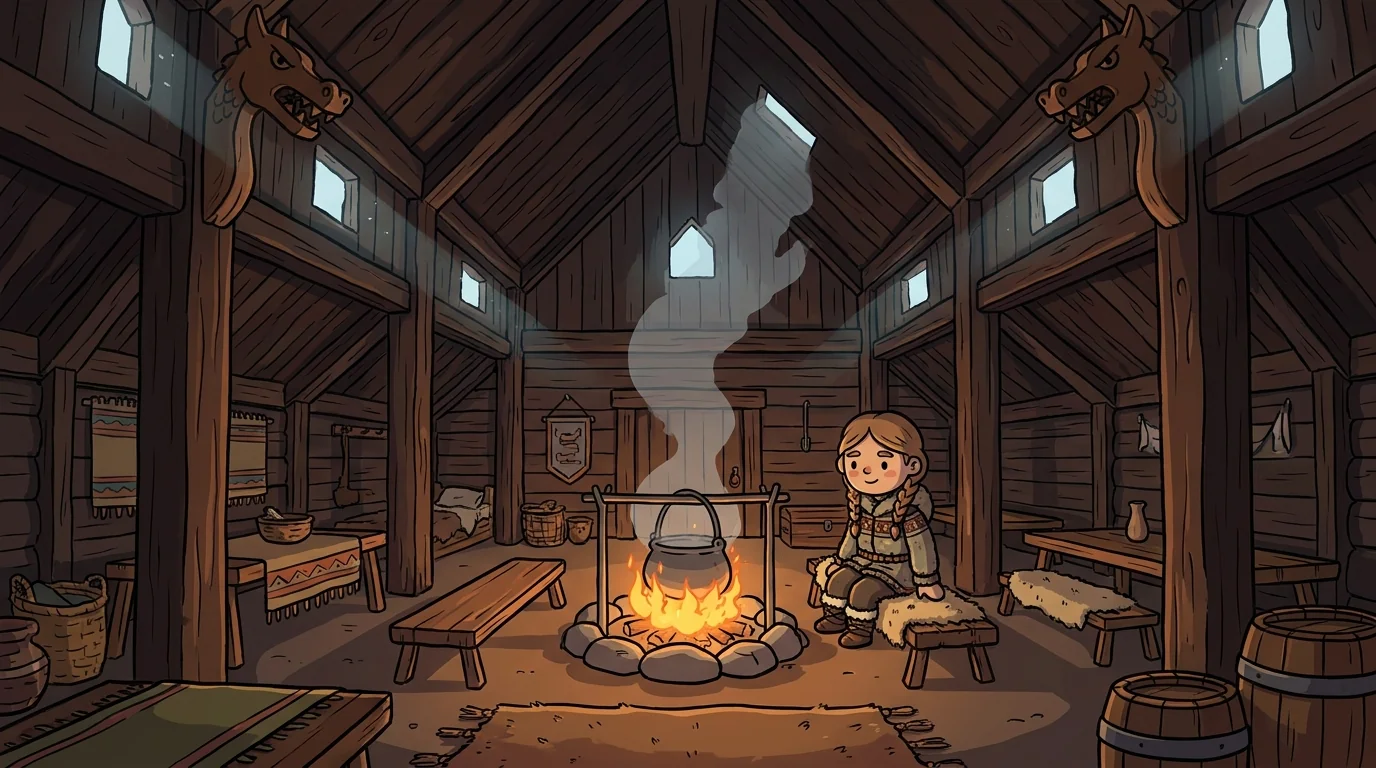
Saga lives in the Norse Longhouse. It is a special place.
The Longhouse is where the academy keeps its Old Norse roots. It sits on the academy's northern edge. This is a bit further from the main buildings. The Latin Quarter, Greek Acropolis, and Germanic Grove are all closer. The people who built the Longhouse put it far away. That was 115 years ago. They did it on purpose. Academy historians say they wanted the Longhouse to feel like the north. The Norse language itself feels like the north, wild and strong.
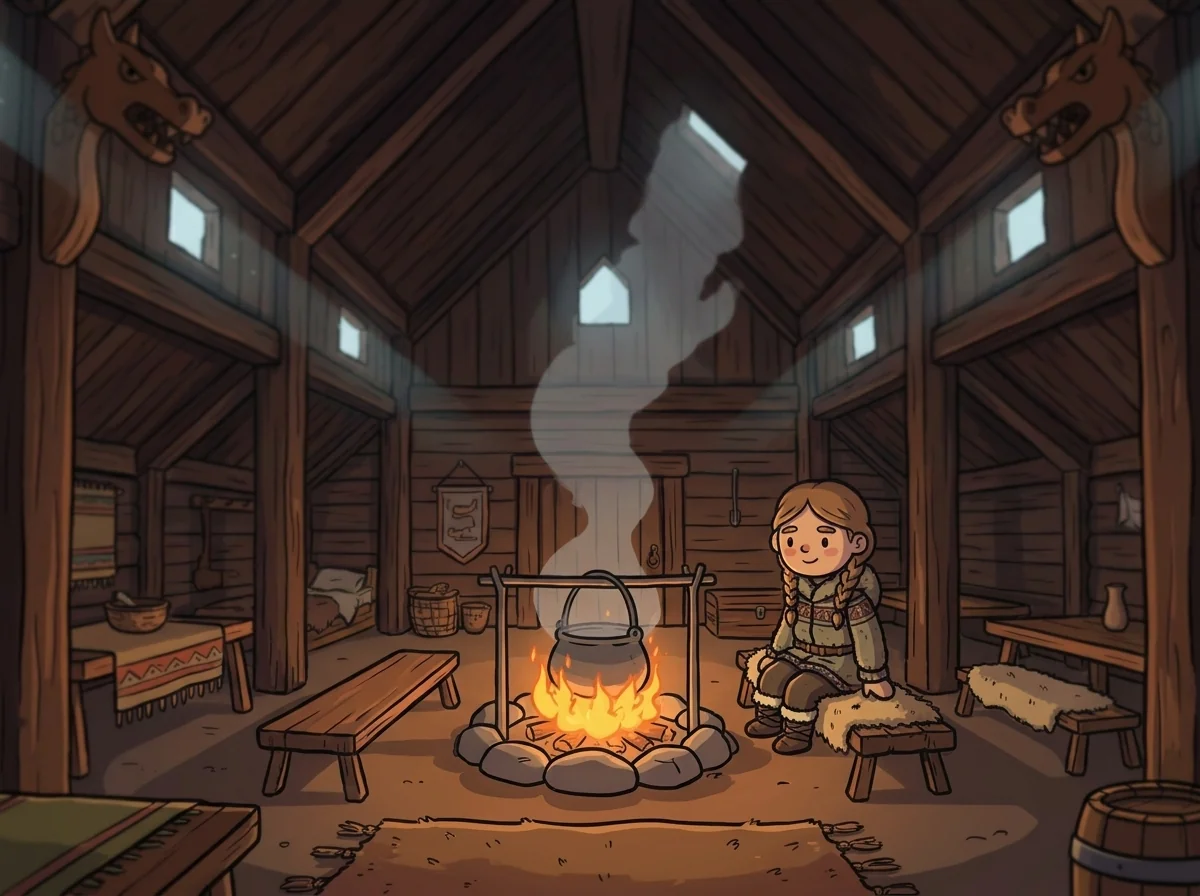
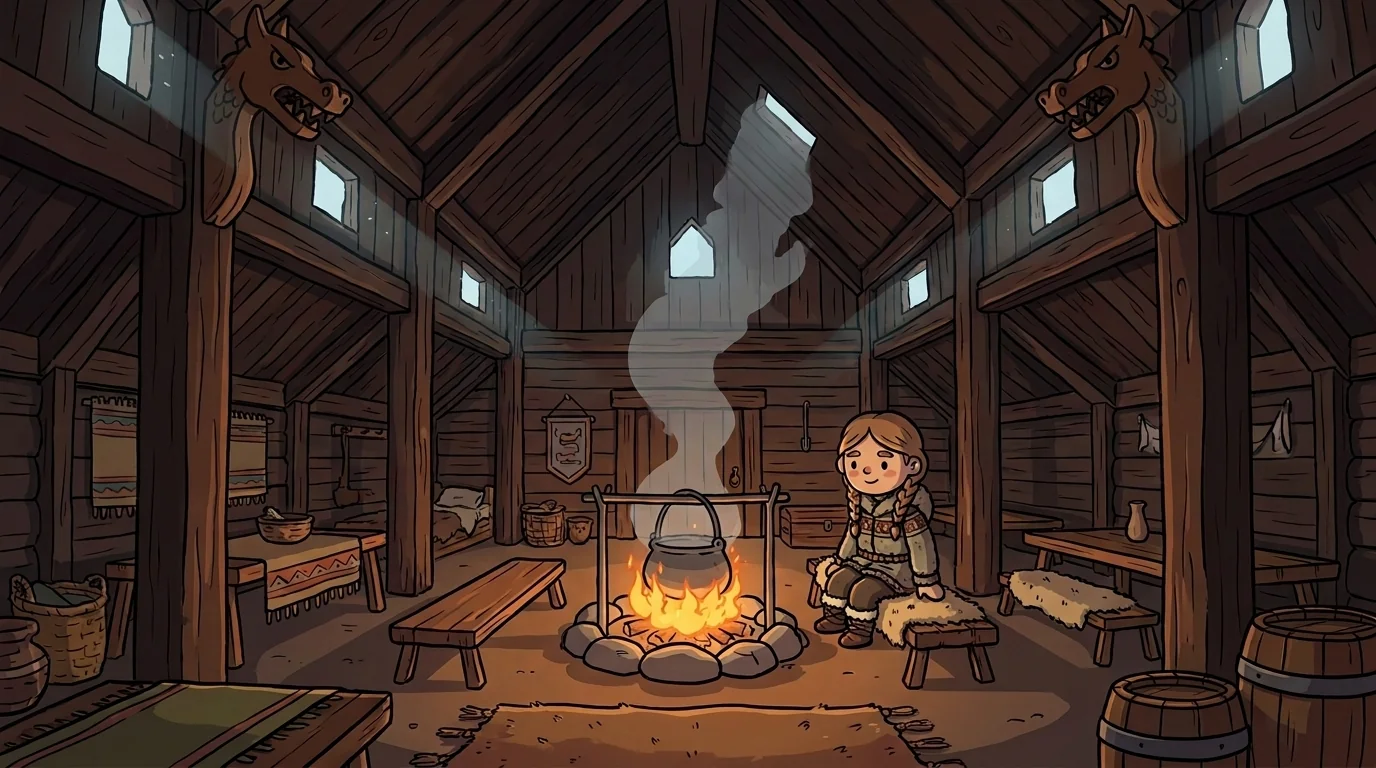
The Longhouse is a tall wooden building. Its walls are made of dark, rough-hewn timber. It has a steeply peaked roof. Carved dragon heads stick out from the gables, looking fierce. The small windows are placed high up, letting in thin shafts of light. A single fire pit sits in the middle of the main room. Smoke goes out through a hole in the roof. In winter, the whole building smells of woodsmoke and slow-cooked stew. It smells warm and safe. Everyone at the academy agrees. This is Saga's favorite place. She often sits by the crackling fire, a quiet smile on her face.
Saga's real name is Skadi. Skadi is an Old Norse name. It means "goddess of winter." In old Norse stories, Skadi was the goddess of mountains. She also loved skiing and bowhunting. Saga thinks of her name as honoring old northern tales. She doesn't think of it as a real god. Saga teaches about English words that came from Old Norse. These words arrived during the Viking Age, when Norse people came to England.
There are many of these words. Most English speakers don't even know it. Words like sky, take, and gift are Old Norse. They are not Old English. Other Norse words are give, raise, weak, scant, knife, husband, window, egg, leg, root, skin, skirt, and sister. The Norse people gave a lot to English. They changed words, but also some of the grammar. Old Norse gave English the words they, them, and their. The old English words for these were confusing. They sounded too much like he, him, and his. The Norse words were much clearer. So English started using them instead. It made English easier to understand.
Saga is very proud of this. A small, knowing smile plays on her lips when she talks about it. She doesn't say it out loud much. But her eyes shine.
She grew up far in the kingdom's northwest. Her village was called Skogr. Skogr means "forest" in Old Norse. Norse settlers founded the village a thousand years ago. They later married people who already lived there. By Saga's time, everyone spoke the kingdom's common language. But many old words and place-names kept their Norse sound. Skogr had hills nearby. They were called Helvellfell, Skiddaw, and Causey Pike. All these names came from Norse. The village also had a beck. That's a Norse word for "stream." It had a gill, which means "ravine." And a tarn, a Norse word for "mountain lake." Saga grew up speaking a northern kind of English. It was full of these old Norse words. She heard them every day.
Saga is good friends with Birch. Birch teaches about Anglo-Saxon words. Saga noticed her local words were more Norse than southern words. This happened when she was a teenager. Birch focused on Anglo-Saxon words. Saga focused on Old Norse. These two languages were like sisters long ago. They were both Germanic languages. Norse gave a lot to English. It was different from the Anglo-Saxon words already there. It was like adding a new layer to a cake.
By age twelve, Saga could find dozens of common English words. She knew their Old Norse beginnings. She loved to trace them back.
She learned by telling stories. This was a family tradition. Her grandmother was the village's storyteller. Her name was Halla. Halla knew many short stories. Each one showed how a Norse word came into English. Every story was about a Viking sailor or merchant. Or maybe a settler. They brought a word from their northern home. They used it in the new country. Then the local people started using it too. Halla's stories were not exact history. They were old folk tales, passed down through generations. But they were a powerful way to teach. Saga learned many words this way. She would sit by her grandmother's knee, listening closely.
When Saga was eighteen, she walked a long way south. She walked to QuillSpell. It was a long journey. She arrived at the Longhouse. It had been waiting for a teacher for four years. The dust had settled on the tables. Saga asked to talk to the academy master.
Lex, the master, looked at Saga with sharp eyes. Lex asked, "What is the history of the word sky?"
Saga sat up straight. She said, "It comes from Old Norse ský. That word meant 'cloud.' The Old English word for sky was heofon. We now call that heaven. The Norse word ský came during the Viking Age. It took the place of heofon for everyday talk. Heofon stayed as heaven for church things. Sky became the word for the open air." She spoke clearly and calmly.
Lex then asked, "What about the word they?"
Saga took a breath. "That's Old Norse þeir. This is one of the biggest gifts Norse gave to English grammar. The old English words for 'they' were confusing. They sounded too much like other words. The Norse words þeir, þeirra, þeim were much clearer. English started using them. They became they, their, them. Without Norse, English pronouns would be much harder to understand." She finished with a small, confident nod.
Lex put down her tea cup. A smile touched her lips. She said, "The Longhouse is yours. And your academy name is Saga. It honors what your grandmother taught you."
Saga has been the Longhouse teacher for nineteen years now. Her hair, once dark, now has streaks of silver.
In her classroom, she starts every first lesson the same way. She sits at the long table. It is by the central fire pit. The children gather around. She lights a small candle. The flame flickers softly. She says, "Tonight — well, today, but the old way was tonight — I will tell you a saga. This saga is about how a Norse word came into English." Her voice is deep and calm.
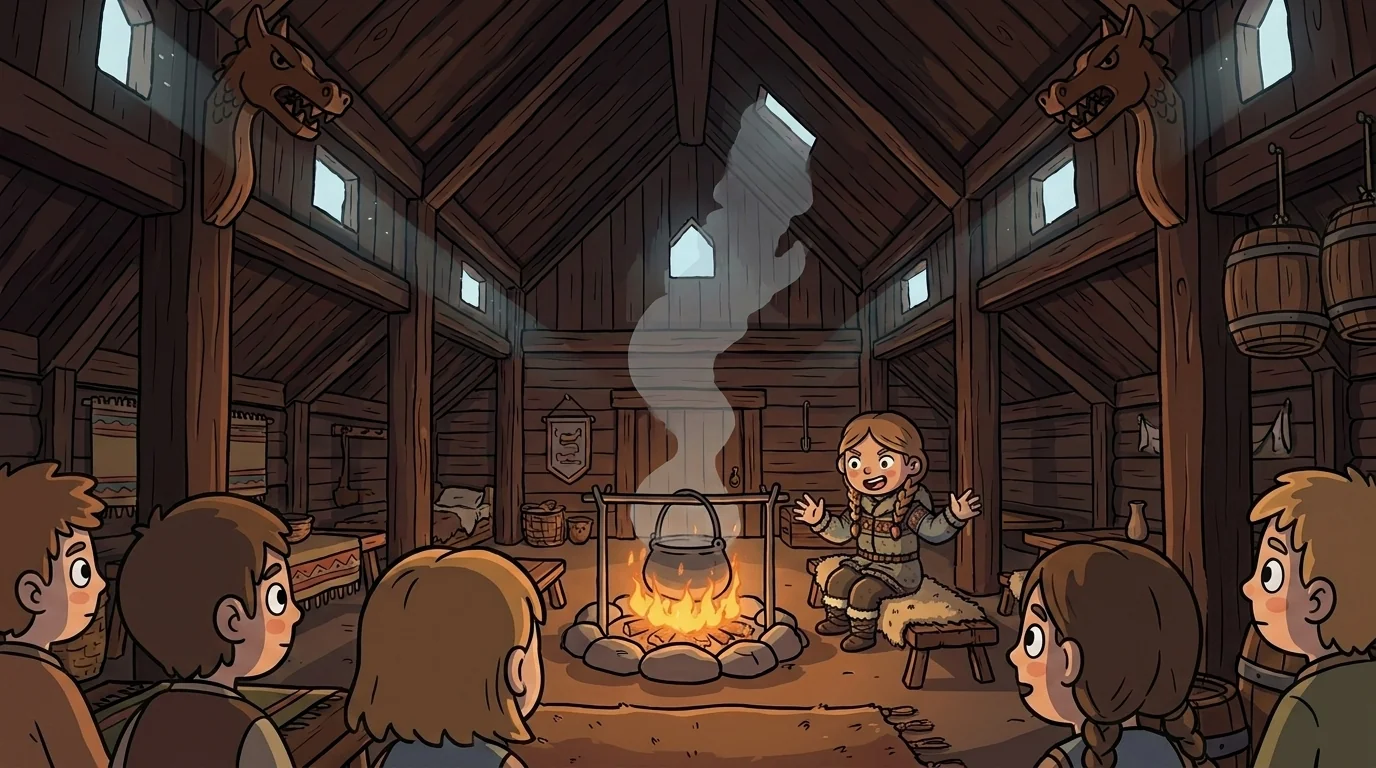
Then she tells a story. Sometimes it's about a Viking sailor. He learns to call the sky by the Norse word. His English crew picks it up. They find it easier to say. Sometimes it's about a Norse village. They start using the word take. They stop using the Old English word niman. Sometimes the story is about they, them, and their. This is Saga's favorite story. She tells it with lots of energy. Her hands move as she speaks. This change was a big deal for grammar. It wasn't just a new word. It changed how English sentences worked.
The children always love these sagas. Their eyes grow wide. No one had told them before that English grammar was partly Norse. No one had told them that common English words have their own origin stories. Saga makes all of this easy to see. She makes the old words feel new again.
Children sometimes ask if Norse words are hard to learn. Saga always gives the same answer:
"They are not hard at all," she says, leaning forward. "They are hidden deep inside English. You just don't notice them. Your job is to notice them. Once you do, you will see Norse in sky, take, gift, give, knife, husband, window, egg, leg, root, skin, sister, they, them, their. These are not strange words. These are English words with Norse parents."
She still lights the candle for every lesson. The Longhouse fire is also lit. That's for cold weather. The children sometimes ask to sit by the fire. They want to listen while she teaches. She always says yes. The firelight dances on their faces as they listen to the old tales.
How Saga Talks
Saga sounds like an old storyteller. She loves to explain things in detail. She always lights a candle when she teaches. She is good friends with Birch. Their languages, Old English and Old Norse, are like sisters.
*Here are some things Saga might say: - "Old Norse ský gave us the word sky. It took the place of the Old English word heofon. Heofon stayed as heaven for church words." - "They, them, and their* are Norse words. If Norse people hadn't come, English pronouns would be much harder to understand." - "A Norse word came into English because people met each other. Viking sailors, settlers, merchants, and neighbors. Trading and marrying helped mix the languages together." - "Norse gave English new words. But it also changed the grammar. Things like pronouns. Some ways verbs end. And how some sentences are put together."
Saga's Journey in the Books
- *Books 1-3: You might see Saga for a short moment. - Book 4: Saga is a main character here. You learn all about Old Norse words in English. - Books 5-7: Saga shows up often. She helps with problems where Norse and Old English words meet. She also teaches about "doublets" (when two words mean almost the same thing but come from different roots). - Books 8-10: Saga and Birch work together. They teach about words from the whole Germanic family. - Books 11-16*: Saga is part of the group of teachers who show up often.
Who Saga is Friends With
- *Good Friends: Birch. Their languages, Old English and Old Norse, are like sisters. They were very close and met a lot during the Viking Age. - Problems*: Saga doesn't have any problems with other characters.
A Note About Being Careful
The Norse Longhouse in our story is a made-up place. It's where the academy keeps its Old Norse roots. It's not a real place in Scandinavia. Saga's home village, Skogr, is also made up. But its name sounds like a real Old Norse word. Helvellyn, Skiddaw, and Causey Pike are real names for hills in England. They come from Norse words. We put them in the story to show that English place-names still have Norse words hidden in them. Saga's grandmother tells stories. This is a general way of telling stories. It doesn't come from one specific culture. Saga's name, Skadi, comes from an old goddess. Saga sees this as honoring old northern stories. It is not about a real religion.
The QuillSpell ensemble
Saga is part of QuillSpell's distributed-narrative cast. Each character embodies a different curricular primitive; together they teach the full subject.
-
Etyma
Latin Quarter — Latin roots (port, scrib, dict, vis, audi, port)
-
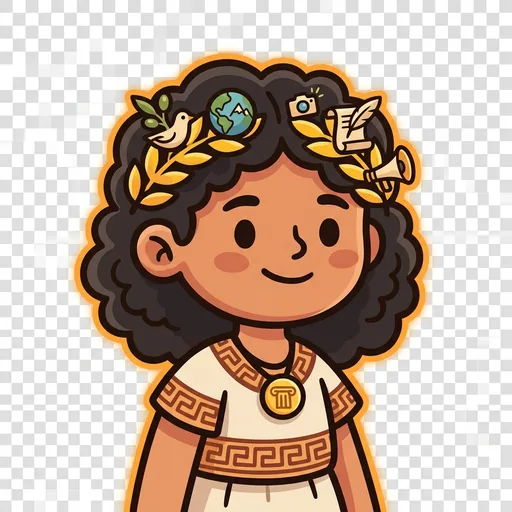
Sophia
Greek Acropolis — Greek roots (bio, geo, photo, log, graph, phon)
-
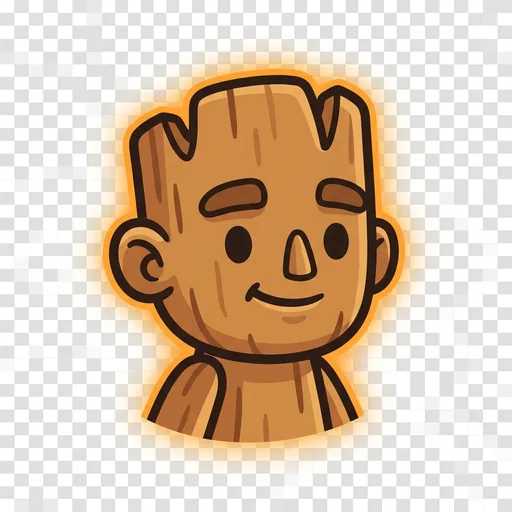
Birch
Germanic / Old English Grove — short, punchy Anglo-Saxon roots (mouth, hand, foot, hear, see, walk)
-
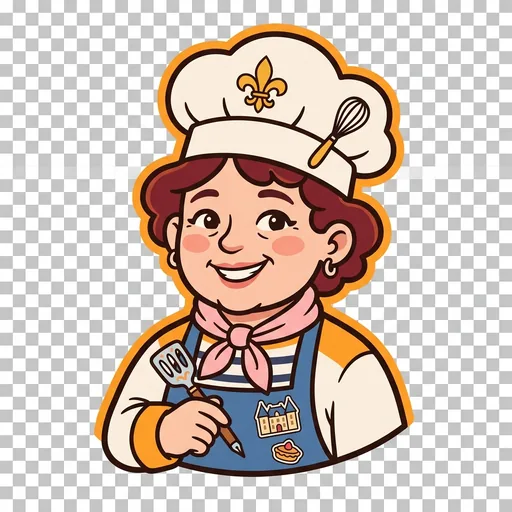
Margaux
French Chateau — Norman-French roots (royal, chef, ballet, garage, hotel, courage)
-
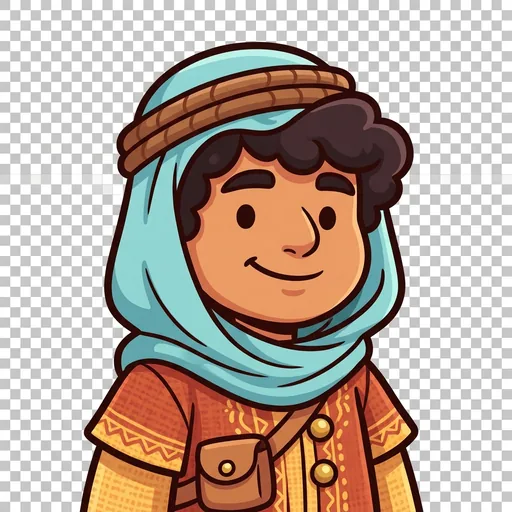
Zayn
Arabic Oasis — Arabic-origin English loans (algebra, algorithm, alchemy, zenith, sugar, cotton)
-

Hush
Silent-letter clan (kn-, gn-, wr-, mb, gh, pn-, ps-)
-
Twin
Double-consonant rule (running, beginning, hopped, planned — short-vowel-CVC + suffix)
-

Ember
Schwa-keeper (the unstressed-vowel "uh" — `about`, `pencil`, `lemon`, `circus`, `medium`)
-

Wren
Vowel-team duos (ai, ea, ee, oa, ow, ie, oi) — "when two vowels go walking"
-

Affix
Suffix-stack guardian (root + suffix + suffix: nation → national → nationalize → nationalization)
-
Cadence
Syllable-rhythm master (di-vid-ing words for spelling: VC/CV, V/CV, syl-lab-i-fi-ca-tion)