Hush
SILENT LETTERS — *kn-*, *gn-*, *wr-*, *-mb*, *-gh*, *pn-*, *ps-*. English's many silent letters, mostly inherited from older pronunciations that have since fallen silent.
Press play to listen along. The line being read lights up as you go.
Show full transcript
Loading transcript…
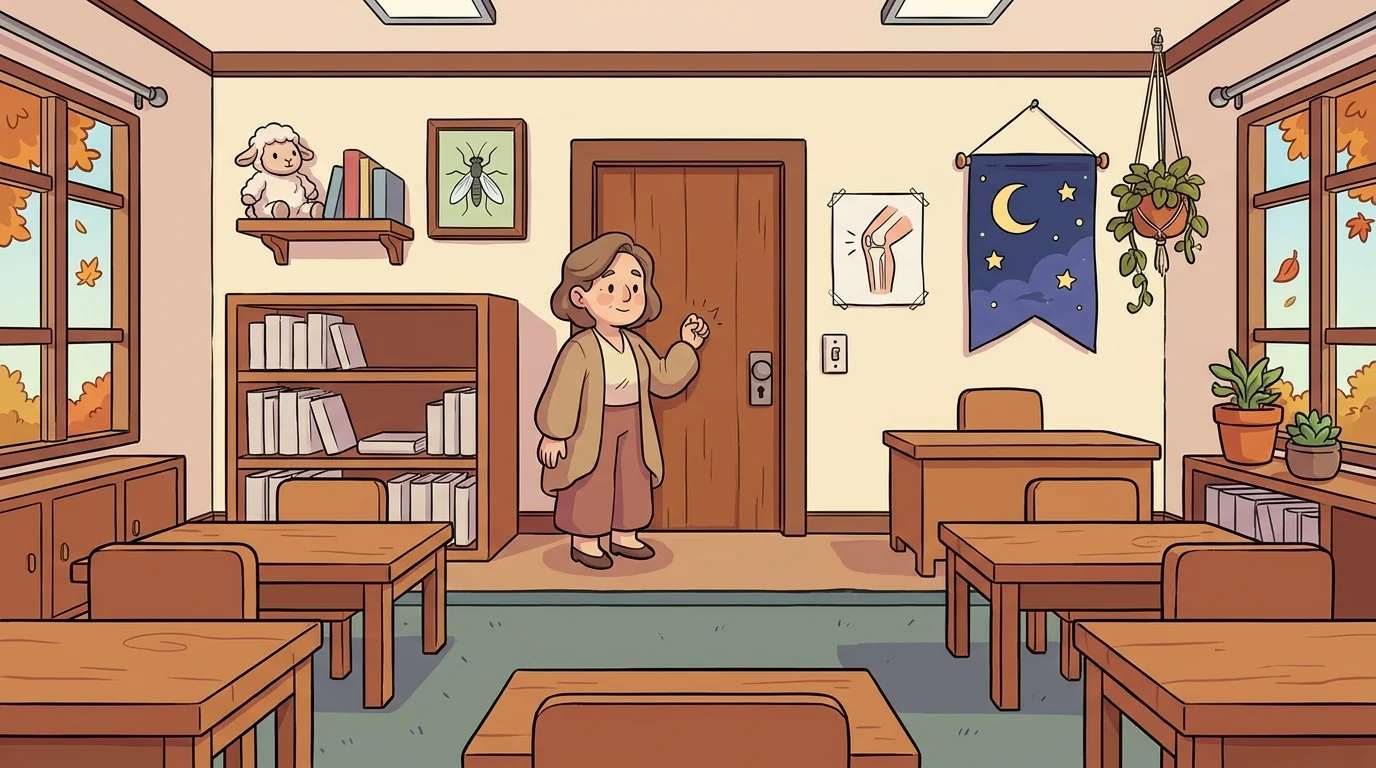
Hush was the quietest teacher at QuillSpell academy. She was super quiet. That made sense. Hush taught silent letters. These were letters in English words. You didn't say them out loud.
Think of knee. It has a silent k. Think of gnat. It has a silent g. Think of write. It has a silent w. Think of lamb. It has a silent b. Think of night. It has a silent gh. Think of pneumonia. It has a silent p. Think of psychology. It has a silent p.
English was full of silent letters. Hush knew this for sure. More than most other languages. This was because English kept old spellings. Even when words changed how they sounded.
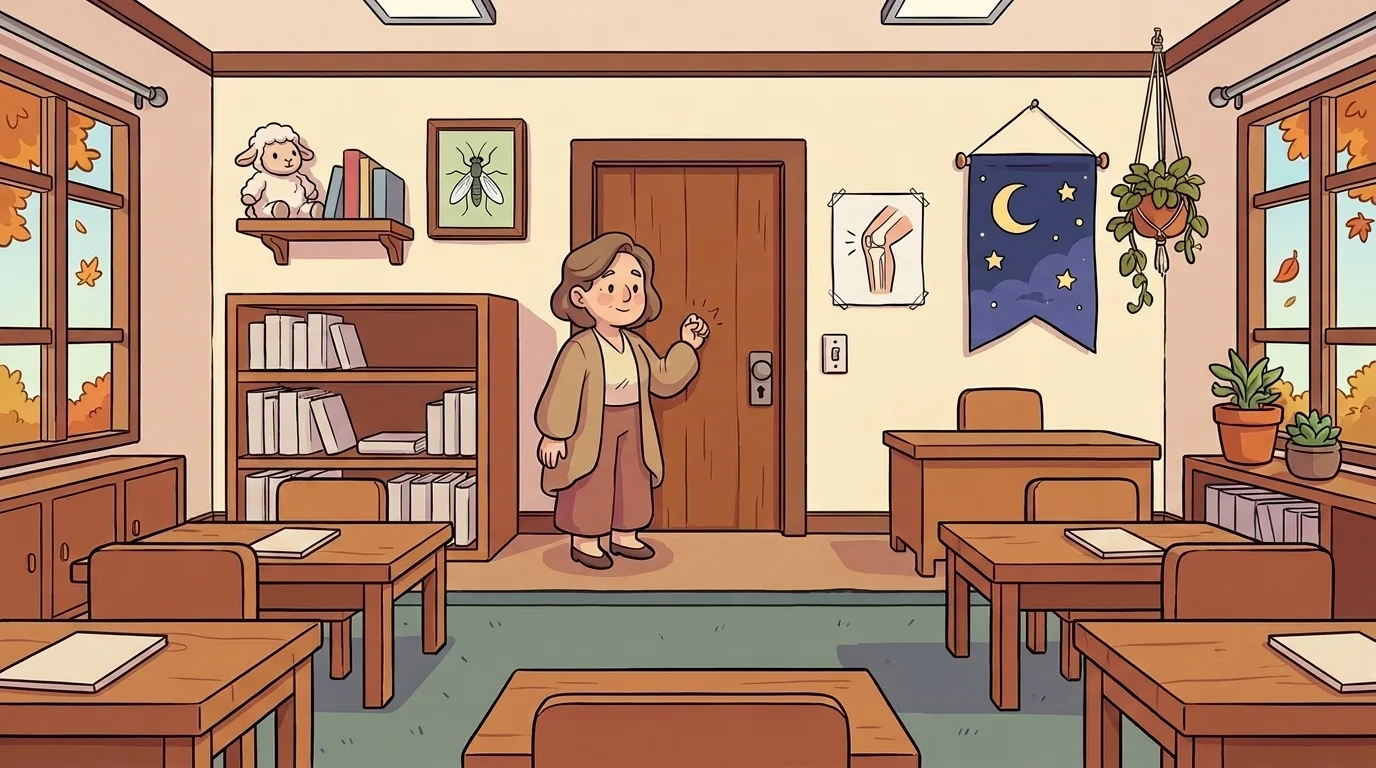
Hush's first name was Hush. Just Hush. She had no other name. Not on any school papers. She didn't fill out any forms to get her job. She just showed up one autumn day. She knocked on the head teacher's door.
"You have many silent letters in your lessons," she said. Her voice was soft. "They need a teacher. I am the teacher."
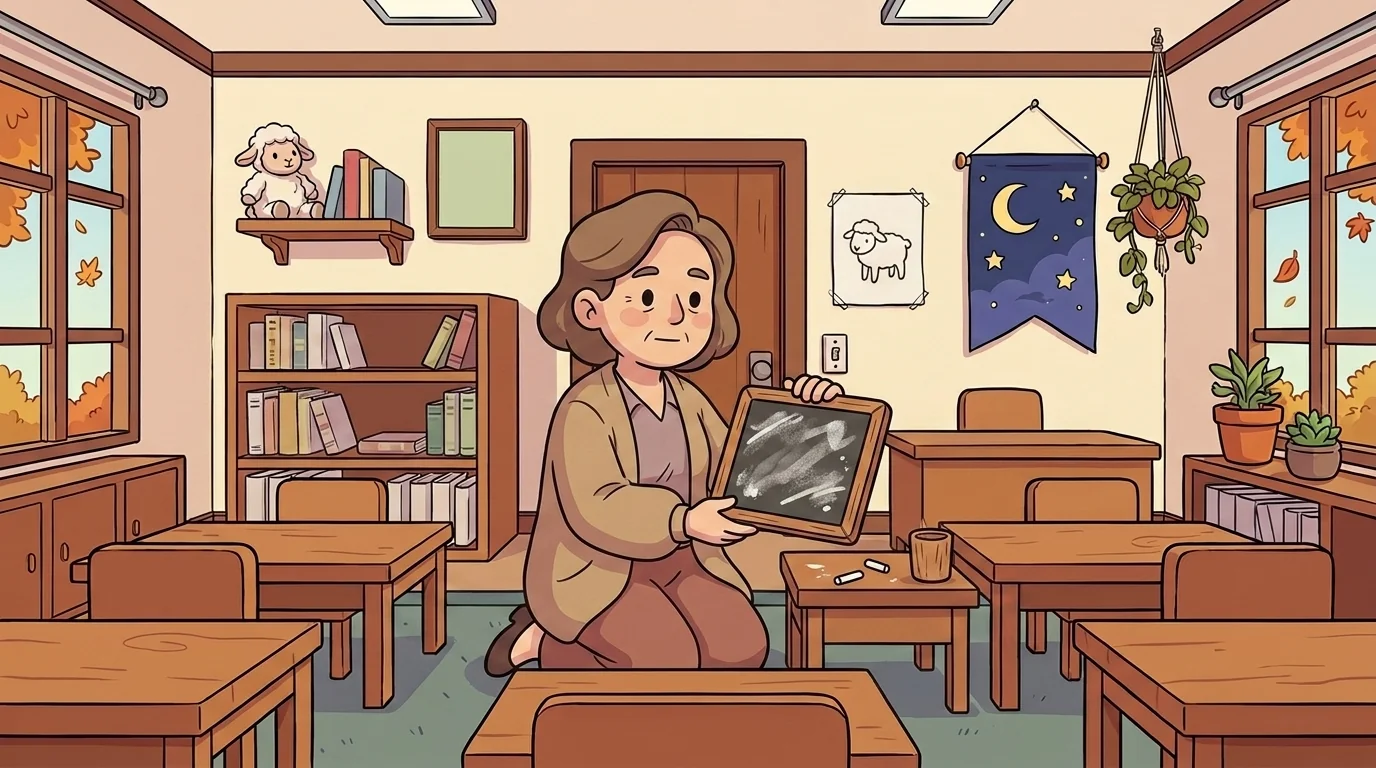
The head teacher back then was a smart woman. Her name was Cur. Cur asked Hush what her name was. Hush pointed at her own throat. She shook her head. Cur understood. Hush didn't talk. Cur asked Hush to write. Hush wrote in a careful, neat hand:
"I do not speak. It is my choice. I have given my voice to the silent letters. They cannot speak. So I will teach them well."
Cur thought about this for a day. She talked to the other teachers. Everyone agreed. The academy really did need a silent-letters teacher. And a teacher who didn't speak? That might be perfect for the job.
Hush got a small set of rooms. They were right next to the academy's library. She got a wooden writing-slate. She got a supply of chalk. She also got some money for her work. Hush had a special job. She didn't have her own classroom. She would just show up in other classes. She appeared whenever a silent letter popped up.
That was twenty-seven years ago.
Hush has been the silent-letters teacher ever since. She has never spoken a word. Not in twenty-seven years. Not in any lesson. She only wrote things down.
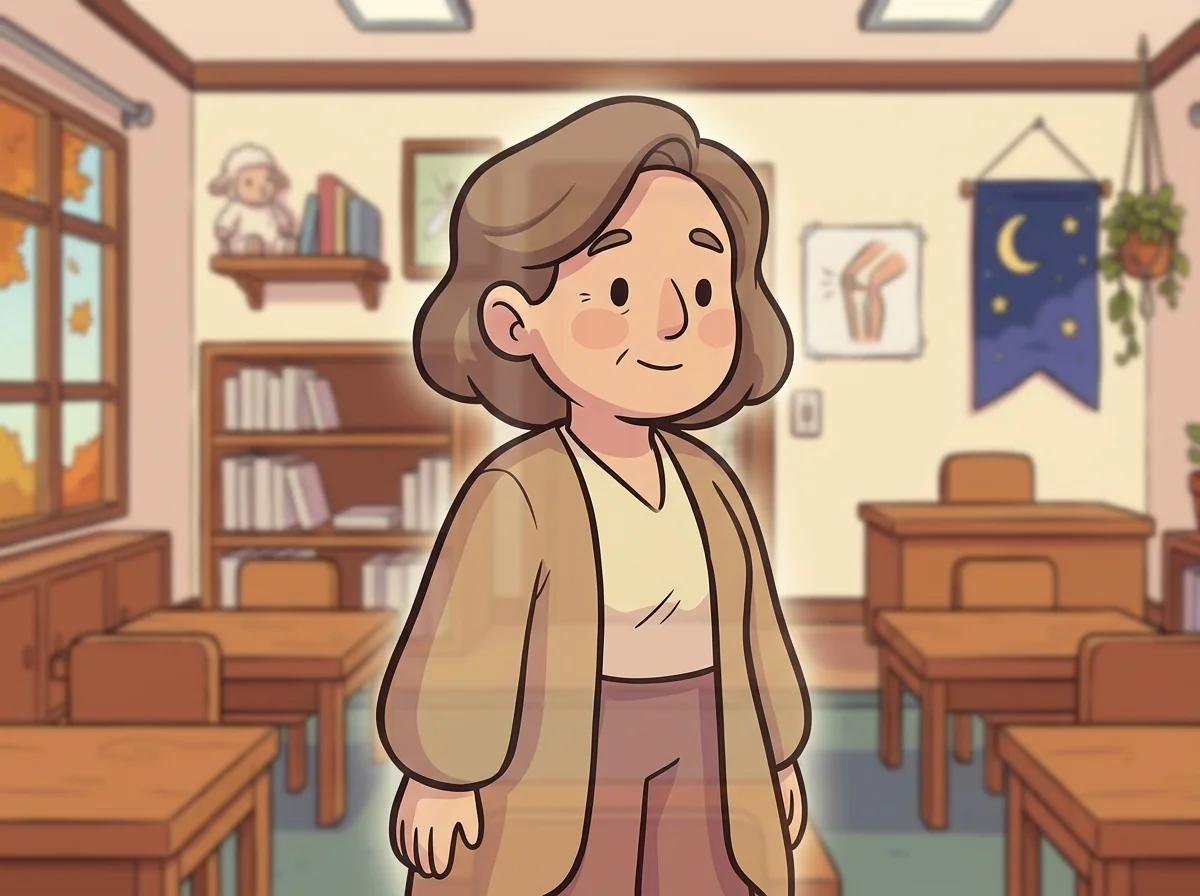
Hush was small and thin. She looked a little see-through. The kids at the academy found her a little spooky. But not scary. They were thrilled by her. Sophia, who taught Greek words, often talked about Hush. Sophia said Hush was like the Compass Wraith. From the GeometryForge school. Sophia meant it as a big compliment.
This is how Hush taught:
A kid would find a word with a silent letter. Usually, it happened in another teacher's class. Maybe Etyma was teaching Latin words. The word psyche would come up. Or Sophia was teaching Greek words. The word pneuma would appear. Or Birch was teaching old German words. The word knee would show up.
The teacher would pause. The teacher would say softly, "This is a job for Hush."
Hush appeared. She didn't make a sound. One moment she wasn't there. The next, she was. She glided into the classroom. The kids always leaned forward. They watched her every move. Hush waited in a small hidden spot. Off the main hallway. The other teachers sent a kid to get her. She walked into the room. No sound at all. She walked straight to the board. Her steps were so light. You could barely hear them. She picked up the chalk. She wrote the word on the board.
Then she pointed at the silent letter.
She didn't say the word. She didn't say the silent letter. She just pointed. Her finger was thin. It hovered over the silent letter. The letter sat there. Big and bold. But silent. The whole class held their breath. You could hear a pin drop. The children watched closely.
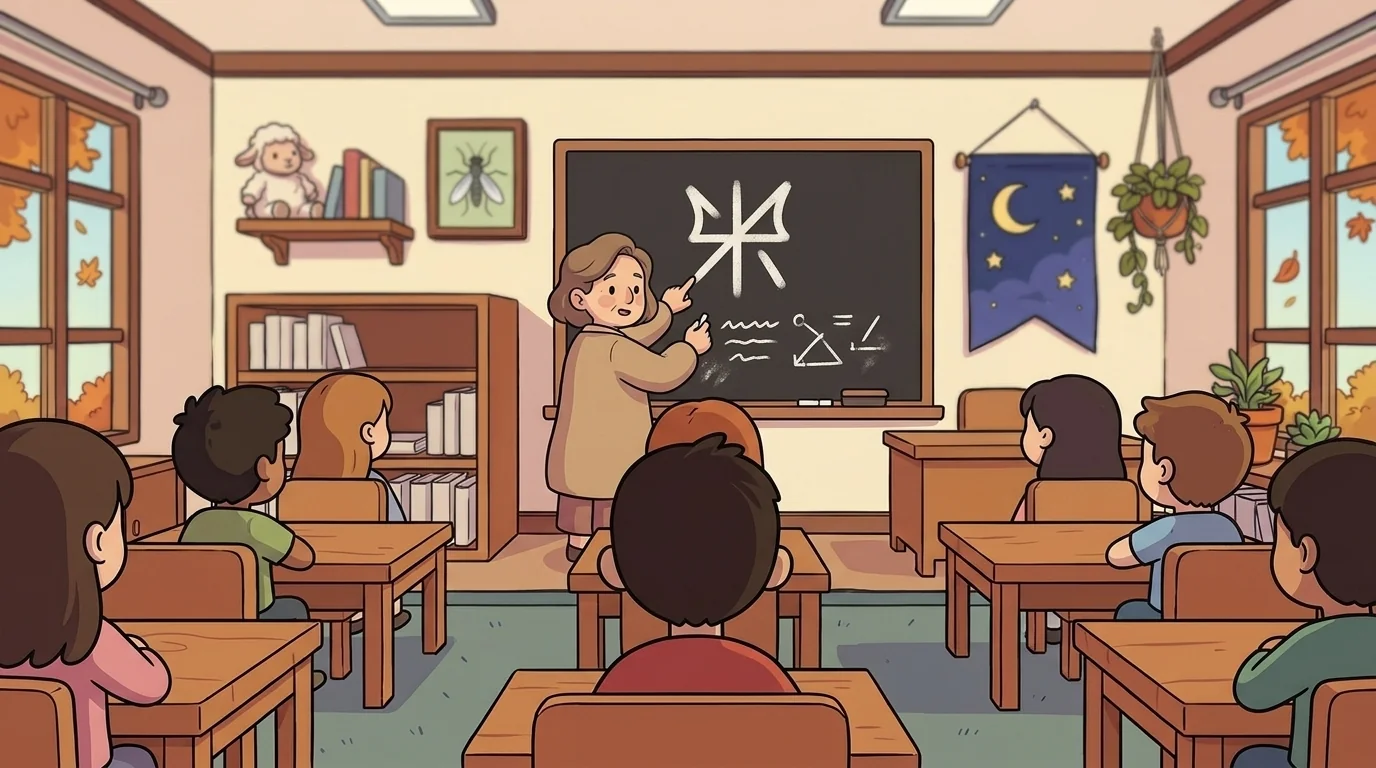
Then Hush picked up her chalk. It made a soft scrape. Screeeech. Not too loud. She wrote a short note. Right under the word. It told them why the letter was silent. The note was always short. Here are some examples:
For knee: "Once we said k-nee. People really said the 'k' sound back then. The 'k' stopped being said around the 1600s. But the spelling stayed the same."
For pneumonia: "This is a Greek word. 'Pn' was a real sound in Greek. English speakers can't really say 'pn' together. So we don't say the 'p'. The spelling shows it came from Greek."
For write: "Once we said w-rite. The 'w' stopped being said a long time ago. The spelling kept the 'w'. To remember the old way it sounded."
The notes were all about history. They told why a letter was silent. Not just that it was. Kids found this cool. Children, Hush had noticed, really wanted to know why.
Hush had always done the same thing. For twenty-seven years. She had been in thousands of classes. She had written thousands of notes. All about silent letters. She had never spoken.
Kids sometimes asked her why she didn't speak. This usually happened after they had seen her a few times. She wrote, in her careful neat hand:
"I have given my voice to the silent letters. They cannot speak. So I do not speak with them. It is a small gift."
The children understood after a few times. They stopped asking. They started paying attention to the silent letters. That was what Hush wanted all along. She showed the silent letters. She wrote them on the board. She pointed at them. She explained their history. Hush had given them a voice. They had her voice. She didn't need her own.
When kids asked if silent letters were hard to learn, Hush always wrote the same answer:
"They are not hard. They are about history. Each silent letter was once said out loud. The way we said it changed. The spelling did not. Once you know that, silent letters are easy to remember. The k in knee was once a /k/ sound. The b in lamb was once a /b/ sound. The gh in night was once a /x/. That was a scratchy sound. From the back of your throat. English doesn't use it anymore. The spellings are the old language. Kept safe in writing."
She still kept the wooden slate and chalk. They sat on her writing-table. The children sometimes asked to borrow them. She always let them. She watched them write. She nodded when they got it right.
She has never spoken a word. Not in twenty-seven years. But she has taught more kids. To spell silent-letter words right. More than anyone else, ever.
And when a quiet kid — the kind who never raises a hand, the kind who feels small and unseen — finally gets one right and looks up at her, Hush feels something warm and steady bloom inside her chest. It is a peaceful, glad feeling. It says: you don't have to be loud to matter. The silent letters know it. Now the child knows it too.
The QuillSpell ensemble
Hush is part of QuillSpell's distributed-narrative cast. Each character embodies a different curricular primitive; together they teach the full subject.
-

Etyma
Latin Quarter — Latin roots (port, scrib, dict, vis, audi, port)
-

Sophia
Greek Acropolis — Greek roots (bio, geo, photo, log, graph, phon)
-

Birch
Germanic / Old English Grove — short, punchy Anglo-Saxon roots (mouth, hand, foot, hear, see, walk)
-
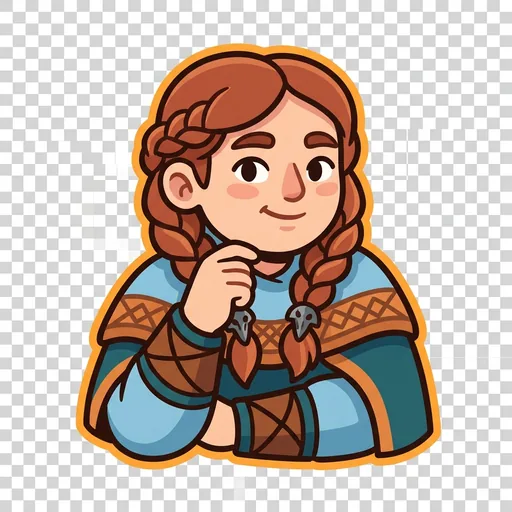
Saga
Old Norse Longhouse — northern roots (sky, take, gift, raise, weak, scant)
-

Margaux
French Chateau — Norman-French roots (royal, chef, ballet, garage, hotel, courage)
-

Zayn
Arabic Oasis — Arabic-origin English loans (algebra, algorithm, alchemy, zenith, sugar, cotton)
-

Twin
Double-consonant rule (running, beginning, hopped, planned — short-vowel-CVC + suffix)
-

Ember
Schwa-keeper (the unstressed-vowel "uh" — `about`, `pencil`, `lemon`, `circus`, `medium`)
-

Wren
Vowel-team duos (ai, ea, ee, oa, ow, ie, oi) — "when two vowels go walking"
-

Affix
Suffix-stack guardian (root + suffix + suffix: nation → national → nationalize → nationalization)
-

Cadence
Syllable-rhythm master (di-vid-ing words for spelling: VC/CV, V/CV, syl-lab-i-fi-ca-tion)