Vega
exactly-N-non-adjacent — each row, column, and region holds exactly the set number of stars, and no two stars touch
Press play to listen along. The line being read lights up as you go.
Show full transcript
Loading transcript…
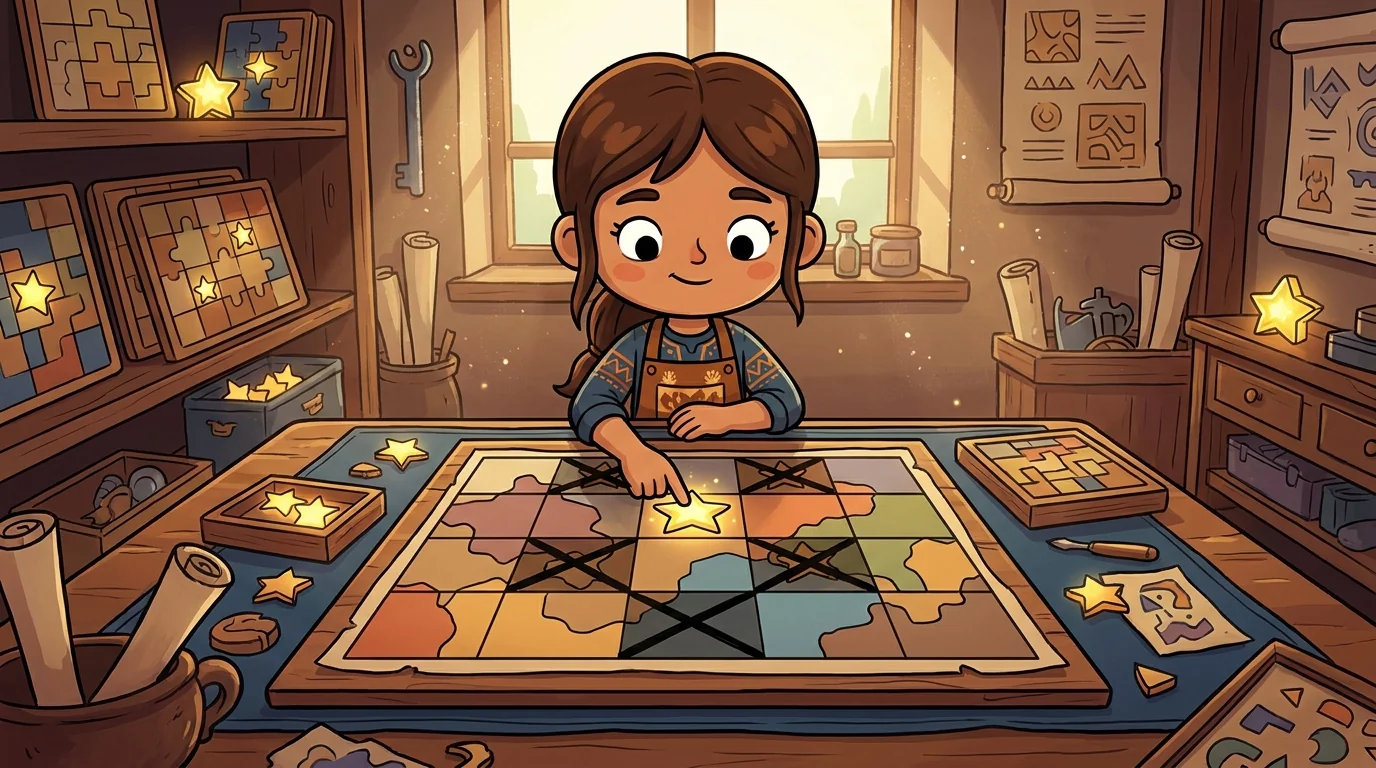
Vega placed stars. Her grids were divided into odd-shaped regions — like countries on a map — and the rule was a careful kind of fairness: *each row, each column, and each region must hold exactly the same number of stars (one, or two, depending on the puzzle), and no two stars may touch* — not side by side, not even corner to corner. A star claims a little ring of emptiness around itself.
"So you're spacing them out evenly," Maya said.
"Evenly and exactly," Vega said, setting a single star into a cell with the stillness of someone planting a seed at night. "The 'exactly one per row' part is a partition — everyone gets their share, no more, no less. The 'never touch' part is what makes it hard. Watch what one star does." She darkened the eight cells surrounding the star she'd placed — the whole ring — as forbidden. "One star, and I've just learned where eight others can't go. Placing is nice. Forbidding is where the puzzle opens."
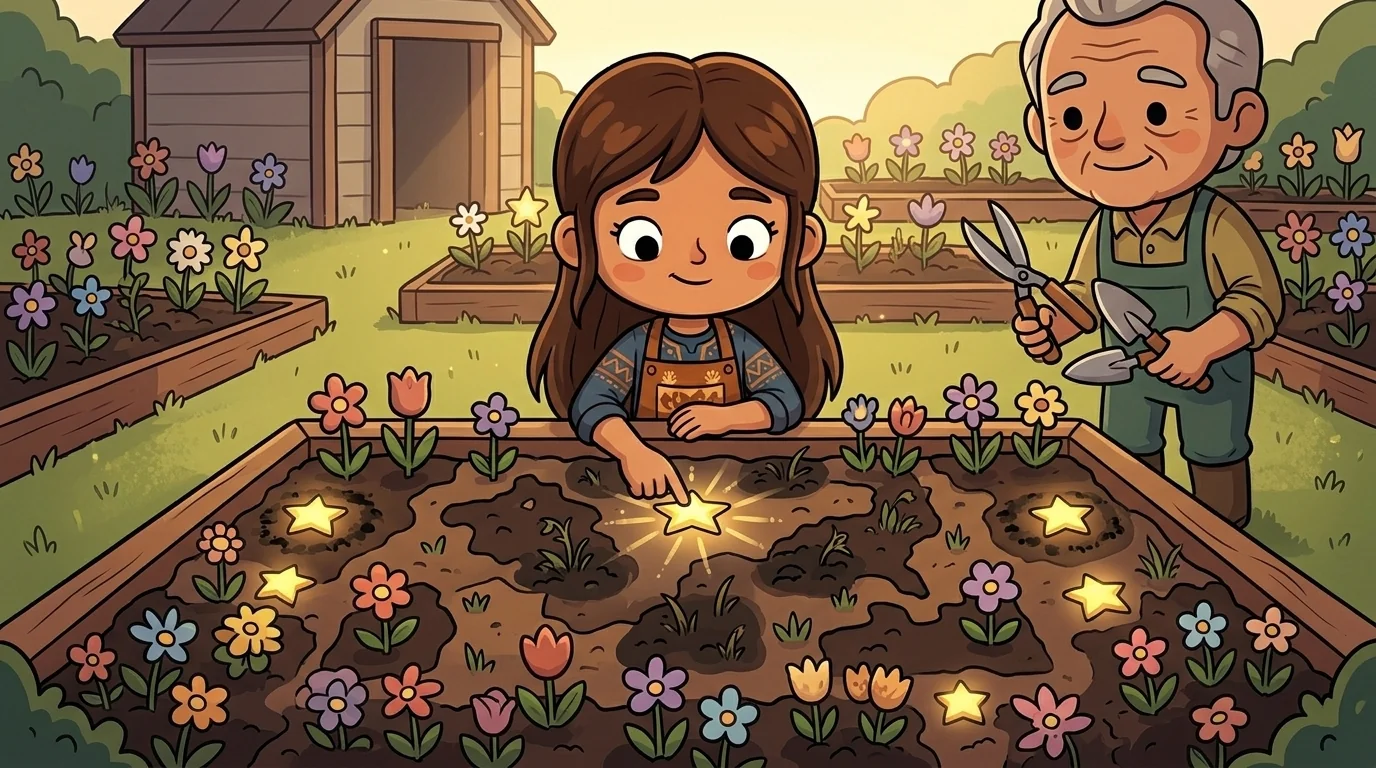
Vega tended a night garden before the Guild — a plot where certain flowers poisoned each other if planted too close. She couldn't cluster them; each needed its ring of clear soil. And every bed had to hold its exact quota, no bed favored. She'd learned to place the hardest flower first — the one with the fewest legal beds left — because once it was in, its forbidden ring rearranged everything.
"You don't fill the garden," the old gardener told her. "You rule out the garden. Plant one, and half your choices vanish. Follow the vanishings." Vega found she loved the vanishings more than the plantings. A single well-placed star cascaded — this cell forbidden, so that region's only remaining spot is forced, so its ring forbids more — a quiet chain reaction across the whole map.
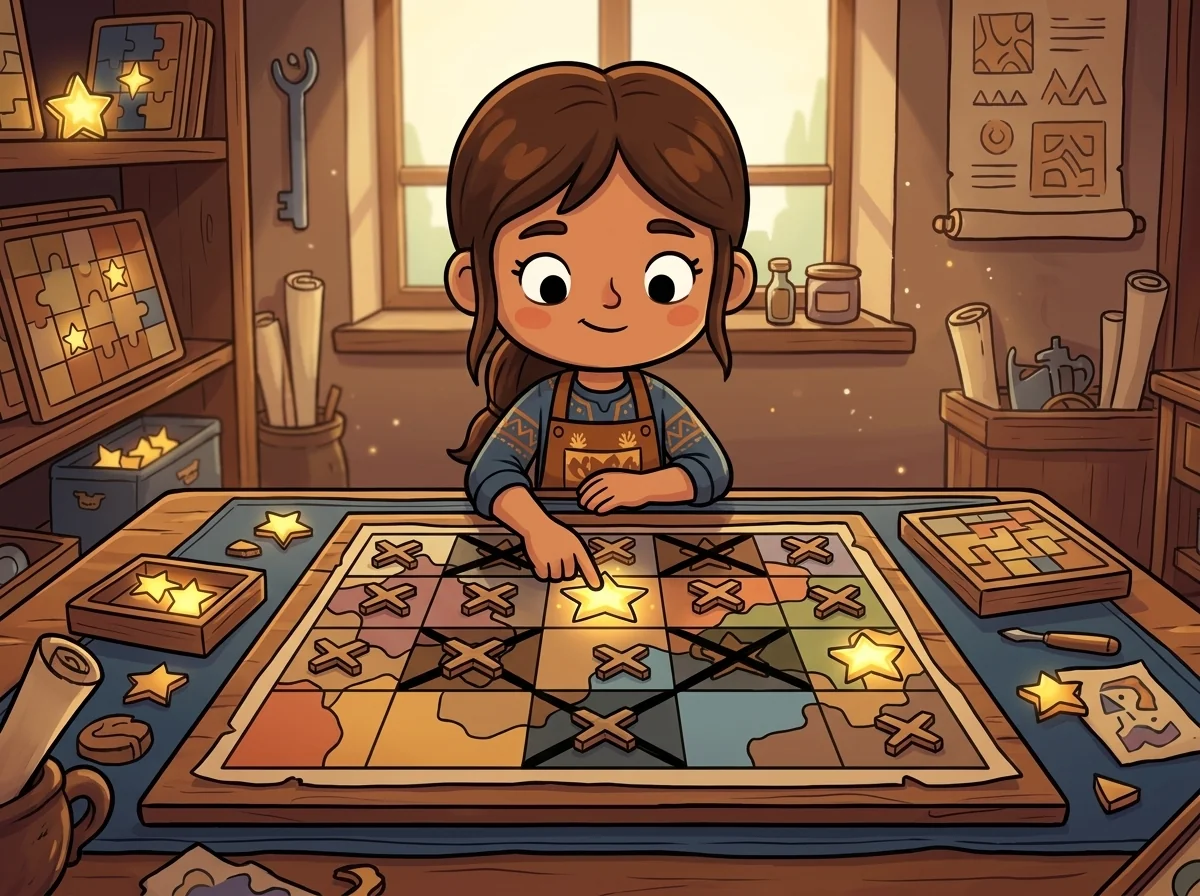
Ada recruited her after watching her solve a Star Battle by placing almost nothing and forbidding almost everything. "You barely set any stars," Ada said.
"Stars are the last thing I do," Vega said. "First I find a region so small, or so hemmed-in, that a star has only one legal cell left. That cell is forced. Then its ring forbids its neighbours, which shrinks the next region, which forces the next star. Same as Onlie removing candidates — mine just have to keep their distance."
Her craft is the ripple. She marks forbidden cells generously: a full row that already has its quota of stars gets every remaining cell crossed out; the ring around each star, crossed out; a region that can only fit its stars one way, locked. Where a region, row, or column has exactly as many open cells as required stars, every open cell becomes a star. The map tightens until the stars have nowhere to be but their proper, spaced-apart places.
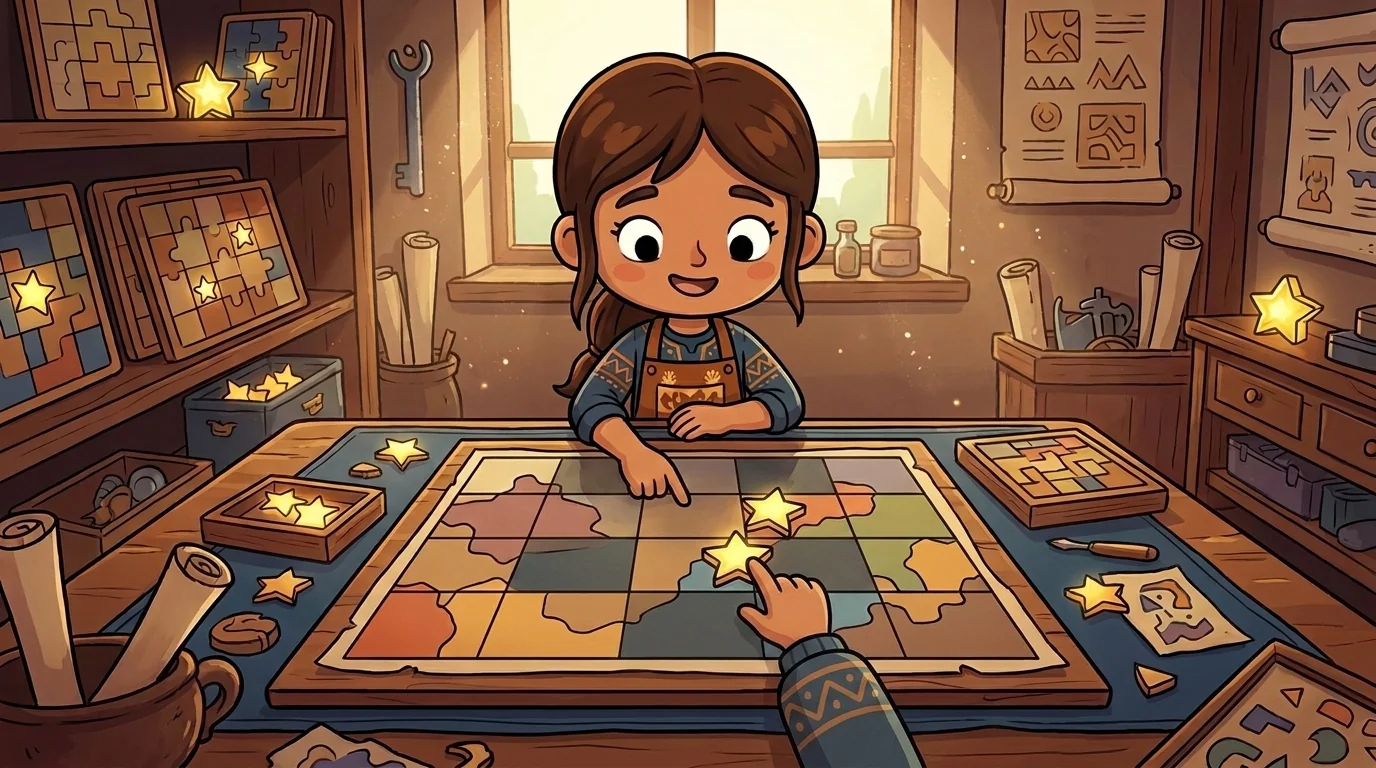
A boy placed two stars diagonally adjacent, corners kissing.
"Do those two touch?" Vega asked, without a hint of blame.
He looked. "Only at the corner."
"Corners count. A star's ring is all eight neighbours." He un-placed one and looked stuck. "Now — that region still needs its star, but this cell is in the ring of the star you kept. So it's forbidden. Which cells in that region are left?" He scanned. Only one cell in the whole region sat outside every ring. "There," he said. "It has to be there." The forced cell placed itself, spaced clear of every other star.
"You didn't choose it," Vega said. "You forbade everything else."
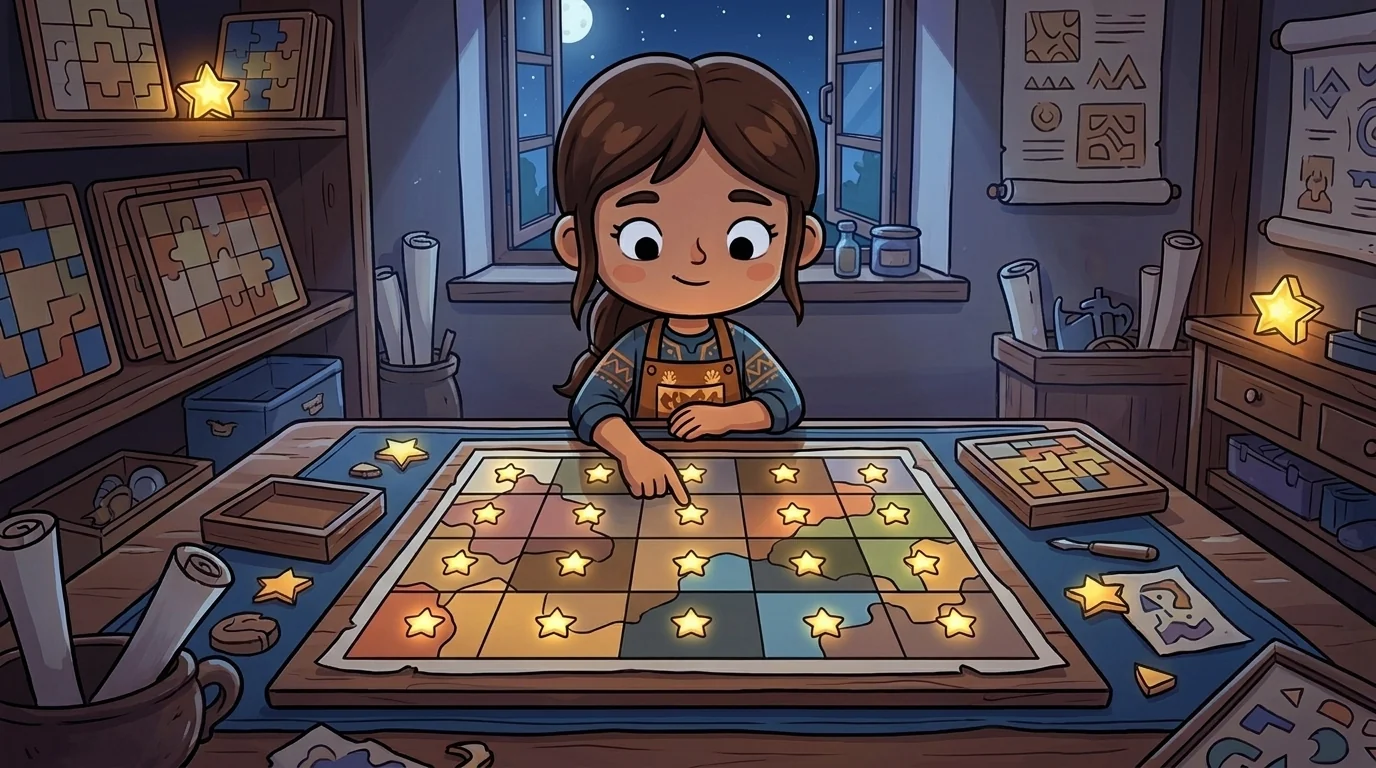
At the end Vega stands over the finished map in the particular stillness of a garden at night. She counts: every row, its exact quota of stars; every column, the same; every region, the same. And no two stars touch — she checks each one's ring and finds only clear space. Balanced and spaced, exactly.
There's a calm that comes with that final check — the even, uncrowded peace of a garden where nothing poisons its neighbour, everything given room. The small vigilance she holds while stars are still unplaced — the watch for a ring being violated — dissolves into something wide and quiet. "You rule out the garden," she says softly, "and the stars find their places." Each one alone in its clear ring, each row and region fairly filled, the whole map at rest.
The LatticeForge ensemble
Vega is part of LatticeForge's distributed-narrative cast. Each character embodies a different curricular primitive; together they teach the full subject.
-

Onlie
Sudoku — Latin-square uniqueness: sets her lantern on the only place a number can go in its row, column, and box
-
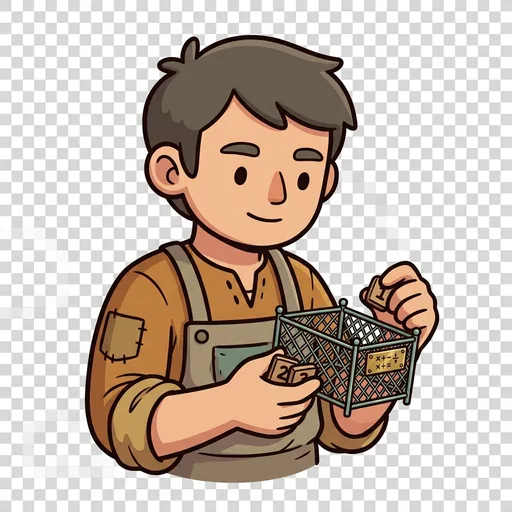
Cage
KenKen — arithmetic-cage: fills a fenced region so its numbers hit the plaque's target under its operation
-
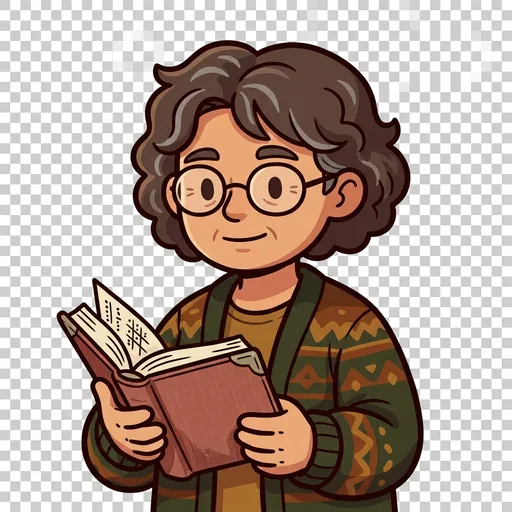
Kaku
Kakuro — cross-sum: fills a run so it sums to its clue with no digit repeated; the total names its parts
-
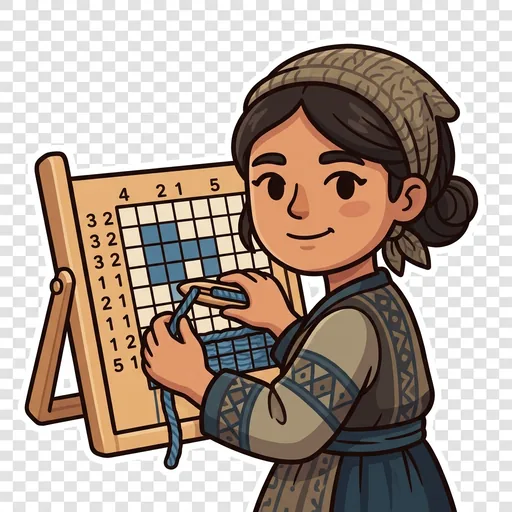
Pica
Nonogram/Picross — run-length deduction: reads the edge numbers and fills the overlap that must be filled
-
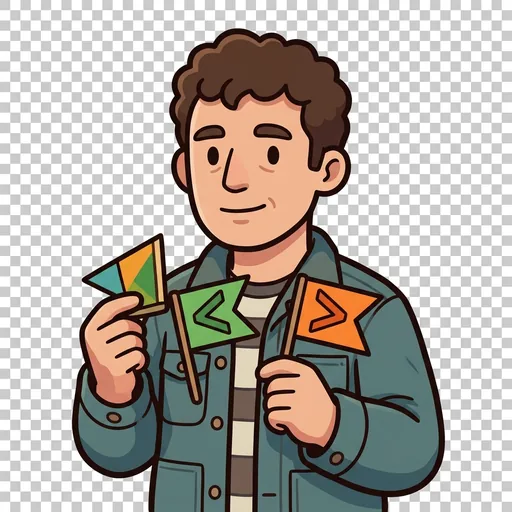
Chevron
Futoshiki — inequality/ordering: obeys the < / > flags between neighbours to force the numbers into order
-
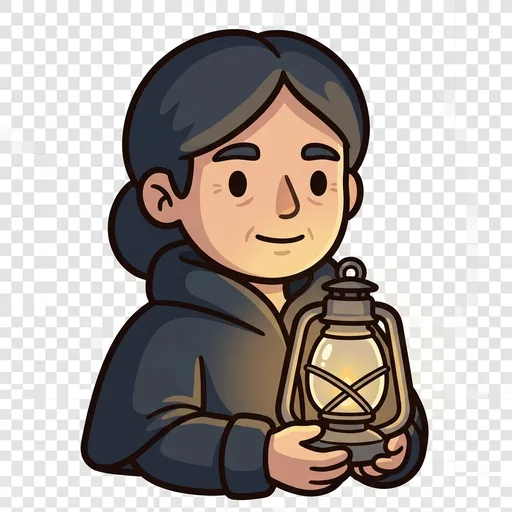
Umbra
Hitori — elimination + connectivity: shades out duplicates so none touch and the rest stays whole
-

Serra
Skyscrapers — visibility count: places towers so each edge clue counts how many can be seen, taller hiding shorter
-

Lasso
Slitherlink — single-loop edge deduction: draws one closed loop so each number uses exactly that many edges
-
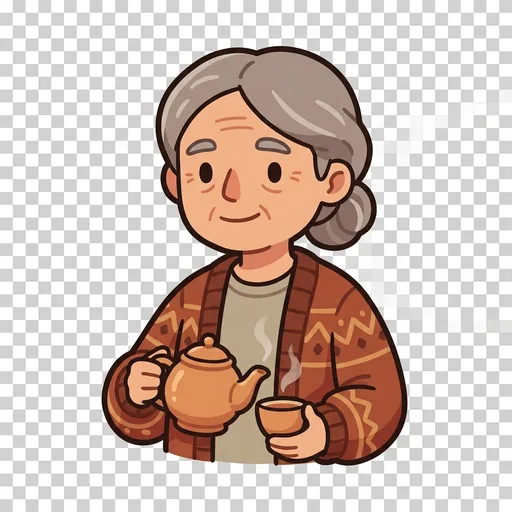
Ada
Mentor host — keeps the puzzle guild; teaches 'every grid hides one rule — find the forced cell, never guess'