Cage
the cage constraint — the numbers in a fenced region hit a target under one operation
Press play to listen along. The line being read lights up as you go.
Show full transcript
Loading transcript…
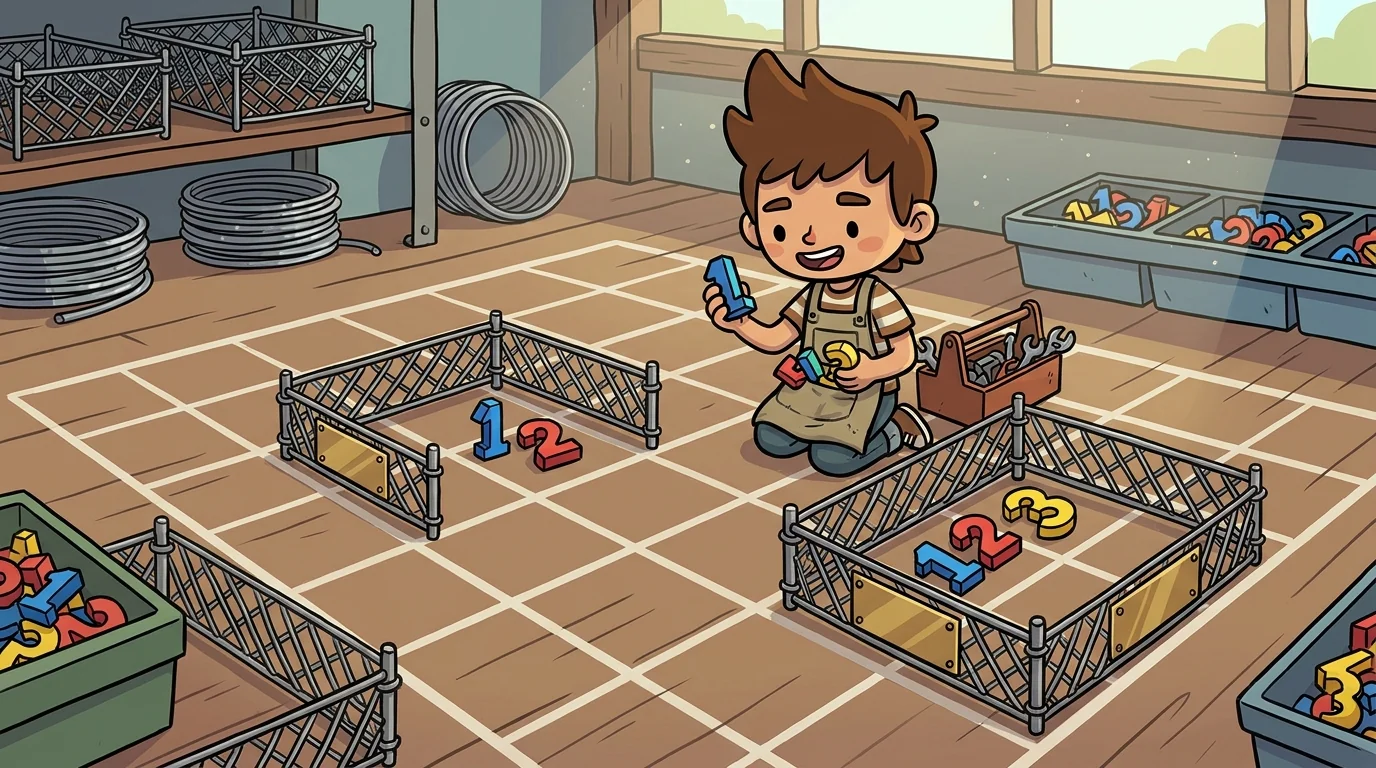
Cage built fences. Small ones — little wire pens dropped over clusters of grid squares, each pen with a brass plaque bolted to the corner. The plaque said something like *6× or 11+ or 2÷*. That was the whole game: whatever numbers lived inside the fence had to hit the target on the plaque, using the operation stamped beside it.
"So a pen marked six-times," Maya said, "means the numbers inside multiply to six?"
"Multiply to six," Cage said, tightening a corner bolt. "And they still have to obey the no-repeats rule of the whole grid. Two rules at once. That's what makes it fun." He grinned like a person who found double-checking genuinely fun, which he did.
A two-square pen marked *3+ could be a one and a two — nothing else adds to three without repeating. Cage set it in place. A three-square pen marked 6×*? One, one, six — no, that repeats. Two, three, one. That works. He turned the little numbers over in his hands like a locksmith trying a ring of keys.
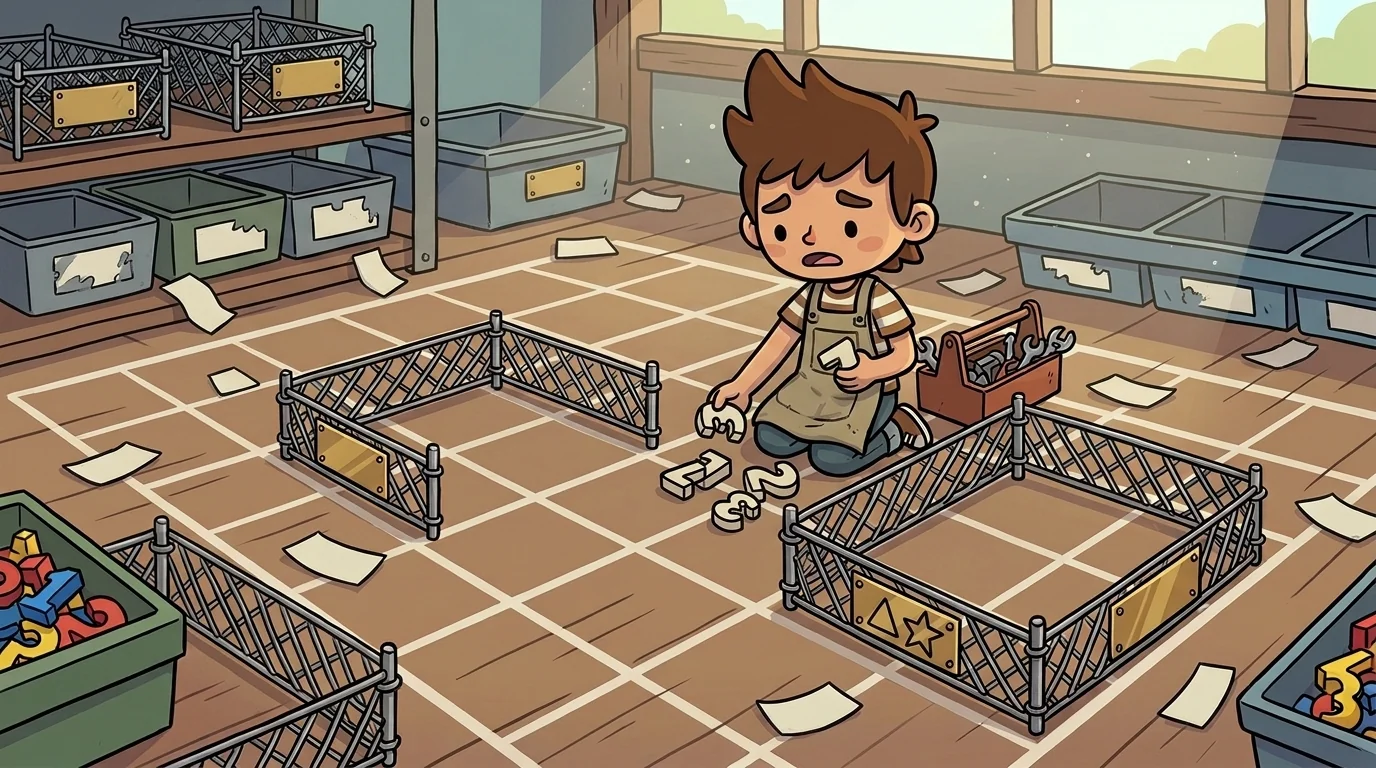
Cage learned fences the hard way, from a workshop that flooded. He'd been an apprentice keeping the guild's supply grid — rows of bins, each holding a count of something. A storm knocked half the labels off. All he had left were the totals: this shelf holds twelve, in three bins, none the same; that shelf holds eight, in two bins, one of them double the other.
He couldn't see inside the bins. But the totals boxed the answers in. Twelve in three different bins meant only a few combinations, and only one of them fit the space he had. He rebuilt the whole storeroom from targets and operations alone, without ever lifting a lid.
"You didn't guess the labels," the quartermaster said.
"I didn't have to," Cage said. "The totals told me. A target plus an operation is almost a label already. You just have to listen to it."
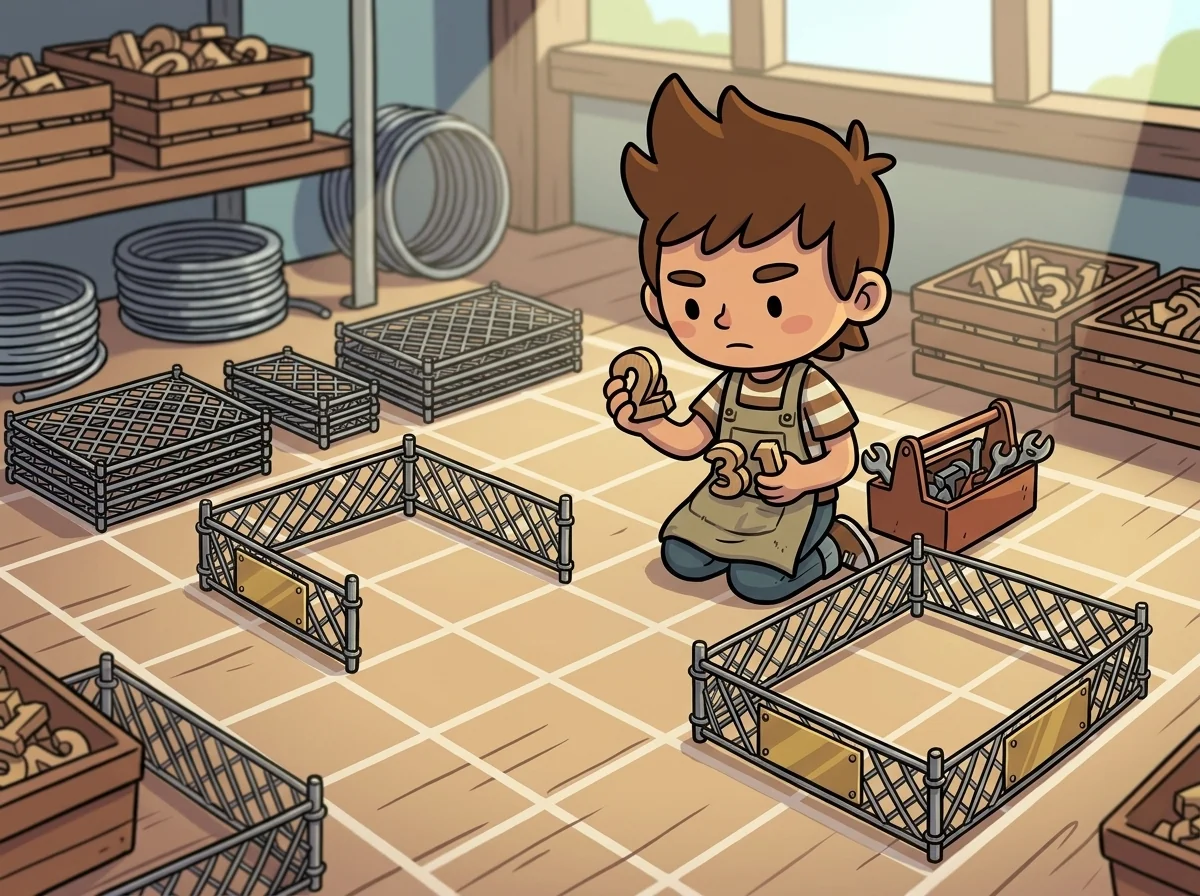
Ada brought him into the Guild for exactly that ear. "Everyone can fill a cage that has one answer," she told him. "I want the person who finds the cage that has only one answer, and starts there."
Cage's habit is to hunt for the tightest fence first — the pen where the target and the operation and the pen's size leave the fewest possibilities. A single-square pen marked *7 is a gift: it's just seven, done. A two-square 1÷ means the two numbers divide to one, so they're equal — except the grid forbids repeats in a line, so their positions matter. He reads the fence, the plaque, and the grid's own no-repeats rule together*, and where all three agree, there's usually just one arrangement standing.
"You're using two rulebooks at once," an artisan complained.
"Three, if you count the grid," Cage said cheerfully. "More rules, fewer answers. That's the trade. I'll take it every time."
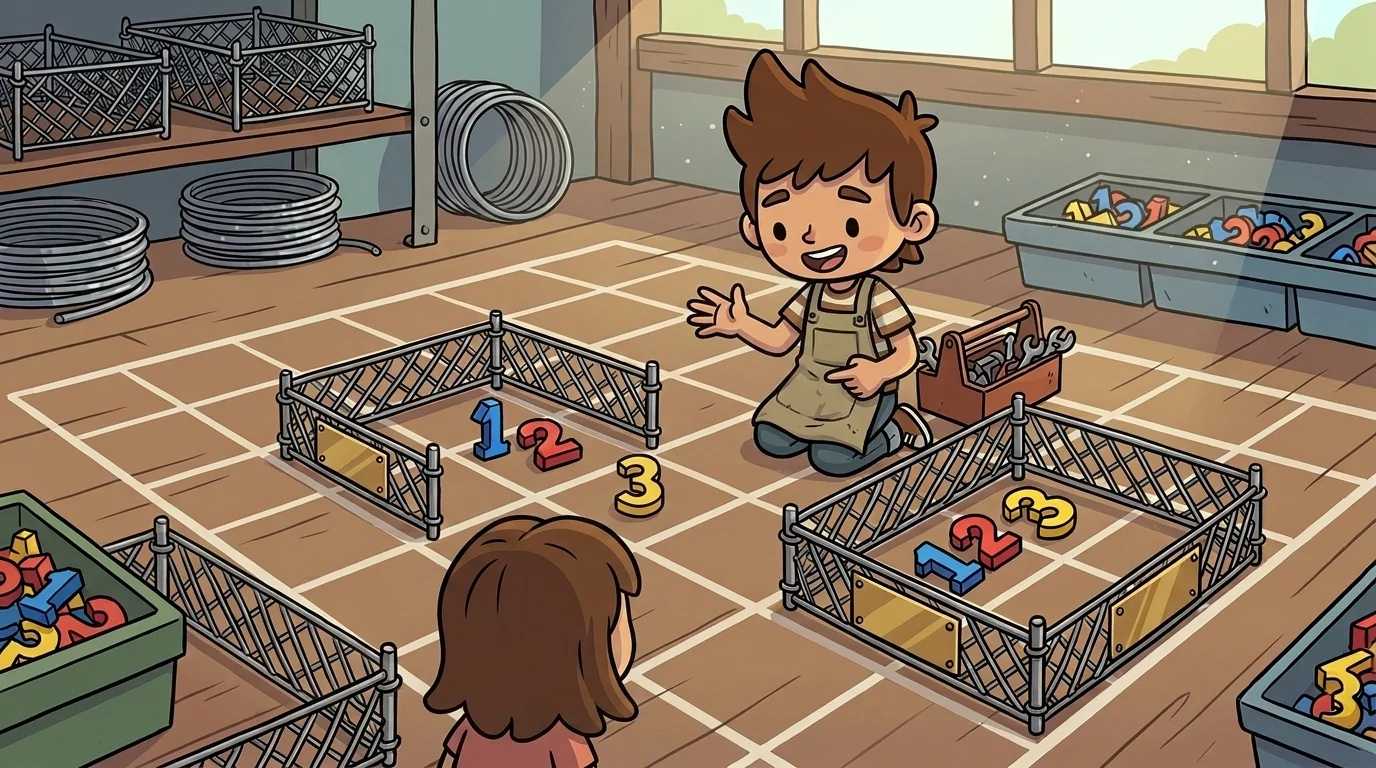
A girl got stuck last week on a three-square pen marked *12×*. "It could be lots of things," she said. "Two, six, one. Three, four, one. Two, two, three—"
"Two, two, three repeats a two," Cage said. "Does this pen bend through the same row?"
She looked. "Yeah. Two of the squares are in the same row."
"Then those two can't match. Which of your combinations survives that?"
She went quiet, then lit up. "Only three, four, one has no two-in-the-same-row problem the way it's shaped. And— oh. Oh, only one way to lay them out." Two facts she already trusted — the target on the plaque and the no-repeats of the row — had walked toward each other and shaken hands on a single answer.
"That's it," Cage said. "You didn't pick it. The two rules picked it for you."
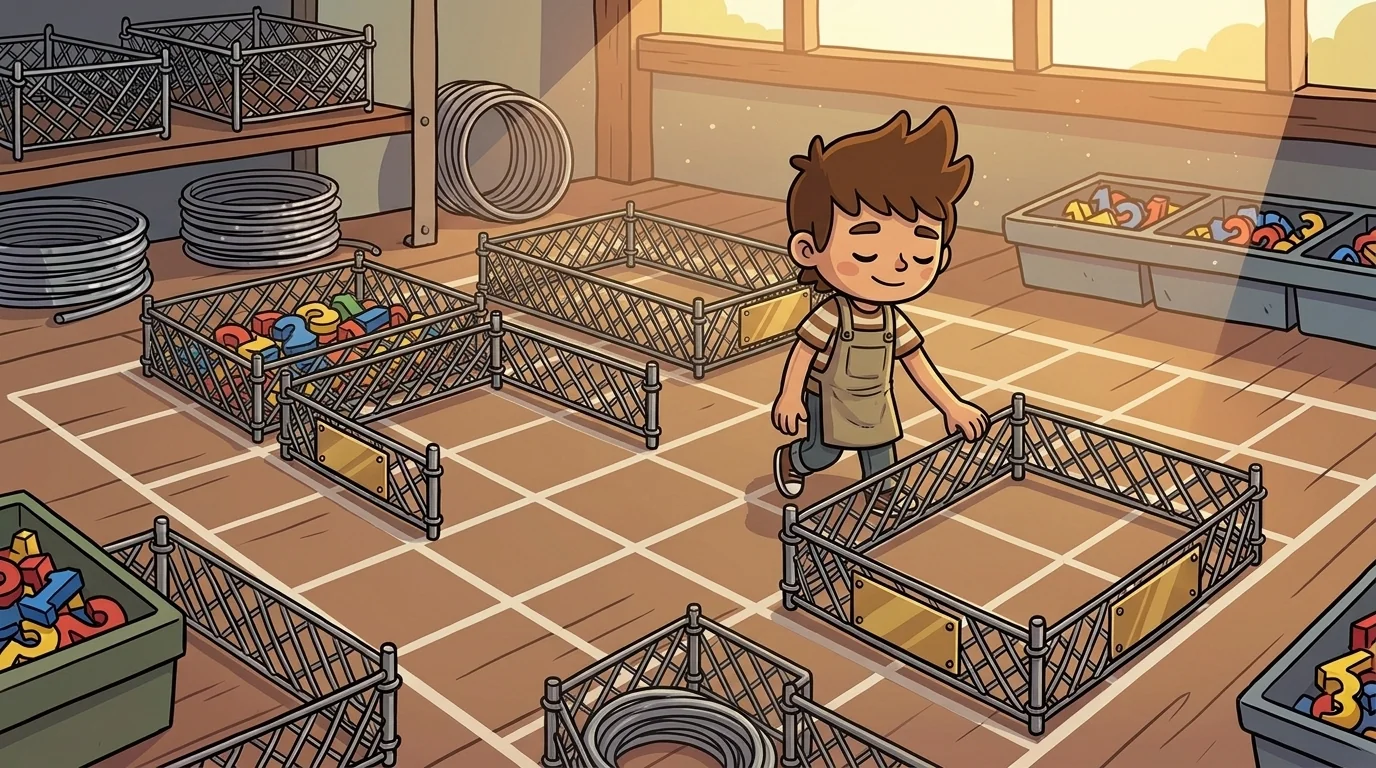
At day's end Cage walks his fences like a farmer at dusk, checking that every pen still adds, still multiplies, still divides to exactly what its plaque promised. Twelve is twelve. Six is six. Nothing inside repeats where it shouldn't.
There's a satisfaction in it he never gets tired of — the moment two separate rules, each true on its own, agree on one and only one arrangement. It feels the way it feels when a door and a key finally turn together: a small, solid click somewhere behind his ribs. He rests a hand on the nearest fence, feels that click settle, and moves to the next one. "Add it up," he says to himself, "and let the total tell you what's inside."
The LatticeForge ensemble
Cage is part of LatticeForge's distributed-narrative cast. Each character embodies a different curricular primitive; together they teach the full subject.
-

Onlie
Sudoku — Latin-square uniqueness: sets her lantern on the only place a number can go in its row, column, and box
-
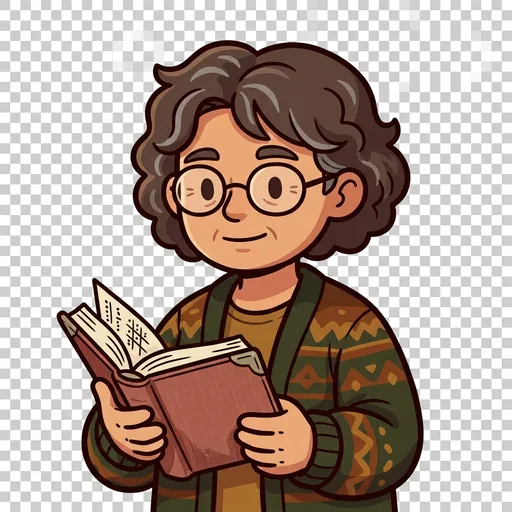
Kaku
Kakuro — cross-sum: fills a run so it sums to its clue with no digit repeated; the total names its parts
-
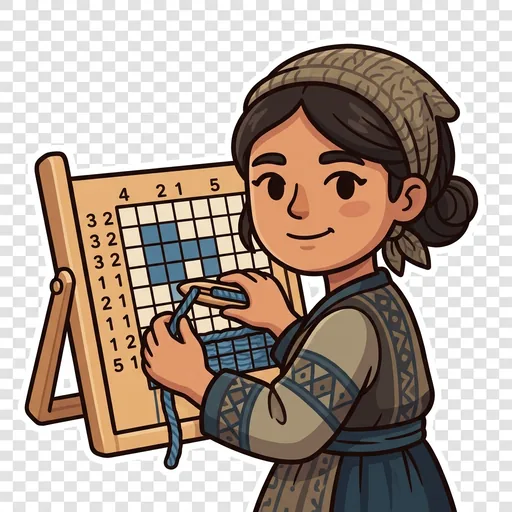
Pica
Nonogram/Picross — run-length deduction: reads the edge numbers and fills the overlap that must be filled
-
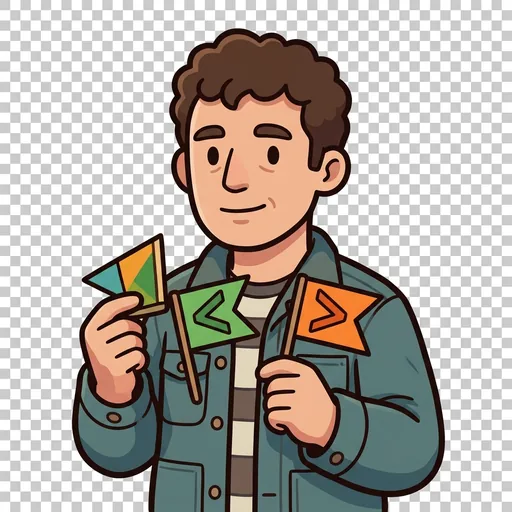
Chevron
Futoshiki — inequality/ordering: obeys the < / > flags between neighbours to force the numbers into order
-
Umbra
Hitori — elimination + connectivity: shades out duplicates so none touch and the rest stays whole
-

Serra
Skyscrapers — visibility count: places towers so each edge clue counts how many can be seen, taller hiding shorter
-
Lasso
Slitherlink — single-loop edge deduction: draws one closed loop so each number uses exactly that many edges
-

Vega
Star Battle — partition + non-adjacency: places the stars so each row, column, and region holds its quota and none touch
-

Ada
Mentor host — keeps the puzzle guild; teaches 'every grid hides one rule — find the forced cell, never guess'