Ada
the meta-skill — every grid hides one rule; look for the forced cell, never guess
Press play to listen along. The line being read lights up as you go.
Show full transcript
Loading transcript…
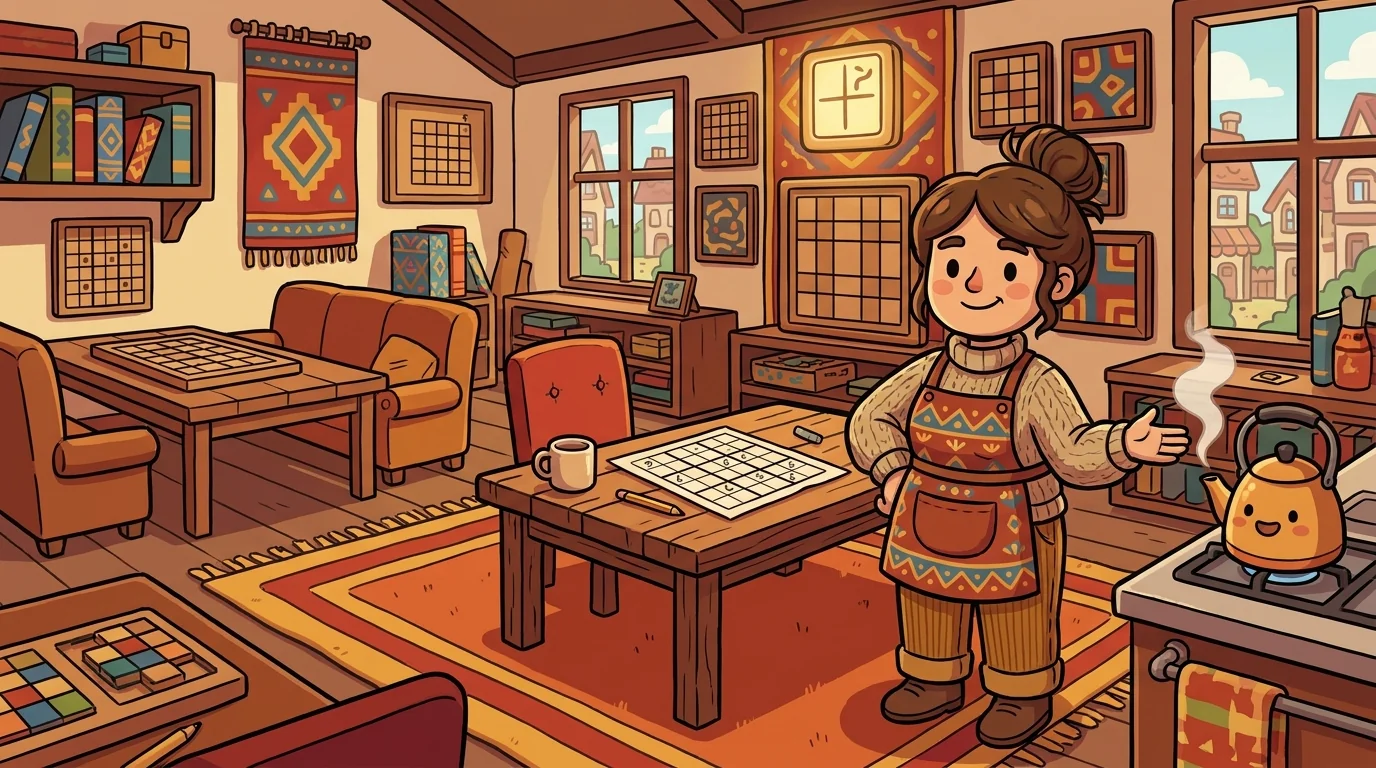
Ada kept the Lattice Guild. She didn't specialize in any one puzzle — she'd tell you, cheerfully, that the artisans each did their thing better than she ever could. What Ada did was keep the door open, put the kettle on, and sit down beside whoever had come in looking defeated by a grid.
"I'm no good at these," Maya said the first day, shoving a half-erased Sudoku across the table. "Everyone else just sees it."
"Nobody just sees it," Ada said. She didn't take the pencil. "They look for the one square that's forced, and they start there. You've been staring at the crowded corner, haven't you? The messy part?"
Maya nodded.
"That's the trap. The crowded part is where the guessing lives. Find me the emptiest, most hemmed-in square instead — the one where almost everything is already forbidden. One rule. One forced cell. We only need one to begin." She slid the kettle off the heat. "Every grid hides exactly one rule that unlocks it. Your whole job is to find that rule, not to be a genius."
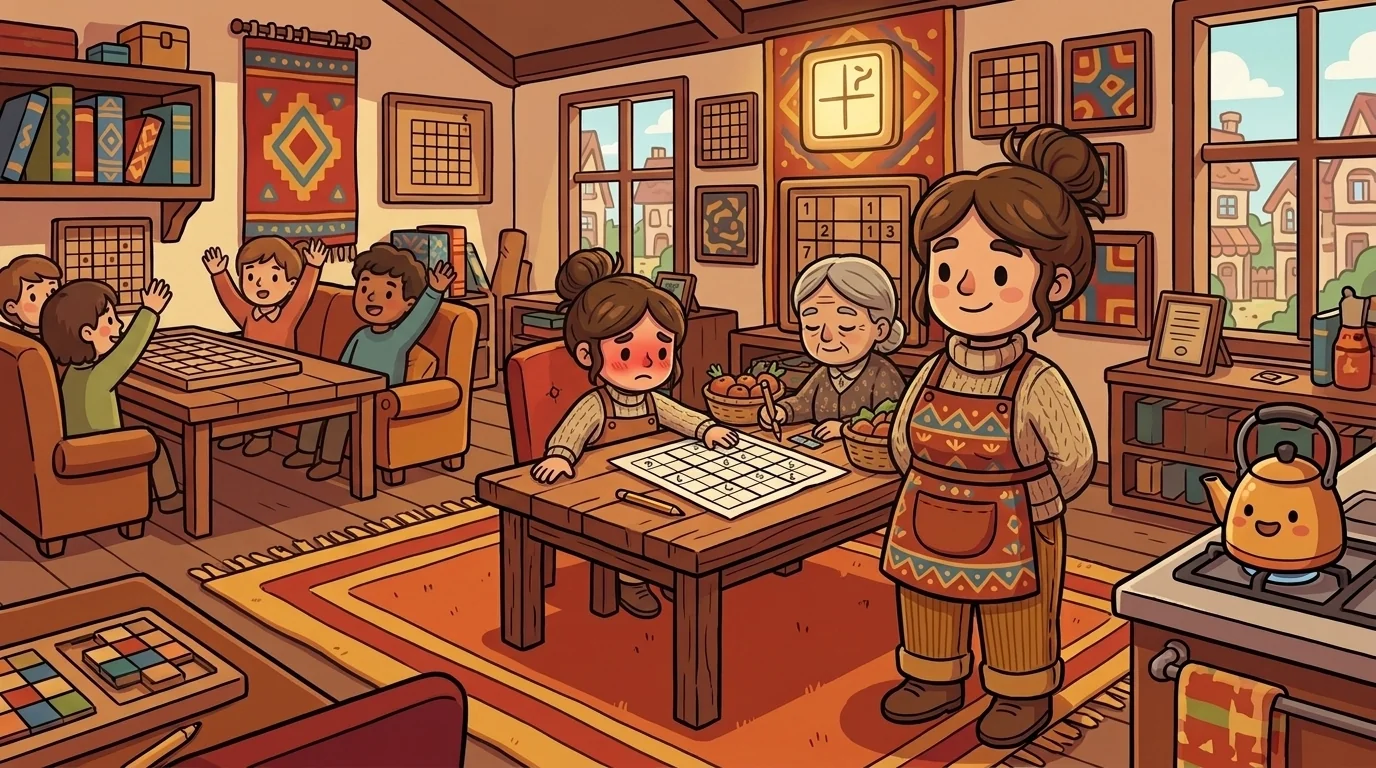
Ada had been the stuck kid once. She remembered it with uncomfortable clarity: a classroom, a puzzle on the board, every other hand up, hers flat on the desk, her face hot. A teacher had called it "not a math person." She'd believed it for years.
What un-taught her wasn't a burst of talent. It was an old woman at a market stall doing logic grids for fun, who let Ada watch. The woman never guessed. She'd tap a cell and murmur why it couldn't be most things, and then say, almost bored, "so it's this." No magic. No speed. Just a patient habit of asking what's forbidden here? until one answer was left standing.
"You're not fast," young Ada had said, half-accusing.
"Fast is for people showing off," the woman said. "I'm sure. Sure beats fast every time." Ada built her whole guild on that sentence.
So the Guild runs on Ada's one frame, and each artisan is a way of living it. When someone's stuck, Ada doesn't solve it — she asks the question that finds the forced cell, then hands them to whoever fits. "You've got a row that's nearly full? That's Onlie's whole art — go watch her narrow it." "You know the total but not the parts? Kaku will show you how a sum names its own pieces." "You only know which is bigger, not the numbers? Chevron never needs the numbers first." "You keep guessing where a star goes? Vega will teach you to forbid instead."
She's careful with the word guess. Not forbidden — but flagged. "A guess is fine when you've truly run out of forced moves," she says, "and that's rarer than you'd think. Almost always there's a certain move you haven't found yet. Slow down. Ask what's forbidden. The forced cell is hiding in plain sight."
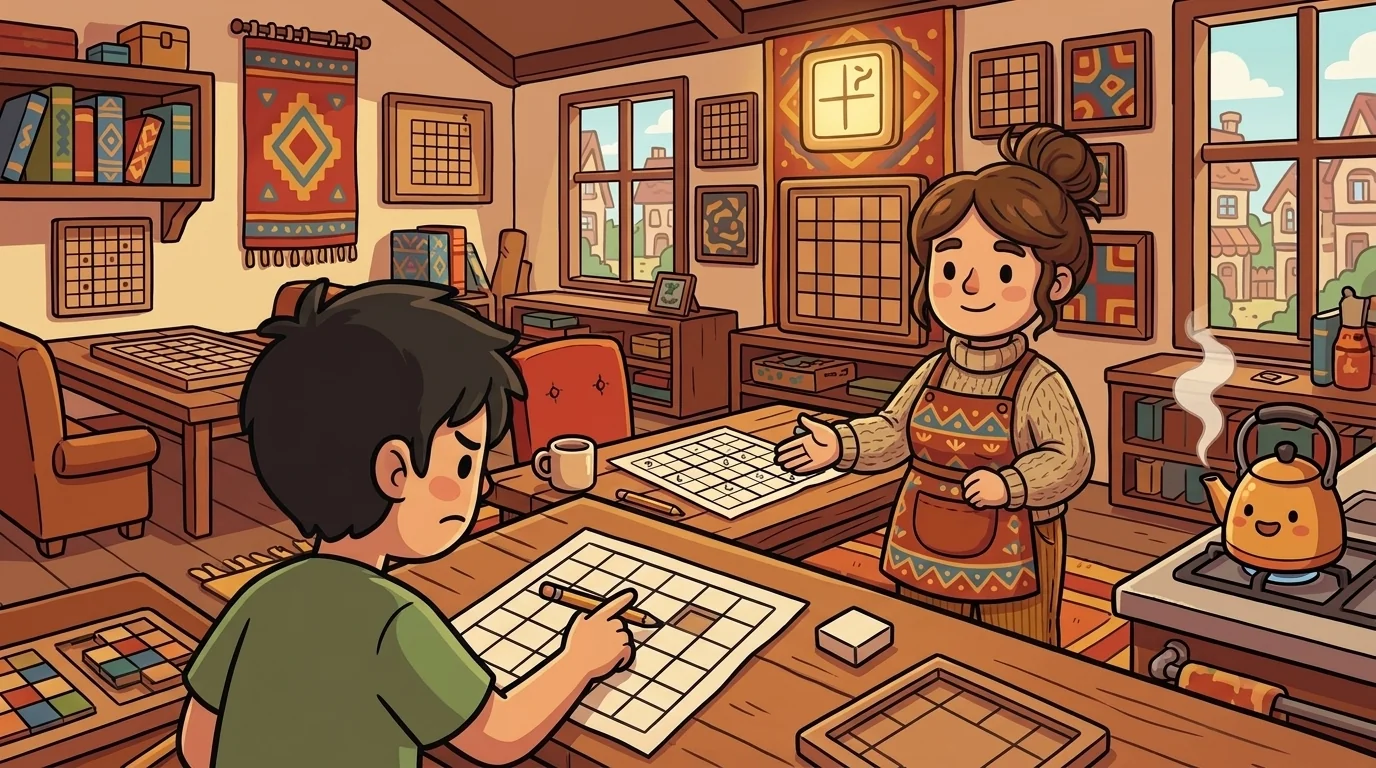
A boy threw down his pencil. "I've been stuck for ten minutes. I hate this."
Ada didn't rush to reassure him. "Ten minutes stuck is normal," she said. "It doesn't mean you're not a puzzle person. It means the grid hasn't shown you its rule yet. Where are you sure? Not where you're guessing — where are you actually certain of even one cell?"
He glared, then softened, then pointed at a corner. "…That one has to be a four. Everything else is already in its box."
"There it is," Ada said quietly. "You were sure the whole time. You just kept looking at the part that scared you instead of the part you knew." He placed the four. It forced the next. His shoulders, which had been up around his ears, came down an inch. He didn't say anything, but Ada saw it — the exact moment the puzzle stopped being an enemy.
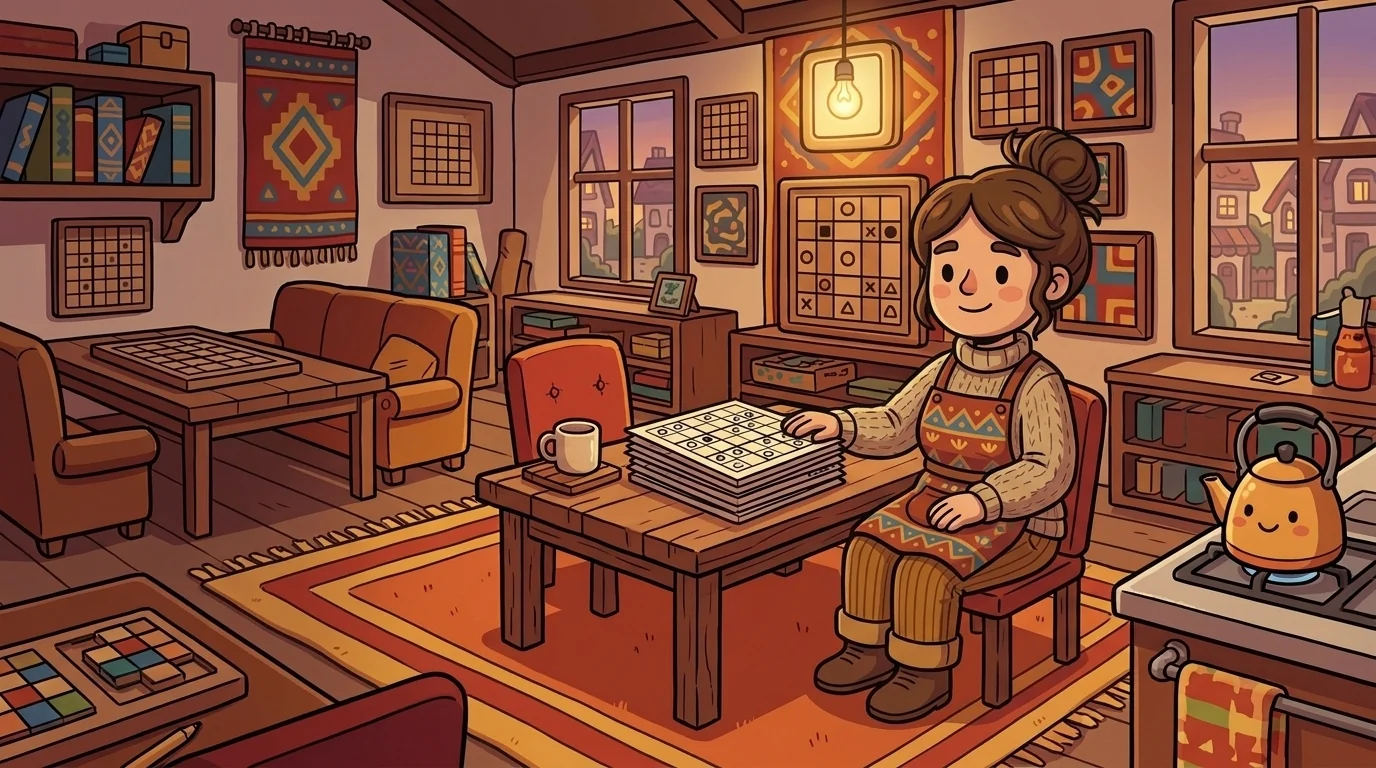
At the end of a long day the Guild empties out and Ada sits alone with the cold kettle and a stack of finished grids left by artisans and stuck kids alike. She doesn't check them for cleverness. She checks them for certainty — that every cell was earned by a reason, not a lucky stab.
There's a warmth she never gets used to, watching a kid walk out standing a little straighter than they walked in — not because they got faster, but because they found out they were allowed to be sure. That old market-stall feeling, passed down one more time. "You're not a genius and you don't have to be," she says to the quiet room, to every kid who ever sat where she sat with a flat hand and a hot face. "You just have to find the one thing you're sure of, and start there." And the certainty of that — the plain, un-showy certainty that anyone can learn to be sure — settles over her like the last warm cup of the day.
The LatticeForge ensemble
Ada is part of LatticeForge's distributed-narrative cast. Each character embodies a different curricular primitive; together they teach the full subject.
-
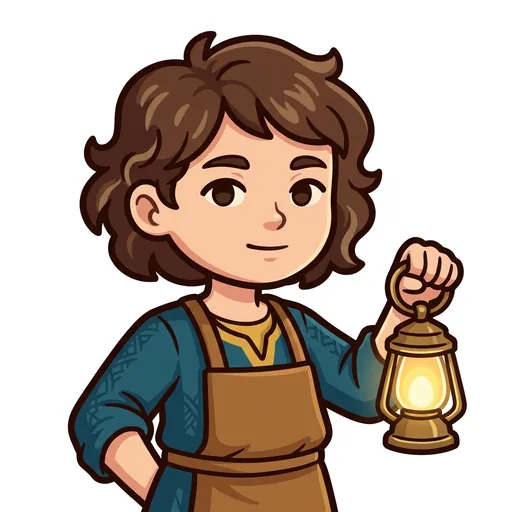
Onlie
Sudoku — Latin-square uniqueness: sets her lantern on the only place a number can go in its row, column, and box
-
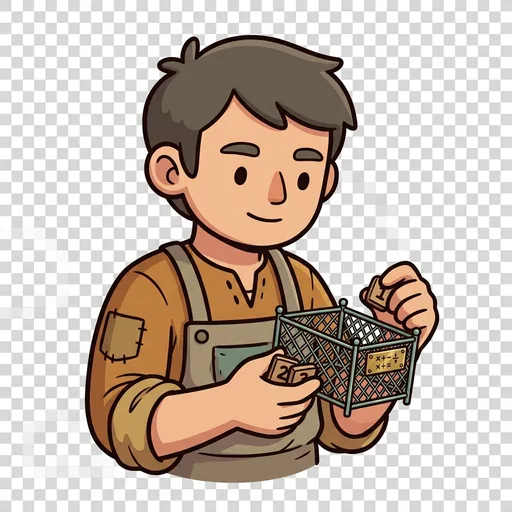
Cage
KenKen — arithmetic-cage: fills a fenced region so its numbers hit the plaque's target under its operation
-
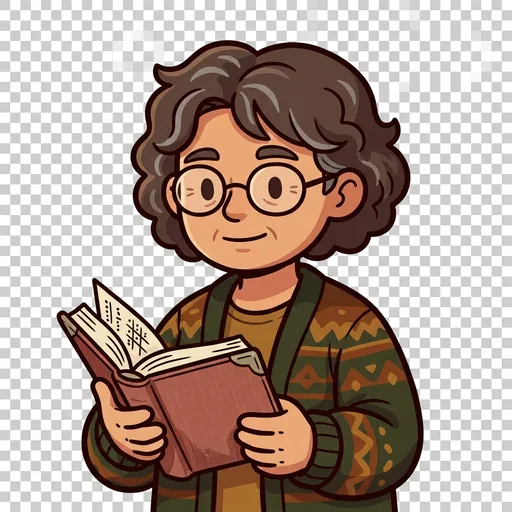
Kaku
Kakuro — cross-sum: fills a run so it sums to its clue with no digit repeated; the total names its parts
-
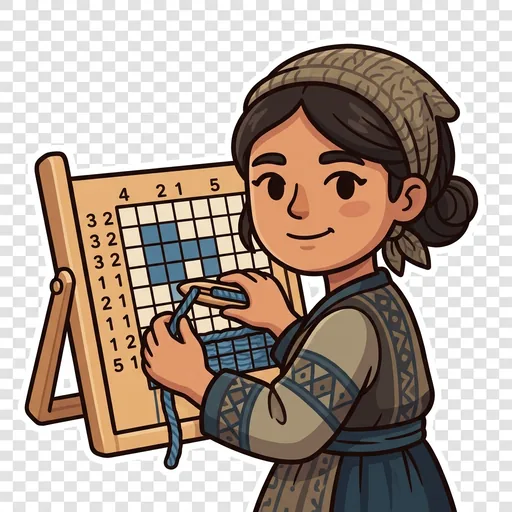
Pica
Nonogram/Picross — run-length deduction: reads the edge numbers and fills the overlap that must be filled
-
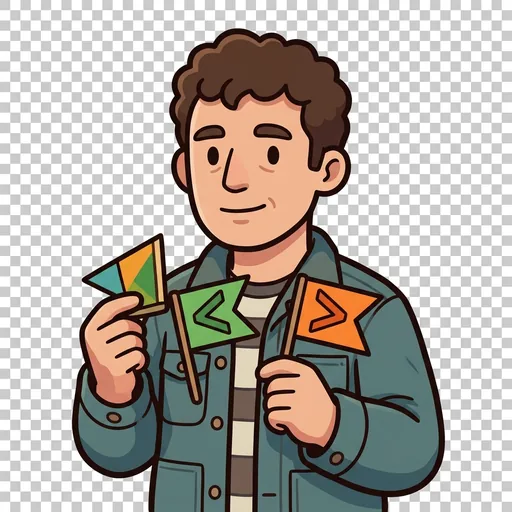
Chevron
Futoshiki — inequality/ordering: obeys the < / > flags between neighbours to force the numbers into order
-
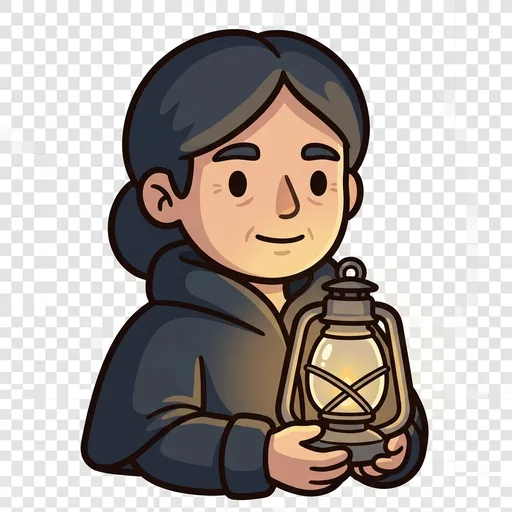
Umbra
Hitori — elimination + connectivity: shades out duplicates so none touch and the rest stays whole
-
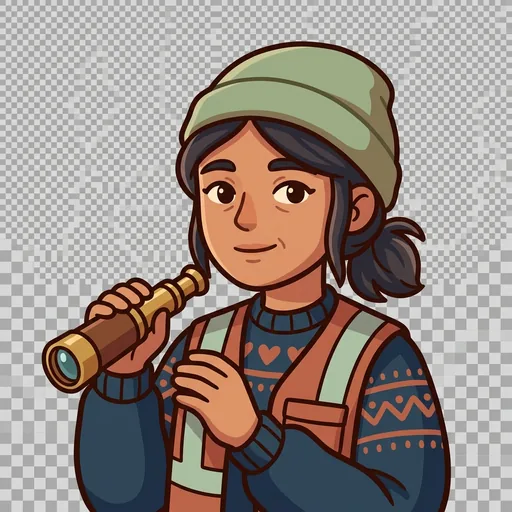
Serra
Skyscrapers — visibility count: places towers so each edge clue counts how many can be seen, taller hiding shorter
-
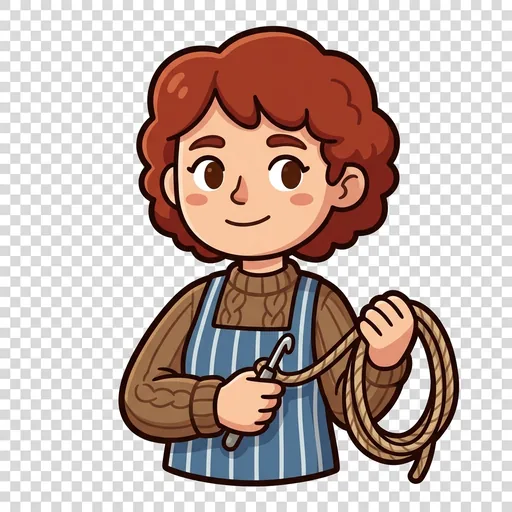
Lasso
Slitherlink — single-loop edge deduction: draws one closed loop so each number uses exactly that many edges
-
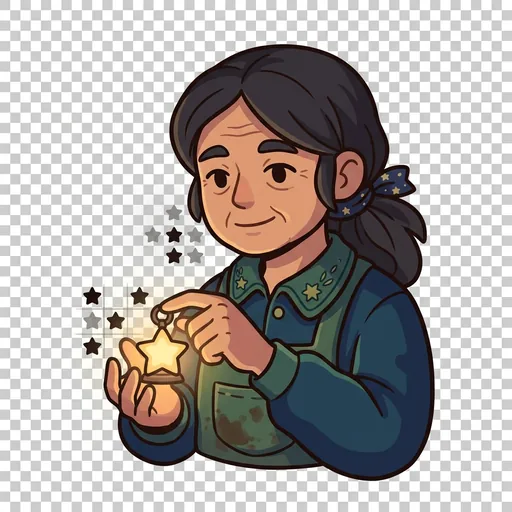
Vega
Star Battle — partition + non-adjacency: places the stars so each row, column, and region holds its quota and none touch