Serra
visibility — an edge clue counts how many towers can be seen; taller towers hide shorter ones behind them
Press play to listen along. The line being read lights up as you go.
Show full transcript
Loading transcript…
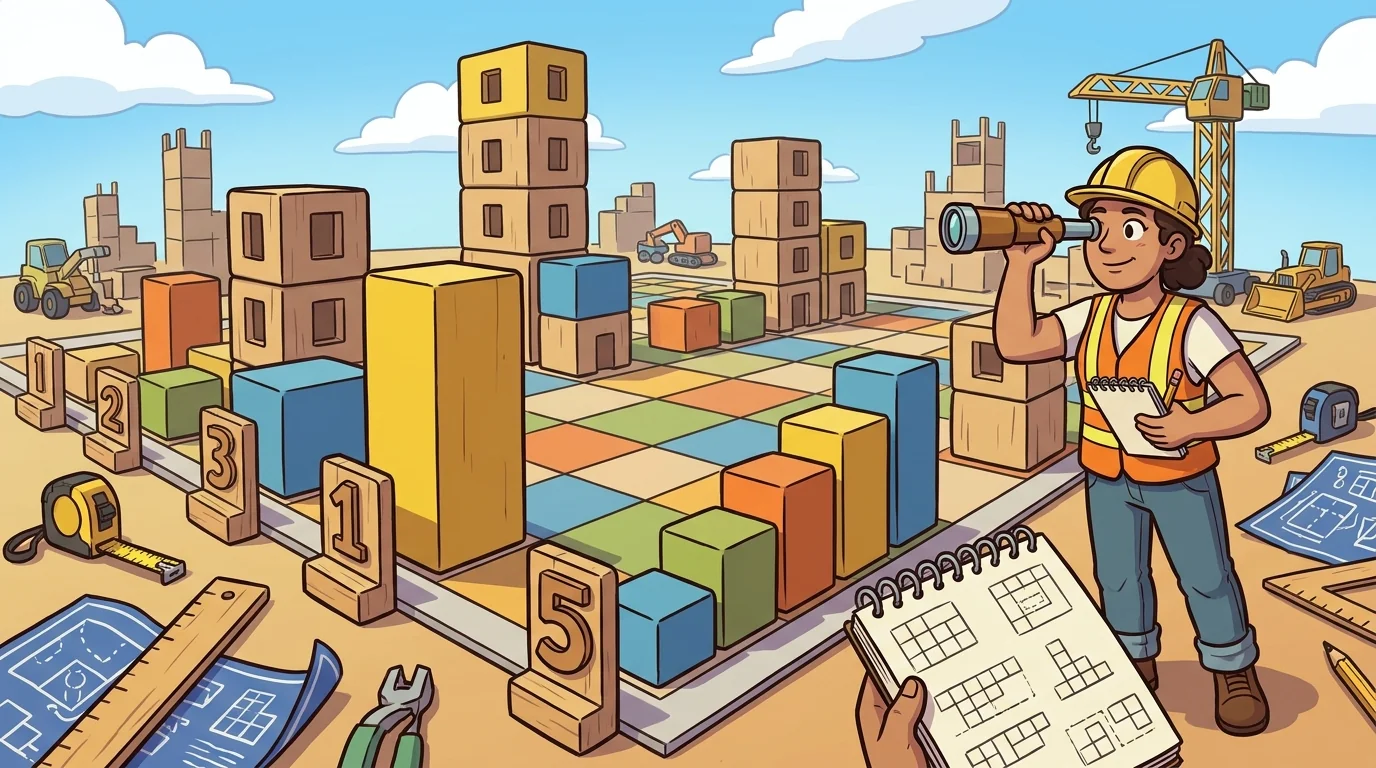
Serra was a surveyor of skylines that didn't exist yet. Her grids were city blocks, and each cell would hold a tower — heights one through five, say, no two the same in any street (row) or avenue (column). But the clues sat outside the grid, at the ends of the streets, and each clue was a single number: *how many towers you'd see, standing at that edge and looking down the line.* A tall tower hides every shorter tower behind it. So the clue counted only the ones tall enough to peek over everything in front.
"How is a number outside the grid a clue about what's inside?" Maya asked.
Serra raised her spyglass toward an empty street with a *1 at its edge. "A one means: standing here, I see exactly one tower. Which means the very first tower is so tall nothing behind it shows. In a five-city, the first cell is a five." She wrote it without hesitation. "The biggest clue and the smallest clue are the loudest. A one puts the tallest tower right at the edge. A five means I see all* of them, so they climb one-two-three-four-five, shortest to tallest, in order."
Serra came from a family of real surveyors, the kind who read a valley from one ridge. Her grandmother could stand at the mouth of a canyon and say how many peaks lay beyond, just from which ones blocked which. "You don't have to walk the canyon," her grandmother said. "The tallest thing you can see tells you what's hidden. Count the visible, and you know a great deal about the invisible."
Young Serra didn't believe it until the day they got lost and her grandmother found the way out by counting ridgelines — "three visible from here, so the pass is the fourth, hidden behind the big one." She was right. From then on Serra trusted the edge-count more than she trusted walking in for a look.
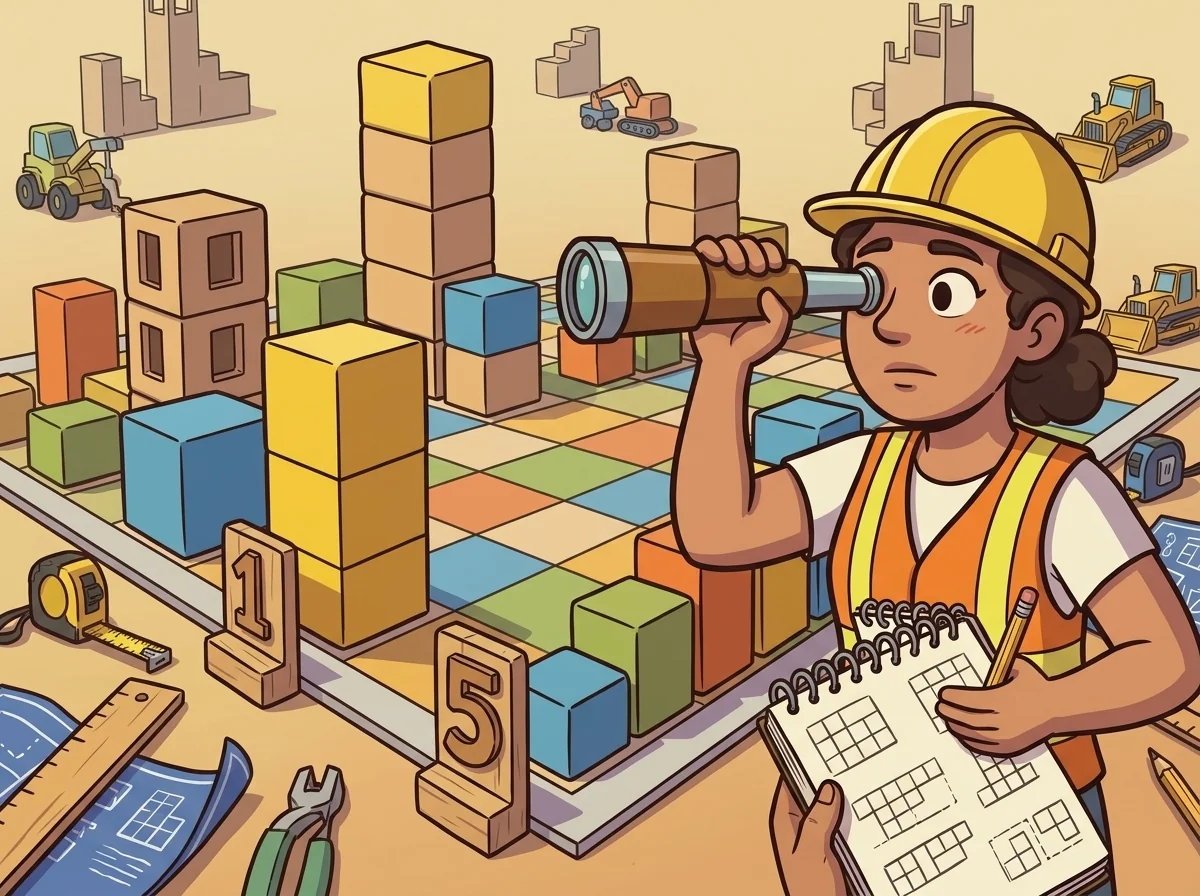
Ada recruited her the moment she saw Serra solve a Skyscrapers grid starting from the clues alone. "You placed the tallest tower before anything else," Ada said.
"The extreme clues place themselves," Serra said. "A one is a five at the edge. A five is a full staircase. After that, I count what a clue forbids. A clue of two means the tallest tower is not first — if it were, I'd see only one. So the edge cell can't be the maximum. Cross it off. Same move as Onlie's, only my forbidden-list comes from sightlines."
Her craft is sightline-counting. She imagines standing at each edge and tallying visible towers as heights rise. Every time a taller tower appears, the count ticks up; shorter towers tucked behind add nothing. She matches that tally to the clue, and arrangements that over-count or under-count get struck out until one survives.
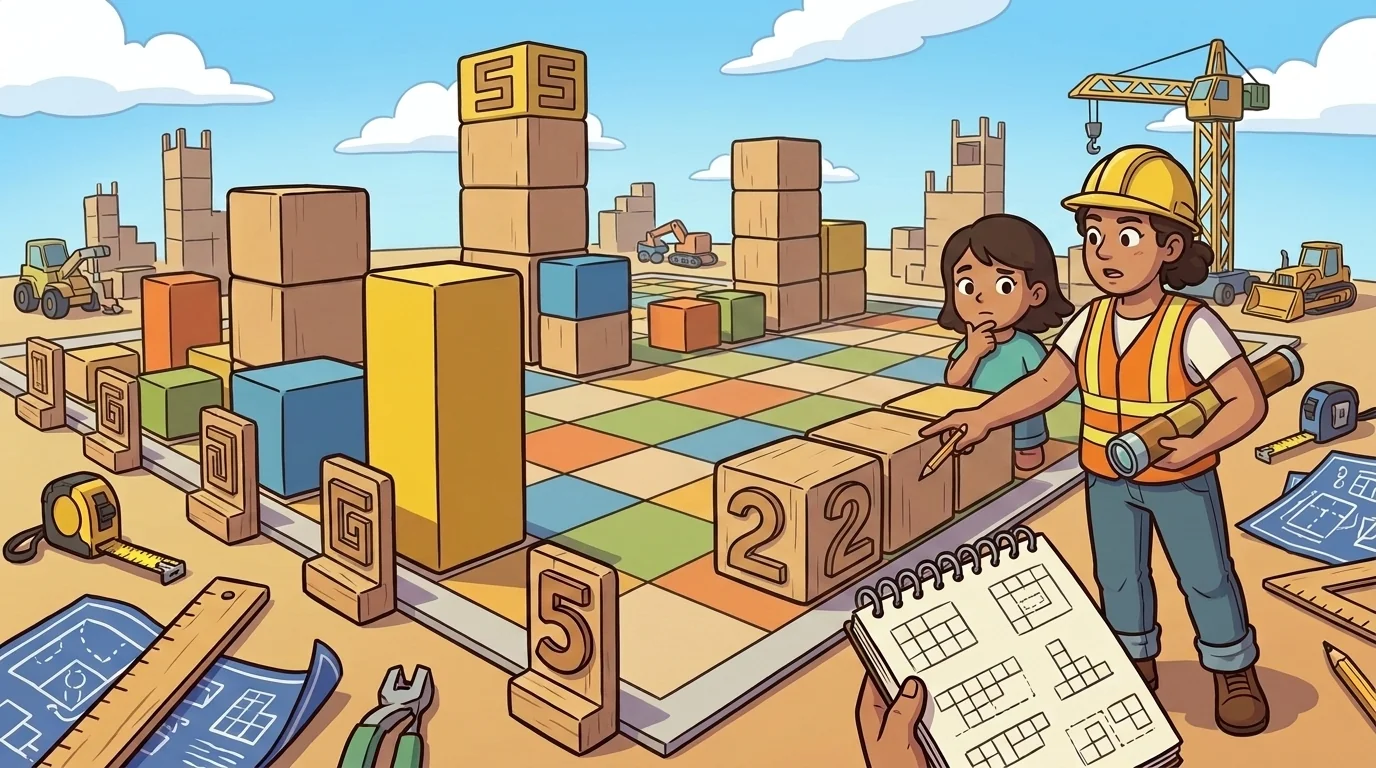
A girl had a street clued *2* and no idea where to start.
"Two visible," Serra said. "So somewhere down this street the tallest tower stands, and in front of it, exactly one tower taller than everything before it. Can the five be at the edge?"
"No — then I'd see one, not two."
"Can the five be second, with a smaller tower first?"
"Yes! Then I see the first one, then the five pops up over it. That's two."
"So the five is at most... where?" Serra let her work it. The girl realized the five couldn't be first (count would be one) and had to sit where exactly one shorter tower stood ahead of it. The clue hadn't given her a tower — it had given her the shape of the whole street, and the towers slid into the only heights that made the count come out to two.
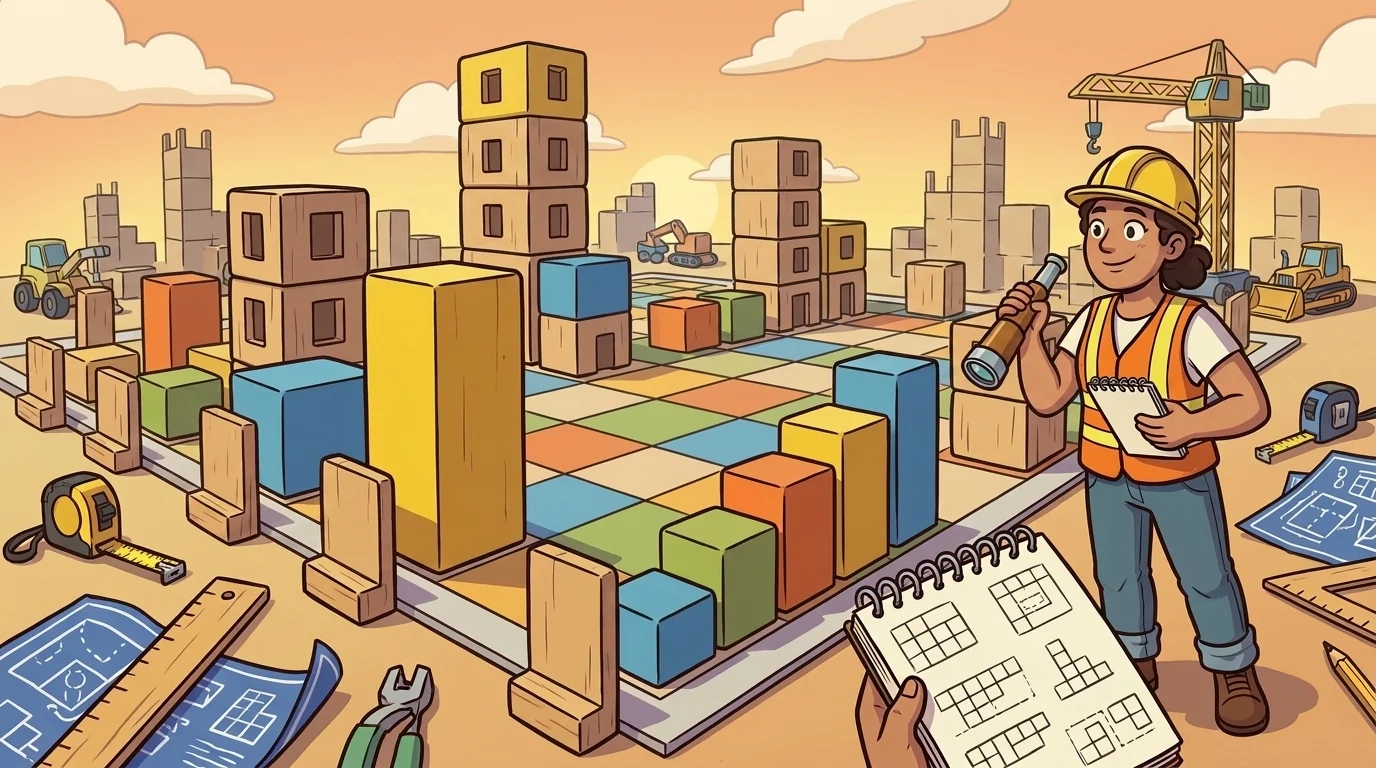
At day's end Serra stands at each edge in turn, spyglass up, and counts. One street shows one tower — the clue said one. Another shows all five climbing — the clue said five. Every count matches every clue; no height repeats in any street or avenue.
There's a clean, wide feeling that comes with the last matching count — the surveyor's clarity, like cresting a ridge and seeing the whole land laid out and knowing it, no walking required. Her eyes relax; the squint she gets from reading sightlines eases. "You don't have to walk the canyon," she says, lowering the spyglass, her grandmother's voice under her own. "The tallest thing you can see tells you what's hidden." And the skyline, counted true from every edge, stands.
The LatticeForge ensemble
Serra is part of LatticeForge's distributed-narrative cast. Each character embodies a different curricular primitive; together they teach the full subject.
-

Onlie
Sudoku — Latin-square uniqueness: sets her lantern on the only place a number can go in its row, column, and box
-
Cage
KenKen — arithmetic-cage: fills a fenced region so its numbers hit the plaque's target under its operation
-

Kaku
Kakuro — cross-sum: fills a run so it sums to its clue with no digit repeated; the total names its parts
-
Pica
Nonogram/Picross — run-length deduction: reads the edge numbers and fills the overlap that must be filled
-

Chevron
Futoshiki — inequality/ordering: obeys the < / > flags between neighbours to force the numbers into order
-

Umbra
Hitori — elimination + connectivity: shades out duplicates so none touch and the rest stays whole
-

Lasso
Slitherlink — single-loop edge deduction: draws one closed loop so each number uses exactly that many edges
-

Vega
Star Battle — partition + non-adjacency: places the stars so each row, column, and region holds its quota and none touch
-

Ada
Mentor host — keeps the puzzle guild; teaches 'every grid hides one rule — find the forced cell, never guess'