Onlie
uniqueness — each symbol appears exactly once in a row, column, and box
Press play to listen along. The line being read lights up as you go.
Show full transcript
Loading transcript…
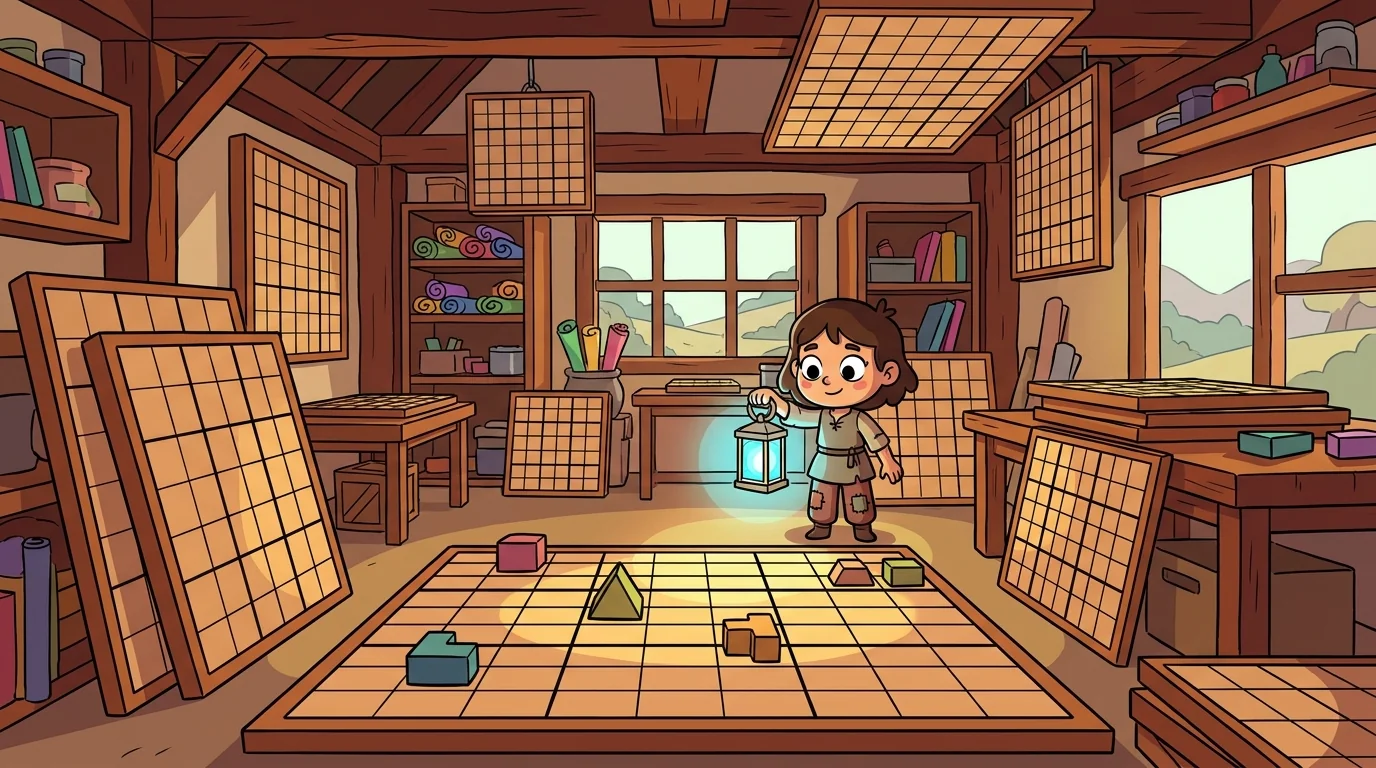
In the Lattice Guild — a workshop full of grids the way other workshops are full of tools — there was an artisan named Onlie. She was small and quick-eyed, and she carried a single lantern. Not a lamp for light, exactly. A lantern for marking. Wherever she set it down, she was saying: this, here, is the only place this belongs.
The first grid Maya ever watched her fill was a nine-by-nine, split into nine little boxes. Numbers one through nine, and one rule: in every row, every column, and every box, each number shows up exactly once. No repeats.
"It looks impossible," Maya said. There were only a few numbers to start.
"It looks crowded," Onlie said, "not impossible. Watch." She didn't guess. She looked for the square where only one number could go.
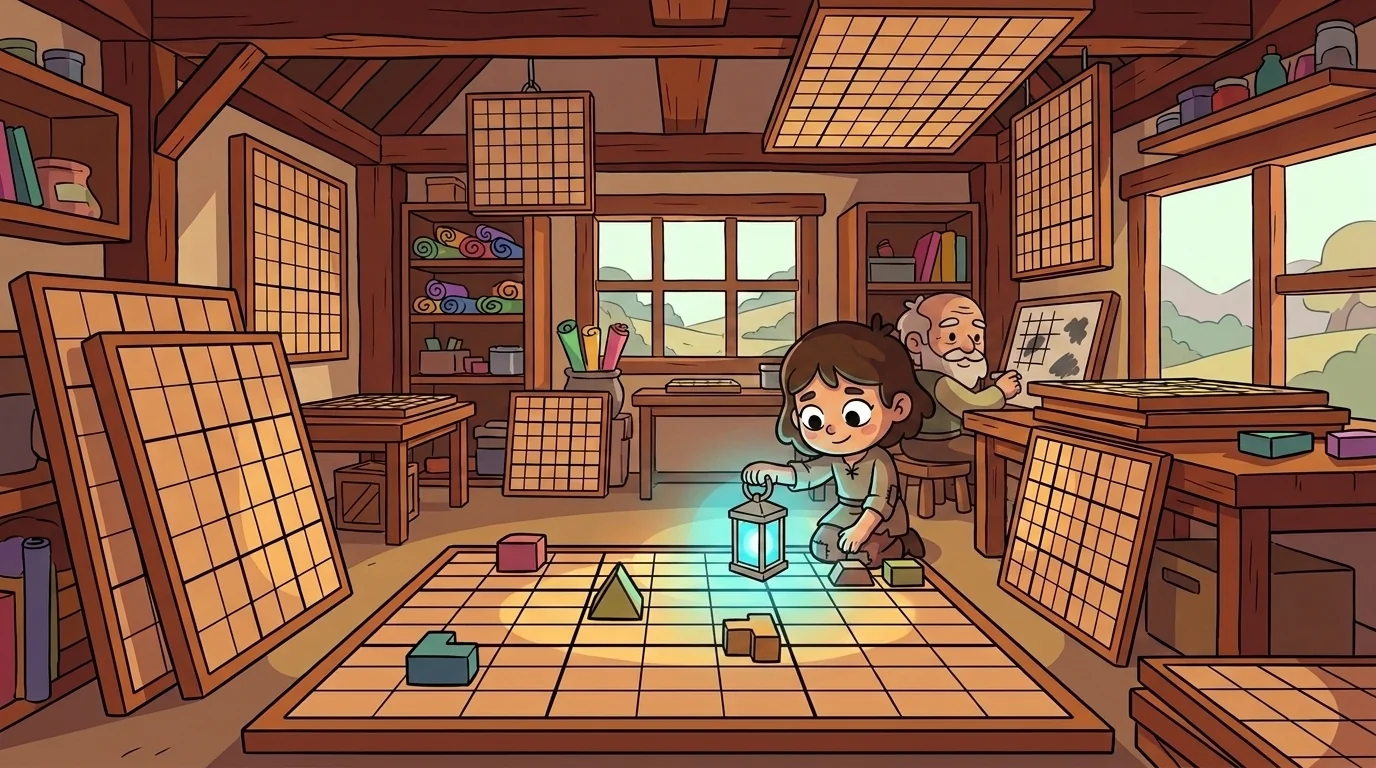
Onlie hadn't always trusted that. When she was younger, she'd fill grids by guessing — a two here, maybe, a five there, maybe — and then a whole corner would collapse into repeats and she'd have to erase it all. She hated erasing. It felt like the grid was laughing at her.
One evening an old guildmaster sat with her over a half-ruined puzzle. "You're guessing at the crowded squares," he said gently. "Guess at the empty ones instead. Find a square where every other number is already forbidden — already showing up in its row, its column, or its box. That square has only one number left. It isn't a guess. It's the only one."
Onlie tried it. She found a square hemmed in on three sides by other numbers. One through eight were all spoken for. Only nine was free. She set her lantern down on it, quietly certain. She didn't have to erase. Not once.
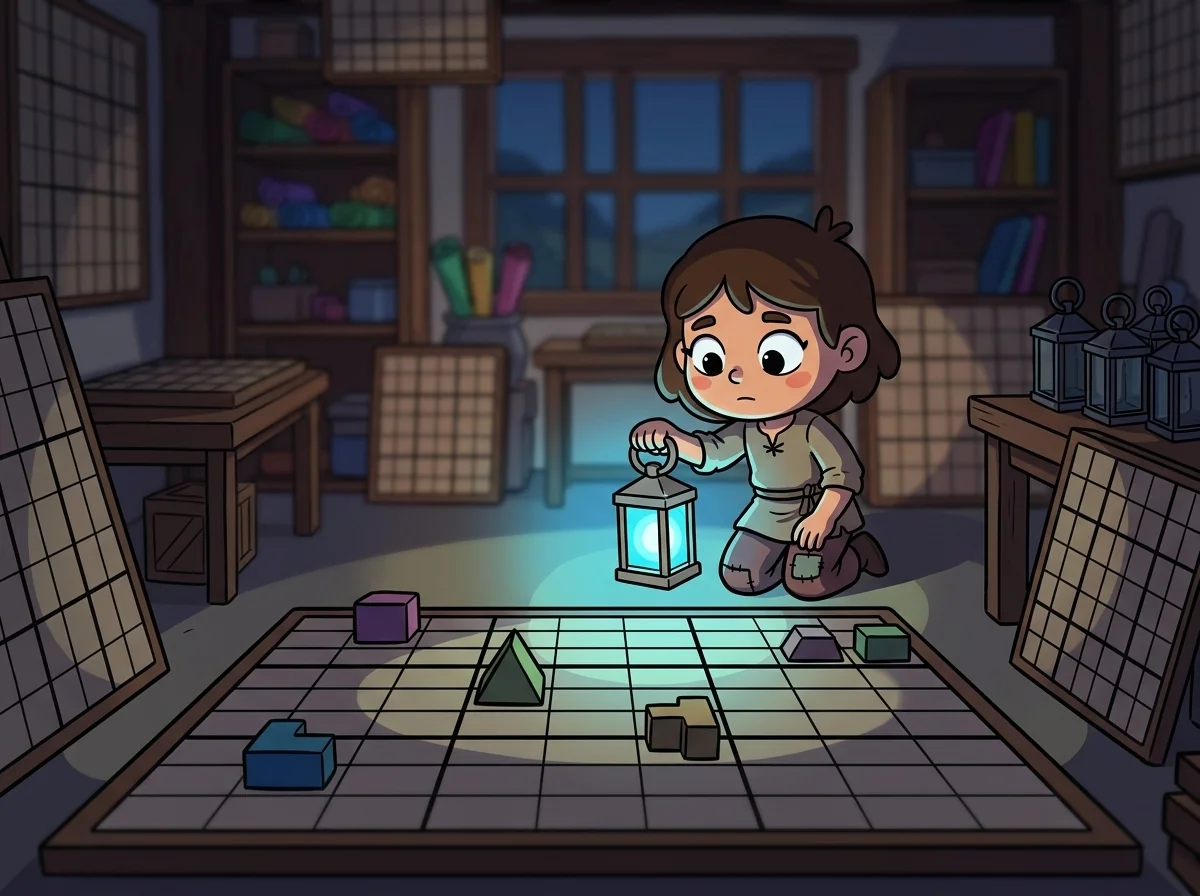
The day she was admitted to the Guild, Ada — the host who kept the workshop — handed her a grid that stumped three older artisans.
"They keep guessing," Ada said. "Show me what you do."
Onlie didn't rush. She walked the grid the way you walk a room in the dark, feeling for the wall you already know. She found a column missing only a three and a seven, and a row through it that already held a seven. "Then this square can't be seven," she murmured. "So it's three. And that one is the only place seven can still go." Lantern down. Lantern down.
"You're not filling it in," an older artisan said, half-annoyed. "You're just… narrowing it."
"That's the whole trick," Onlie said. "I never place a number. I remove every place it can't be, and one place is left."
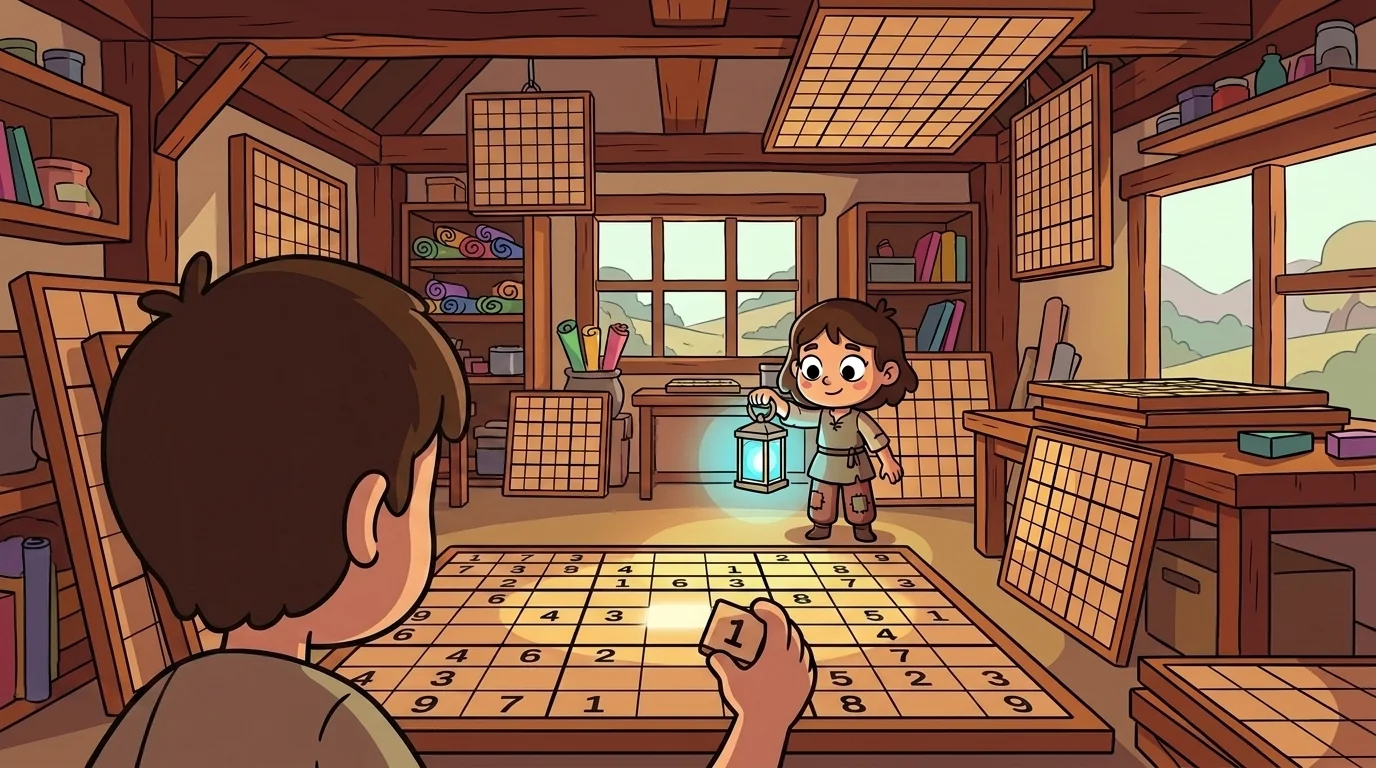
She teaches it now to anyone who'll stand still long enough. A boy came in last week, stuck, erasing furiously.
"Where do you want to put the four?" Onlie asked.
"I don't know! There are like five spots."
"Then don't put it anywhere yet. Find me a square that can only be one thing." She waited. She's good at waiting. The boy scanned, scowled, then went very still. "This one," he said. "Everything else is already in its row or box. It has to be a one." He set it down. Then, because one certain square unlocks its neighbors, the next square had only one number too. And the next.
"You didn't guess once," Onlie said.
"I didn't guess once," he repeated, like he couldn't believe it was allowed.
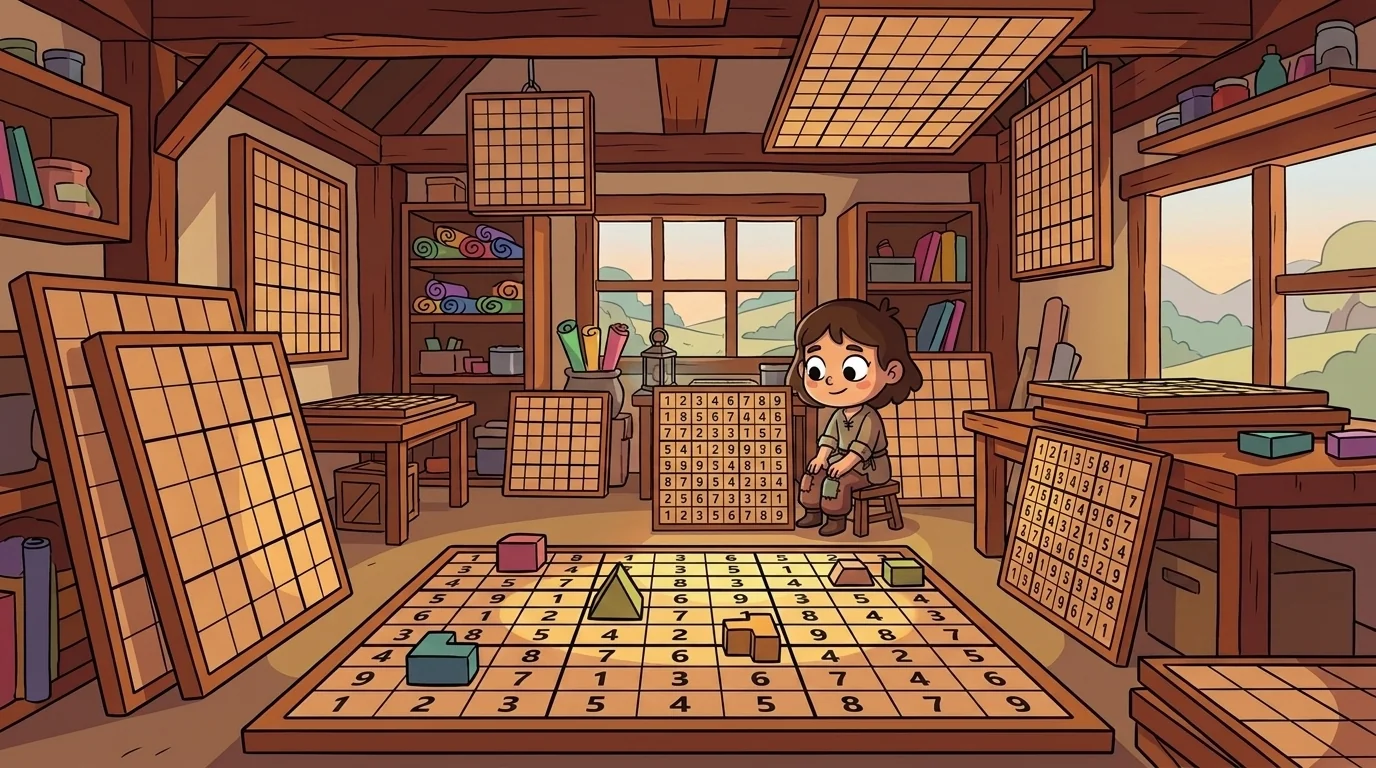
At the end of the day Onlie snuffs her lantern and looks at a finished grid — eighty-one squares, each one the only number it could ever have been. There's a particular quiet that comes with that. Not the loud thrill of a lucky guess that happened to work. Something steadier. Every square earned its place by being the only place it fit, and she can look at any one of them and know exactly why it's there.
Her shoulders come down. Her jaw unclenches. She hadn't noticed she'd been holding them. "No repeats," she says softly, to the grid and to herself. "Just the one right place for everything." And the certainty of it — that calm, sure feeling of knowing, not hoping — settles into her chest like a lantern set gently down.
The LatticeForge ensemble
Onlie is part of LatticeForge's distributed-narrative cast. Each character embodies a different curricular primitive; together they teach the full subject.
-
Cage
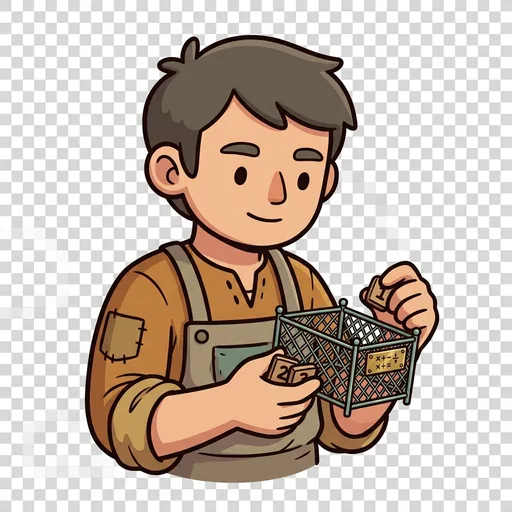
KenKen — arithmetic-cage: fills a fenced region so its numbers hit the plaque's target under its operation
-
Kaku
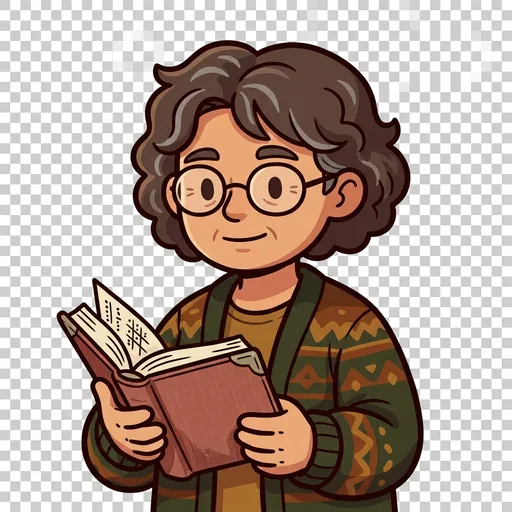
Kakuro — cross-sum: fills a run so it sums to its clue with no digit repeated; the total names its parts
-
Pica
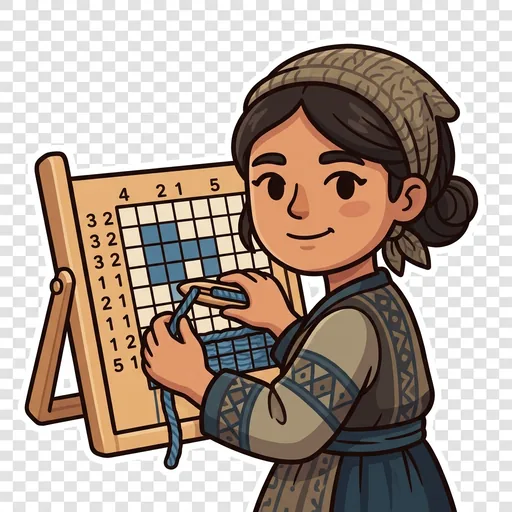
Nonogram/Picross — run-length deduction: reads the edge numbers and fills the overlap that must be filled
-
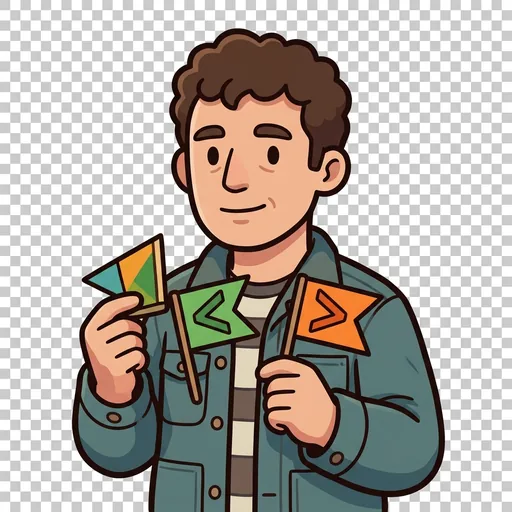
Chevron
Futoshiki — inequality/ordering: obeys the < / > flags between neighbours to force the numbers into order
-
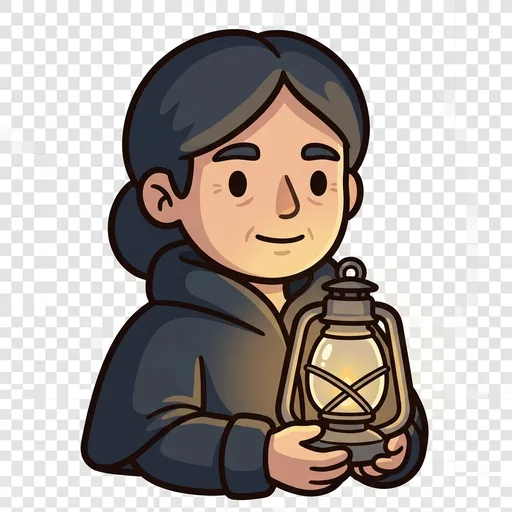
Umbra
Hitori — elimination + connectivity: shades out duplicates so none touch and the rest stays whole
-

Serra
Skyscrapers — visibility count: places towers so each edge clue counts how many can be seen, taller hiding shorter
-

Lasso
Slitherlink — single-loop edge deduction: draws one closed loop so each number uses exactly that many edges
-
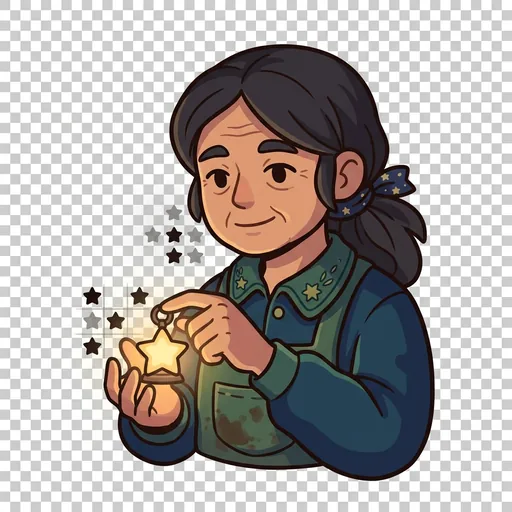
Vega
Star Battle — partition + non-adjacency: places the stars so each row, column, and region holds its quota and none touch
-

Ada
Mentor host — keeps the puzzle guild; teaches 'every grid hides one rule — find the forced cell, never guess'