Umbra
elimination — shade out the duplicates, no two shaded cells touch, the rest stays connected
Press play to listen along. The line being read lights up as you go.
Show full transcript
Loading transcript…
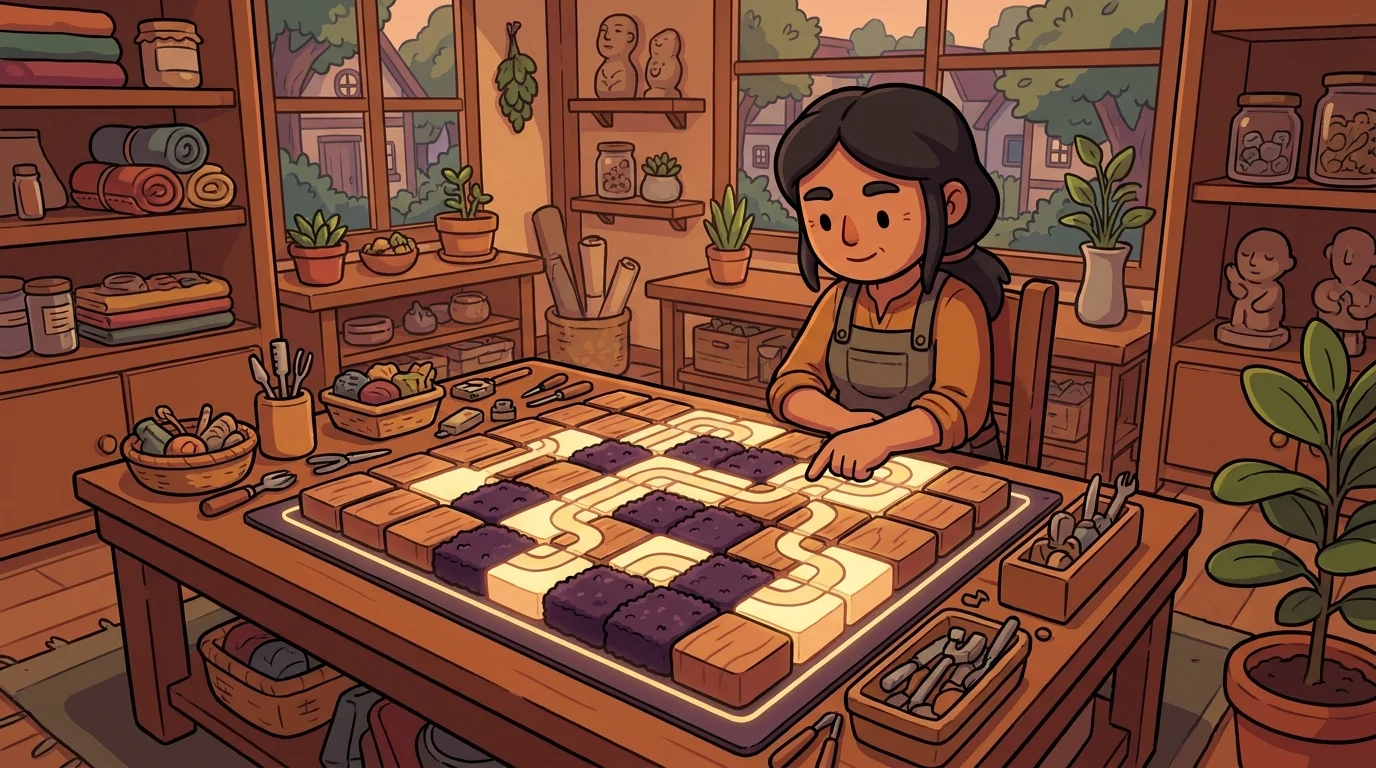
Umbra tended shadow. In her grids the numbers came pre-filled, too many of them, the same number repeated along a row or down a column. Her job wasn't to add. It was to shade — to darken certain cells until no number repeated in any row or column. But there were two more rules, and they were the whole art: *no two shaded cells may touch, and every unshaded cell must stay connected to all the others.* Shade too greedily and you strand a corner in the dark, cut off from the rest.
"So you're erasing duplicates," Maya said, "by covering them."
"By covering some of them," Umbra said, resting a fingertip over a cell without darkening it yet. "If a three shows up twice in a row, one of them gets shaded. But which one? The rule that decides is usually the touching rule. Two duplicates side by side — I can't shade both, they'd touch. So often I shade the one that keeps its shaded neighbours apart." She darkened a cell, and it sat alone, no shadow beside it, the light path around it unbroken.
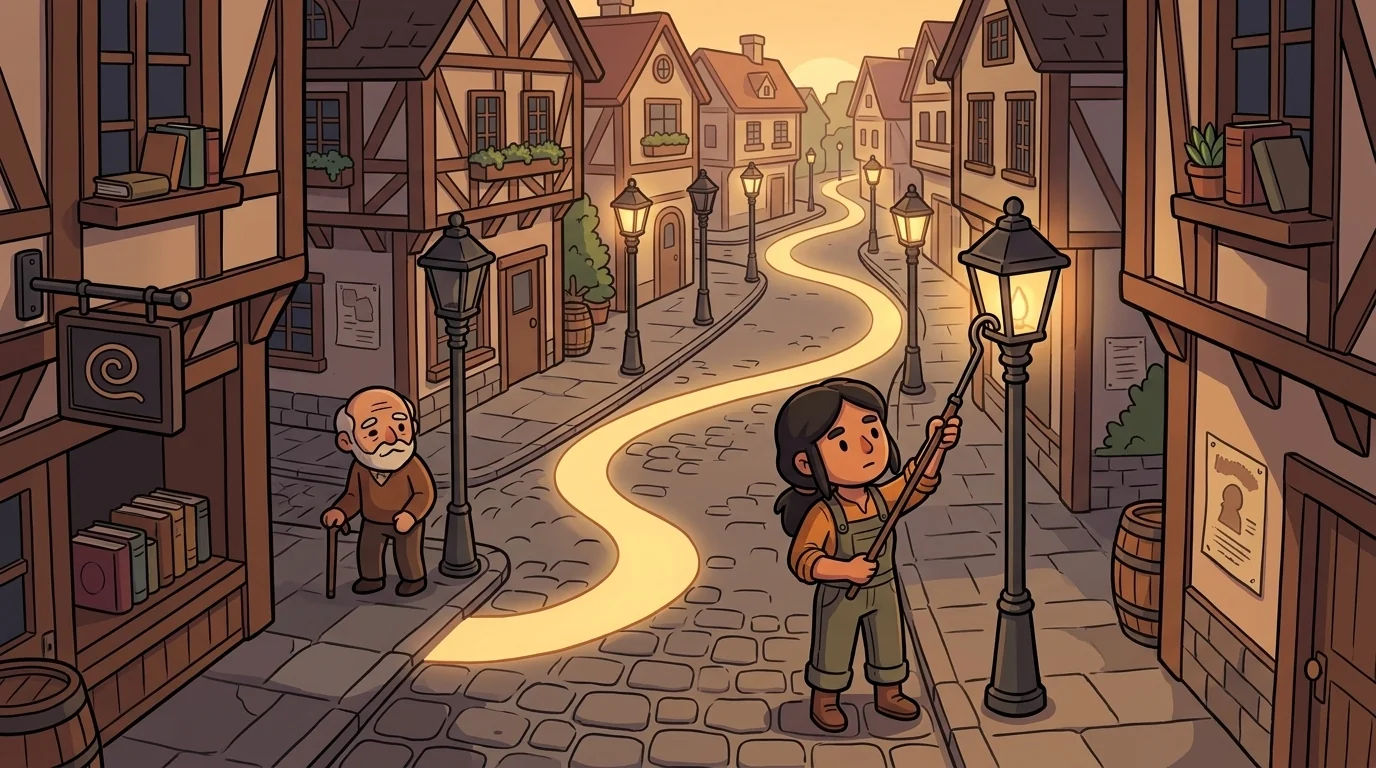
Umbra had been a lamplighter in a winding old quarter, dousing lamps at dawn. There was an art to which lamps you doused: put out two next to each other and a stretch of street went pitch black; leave the wrong one lit and a corner glared. She learned to douse so the darkness never pooled and the lit path always ran unbroken from one end of the quarter to the other.
The night she understood her craft, a new lamplighter doused greedily — every other lamp, fast — and stranded a blind old man in a dark cul-de-sac with no lit path home. Umbra relit one lamp, just one, chosen so the light reconnected. "You can take a lot away," she told the apprentice, "as long as what's left still holds together. That's the only rule that matters. Don't strand anyone in the dark."
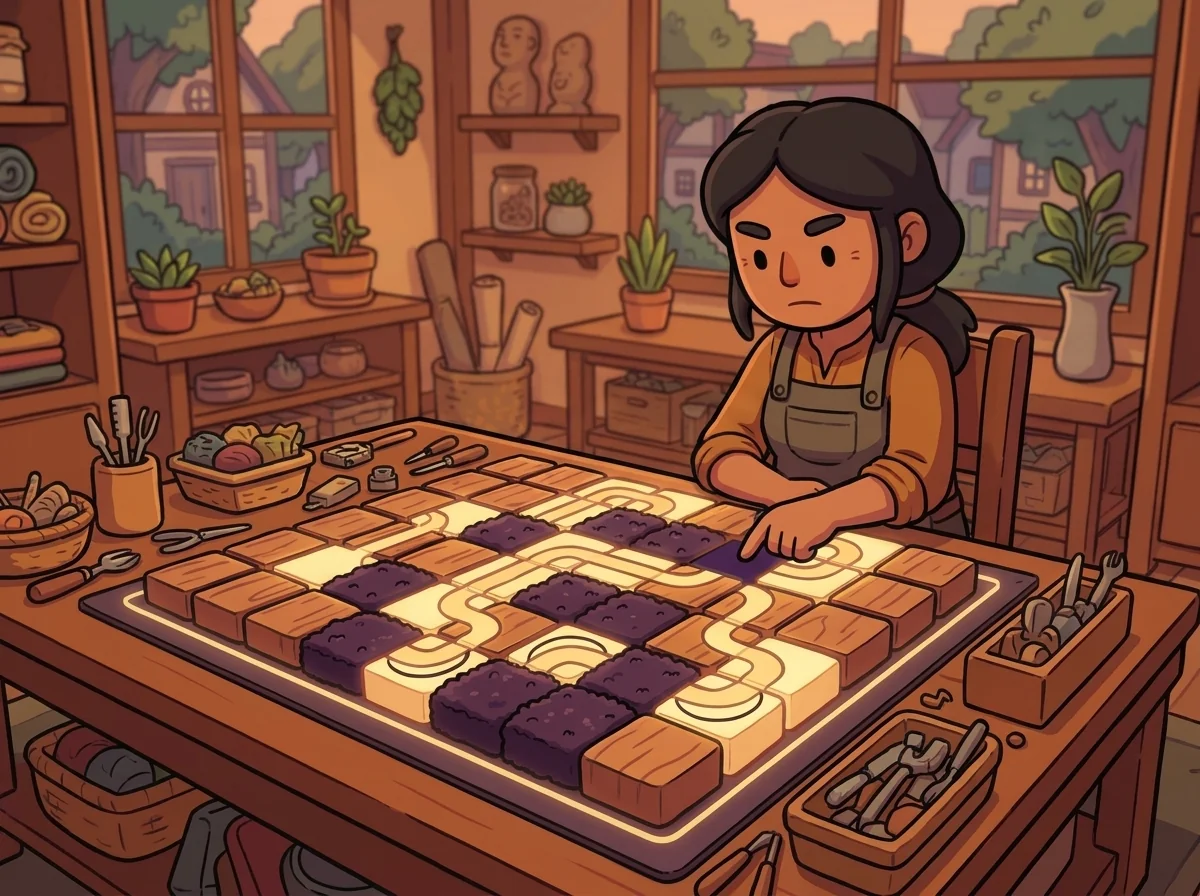
Ada found her and knew immediately. "You don't just remove duplicates," Ada said. "You remove them without breaking the whole."
"Anyone can find a duplicate," Umbra said. "The craft is shading it in a way that doesn't touch another shadow and doesn't cut a cell off from the rest. Two rules pulling against the first one. That's where the real deductions live."
Her method leans on the negatives. A cell she proves must stay lit — because shading it would strand a corner — she circles as safe, and every duplicate of its number in that row and column must be the shaded one instead. And whenever she shades a cell, she immediately marks its four neighbours as safe — they can't be shaded, they'd touch. Those forced-safe cells then force their duplicates to be shaded, and the shadow-pattern deduces itself the way Onlie's numbers do, one justified cell at a time.
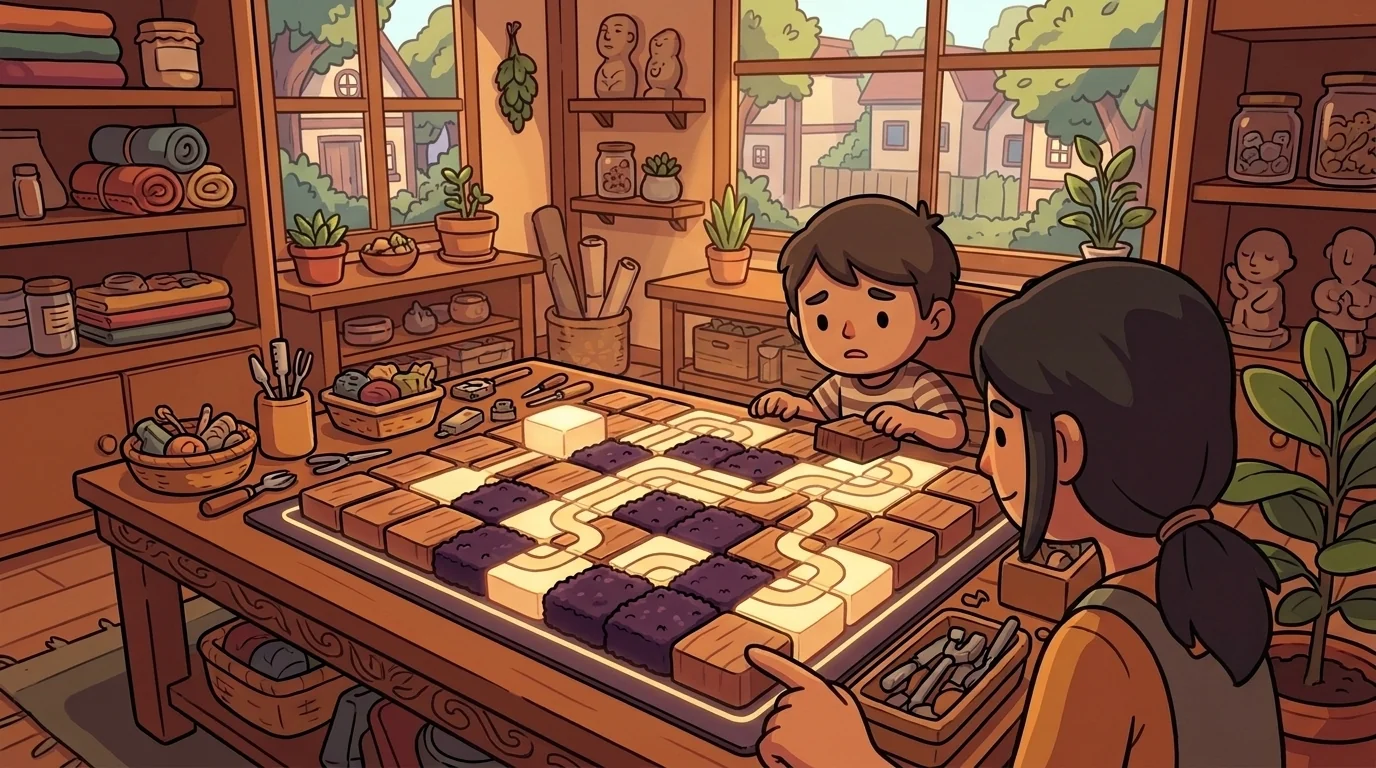
A boy was shading fast, and stranded a single cell in the top corner.
"Look at that cell," Umbra said, not scolding. "Is there any lit path from it to the rest of the grid?"
He looked. The cell was ringed by shadow. "…No. It's cut off."
"Then one of those shadows around it is wrong — it has to stay lit to keep that corner connected. Which shadow, if you kept it lit, would still leave no duplicate uncovered?" He traced it, un-shaded one cell, and the corner rejoined the whole. The duplicate it was supposed to cover turned out to have another copy that could safely take the shadow instead.
"I thought removing more was better," he said.
"Removing more is easy," Umbra said gently. "Removing exactly enough — and keeping everyone connected — that's the work."
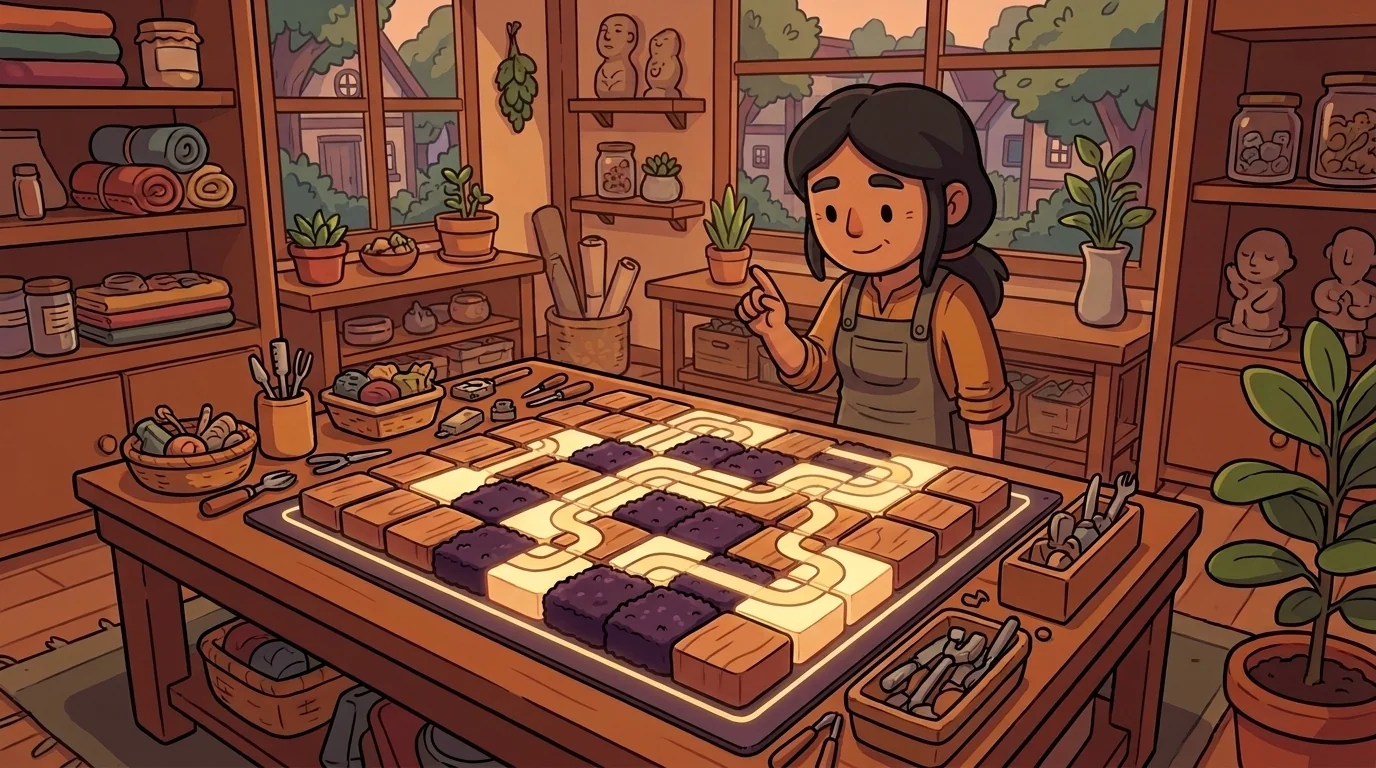
At the end Umbra steps back and checks the three things: no number repeats in any row or column, no two shadows touch, and — she traces it with her eye, corner to corner — the lit cells all hold together in one unbroken piece. Nothing stranded. Nothing pooled.
There's a particular relief in that last check, the connectivity one. She always half-fears she's cut something off. When the light runs unbroken end to end, the fear lets go all at once and a soft, whole feeling settles over her, like a quarter fully and safely lit. "You can take a lot away," she murmurs, the old lamplighter's line, "as long as what's left still holds together." And the grid, dark in exactly the right places and whole everywhere else, holds.
The LatticeForge ensemble
Umbra is part of LatticeForge's distributed-narrative cast. Each character embodies a different curricular primitive; together they teach the full subject.
-
Onlie
Sudoku — Latin-square uniqueness: sets her lantern on the only place a number can go in its row, column, and box
-
Cage
KenKen — arithmetic-cage: fills a fenced region so its numbers hit the plaque's target under its operation
-
Kaku
Kakuro — cross-sum: fills a run so it sums to its clue with no digit repeated; the total names its parts
-
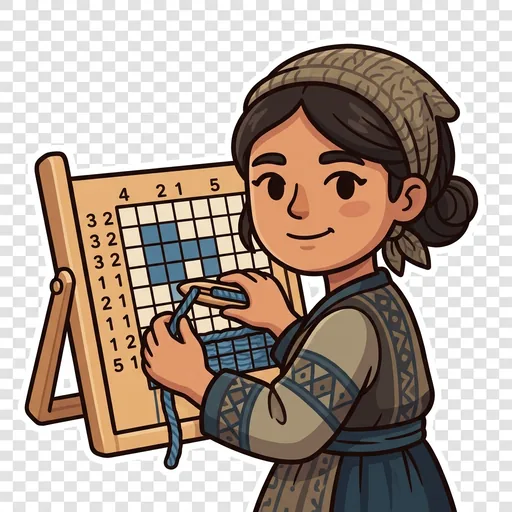
Pica
Nonogram/Picross — run-length deduction: reads the edge numbers and fills the overlap that must be filled
-
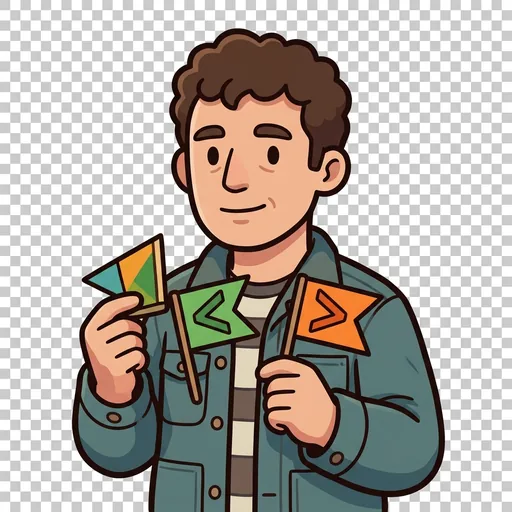
Chevron
Futoshiki — inequality/ordering: obeys the < / > flags between neighbours to force the numbers into order
-

Serra
Skyscrapers — visibility count: places towers so each edge clue counts how many can be seen, taller hiding shorter
-

Lasso
Slitherlink — single-loop edge deduction: draws one closed loop so each number uses exactly that many edges
-
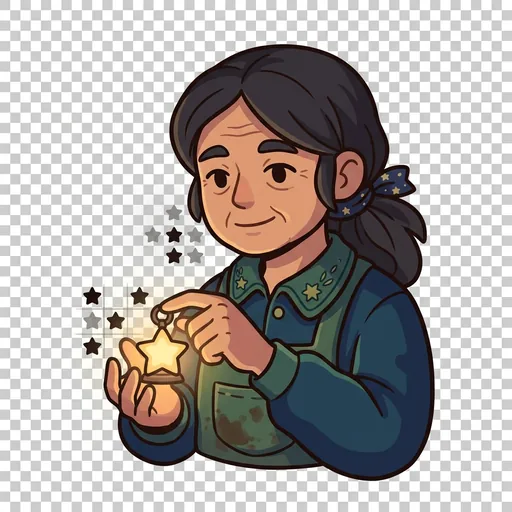
Vega
Star Battle — partition + non-adjacency: places the stars so each row, column, and region holds its quota and none touch
-

Ada
Mentor host — keeps the puzzle guild; teaches 'every grid hides one rule — find the forced cell, never guess'