Chevron
the inequality constraint — the < / > signs between neighbours order the numbers
Press play to listen along. The line being read lights up as you go.
Show full transcript
Loading transcript…
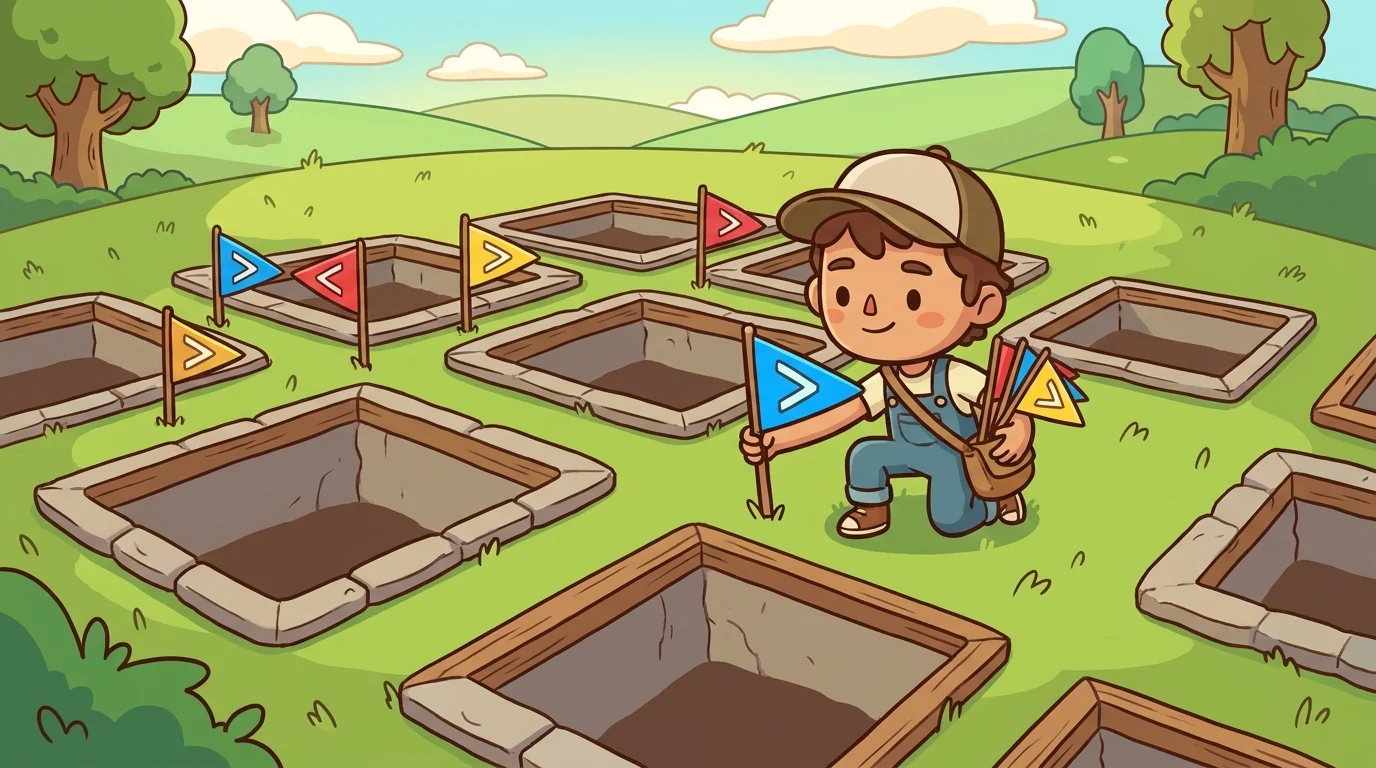
Chevron carried flags. Little chevron-shaped flags, and he planted them in the gaps between squares. An arrow pointing from one cell to its neighbour meant something exact: the numbers here obey this. Point the open mouth of the arrow at the bigger number; point the tip at the smaller. *A < B. B > C.* No numbers on the flags themselves — just the relation.
"So you don't even know what the numbers are," Maya said, "just which is bigger?"
"At first," Chevron said, planting a flag between two empty cells. "But 'bigger than' is stronger than it looks. In a row of four using one, two, three, four, if I know this cell is greater than that one, and that one is greater than the one before it — a chain of arrows — the ends get pinned fast. The number at the top of a long chain of greater-thans can only be the biggest one there is."
He walked a chain of three arrows, all pointing the same way: A > B > C. "C is smallest. A is biggest. In a four-row, A is at least a three, probably a four. The arrows sorted them before I placed a single digit."
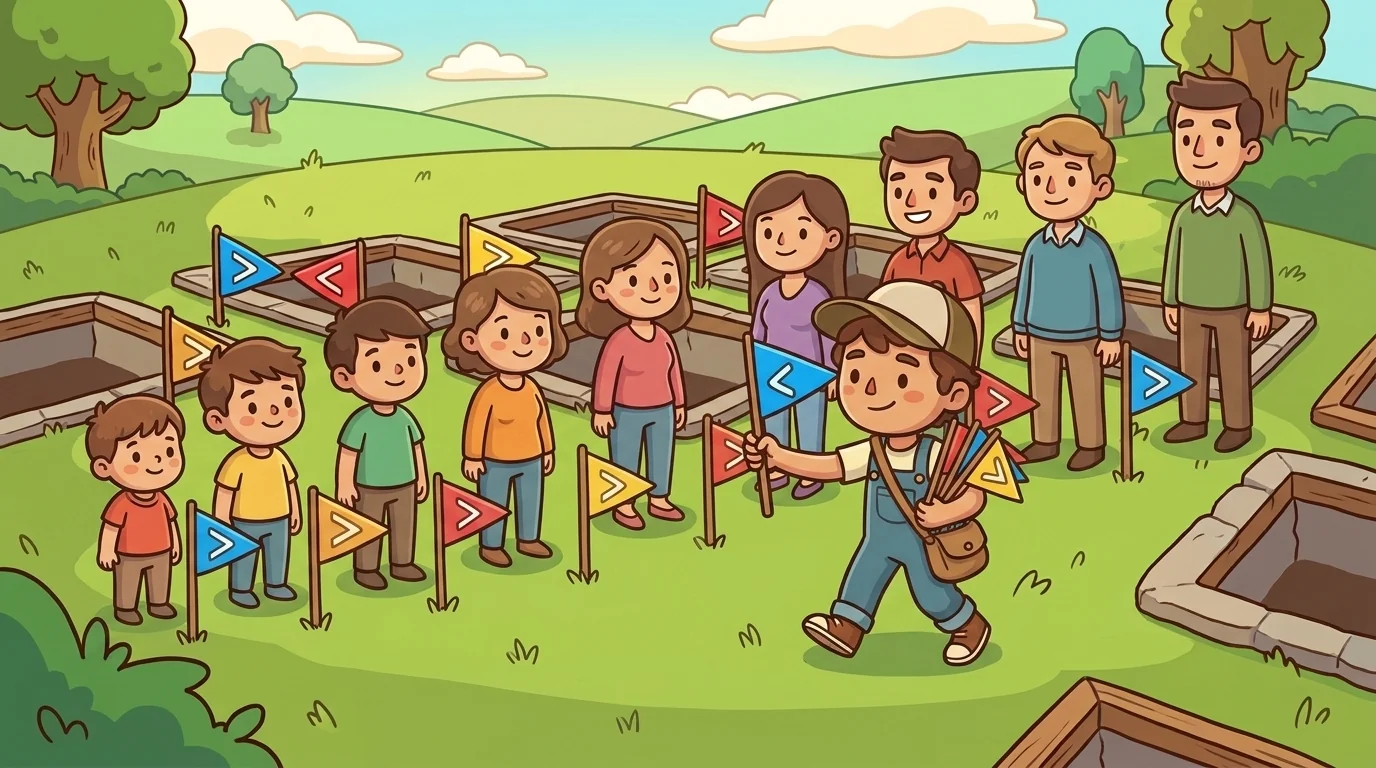
Chevron had been a line-marshal once, at ceremonies — the person who stood people in height order without a measuring stick. He never measured. He'd just say, "You're taller than her; you're shorter than him," and let the comparisons cascade until the whole line sorted itself. One day a visiting official demanded to know everyone's exact height. Chevron shrugged. "I don't know their heights," he said. "I know their order. And order is what you asked for, really — you just thought you wanted numbers."
That was the day he understood his craft. You rarely need the value first. You need the relation. Get the relations right and the values are forced into the only order that fits them.
The official was annoyed. The line, perfectly sorted, was not.
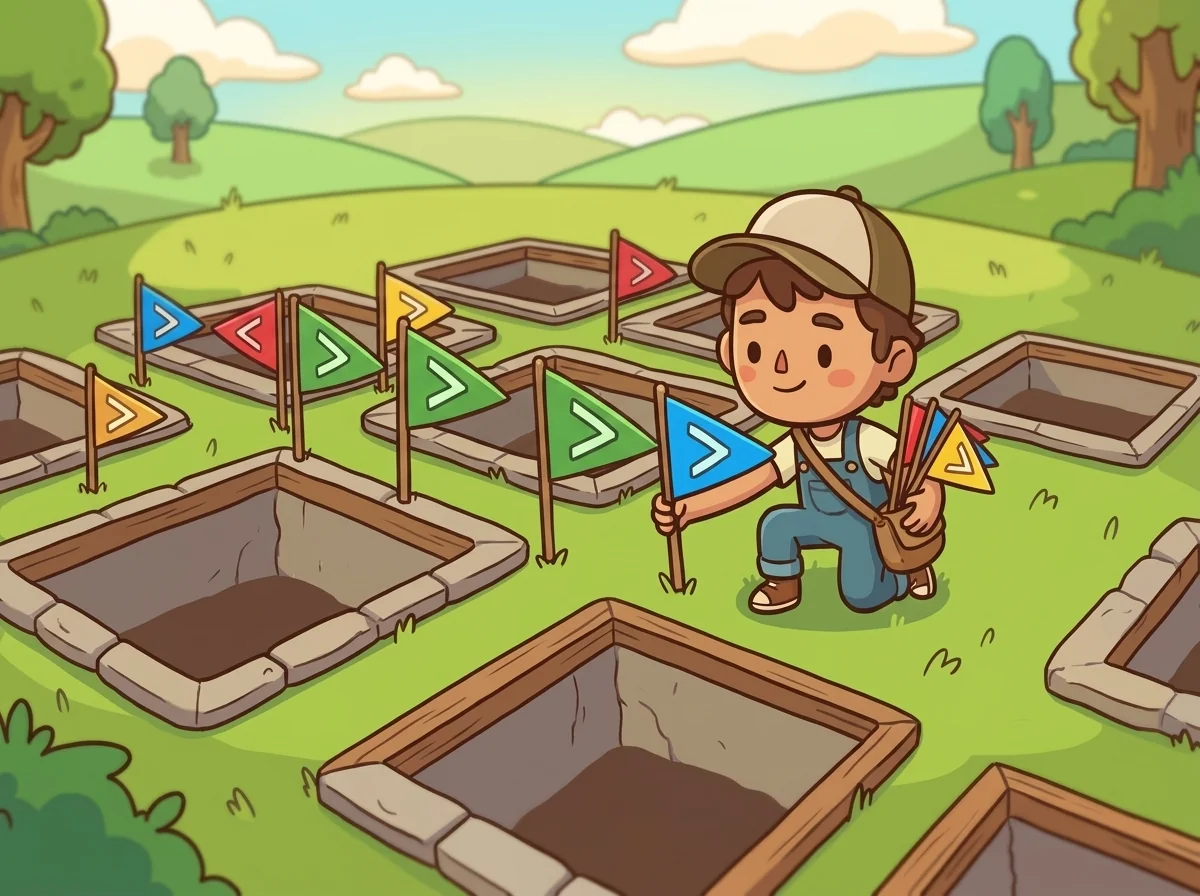
Ada recruited him after watching him solve a Futoshiki by starting nowhere near a number. "You began with the arrows," she said.
"The arrows are the free information," Chevron said. "A cell with three greater-than arrows all pointing away from it — everything is smaller than this cell — that cell is the maximum. In a five-grid it's a five. No guessing. And a cell everything points toward is the minimum. Pin the extremes, and the middle sorts itself."
His method is to find the longest chains and the cornered cells. A cell that must be bigger than three of its neighbours can't be small — the arrows forbid it. He crosses off the low candidates the inequalities rule out, exactly the way Onlie crosses off the numbers already in a line, and where one candidate is left, he places it, calm as a marshal calling a name.
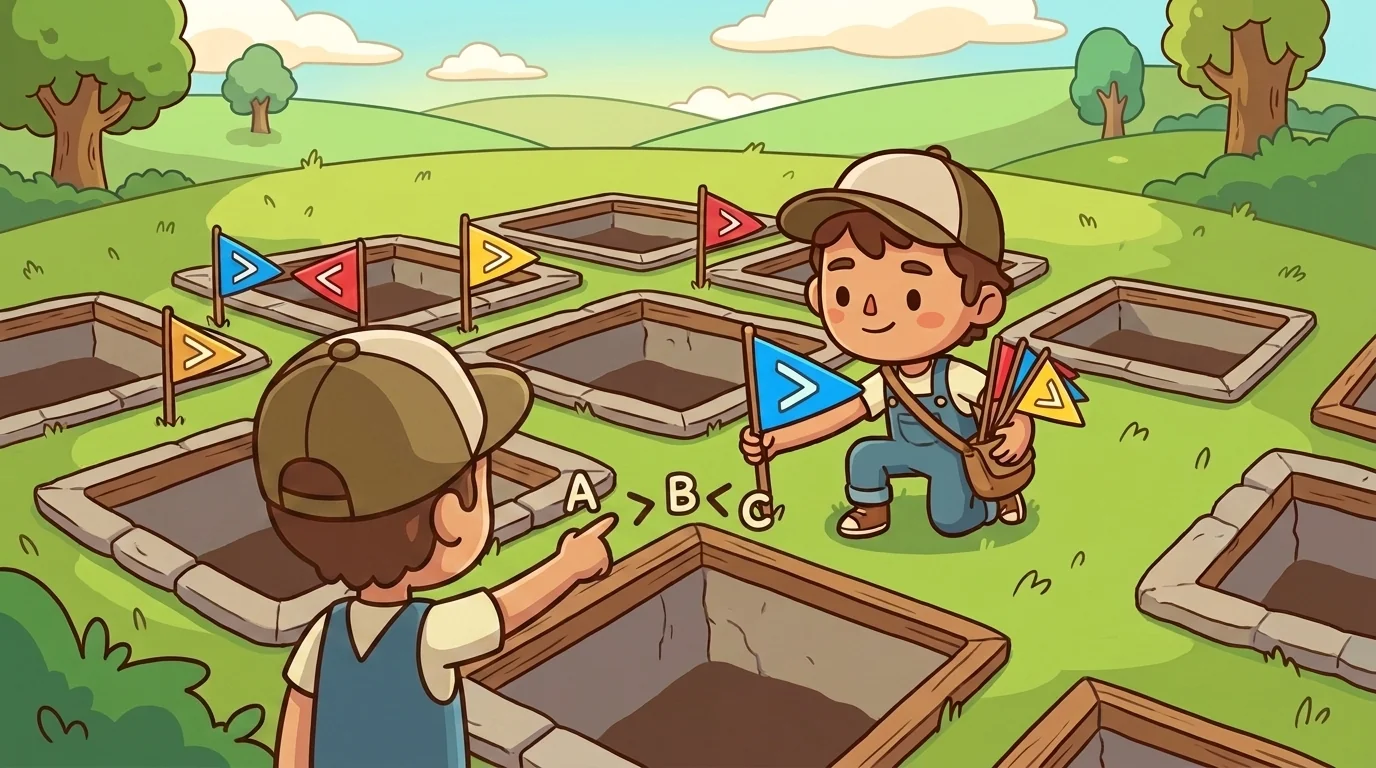
A boy had a five-row and a single arrow: this cell < that cell. "That's barely anything," he said.
"It's more than nothing," Chevron said. "The bigger cell can't be a one — nothing's smaller than one for it to beat. The smaller cell can't be a five — nothing's bigger than five to beat it. You just removed a candidate from each, from one little arrow. Now find where two arrows meet on the same cell."
The boy found a cell with an arrow in and an arrow out — bigger than its left, smaller than its right. "So it's… in the middle. Not the max, not the min."
"And if the right neighbour already can't be more than three," Chevron said, "then this one can't be more than two, and its left neighbour can't be more than one, so its left neighbour is one." The boy watched the chain fall like dominoes he hadn't known he'd set up. One arrow, then two, then the whole row in order.
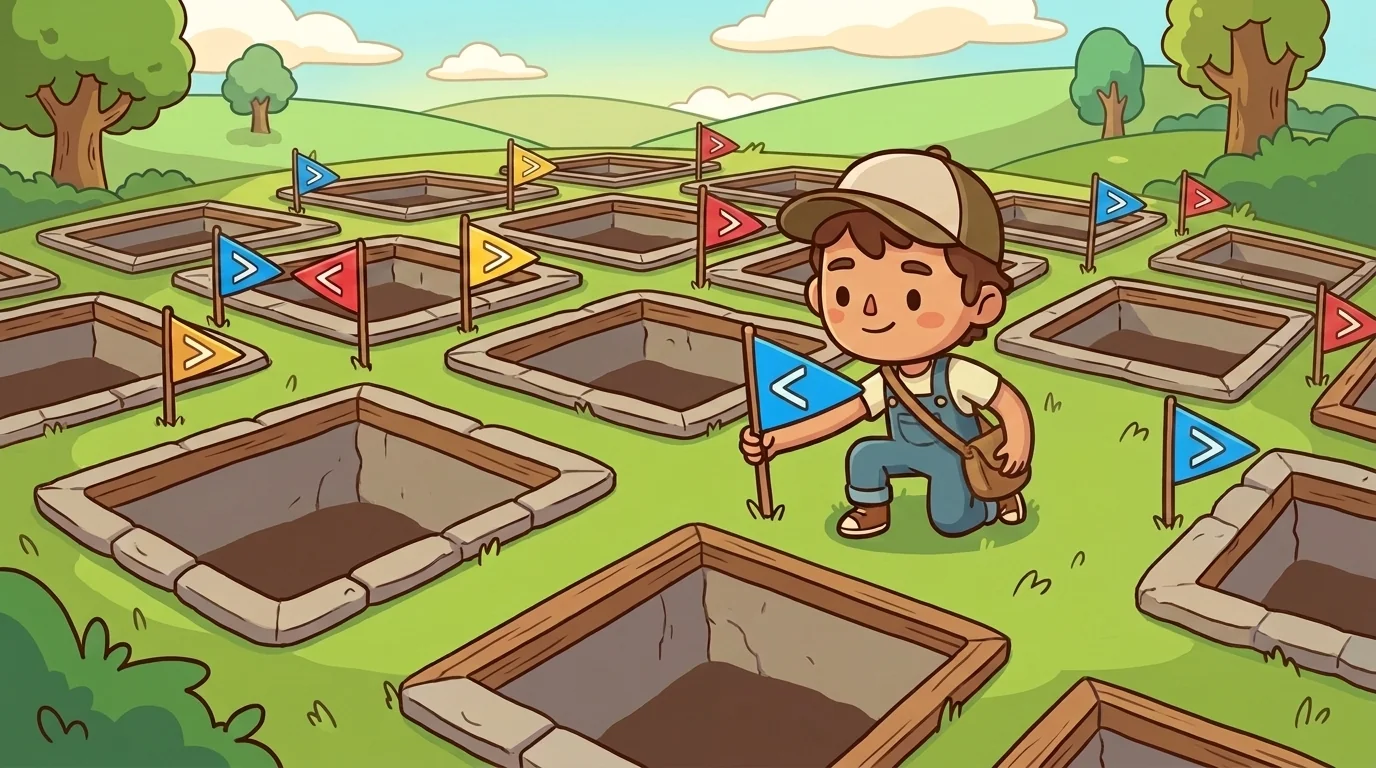
At the end Chevron walks his flags one final time, checking every arrow: the open mouth always on the bigger number, the tip always on the smaller. Every "greater than" true, every "less than" true, the whole grid a set of little agreements kept.
There's a steadiness that comes over him when the last arrow checks out — the settled feeling of a line that's properly sorted, everyone exactly where the comparisons put them, no one out of order. His breathing goes slow and even, the way it did at the end of a ceremony when the line stood true. "I never needed to know the numbers first," he says, planting his last flag. "I only needed to know who beats whom. The order does the rest." And that certainty — earned from arrows, not guesses — stands as steady in his chest as the line ever did.
The LatticeForge ensemble
Chevron is part of LatticeForge's distributed-narrative cast. Each character embodies a different curricular primitive; together they teach the full subject.
-

Onlie
Sudoku — Latin-square uniqueness: sets her lantern on the only place a number can go in its row, column, and box
-
Cage
KenKen — arithmetic-cage: fills a fenced region so its numbers hit the plaque's target under its operation
-
Kaku
Kakuro — cross-sum: fills a run so it sums to its clue with no digit repeated; the total names its parts
-
Pica
Nonogram/Picross — run-length deduction: reads the edge numbers and fills the overlap that must be filled
-

Umbra
Hitori — elimination + connectivity: shades out duplicates so none touch and the rest stays whole
-

Serra
Skyscrapers — visibility count: places towers so each edge clue counts how many can be seen, taller hiding shorter
-

Lasso
Slitherlink — single-loop edge deduction: draws one closed loop so each number uses exactly that many edges
-
Vega
Star Battle — partition + non-adjacency: places the stars so each row, column, and region holds its quota and none touch
-

Ada
Mentor host — keeps the puzzle guild; teaches 'every grid hides one rule — find the forced cell, never guess'