Pica
run-length deduction — the numbers beside a line dictate its runs of filled cells
Press play to listen along. The line being read lights up as you go.
Show full transcript
Loading transcript…
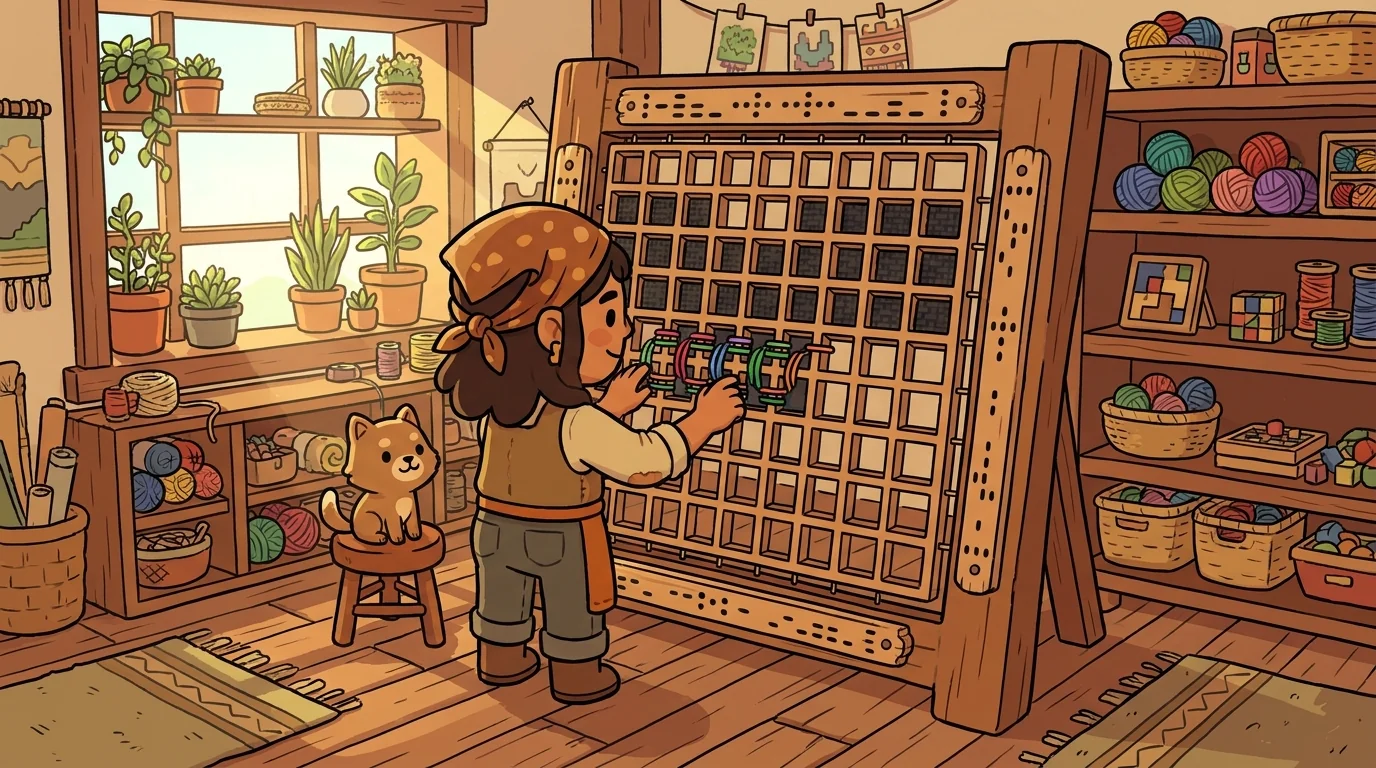
Pica worked a loom. That's the closest word for it — a big upright frame of squares, and along the top of every column and the side of every row, a little stack of numbers. The numbers weren't a total, the way Kaku's were. They were a description. They told you the lengths of the filled runs in that line, in order, with at least one blank between runs.
"So a row of ten cells," Maya said, "with the clue seven—"
"One run of seven filled cells, somewhere in the ten," Pica said, her fingers already moving. "It can slide a little. But watch." She marked the row's leftmost-possible seven and its rightmost-possible seven, and where the two overlapped — the middle — those cells were filled no matter where the run actually sat. "Four cells in the middle are certain. The ends are still loose. But the middle? The middle is yours."
Maya stared. "You solved part of it without knowing the rest."
"That's the whole craft," Pica said, threading a filled cell into place. "You don't need the ends to be sure of the middle."
Pica had grown up in a weaving town, watching her aunt read pattern-cards — cards punched with the lengths of each colored stripe. Her aunt never guessed where a stripe went. She'd measure the longest stripe against the width of the cloth and say, "This one's so wide it can only sit here, near enough," and mark the part that couldn't move.
The first time Pica did it herself she was small and impatient and wanted to fill the whole row at once. Her aunt caught her hand. "You'll fill a cell you'll have to pull out," she said. "Fill only what has to be filled. Mark what has to be blank. The picture comes when you stop reaching past what you know."
It was the hardest lesson and the one that stuck. Certainty first. The rest follows the certain part like thread follows a needle.
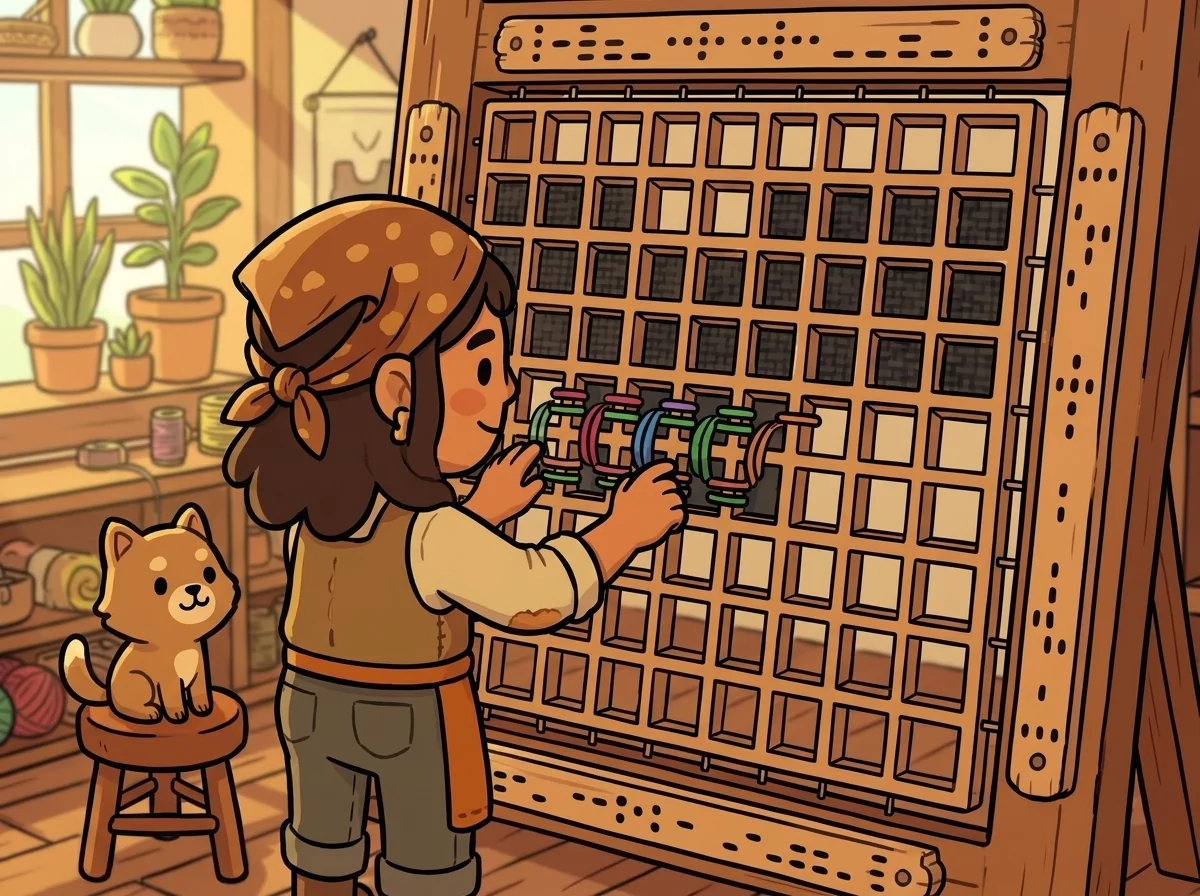
Ada saw her fill a corner of a Nonogram nobody had cracked and knew right away. "You're not painting," Ada said. "You're proving."
"Every filled cell I place, I can tell you why it can't be blank," Pica said. "Every blank I place, I can tell you why it can't be filled. The clue-numbers do the arguing. I just listen."
Her method is overlap and edges. A long run in a narrow line barely moves, so its overlap is huge — big blocks of certain cells. A run pinned against the edge (a clue that starts a line, with the run touching the wall) is exact. And once a run is placed for sure, the cell right after it must be blank — you can't have two runs touching. Those forced blanks then squeeze the next run, which reveals its own overlap, and the picture walks itself open, cell by justified cell.
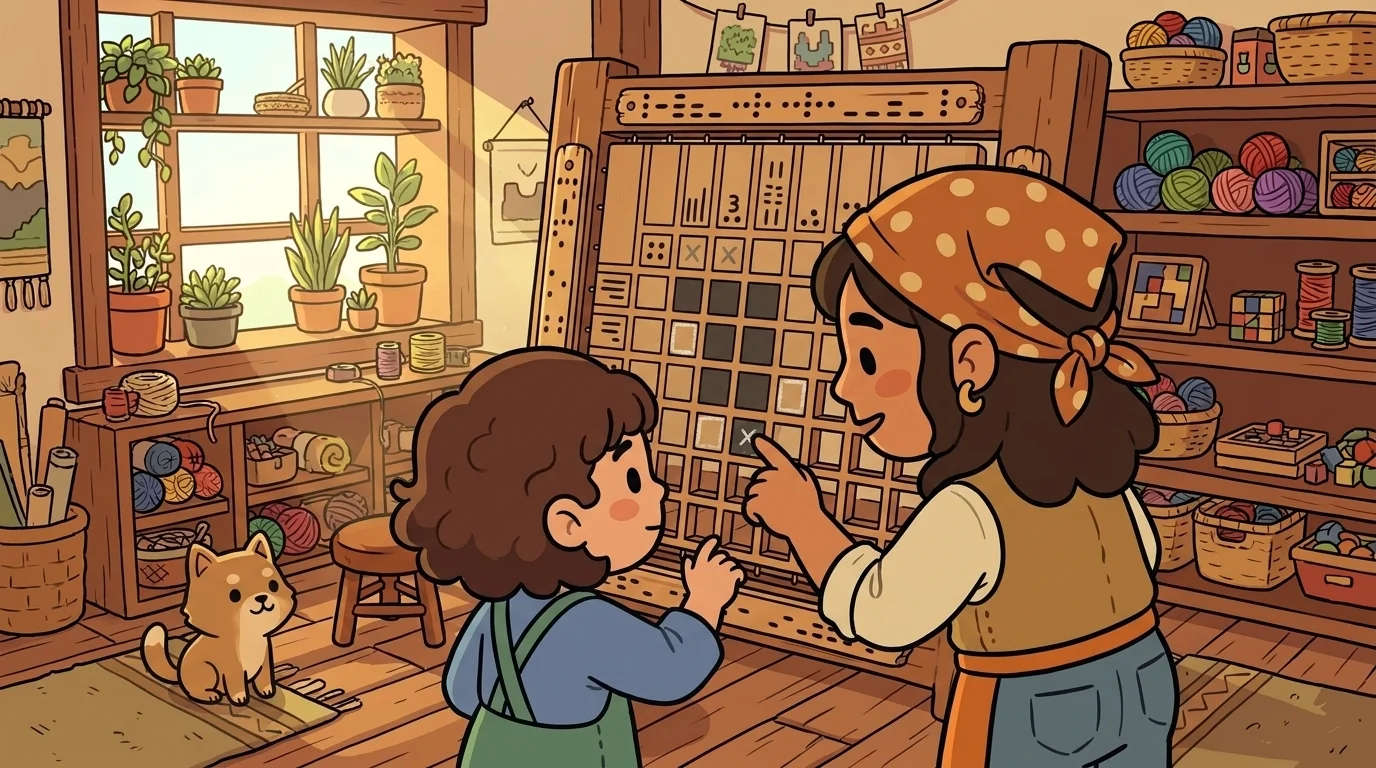
A girl was filling a Picross by vibes — a cell here because it "felt" like part of the shape.
"What's the clue on that column?" Pica asked.
"Three, then two."
"How many cells?"
"Ten."
"Three, a gap, two — that's at least six cells of pattern in ten. Slide it left as far as it goes, slide it right as far as it goes. Where does the three overlap itself?"
The girl worked it out on her fingers. "The… middle of the three is filled both ways. One cell for sure."
"One cell you'll never have to erase," Pica said. "Build out from the cells you can defend. Never from a feeling." The girl marked her one certain cell, then the forced blank beside the finished run, and suddenly the column had edges to push against, and the two came clear a breath later.
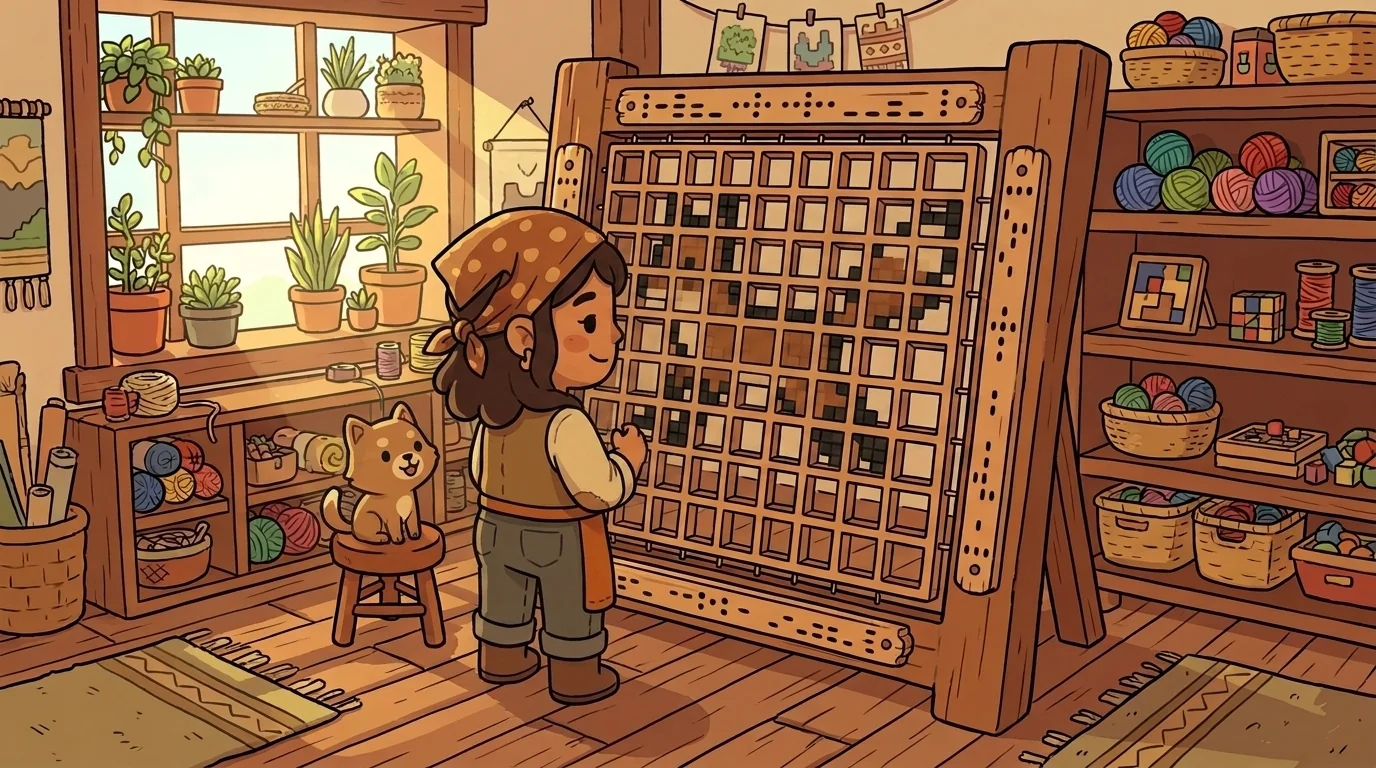
When a grid finishes, Pica steps back the way a weaver steps back from a loom — far enough to see the whole cloth at once. Out of a field of numbers and blanks, a picture: a bird, a key, a little running fox. Every filled cell she can point to and say the clue forced this; every blank the same.
There's a specific gladness in watching the picture arrive — not all at once, but the way dawn arrives, certain cells first and then the loose ones snapping into place around them. Her chest goes warm and open, the way it does when something you were patient with finally shows you what it was. "You don't need the ends to be sure of the middle," she murmurs, the way her aunt used to. "Stand on the middle. The picture will come to you."
The LatticeForge ensemble
Pica is part of LatticeForge's distributed-narrative cast. Each character embodies a different curricular primitive; together they teach the full subject.
-
Onlie
Sudoku — Latin-square uniqueness: sets her lantern on the only place a number can go in its row, column, and box
-
Cage
KenKen — arithmetic-cage: fills a fenced region so its numbers hit the plaque's target under its operation
-
Kaku
Kakuro — cross-sum: fills a run so it sums to its clue with no digit repeated; the total names its parts
-
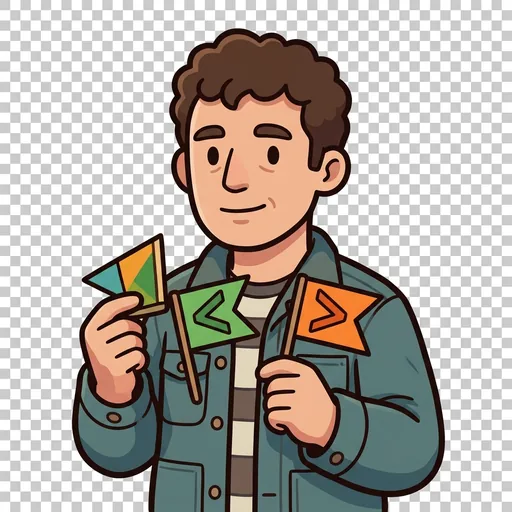
Chevron
Futoshiki — inequality/ordering: obeys the < / > flags between neighbours to force the numbers into order
-
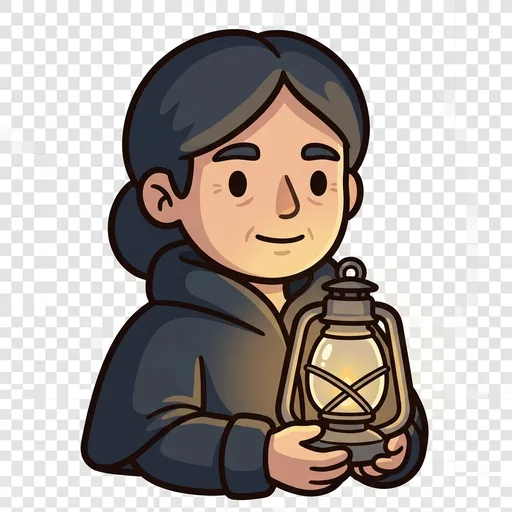
Umbra
Hitori — elimination + connectivity: shades out duplicates so none touch and the rest stays whole
-
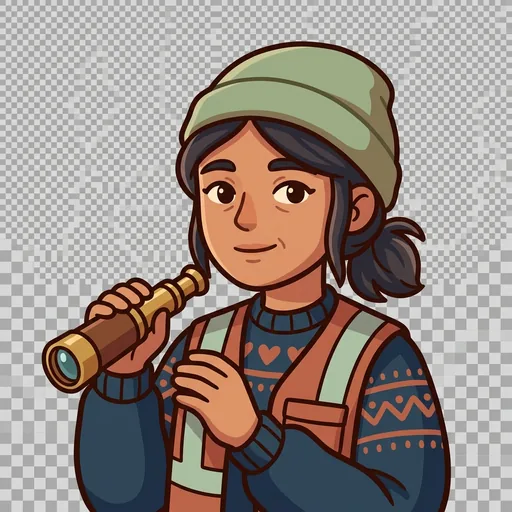
Serra
Skyscrapers — visibility count: places towers so each edge clue counts how many can be seen, taller hiding shorter
-
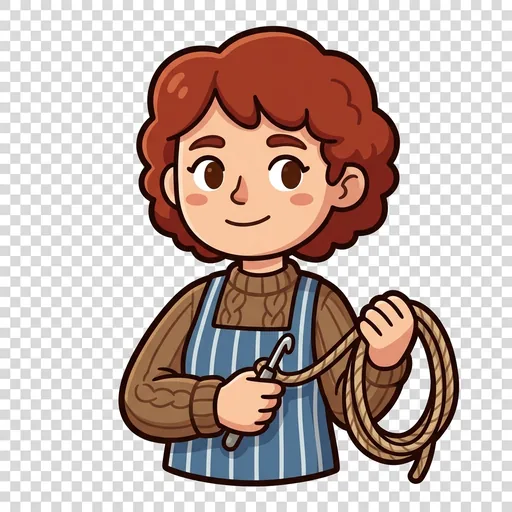
Lasso
Slitherlink — single-loop edge deduction: draws one closed loop so each number uses exactly that many edges
-
Vega
Star Battle — partition + non-adjacency: places the stars so each row, column, and region holds its quota and none touch
-
Ada
Mentor host — keeps the puzzle guild; teaches 'every grid hides one rule — find the forced cell, never guess'