The Latin-Square Three
three readings of one Latin-square grid — pure uniqueness / cage-arithmetic / run cross-sum
A story read by The Latin-Square Three
Press play to listen along. The line being read lights up as you go.
Show full transcript
Loading transcript…
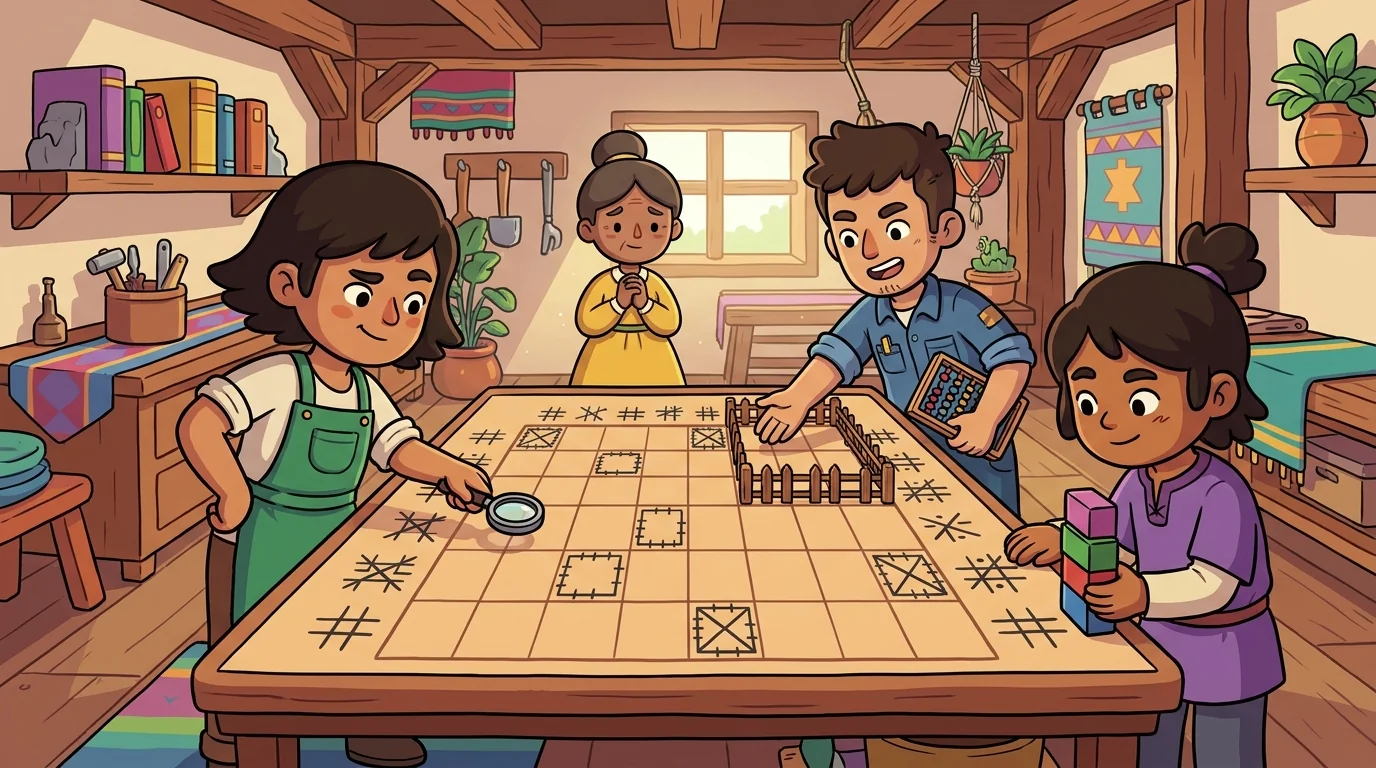
The three of them worked the same grid so often the other artisans called them the Latin-Square Three. It made sense: Onlie, Cage, and Kaku all lived on the same bones — a grid where each number appears exactly once in every row and column. What made them a trio was that they read those bones three different ways, and where their three readings agreed, the grid had nowhere left to hide.
Ada set a single grid in front of them one morning — a nasty one, mostly empty, with cage-fences penned over some regions and cross-sum clues perched over some runs. "It stumped me," she admitted, which she rarely said. "See what the three of you see."
"Same grid, three languages," Onlie said, already scanning for the emptiest square. "Let's translate."
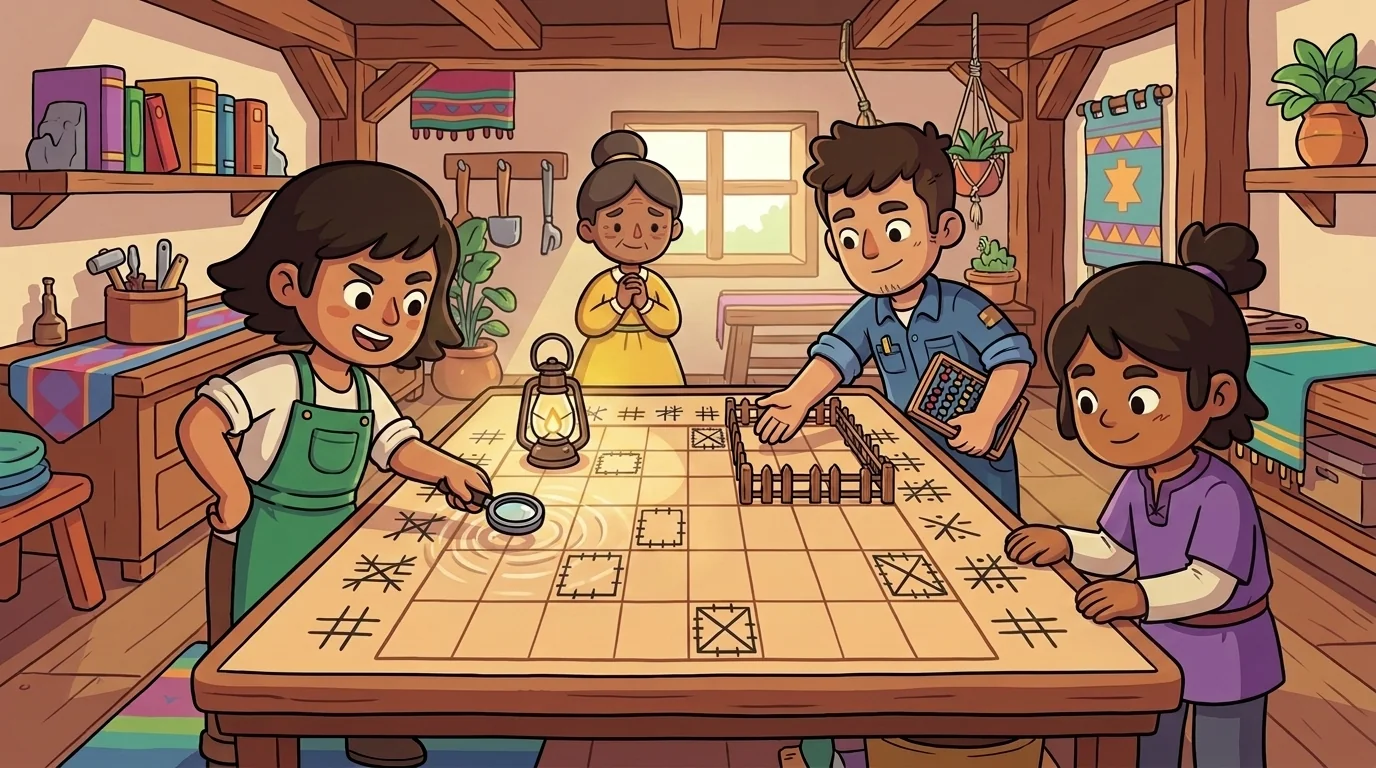
Onlie went first, because she always found the free ground. She ignored the fences and the sums entirely at first and just hunted for a square hemmed in by its own row, column, and box — the pure no-repeats rule, nothing fancy. "This one," she said, tapping a cell where one through eight were all spoken for in its lines. "Only nine is left. Not a guess — the only place it fits." Lantern down. The single certain nine rippled outward: two neighbouring squares now had one fewer candidate each. "I've opened the door," she said. "Someone read the fences."
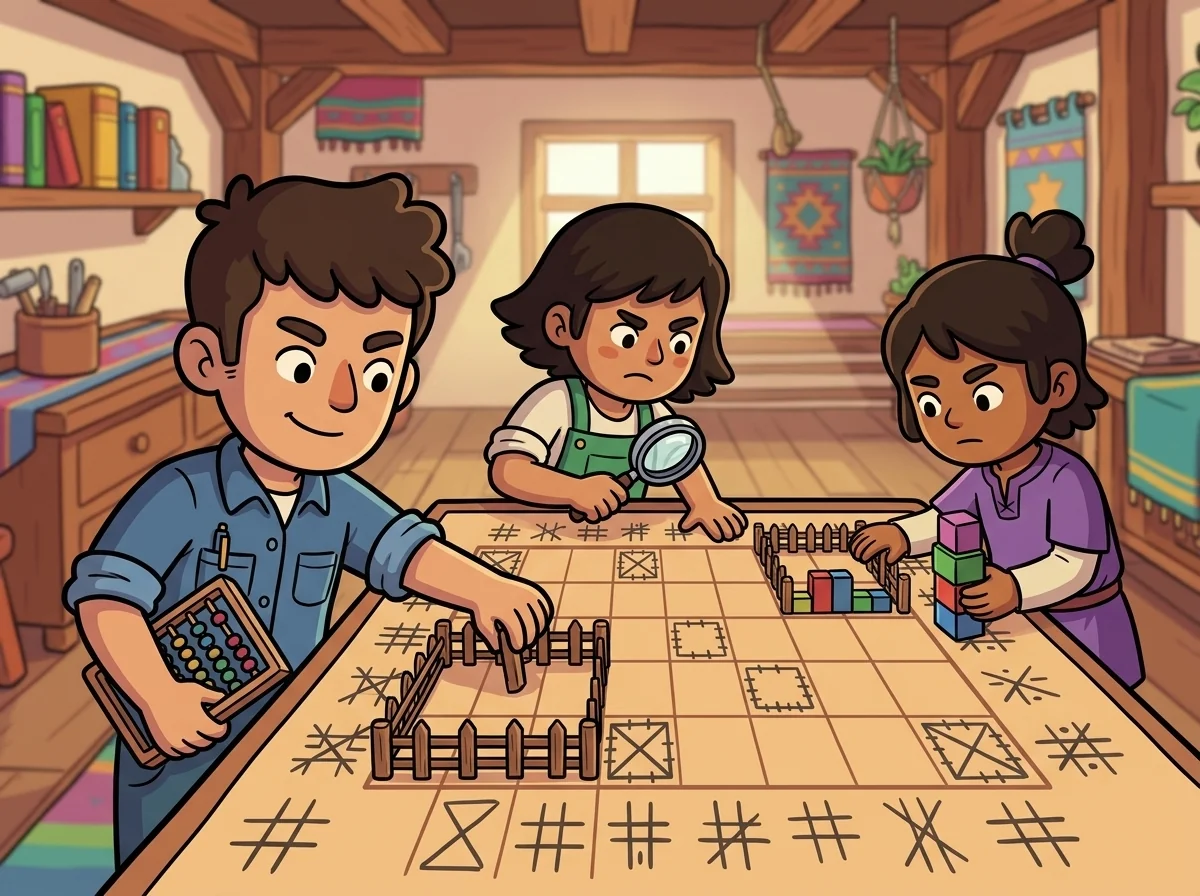
Cage stepped in, reading the same grid as a set of penned targets. A three-square fence marked *6× overlapped the region Onlie had just touched. "One, two, three multiply to six," he said, "and Onlie's nine next door forbids a repeat down this column, so the two can't sit here* — it'd clash. Which leaves exactly one way to lay one-two-three in this pen." He set them, humming. "The uniqueness Onlie loves and the target on my plaque agreed. More rules, fewer answers." Two more cells locked, and a cross-sum run now had all but one of its cells filled.
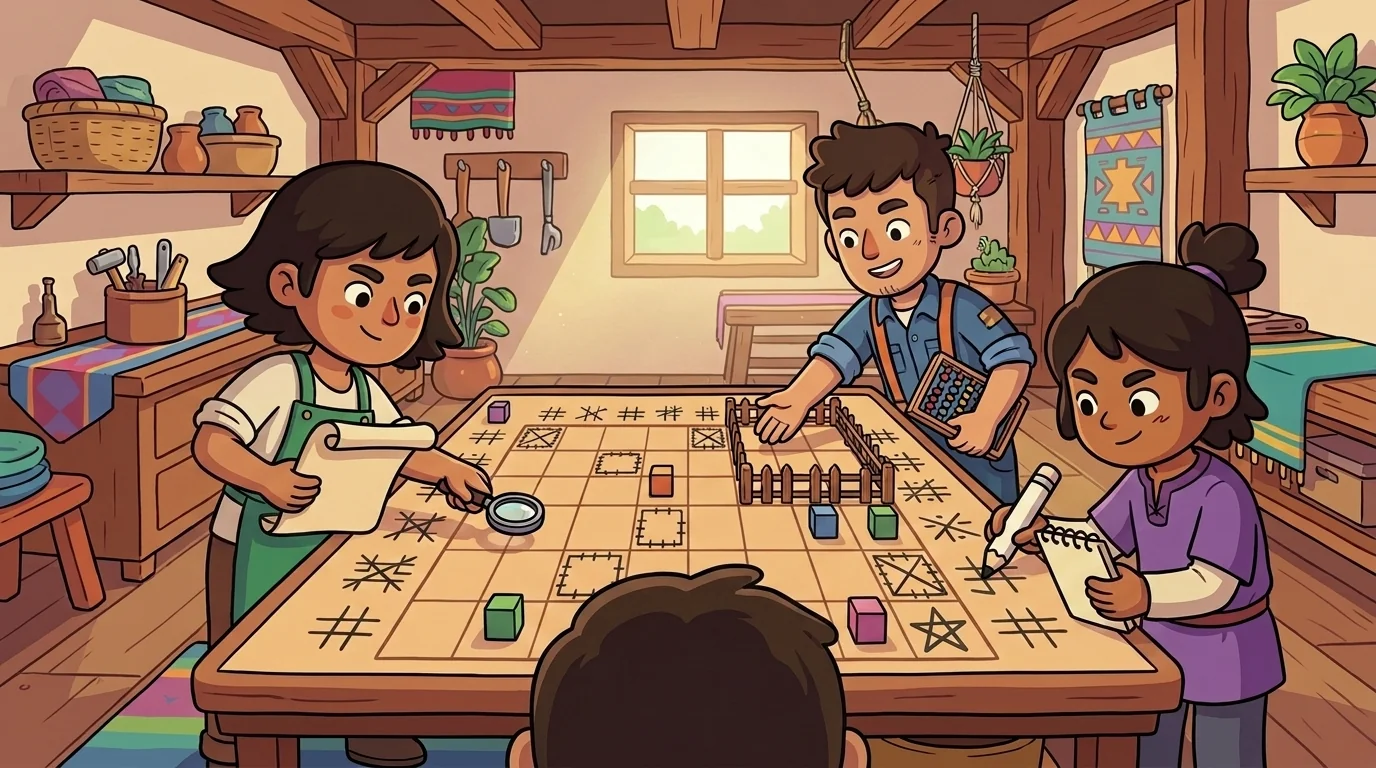
Kaku finished the corner, reading the grid as totals. A run clued *17 across two cells stared at her. "Eight and nine — the only pair that reaches seventeen without repeating," she said, "and Cage's placement already put a nine in the crossing column, so this* cell can't be nine. It's eight. Which makes its partner nine, over there where nine is still allowed." She wrote it in her ledger with the small satisfaction of a balanced book. "The sum named its parts. Onlie's uniqueness and Cage's cage told me the order." The corner, hopeless twenty minutes ago, was solid.
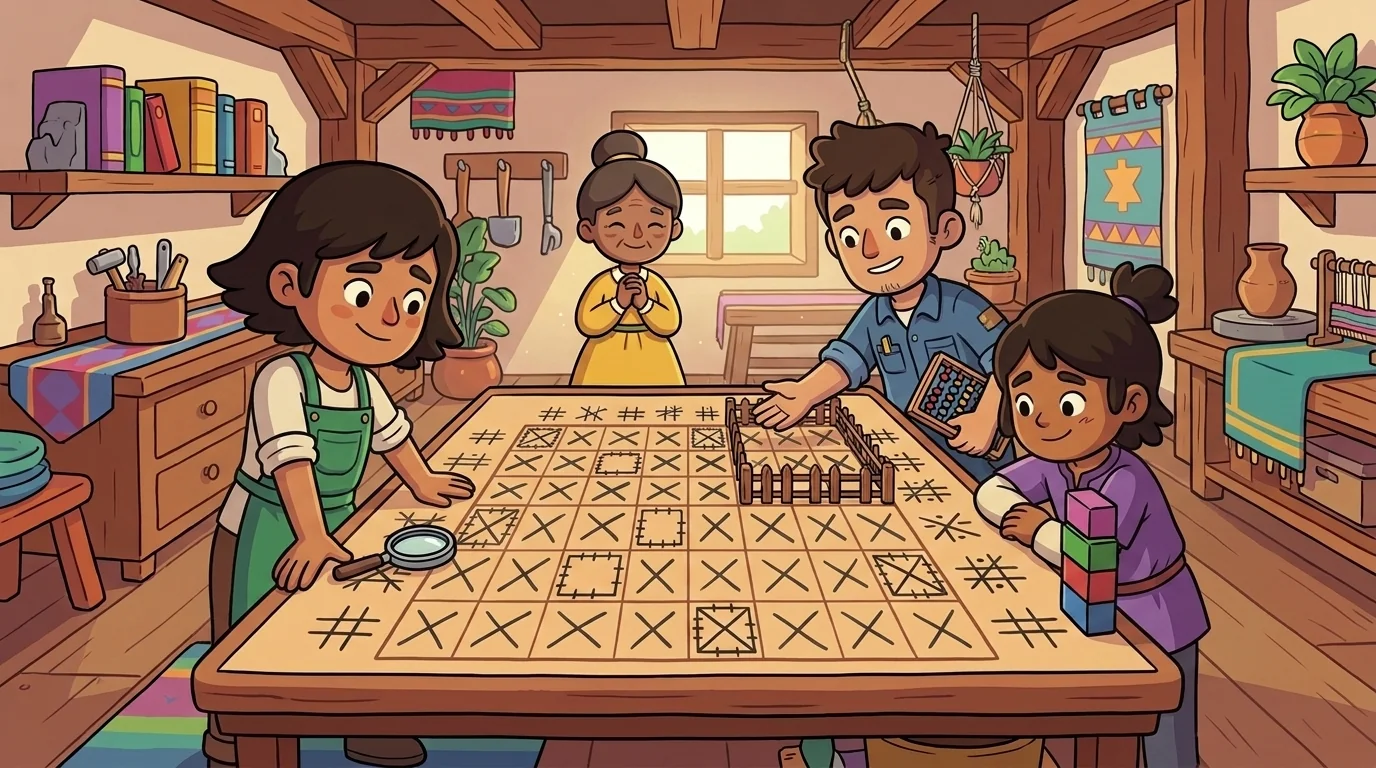
They stepped back together and looked at what they'd built. Not one of them had solved it alone — Onlie's forced nine gave Cage his no-repeat; Cage's one-two-three gave Kaku her filled crossing; Kaku's eight closed a column that handed Onlie her next forced cell. Three ways of being sure, braided into one grid, each covering the others' blind spots.
There's a particular gladness in that — the warm, easy feeling of different certainties all landing on the same answer, no one having to be right alone. Onlie's shoulders were down; Cage had that behind-the-ribs click; Kaku's held breath had long since gone out even. "Same grid, three rules," Onlie said, "and every one of them true at once." And the grid, read three ways and agreeing with itself everywhere, sat finished between the three of them like something they'd woven together.
The LatticeForge ensemble
The Latin-Square Three is part of LatticeForge's distributed-narrative cast. Each character embodies a different curricular primitive; together they teach the full subject.
-

Onlie
Sudoku — Latin-square uniqueness: sets her lantern on the only place a number can go in its row, column, and box
-
Cage
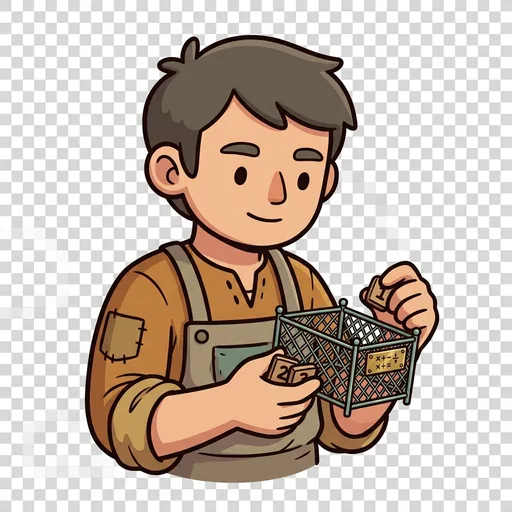
KenKen — arithmetic-cage: fills a fenced region so its numbers hit the plaque's target under its operation
-

Kaku
Kakuro — cross-sum: fills a run so it sums to its clue with no digit repeated; the total names its parts
-
Pica
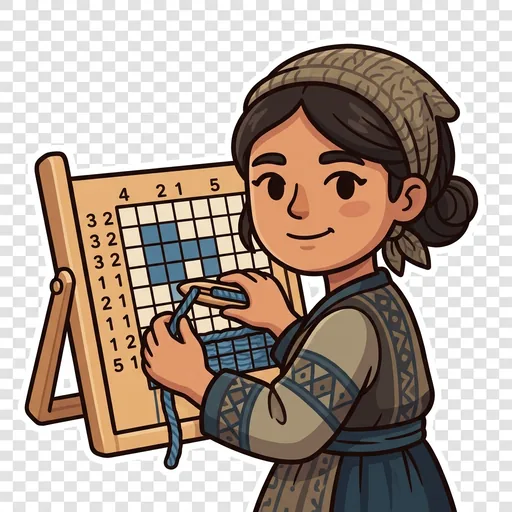
Nonogram/Picross — run-length deduction: reads the edge numbers and fills the overlap that must be filled
-
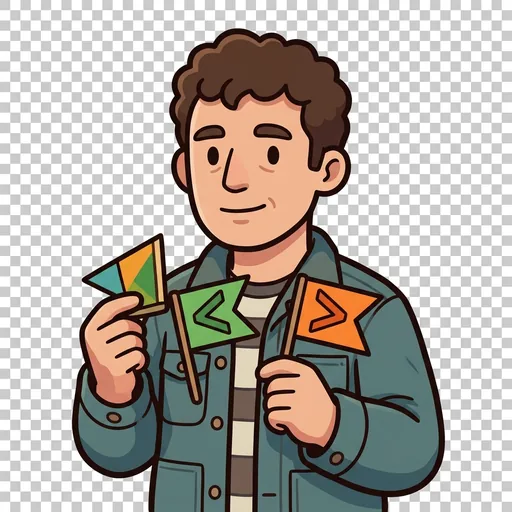
Chevron
Futoshiki — inequality/ordering: obeys the < / > flags between neighbours to force the numbers into order
-

Umbra
Hitori — elimination + connectivity: shades out duplicates so none touch and the rest stays whole
-

Serra
Skyscrapers — visibility count: places towers so each edge clue counts how many can be seen, taller hiding shorter
-

Lasso
Slitherlink — single-loop edge deduction: draws one closed loop so each number uses exactly that many edges
-

Vega
Star Battle — partition + non-adjacency: places the stars so each row, column, and region holds its quota and none touch
-

Ada
Mentor host — keeps the puzzle guild; teaches 'every grid hides one rule — find the forced cell, never guess'