Pivot Pia
reframing — the "would-you-rather" character; restating the question
Loading audio…
Press play to listen along. The line being read lights up as you go.
Show full transcript
Loading transcript…
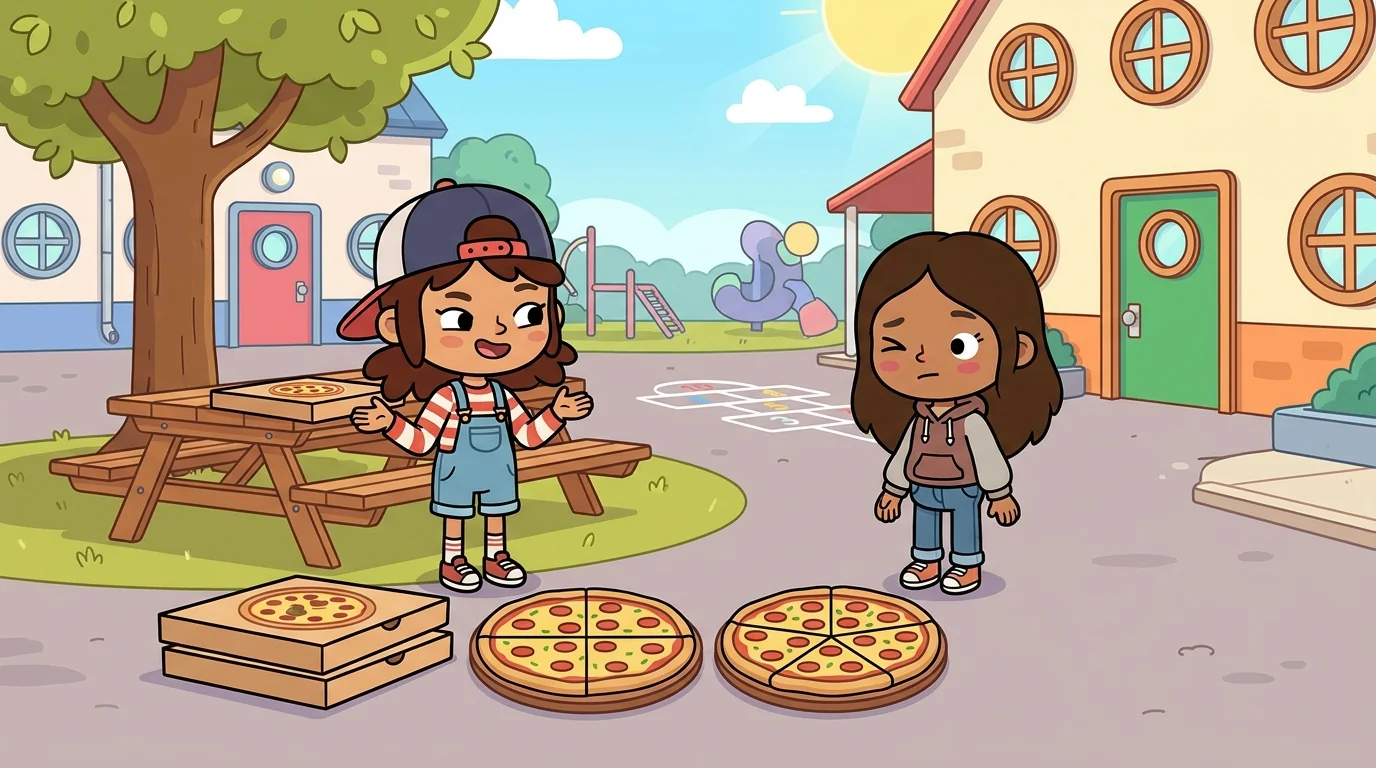
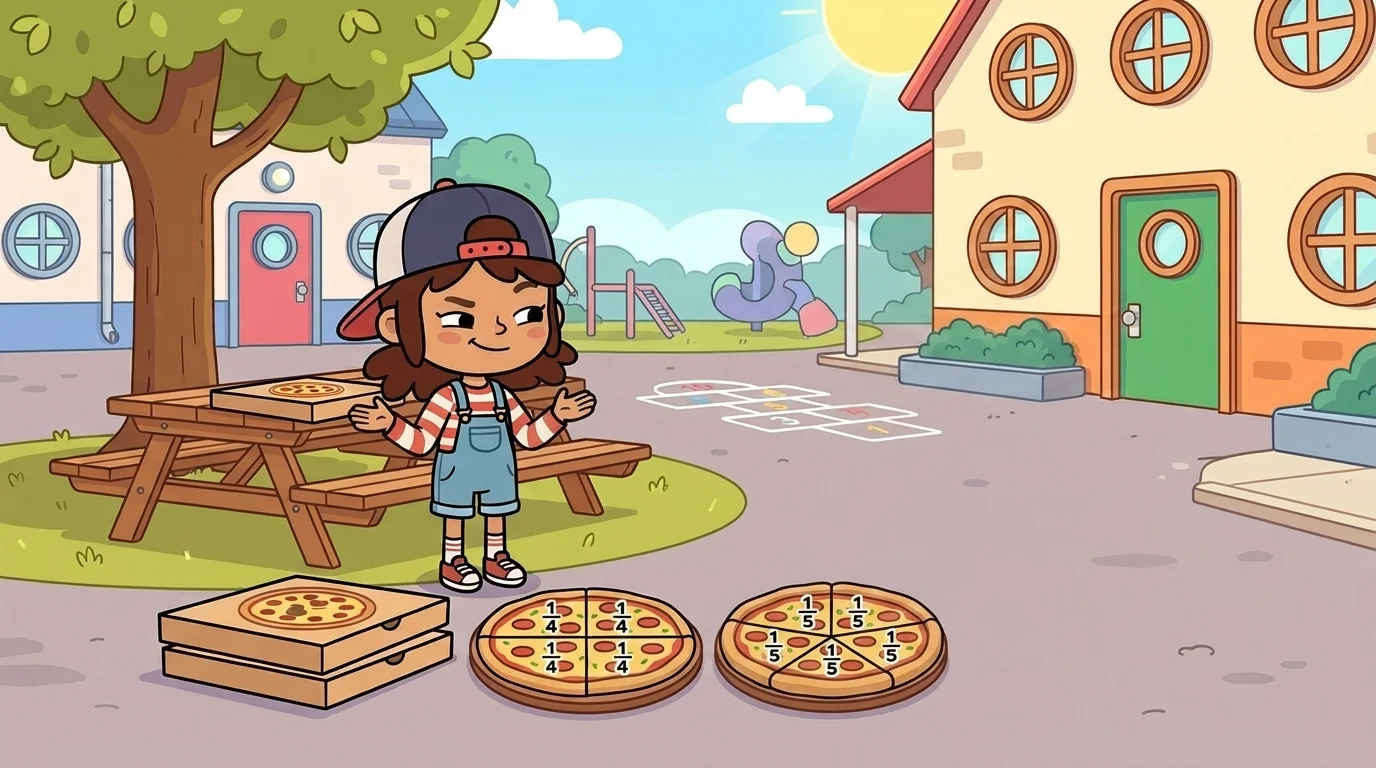
The first time Maya met Pivot Pia, Pia didn't say hello. She just asked a question.
"Would you rather have a quarter of a pizza or one-fifth of a pizza?"
Maya blinked. She was ten years old. She expected a normal "hello." Maybe something like, "Hi, I'm Pivot Pia!" Not a quiz about pizza.
"Um," Maya said. "The bigger one, I guess."
"Which one is bigger?"
"A quarter? A quarter is one-fourth. And one-fourth is bigger than one-fifth, right?"
"Right. So you'd rather have a quarter."
"Yes."
"Okay. Now, would you rather have a quarter of a pizza or one-fifth of a LARGER pizza?"
Maya paused.
"Wait. Um. How much larger?"
"Twice as large."
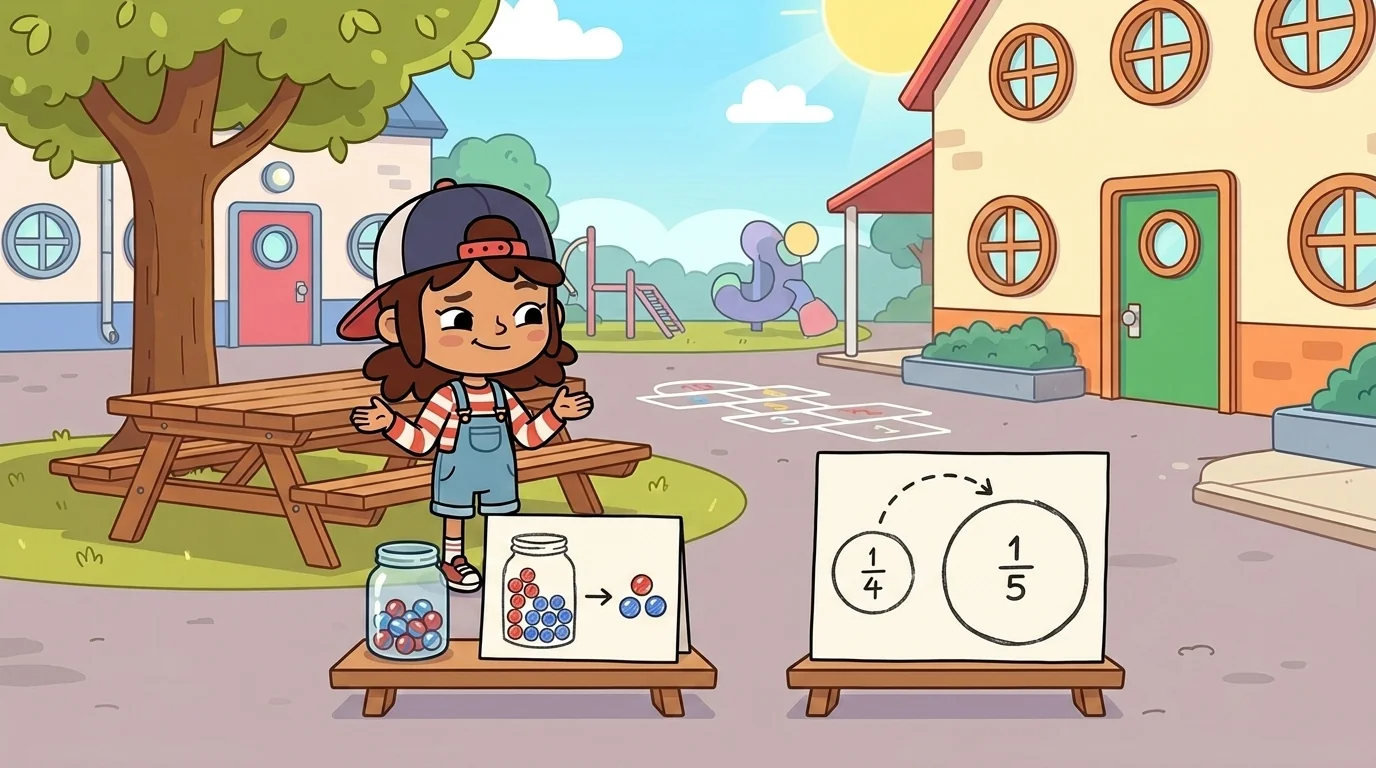
"Oh. Then... one-fifth of the larger one. Because one-fifth of a huge pizza is like two-fifths of the first pizza. And two-fifths is bigger than one-quarter."
"Right."
"Is that right? Let me think."
"Take your time," Pia said. "The question changed when I changed the pizzas. So your answer should change, too. Most kids stick with their first answer. They don't like to change their minds. But you re-thought it. That's what I teach."
"That's the skill you teach?"
"Yep. It's a small skill. But you'll see it everywhere."
Pivot Pia had a small, tricky smile. Maya noticed it never went away.
Over the next few weeks, Maya learned Pia's first skill. It was simple. Notice when you're about to answer the wrong question.
This happened a lot more than Maya thought.
One day, Pia gave her a problem. "There are 20 marbles in a jar. 8 are red. The rest are blue. What's the ratio of red to blue?"
Maya typed 8 to 20.
Pia said, gently, "That's red to total. The question asked for red to BLUE. Read it again."
Maya read it again. Pia was right. Maya typed a new answer: 8 to 12.
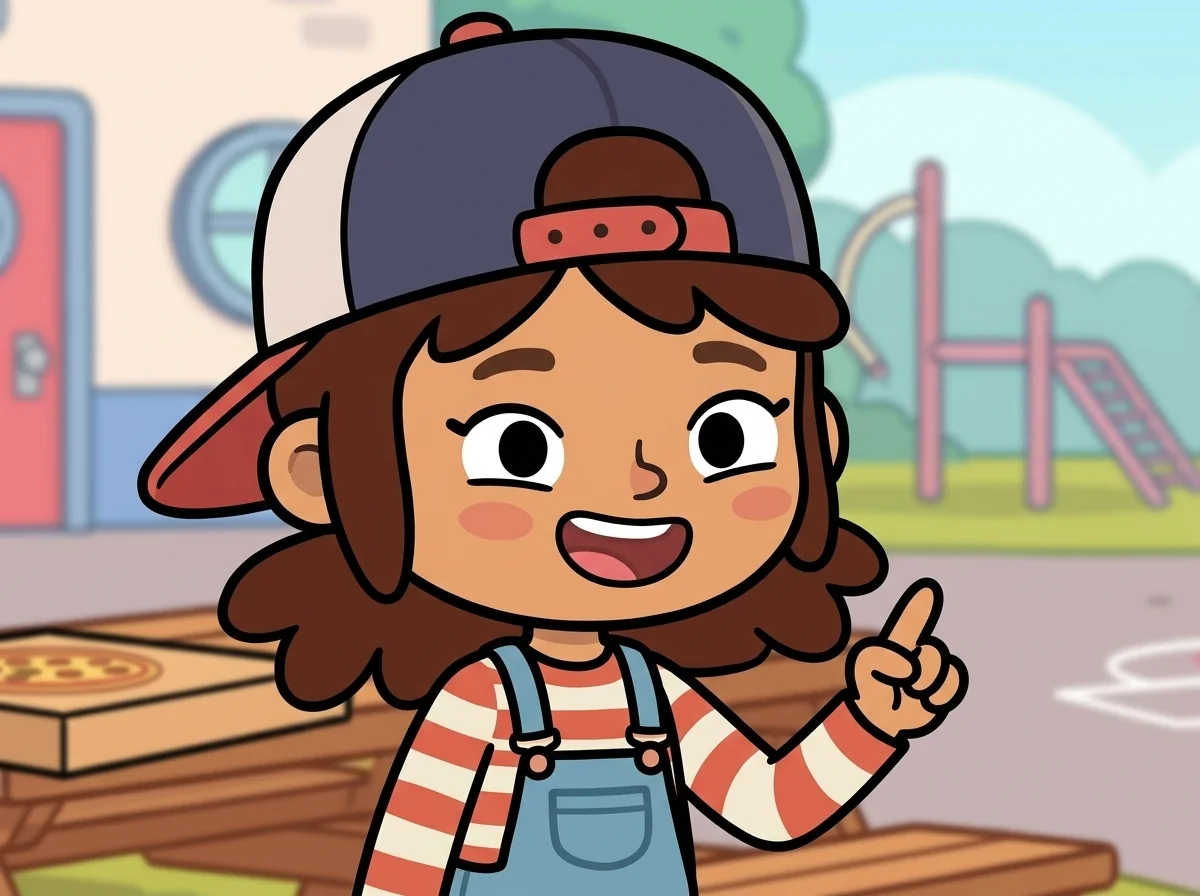
"There you go," Pia said. "You answered a different question the first time. That happens all the time. The best way to catch it is to read the question. Then, before you answer, say it again in your head. Make sure your answer matches the question."
Maya thought about this.
"That seems easy."
"It is easy," Pia said. "And almost nobody does it."
"Why not?"
"Your brain is fast," Pia explained. "Super fast. It skims the words and sees a pattern. It sees 'red marbles, 8, total 20.' Then it starts solving. Vroom! But it solved before it finished reading. It missed the word BLUE. The trick is to catch your brain. Slow it down before it gives the wrong answer."
"That sounds hard, actually."
"It's hard at first," Pia said. "But it's the most useful trick for math. It catches tons of wrong answers. Just read the question twice. If you do that, you'll get about half as many problems wrong. I'm not making that up. I read it somewhere."
Pivot Pia had another trick, too. It was the one she was named for.
The trick was pivoting.
Some problems look really hard. But they have an easier question hiding inside. Pia's job was to find that easier question.
For example: "If you walk at 4 miles per hour, how many minutes does it take to walk a quarter mile?"
That sounded complicated. It had decimals and hours and minutes.
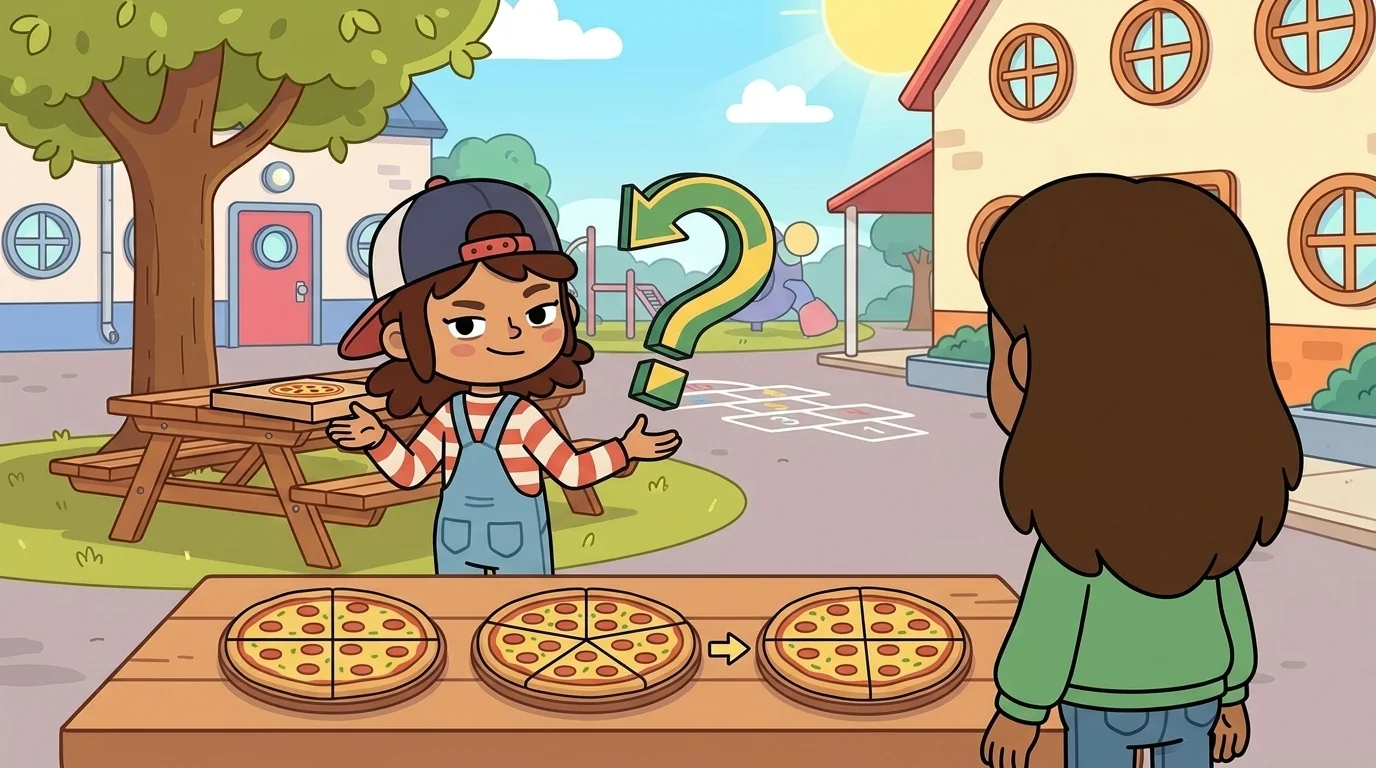
But a pivot could help. An easier question was hiding inside. "If it takes an hour to walk 4 miles, how long to walk one mile? Fifteen minutes. So how long to walk a quarter of a mile? A quarter of fifteen minutes. A little less than four minutes."
Same answer. Different question. The second one was way easier.
"That's pivoting," Pia explained. "You take the question and flip it around. You find an easier way to ask the same thing. Sometimes the flip is small. Sometimes it's huge. When you find a flip that makes the problem super easy? That's the best feeling in the world."
Maya started looking for pivots on her own.
She found them in weird places. A problem about sharing cookies: "How do 4 friends share 13 cookies?" That pivoted to a different question. "If each friend gets 3 cookies, how many are left over?" It was easier to think about, but it gave the same answer. Three cookies each, with one left over.
A problem about a recipe: "If a recipe for 6 people uses 2 cups of rice, how much for 9 people?" That pivoted, too. "How much rice per person? One-third of a cup. Okay, so for 9 people? Three cups."
A problem about percents: "What's 15% of 80?" That pivoted into two smaller questions. "What's 10% of 80? That's 8. What's 5% of 80? That's 4. So 15% is 8 plus 4. It's 12."
The pivots were always the same trick. Find an easier question with the same answer. Then answer THAT one.
"That's the secret," Pia said when Maya told her this. "Most hard problems have an easy twin. The trick is finding it. That's what real mathematicians do all day. People think they just crunch numbers like a calculator. Nope. They pivot. They turn hard questions into easy ones. Then the answer just pops out."
Pia paused.
"Also," she added. "Would you rather have ten dollars now, or one penny that doubles every day for thirty days?"
Maya thought about it.
She said, "The penny that doubles. I read about that one."
"Smart kid. How much does it become?"
"I don't remember. A lot."
"Over five million dollars," Pia said. "The penny pivot wins every time. You'd think everyone would pick the penny. But most grown-ups take the ten dollars. They look at the small thing and grab the big thing. They don't pivot. They don't ask what the small thing becomes."
She smiled her tricky smile.
"That's most of my job," she said. "Teaching kids to ask what the small thing becomes."
Maya grinned back. She noticed a warm, curious feeling settling in — the kind you get when someone hands you a secret you know you'll use forever. She wasn't nervous about tricky questions anymore. She felt ready for them. Excited, even.
Meet Pivot Pia
Pia is cool and casual, but she's secretly a genius. She loves to ask "would you rather" questions. She almost always has a little smile, like she knows a secret you're about to figure out. She teaches two big skills: 1. Always check that you're answering the real question. 2. Find an easier question that has the same answer. (That's a pivot!)
Things you'll hear Pia say: - "Would you rather have a quarter of a pizza or one-fifth of a LARGER pizza?" - "Read the question, then say it in your head before you answer. It's the best way to catch mistakes." - "Find an easier question that has the same answer. Then answer THAT one." - "People think mathematicians are calculators. Nope. They're question-pivoters." - "Most grown-ups take the ten dollars. They forget to ask what the small thing becomes."
Your Journey with Pia
At first, you'll just be answering Pia's weird pizza questions. That's how it starts. But soon, you'll start catching your own mistakes. You'll stop yourself just before you answer the wrong question. It feels great. A few weeks later, you'll find your first pivot. You'll turn a hard problem into an easy one all by yourself. Then you'll start seeing pivots everywhere. You might even help your friends (or your older brother!) with their homework. By the end of the year, you'll be teaching Pia's tricks to other people.
Pia's Crew
- With Estimator Ernie (friends, but they drive each other nuts): Ernie likes to guess the answer right away. Pia always wants to change the question first. They tease each other about it all the time. - With Splitter Sasha (a friendly rivalry): Sasha is an expert at splitting big numbers into smaller, friendlier pieces. Pia is an expert at splitting hard questions into easier ones. They love to argue about which skill is more important. - With Ratio Rio (a team): Rio turns ratios into simple "per one" amounts. Pia turns questions into simple versions. They're both using the same kind of thinking, just in different ways.
A Note from the Creators
Why did we make a character like Pivot Pia? We think she teaches two of the most important skills in all of math. First: Read the question carefully. So many wrong answers happen because someone solves a slightly different problem than the one they were asked. Pia's trick of saying the question back to yourself is a real-life superpower for school. Second: Look for an easier way. This is what real scientists and mathematicians do! They don't just solve hard problems. They are experts at turning hard problems into easier ones. That's a pivot. It's not just a school trick. It's a life trick. Like with the penny that doubles. The person who takes the ten dollars isn't thinking it through. The person who pivots asks, "Wait... what does that little penny become?" That's a question that can change everything.
The NumberSense ensemble
Pivot Pia is part of NumberSense's distributed-narrative cast. Each character embodies a different curricular primitive; together they teach the full subject.
-

Estimator Ernie
Confidently approximate; the first-guess advocate
-
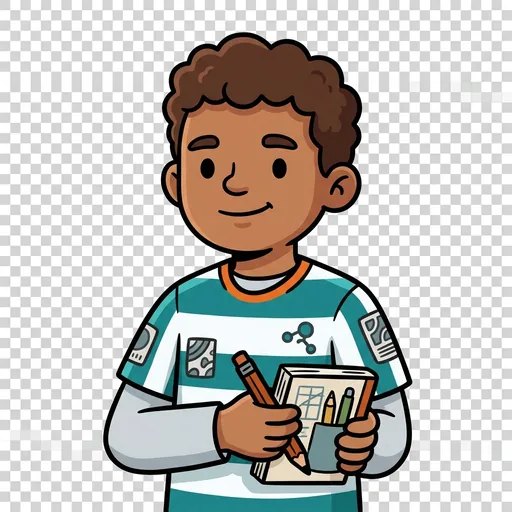
Ratio Rio
Per-something specialist; rate thinker
-

Splitter Sasha
Make-10 and place-value specialist; benchmark builder
-

Nudge Nora
Compensation — nudge a number to a friendly round one, do the easy math, then give back exactly what you borrowed.
-

Doubler Della
Doubling and halving — to multiply, double one number and halve the other; the product stays the same while one side gets friendlier.
-

Landmark Lena
Benchmark numbers — judge any number by how it sits next to friendly landmarks like 0, a half, 10, 50, and 100.
-
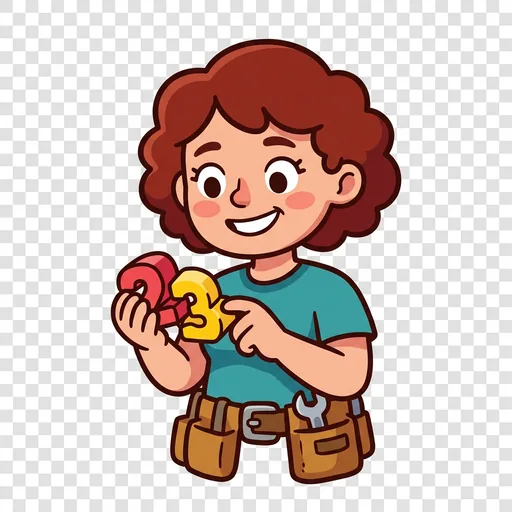
Factor Fiona
Factors and multiples — every number is built from smaller numbers multiplied together, and seeing the building blocks makes hard arithmetic come apart.
-
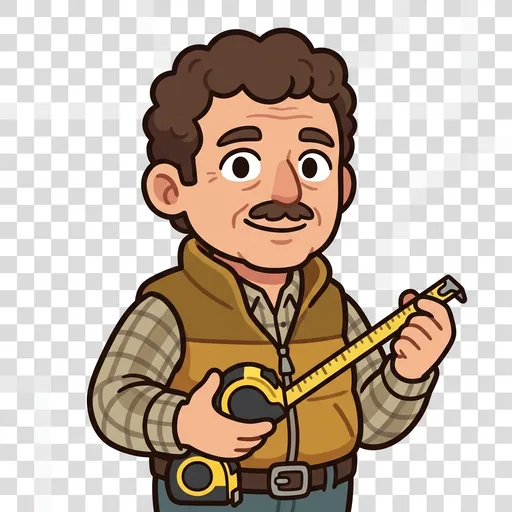
Gap Gus
Constant difference — subtraction is the gap between two numbers; slide both the same amount and the gap stays the same, so you can land on friendly numbers.
-

Bridge Bao
Derived facts — reach a fact you don't know by taking one short step out from a fact you do.