
Pivot Pia
reframing — the "would-you-rather" character; restating the question
Loading audio…
Press play to listen along. The line being read lights up as you go.
Show full transcript
Loading transcript…
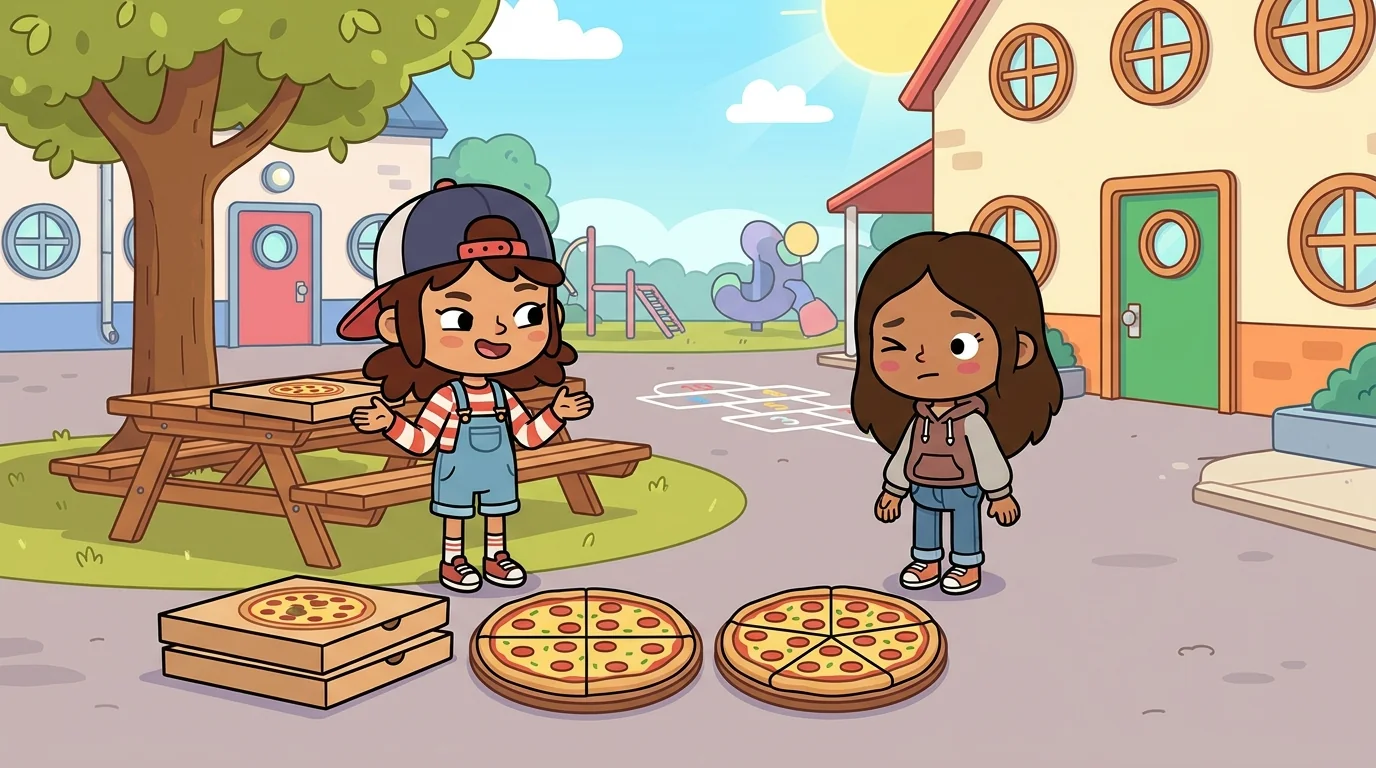
Pivot Pia had a job most people did not understand.
Her job, when she described it to other adults at parties, sounded made-up. She would say: "I teach kids how to notice when the answer they're about to give doesn't match the question they were asked, and how to find easier equivalent questions hiding inside hard ones." The adults at the parties would nod politely. They would not understand. They would ask if that was, like, a math-tutoring thing. She would say no, it was not exactly a math-tutoring thing. They would change the subject.
This had stopped bothering her, mostly, because she had figured out something important about her job over the years.
The thing she had figured out was that her job was actually the most important pedagogy in middle school, but it was the one nobody had named.
Math class taught arithmetic. English class taught grammar. Science class taught facts. None of them taught the skill of noticing whether the question you were about to answer was actually the question that had been asked. None of them taught the skill of pivoting from a hard question to an easier equivalent one. These skills were everywhere in adult life. They were nowhere in school.
Pia had been trying to fix this, one kid at a time, for fifteen years.
Maya, who was fourteen and had been using the app for two and a half years, asked Pivot Pia one afternoon why these skills weren't taught in school.
Pia had answered slowly.
"They're hard to test," she had said. "School likes things that can be tested. You can test arithmetic — there's a right answer to seventeen times nineteen. You can test grammar — there's a right answer to whether to use 'who' or 'whom.' You can test facts. You can't easily test 'did this student notice that their answer didn't match the question?' because the kid will say yes and you can't check."
"That seems like a bad reason to skip it."
"It's a terrible reason. But it's the reason. Schools test what's testable, not what's important. And the result is that kids spend twelve years learning to compute and then graduate without learning to ASK whether their answer makes sense. Which is the only thing that actually matters."
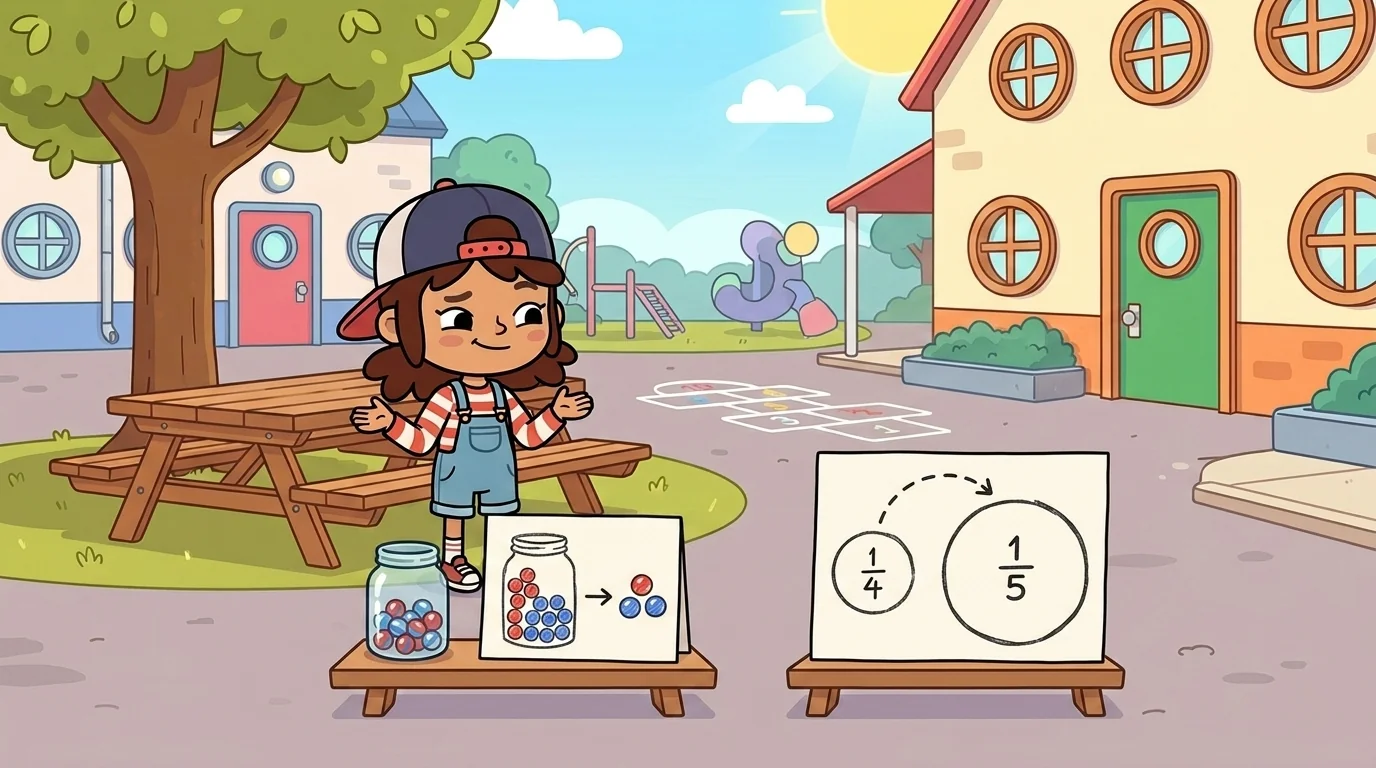
Maya had been quiet.
"How did you learn the skill?"
"I learned it from a woman named Beatrice. She was my eighth-grade math teacher. She wasn't a normal math teacher. She used to assign us problems that didn't have answers — or problems where the obvious answer was wrong — or problems where the question was unclear and we had to ask what it was really asking. She drove half the class crazy. The other half started thinking differently. I was the other half."
"What was an example of one of her problems?"
Pia had smiled the mischievous smile.
"This one. Try it. A car traveling at 60 miles per hour passes a sign. Two hours later, another car traveling at 80 miles per hour passes the same sign, going in the same direction. How far past the sign does the second car catch up with the first?"
Maya had thought.
She had said, "240 miles."
"Show me your work."
"After two hours, the first car is 120 miles past the sign. The second car catches up at a rate of 20 miles per hour relative to the first. So it takes 120 divided by 20 equals 6 hours to catch up. In 6 hours, the second car travels 80 times 6 equals 480 miles. But the question asks how far PAST the sign — wait. The second car traveled 480 miles past the sign. So 480 miles."
"That's right."
"I said 240 first. That was wrong."
"You said 240 first because you computed the distance the second car traveled MINUS the head start, instead of the distance from the sign. That's exactly the kind of mistake Beatrice would have flagged. You caught it in the show-your-work step. That's the skill. The show-your-work step is where you catch your own brain answering a different question than the one asked."
"How did Beatrice teach this?"
"By being mean about it. Loving mean. Every time we'd give an answer, she'd ask us to restate the question. We'd have to read it again, out loud, in front of the class. If our answer didn't match the question, she'd make us figure out why before she'd let us move on. She did this every day for a year. By the end of the year, half of us had installed the habit. The half who installed it have been better at math, and better at adult life, ever since."
What Pia did not tell Maya at this point, because Maya was not ready yet, was that Beatrice had been the one who had named her Pivot Pia.
She had not always been Pivot Pia. She had been Phoebe, growing up. Phoebe had been a perfectly fine name. Phoebe had not, however, captured what she eventually became.
Beatrice had given her the nickname in the middle of eighth grade. It had happened during a problem about probability. Phoebe had answered a question. The question had been "what's the probability of drawing two red marbles in a row from a bag with three red and two blue marbles." Phoebe had given the answer for drawing one red marble (3/5). Beatrice had asked her to restate the question. Phoebe had read it again. Phoebe had blinked. Phoebe had said: "Oh — two in a row. So I need to multiply by the probability of the second draw being red also. Which is... 2/4, because there are 2 red left out of 4 total. So 3/5 times 2/4 equals 6/20 equals 3/10."
Beatrice had smiled. She had said: "That was a beautiful pivot. You changed your answer because you re-read the question. Most students don't do that. You're going to be a pivot person. You're going to grow up to teach other kids to do this. I can already see it."
Phoebe had not known what to do with this.
She had thought about it for years afterward.
In college she had majored in mathematics. She had taken a job teaching middle school. She had taught middle school for ten years. She had become known, among her students, as the teacher who would not let them get away with answering different questions than the ones asked. She had started, in her thirties, calling herself Pivot Pia in her head. The name had stuck.
When the NumberSense app had reached out to her, asking if she would be one of the four characters in a daily-prompt app, she had said yes immediately. She had asked them to use the name Pivot Pia on the screen.
They had asked her why.
She had said: "Because the name is older than the app. The name is from my eighth-grade math teacher. The name belongs to the pedagogy. The pedagogy belongs to her."
They had agreed.
Maya was almost sixteen when Pia finally told her about Beatrice.
It had happened on a slow afternoon at the end of a long week. Maya had finished a problem cleanly. She had restated the question before answering. She had caught a subtle pivot. She had felt the satisfying click of a hard problem becoming easier.
She had said: "Pia. Where did you learn all this?"
Pia had told her. About Beatrice. About the eighth-grade probability problem. About the moment Beatrice had said "You're going to be a pivot person."
Maya had listened.
When Pia had finished, Maya had said: "Is Beatrice still alive?"
"Yes. She's in her seventies. She's retired. She lives in a small house near a river. I visit her once a year."
"Does she know about the app?"
"Yes. I told her when they reached out. I told her I asked them to use the name Pivot Pia on the screen."
"What did she say?"
Pia had smiled.
"She said: 'Good. Now you can teach more kids than I ever did. That's the whole job. The pedagogy doesn't belong to me. It belongs to whoever passes it on next. You're the next.'"
Maya had been quiet for a long time.
She had finally said: "Pia. I want to be the next-next."
"You already are. You've been teaching your cousin. You've been teaching your friend. You catch your brother answering wrong questions at the dinner table. That's the pedagogy. You're doing it."
"It feels small."
"It is small. Small is what it has to be. Pedagogy at this register only moves person to person. One kid at a time. Beatrice taught maybe two hundred eighth-graders in her career. I'm reaching more kids through this app than she ever did in person. That's a real change. But the actual TRANSMISSION still happens one kid at a time, because the skill is small and personal and has to be modeled, not lectured. So you teach your cousin. He teaches his kids. They teach their kids. The line stays alive."
"Will Beatrice know about my cousin?"
Pia had thought about it.
"I'll tell her this year when I visit. She'll be glad. She remembers every kid she taught. She'll add yours to the list."
Maya had nodded.
She had not said much else.
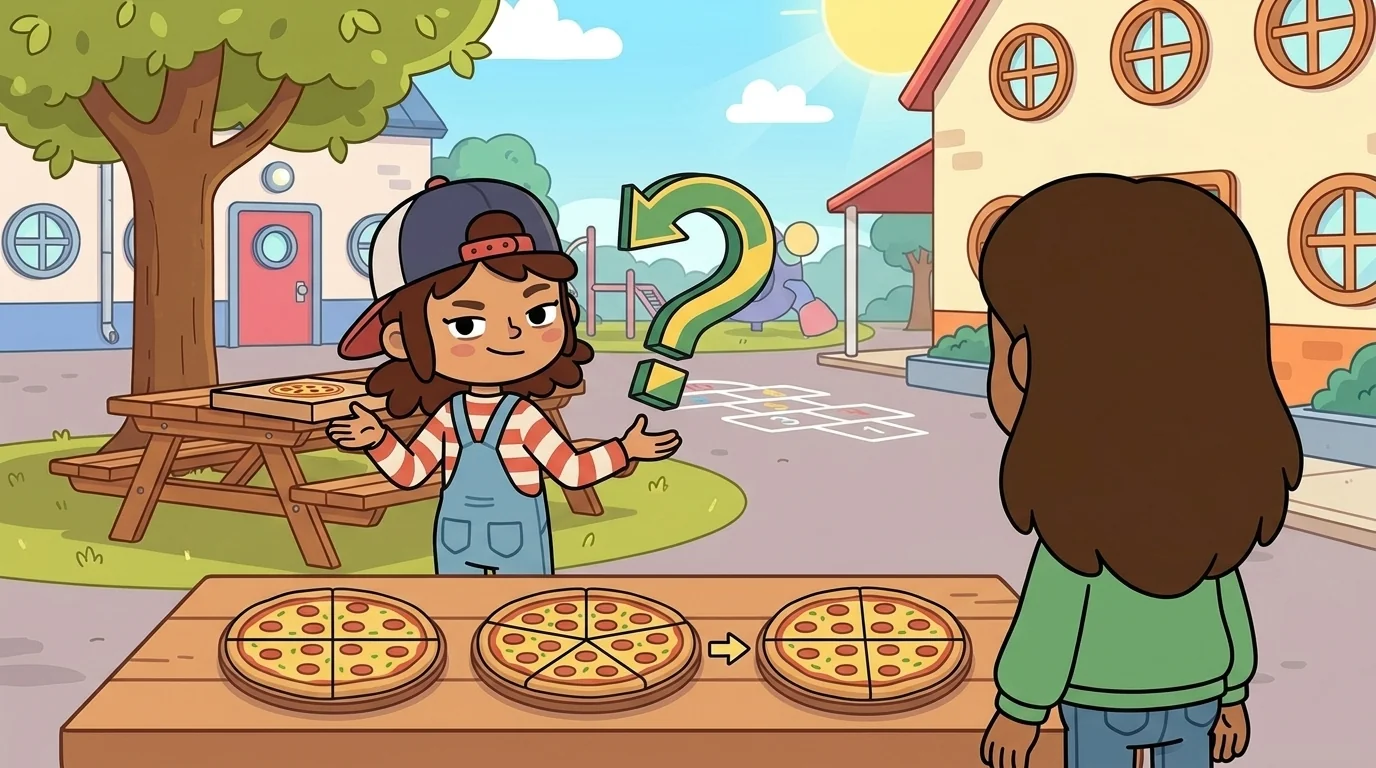
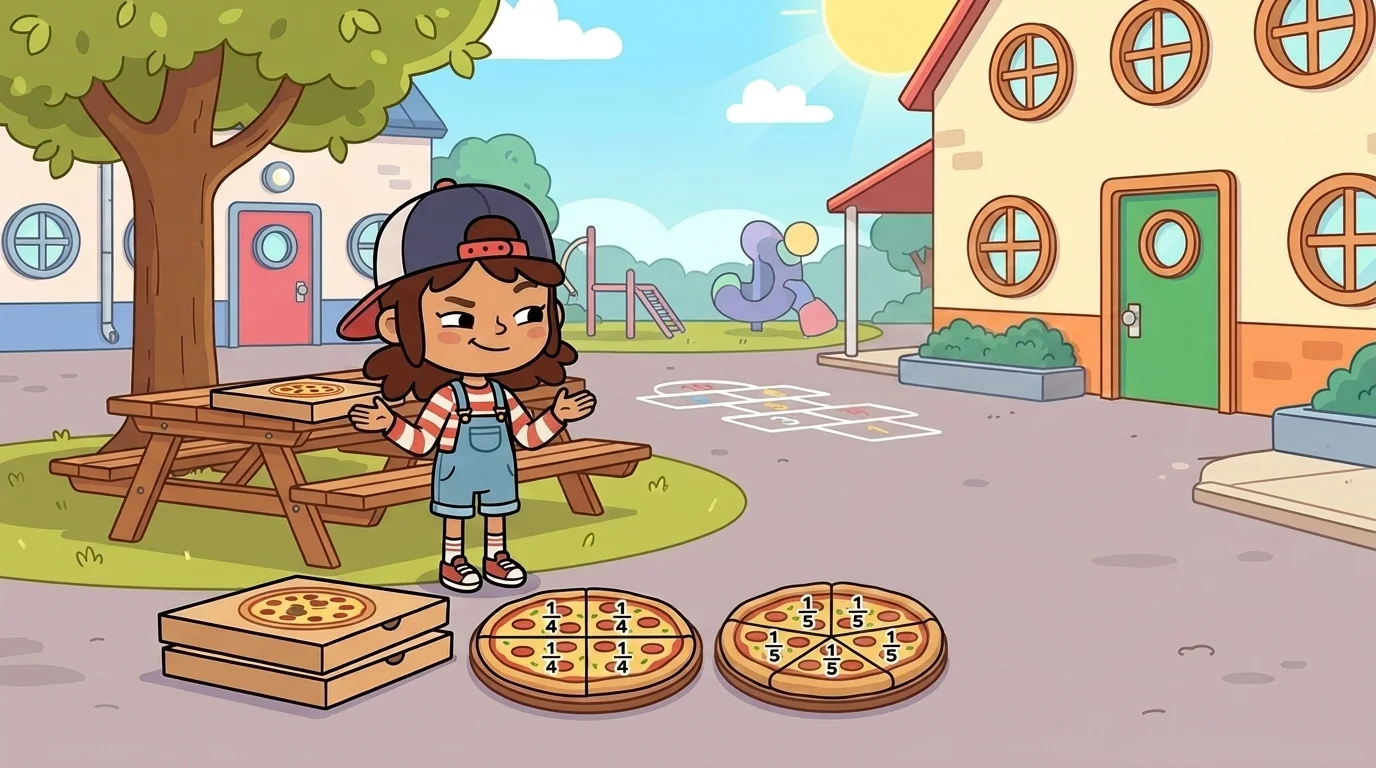
She had gone home that evening and called her cousin and asked him would-you-rather have a quarter of a pizza or one-fifth of a larger pizza.
He had asked how much larger.
She had smiled.
The teaching was moving from one person to the next, the way it always had. And Maya, holding the phone to her ear while her cousin puzzled over the pizza question, felt something warm and steady settle in her chest — the quiet, glad feeling of being part of a line much longer than herself. She didn't feel small anymore. She felt connected.
The NumberSense ensemble
Pivot Pia is part of NumberSense's distributed-narrative cast. Each character embodies a different curricular primitive; together they teach the full subject.
-

Estimator Ernie
Confidently approximate; the first-guess advocate
-

Ratio Rio
Per-something specialist; rate thinker
-

Splitter Sasha
Make-10 and place-value specialist; benchmark builder
-

Nudge Nora
Compensation — nudge a number to a friendly round one, do the easy math, then give back exactly what you borrowed.
-

Doubler Della
Doubling and halving — to multiply, double one number and halve the other; the product stays the same while one side gets friendlier.
-

Landmark Lena
Benchmark numbers — judge any number by how it sits next to friendly landmarks like 0, a half, 10, 50, and 100.
-
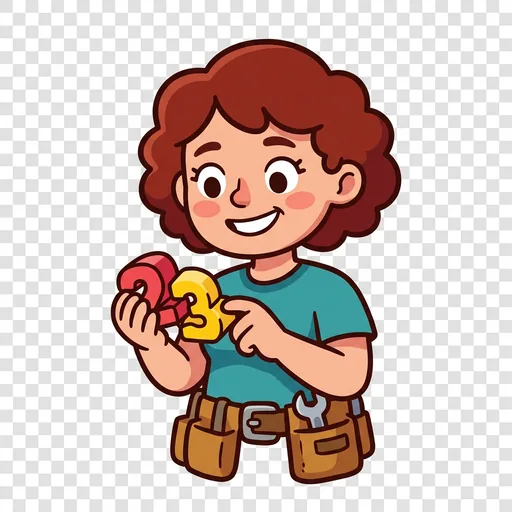
Factor Fiona
Factors and multiples — every number is built from smaller numbers multiplied together, and seeing the building blocks makes hard arithmetic come apart.
-
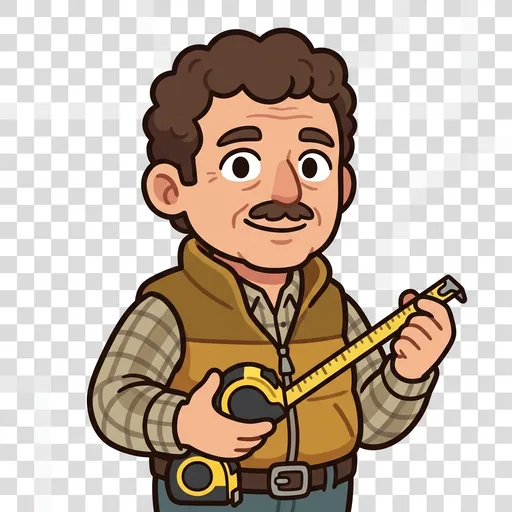
Gap Gus
Constant difference — subtraction is the gap between two numbers; slide both the same amount and the gap stays the same, so you can land on friendly numbers.
-

Bridge Bao
Derived facts — reach a fact you don't know by taking one short step out from a fact you do.