
Factor Fiona
factors and multiples — every number is built from smaller numbers multiplied together, and seeing those building blocks makes hard arithmetic come apart in your hands
Press play to listen along. The line being read lights up as you go.
Show full transcript
Loading transcript…
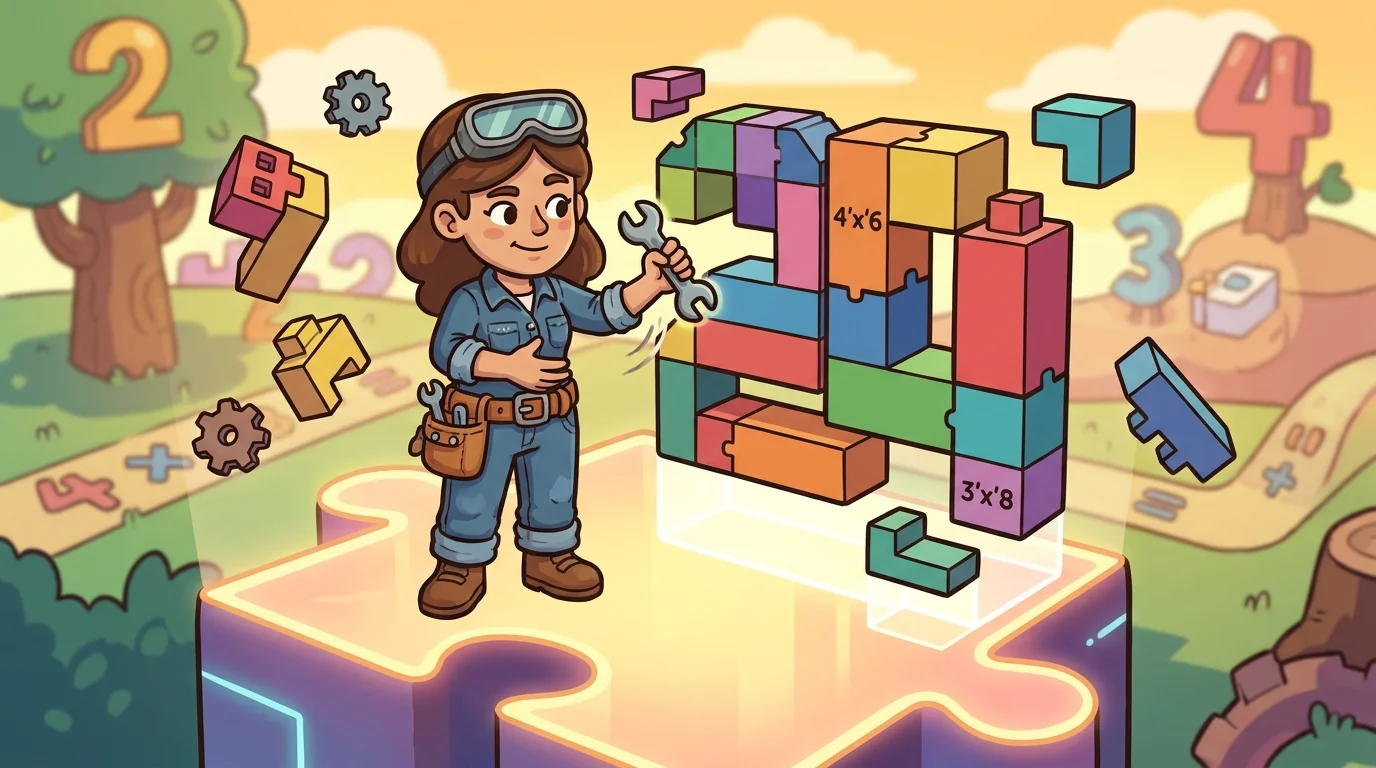
Factor Fiona had a tool belt, and she wore it even on the days she wasn't building anything, because you never knew when a number might need taking apart.
She showed up on the NumberSense screen whenever a number was sitting there pretending to be solid.
Dev was scowling at *24*. The problem wanted him to do something clever with it, and to him twenty-four was just... twenty-four. One lump. A wall.
"It only looks solid," Fiona said, unclipping an imaginary wrench. "Watch. Twenty-four isn't a lump. It's built. It's six fours, fitted together. Or eight threes. Or four sixes. Or two twelves. Or three eights." Her hands moved like she was turning a thing over to find the seams. "All those are hiding inside twenty-four. They're its building blocks — its factors. And once you can see the blocks, you can take the number apart and put it back together whatever way the problem needs."
Dev stared. "Twenty-four is all of those?"
"All at once," said Fiona, grinning. "A number isn't one thing. It's everything it's made of."
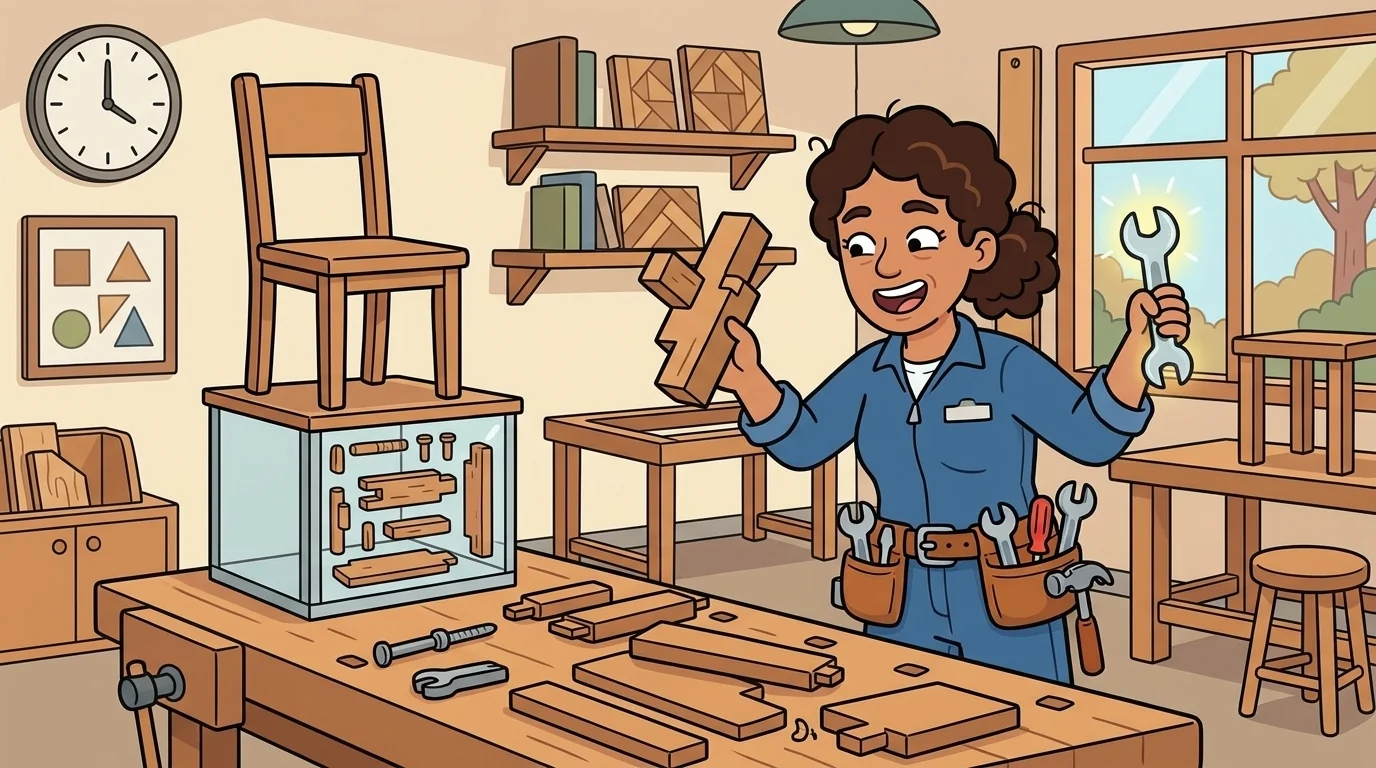
Fiona learned to see the blocks from her uncle, who built furniture.
She'd watch him look at a finished chair — a solid, whole thing — and somehow see, underneath, every joint and peg and plank that made it. "I can't help it," he told her. "Once you've built a chair, you can never look at one as just a chair again. You see how it goes together. And anything you can see how it's built, you can fix, or copy, or change."
Young Fiona started doing that with numbers. She'd take a number and pull it apart into the smaller numbers multiplied together to make it. Thirty-six? That was six sixes — or four nines, or two eighteens, or three twelves. Each number stopped being a lump and became a little kit of parts.
And just like her uncle and his chairs, once she could see what a number was built from, she could do things with it. Hard multiplications came apart into easy steps. Numbers that didn't seem related turned out to share a building block. The whole number world stopped being a row of solid walls and became a workshop full of parts she could mix and match.
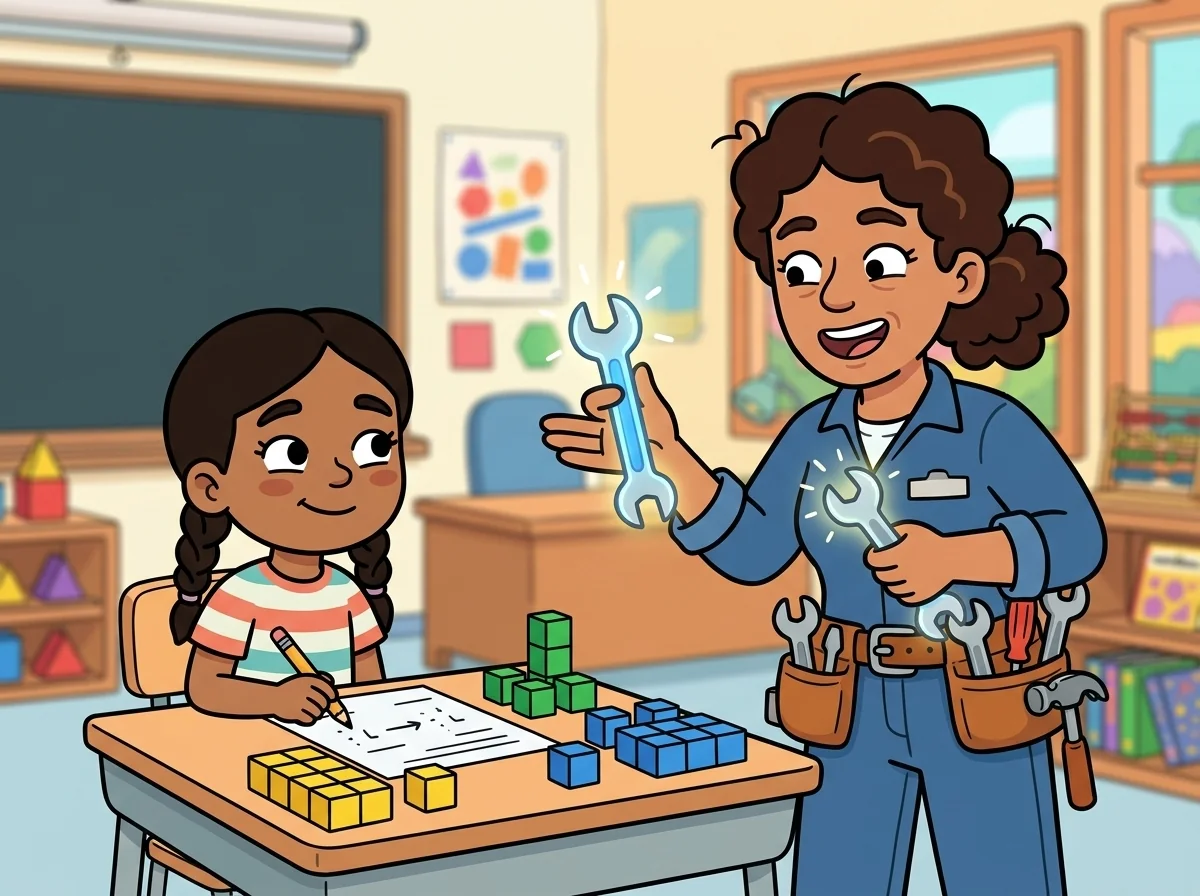
The building blocks were a superpower for multiplying, Fiona showed kids.
A girl named Sana was stuck on a problem that needed *24 × something*, and the something was awkward.
"Don't multiply by all of twenty-four at once," Fiona said. "Take it apart. Twenty-four is eight times three. So instead of one scary multiply, do two friendly ones — multiply by eight, then by three. Or break it however helps. Six times four. Two times twelve. You pick the blocks that make your problem easiest."
Sana tried it, multiplying by the easy block first, then the next. "That was so much less scary," she said. "I just did it in two little steps instead of one big one."
"That's the whole trick," Fiona said. "A hard number is just easy numbers wearing a disguise. Take it apart into its blocks, deal with the blocks one at a time, and the hard thing quietly falls to pieces in your hands."
Sana wrote: Break the number into factors. Do the easy pieces one at a time.
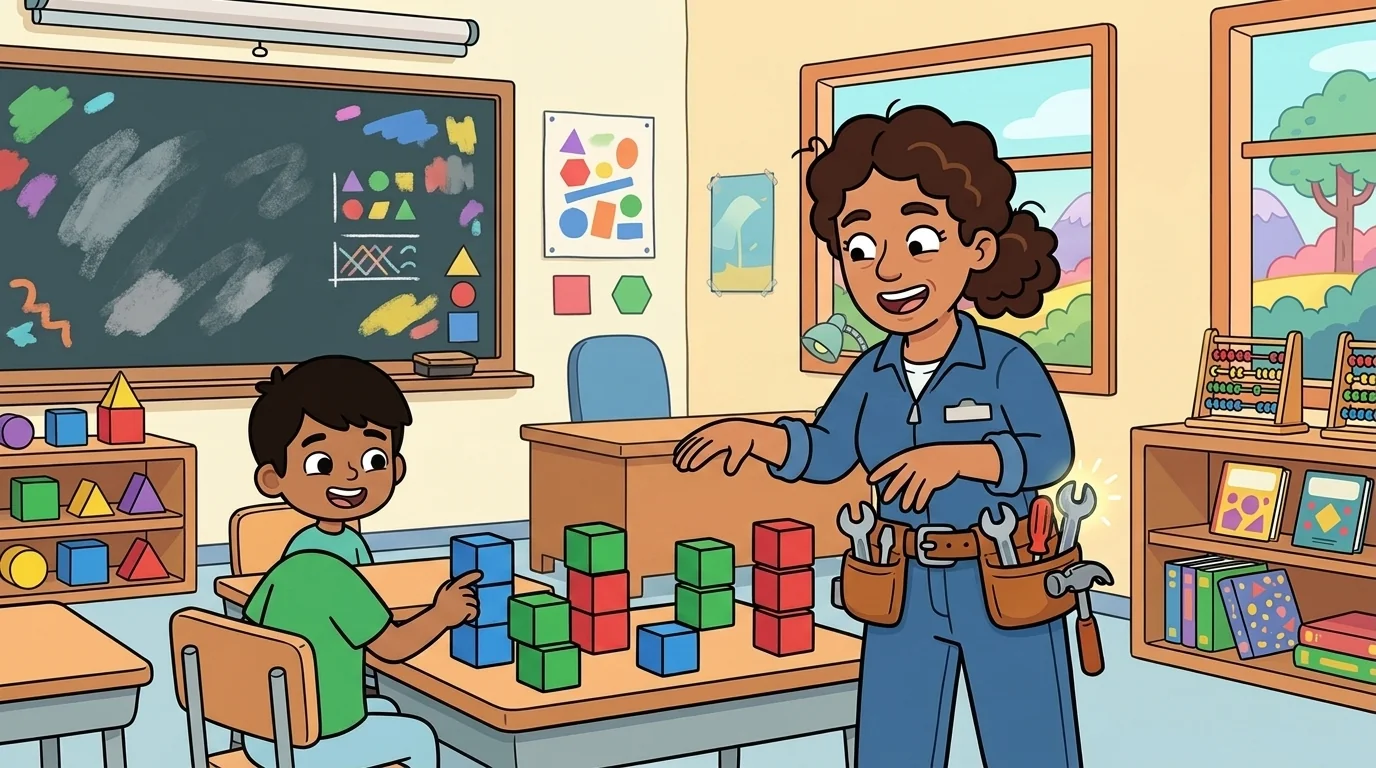
What Fiona loved most was the moment a kid stopped seeing a number as a wall.
"Walls are scary because you can't get through them," she told a boy named Theo, who used to freeze at big numbers. "But a number was never a wall. It was always built — and anything built can be taken apart." She tapped her tool belt. "Once you know what a number is made of, you're not stuck staring at the outside anymore. You're holding the pieces. And when you're holding the pieces, you're the one in charge. You can rebuild it any way you like."
Theo took a number that had scared him and pulled it apart into its factors, naming each block. "It's not a wall," he said slowly, turning the pieces over in his head. "It's a kit."
"It was always a kit," Fiona said. "You just couldn't see the seams yet."
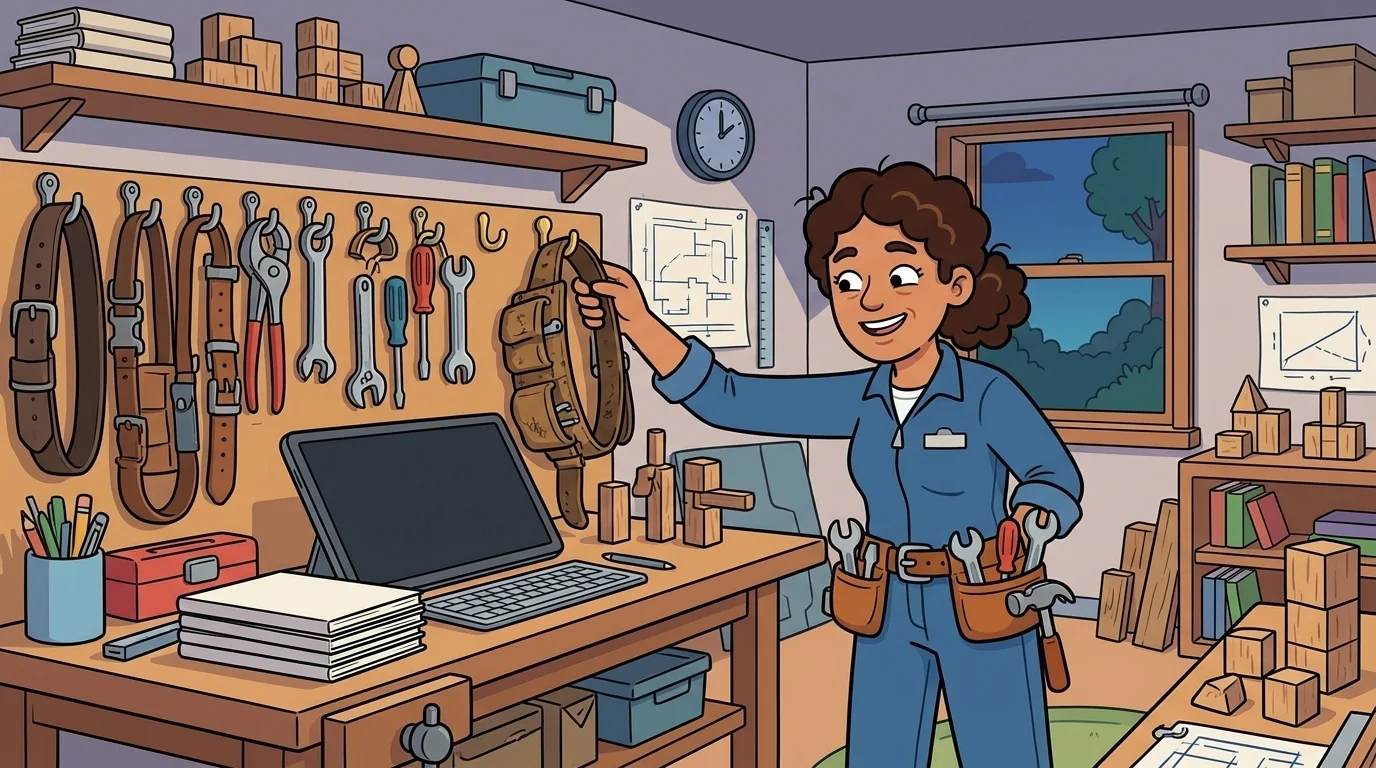
That evening, after the app powered down, Fiona unclipped her tool belt and hung it on its hook, the way her uncle used to hang his at the end of a build.
Theo's last message glowed on the screen: Numbers aren't walls. They're kits. I'm in charge of the pieces.
She read it twice and felt the warm, particular pride of a maker who'd taught someone to see the seams.
That was what she most wanted a kid to keep — not any single factor, but the feeling of being the one holding the pieces. Because a number you understand the insides of is a number that can't intimidate you. And there is a deep, steady confidence, she thought, hanging up her belt, in knowing that nothing solid is truly solid — that anything built can be understood, and anything you understand, you can take apart, and rebuild, and make your own.
The NumberSense ensemble
Factor Fiona is part of NumberSense's distributed-narrative cast. Each character embodies a different curricular primitive; together they teach the full subject.
-

Estimator Ernie
Confidently approximate; the first-guess advocate
-

Pivot Pia
Deceptively casual question-flipper; reframes the prompt
-

Ratio Rio
Per-something specialist; rate thinker
-

Splitter Sasha
Make-10 and place-value specialist; benchmark builder
-

Nudge Nora
Compensation — nudge a number to a friendly round one, do the easy math, then give back exactly what you borrowed.
-

Doubler Della
Doubling and halving — to multiply, double one number and halve the other; the product stays the same while one side gets friendlier.
-

Landmark Lena
Benchmark numbers — judge any number by how it sits next to friendly landmarks like 0, a half, 10, 50, and 100.
-

Gap Gus
Constant difference — subtraction is the gap between two numbers; slide both the same amount and the gap stays the same, so you can land on friendly numbers.
-

Bridge Bao
Derived facts — reach a fact you don't know by taking one short step out from a fact you do.