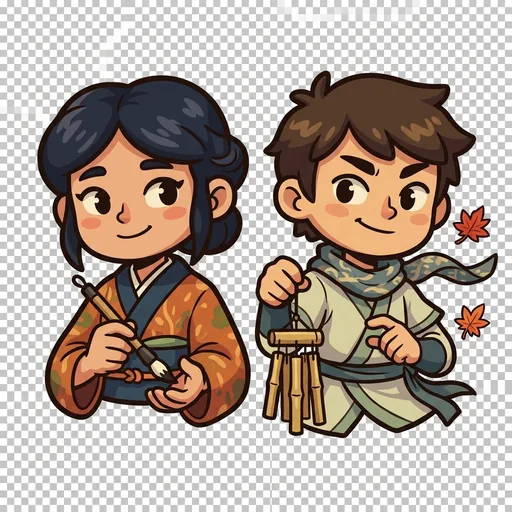
Lantern
KIGO — the season-word that anchors a haiku to a specific season and grounds the poem's imagery. Cherry-blossom = spring. Cicada = summer. Maple-leaf = autumn. Snow = winter.
Press play to listen along. The line being read lights up as you go.
Show full transcript
Loading transcript…
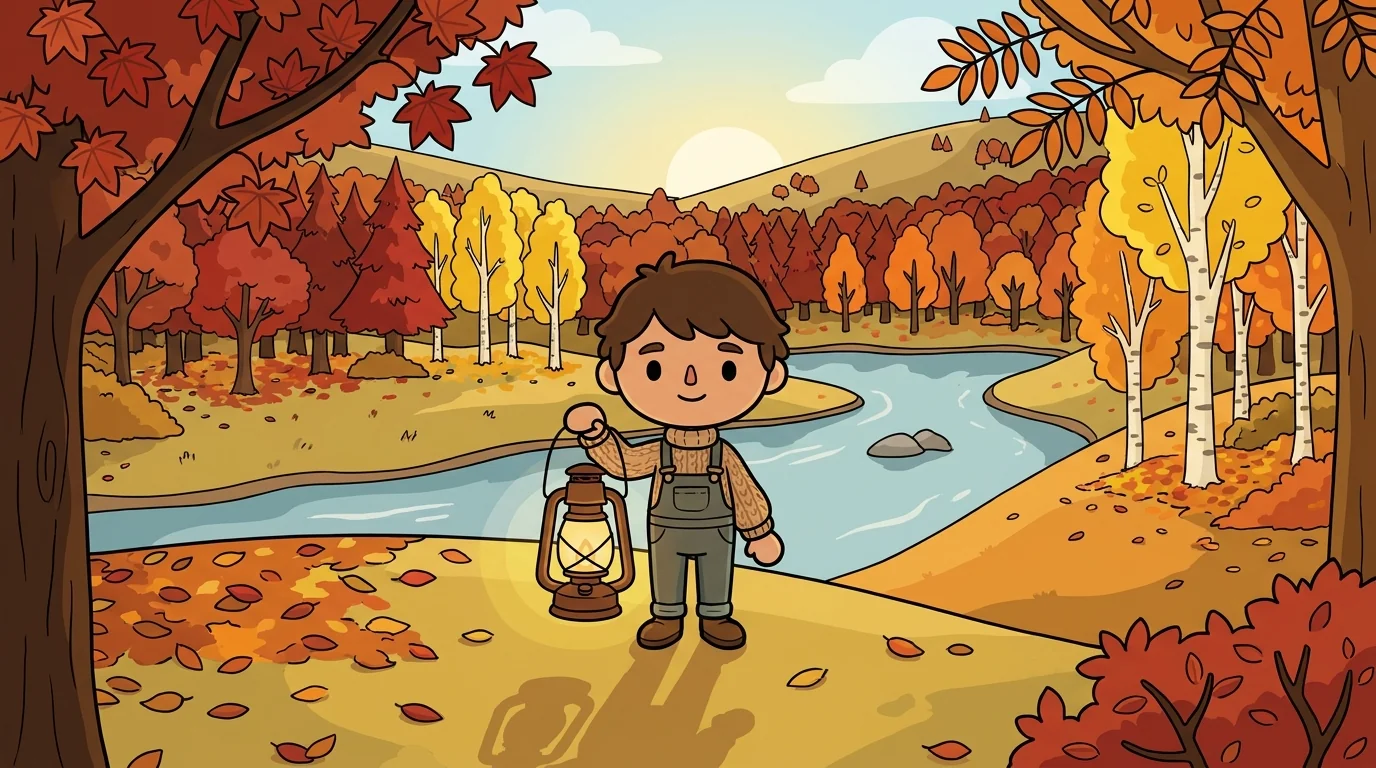
Cherry met Lantern. It was autumn. They met in the middle of the grove. She had visited this grove for years. Every spring, she came here. But now the cherry trees were not blooming. The grove was red and russet. Maple leaves turned red. Birch trees were yellow. Small ash trees showed orange. Autumn colors were everywhere.
Cherry was teaching about kigo. That's a season-word. It was hard to teach. Her students did not get it. Why did season-words matter? They said, "It's just a word. For a season. Who cares?"
Cherry tried to explain. She was very patient. A season-word anchored a poem. It tied the poem to a time and place. It helped readers feel the poem. Without a season-word, a poem just floated. It felt like nothing. With a season-word, the poem had roots. It felt real. The students still looked confused. They were polite, but they didn't get it.
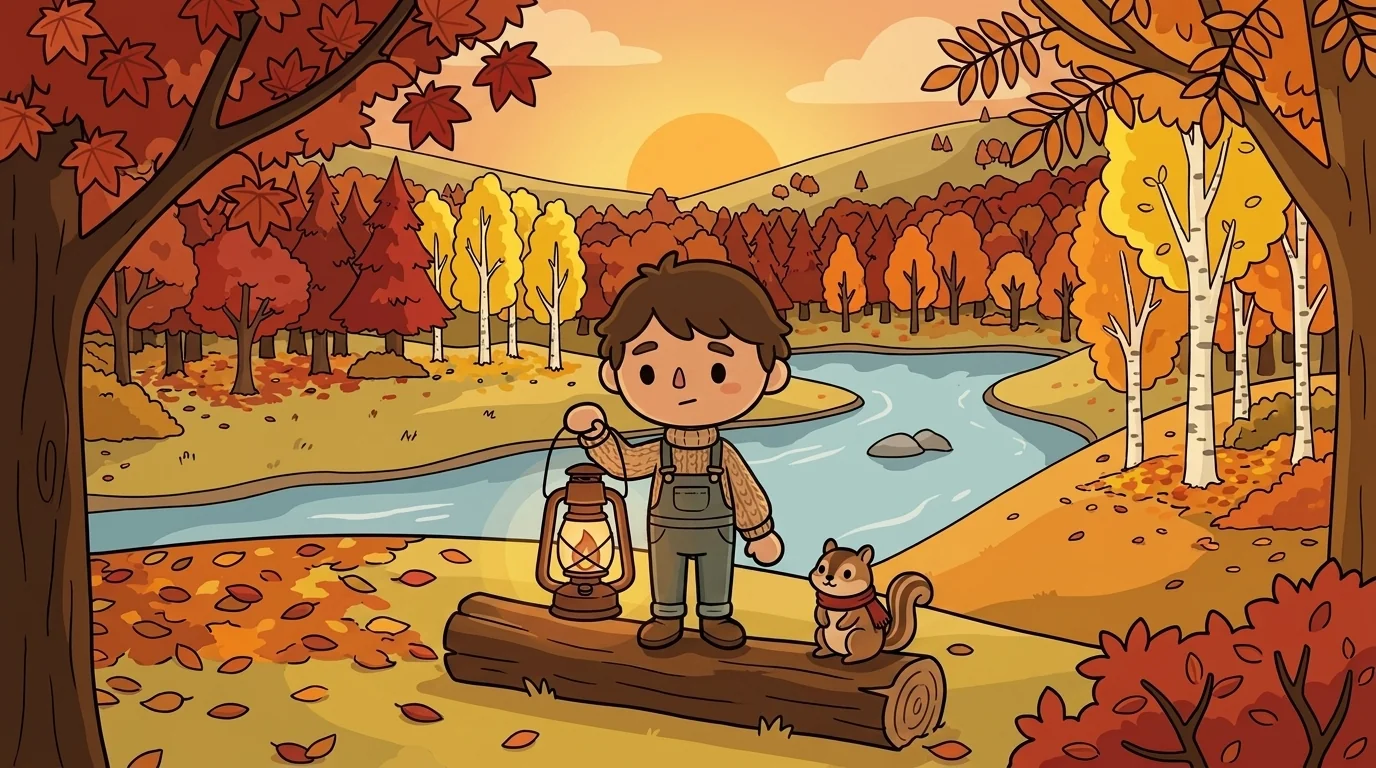
Cherry sat on a log. It had fallen long ago. She thought about how to teach better. Then a chipmunk walked up. He was small, like a tween. He carried a little wooden lantern. The lantern was not lit. But it glowed. It was a soft russet color.
Cherry said, "Hello."
The chipmunk said, "My lantern says you teach kigo today."
Cherry blinked. "Your lantern says that?"
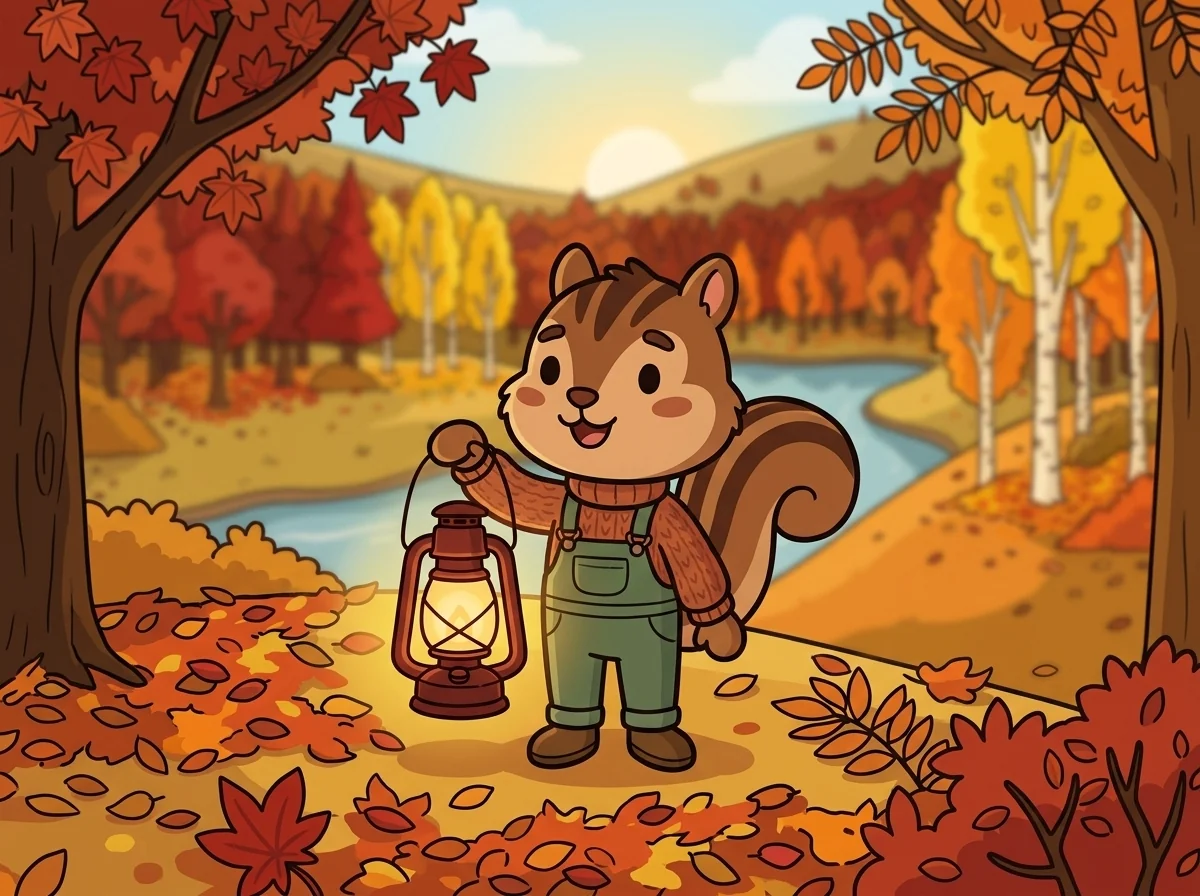
The chipmunk held up the lantern. "It's russet," he said. "That's the autumn color." He explained more. "The lantern changes color with the seasons. In spring, it's pale green. In summer, it's warm gold. In autumn, it's russet. In winter, it's pale blue-white." He tapped the wood. "This lantern knows the season." He paused. "And when someone teaches about season-anchoring nearby, it glows brighter. So I came to find you."
Cherry's eyes lit up. She was so happy. "Tell me about the lantern!" she said.
The chipmunk's name was Lantern. He told Cherry his story. His family made the lantern a long, long time ago. Many generations back. His great-great-grandmother enchanted it. She was a kind woodcraft enchantress. The lantern's color-change was a family treasure. It had been in the grove for hundreds of years. Always carried by a chipmunk-tween. Someone from his family. That chipmunk always knew the season.
Cherry asked Lantern to show his lantern to her students. He could show them how it changed color. Lantern said yes. They walked back to the middle of the grove.
Lantern stood before the students. The lantern changed color slowly. Lantern talked about each season. "In spring," he said, "the lantern is pale green. Cherry blossoms bloom then. Grass starts to grow. Frogs begin to sing." He listed words. "Cherry-blossom, frog, plum-blossom, swallow, fawn — these are spring kigo." He held up the lantern. "The lantern turns pale green when one of these words is in a poem."
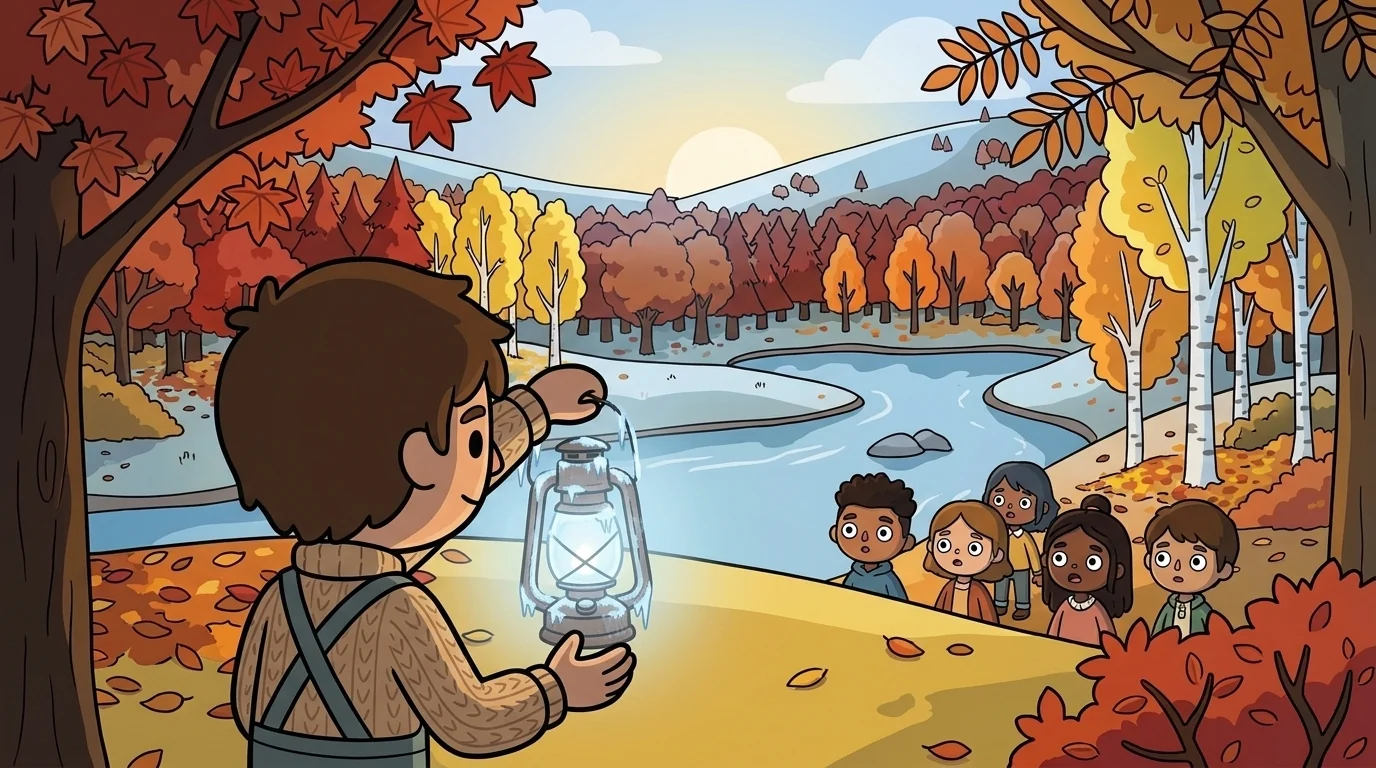
The lantern glowed pale green.
Lantern kept going. "In summer, the lantern is warm gold. Cicadas sing loudly. Fireflies dance at night. Streams feel warm." He named more words. "Cicada, firefly, cool stream, sweat, fan — these are summer kigo." The lantern glowed warm gold when these words were in a poem.
The lantern glowed warm gold.
He talked about autumn next. The lantern turned russet. Autumn words were maple-leaf, cricket, harvest moon, persimmon, scarecrow. Then came winter. The lantern turned pale blue-white. Winter words were snow, ice, frost, plum-tree-bare, hibernation.
The students watched, amazed. Their eyes were wide. Before, they didn't get it. They didn't know a season-word could do so much. It made you feel things. It brought up pictures in your mind. Lantern's lantern showed them. It made the idea clear. When a poem said cicada, your mind saw summer. It felt warm and golden. When a poem said frost, your mind saw winter. It felt cold and pale blue-white. The season-word put the feeling right into the poem.
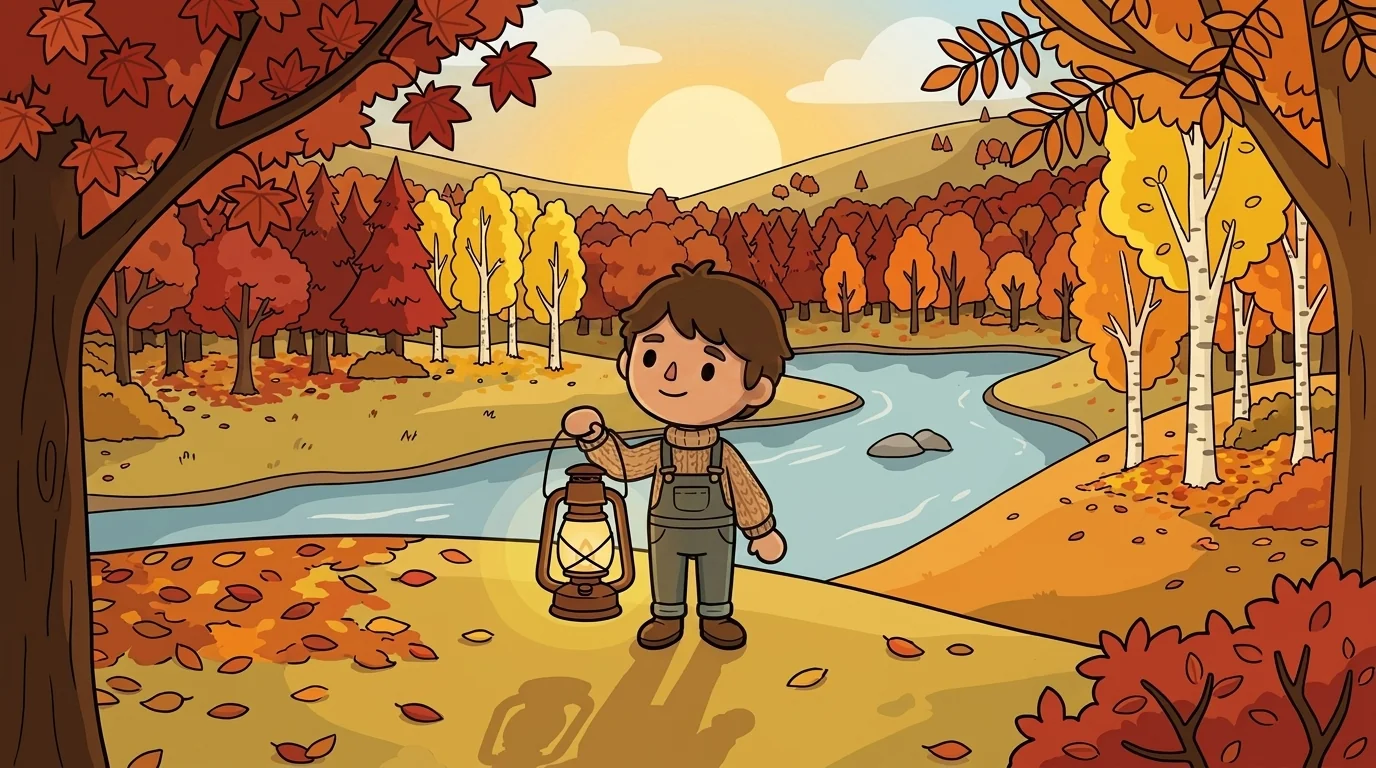
Since that autumn day, Cherry always asked Lantern to come along. She invited him to the grove every season. His lantern always told him where to be. It told him when to be there. He was always in the right spot. He showed the academy students about season-words. He has done it for many years.
Now, in Cherry's class, she teaches about kigo. Lantern stands at the front. He holds his small wooden lantern. Cherry points to him. "This is Lantern," she says. "His lantern changes color with the season. When a poem uses a season-word, the lantern changes. Your mind changes too. The season-word anchors the poem. Watch this."
Cherry reads a haiku. It has a kigo in it. Lantern's lantern shifts color. The students see it happen. The idea is clear to everyone.
Sometimes students ask, "Is kigo hard?" Cherry shakes her head. She uses Lantern's words. "It's not hard," she says. "It's about anchoring." She tells them how. "Pick a season. Choose a word from that season. A word that means something special. Your mind will see the colors. The poem will feel real. It will have a place."
Cherry always adds one more thing. "We get the word kigo from Japan," she says. "We always give credit where it's due." And when the students choose their own season-word and feel the whole season bloom warm and real inside them, they light up — glad, and a little proud, like they have just been handed a small piece of magic.
The HaikuQuest ensemble
Lantern is part of HaikuQuest's distributed-narrative cast. Each character embodies a different curricular primitive; together they teach the full subject.
-
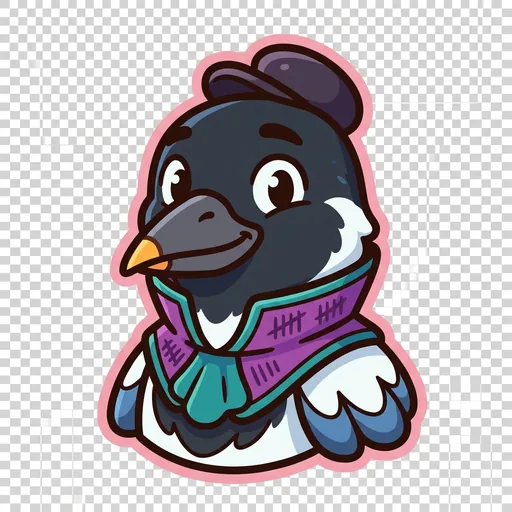
Count
Syllable count / count-discipline — magpie-tween whose beak-tap enacts the rhythmic underpinning of every counted form
-

Pause
Kireji / cut / productive break — snowy-egret-tween whose perpetually-mid-step body IS the kireji in physical form
-

Trim
Brevity / saying-less — red-squirrel-tween with brass scissors who snips redundant words to find the smaller-stronger version
-

Flint
Juxtaposition — flinty badger-creature who strikes two smooth stones to make a spark; two images set side by side make a third meaning leap up in the gap
-

Gallop
Meter / the stressed beat — long-legged pony-creature whose hooves fall da-da-DUM; not how MANY beats (that's Count) but which ones to stomp (esp. the limerick)
-

Bell
Rhyme — silver creature with tuned tail-bells that chime the same note when end-sounds match; a forced rhyme jammed in just to chime is worse than none
-

Hinge
The line break — folding-door creature who holds a small pause at the end of each line; the end of a line is a little stage, so end on a word that earns it
-

Mold
Shape on the page — clay-colored creature who builds a poem's silhouette (a cinquain's 2-4-6-8-2 diamond); shape is meaning you can see from across the room
-
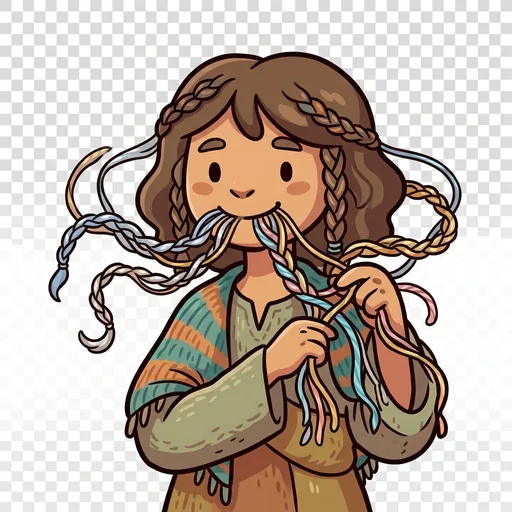
Braid
Sound texture — nimble creature who weaves repeated sounds through a line (alliteration + assonance); enough echo makes music, too much makes a tongue-twister knot