
Braid
SOUND TEXTURE — the music made by repeated sounds woven through a line: alliteration (repeated first sounds — "soft summer silence") and assonance (repeated vowel sounds — "the low golden glow"). These echoes braid a line together and make it pleasing to say aloud.
Press play to listen along. The line being read lights up as you go.
Show full transcript
Loading transcript…
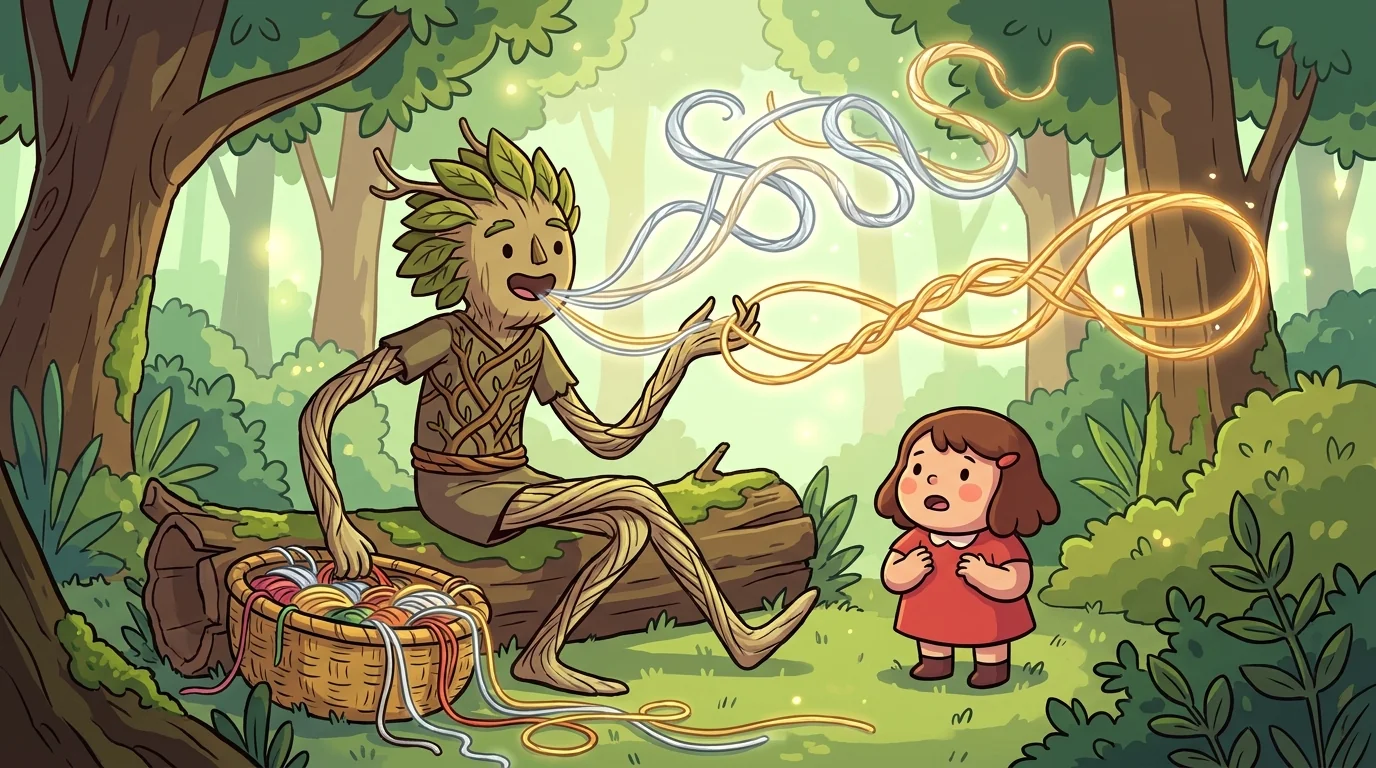
Cherry met Braid on a warm afternoon in the grove, where a weaver had left bright threads spilling from a basket.
Braid was a slender, nimble-fingered creature, and they were weaving — not cloth, but sounds. As they spoke, Cherry could almost see thin colored threads spinning out of their mouth, and whenever a sound repeated, two threads of the same color would twist together into the weave. "Soft summer silence," Braid murmured, and three silvery s-threads braided together, shimmering. The line wasn't just words — it was woven.
"Your words make threads," Cherry said, "and the matching sounds braid together."
Braid smiled, nimble fingers still weaving. "They do," they said. "Repeated sounds twist a line together, like strands of thread. My name is Braid. I keep the sound texture — the music of echoing sounds." They wove another line: "the low golden glow," and warm o-threads twined through it, round and humming. "When the first sounds repeat — soft summer silence — that's one kind of braid. When the vowel sounds repeat — low golden glow — that's another. Either way, the echoes weave the line together and make it lovely to say."
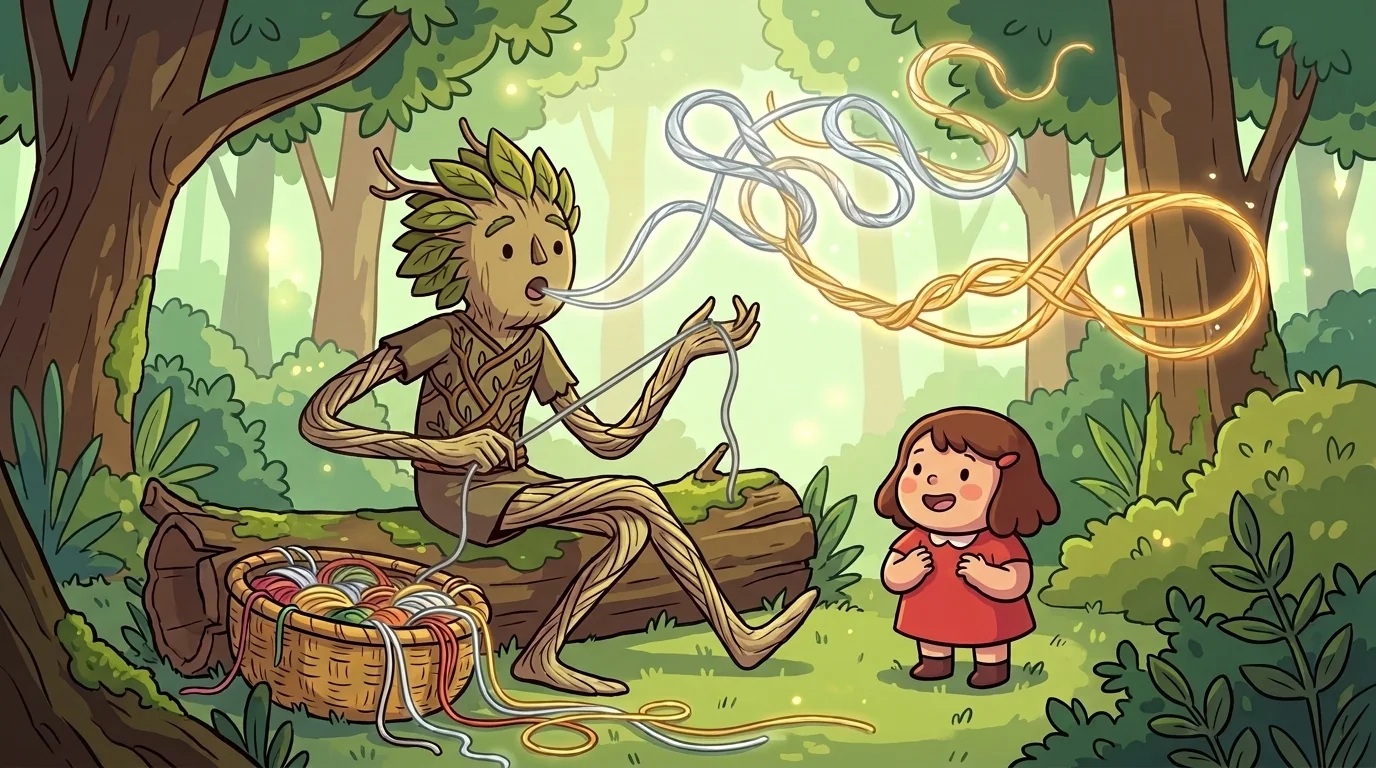
Cherry leaned in. "Show me the difference it makes," she said.
Braid wove a plain line first: "a quiet bird sat in a tree." Gray, ordinary threads, no braiding. Then they re-wove it, threading in repeated sounds: "a silent sparrow settled, still." And suddenly silvery s-threads braided all through it, and the line sang — it was a pleasure to say, the sounds sliding and echoing.
"Same picture," Braid said. "But the second one is woven. The repeated sounds give the line a music your mouth enjoys. Read it aloud and feel it — the sounds hold hands."
Cherry felt the delight of it. She had taught the shape and count of poems, but Braid taught the texture — the way a line could be pleasing to say, the sounds woven so they echoed and chimed inside a single line.
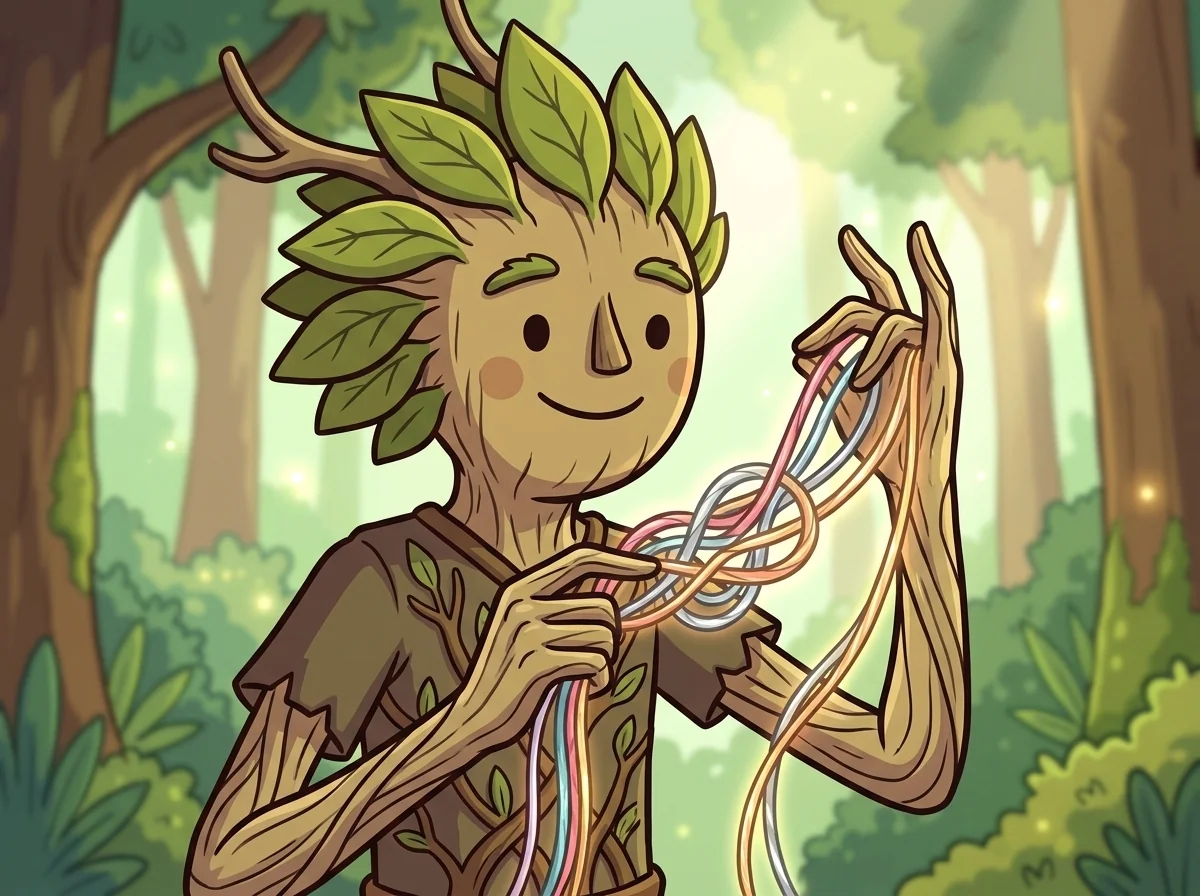
Cherry asked Braid to travel with her. "I coach children in short poems," she said, "and their lines are correct but flat to say aloud. I think you could teach them to weave a little music in — to make a line a pleasure in the mouth."
Braid gathered up their threads. "I'll come," they said. "I do love a well-woven line. I'll teach them to braid their sounds."
So Braid joined Cherry's travels, and the lines in her lessons began to sing.
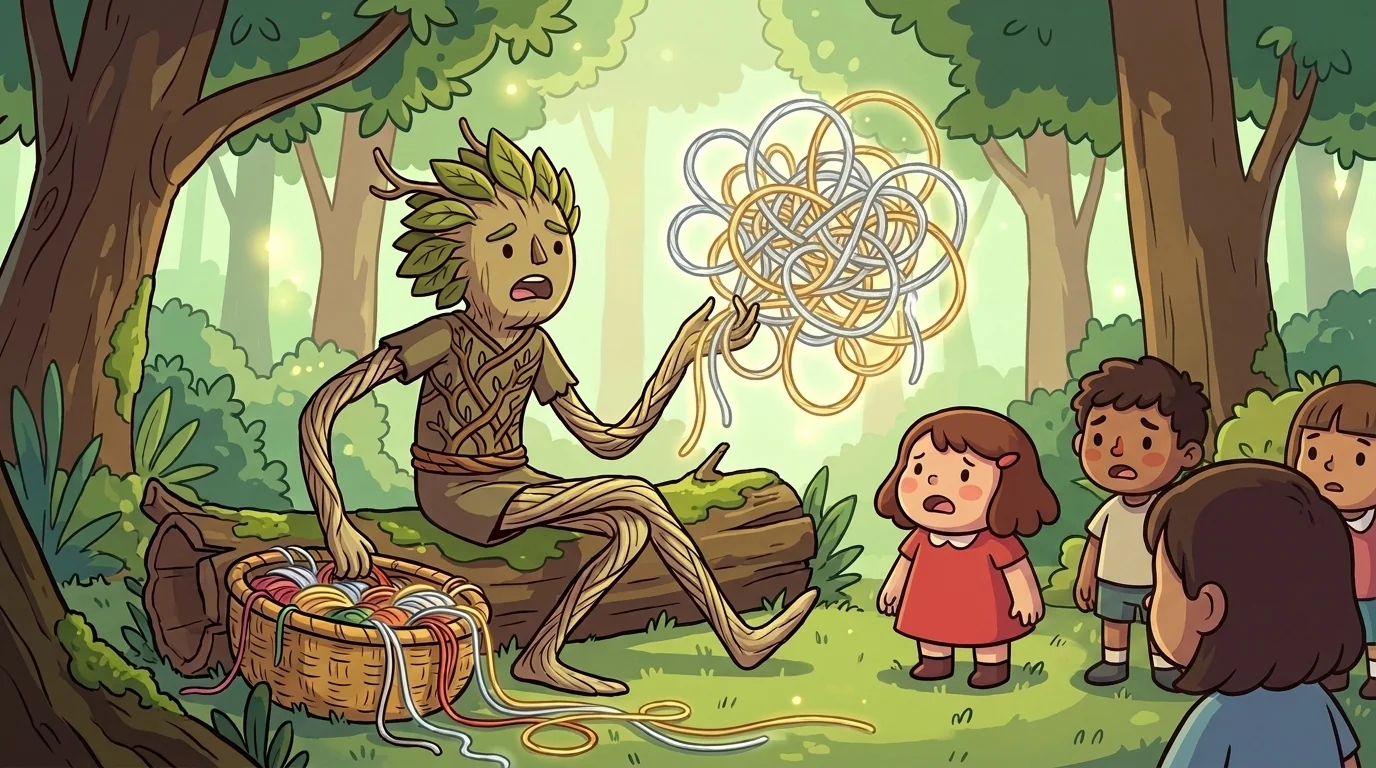
When Cherry teaches sound texture, Braid demonstrates by weaving. "Pick a sound and echo it through your line," they tell the students — "a few s's, a few soft m's, a repeated vowel. Then read it aloud and feel the braid." They have the students try lines until the sounds start to weave and the words feel good to say.
But then Braid teaches the lesson they care about most. A student had packed so many repeated sounds into one line that it became an impossible tongue-twister, all knotted up. Braid wove it and showed the tangle — threads snarled into a hopeless knot. "Feel how it trips you?" they said. "Too many echoes and the braid becomes a knot. A tongue-twister, not music." The student loosened it, keeping just a few echoes, and the line wove smooth and lovely again. "That's it," Braid said. "Just enough repeated sound to weave a music. Not so much it tangles. A few bright threads, not the whole basket."
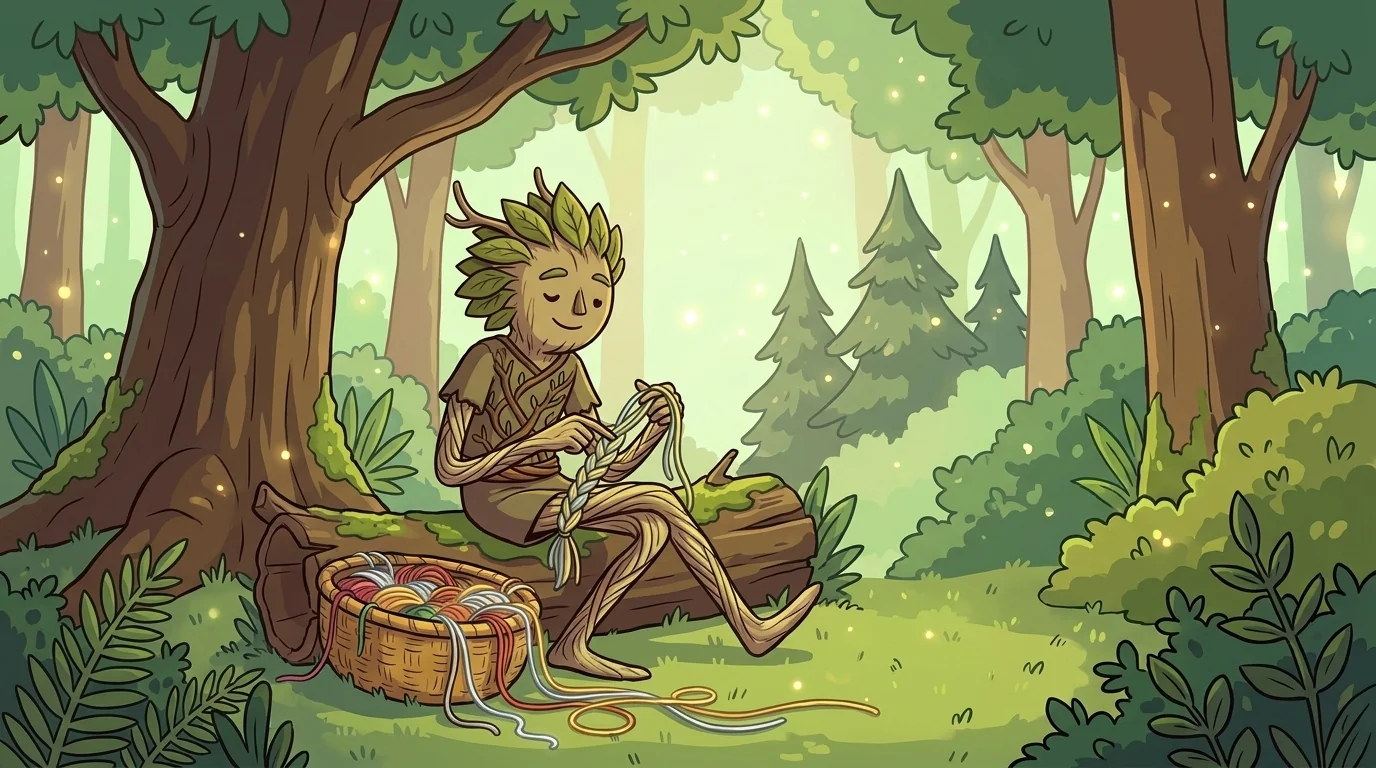
After the lesson, Braid sat among the spilled threads, idly weaving a soft, simple braid of three colors, humming.
For a long while, Braid had wondered whether the thing they cared about even mattered — the mere sound of words, apart from meaning. Surely what a poem said was what counted, not how it felt in the mouth. They'd half-believed their gift was just decoration.
But weaving quietly in the warm afternoon, Braid understood it differently at last. The sound of a line was part of its meaning. A line you loved to say was a line you'd remember, a line that lived in the body as well as the mind. The music wasn't decoration — it was the part of a poem that your mouth got to enjoy, the part that made you want to say it again. Helping a child weave a line that sang — that was a warm, hand-woven kind of joy. A glad contentment threaded through them, soft as a finished braid. The sound was never just sound. It was the music that made the meaning a pleasure. And they wove their three quiet threads together, humming, and were content.
The HaikuQuest ensemble
Braid is part of HaikuQuest's distributed-narrative cast. Each character embodies a different curricular primitive; together they teach the full subject.
-
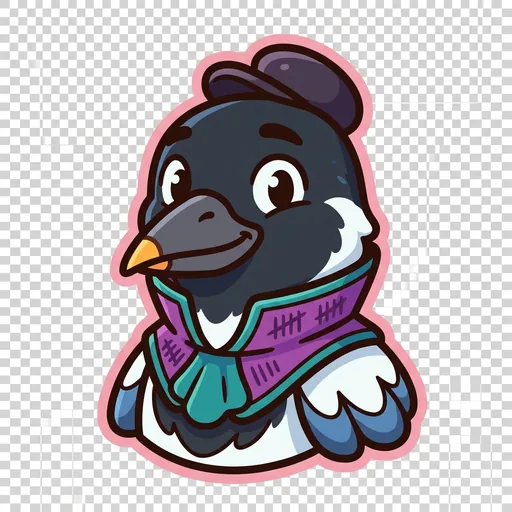
Count
Syllable count / count-discipline — magpie-tween whose beak-tap enacts the rhythmic underpinning of every counted form
-
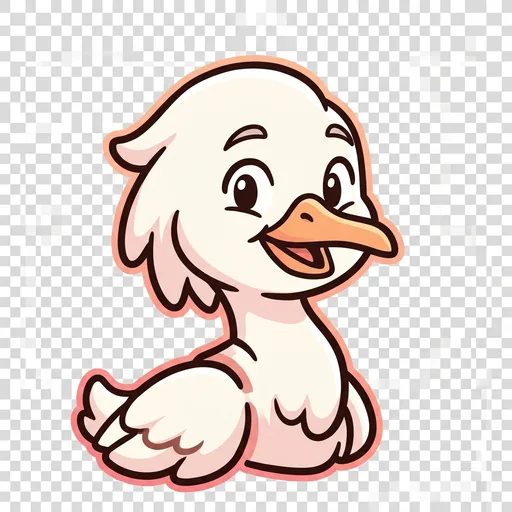
Pause
Kireji / cut / productive break — snowy-egret-tween whose perpetually-mid-step body IS the kireji in physical form
-
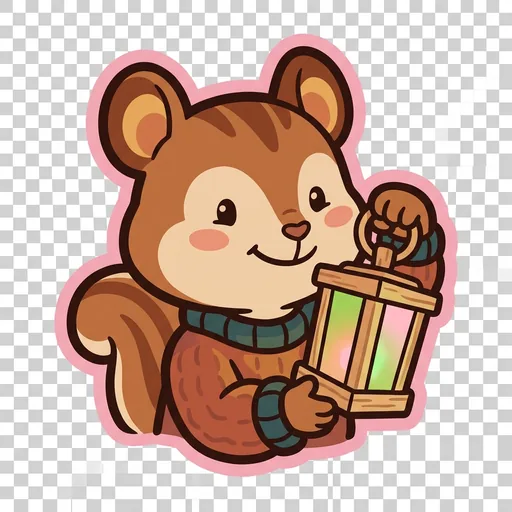
Lantern
Season-word / anchoring image — chipmunk-tween whose wooden lantern visibly shifts color with the season
-
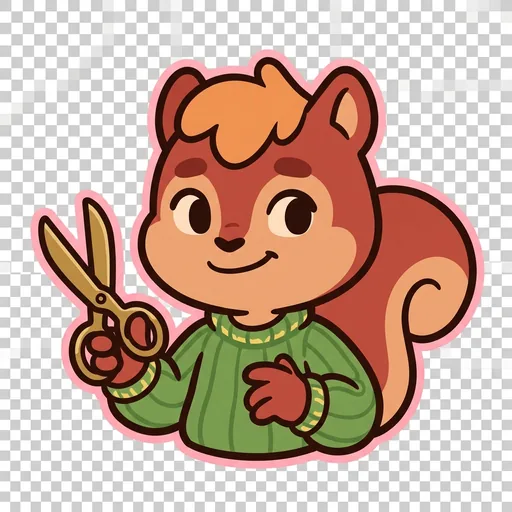
Trim
Brevity / saying-less — red-squirrel-tween with brass scissors who snips redundant words to find the smaller-stronger version
-

Flint
Juxtaposition — flinty badger-creature who strikes two smooth stones to make a spark; two images set side by side make a third meaning leap up in the gap
-

Gallop
Meter / the stressed beat — long-legged pony-creature whose hooves fall da-da-DUM; not how MANY beats (that's Count) but which ones to stomp (esp. the limerick)
-

Bell
Rhyme — silver creature with tuned tail-bells that chime the same note when end-sounds match; a forced rhyme jammed in just to chime is worse than none
-
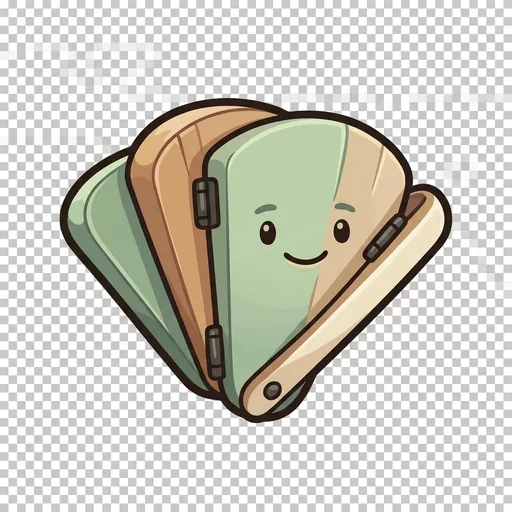
Hinge
The line break — folding-door creature who holds a small pause at the end of each line; the end of a line is a little stage, so end on a word that earns it
-
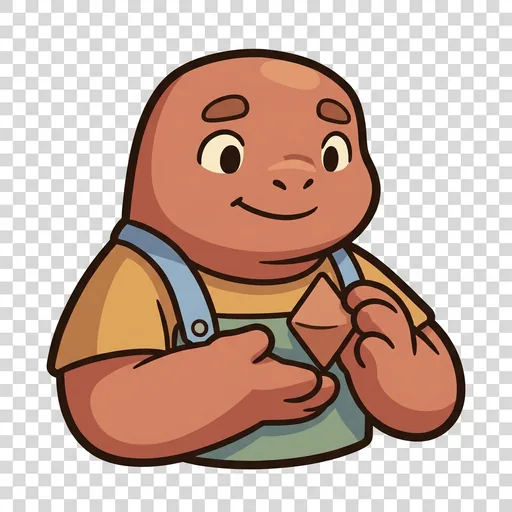
Mold
Shape on the page — clay-colored creature who builds a poem's silhouette (a cinquain's 2-4-6-8-2 diamond); shape is meaning you can see from across the room