Modifier Madge
ADJECTIVE — a word that modifies a noun or pronoun. Tells *which*, *what kind*, *how many*. *The red ball.* (Red modifies ball.)
Press play to listen along. The line being read lights up as you go.
Show full transcript
Loading transcript…
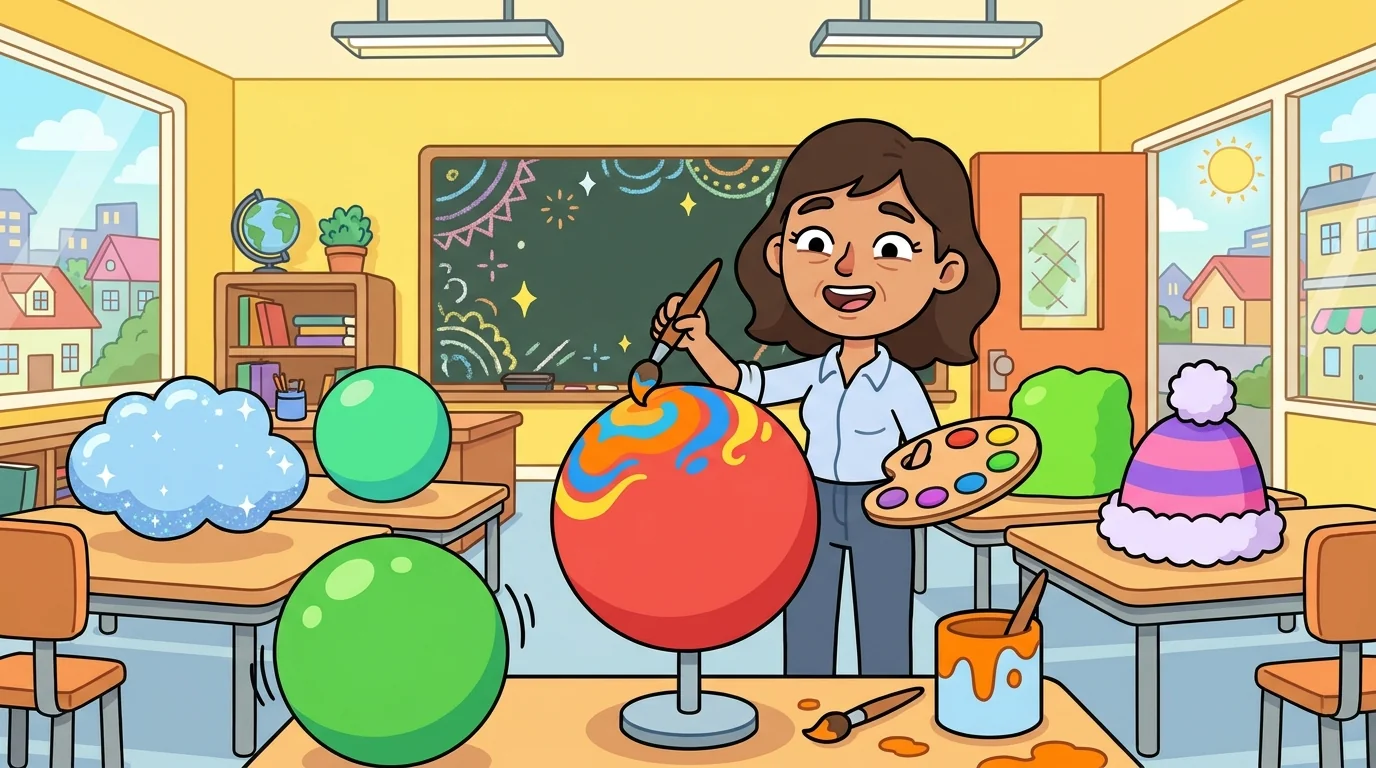
Modifier Madge is Sentence-Town's noun-decorator. She loves making things clear. Madge works with Modifier Mike. He decorates verbs. She decorates nouns. Together, they decorate everything. They are a great team.
Madge's real name is Margaret. But everyone calls her Madge. She is always cheerful. She loves bright colors. Her classroom walls are painted a sunny yellow. Madge thinks the right adjective makes a sentence sparkle. "The ball" just tells you about a ball. "The red ball" tells you its color. It also tells you which ball. "The big red ball" tells you its size and color. "The big bouncy red ball that the dog chased" tells you even more. It tells you size, how it feels, color, and what happened to it. Adjectives add details. They make the noun clearer. But the ball is still a ball.
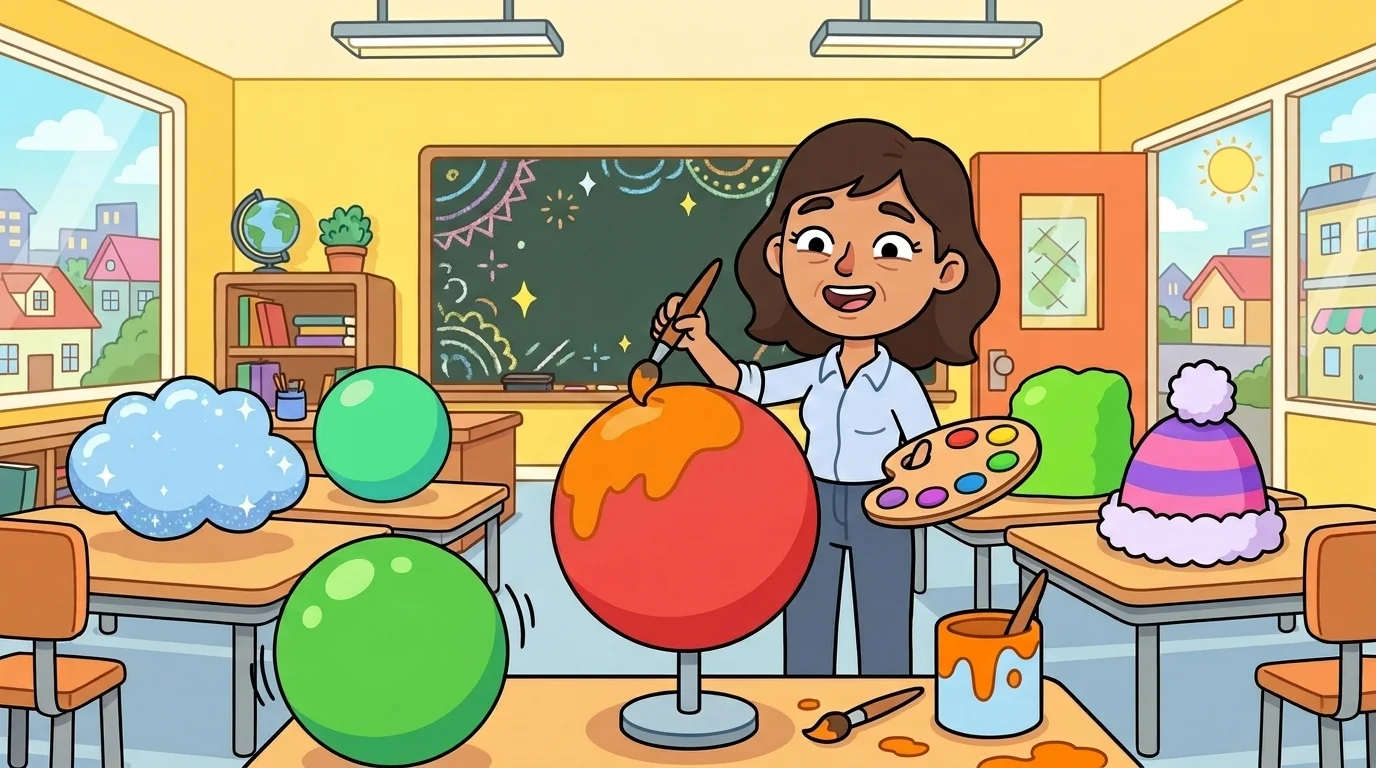
Madge finds this very satisfying. She really likes adjectives. They don't shout, but they are strong. They don't change the noun. A ball is still a ball. But they make it special. Knowing details is important. It helps you picture things better.
Madge grew up like Mike. Her family decorated houses too. They lived in the same city. Their families even owned rival shops. Mike's parents sold chairs and curtains. Madge's parents sold paint and wallpaper. Their shops were only two blocks apart. Mike and Madge knew each other a little as kids. But they were not close friends.
Both Mike and Madge learned something important. Decoration was all about details. A wall was just a wall. A red wall was a certain wall. A velvety red wall was even more special. A velvety red wall in a fancy old room told you a lot. Each new layer of decoration made things clearer. It gave things more character.
Mike and Madge both came to GrammarForge academy. They were both twenty-one. The head of the academy, Master Clause, saw how similar they were. He put them together. He gave them offices next to each other. He told them to teach lessons together. "You two grew up the same way," he said. "You will understand each other. Students will learn about decorating words from both of you."
At first, Mike and Madge were shy. They kept to themselves. But by the end of that first year, they were friends. Really good friends. Not boyfriend-girlfriend friends, just good work friends. They have been friends for seventeen years. They share an office. They eat lunch together. They visit each other's families on holidays. Even Madge's parents and Mike's parents became friends! After years of rival shops, they now eat dinner together every few months. No more rivalry. Just real friendship.
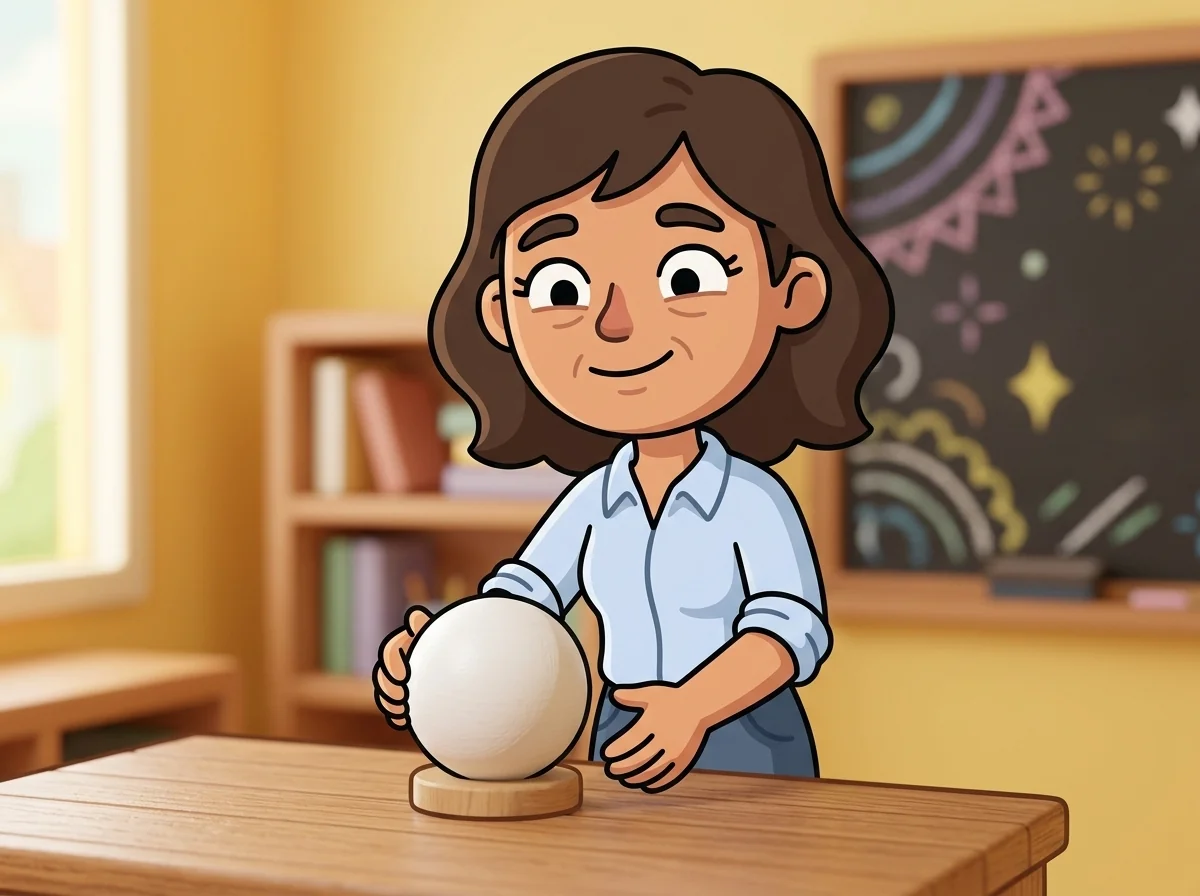
Madge starts every first lesson the same way. She has a small wooden ball on her desk. It is painted plain white. It is about the size of a tennis ball. She puts it down carefully. "This is a ball," she says. Her voice is warm. "It is just a ball. It does what a ball does." The children watch her.
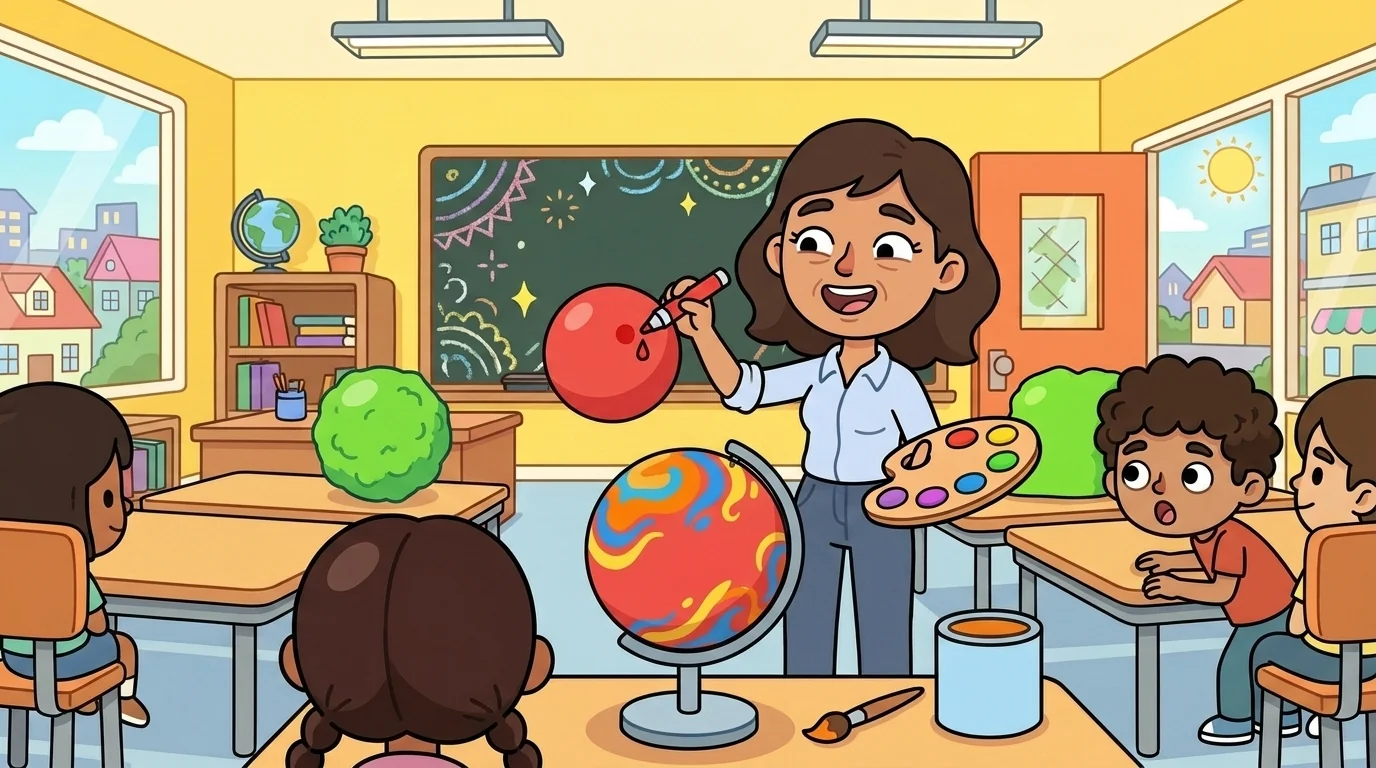
Then she pulls out a red paint-pen. She carefully adds a small red dot to the ball. The children lean forward. "Now it is a ball with red," she says. "Or, we can say, a red ball. The word red is an adjective. It describes the ball. It tells you the ball's color. The ball is still a ball. But now it has a detail." She holds it up. The red dot shines.
She writes on the board: The ball. Then she adds: The red ball. "Red answers 'what color?'" she explains. "It is an adjective."
She keeps going. The big red ball. "Big answers 'what size?'" she says. The big bouncy red ball. "Bouncy answers 'how does it feel?'" she adds. She bounces the ball gently. It makes a soft thud. The big bouncy red ball that the dog chased. "That the dog chased" tells us which ball. She makes a playful barking sound. (Clause-Chief Carla will teach you more about these later. Madge just mentions them now.) The ball gets more and more details. But it is still the same ball. It just has more information.
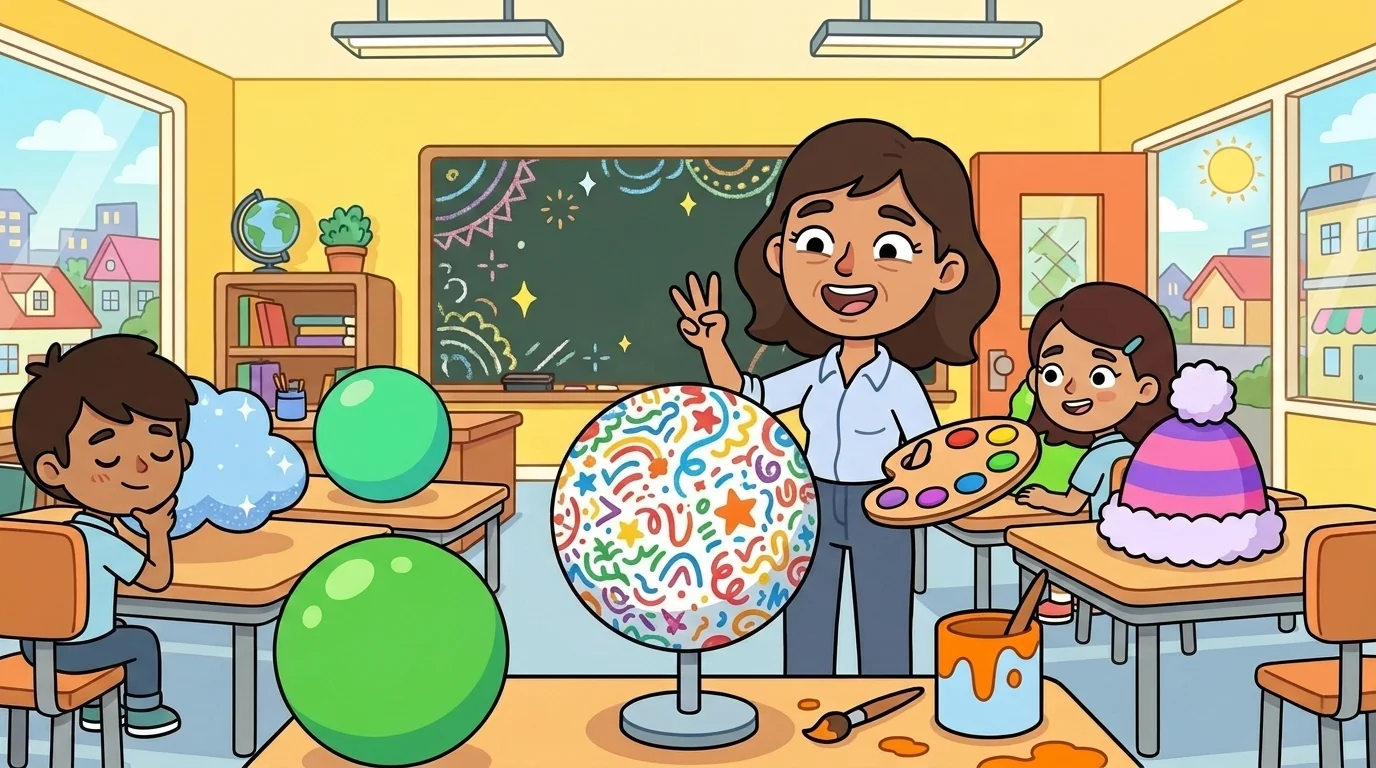
Madge has a trick to help kids remember. "Adjectives answer three questions," she says. She holds up three fingers. "They tell you which one. They tell you what kind of thing. They tell you how many of them. If a word answers one of these questions about a noun, it's an adjective!" A boy in the front row nods slowly.
Kids often ask if adjectives are hard to find. Madge always gives the same answer. "They are not hard at all," she says. "They just answer 'which,' 'what kind,' or 'how many.' Find the noun. Ask one of those questions. If a word answers, it's an adjective!" A girl who looked confused now smiles.
Madge still keeps that little white-and-red ball. It sits on her desk. Kids often ask to add their own marks. She keeps a pot of paints just for that. Madge always lets them. Now, after seventeen years, the ball is covered in marks. It has every color. There's a tiny blue star. A green squiggle. A purple lightning bolt. The children have all helped decorate it. And when Madge holds it up, her heart goes soft and glad — because every little mark is a kid who once felt happy adding their own bright detail to the world.
The GrammarForge ensemble
Modifier Madge is part of GrammarForge's distributed-narrative cast. Each character embodies a different curricular primitive; together they teach the full subject.
-

Mayor Subject
Subject (noun/pronoun performing the action)
-

Verb Verity
Verb (action / state of being)
-

Object Otto
Direct / indirect object (receiver of the verb's action)
-

Modifier Mike
Adverb (modifies verb / adjective / other adverb)
-

Connector Chen
Conjunction (coordinating / subordinating — *and*, *but*, *because*, *although*)
-

Pronoun Perry
Pronoun (substitute for noun — *he*, *she*, *they*, *it*, *who*)
-

Article Anne
Article (*a*, *an*, *the* — definite vs. indefinite)
-

Preposition Pat
Preposition (spatial / temporal relations — *on*, *under*, *between*, *before*)
-

Clause-Chief Carla
Clause-types (independent / dependent / subordinate / relative)
-

Punctuator Polly
Punctuation guardian (commas, semicolons, apostrophes, colons, dashes)
-

Agreement Ada
Subject-verb agreement (singular subject → singular verb; plural subject → plural verb; tricky cases — collective nouns, *either/or*, indefinite pronouns)