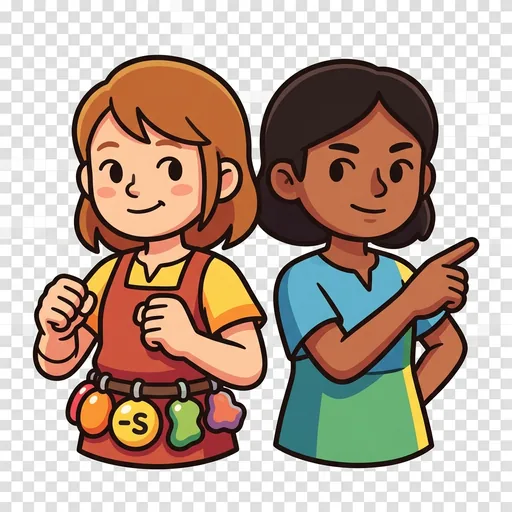
Connector Chen
CONJUNCTION — a word that joins words, phrases, or clauses. *and*, *but*, *because*, *although*, *while*, *if*, *or*. Coordinating (joining equals) vs. subordinating (joining unequals).
Press play to listen along. The line being read lights up as you go.
Show full transcript
Loading transcript…
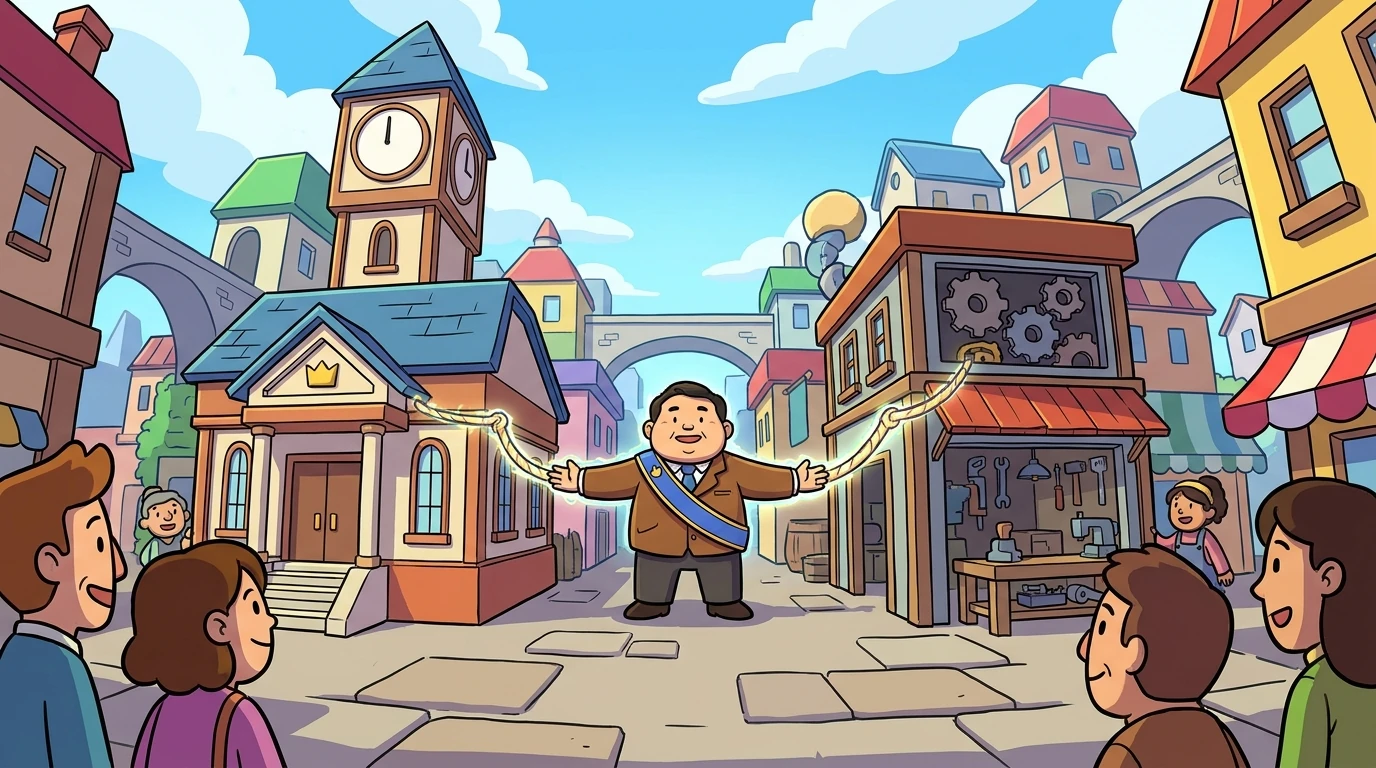
Connector Chen is Sentence-Town's diplomat.
The diplomat's job is to connect. Imagine the Mayor needs to decide something. The Chief of Operations needs to do something. Sometimes, they need to work together. Or maybe they need to talk to other parts of town. Connector Chen helps them do that. He joins ideas. He connects words. He shows how things fit together.
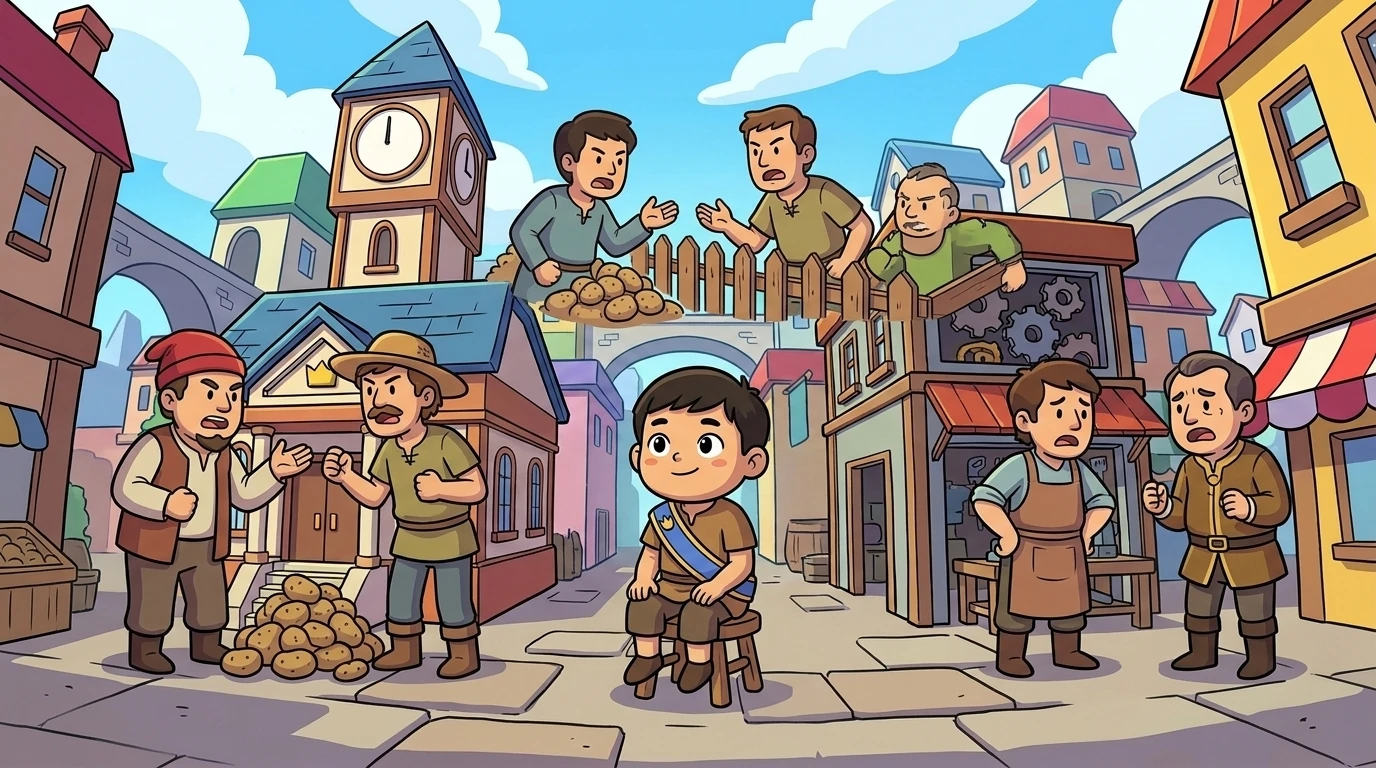
Chen's full name was Chen-Lao. Most people just called him Chen. He grew up in a house full of negotiators. His parents were special helpers in the big city. They helped people sort out fights. Merchants argued over prices. Neighbors bickered about fences. Guilds had problems with new rules. Landowners and tenants disagreed about rent. Chen's parents helped them all find a way to agree. Or at least, a way to live together.
Chen watched his parents work. He learned a big secret. To connect two people, you had to know how they needed to connect. Sometimes people needed to agree. They needed to join up with one idea. Sometimes they disagreed. They knew they were different. But they still needed to get along. Sometimes one person would act only if something else happened. Or because something was true. Or while something else was going on.
These were exactly like the connections that conjunctions made. Conjunctions are special words. And joined people who agreed. But showed differences. Because showed why something happened. If showed a condition. While showed two things happening at the same time. Although showed a surprise or a "but still" idea.
Chen was fifteen when he figured this out. He started sorting his parents' cases. He used conjunctions to describe each problem. The baker and the miller had a fight. They both wanted the same well. Chen called that an and-case. The brewer wanted big barrels. The tavern wanted small ones. That was a but-case. The cobbler's tenant couldn't pay rent. His sheep had died. Chen marked it as a because-case. Chen's sorting was super accurate. It was almost spooky.
When Chen turned nineteen, he walked to the GrammarForge academy. He carried a thick notebook. It had six hundred solved problems inside. Each one was sorted by its conjunction-relationship. The academy master read his notebook. He was very impressed. He made Chen the diplomat right away.
Chen has taught conjunctions at the academy for fourteen years.
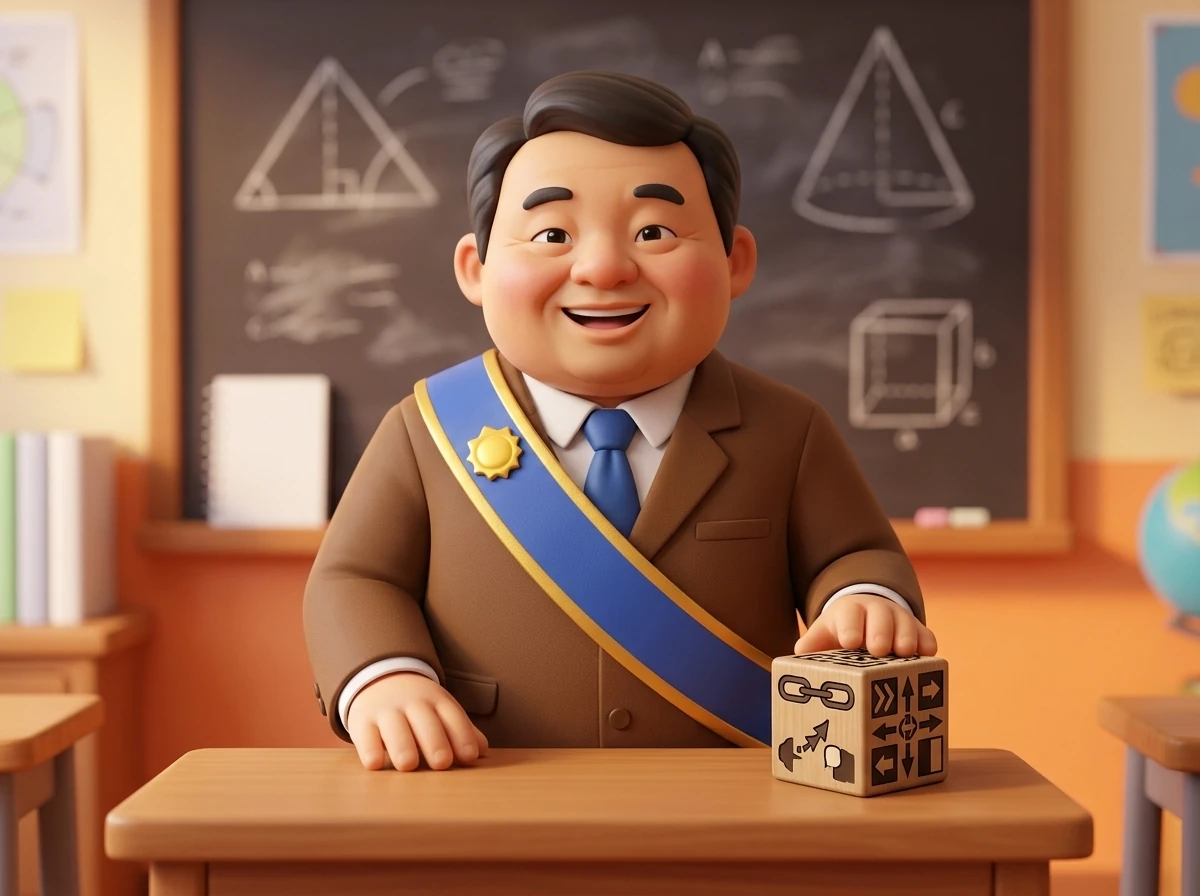
In his classroom, he starts every first lesson the same way. On his desk sits a small wooden cube. It has seven faces. (Yes, seven! A normal cube has six. Chen asked the carpenters to make a special one. The seventh face is on the bottom. He calls it "the secret seventh face"). Each face has a word: and, but, because, although, while, if, or.
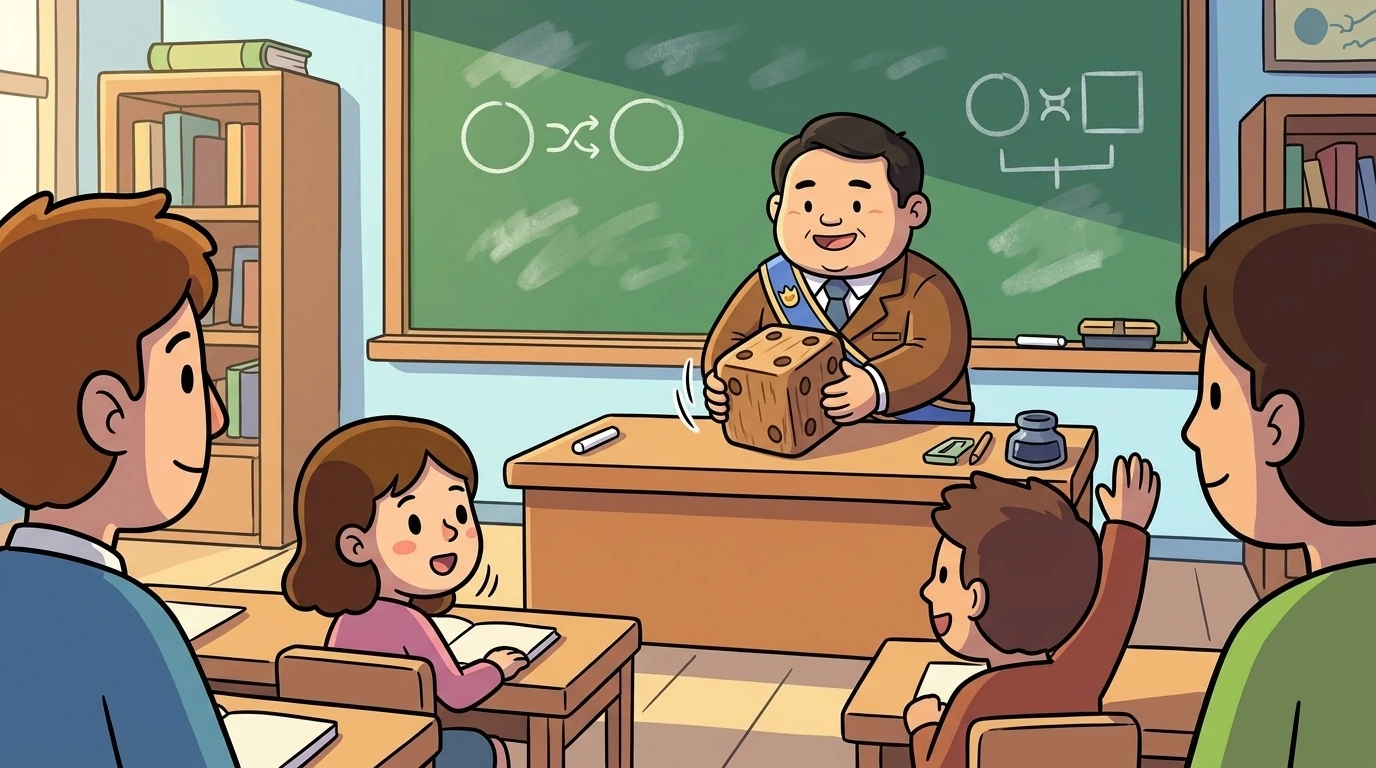
He rolls the cube. It spins across the desk. He looks at the class. "The word on top tells us today's conjunction," he says. "Today we learn it."
He shows them how it works. The cube lands on and. "And joins things that are equal," he says. He writes on the board: The dog and the cat slept. "The dog and the cat are equal subjects. They both slept." He writes another: The dog slept and the cat slept. "Those are two equal ideas. Both things happened. And means both, equally." He taps the board with his chalk. A girl in the front row nods, her eyes wide.
He rolls it again. This time, but lands face up. "But joins things that are different," he explains. He writes: The dog slept, but the cat woke up. "The dog sleeping is one idea. The cat waking up is the opposite. See the difference? But means 'however' or 'on the other hand.' It shows a contrast." A boy in the back raises his hand. "So, if I like pizza, but my brother likes broccoli, that's a but?" Chen smiles. "Exactly! A perfect but-case!"
He goes through each face of the cube. Because shows why something happens. It connects the cause to the effect. If shows a condition. It connects what needs to happen first. Although shows a surprise. It connects a "but still" idea to the main point. While connects two things happening at the same time. Or connects different choices.
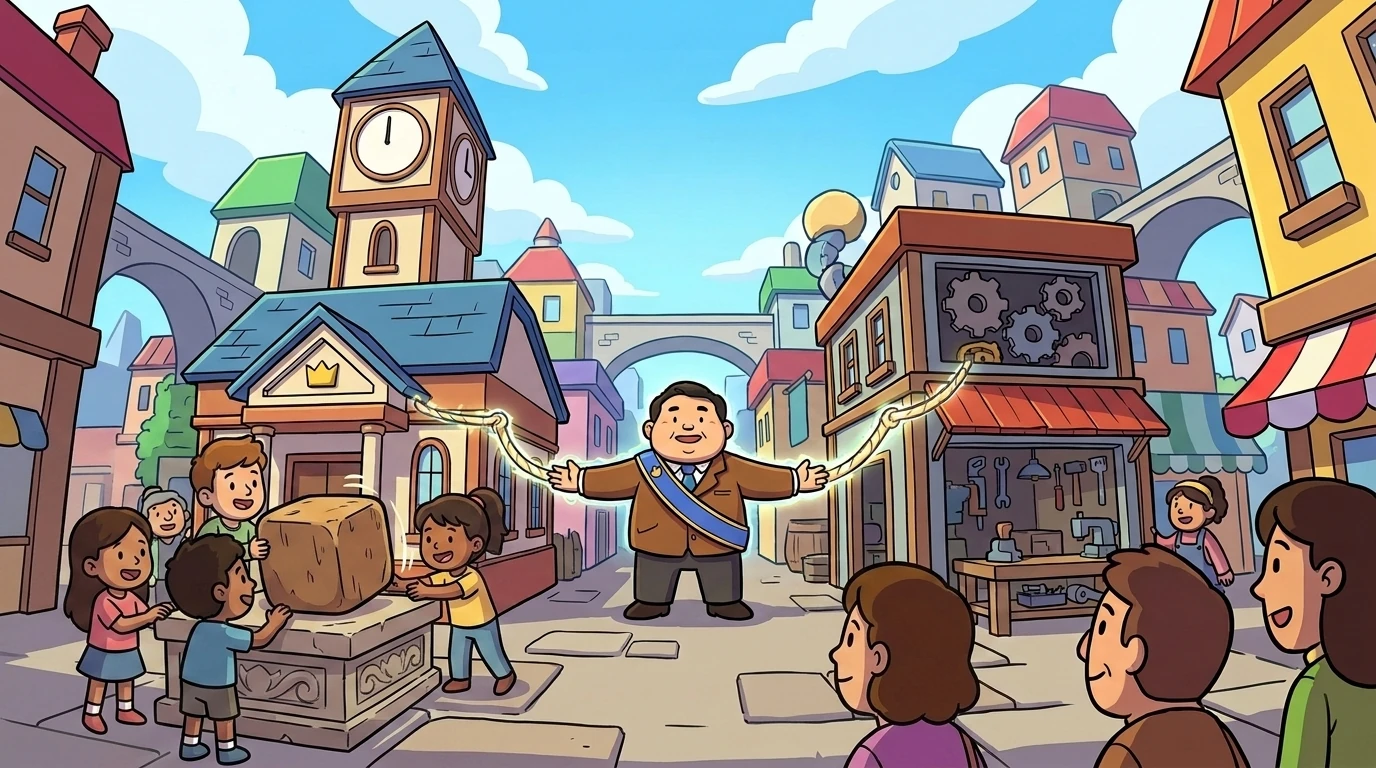
The children always love the cube. It's truly delightful. They used to think conjunctions were just tiny words. Words that just stuck other words together. But Chen shows them more. Each conjunction carries a special meaning. It shows a specific kind of connection. That connection is the real information. The conjunction is just the word that holds it.
When kids ask if conjunctions are hard, Chen always gives the same answer:
"They are not hard," he says. "They are logical connectors. Each one shows a special connection: agreement, contrast, cause, condition, surprise, same time, or choice. Once you know the connection, you know the conjunction."
He still rolls the cube. He does it at the start of every lesson. Sometimes the children ask to roll it. He always says yes. After fourteen years, the cube looks a bit worn. Its corners are soft and smooth. Chen won't let anyone fix it. "The cube has earned its corners," he says.
The GrammarForge ensemble
Connector Chen is part of GrammarForge's distributed-narrative cast. Each character embodies a different curricular primitive; together they teach the full subject.
-

Mayor Subject
Subject (noun/pronoun performing the action)
-

Verb Verity
Verb (action / state of being)
-

Object Otto
Direct / indirect object (receiver of the verb's action)
-

Modifier Mike
Adverb (modifies verb / adjective / other adverb)
-

Modifier Madge
Adjective (modifies noun / pronoun)
-

Pronoun Perry
Pronoun (substitute for noun — *he*, *she*, *they*, *it*, *who*)
-

Article Anne
Article (*a*, *an*, *the* — definite vs. indefinite)
-

Preposition Pat
Preposition (spatial / temporal relations — *on*, *under*, *between*, *before*)
-

Clause-Chief Carla
Clause-types (independent / dependent / subordinate / relative)
-

Punctuator Polly
Punctuation guardian (commas, semicolons, apostrophes, colons, dashes)
-

Agreement Ada
Subject-verb agreement (singular subject → singular verb; plural subject → plural verb; tricky cases — collective nouns, *either/or*, indefinite pronouns)