
Verity and Ada
SUBJECT-VERB AGREEMENT — a singular subject takes a singular verb, a plural subject takes a plural verb (the dog barks / the dogs bark). Verity is the verb who flips her ending; Ada is the one who reads whether the subject is one or many — and points past distracting in-between phrases to the true subject.
Press play to listen along. The line being read lights up as you go.
Show full transcript
Loading transcript…
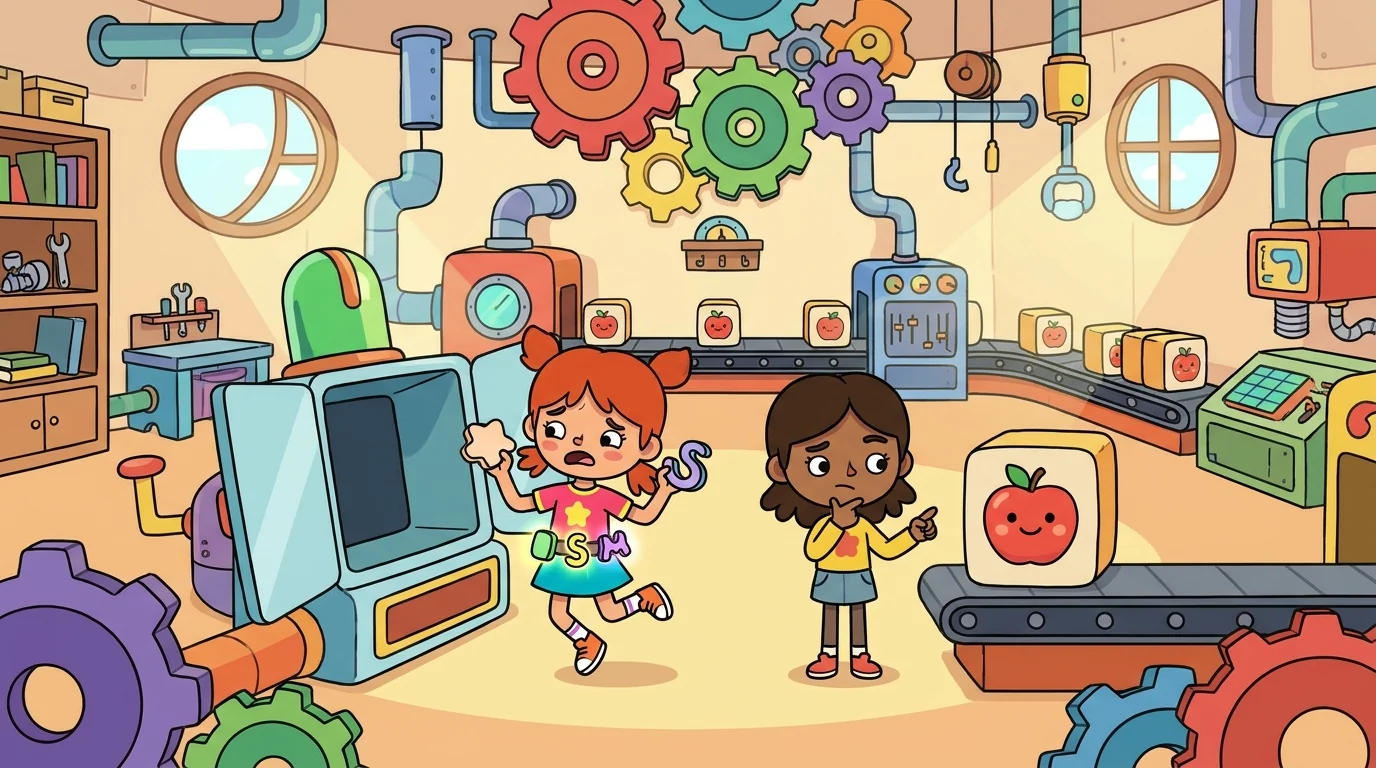
Verb Verity was the busiest word in the whole sentence workshop, because Verity was the doing. Nothing in any sentence ever happened unless Verity happened first.
She was a quick, bright figure with a whole belt of little glowing endings clipped around her waist — a plain one, and one with a soft -s charm, and a couple of stranger ones she saved for special occasions. When a sentence needed her, she'd hop into the middle of it, throw out an action — run, jump, wonder, is — and the sentence would spring to life. She loved the springing-to-life part.
What she did not love, if she was honest, was the endings. Choosing which one to clip on. She got it wrong sometimes, and when she got it wrong the sentence sat slightly crooked, and nobody could say exactly why, but everybody felt it.
"Close enough," Verity would mutter, clipping on whichever ending was nearest, and hopping on.
It was almost never close enough.
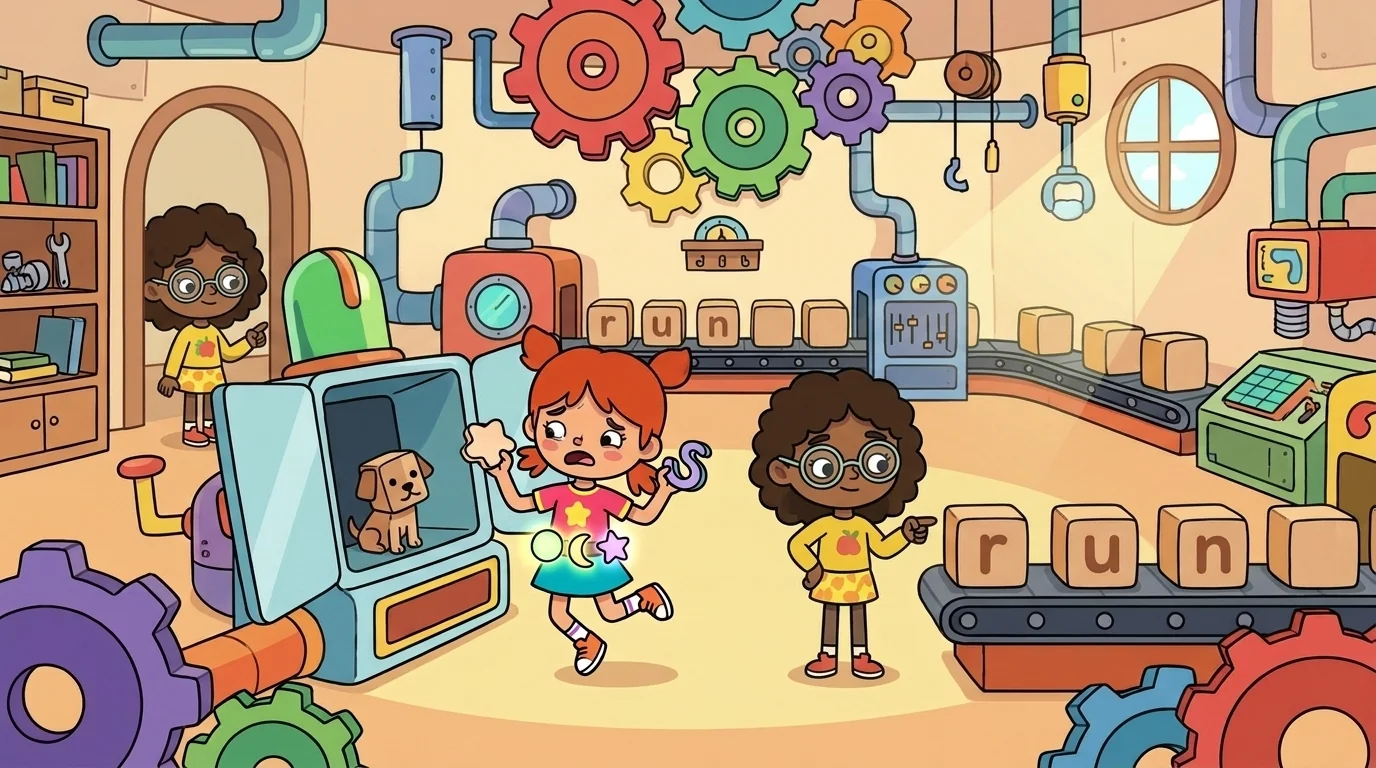
"The dog run across the yard," Verity announced one morning, proud of the speed of it.
The sentence hung in the air, and it hung crooked. One small dog, at the front, looked back over its shoulder as if something were pinching it. The workshop went a little quiet, the way a room does when a picture on the wall is one degree off level and everyone pretends not to notice.
Verity felt the crookedness and didn't know where it lived. "It's fine," she said, less sure now. "The dog. Run. Across the yard. It's — it's got all the parts."
"It has all the parts," said a calm voice from the doorway. "It just doesn't have them listening to each other."
The speaker was a small, unhurried figure with round spectacles and her head tilted very slightly, the way people tilt their heads when they are listening for something quiet. This was Agreement Ada. Ada did not do the action. Ada did something Verity had never thought to do at all: before anything moved, Ada counted.
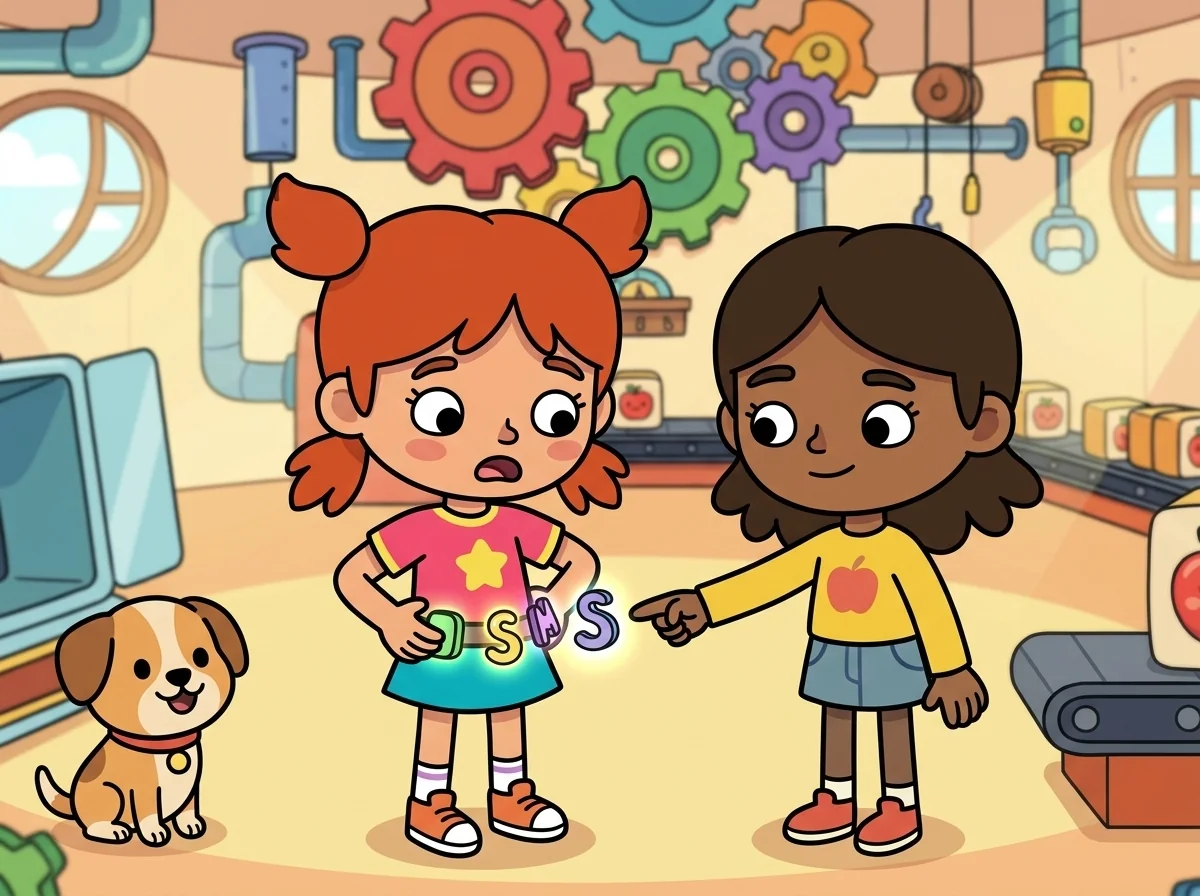
"May I?" Ada asked, and Verity, relieved to hand the crooked thing to someone, said please.
Ada walked to the front of the sentence and looked — really looked — at who was standing there. "One dog," she said gently. "Just the one. See? A single. So when it comes to you, Verity, and asks you for an action —" she turned, "— you have to answer it the way you answer one."
"How do I answer one?" Verity asked.
"With the -s," said Ada, and pointed at the little glowing charm on Verity's belt. "For a single someone, in the here-and-now, you clip on the -s. The dog barks. Try it."
Verity unclipped the plain ending, clipped on the soft -s charm, and said it: "The dog barks." And the small dog at the front of the sentence stopped looking pinched. It sat up straight. The whole line of words settled level on the wall, and the quiet in the room turned from the holding-breath kind into the easy kind.
"Oh," said Verity, staring at her own belt. "Oh. It wasn't a bigger word it wanted. It wanted the matching one."
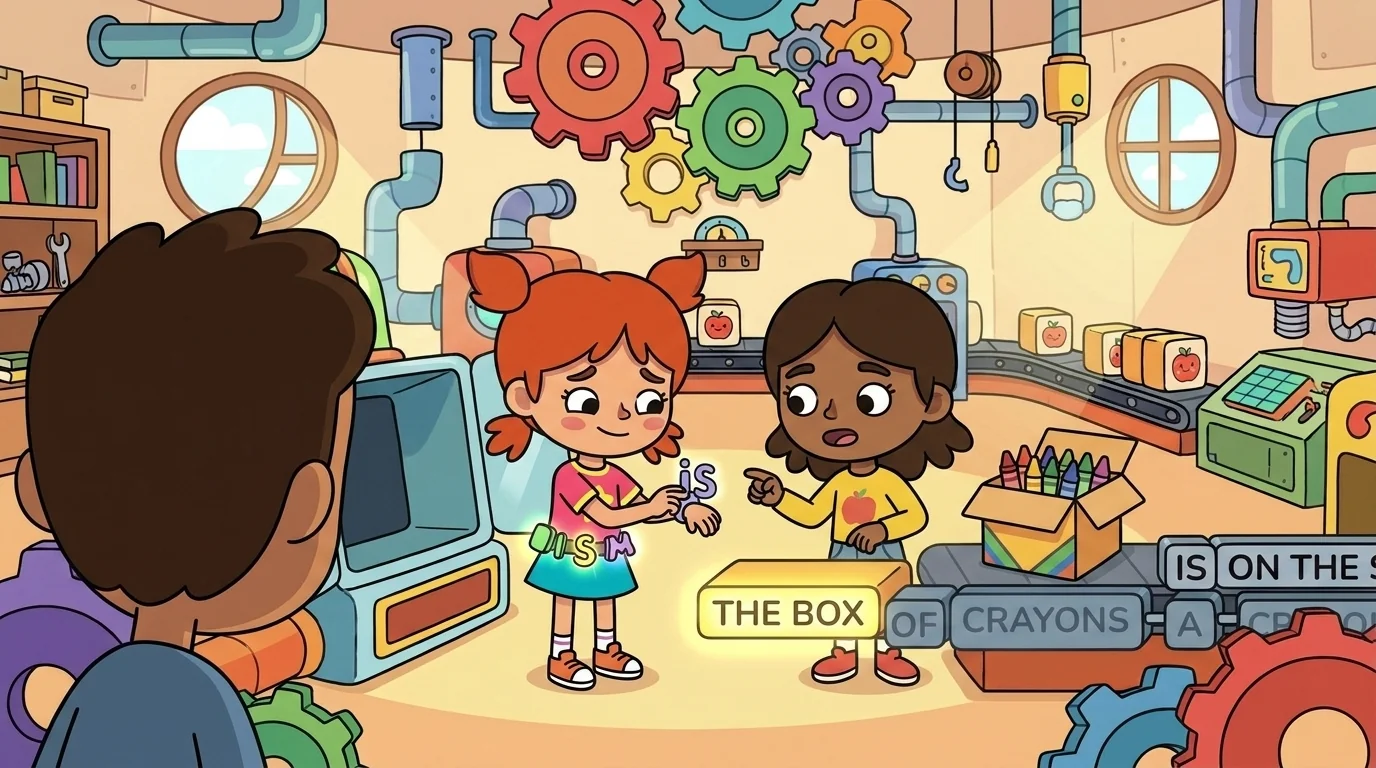
A student named Perry had drifted over, and Perry set a genuinely nasty sentence on the bench between them — the kind grown-ups use to trip people up.
"The box of crayons —" Perry read, and stopped, grinning. "is, or are, on the shelf? There's a whole bunch of crayons in it. So — are?"
Verity's hand drifted toward her plural ending, tempted. All those crayons.
"Wait," said Ada, and put a light hand on Verity's wrist. "Don't count the crowd, Verity. Count the one who's actually the subject." She stepped up to the sentence and did the thing that was her whole gift: she looked past the loud middle part. She cupped her hands around the little travelling phrase of crayons and, ever so gently, dimmed it — not deleting it, just quieting it — until only the true subject at the front still glowed.
"What's left glowing?" Ada asked.
"...Box," said Verity. "One box."
"One box," Ada agreed. "The crayons are just visiting. The box is who the sentence is about. So?"
Verity clipped on the singular ending, sure this time. "The box of crayons is on the shelf." The sentence rang true, level, done. Perry groaned happily, the way you do when a trick fails in the best way.
"You looked past the distraction," Verity said, a little awed. "I never look past anything. I just go."
"You go," said Ada, smiling. "I look. That's why we're good together."
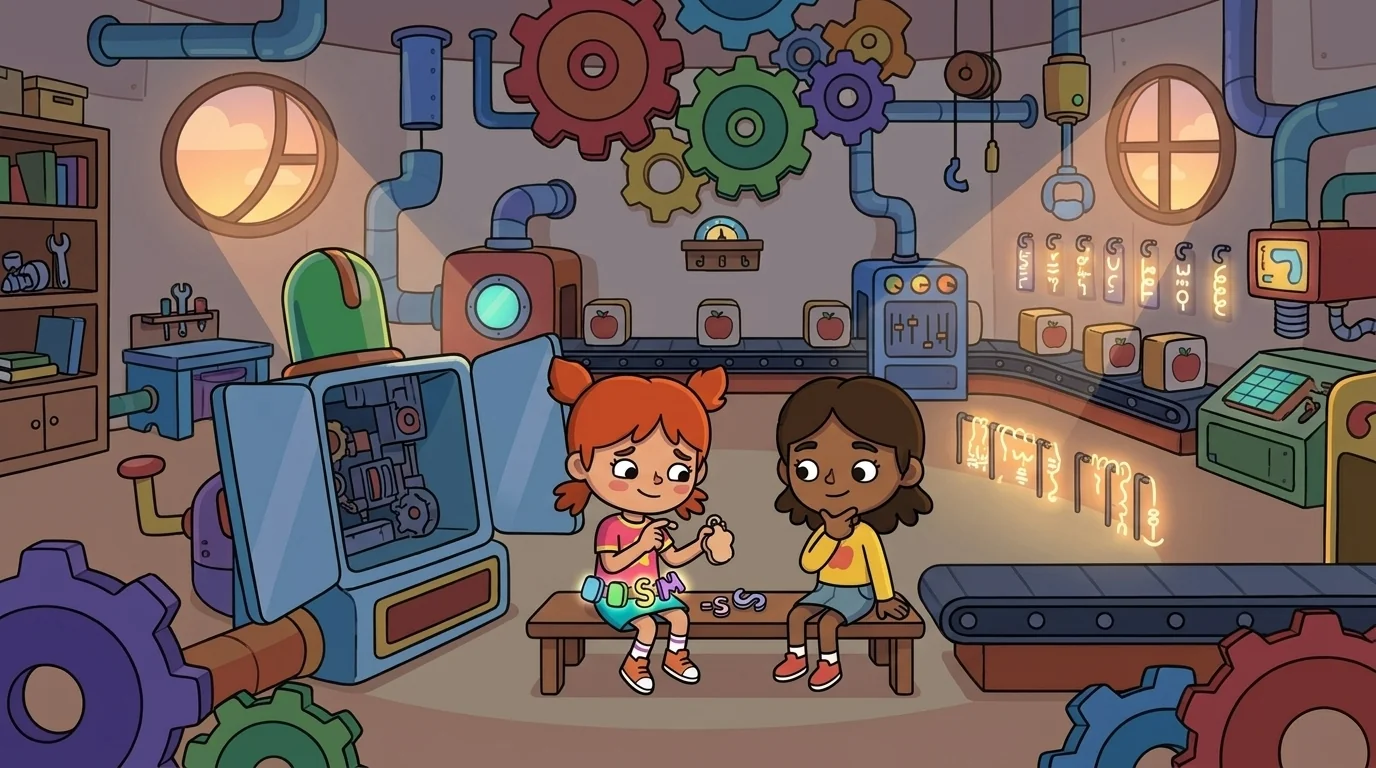
Later, when the workshop had emptied and the last sentences of the day hung straight and quiet on the wall, Verity sat on the bench beside Ada and turned the little -s charm over in her fingers.
"I used to hate this part," she admitted. "Picking the ending. It made me feel like I was always about to get something wrong in front of everybody." She was quiet a moment. "It feels different now. Not scary. More like — tuning. Like when two notes are almost the same and then they slide into being the same and your chest kind of unclenches."
"That's the feeling," Ada said. "That little click when the verb and the subject finally match. It's not a rule I'm enforcing on you, you know. It's just two words agreeing to be about the same number of things. Agreeing is a kind of listening."
Verity leaned back against the wall of settled sentences. Her belt of endings felt lighter than it used to — not because there were fewer of them, but because she no longer had to guess.
"Matching feels good," she said softly. "I didn't know I could feel this calm about getting something right."
And that was the truest feeling of her whole day: the warm, unclenched, settled calm of two words that had finally stopped guessing and simply agreed. It felt, Verity thought, a little like belonging.
The GrammarForge ensemble
Verity and Ada is part of GrammarForge's distributed-narrative cast. Each character embodies a different curricular primitive; together they teach the full subject.
-

Mayor Subject
Subject (noun/pronoun performing the action)
-

Verb Verity
Verb (action / state of being)
-

Object Otto
Direct / indirect object (receiver of the verb's action)
-

Modifier Mike
Adverb (modifies verb / adjective / other adverb)
-

Modifier Madge
Adjective (modifies noun / pronoun)
-

Connector Chen
Conjunction (coordinating / subordinating — *and*, *but*, *because*, *although*)
-

Pronoun Perry
Pronoun (substitute for noun — *he*, *she*, *they*, *it*, *who*)
-

Article Anne
Article (*a*, *an*, *the* — definite vs. indefinite)
-

Preposition Pat
Preposition (spatial / temporal relations — *on*, *under*, *between*, *before*)
-

Clause-Chief Carla
Clause-types (independent / dependent / subordinate / relative)
-

Punctuator Polly
Punctuation guardian (commas, semicolons, apostrophes, colons, dashes)
-
Agreement Ada
Subject-verb agreement (singular subject → singular verb; plural subject → plural verb; tricky cases — collective nouns, *either/or*, indefinite pronouns)