Clause-Chief Carla
CLAUSE TYPES — independent clauses (can stand alone), dependent / subordinate clauses (cannot stand alone; needs an independent clause to attach to), and relative clauses (modify a noun).
A story read by Clause-Chief Carla
Press play to listen along. The line being read lights up as you go.
Show full transcript
Loading transcript…

- 'Because the dog barked,' - 'the cat woke up.' - 'The dog that barked woke the cat.' - COCO - CUL - MAIN - SUB - IND - DEP
- 'zZz...' - '11' - '12' gate-allow-text-pattern: '^(?:\d+|[A-Za-z][A-Za-z'',. ]{0,60}[.,!?]?|z[Zz]+\.{0,3})$' ---
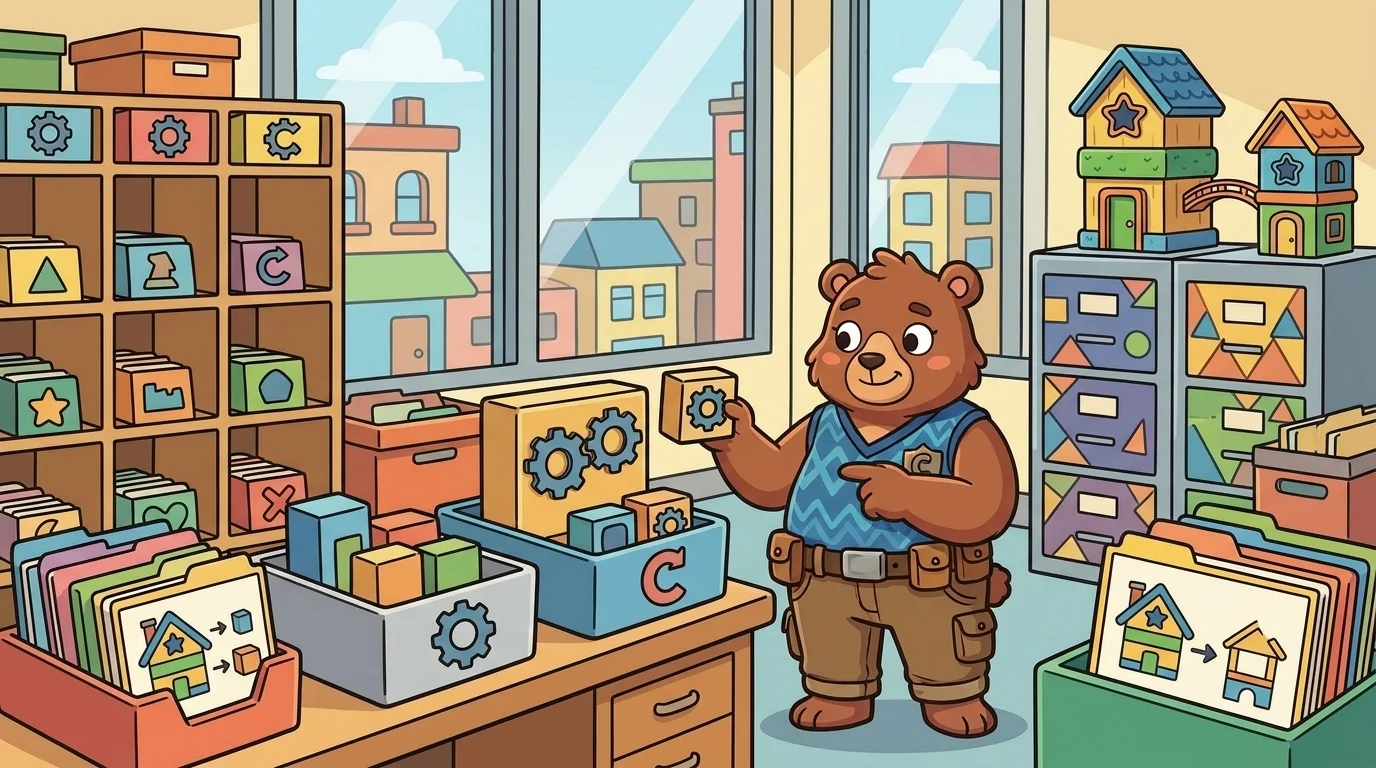
Clause-Chief Carla is Sentence-Town's zoning commissioner. Her job is to sort out *clauses*. She puts them into groups. This helps sentences make sense.

Carla's real name is just Carla. She is very patient. She loves drawing diagrams. Especially ones with boxes inside other boxes. Carla thinks sentences are like puzzles. You just need to find the main piece. Then you see how all the other pieces connect. Big sentences aren't messy. They have a clear order. Like a family tree, but for words. Once you see the order, any sentence makes sense.
Carla grew up in a city-planning family. Her mom and dad worked for the kingdom's central city-planning bureau. They planned how the city would grow. They spent their whole careers sorting land. "This spot is for houses," her dad would say. "That spot is for shops." "This one is for a park!" Every piece of land needed a label. This helped the city grow in a good way. Carla watched them draw maps. They colored parts of the city. Green for houses. Blue for shops. Each color meant something different.
When Carla was fifteen, she saw something. Sentences were just like cities. They had the same kind of problems. Each *clause was like a piece of land. Each piece had a job. Independent. Dependent. Relative. Cities worked best when all the pieces fit. Sentences worked best that way too. Wrongly zoned land caused trouble. Wrongly used clauses made sentences messy. They caused sentence errors*.
Carla walked to GrammarForge Academy when she was twenty. She has been Clause-Chief Carla for twelve years now. A long time!
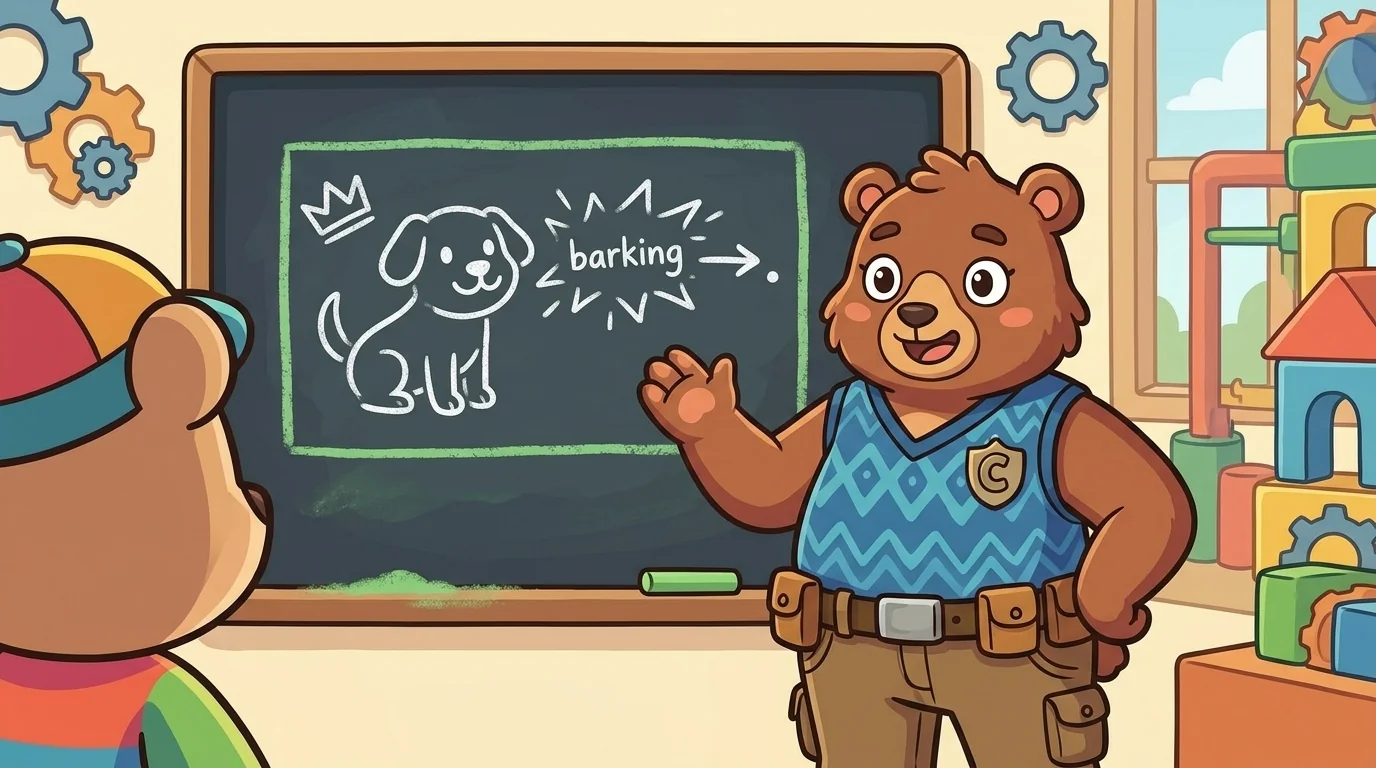
She shows them how. She writes on the board:
"The dog barked."
She draws a big green box around it. "This is an *independent clause," she explains. "It has a subject, the dog. It has a verb, barked*. It's a complete thought. It can stand all by itself. So, green-zoned for standalone use!"
Next, she writes:
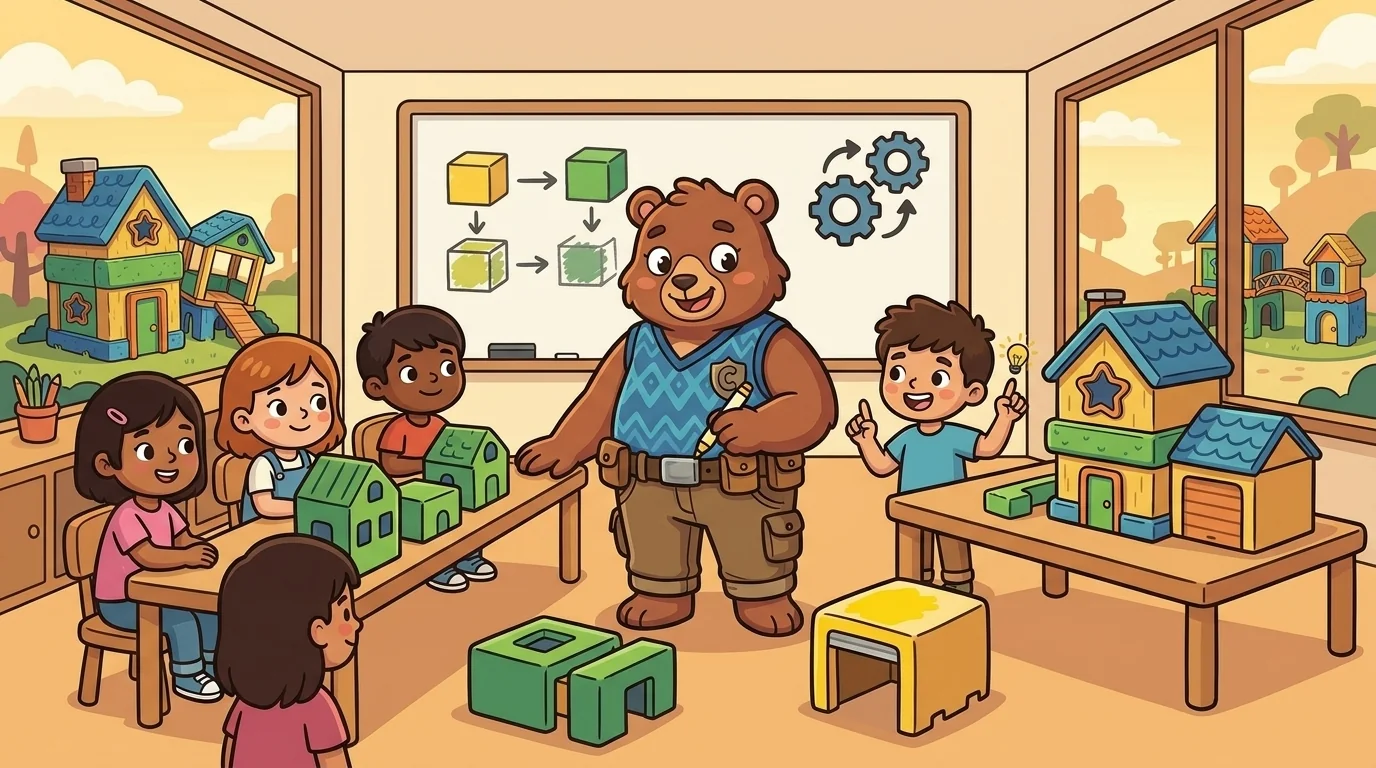
She marks it yellow. "This is a *dependent clause," she says. "It has a subject and a verb. But it can't stand alone. The word Because* tells us it's not finished. It's yellow-zoned for attached use. It needs a green clause to connect to."
A student named Leo raises his hand. "So it's like a garage?" he asks. "A garage needs a house to be useful."
Carla smiles. "Exactly, Leo! A great way to think about it." She writes a longer sentence:
"Because the dog barked, the cat woke up."
The GrammarForge ensemble
Clause-Chief Carla is part of GrammarForge's distributed-narrative cast. Each character embodies a different curricular primitive; together they teach the full subject.
-

Mayor Subject
Subject (noun/pronoun performing the action)
-

Verb Verity
Verb (action / state of being)
-

Object Otto
Direct / indirect object (receiver of the verb's action)
-

Modifier Mike
Adverb (modifies verb / adjective / other adverb)
-

Modifier Madge
Adjective (modifies noun / pronoun)
-

Connector Chen
Conjunction (coordinating / subordinating — *and*, *but*, *because*, *although*)
-

Pronoun Perry
Pronoun (substitute for noun — *he*, *she*, *they*, *it*, *who*)
-

Article Anne
Article (*a*, *an*, *the* — definite vs. indefinite)
-

Preposition Pat
Preposition (spatial / temporal relations — *on*, *under*, *between*, *before*)
-

Punctuator Polly
Punctuation guardian (commas, semicolons, apostrophes, colons, dashes)
-

Agreement Ada
Subject-verb agreement (singular subject → singular verb; plural subject → plural verb; tricky cases — collective nouns, *either/or*, indefinite pronouns)