
Tome
CODEBOOK — *swap whole words and phrases, not single letters.* Both sides share a book that maps "eagle" to "613" and "we attack at dawn" to "ROSE GARDEN." Letter-ciphers scramble inside words; a codebook replaces the words themselves with code-words from a shared list.
Press play to listen along. The line being read lights up as you go.
Show full transcript
Loading transcript…
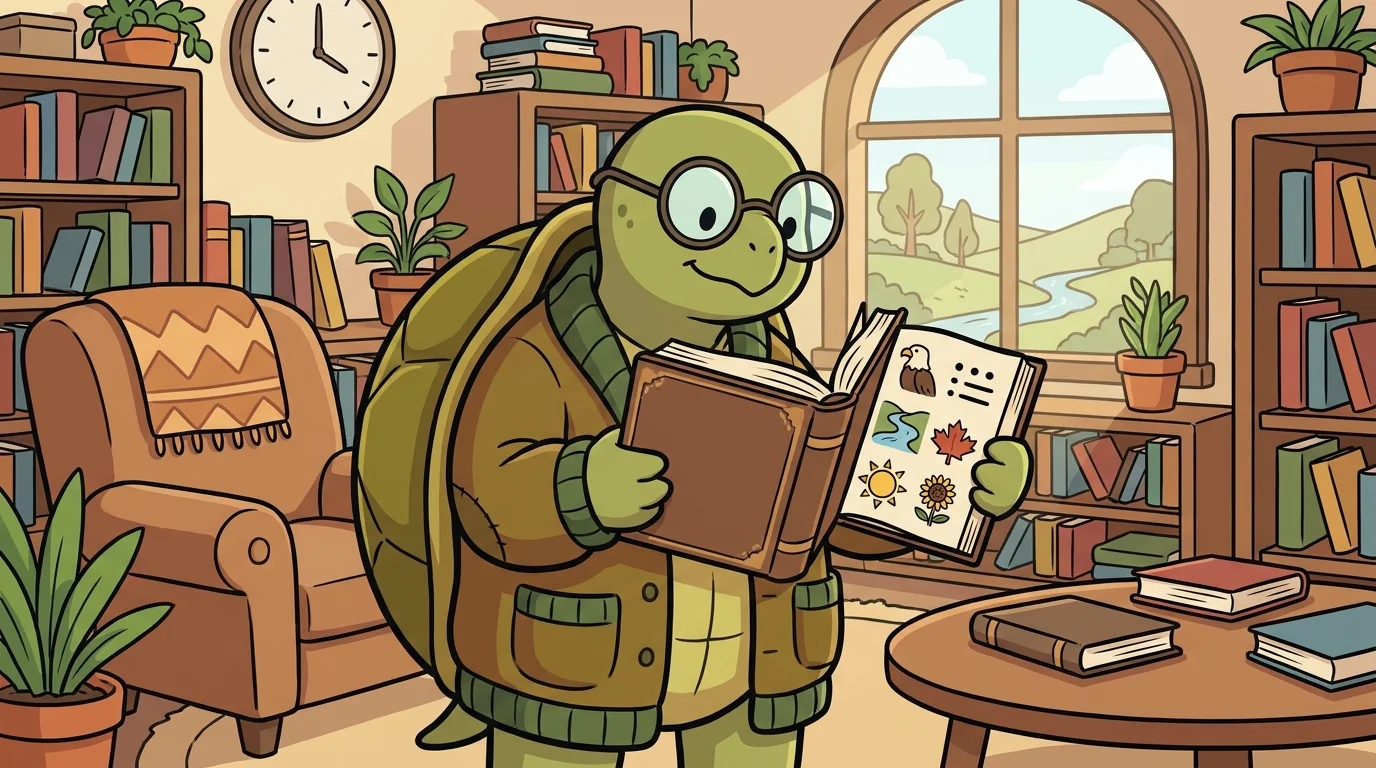
Tome is a sturdy, spectacled tortoise-tween in a chunky librarian's cardigan with deep pockets. He moves slowly and thinks carefully. His signature feature is a thick, worn code-book — a fat little volume he carries everywhere, full of lists where ordinary words sit next to their secret stand-ins: eagle → 613, river → MAPLE, "meet me at noon" → SUNFLOWER.
Tome teaches a kind of secret-keeping that is older and homier than letter-scrambling. Caesar and Mask and Vigenère all work inside a word, changing its letters. Tome doesn't touch the letters at all. He swaps whole words for code-words from his book.
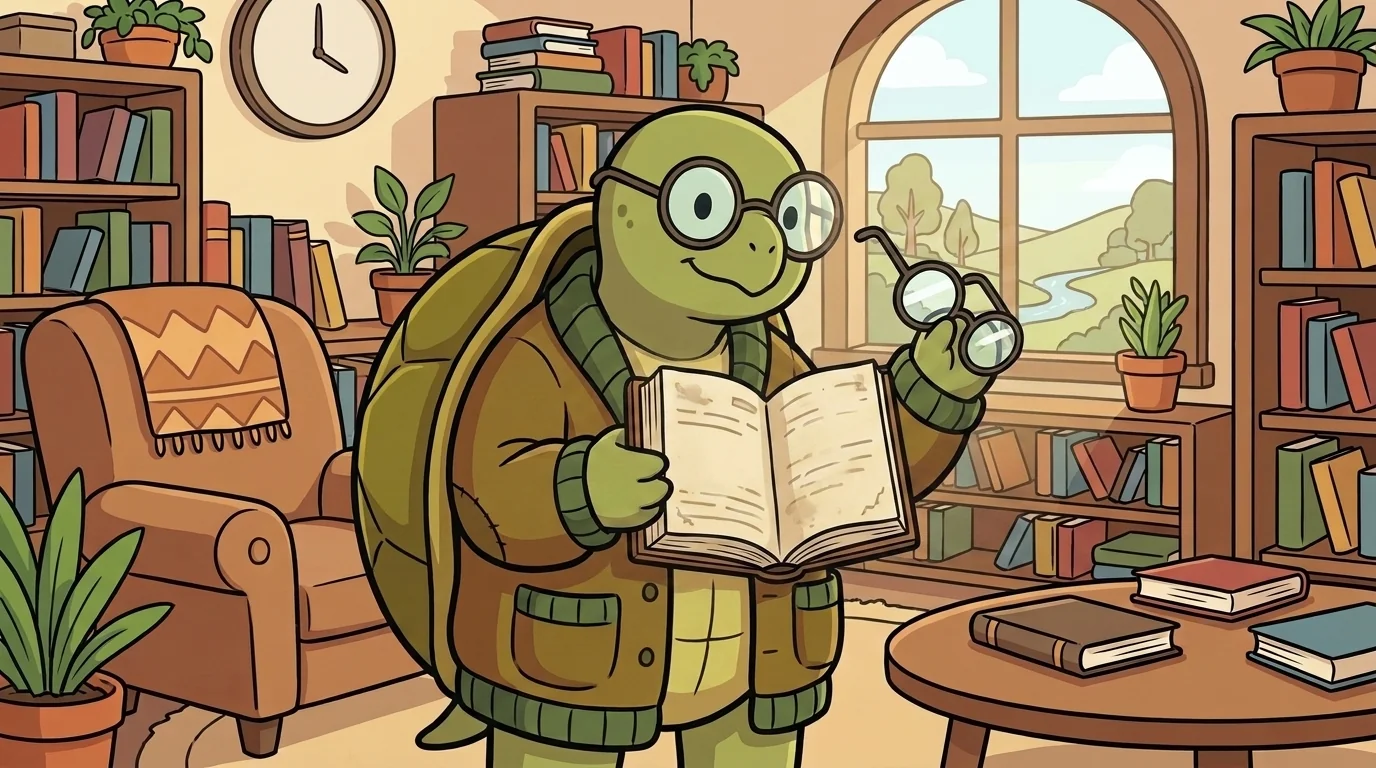
This is a *codebook (the old spies called it a nomenclator): a shared list where each real word or phrase has a secret stand-in. Write "the eagle has landed" as "the 613 has MAPLE," and only someone holding the same book can turn it back. No letter-counting helps. You need the book.*
The difference, Tome explains, is the whole point. "A letter-cipher is a machine — learn the rule and you can read every message," he says. "A codebook isn't a rule. It's a relationship. It only works between two people who share the same book. Lose the book, and the messages go silent."
He keeps the anti-fear frame steady, the way all of CipherForge does. "This isn't about spies and danger," he says, polishing his spectacles. "It's the cosiest code there is. It's two friends with a private language — the way you and your best friend might have a word that means 'rescue me from this boring party.' That's a codebook. You've probably already invented one."
Reflection: have you ever had an inside word or nickname that meant something only you and one other person understood?
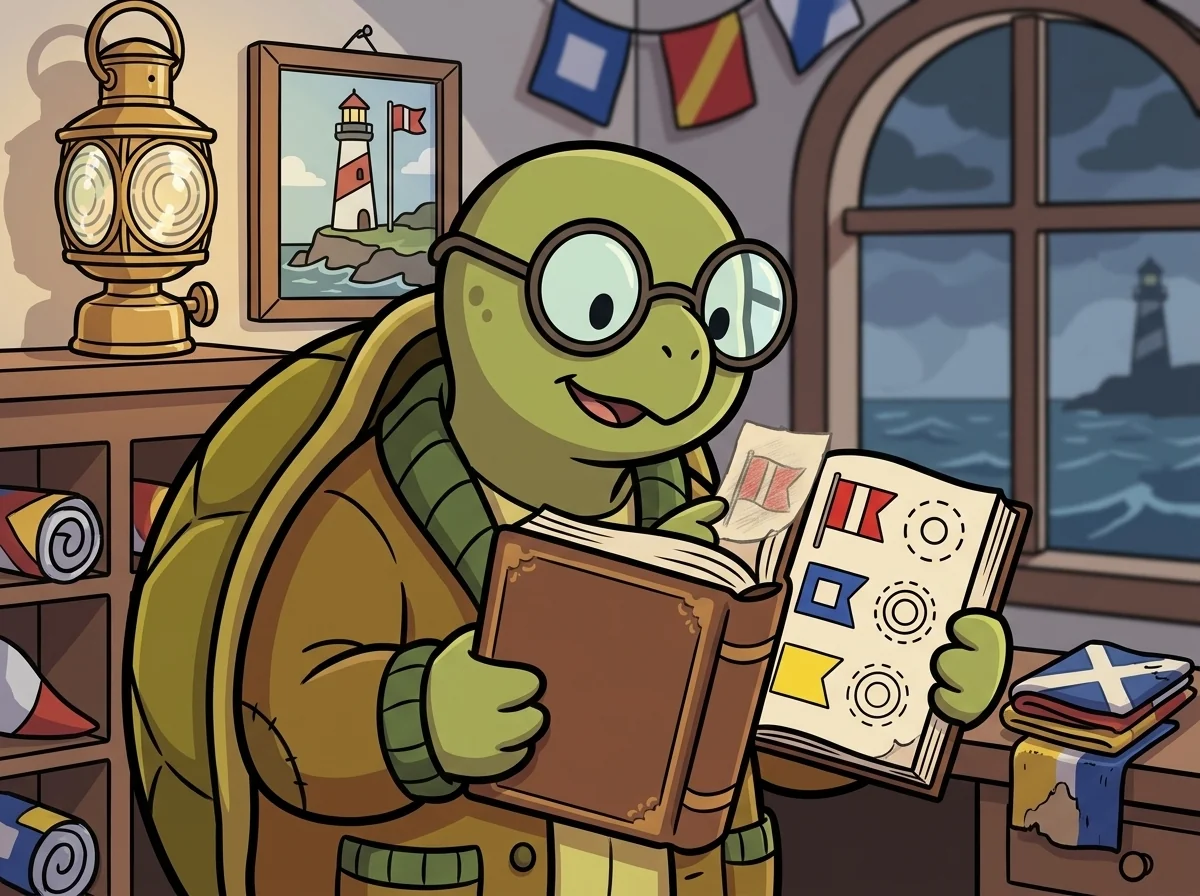
Tome grew up in a lighthouse-keeper's family, where messages crossed the water by lamp and flag. There was never time to scramble letters one by one on a stormy night. So the keepers used a signal book: one long flash meant "all clear," a red flag plus two short meant "rocks ahead, steer wide." Whole meanings, packed into single signals, shared by every lighthouse on the coast.
Young Tome loved that book more than anything. It meant a tired keeper could say a whole careful sentence with one steady lamp — if the other shore held the same book. One autumn a neighbouring lighthouse lost its copy in a leak, and for a week their lamps flashed signals nobody could read. Tome never forgot it: the code wasn't in the lamp. It was in the shared book. Without it, the brightest signal said nothing at all.
When Tome was grown he carried his fat code-book the long, slow road to CipherForge. Cypher, the leader, asked him, "What is a codebook?"
Tome set the heavy book on the desk with both hands. "It's swapping whole words for code-words, not scrambling letters," he said. "Both sides share this book. 'Eagle' becomes '613.' 'Meet at dawn' becomes 'ROSE GARDEN.' Counting letters won't crack it, because the letters were never the secret — the words were. The only way in is to hold the same book. It's not a rule you can figure out. It's a thing you have to share."
Cypher opened the book, found a page, and read a line of perfectly innocent code-words. "You are appointed," he said, "keeper of the shared book." Tome bowed, slow and pleased.
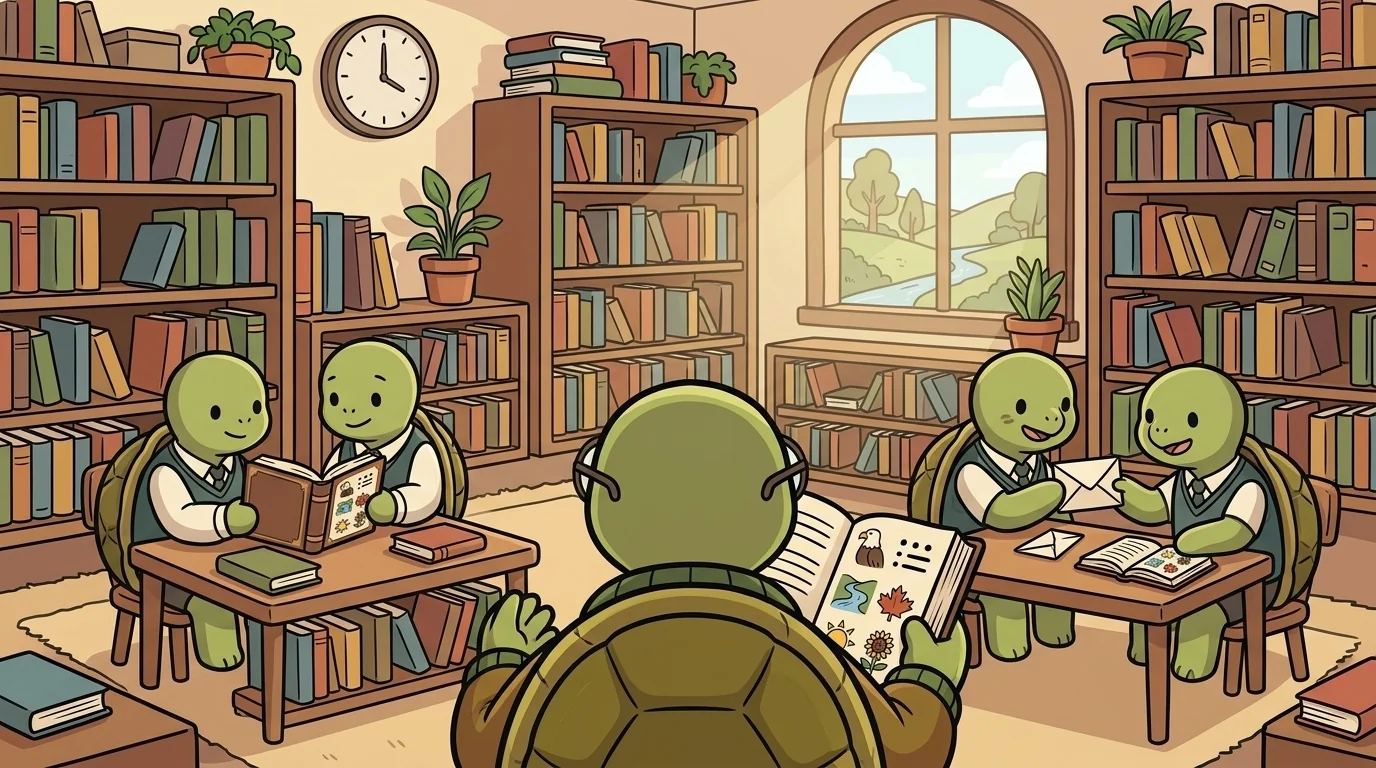
In his classroom — wall-to-wall shelves, every spine a little code-book — Tome begins each lesson by giving pairs of students a tiny shared book and letting them pass notes only the two of them can read.
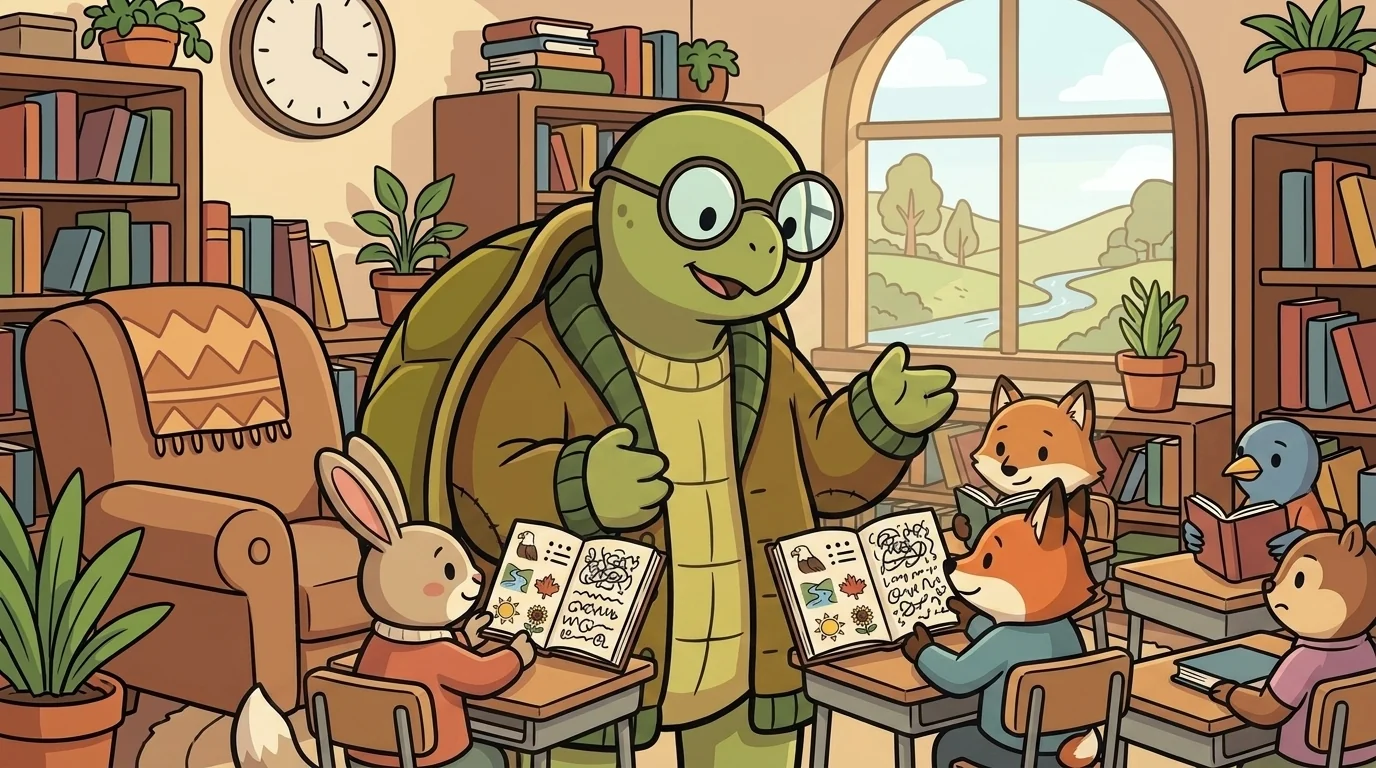
He teaches the codebook craft, page by page: - Code-words for whole things — a word, a name, a whole phrase gets one stand-in. - Both sides need the same book — no shared book, no message. - Mix it up — some codebooks use numbers (613), some use innocent words (MAPLE), so the message reads like a normal letter. - Guard the book — the message can be totally safe, but if someone steals the book, the whole code is open. The book is the real secret.
"And here's a CipherForge favourite," he adds. "Hide a code-word message inside an ordinary letter — that's Hollow's craft — and you've got a note that looks like chit-chat, reads like chit-chat, and means something else entirely to the one friend who holds the book."
At the close of every lesson, Tome does something quietly tender. He has two students who've been passing book-notes all class swap their tiny shared books with the whole room for a moment — and suddenly everyone can read the once-secret messages, and the magic drains right out of them.
"Feel that?" he says, gently. "When everyone has the book, the secret stops being a secret. A codebook isn't powerful because it's clever. It's powerful because it's shared by just the right people." And he gives the books back to their pairs, and the warmth returns — the cosy, particular gladness of having a private language with someone you trust. "That's the feeling I want you to keep," he tells them, hugging his fat book to his cardigan. "Not 'I made an unbreakable code.' Just — there's a language only my friend and I can speak. That closeness is the whole treasure. The book just keeps it ours."
The CipherForge ensemble
Tome is part of CipherForge's distributed-narrative cast. Each character embodies a different curricular primitive; together they teach the full subject.
-
Caesar
Caesar shift / monoalphabetic shift cipher
-
Mask
Atbash + general monoalphabetic substitution (every letter has a fixed substitute)
-

Vigenère
Vigenère / polyalphabetic keyword cipher (the Caesar-on-a-rotating-keyword pattern)
-
Echo Pair
Playfair digraph cipher (letters encoded in pairs through a 5×5 grid)
-
Rail
Rail-fence + columnar transposition ciphers (rearrange letter order without changing the letters themselves)
-

Tally
Number-based codes (A1Z26, ASCII, binary, book ciphers — any mapping that converts letters to numbers)
-

Sift
Frequency analysis + cryptanalysis-by-statistics (the cipher-breaking method, not a cipher itself)
-

Lattice
Modern cryptography fundamentals — XOR, public-key concept, hashing (the irreversible / asymmetric family)
-

Hollow
Hides a secret message inside something ordinary, so nobody even knows there is a message to look for.