Caesar
CAESAR SHIFT — *the simplest cipher: shift every letter by a fixed number.* The cryptography primitive of *substitution by uniform alphabet rotation — the entry point to symmetric-key cryptography.*
Press play to listen along. The line being read lights up as you go.
Show full transcript
Loading transcript…
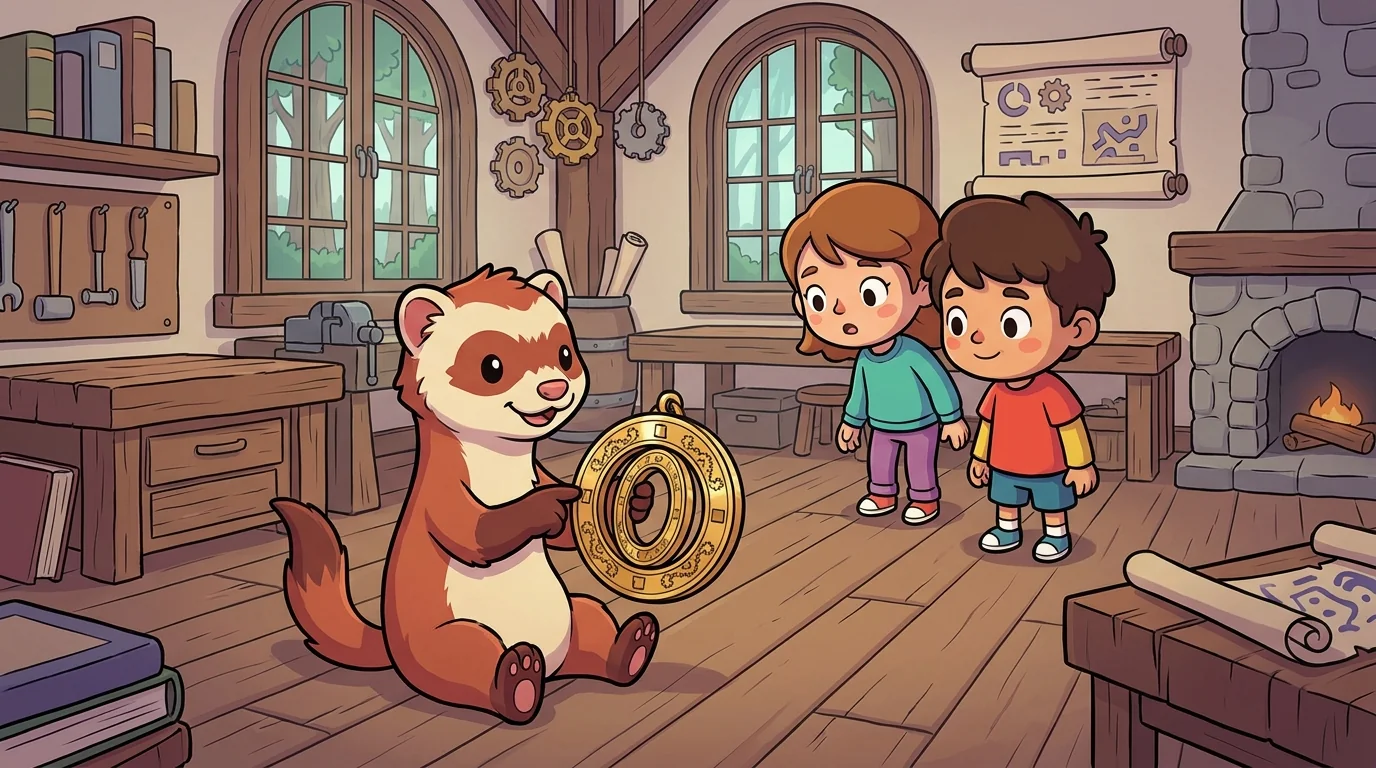
Caesar was a small ferret with warm russet-and-cream fur, a tail that twitched when she was excited, and a brass pendant that never left her neck. The pendant was her favorite thing in the world. It was made of two shiny brass circles, one nested inside the other, held together by a single tiny rivet so the inner circle could spin. Each circle had the whole alphabet carved around its edge.
On the day this story starts, she was sitting cross-legged on the floor of the CipherForge workshop, spinning it.
She lined up the letter on the inner circle with the letter three spots over on the outer one, and the wheel clicked into place. Then she looked up, because a couple of curious kids had wandered in and were watching her.
"Want to see something?" Caesar said. She held the wheel out flat. "Pick a letter."
"A," said the taller kid.
Caesar found A on the inner circle. Her finger slid across to the letter sitting opposite it on the outer ring. "Right now, A points to D. See? I've spun it three spots." She tapped the wheel. "So if I write you a secret note, every A becomes a D. Every B becomes an E. The whole alphabet slides down by the same amount."
The kid's eyes went wide. "So the message just looks like nonsense."
"To anybody who doesn't have a wheel," Caesar said, grinning. "But watch — I hand you a wheel too, tell you I shifted by three, and you spin yours to match. Now you can slide every letter back and read it perfect." She spun the inner circle back. "Same wheel. Same number. Forward to hide it, backward to read it."
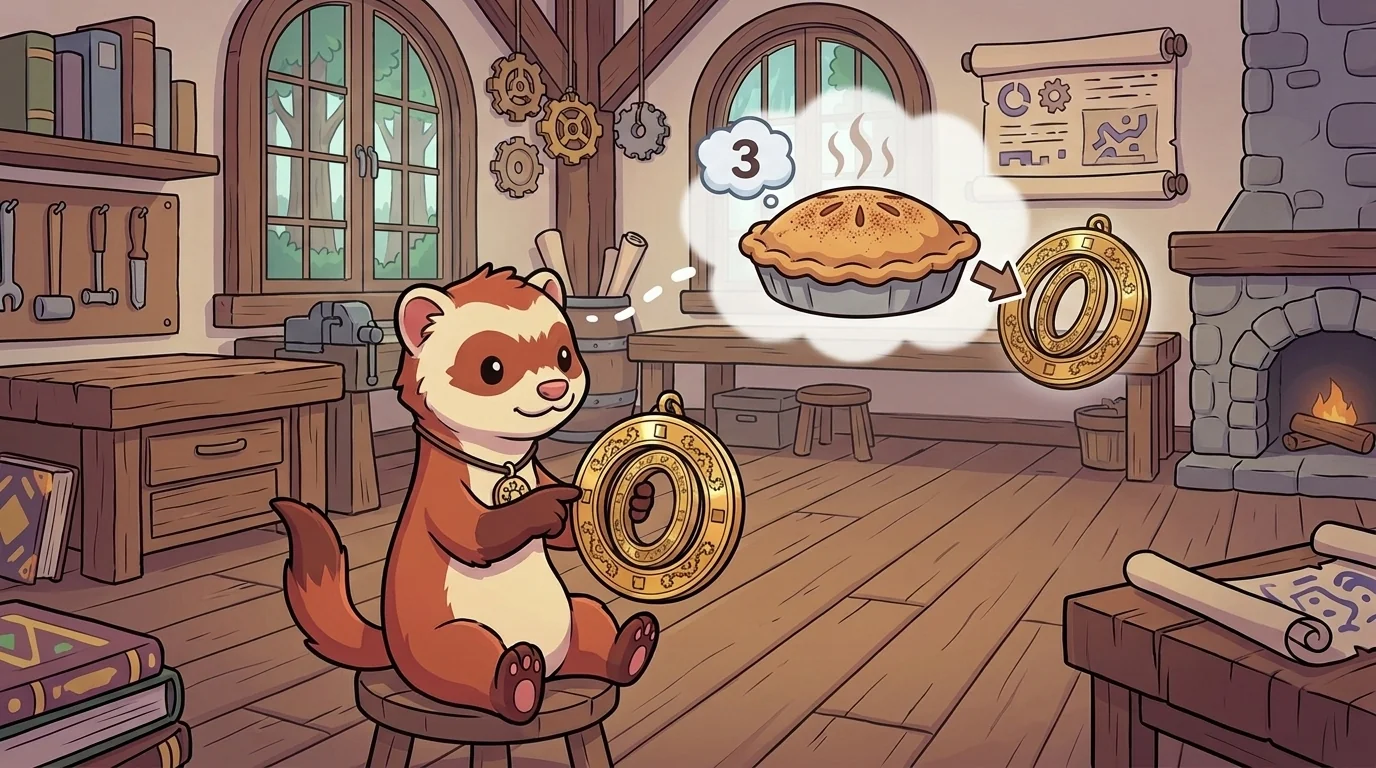
Caesar had grown up with codes. She just hadn't known that was unusual.
Her family lived in a small village where they kept the recipes — the really good ones, the ones for the dishes people came from three towns over to taste. And her family did not write those recipes down in plain words. They wrote them in code. It was an old tradition, older than anyone could remember, and Caesar's grandmother taught it to her the way other grandmothers teach knitting.
The first code Grandmother taught her was the simplest one there was. "You slide the letters," Grandmother had said, sliding a worn brass wheel around with a thumbnail. "Every letter the same amount. That's all it is. Start here, little one. Everything else grows from this."
Caesar loved it instantly. She loved that a page of gibberish could turn back into cinnamon and simmer slowly the moment you knew the secret number. She spent whole afternoons writing messages to herself and un-writing them again, spinning the wheel forward and back, forward and back, until her thumb went sore.
She learned quickly that her little code was easy to crack — there were only twenty-five different shifts, so anyone patient could just try them all until the words popped out. But that never bothered her. It wasn't meant to guard a castle. It was meant to be the first door.
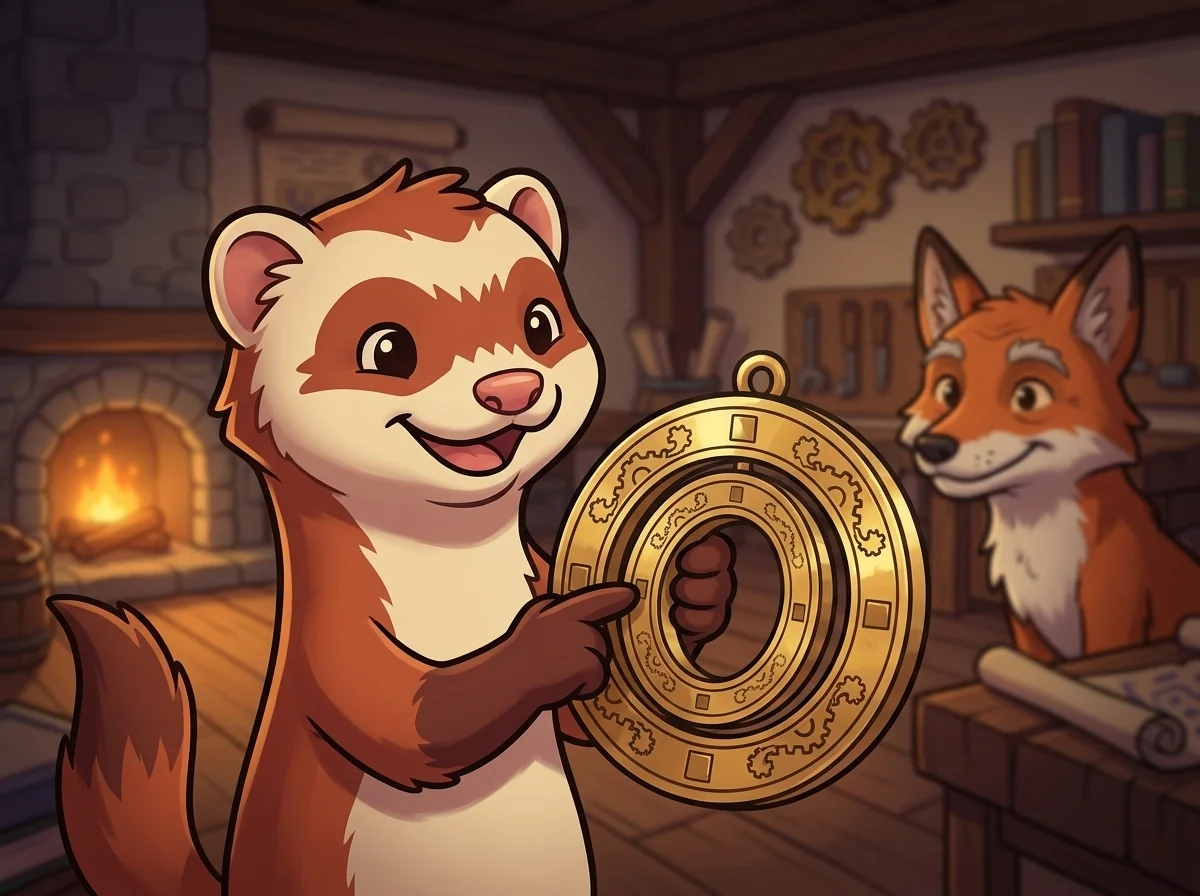
Years later, when Caesar was twenty-two, she walked all the way to CipherForge, where a wiry old fox named Cypher ran the place.
Cypher looked her over. "So. What have you got for us?"
Caesar didn't answer with words. She lifted the wheel off her neck, held it up so the brass caught the light, and spun the inner circle until it clicked. "Pick a letter," she said, "and I'll show you."
Cypher raised an eyebrow, but he played along. "C."
Her finger found it. "Right now C points here." She traced across. "I shifted by a set amount, and I applied that same amount to every single letter. Nothing fancy. And" — she spun it smoothly the other way — "the same shift runs it backward, so whoever knows the number can read it right back. One secret number, doing both jobs."
Cypher watched the little brass circles turn. He was quiet for a moment. Then a slow smile crept across his face.
"Simple," he said. "And you'll teach it simple?"
"It's the first door," Caesar said. "You don't scare kids at the first door."
"Then the workshop's yours," Cypher said.
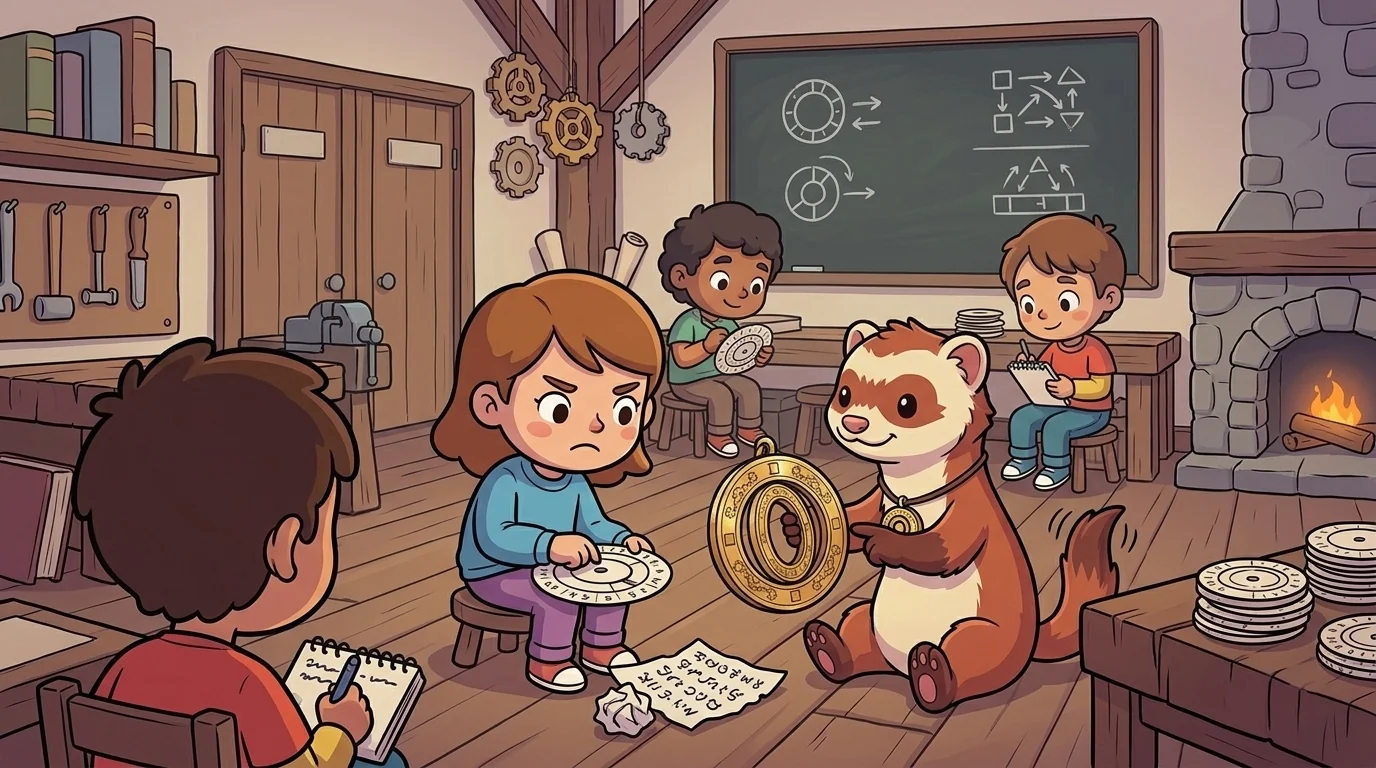
In her workshop now, Caesar teaches the same way her grandmother did — hands on the wheel, one door at a time.
She starts every class by spinning her pendant so the brass flashes. "Everybody, grab a wheel," she says, and the kids each get one of the little paper cipher-wheels she cuts by the stack. "Now spin the inside ring. Line up any letter you like. That's your shift. Write your name in code — just slide every letter the same amount."
The room fills with the whisper of spinning paper.
She catches a girl frowning at her scrambled name. "It's supposed to look like nonsense," Caesar says gently, crouching beside her. "That's the point. Now — what's your secret number?"
"Five."
"Then spin it back five, and slide every letter home."
The girl does. Her real name blooms out of the gibberish, letter by letter, and she gasps out loud. A couple of kids nearby lean over to see.
"It's not hard," Caesar tells the whole room, tapping her wheel. "Spin, and apply. The same number both ways. That's the whole trick — and it's the start of everything." She glances toward the row of doors along the workshop wall. "The other rooms teach harder things. Fixed swaps. Spinning swaps. Cracking codes wide open. Codes so strong they're almost impossible to break. But every one of those rooms starts with what your fingers already know how to do."
She always says the same thing about her code, and she says it proudly, not apologetically: "Mine's easy to break. Twenty-five shifts, try them all — anyone can. That's exactly why we start here. You learn how letters trade places when there's nothing scary in the way."
And she keeps her one firm rule, the one she never bends. When a kid asks whether they'll be sending secret spy messages now, Caesar shakes her head and taps the wheel. "No spy stuff. No army secrets. No bad guys," she says. "Our codes are for treasure hunts. For escape rooms. For notes to your best friend that only the two of you can read. Ciphers are puzzles. Puzzles are for fun."
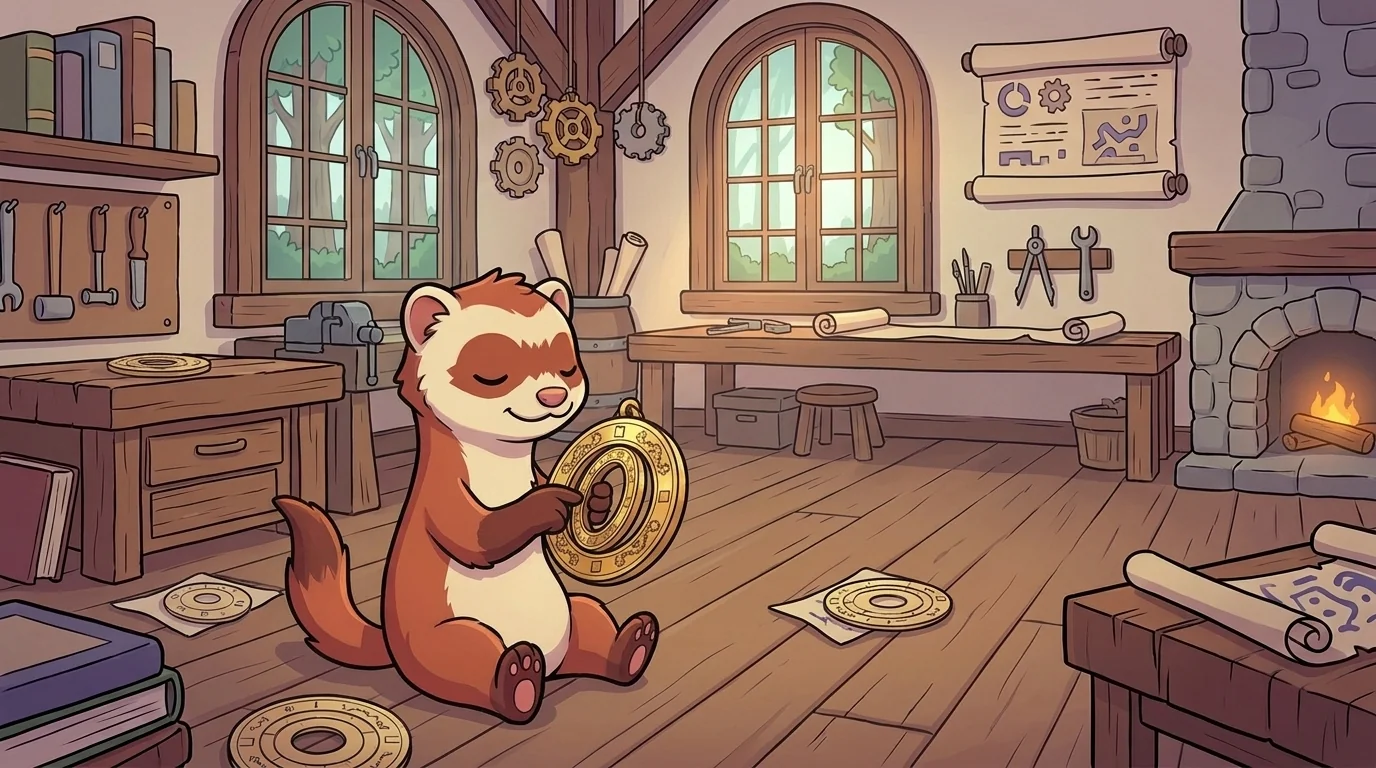
After the class had scattered — trading coded notes, spinning their paper wheels, laughing when a name came out garbled — Caesar sat alone on the workshop floor for a minute.
She picked up her brass pendant and gave it one slow, easy spin, the way she used to on her grandmother's kitchen floor. The circles turned, caught the light, and clicked softly into place.
A warm, glad feeling settled deep in her chest. It wasn't about being clever, or about codes at all, really. It was the quiet joy of watching someone stand at the very first door — a little unsure, a little curious — and then step through it, into a whole world they didn't know was waiting.
She held the wheel a moment longer, glad all the way down, and let it slow to a gentle stop.
The CipherForge ensemble
Caesar is part of CipherForge's distributed-narrative cast. Each character embodies a different curricular primitive; together they teach the full subject.
-

Mask
Atbash + general monoalphabetic substitution (every letter has a fixed substitute)
-

Vigenère
Vigenère / polyalphabetic keyword cipher (the Caesar-on-a-rotating-keyword pattern)
-
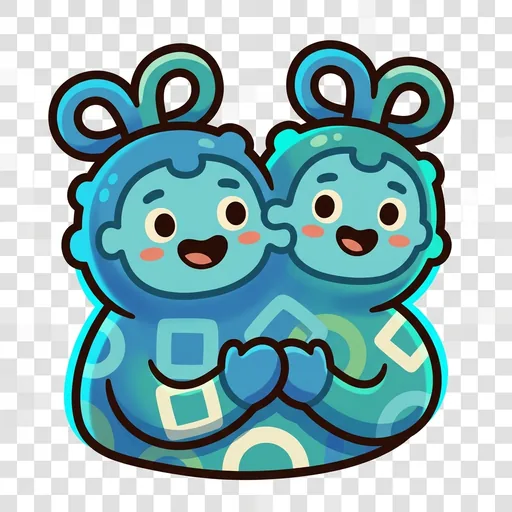
Echo Pair
Playfair digraph cipher (letters encoded in pairs through a 5×5 grid)
-
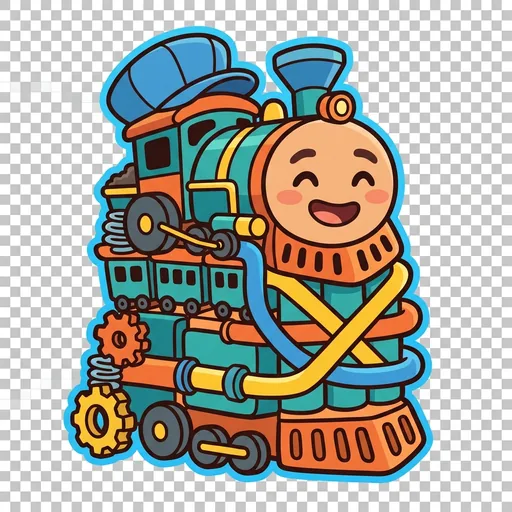
Rail
Rail-fence + columnar transposition ciphers (rearrange letter order without changing the letters themselves)
-

Tally
Number-based codes (A1Z26, ASCII, binary, book ciphers — any mapping that converts letters to numbers)
-

Sift
Frequency analysis + cryptanalysis-by-statistics (the cipher-breaking method, not a cipher itself)
-

Lattice
Modern cryptography fundamentals — XOR, public-key concept, hashing (the irreversible / asymmetric family)
-

Hollow
Hides a secret message inside something ordinary, so nobody even knows there is a message to look for.
-
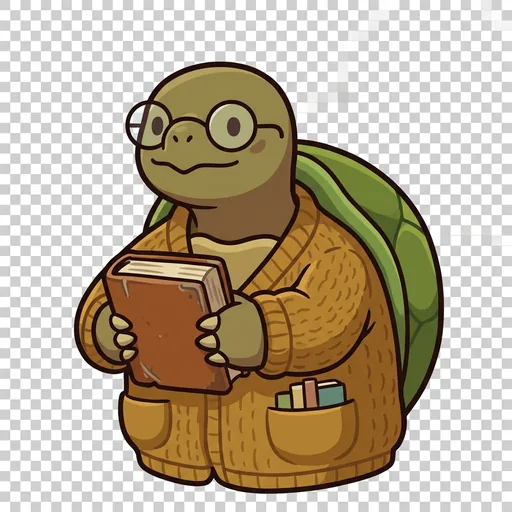
Tome
Keeps a shared code-book where whole words stand for secret words, so only someone with the same book can read the note.