Lattice
MODERN CRYPTOGRAPHY FUNDAMENTALS — *XOR, public-key concept, hashing; the irreversible / asymmetric family.* The cryptography primitive of *one-way operations + asymmetric keys as the foundation of modern secure communication.*
Press play to listen along. The line being read lights up as you go.
Show full transcript
Loading transcript…
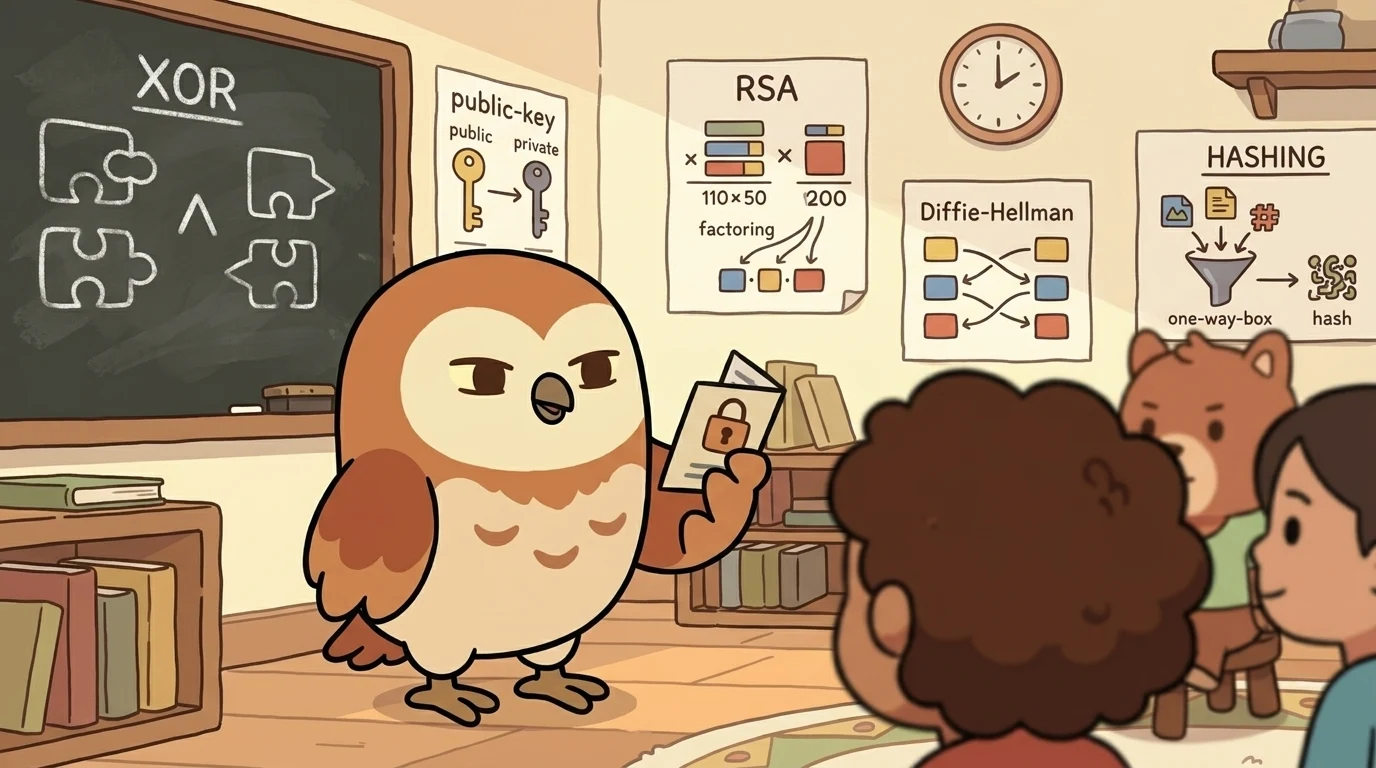
- "XOR" - "public-key" - "public"
- "RSA" - "Diffie-Hellman" - "HASHING" - "hash" - "one-way-box"
- "push" - "PUSH" gate-allow-text-pattern: '^([0-9]{1,4}|[0-9]+x[0-9]+|[A-Z]{1,6})$' ---
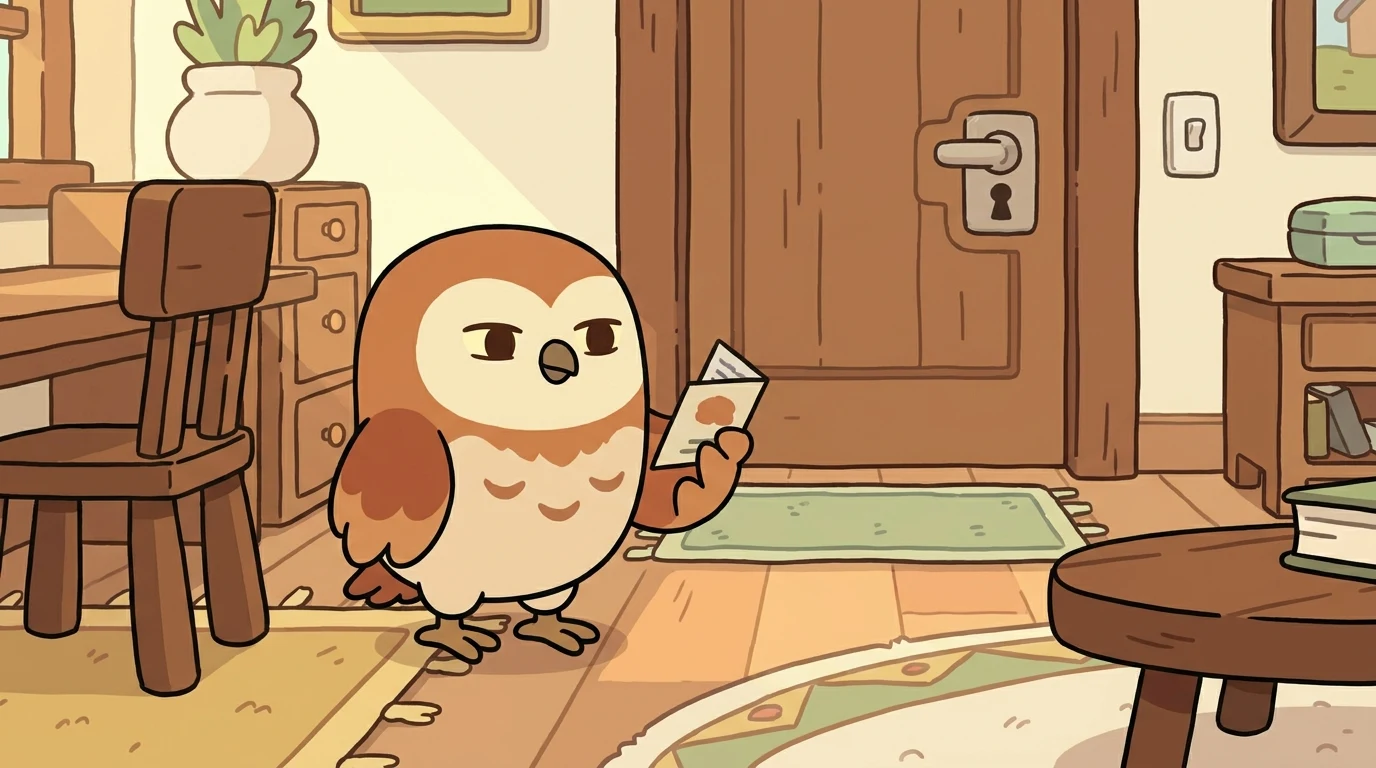
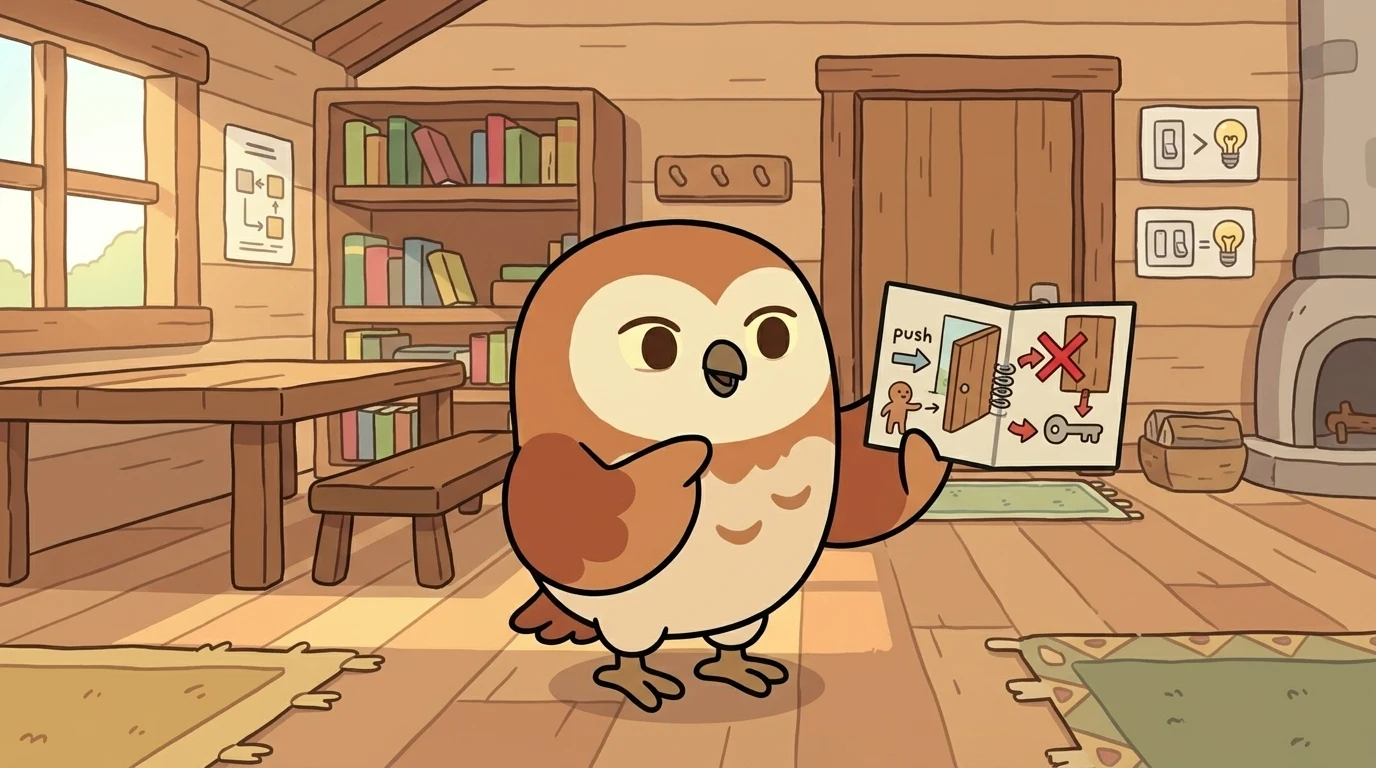
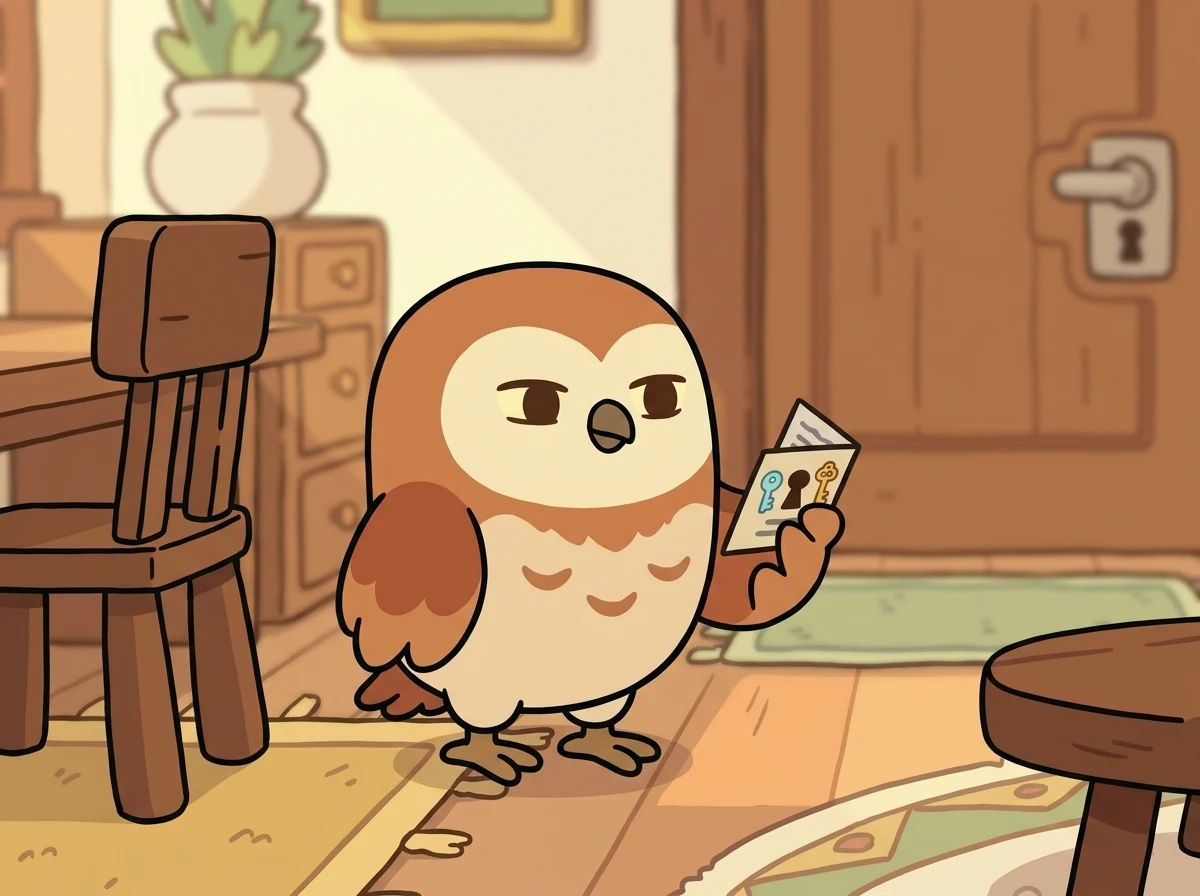
Lattice is a small owl-tween. She has soft, warm-brown and cream feathers. Her eyes are steady and thoughtful. She always carries a small, folded card. She moves carefully and thinks a lot before she speaks.
Lattice loves to explain things that are one-way. Her special thing is that little folded card. It shows a door. The door opens easily one way. But it won't open the other way. Not without a special key. This card shows the main idea of modern cryptography. It's about steps that are easy to do forward. But they are super hard to undo.
Lattice teaches about modern cryptography fundamentals. She helps us understand how today's secret codes work. Think about the old codes. Caesar, Mask, Vigenère, Echo Pair, and Rail codes are all symmetric. That means you use the same secret key to lock and unlock them. Sift can crack those codes. She finds patterns in them. But modern cryptography is really different. It works in three big ways.
1. *XOR and Bit-Steps*: This is about working with number-codes. Tally's number-codes are perfect for this. XOR is a main math trick. It can be undone easily. It's like having two light switches. If both are off (0,0), the light is off (0). If one is on (0,1 or 1,0), the light is on (1). If both are on (1,1), the light is off (0). If you do the XOR trick again with the same secret, you get the original code back. Fancy types of codes, called stream ciphers and block ciphers, use XOR. They also mix up and swap letters. This makes sure there are no patterns for Sift to find.
2. *PUBLIC-KEY (One-Way Key) Codes: This kind of code uses different keys. One key locks the message. A different key unlocks it. You share the "public" key with everyone. Anyone can use it to send you a secret message. But only you have the "private" key. Only your private key can unlock that message. This fixes a big problem. Old codes always had trouble sharing secret keys safely. This new way is super important for keeping the internet safe. It protects things like secure websites and emails. The math behind it uses one-way functions*. These are math tricks. They are easy to do one way. But they are super hard to undo. Imagine multiplying two huge secret numbers. That's fast and easy. But trying to find those two secret numbers again? That takes too long for computers to figure out.
3. *HASHING*: This is another one-way math trick. You can't undo it. It takes any message or file. Then it makes a short, unique code from it. This is like a digital fingerprint. For example, SHA-256 makes a 256-bit fingerprint. You can't use the fingerprint to get the original message back. It's like putting an apple, banana, and spinach into a blender. You get a smoothie. You can't get the whole apple, banana, and spinach back out. Hashing is used for saving passwords. It's also used for signing things online. It helps check if files have been changed.
Lattice always makes one thing clear. She never says modern codes are magic. She says clearly, "Modern codes are about one-way math. Some steps are one-way. They are easy to do forward. But super hard to undo." She pulls out her one-way-door card. "Multiplying two huge secret numbers is fast. But finding those numbers again? That takes too long for computers to figure out." She taps the card. "That one-way trick is what modern codes are all about. Public-key codes and hashing both use this idea."

XOR (the ^ symbol). It's a key math trick that can be undone. The idea of *Public-key codes. Different keys lock and unlock messages. How *RSA codes work (the main idea). It uses the "multiply two primes, hard to factor" trick. How *Diffie-Hellman shares a secret key. It's a clever math puzzle. *Hashing* (making one-way codes). You can't undo them.
The CipherForge ensemble
Lattice is part of CipherForge's distributed-narrative cast. Each character embodies a different curricular primitive; together they teach the full subject.
-

Caesar
Caesar shift / monoalphabetic shift cipher
-

Mask
Atbash + general monoalphabetic substitution (every letter has a fixed substitute)
-

Vigenère
Vigenère / polyalphabetic keyword cipher (the Caesar-on-a-rotating-keyword pattern)
-

Echo Pair
Playfair digraph cipher (letters encoded in pairs through a 5×5 grid)
-

Rail
Rail-fence + columnar transposition ciphers (rearrange letter order without changing the letters themselves)
-

Tally
Number-based codes (A1Z26, ASCII, binary, book ciphers — any mapping that converts letters to numbers)
-

Sift
Frequency analysis + cryptanalysis-by-statistics (the cipher-breaking method, not a cipher itself)
-

Hollow
Hides a secret message inside something ordinary, so nobody even knows there is a message to look for.
-

Tome
Keeps a shared code-book where whole words stand for secret words, so only someone with the same book can read the note.