Sift
FREQUENCY ANALYSIS + CRYPTANALYSIS-BY-STATISTICS — *every cipher has a frequency-fingerprint.* The cryptography primitive of *breaking ciphers using statistical analysis of letter + digraph + word patterns.*
Press play to listen along. The line being read lights up as you go.
Show full transcript
Loading transcript…
- "E"
- "A" - "TH" - "HE"
- "ER" - "AN" - "RE" - "ON" - "word" - "wod"

- "C=Q" - "T=E" - "1/2" - "V+" gate-allow-text-pattern: '^([A-Z]{1,3}|[A-Z]=[A-Z]|[0-9]/[0-9]|[A-Z]\+)$' ---
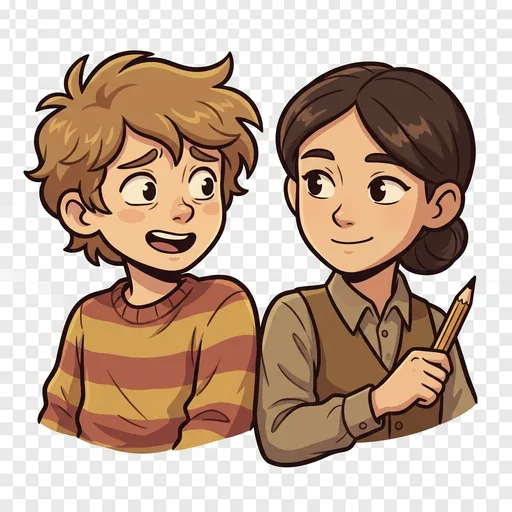
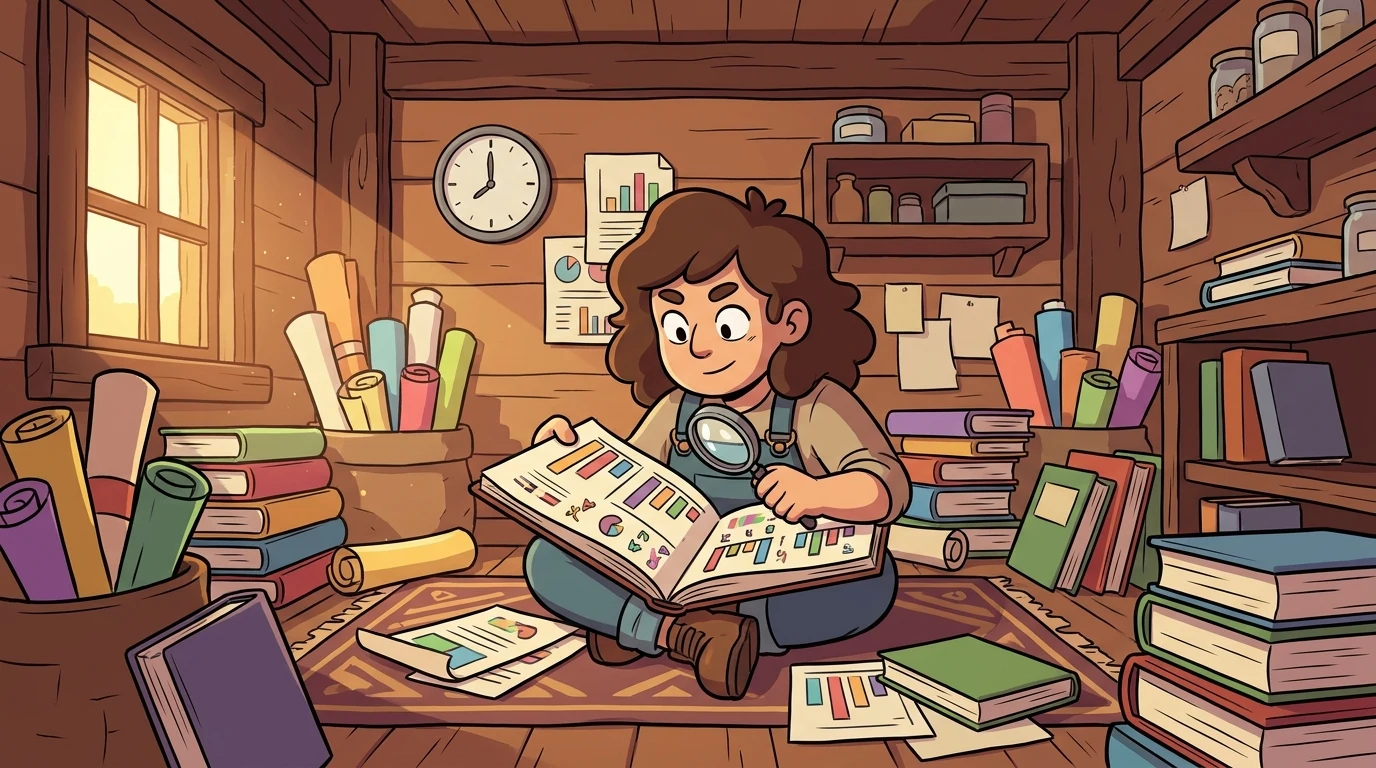
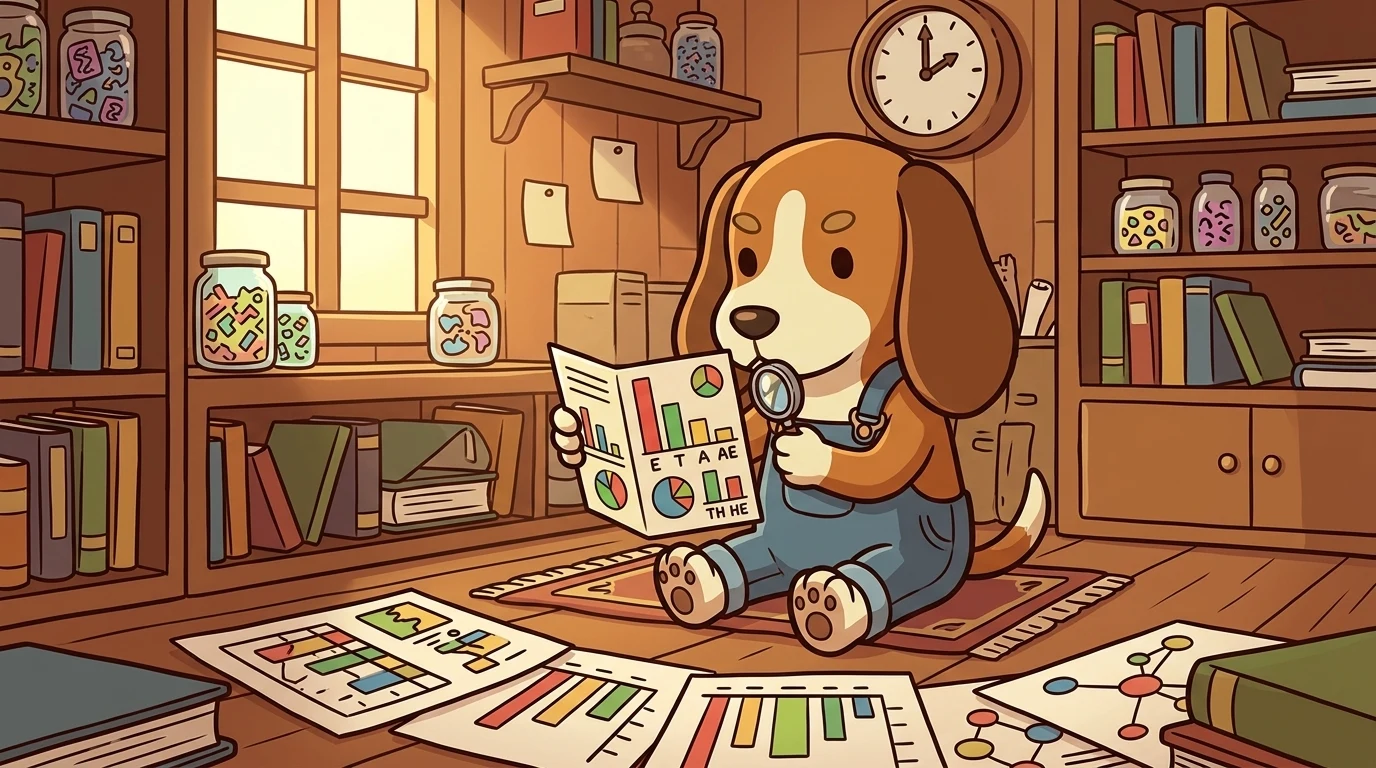
Sift was a small hound. She wasn't a puppy, but not quite grown up either. Her fur was a mix of warm brown and creamy white. Her ears were long and floppy. They bounced when she moved. Sift always carried two things. One was a tiny magnifying glass. The other was a small, folded card. This card was her special treasure. It showed all the English letter frequencies. E was the most common, then T, then A. It also listed common letter pairs. Things like TH, HE, and IN. Sift had quick eyes. She was great at spotting patterns. She loved finding little clues. These clues helped her figure things out.
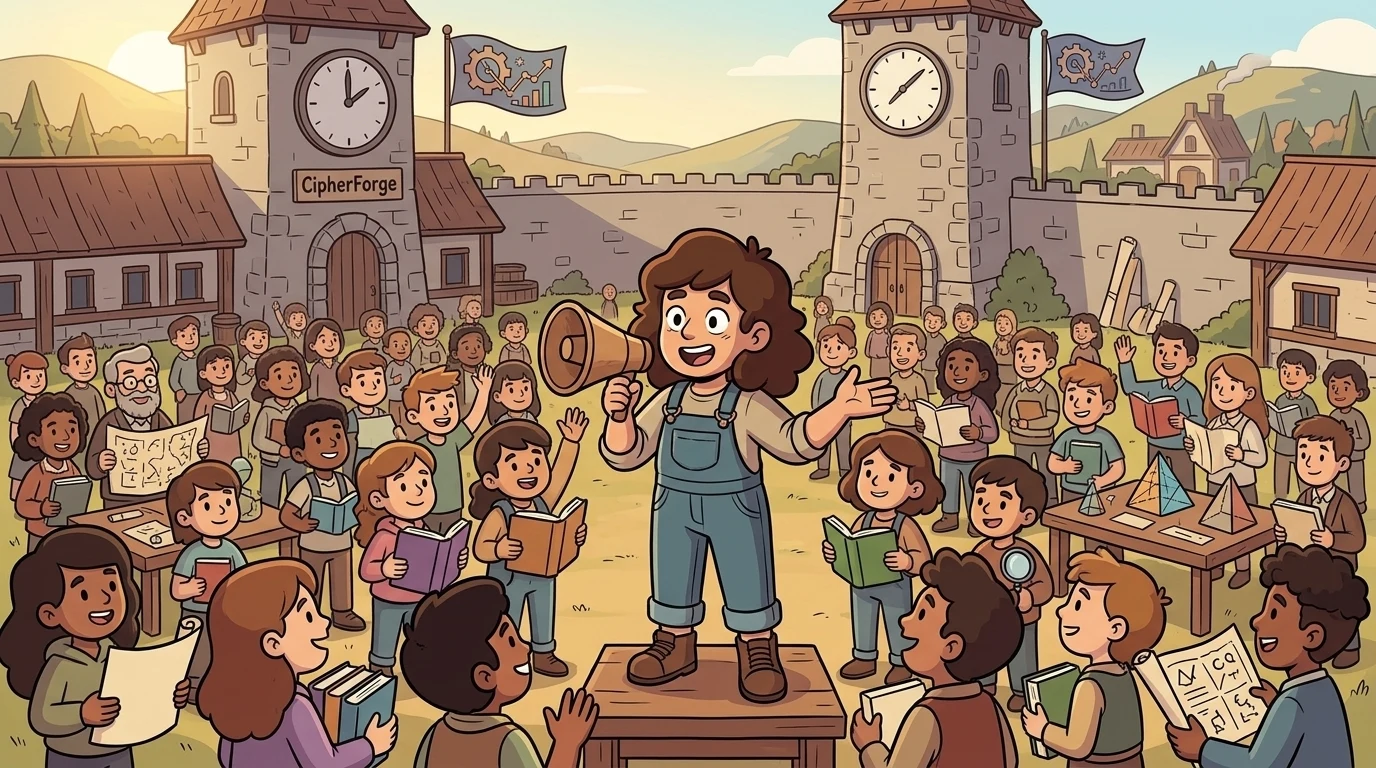
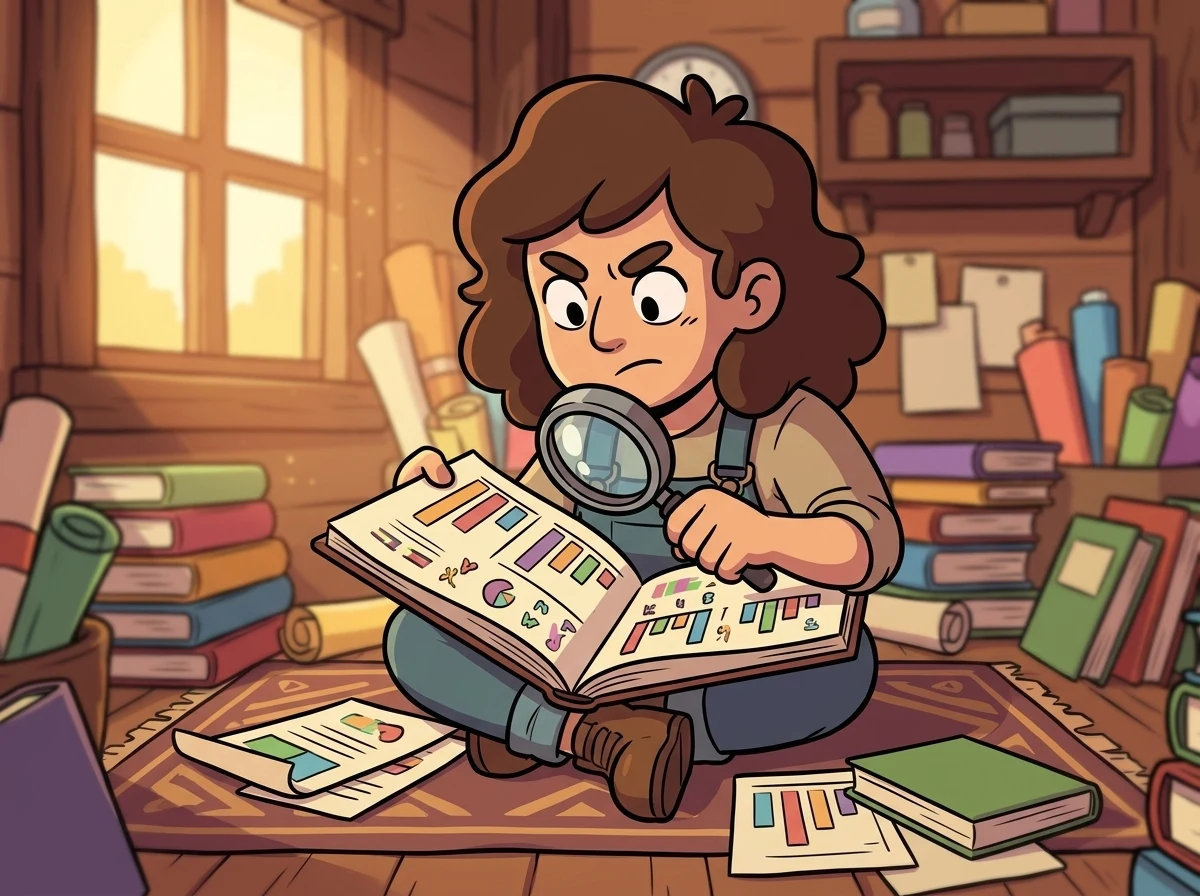
Sift is all about *frequency analysis*. That's a fancy name. It just means looking for patterns. She uses patterns in letters. She looks at letter pairs. She even checks whole words. This helps her crack secret messages. English has its own special patterns. They show up even in coded messages. Imagine a secret message. You don't know what it says. But you can count the letters. What if 'Q' shows up the most? And you know 'E' is the most common letter in English? Then 'Q' probably stands for 'E'. See how that works? You just keep going. Find the next most common letter. Guess what it stands for. Most simple codes break this way. Sift can crack them in minutes. It's like magic, but it's just math.
Sift never said cracking codes was only for super-smart people. "Anyone can do it!" she'd bark. "Every secret code has a tell." She meant a little clue. "The patterns in a normal message," she'd explain, "they usually sneak into the coded message." *Frequency analysis works great on simple codes. Like ones where each letter just swaps for another. It even helps with harder codes. Codes like Vigenère. But only after you find a special key. It also helps with Playfair codes. You look at letter pairs for those. "But listen up!" Sift would warn. "It doesn't work on all codes." Modern codes are different. They are made to hide patterns. They flatten everything out. So, frequency analysis* won't help there. "The big lesson," Sift would say, "is that you need the right tool. The code you're breaking tells you which trick to use."
The CipherForge ensemble
Sift is part of CipherForge's distributed-narrative cast. Each character embodies a different curricular primitive; together they teach the full subject.
-

Caesar
Caesar shift / monoalphabetic shift cipher
-

Mask
Atbash + general monoalphabetic substitution (every letter has a fixed substitute)
-

Vigenère
Vigenère / polyalphabetic keyword cipher (the Caesar-on-a-rotating-keyword pattern)
-

Echo Pair
Playfair digraph cipher (letters encoded in pairs through a 5×5 grid)
-
Rail
Rail-fence + columnar transposition ciphers (rearrange letter order without changing the letters themselves)
-

Tally
Number-based codes (A1Z26, ASCII, binary, book ciphers — any mapping that converts letters to numbers)
-

Lattice
Modern cryptography fundamentals — XOR, public-key concept, hashing (the irreversible / asymmetric family)
-

Hollow
Hides a secret message inside something ordinary, so nobody even knows there is a message to look for.
-

Tome
Keeps a shared code-book where whole words stand for secret words, so only someone with the same book can read the note.