
Grace
SELF-MERCY — after you hurt someone, you can be truly sorry AND still know you are worthy. Releasing the shame-spiral isn't excusing what you did; it's staying steady enough to actually repair it.
Press play to listen along. The line being read lights up as you go.
Show full transcript
Loading transcript…
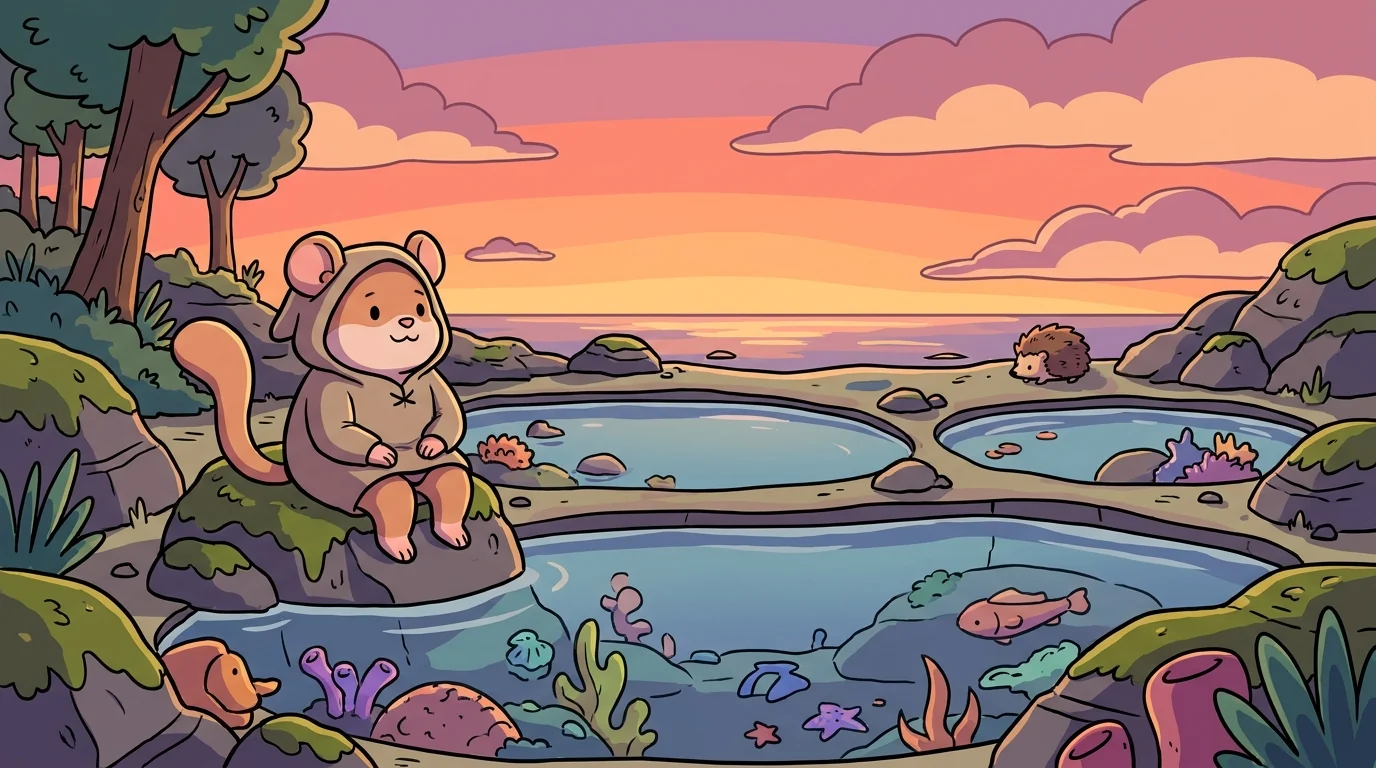
Grace was a soft, round dormouse-tween with the gentlest eyes in all of Heart-Harbor, and she spent her time near the tide pools, where she kept watch for the creatures who had hurt someone and then started to drown — not in the water, but in themselves.
Because that was the thing Grace understood that almost nobody else did: there are two different sentences a creature can say after a mistake, and they sound alike but they are nothing alike. "I did a bad thing" — that one is honest, and useful, and it leads somewhere good. And "I am a bad person" — that one is a riptide, and it pulls you under, and from under there you can't repair anything at all.
One afternoon she found a young hedgehog named Sol curled into a tight, miserable ball by the tide pools. He had hurt a friend. He knew it. And now he was spiraling — I'm awful, I'm the worst, I always ruin everything, I'm a terrible friend, I'm a bad person — sinking deeper with every word, too crushed to even think about going to repair it.
Grace sat down beside him, soft and close. "You did something that hurt someone," she said gently. "That's true. I'm not going to tell you it didn't happen. But the sentence you're saying right now — I'm a bad person — that one's a riptide. And you're getting pulled under. Let's get your feet back on the sand."
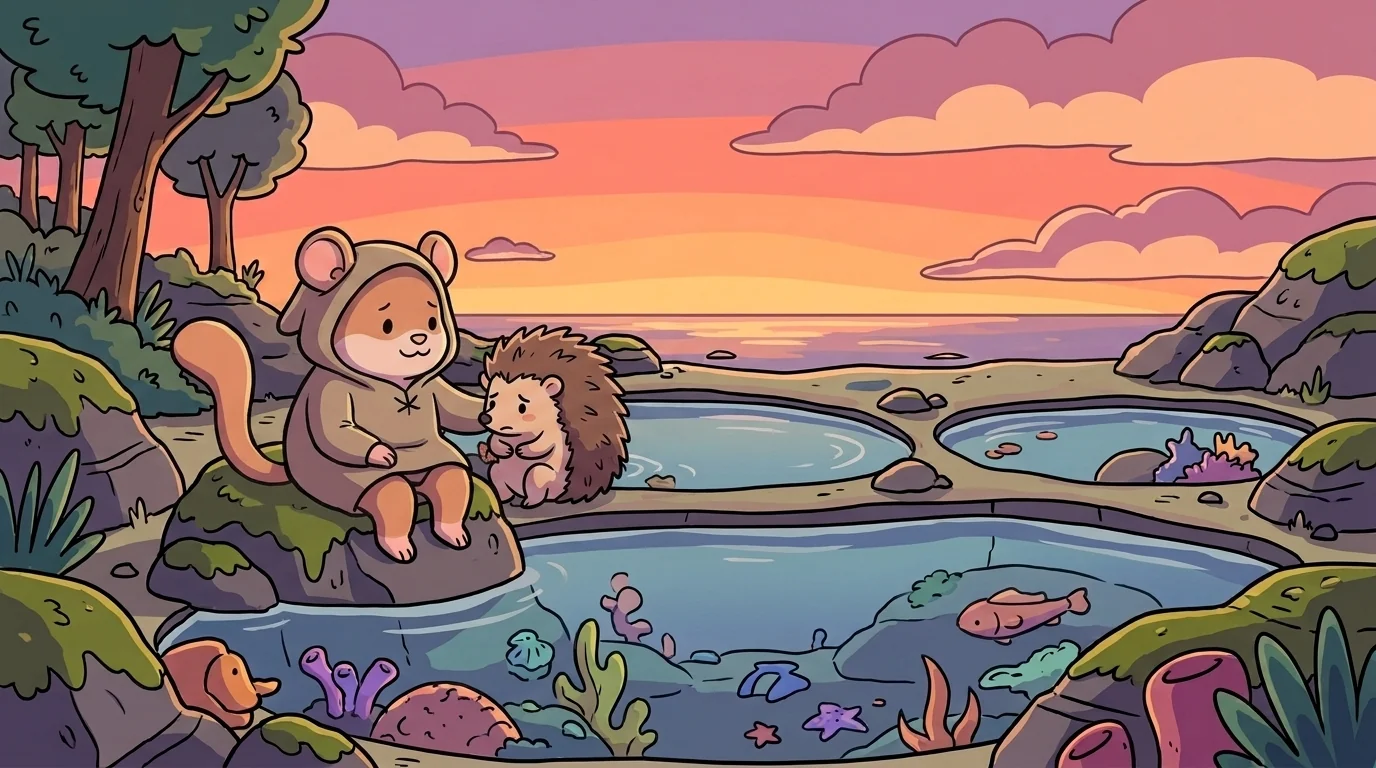
Sol's voice was small and wretched. "But I AM bad. I hurt my friend. Bad people hurt people. So I'm bad."
"That feels true when you're caught in the riptide," Grace said, with enormous gentleness and no argument in her voice. "But listen to the two sentences side by side. 'I did a bad thing' — that one means you're a good creature who made a mistake, and good creatures who made mistakes can fix them. 'I am a bad person' — that one says you ARE the mistake, all the way through, and a thing that's bad all the way through can't fix anything. It can only drown." She tilted her head. "One sentence leads to repair. The other leads to the riptide. They are not the same sentence, even though your mind is sliding from the first one to the second."
Sol blinked through his misery. "I didn't even notice I'd switched them."
"Almost nobody does," Grace said softly. "The slide happens so fast. You feel bad about what you did — which is right, that's your kindness working — and then the feeling-bad slides into being-bad, and suddenly you're under the water. My whole job is to catch you right there, at the slide, and walk you back to the true sentence."
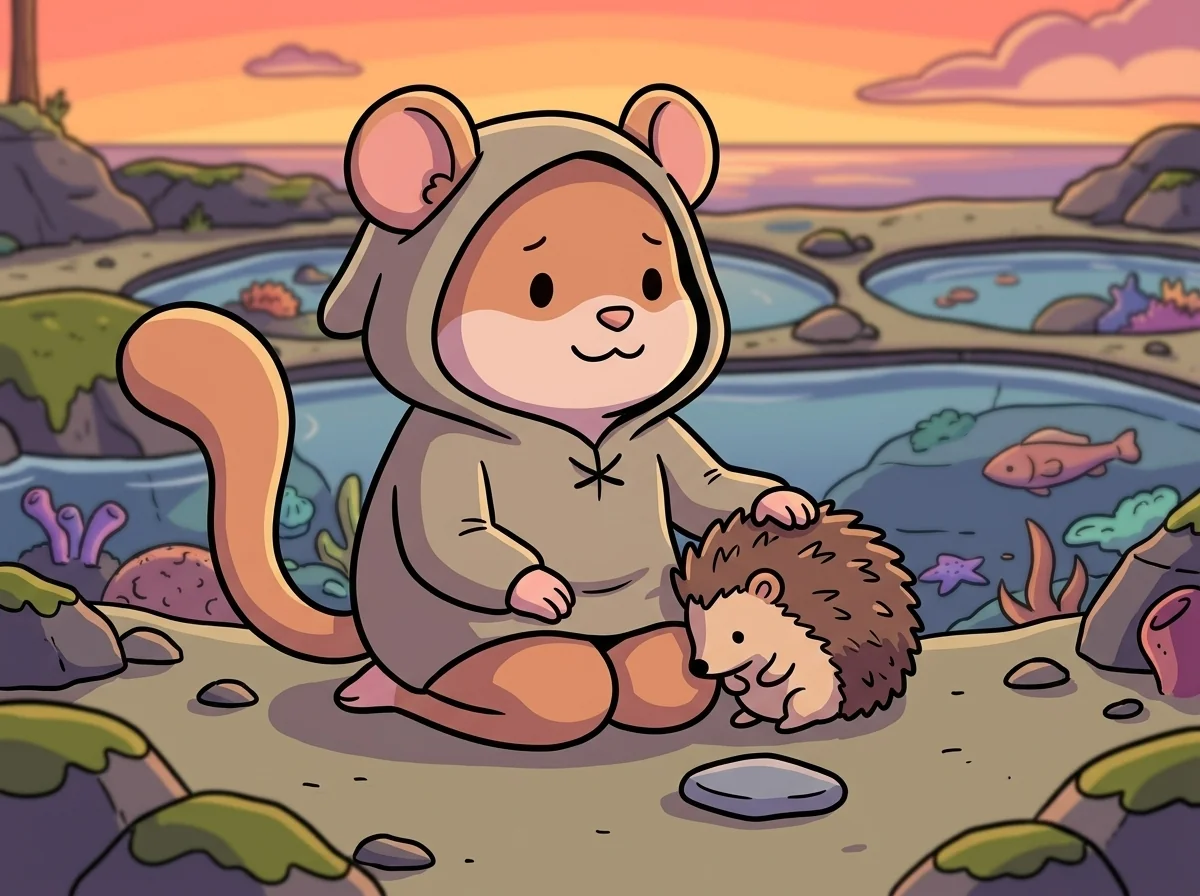
Grace showed Sol how to find his feet on the sand again — not by deciding what he did was okay (it wasn't, and she never pretended it was), but by separating the two sentences and standing on the true one.
"Say the honest one," she murmured. "Out loud. I did something that hurt my friend, and I feel bad about it. All of that is true and all of that is good — even the feeling-bad, because the feeling-bad is just your caring, pointing at something real." She waited while he said it. "Now notice what's NOT in that sentence. It doesn't say you're worthless. It doesn't say you always ruin everything. It doesn't say you're bad all the way through. Those were the riptide talking. They were never the true sentence."
Sol said the honest sentence. I did something that hurt my friend, and I feel bad about it. And he noticed, to his surprise, that it didn't pull him under. It hurt — but it was a sturdy kind of hurt, the kind you can stand up inside of. The crushing, drowning I'm-the-worst feeling began, slowly, to loosen its grip.
"There's your feet on the sand," Grace said warmly. "Feel that? You can be really, truly sorry — and still be a worthy creature. Both at once. That's not letting yourself off the hook. That's staying steady enough to actually do something about it."
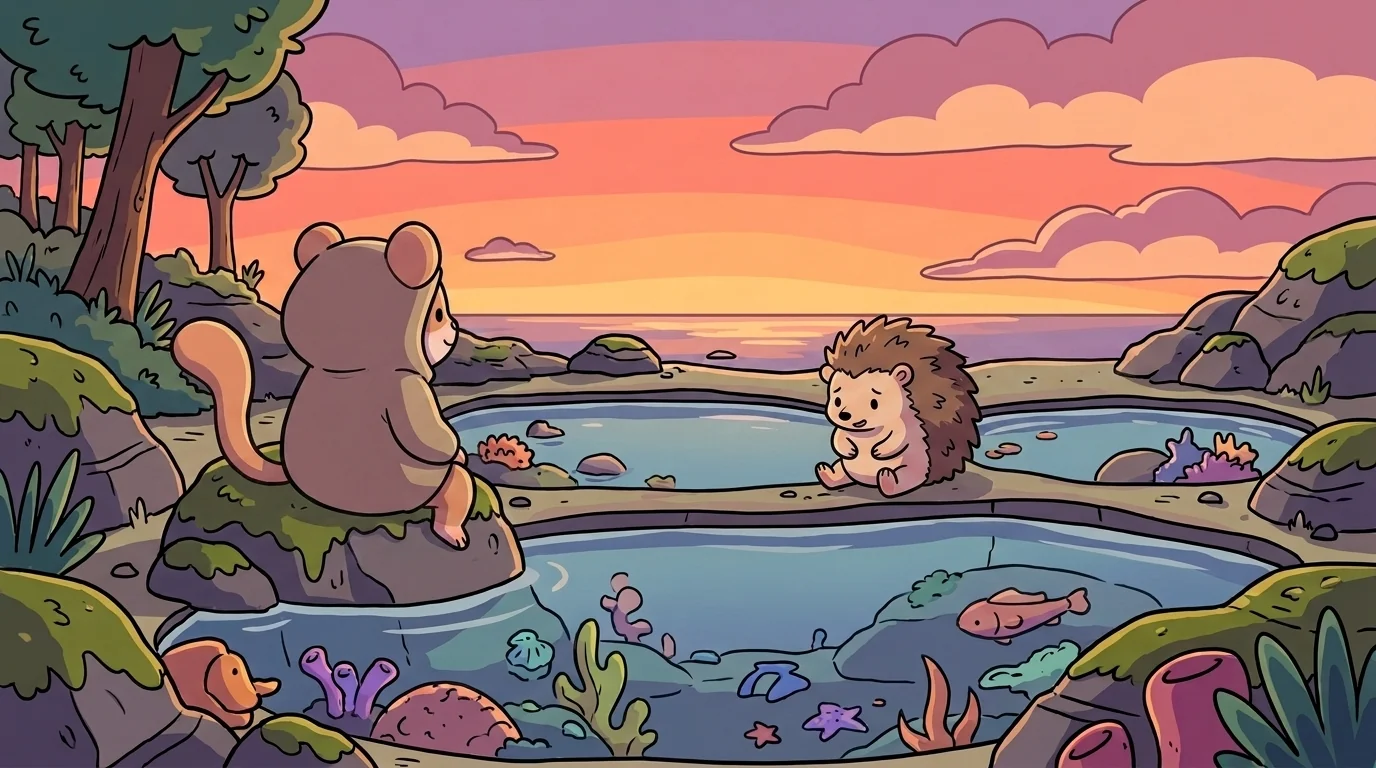
And that was the part Sol hadn't understood until now: the self-mercy wasn't the opposite of taking responsibility. It was what made responsibility possible.
"When I was drowning in I'm-so-bad," Sol said slowly, "I couldn't even think about going to my friend. I was too busy sinking. I had no room left to actually fix anything."
"That's the cruel trick of the riptide," Grace said. "It feels like being responsible — like really beating yourself up proves how sorry you are. But it does the opposite. A creature drowning in shame has no hands free to repair with. You have to get your feet on the sand first. You have to know you're still worthy. Then you have enough steadiness to go and make it right." Her gentle eyes warmed. "Being kind to yourself isn't the reward for repairing. It's the thing that lets you repair at all."
Sol uncurled from his miserable ball. The shame hadn't vanished — but it had changed shape, from a riptide pulling him under into a steady, standing sorrow he could carry while he walked. And from there, for the first time since he'd hurt his friend, he had enough of himself back to actually go and mend it.
He felt it as a kind of quiet rescue — not the relief of being told he'd done nothing wrong, but the steadier relief of knowing he could have done a wrong thing and still be a good creature worth standing up. "I think I can go fix it now," he said. "I couldn't, a minute ago. I was too far under. But I've got my feet now." And the feeling underneath that — getting his feet back — was the warm, solid mercy of being allowed to be a good person who made a mistake.
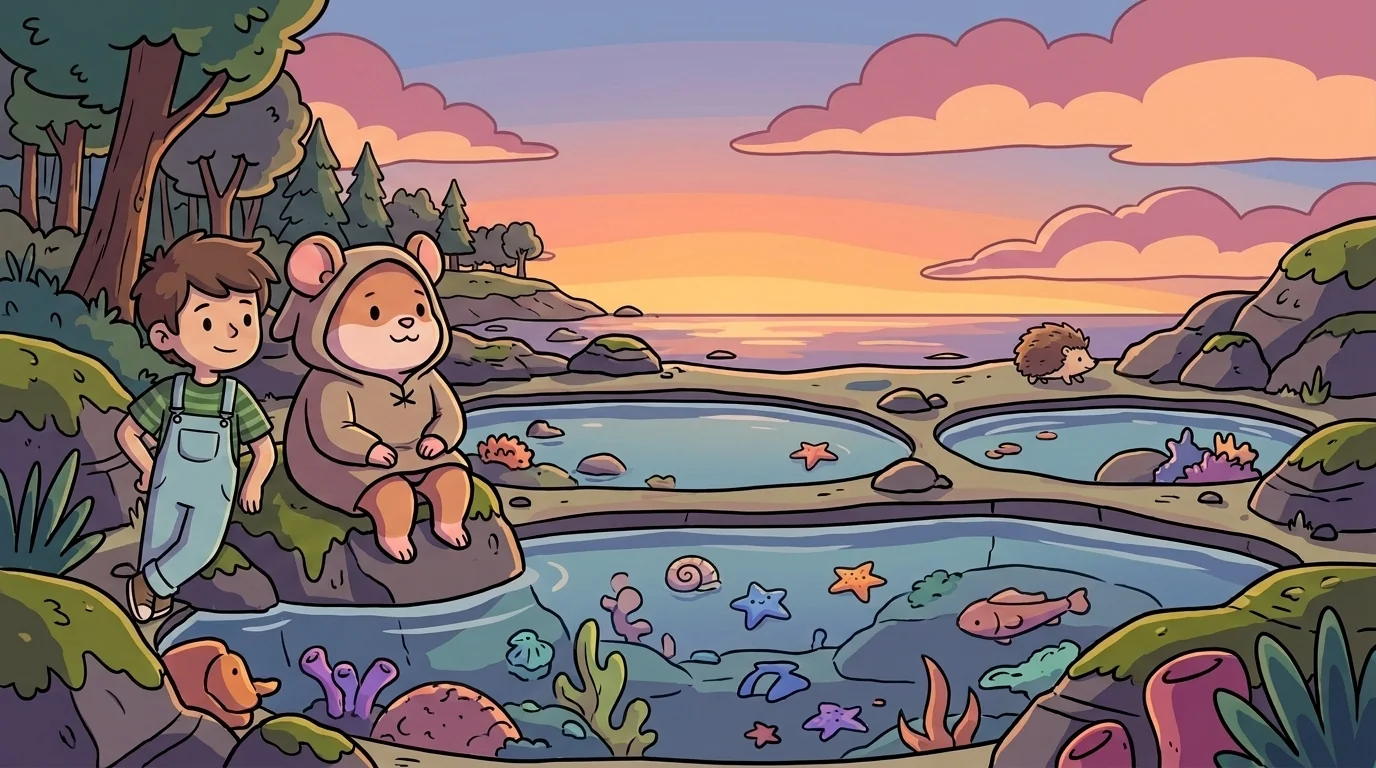
That evening Mend found Grace by the tide pools, watching the gentle water.
"He'd slid from I did a bad thing into I am a bad person," Grace told Mend. "He was drowning in it, too far under to repair anything. We just got his feet back on the true sentence."
Mend nodded slowly. "And how does Sol feel now, before he goes to mend it?"
Grace smiled gently. "Steady enough to do the brave thing. The shame turned from a riptide into something he can stand up inside. He knows he can be sorry and still be worthy — and that's exactly what gave him his hands back to repair with."
And later, when Sol had gone off to make things right, Grace stayed by the tide pools in the soft evening light, glad in her gentle, watchful way — because the riptide of I'm-a-bad-person came for everyone eventually, after they'd hurt someone they loved, and now Sol knew there was always a true sentence to stand on, and a worthiness the riptide could never actually take away.
The RuptureRepair ensemble
Grace is part of RuptureRepair's distributed-narrative cast. Each character embodies a different curricular primitive; together they teach the full subject.
-

See-It
Notice harm — soft warm-russet deer-tween in chunky moss-green vest; ears literally perked + eyes wide + one hoof raised mid-step; doesn't pretend not to see what just happened
-

Sorry
Acknowledge — soft cream-and-amber otter-tween in chunky soft-blue scarf; palms-up open-hands level bow-pose (NOT cringe); treats acknowledgment as skill, never proof of badness
-

Felt
Name-impact — round soft-grey-and-cream badger-tween with tiny notebook + soft-charcoal pencil; mid-listening with head tilted; never assumes — always asks-then-listens
-

Offer
Offer-repair — warm-amber raccoon-tween with chunky-paw extended palm-up holding small soft hand-folded paper-crane (universal not specific cultural symbol); never grasping
-
Together
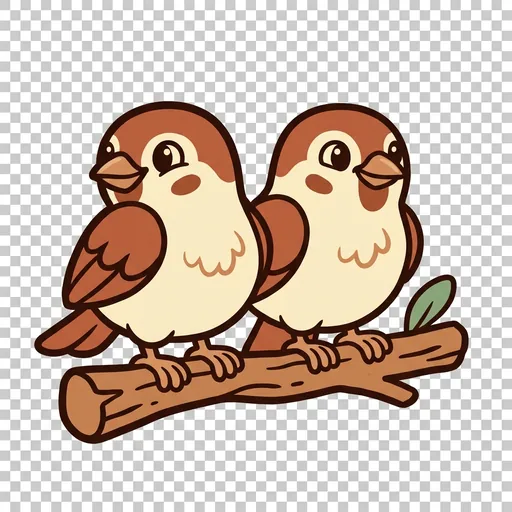
Re-engage — two warm-cream-and-russet sparrow-twins on a single chunky branch, perched comfortable-distance-apart; both looking outward in same direction; `we're still here` energy
-

Eddy
Helps you steady yourself first, because you cannot mend anything while a big feeling is still rushing through you.
-

Lee
Shows that you can receive an apology from a safe place, at your own pace, without rushing to say it is okay.
-

Ease
Once you have made a real mend, helps you let the other person come back in their own time, with no pushing.
-

Levee
Shows that you can forgive someone and still keep a kind, clear limit that makes it safe to stay close.