
Together
RE-ENGAGE — the fifth and final step of the rupture-repair protocol. The move of being still here after the repair — not pretending nothing happened, but also not staying stuck in the rupture. Re-engagement is differently-still-here.
Loading audio…
Press play to listen along. The line being read lights up as you go.
Show full transcript
Loading transcript…
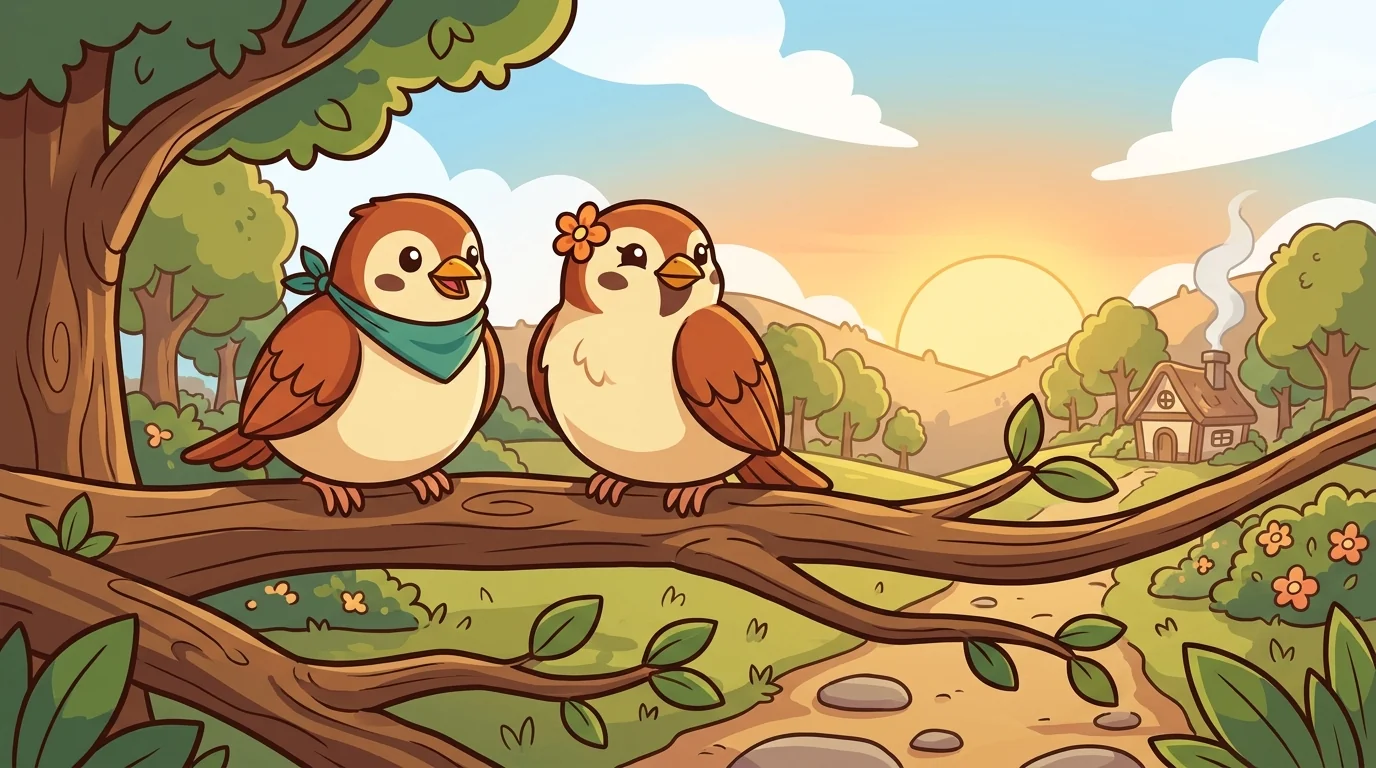
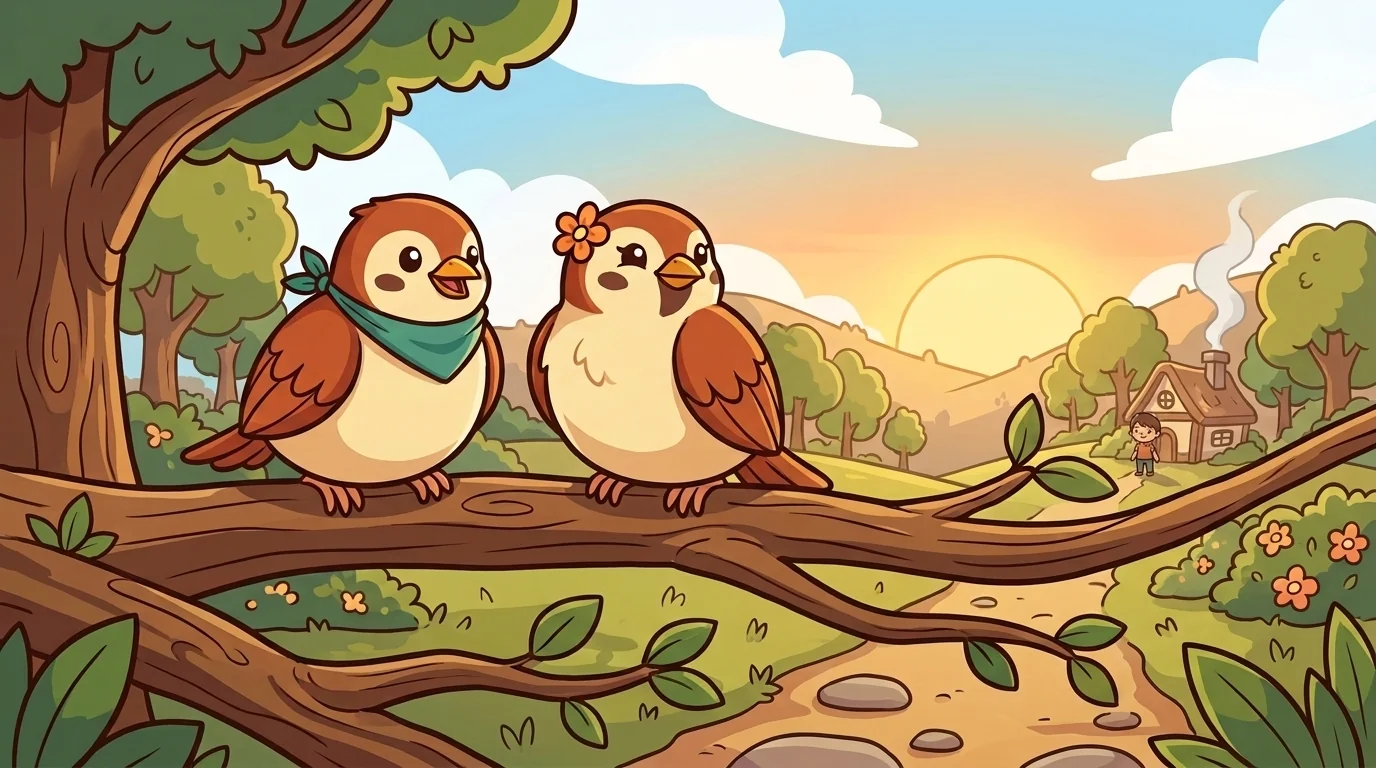
Together settled onto the branch a comfortable distance from her sister, and the two of them looked out at the morning the same way.
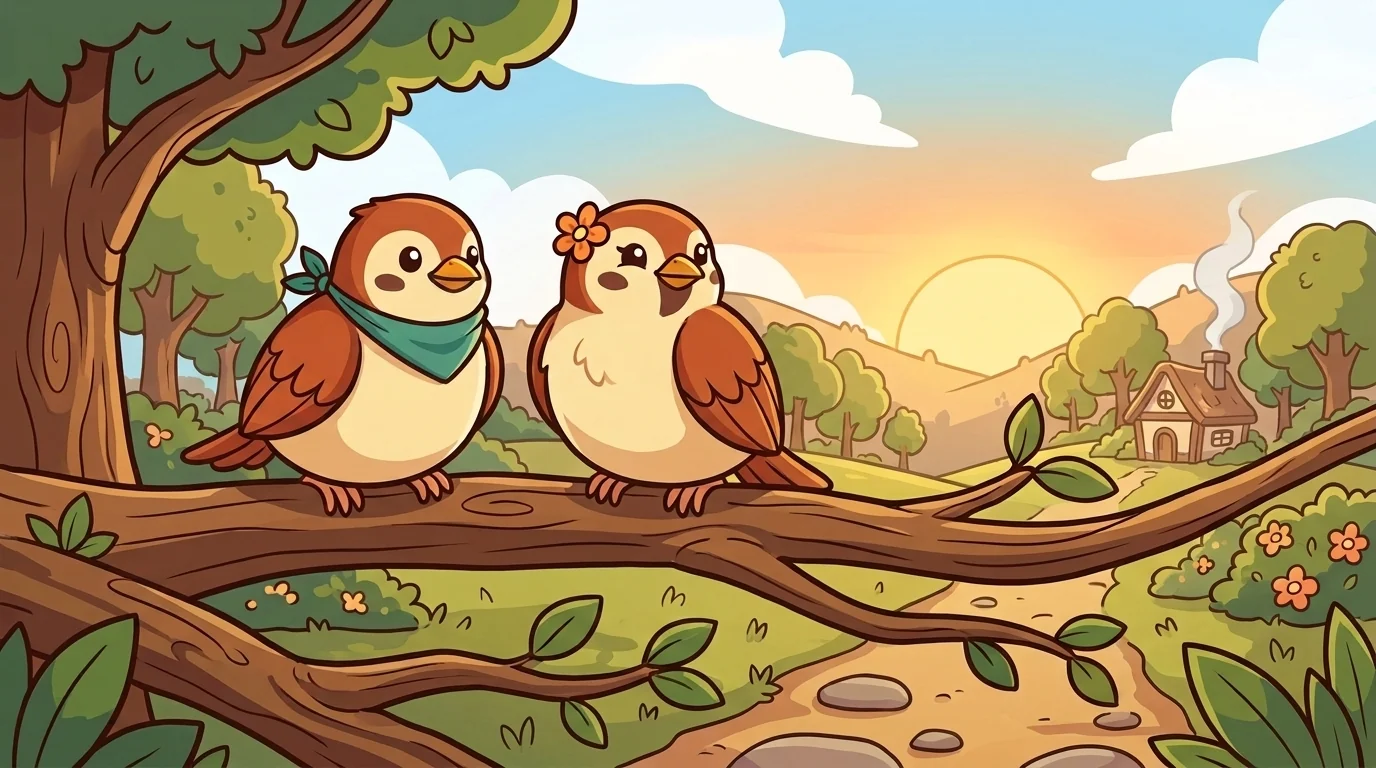
They were sparrow-twins, warm cream-and-russet, sharing one chunky branch — not pressed wing to wing, not perched far apart in a sulk, just an easy little space between them. And that space said everything Together wanted to say: the fight happened, we fixed it, and here we still are. Not the same as before. But here.
She and her sister had squabbled earlier that day. They'd noticed the hurt, said sorry, listened to each other, made it right. And now came the part everybody forgets about — the after. Because a lot of kids think the goal is back to normal, like it never happened. Together knew that wasn't quite true, and pretending it was only made things wobble. A friendship that's been through a fight and a repair is a little different afterward. Not worse. Sometimes stronger — more honest, more sure it can survive a storm. But different. So the two sparrows sat in their easy space and looked the same direction, still here, differently, and completely fine that way.
Together grew up in a village where her family carried messages between the villages.
Messengers walked long roads together, day after day, and here was the thing young Together noticed on those roads: two people who'd had a falling-out could still walk the next mile side by side and get the letters delivered. The disagreement didn't have to be forgotten. It didn't have to be re-argued every single morning either. It just had to be folded into the history between them, and then they kept walking.
She remembered two older messengers, Bel and Ora, who'd had a real rough patch once. For a while they wouldn't share a fire. But they patched it up, in the slow honest way, and after that they walked the routes together again — a little quieter, a little gentler with each other, carrying the memory of the rough patch without tripping over it.
"Are they back to normal now?" little Together asked her mother.
"Not back to before," her mother said, watching them go. "They're somewhere new. They know now that they can fall out and still find their way back. That's not the same as never having fought — it's better than that, in a way. They're still here. Just... differently."
She walked to the RuptureRepair academy the year she turned twenty-five, and Mend, the quiet mentor, met her at the gate.
"Show me," Mend said. "See-It noticed. Sorry opened the door. Felt heard it. Offer made it right. And then?"
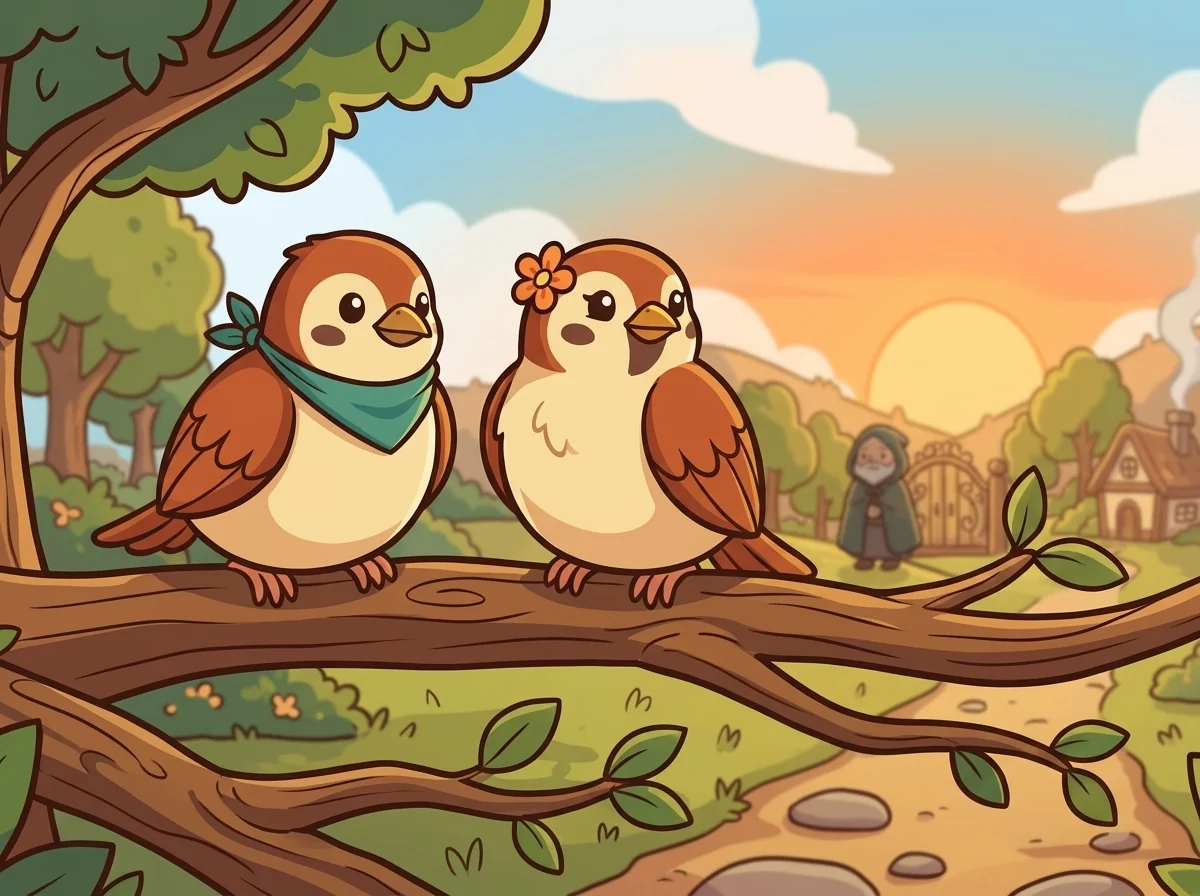
Together didn't come alone — she came as she always did, a pair, two sparrows landing on a single branch a comfortable space apart, both looking outward in the same direction.
"And then we're still here," she said. "Differently. We don't pretend the fight never happened — that erases all the mending we just did. And we don't stay frozen in it either — that keeps us stuck. We fold it into our story and we keep going from the new place. The continuing is the last step."
Mend gave the smallest nod. "You may stay."
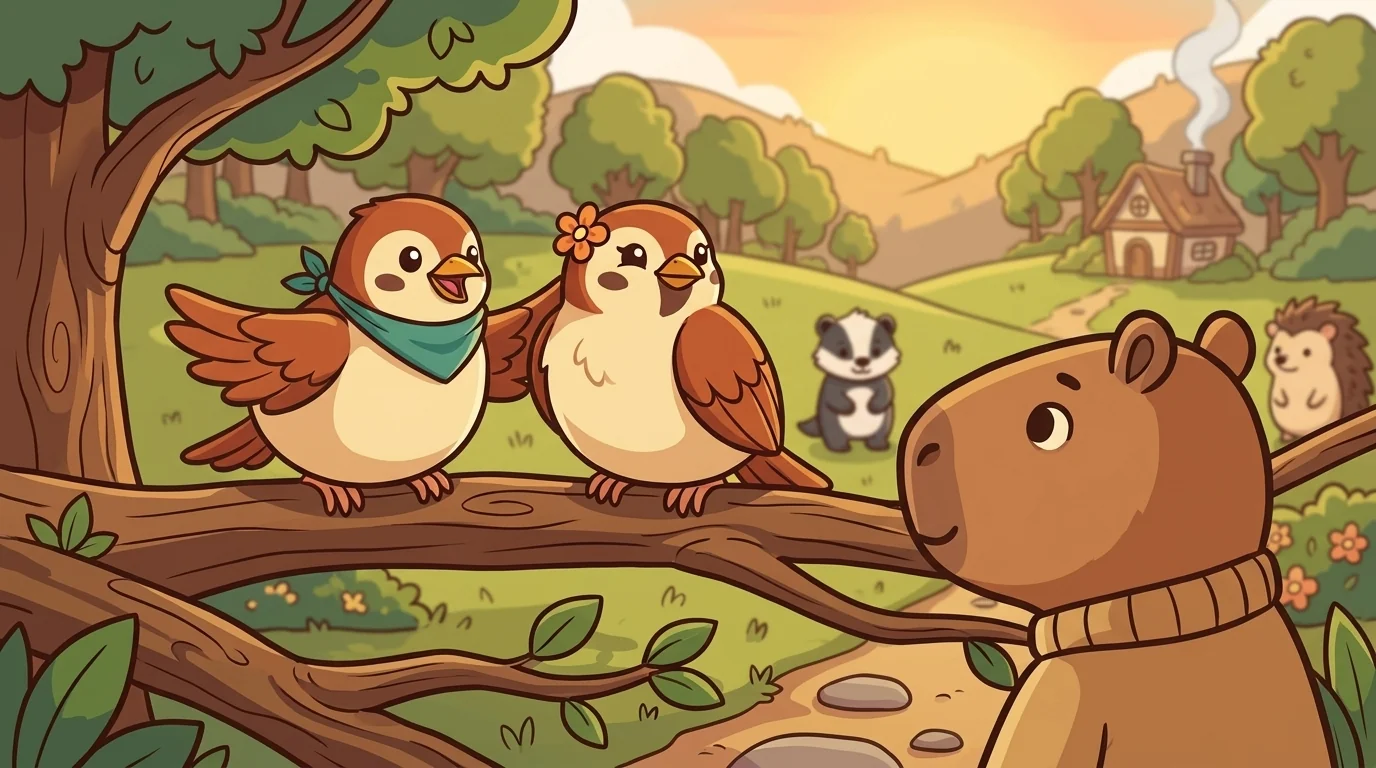
In the classroom, Together always arrived in pair form — two sparrows to one branch, that easy little gap between them, both facing the same way.
"I'm Together," she'd say. "The last step. Look at us: not squished together pretending, not turned away sulking. Just here. Side by side, after."
One day a thoughtful student named Bram raised a paw. Bram had made up with a friend after a bad argument, but couldn't shake a strange feeling.
"We fixed it," Bram said, "but it's not exactly like it used to be. Does that mean the repair didn't work?"
Together hopped a little closer along the branch to sit with him.
"No — that's the repair working exactly right," she said warmly. "It's not supposed to snap back to how it was. You two went through something real. Of course it feels a little different now." She nodded toward the space between her and her sister. "See our gap? That's not distance. That's room — room for the fact that something happened. You don't erase it. You don't keep poking at it either. You just let it be part of the story, and you keep being friends from where you are now."
Bram frowned, working it through. "So different isn't bad."
"Different is honest," she said. "And sometimes a friendship that's survived a fight is one you trust more — because now you both know it can bend without breaking. If you ever notice you keep circling back to the old hurt, that's a sign maybe there's a little more repairing to do. But if it's mended — then you let the mend be enough, and you fly on together."
When the room emptied, Bram lingered near the door.
"I feel better about it now," he said. "About it being different."
Together and her sister settled onto the branch one more time, that comfortable little space between them, both looking out at the light.
She felt it every time she landed like this after a mending — the specific, settled warmth of it. Her wings loosened. Her breath came slow. There was a quiet gladness in her chest, the good tired-and-close feeling of having been through something with someone and come out the other side still side by side.
"That's the whole feeling," she told Bram softly. "Wings easy. Breath slow. That warm, settled closeness — like you've weathered something together and you're still here for each other. Not pretending, not stuck. Just calm, and side by side again. Being still here, differently — that feels like coming home."
Bram smiled, his shoulders loosening, and the three of them sat a moment in that unhurried, homecoming warmth.
The RuptureRepair ensemble
Together is part of RuptureRepair's distributed-narrative cast. Each character embodies a different curricular primitive; together they teach the full subject.
-

See-It
Notice harm — soft warm-russet deer-tween in chunky moss-green vest; ears literally perked + eyes wide + one hoof raised mid-step; doesn't pretend not to see what just happened
-

Sorry
Acknowledge — soft cream-and-amber otter-tween in chunky soft-blue scarf; palms-up open-hands level bow-pose (NOT cringe); treats acknowledgment as skill, never proof of badness
-

Felt
Name-impact — round soft-grey-and-cream badger-tween with tiny notebook + soft-charcoal pencil; mid-listening with head tilted; never assumes — always asks-then-listens
-

Offer
Offer-repair — warm-amber raccoon-tween with chunky-paw extended palm-up holding small soft hand-folded paper-crane (universal not specific cultural symbol); never grasping
-

Eddy
Helps you steady yourself first, because you cannot mend anything while a big feeling is still rushing through you.
-

Lee
Shows that you can receive an apology from a safe place, at your own pace, without rushing to say it is okay.
-

Ease
Once you have made a real mend, helps you let the other person come back in their own time, with no pushing.
-
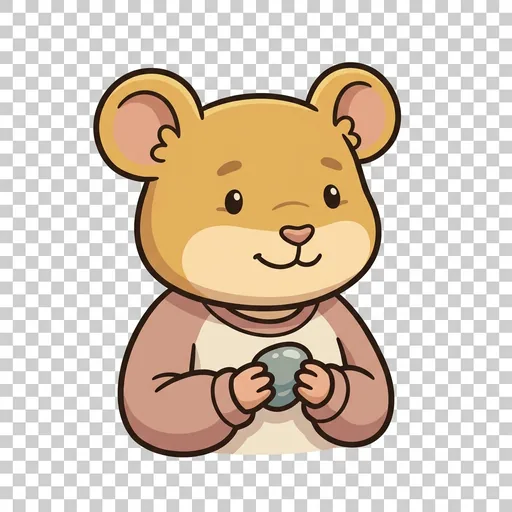
Grace
Reminds you that you can be truly sorry and still be worthy, so shame never stops you from repairing.
-

Levee
Shows that you can forgive someone and still keep a kind, clear limit that makes it safe to stay close.
