Offer
OFFER-REPAIR — the fourth step of the rupture-repair protocol. The move of offering a specific repair the apologizer can do — with palm-up extended hand, never grasping. The other person can accept, change, or decline.
Loading audio…
Press play to listen along. The line being read lights up as you go.
Show full transcript
Loading transcript…
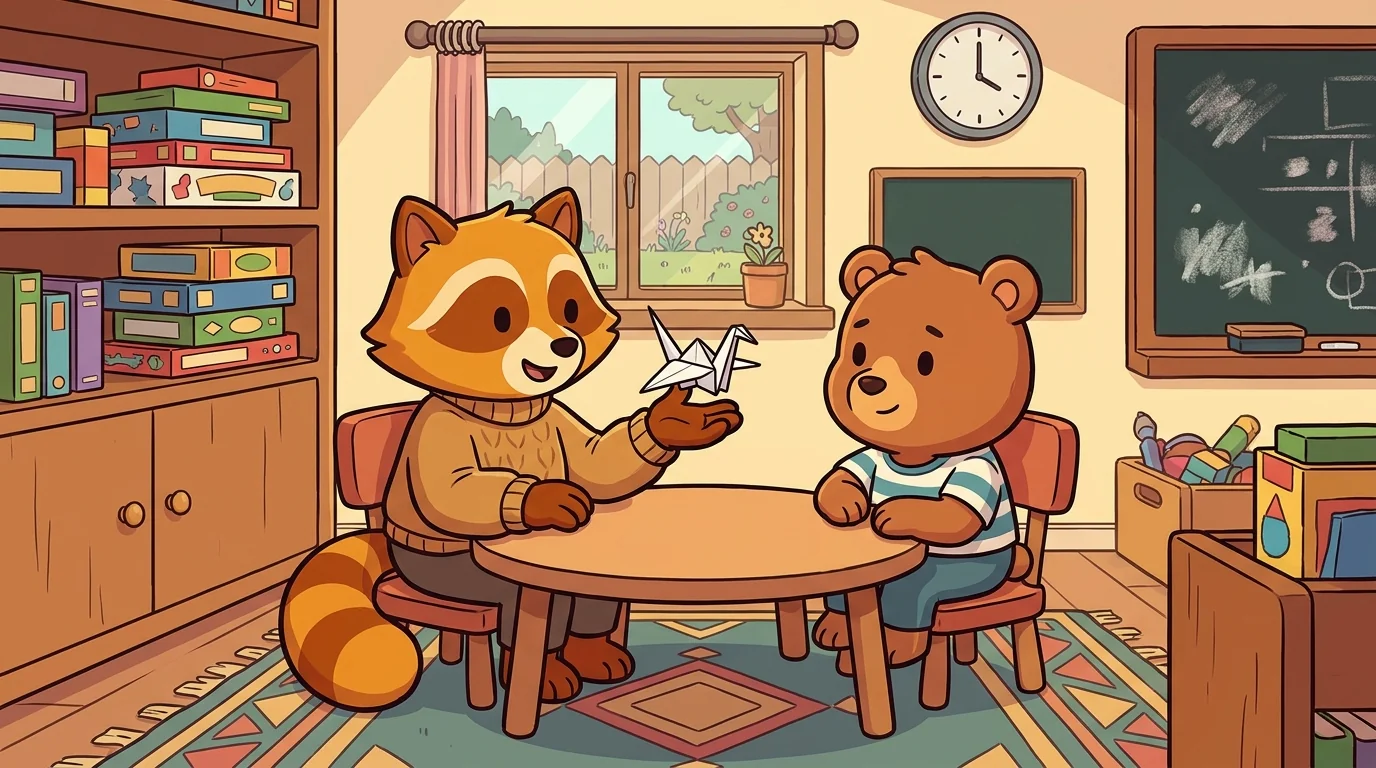
Offer held out a small folded paper bird on her open palm and waited.
She was a warm-amber raccoon, and she'd forgotten a friend's turn in a game earlier — skipped right past him. Now she sat across from him with her chunky paw turned upward, a little hand-folded paper crane resting on it, and she made the friend an offer.
"I could take my next turn last, so you get yours first," she said. "Or if you'd rather something else, tell me. Or if you'd rather nothing, that's okay too."
She didn't push the crane toward him. She didn't fold his fingers around it. She just held it out, palm open, and let it sit there — here's what I can do, you decide. The little bird had come from a habit her paws knew well: folding small things by hand. Lots of people, in lots of places, fold paper into little shapes; the crane wasn't borrowed from anyone's tradition, it was just her own small handmade thing, offered plainly.
Because that was Offer's whole way of moving through the world: after you've noticed the hurt, and said sorry, and truly heard how it landed, you offer something real and specific to make it right — and then you keep your paw open. Accept, change, or decline. All three answers are fine. The gift is in the offering; the choosing belongs to them.
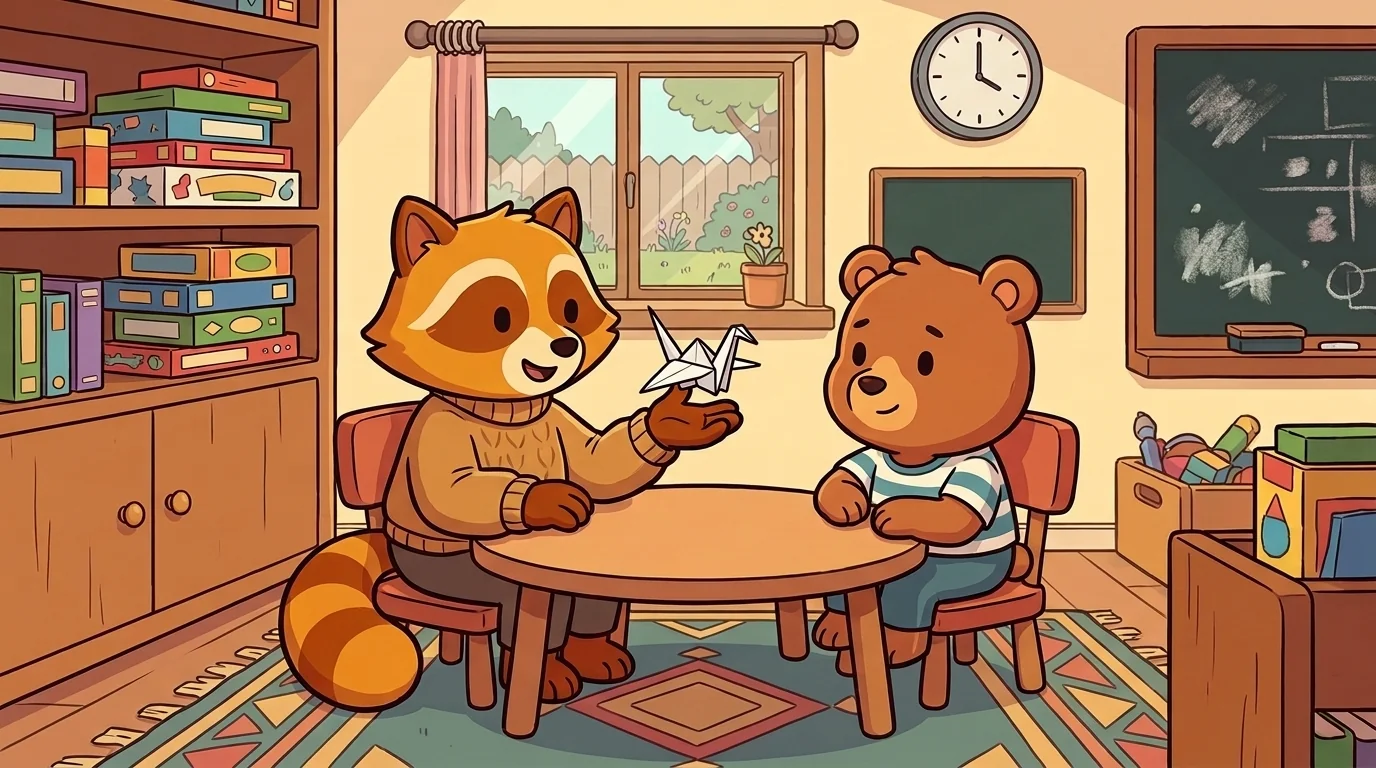
Offer grew up in a forest village where her family folded little paper gifts.
Her parents made small paper-folded birds and boxes and stars for villagers to give one another — tiny handmade things. And the lesson of the stall, the one Offer soaked up by age six, was this: a small specific gift, offered gently, means more than a big vague one shoved at you.
She remembered a market day when a boy tried to give his grandmother an enormous armful of goods he'd grabbed at random — here, take all this — and the grandmother looked overwhelmed and a little cornered by it. Then a smaller girl held out a single folded paper crane on her open hand and said only, "I made this for you." The grandmother's whole face softened.
"See the difference?" Offer's mother murmured to her. "The big pile pushes. It says take it, I need you to want it. The little bird just waits. It leaves the person room to say yes." Offer looked at her own paws and understood: keep the offer small, keep it specific, keep the palm open, and let the other person breathe.
She walked to the RuptureRepair academy the year she turned twenty-three, and Mend, the quiet mentor, met her at the gate.
"Show me," Mend said. "See-It noticed. Sorry opened the door. Felt heard how it landed. Now?"
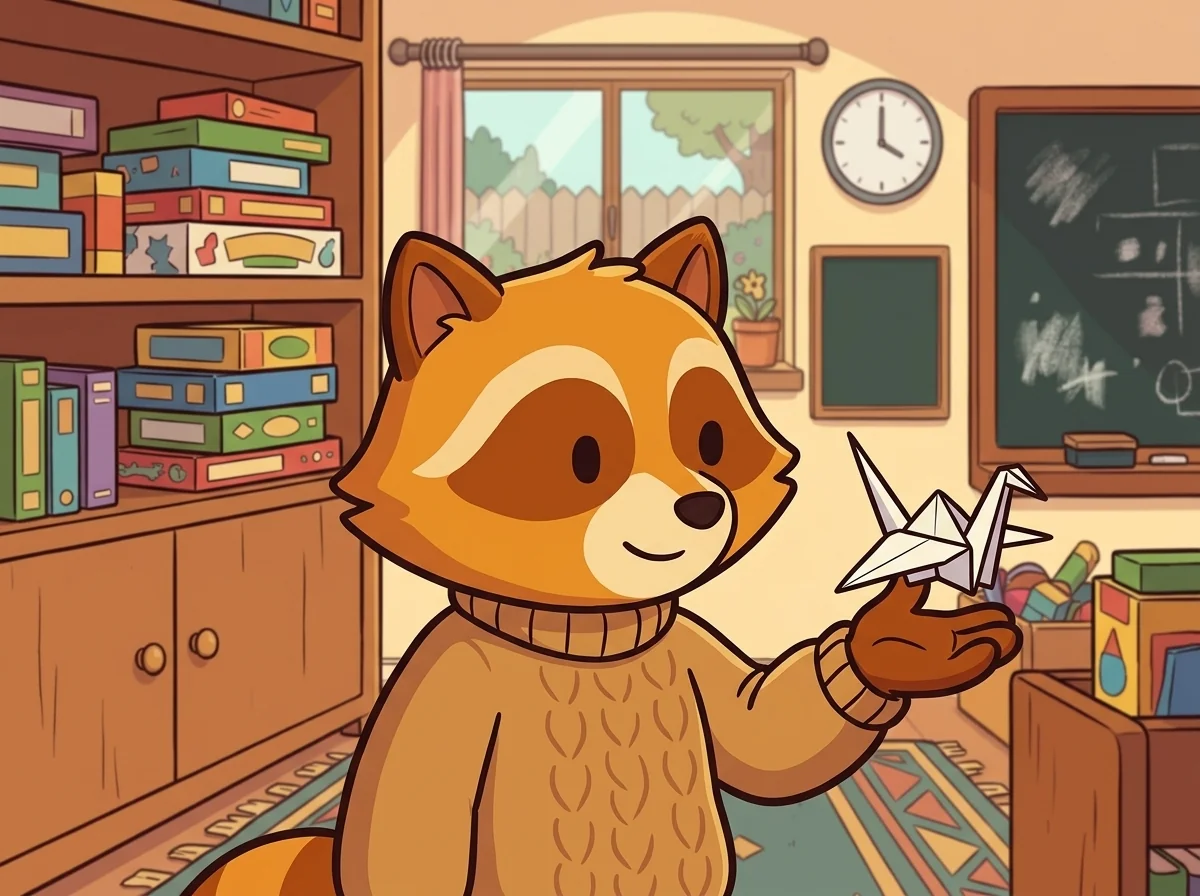
Offer extended her paw, palm up, the little paper crane resting on it.
"Now I offer something real," she said. "Specific — I'll replace what I broke, not a vague I'll try to be better. Palm up, never grasping. And then I let them choose: accept it, change it, or turn it down. If they change it or say no, I don't snatch my paw back or get hurt. The receiving is part of the offering. Sometimes the first thing I offer isn't the right one, and the third one is."
Mend nodded slowly. "You may stay."
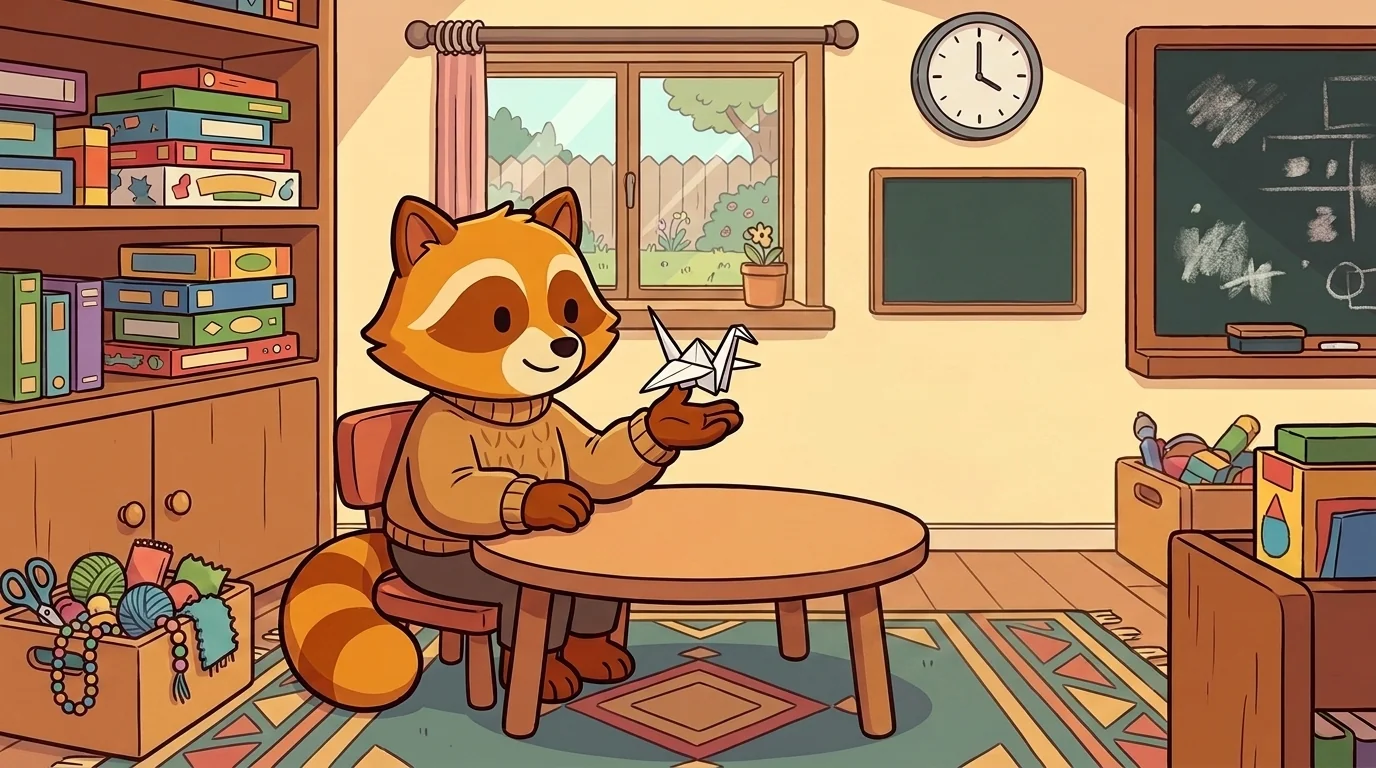
In the classroom, Offer always began the same way — one paw out, palm up, the small soft crane resting on it.
"I'm Offer," she'd say. "The offering step. Watch my paw: open, waiting. Not grabbing. Here's what I can do — you decide."
One day a careful student named Wren raised a paw. Wren had knocked over a friend's paint water and wanted to fix it but kept guessing wrong about what would help.
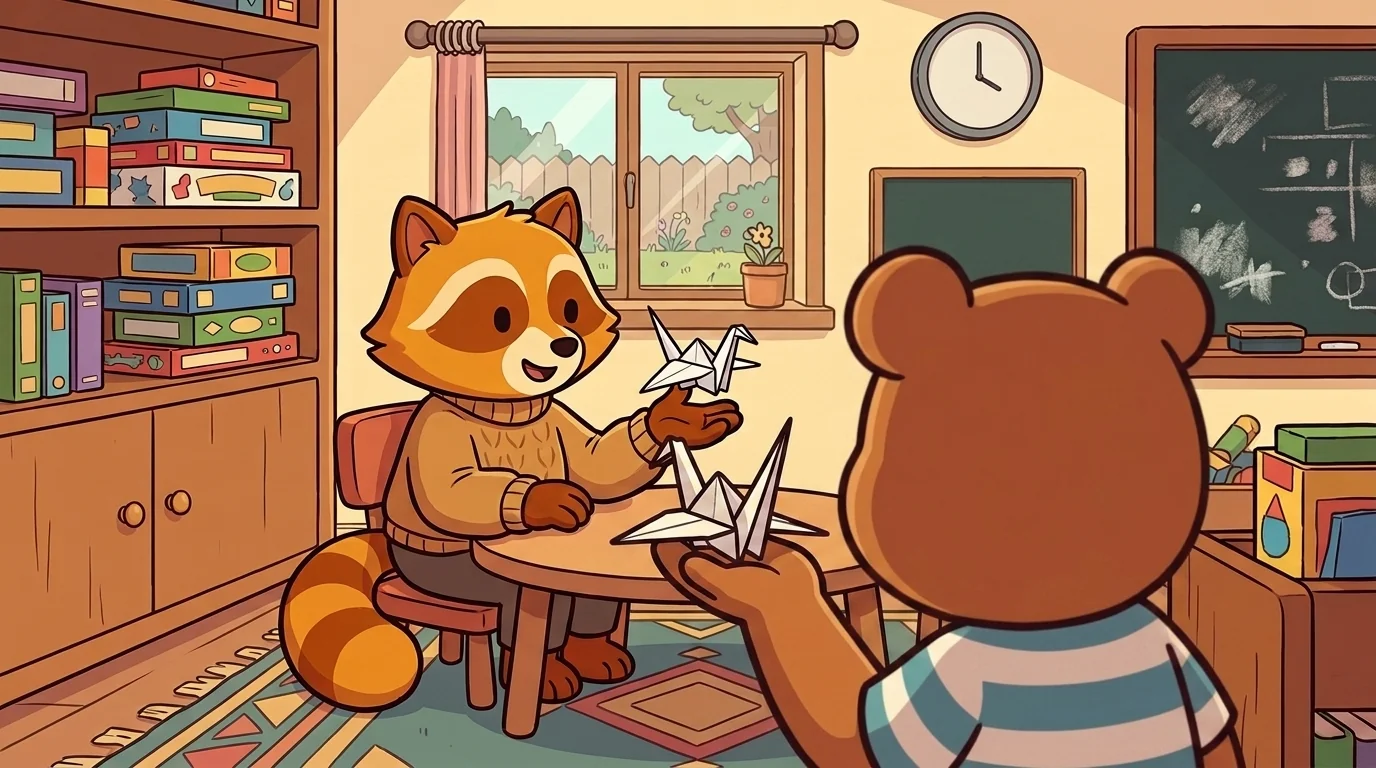
"I offered to buy her new paints," Wren said, "but she just wanted me to help clean up. Did I mess it up?"
Offer smiled and sat with her.
"Not at all — that's the whole system working," she said. "You offered. She changed the offer. You listened and gave her what she actually wanted. That's you keeping your palm open." She held out the crane to show her. "Be specific when you offer, so there's something real to say yes or no to. And when they change it or turn it down, let your paw stay soft. Their answer isn't a rejection of you. It's just them telling you what would truly help."
Wren considered this. "So I offer... but I don't cling to my idea of the fix."
"Right. You hold it out. They decide. And if it takes two or three tries to land on the right thing —" Offer shrugged warmly "— that's normal. Keep the paw open each time."
There was one more thing Offer taught, always slowly and always seriously, and she told it to Wren before she left.
"There's a kind of hurt where offering to fix it isn't your job at all," she said. "If a grown-up, or anyone bigger with power over you, is the one who caused the harm — you are not the one who should be smoothing that over. That's too big a weight for a kid to carry. The very first move there isn't an offer. It's finding a trusted adult you can tell — and there are grown-ups whose whole job is to help, any time, day or night." She said the numbers plainly, the way you'd hand someone a lifeline: RAINN, 1-800-656-4673. Childhelp, 1-800-422-4453. "In those moments, you don't offer repair. You reach for help. That's the brave, correct thing."
Wren nodded, taking it in, and Offer let the seriousness settle before she softened again.
When the room emptied, Wren paused at the door.
"I think I get it," she said. "Offer real, but let go of how they answer."
Offer held out the little crane one last time, palm up, easy.
She felt it every time she offered something this way — the specific loosening of it. Her paw stayed soft instead of gripping. Her shoulders came down. A small warm calm settled in her chest, and her breath came easier, because letting go of needing a certain answer felt so much lighter than clutching for one.
"That's the feeling right there," she told Wren gently. "Paw soft, shoulders down, breath easy. When you offer with nothing forced — when you're genuinely okay with yes, or with something different, or with no — you feel it loosen inside you. That gentle, no-pressure ease? That's how you know you're offering, not grasping."
Wren smiled, her own hands unclenching, and a quiet, unhurried warmth passed between them.
The RuptureRepair ensemble
Offer is part of RuptureRepair's distributed-narrative cast. Each character embodies a different curricular primitive; together they teach the full subject.
-
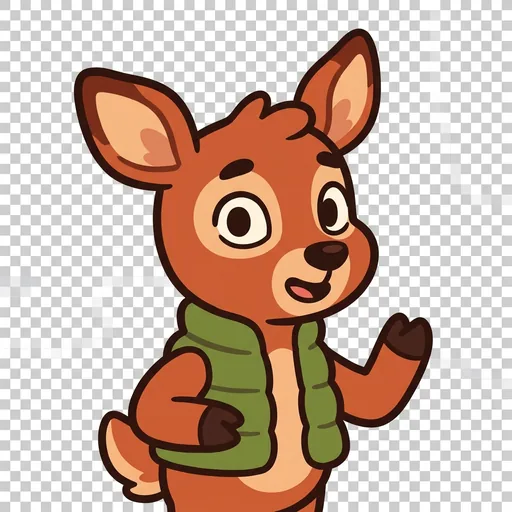
See-It
Notice harm — soft warm-russet deer-tween in chunky moss-green vest; ears literally perked + eyes wide + one hoof raised mid-step; doesn't pretend not to see what just happened
-

Sorry
Acknowledge — soft cream-and-amber otter-tween in chunky soft-blue scarf; palms-up open-hands level bow-pose (NOT cringe); treats acknowledgment as skill, never proof of badness
-

Felt
Name-impact — round soft-grey-and-cream badger-tween with tiny notebook + soft-charcoal pencil; mid-listening with head tilted; never assumes — always asks-then-listens
-
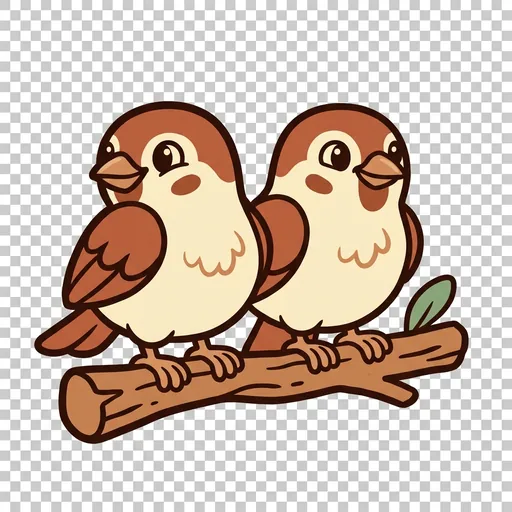
Together
Re-engage — two warm-cream-and-russet sparrow-twins on a single chunky branch, perched comfortable-distance-apart; both looking outward in same direction; `we're still here` energy
-

Eddy
Helps you steady yourself first, because you cannot mend anything while a big feeling is still rushing through you.
-

Lee
Shows that you can receive an apology from a safe place, at your own pace, without rushing to say it is okay.
-

Ease
Once you have made a real mend, helps you let the other person come back in their own time, with no pushing.
-
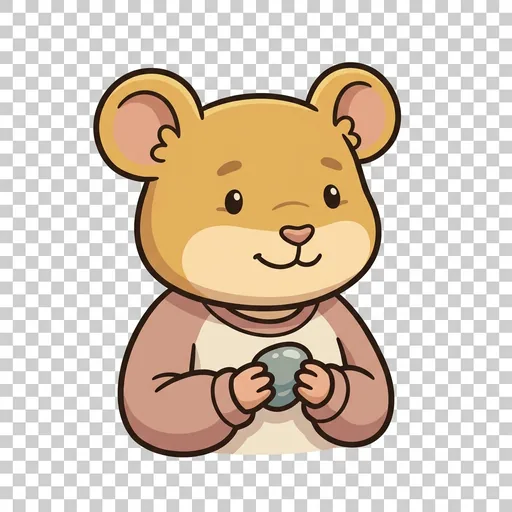
Grace
Reminds you that you can be truly sorry and still be worthy, so shame never stops you from repairing.
-

Levee
Shows that you can forgive someone and still keep a kind, clear limit that makes it safe to stay close.