
Preposition Pat
PREPOSITION — a word showing spatial or temporal relation: *on*, *under*, *between*, *before*, *after*, *during*, *with*, *in*, *at*.
Press play to listen along. The line being read lights up as you go.
Show full transcript
Loading transcript…
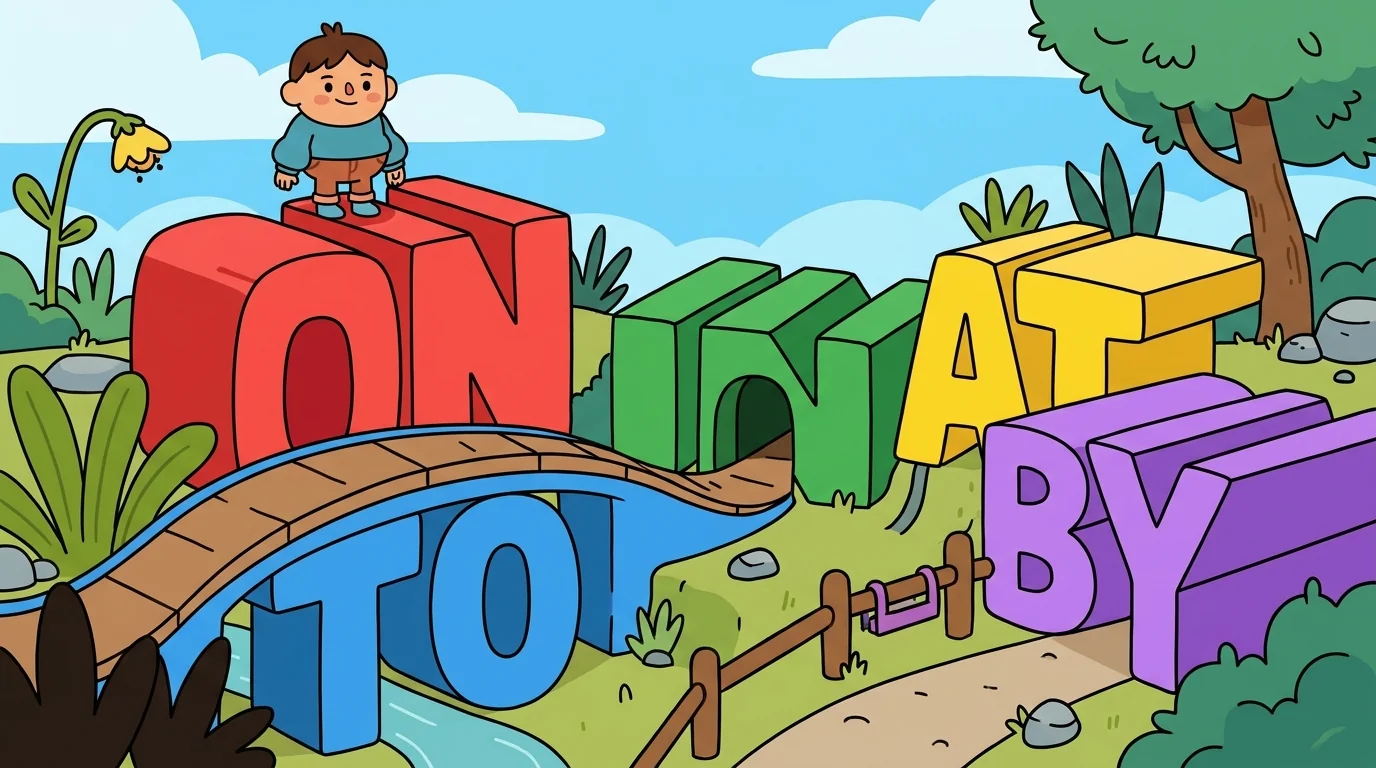
Patricia, known to everyone as Pat, was Sentence-Town's cartographer. Her job was to map the world, not with mountains and rivers, but with words. If the mayor said the dog is on the chair, Pat understood "on." She drew a mental picture of it. If the chief of operations sent a letter to the post office, Pat saw the path, the direction, the "to." If something happened during the morning, or after the meal, or between the bell and supper, Pat handled those words too. These small words—on, to, during, after, between—were like tiny maps. They showed where things were, or when they happened, or how they related to each other.
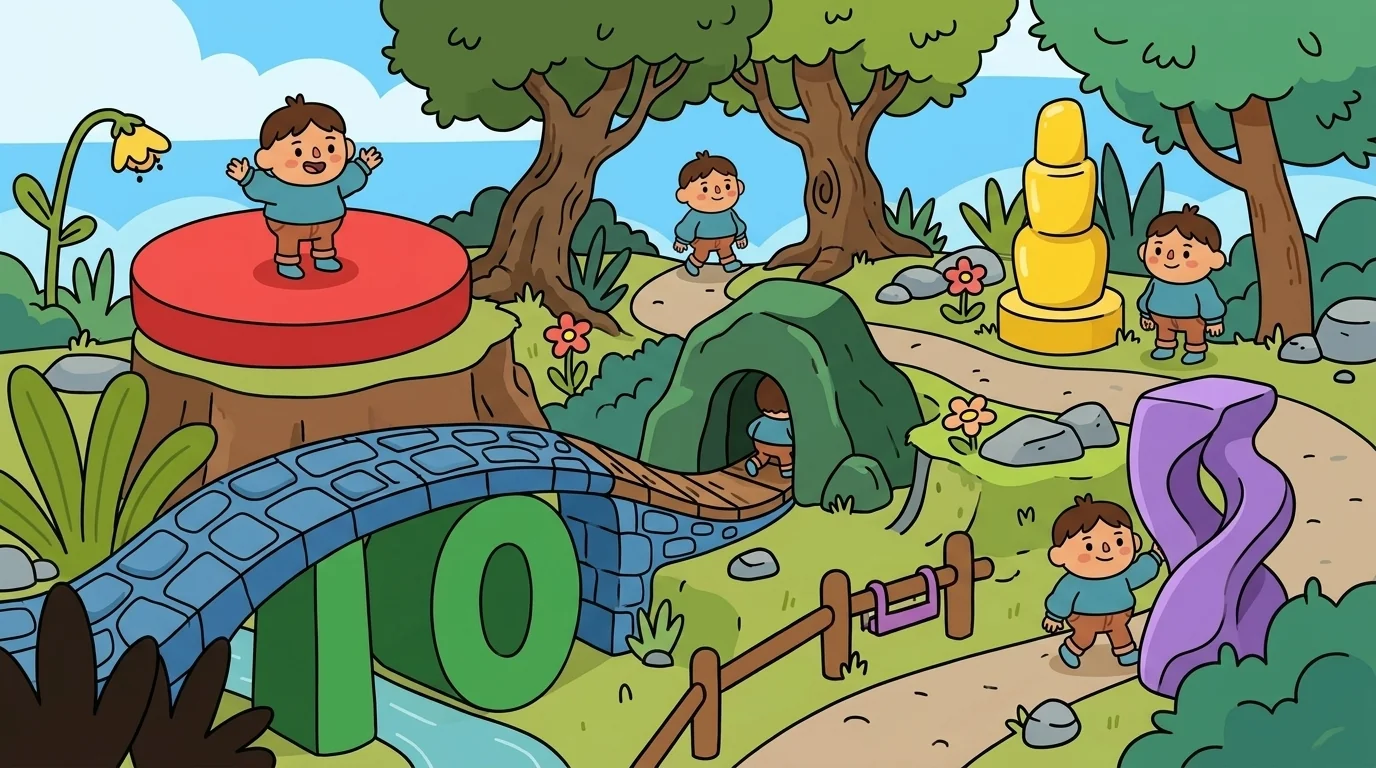
Pat always thought in pictures, in shapes and distances. She believed most prepositions were about location. This could be a physical location in space, like on, under, behind, in front of, beside. Or it could be a temporal location in time, like before, after, during, since, until. For Pat, understanding these words meant understanding the relationships of position they described.
Pat had grown up breathing the scent of ink and old paper. Her parents ran a small workshop, filling orders for local maps. The air in their home always smelled of parchment and the faint, metallic tang of ink. Their workshop was a quiet, busy place, filled with the rustle of paper and the soft scratch of quills. They drew the kingdom's winding roads, its quiet villages, the rush of its rivers, and the bustling market-towns. Pat watched them, fascinated, as blank sheets slowly transformed into detailed landscapes. Maps were everywhere: pinned to walls, rolled on tables, stacked in neat piles. Some were half-finished, marked with pencil lines and smudges. Others were crisp and new, ready for delivery.
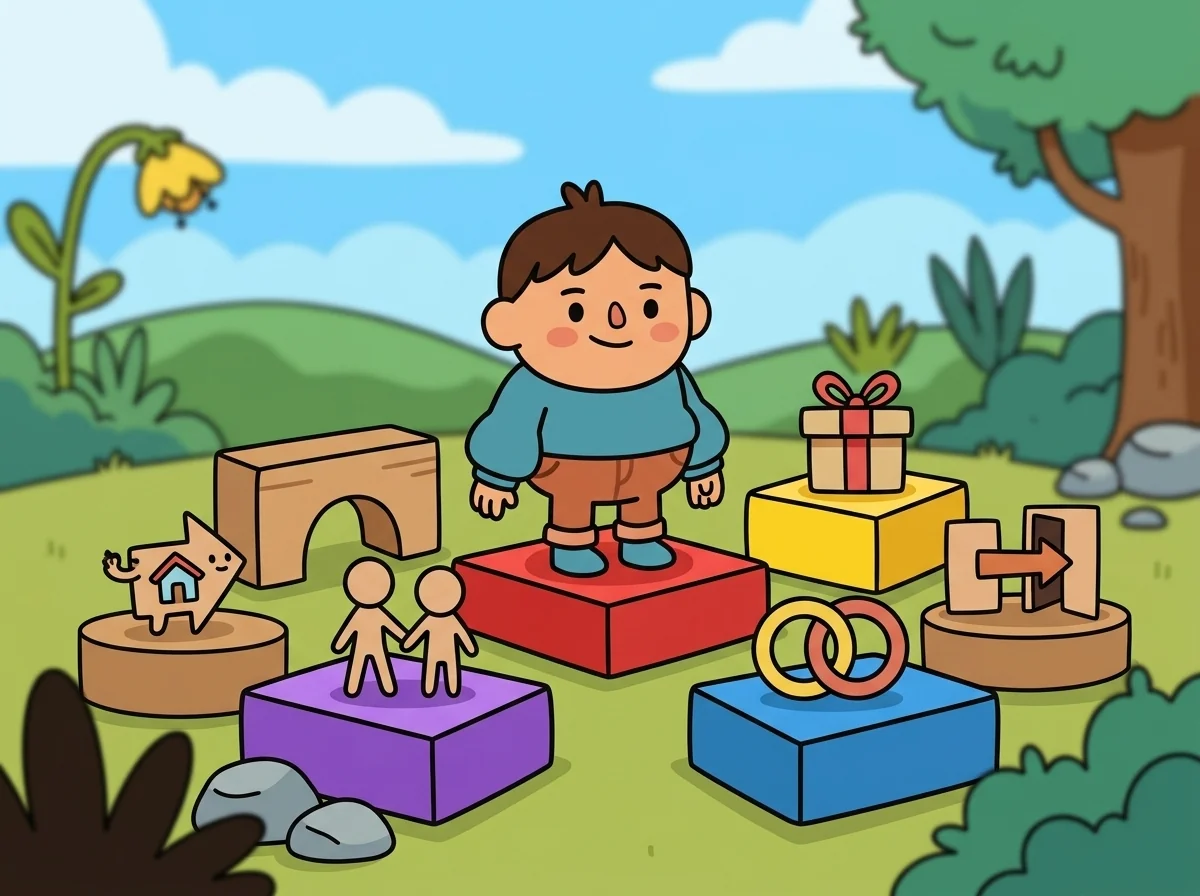
By the time she was eight, Pat could read a map better than most adults. She could look at the lines and symbols and see the real world in her mind. But by twelve, she noticed something else. Every time she read a map, she used tiny words in her head. The old mill stood on the river. The main road ran between the two dark forests. The market was always south of the church. The bridge stretched across the stream. Maps showed relationships. And these small words—on, between, south of, across—they named those relationships. It was the same puzzle, just in different ways.
When Pat was sixteen, this idea finally clicked into place. She bought a small, blank notebook. Every time she heard a preposition, she wrote it down. Then, she drew a tiny diagram next to it, showing the exact spatial relationship. By the time she left for the academy at nineteen, her book held hundreds of these small, precise drawings. She had been Preposition Pat ever since, for sixteen years.
In her classroom, the first day of lessons always started the same way. Pat stood behind her desk. On it sat a small, polished wooden box. Inside, nestled on blue velvet, were several tiny wooden figures: a chair, a dog, a ball, a tree. They were smooth from years of handling.
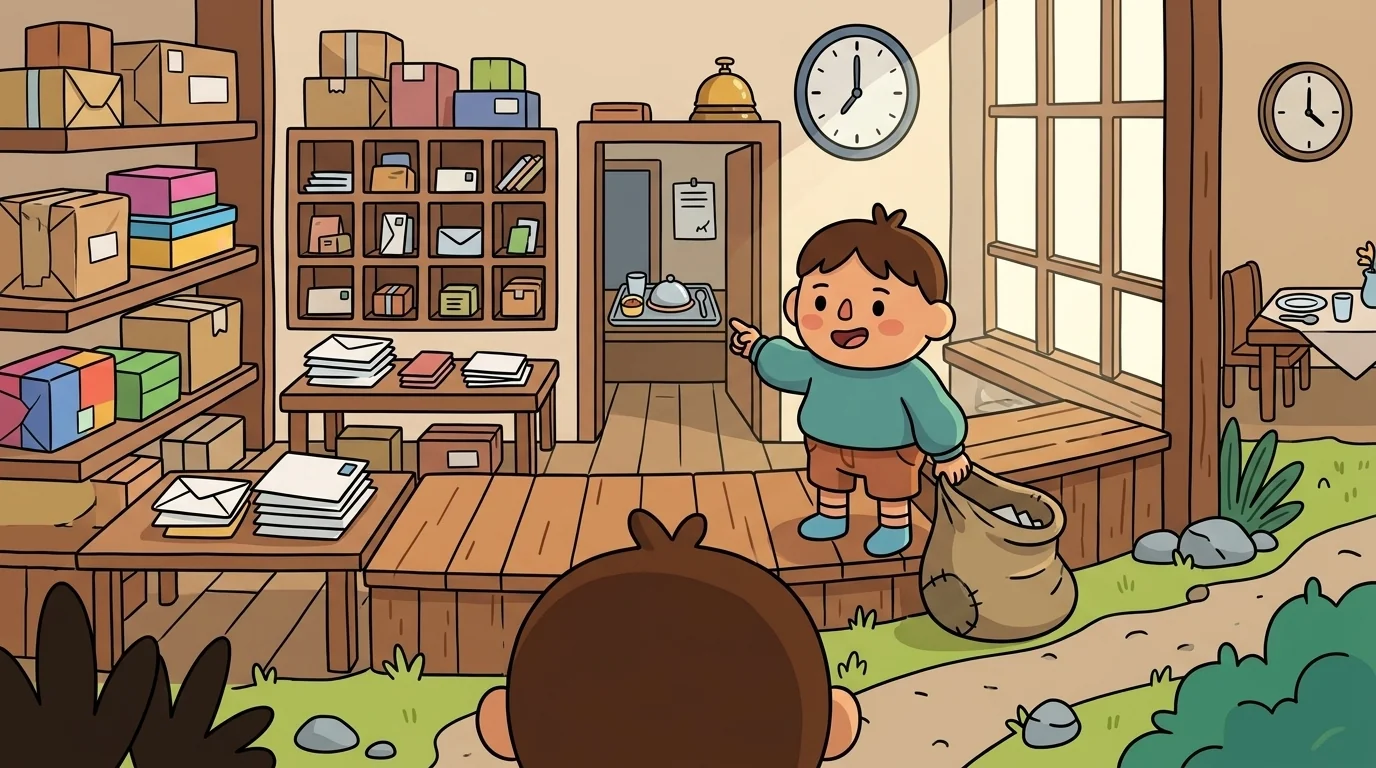
She would pick up the dog and the chair. "I am Preposition Pat," she'd say, her voice calm and clear. "I map the relations between things. Watch."
She placed the wooden dog gently on the wooden chair. "The dog is on the chair. 'On' is a preposition. It tells you the spatial relationship between the dog and the chair. It's a tiny map."
Then the dog went under the chair. "The dog is under the chair. A different preposition. A different map. The relationship has changed." She moved the dog again. Behind the chair. In front of the chair. Beside the chair. Between the chair and the ball. Across the box. Each time, a new word, a new picture.
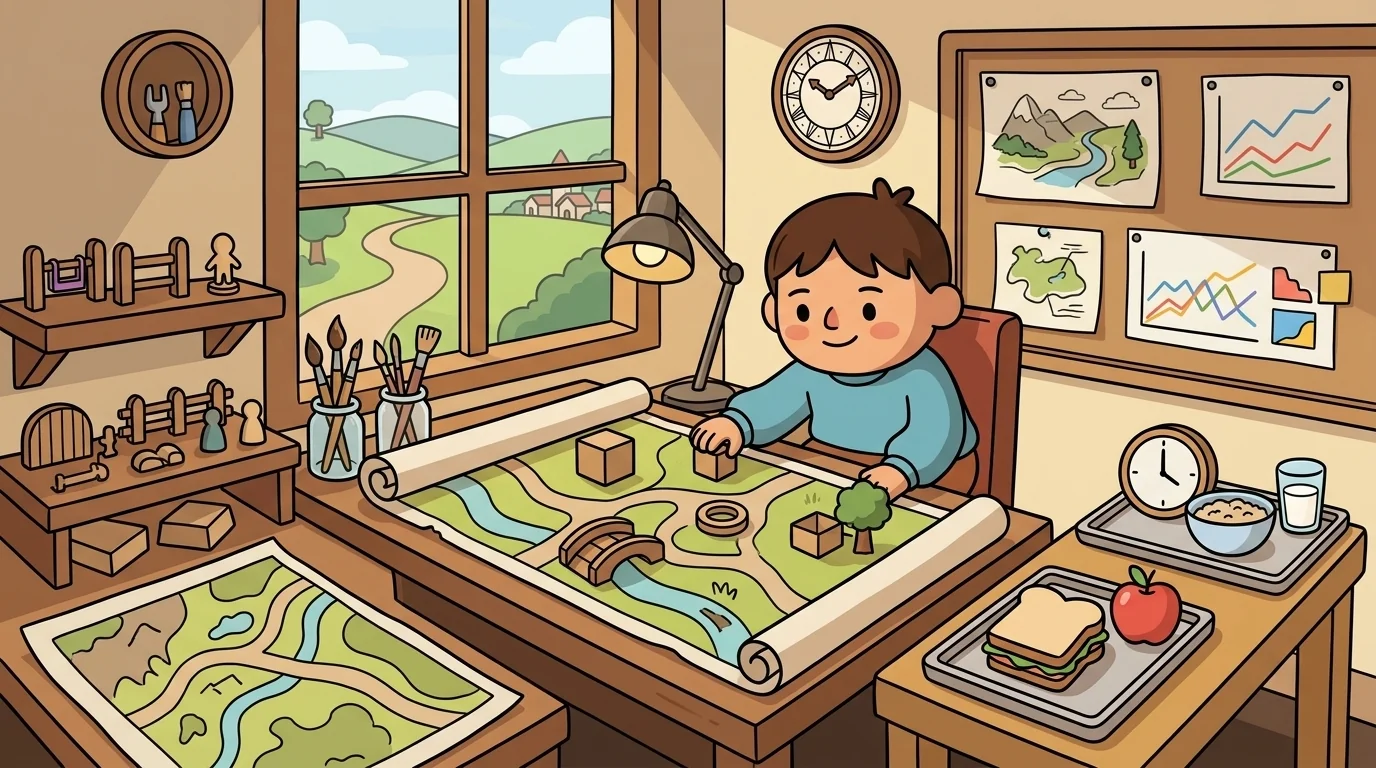
Next, she pointed to the big clock on the wall. "Prepositions don't just work in space," she explained. "They work in time, too. Before the bell rang. After the bell rang. During the lesson. Since this morning. Until lunch. Same idea. Just mapping a relationship in time instead of space."
Kids always asked if prepositions were hard. Pat would smile. "They are not hard," she'd say. "They are small maps. Each preposition tells you a relationship. Is it about space? Like on, under, behind, beside. Or is it about time? Like before, after, during, since. Once you can picture that relationship, you can use the word correctly."
The wooden box stayed on her desk. Sometimes, during a break, students would ask to rearrange the figures. Pat always let them. She had, in sixteen years, probably tidied up ten thousand tiny preposition-demonstrations. The wooden dog had a small chip on its ear. It got there, Pat would tell you, in 2018, when a particularly enthusiastic student dropped it. "That chip," she'd say, a hint of dry humor in her voice, "is historical. It marks a moment in time, a relationship between the dog and the floor."
The GrammarForge ensemble
Preposition Pat is part of GrammarForge's distributed-narrative cast. Each character embodies a different curricular primitive; together they teach the full subject.
-

Mayor Subject
Subject (noun/pronoun performing the action)
-

Verb Verity
Verb (action / state of being)
-

Object Otto
Direct / indirect object (receiver of the verb's action)
-

Modifier Mike
Adverb (modifies verb / adjective / other adverb)
-

Modifier Madge
Adjective (modifies noun / pronoun)
-

Connector Chen
Conjunction (coordinating / subordinating — *and*, *but*, *because*, *although*)
-

Pronoun Perry
Pronoun (substitute for noun — *he*, *she*, *they*, *it*, *who*)
-

Article Anne
Article (*a*, *an*, *the* — definite vs. indefinite)
-

Clause-Chief Carla
Clause-types (independent / dependent / subordinate / relative)
-

Punctuator Polly
Punctuation guardian (commas, semicolons, apostrophes, colons, dashes)
-

Agreement Ada
Subject-verb agreement (singular subject → singular verb; plural subject → plural verb; tricky cases — collective nouns, *either/or*, indefinite pronouns)