
Clause-Chief Carla
CLAUSE TYPES — independent clauses (can stand alone), dependent / subordinate clauses (cannot stand alone; needs an independent clause to attach to), and relative clauses (modify a noun).
A story read by Clause-Chief Carla
Press play to listen along. The line being read lights up as you go.
Show full transcript
Loading transcript…
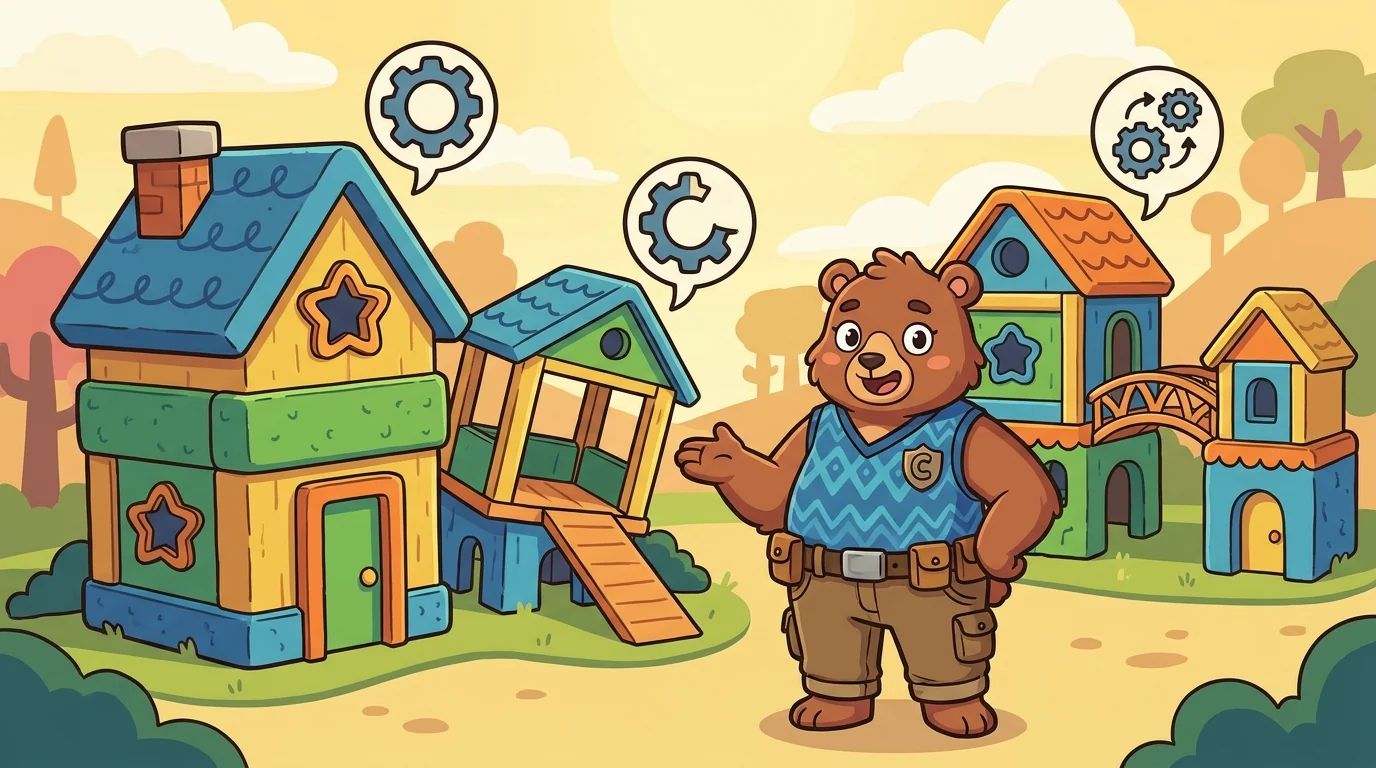
Clause-Chief Carla didn't just teach grammar. She was Sentence-Town's zoning commissioner. Her job was to categorize clauses by how they connected to the main sentence.
An *independent clause was like a house zoned for standalone use. It could be a complete sentence all by itself. A dependent (or subordinate) clause was zoned for attached use. It had a subject and a verb, but it couldn't stand alone. It needed to connect to an independent clause. A relative clause was zoned as a modifier. It gave more information about a noun. It always attached with a relative pronoun like who, that, or which*.
Carla, whose real name was just Carla, moved with a quiet precision. She loved intricate diagrams, especially ones that showed how things fit together. She really believed that understanding sentences meant seeing which clause was the main one, and which ones simply hung onto it. Complex sentences were not random jumbles. They were like careful hierarchies, structures built layer by layer. Once you saw the structure, any sentence made sense.
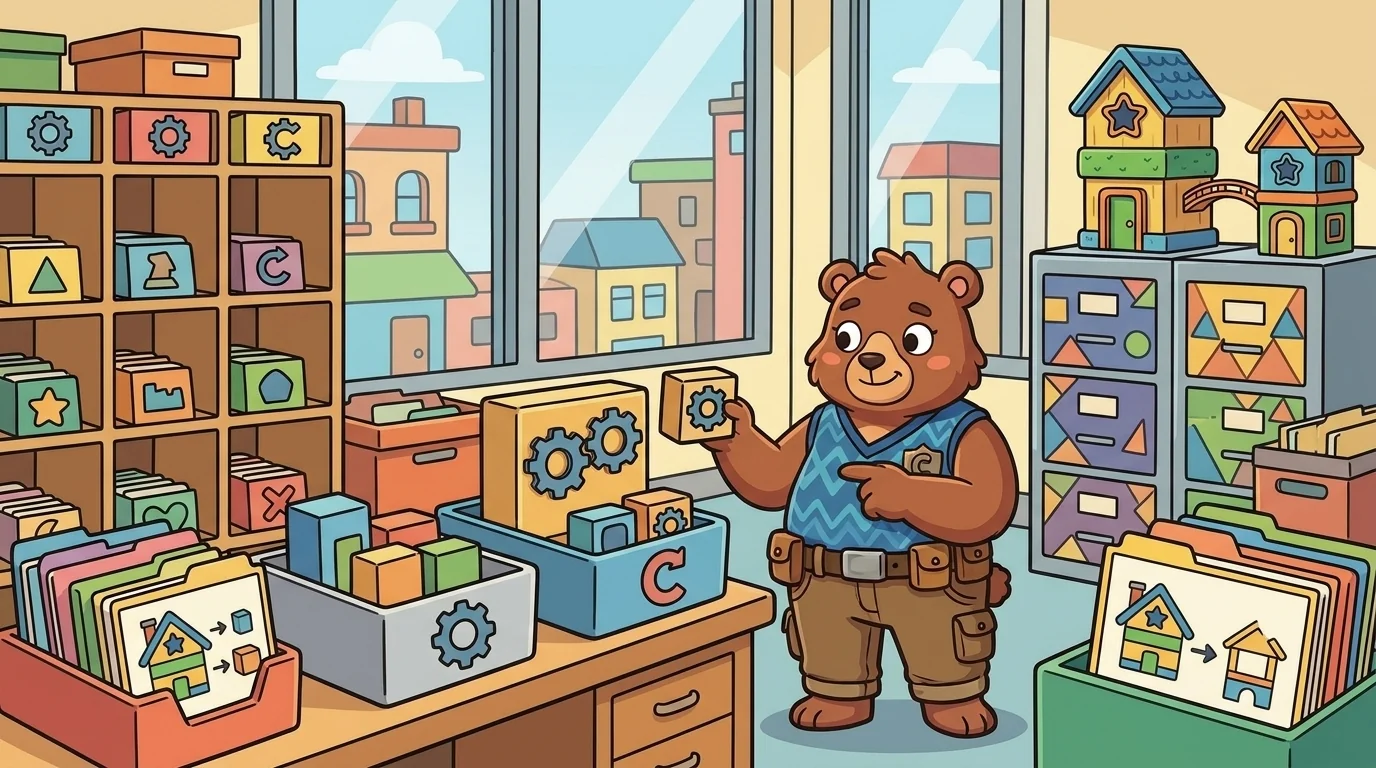
Carla grew up in a family of city planners. Her parents worked for the kingdom's central bureau, mapping out towns. Their careers focused on categorizing land use. This piece of land was for homes. That one was for shops. Another for parks. Each section needed a label so the city could grow properly. Carla spent her childhood watching them draw zoning maps. They colored different city parcels based on their use.
By age fifteen, she saw it clearly. Sentences had the same structural puzzle as cities. Each clause was like a parcel of land. Each parcel had a specific use: independent, dependent, or relative. A city or a sentence worked best when its parcels, its clauses, fit together correctly. Mis-zoned land caused traffic jams or empty lots. Mis-used clauses caused tangled sentences, confusing readers.
Carla walked into the GrammarForge academy when she was twenty. She has been Clause-Chief Carla for twelve years now.
In her classroom, the first lesson always began the same way. Behind her desk, a huge, blank zoning map covered the wall. It waited, pristine and white. Carla picked up her three colored markers. Green for independent clauses. Yellow for dependent clauses. Blue for relative clauses. She turned to the class, her gaze steady. "Every sentence is a small city," she announced. "Each clause is a parcel. Today we learn the three zoning categories."

She walked to the whiteboard, markers in hand. Her first example appeared in neat script:
"The dog barked."
She drew a large green box around the whole sentence. "This is an independent clause," she explained. "Subject: the dog. Verb: barked. It's a complete thought. It can stand alone, just like a green-zoned house. Standalone use."
Next, she wrote:
"Because the dog barked."
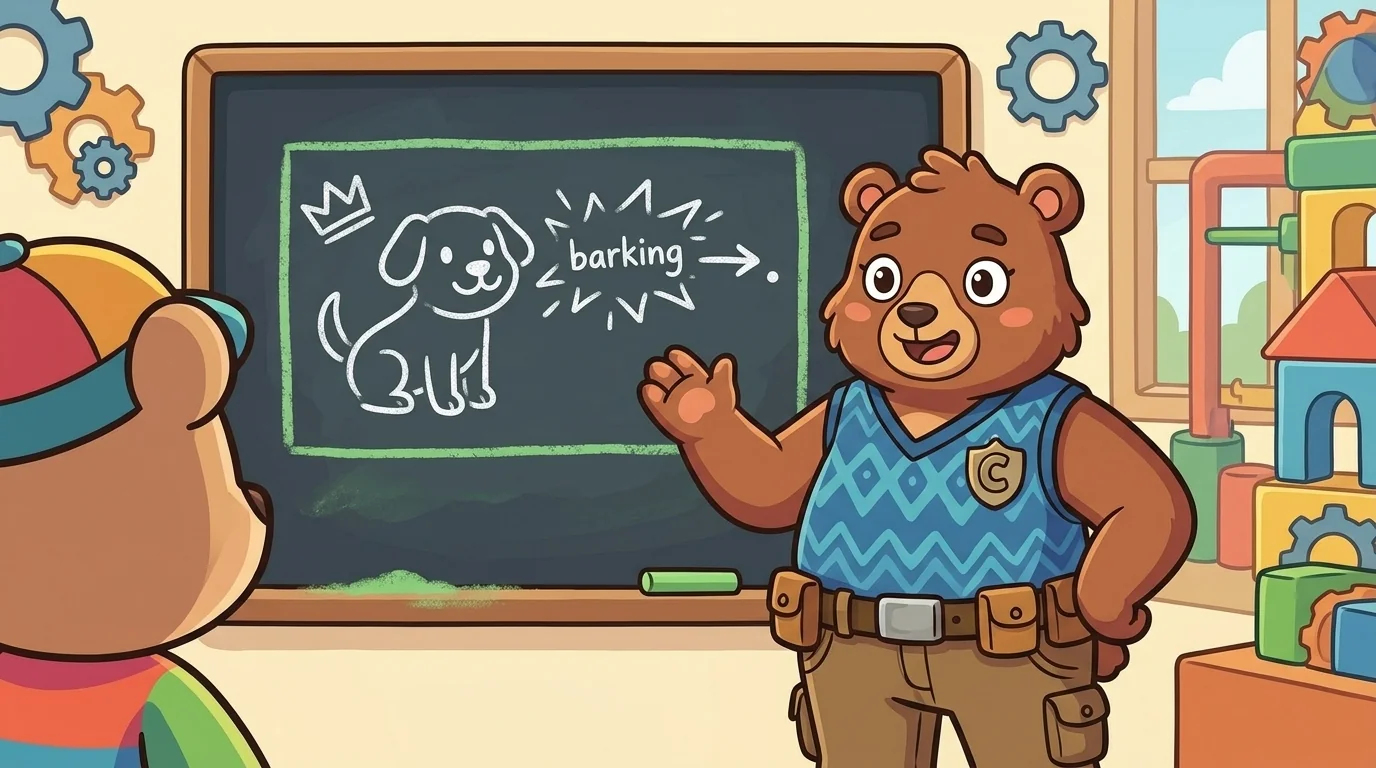
She circled it in bright yellow. "This is a dependent clause," she said. "It has a subject (the dog) and a verb (barked). But listen to it. Because the dog barked. It hangs there, waiting for something else. Because signals it's incomplete. Yellow-zoned for attached use. It needs an independent clause to connect to." A few students nodded, remembering past confusion.
Then, she added to the yellow clause:
"Because the dog barked, the cat woke up."
She marked the first part yellow, then drew a green box around "the cat woke up." "Now the dependent clause has an independent clause to attach to," Carla said. "The whole sentence is a complex sentence. A yellow parcel attached to a green one. See how it makes sense now?"
Her final example for the day:
"The dog that barked woke the cat."
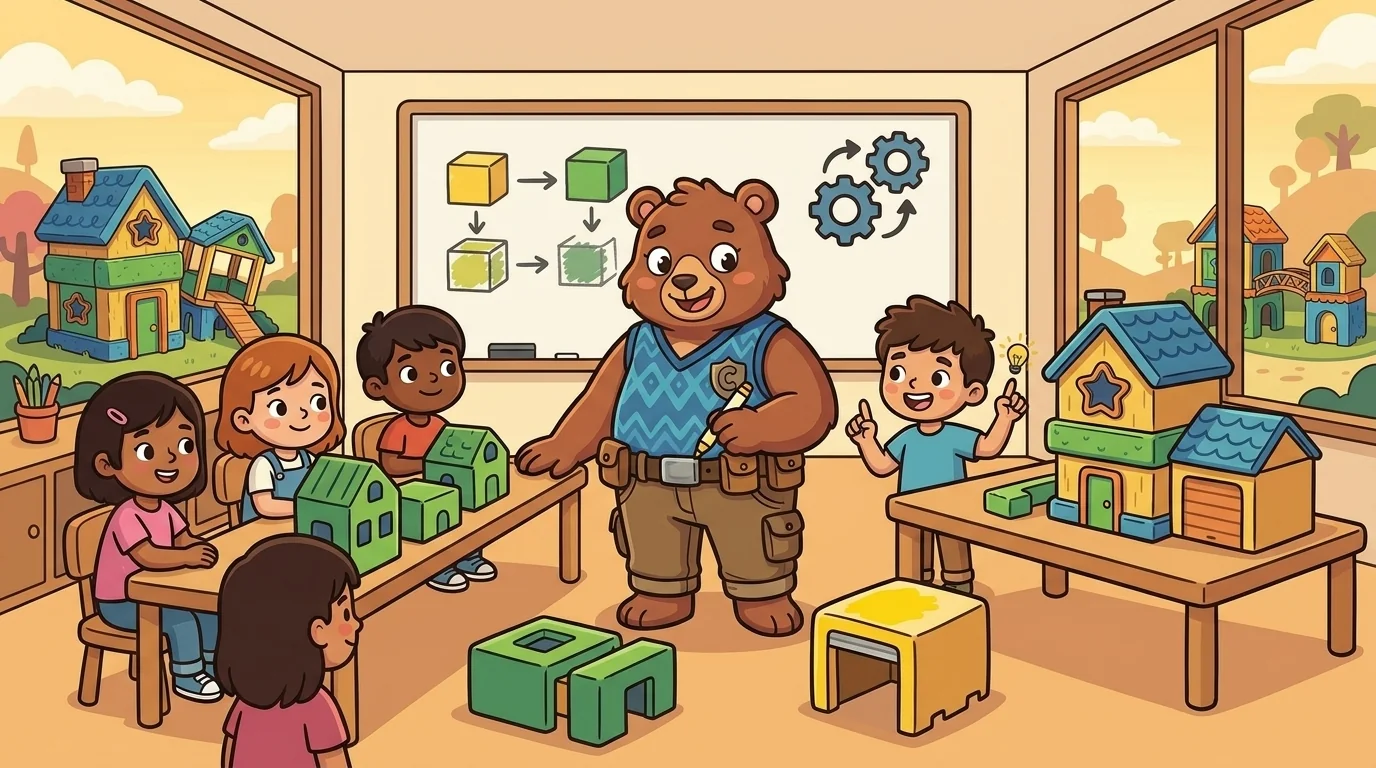
Carla marked "The dog" and "woke the cat" with green. Then, she carefully drew a blue box around "that barked," tucking it neatly inside the green section. "Relative clauses modify a noun," she explained. "That barked tells us which dog. It adds a specific detail, like a blue-zoned sign. It's attached inside the main clause, giving us more information."
The children, almost without fail, found the color-coded zoning incredibly clear. They had often mixed up dependent and relative clauses. Both could start with words like that, making them tricky. Carla's color system made the difference visible. It was like seeing the layout of a town for the first time, instead of just a jumble of buildings.
When students asked if clause types were hard, Carla always gave the same answer. "They are not hard," she would say. "They are just parcels. Independent ones stand alone. Dependent ones need to attach. Relative ones modify a noun. Once you know the type of each clause, you can see the whole sentence as a small zoning map."
She still kept the three markers on her desk, always within reach. Sometimes, children would ask to mark up their own sentences, eager to try the system. Carla always let them. The wall behind her, after twelve years, was now a vibrant tapestry. It was covered in hundreds of small, color-coded student-sentence-maps, each one a tiny, perfectly zoned city.
The GrammarForge ensemble
Clause-Chief Carla is part of GrammarForge's distributed-narrative cast. Each character embodies a different curricular primitive; together they teach the full subject.
-

Mayor Subject
Subject (noun/pronoun performing the action)
-

Verb Verity
Verb (action / state of being)
-

Object Otto
Direct / indirect object (receiver of the verb's action)
-

Modifier Mike
Adverb (modifies verb / adjective / other adverb)
-

Modifier Madge
Adjective (modifies noun / pronoun)
-

Connector Chen
Conjunction (coordinating / subordinating — *and*, *but*, *because*, *although*)
-

Pronoun Perry
Pronoun (substitute for noun — *he*, *she*, *they*, *it*, *who*)
-

Article Anne
Article (*a*, *an*, *the* — definite vs. indefinite)
-

Preposition Pat
Preposition (spatial / temporal relations — *on*, *under*, *between*, *before*)
-

Punctuator Polly
Punctuation guardian (commas, semicolons, apostrophes, colons, dashes)
-

Agreement Ada
Subject-verb agreement (singular subject → singular verb; plural subject → plural verb; tricky cases — collective nouns, *either/or*, indefinite pronouns)