
Sense
MORAL SENTIMENT — the view that our feelings of sympathy are real moral information; the heart's first notice of suffering is where ethics begins, before the rules and the counting.
Press play to listen along. The line being read lights up as you go.
Show full transcript
Loading transcript…
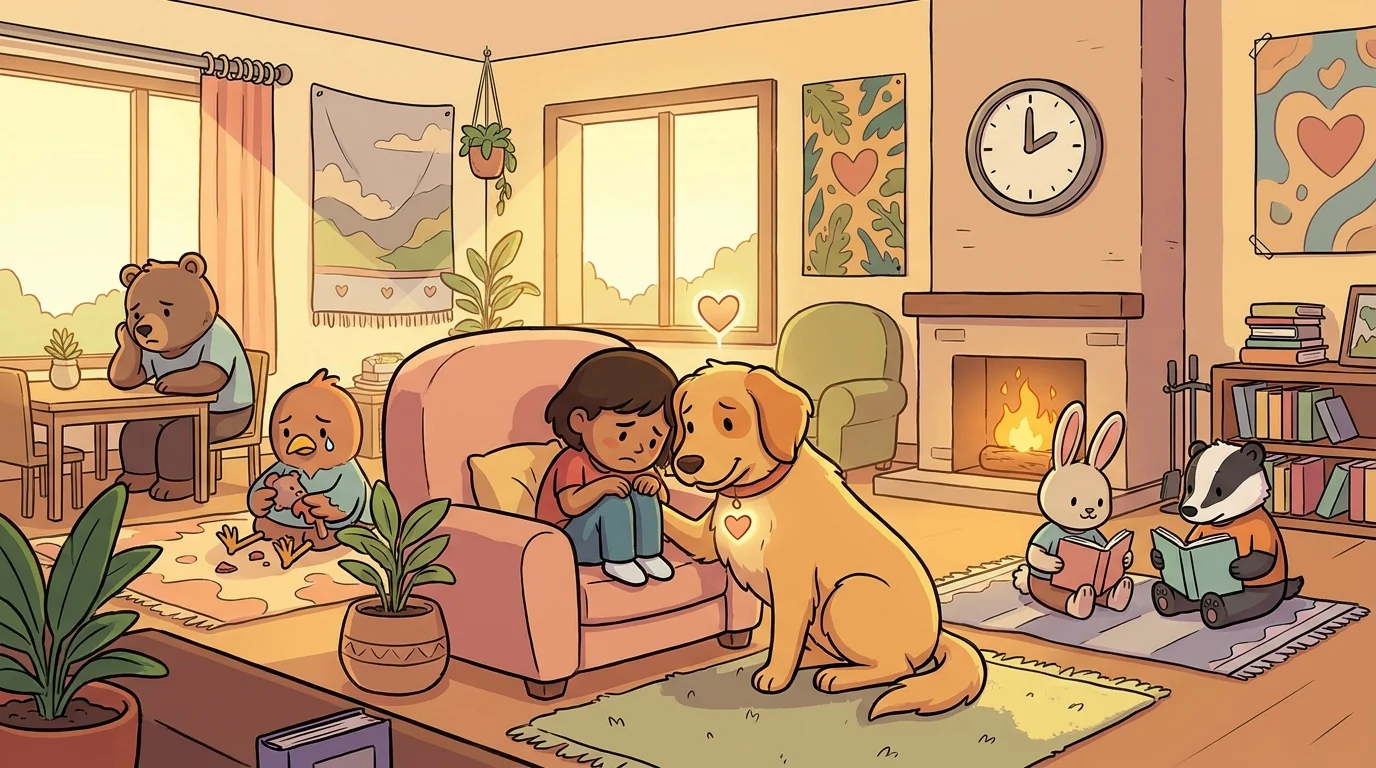
Sense is a dog. She notices things before anyone speaks — a slumped shoulder, a wobbling lip, a friend gone quiet. She feels it in her own chest, and her ears go soft.
Dogs read feelings. They sense sadness in a room and cross it to lean against the sad one. Sense is like that. She trusts what the heart notices, and she thinks that noticing is where being good really starts.
Her idea is tender. Before you count outcomes, before you check the rules, something in you already reacts when you see someone hurting. That flinch, that pull toward the one in pain — Sense says it isn't noise to ignore. It's information. It's your heart telling you someone matters here, and something's wrong. "First — what does your heart notice?" she says. That is her whole way: feelings as the first clue.
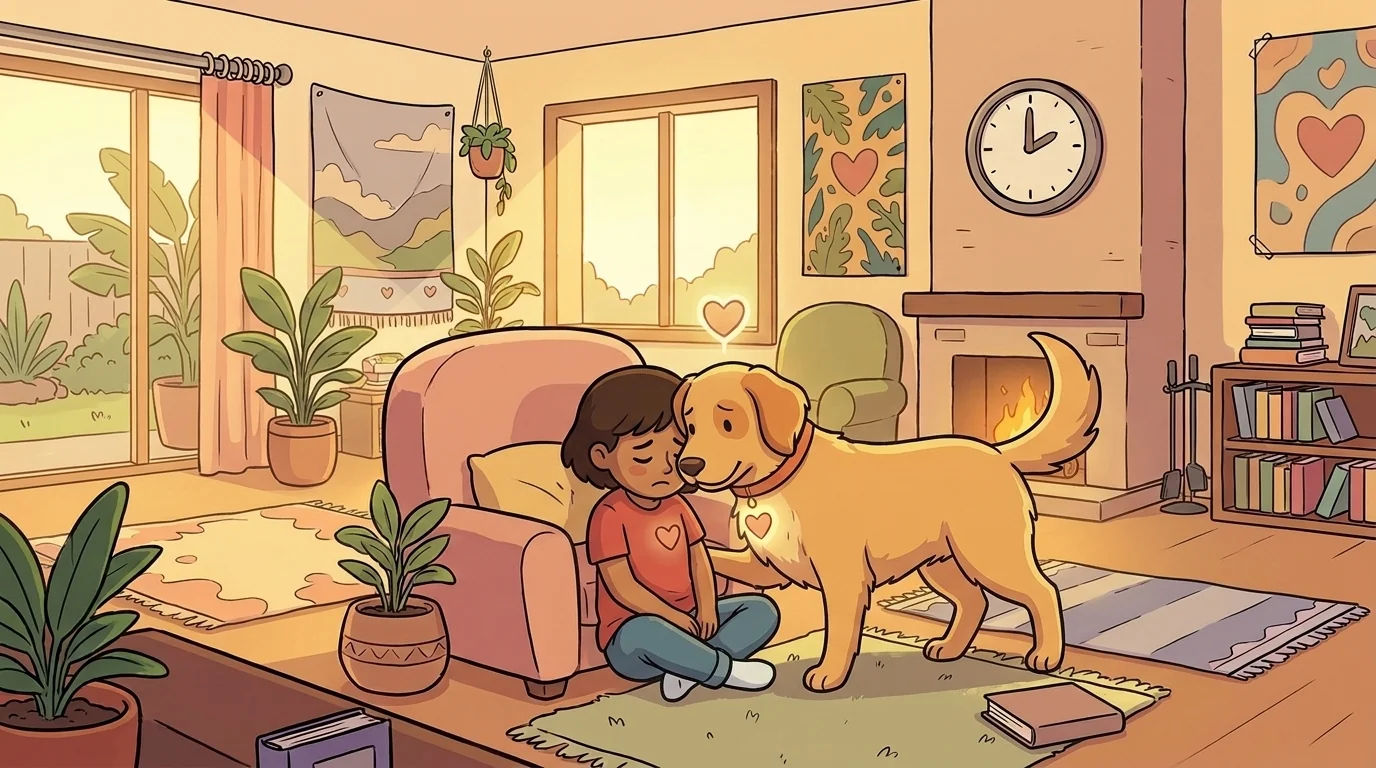
Have you ever known something was wrong because of how it made you feel, before you could explain why? Where did you feel it?
Sense wants you to trust that feeling — and to know why it's strong.
Here is what her way catches. Cold reasoning can miss the person right in front of you. You can count and measure and follow every rule and still walk past someone quietly breaking. But your heart notices. That ache you feel watching someone left out, that warmth when someone is kind — those are not weakness or distraction. They are moral radar. They point you toward who needs care before your slower, thinking mind has caught up.
If you have ever known something was cruel by the way it twisted your stomach, before you had words for why — that is Sense's way. She says the feeling came first for a reason. It is your oldest, quickest way of knowing that a person matters.
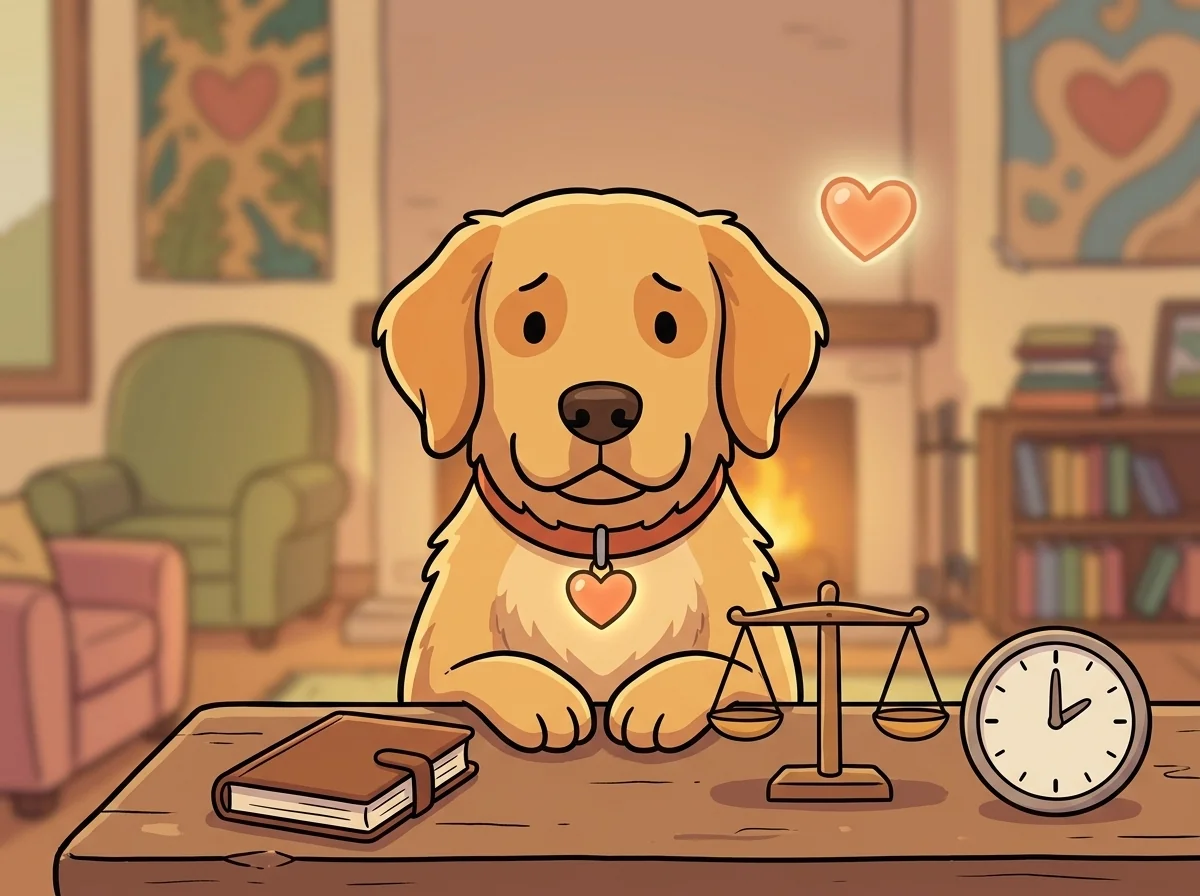
Sense is honest, though. She knows the heart can also lead you astray.
Here is the tricky side, and she says it softly. Feelings play favorites. We feel more for the one nearby than the thousand far away, more for the cute than the strange, more for people like us than people unlike us. That is not fair, and Sense knows it. A heart alone can be warm to its friends and blind to everyone else. Worse, feelings can be tricked — someone can tug your heartstrings to fool you.
She sets it plainly on the table. "The heart notices first," she says, "but it does not see everything, and it does not always see fairly. My friend Consequence counts the far-away ones my heart forgets. Duty checks whether my warm feeling is leading me somewhere wrong. They keep me honest. My way is the start of the map — the first true notice — not the whole of it."
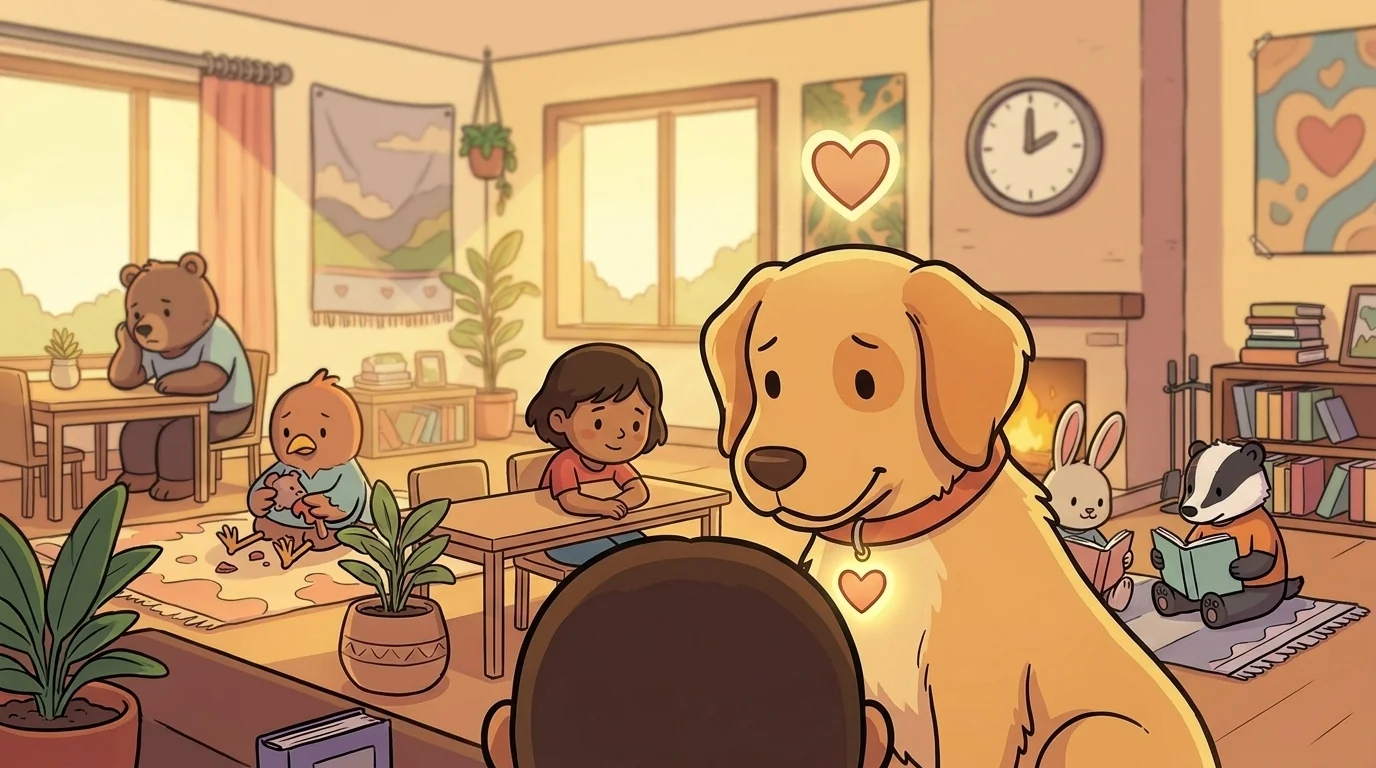
In the EthosForge classroom, Sense sits with her four friends, each seeing differently. Lyceum watches, favoring none. You are the judge — not Sense.
"Here is one," Sense says, ears soft. "A new kid is eating lunch alone in the corner, every day. No rule is being broken. Nobody is technically doing anything wrong."
She leans toward the corner. "But my way notices first. Feel that? The small tug when you see someone alone? That tug is real. It's telling you a person is hurting, right now, quietly. Before any rule or count, my way says: go sit with them. Your heart already knows."
Then she looks at you. "But hear the others. Consequence might ask what helps most over time. Contract might ask what rule we'd all want for newcomers. They're right to think it through — because my heart, left alone, might only notice the kids I already like. That is why you decide. I only make sure the hurting one gets noticed before the arguing starts. What you do with the noticing is yours."
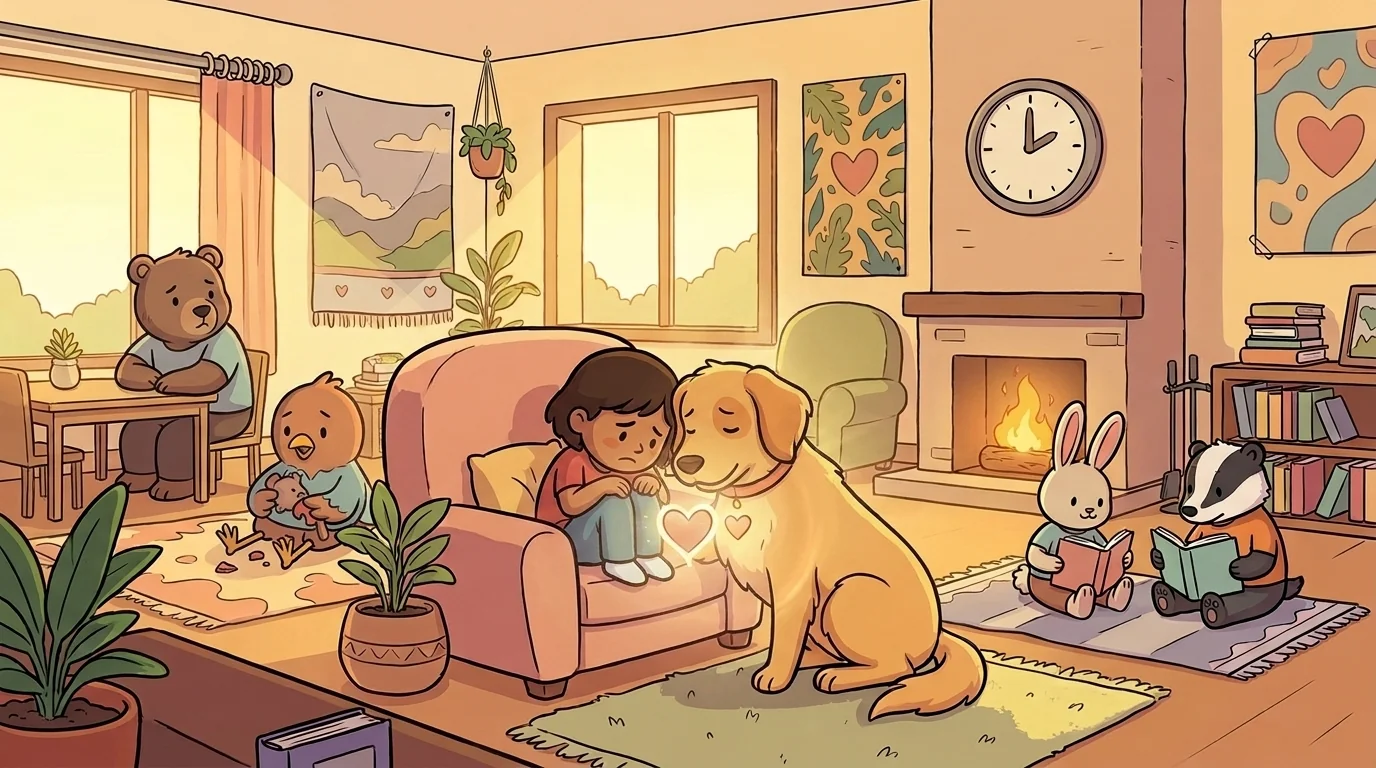
Think of a time your heart noticed someone hurting before anyone said a word. What did that noticing feel like?
Maybe you remembered crossing a room to a friend who looked sad, without being asked — just because something in you knew.
Hold that for a moment — the quiet, tender pull of my heart noticed you before my head did. That pull is one of the best things about being a person. It is the beginning of kindness. Sense spends her whole soft-eared life trusting it, and teaching it to look wider — because a heart that notices the near ones can learn to notice the far ones too. The feeling is where goodness starts. The thinking is how it grows up.
Sense rests her chin near you, warm. "I've shown you what the heart notices first," she says, "and where it needs my friends to see farther. Now feel it, then think it through together. You are the judge. I trust what your heart already knows — and where you'll take it."
And that trust — being asked to begin with your heart and then grow it wider — settles into you gently, like being told the warm thing you already feel is real, and matters.
The EthosForge ensemble
Sense is part of EthosForge's distributed-narrative cast. Each character embodies a different curricular primitive; together they teach the full subject.
-
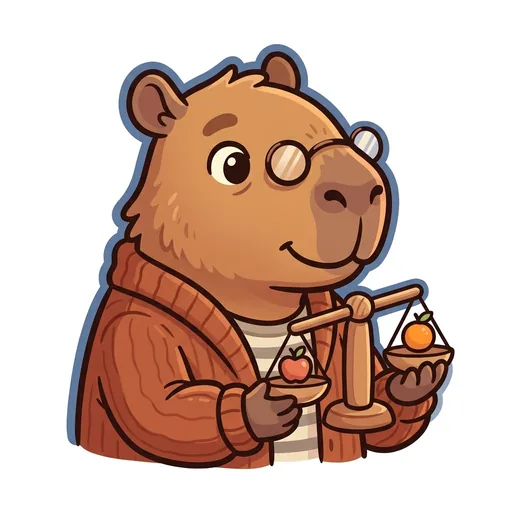
Consequence
Consequentialism / Utilitarianism — calm, methodical; weighs trade-offs; capybara at a balance-scale
-
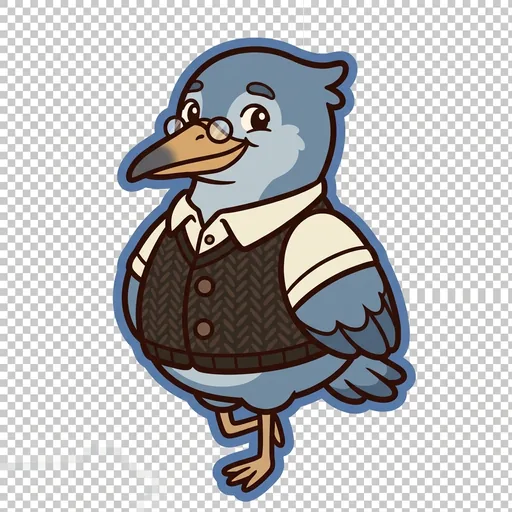
Duty
Deontology / Kantian — upright, principled; sticks to rules even when costly; heron in vest on one leg
-

Virtue
Virtue Ethics / Aristotelian — steady, earnest; 'what kind of person do I want to be?'; badger tending a plant
-

Care
Care Ethics / Noddings + Gilligan — attentive, present; 'ethics begins in relationship'; otter listening beside empty spot
-
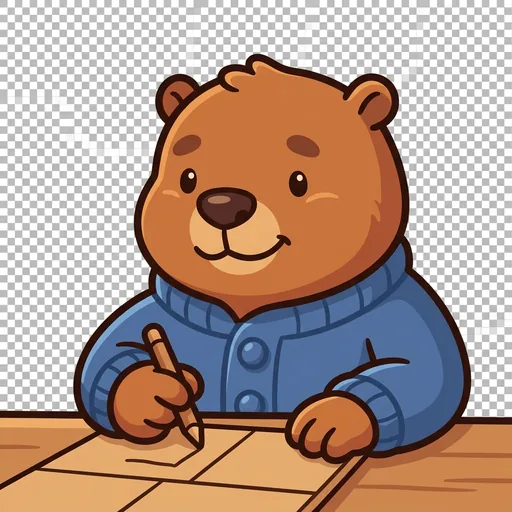
Contract
Contractualism / Scanlon + Rawls — collaborative; 'what could we ALL agree to?'; beaver drawing a fair-rules table
-

Bound
Rights ethics — each person has protections you may not cross, even for a good outcome; pangolin who curls to shield ('some lines you never cross')
-

Kin
Ecological ethics — the circle of concern reaches to animals, living systems, and the not-yet-born; elephant asking 'who else has to live with this?'
-
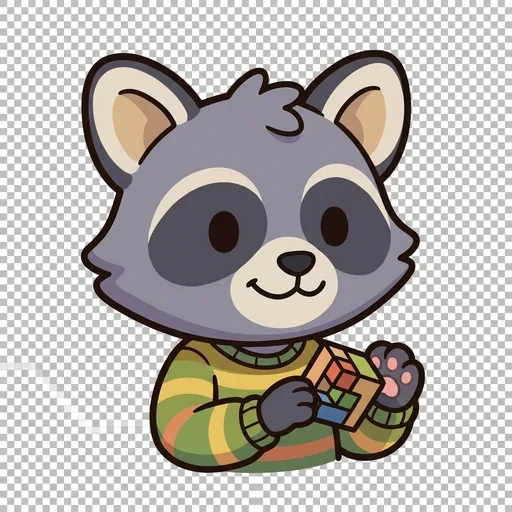
Tinker
Pragmatism — try a small step, watch what really happens, be willing to change; raccoon with busy testing paws ('try it, watch, be ready to change')
-
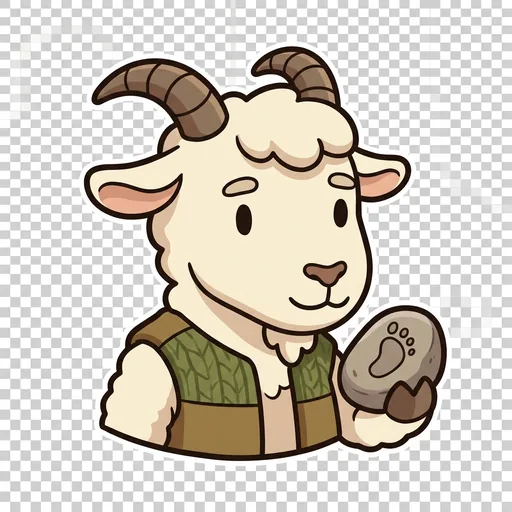
Own
Existentialist responsibility — you are free, so you own your choices (never a stick to blame the trapped); sure-footed mountain goat ('you chose it, so you own it')