
Kin
ECOLOGICAL ETHICS — the view that the circle of moral concern reaches beyond the people in the room, to animals, living systems, and the people not born yet.
Press play to listen along. The line being read lights up as you go.
Show full transcript
Loading transcript…
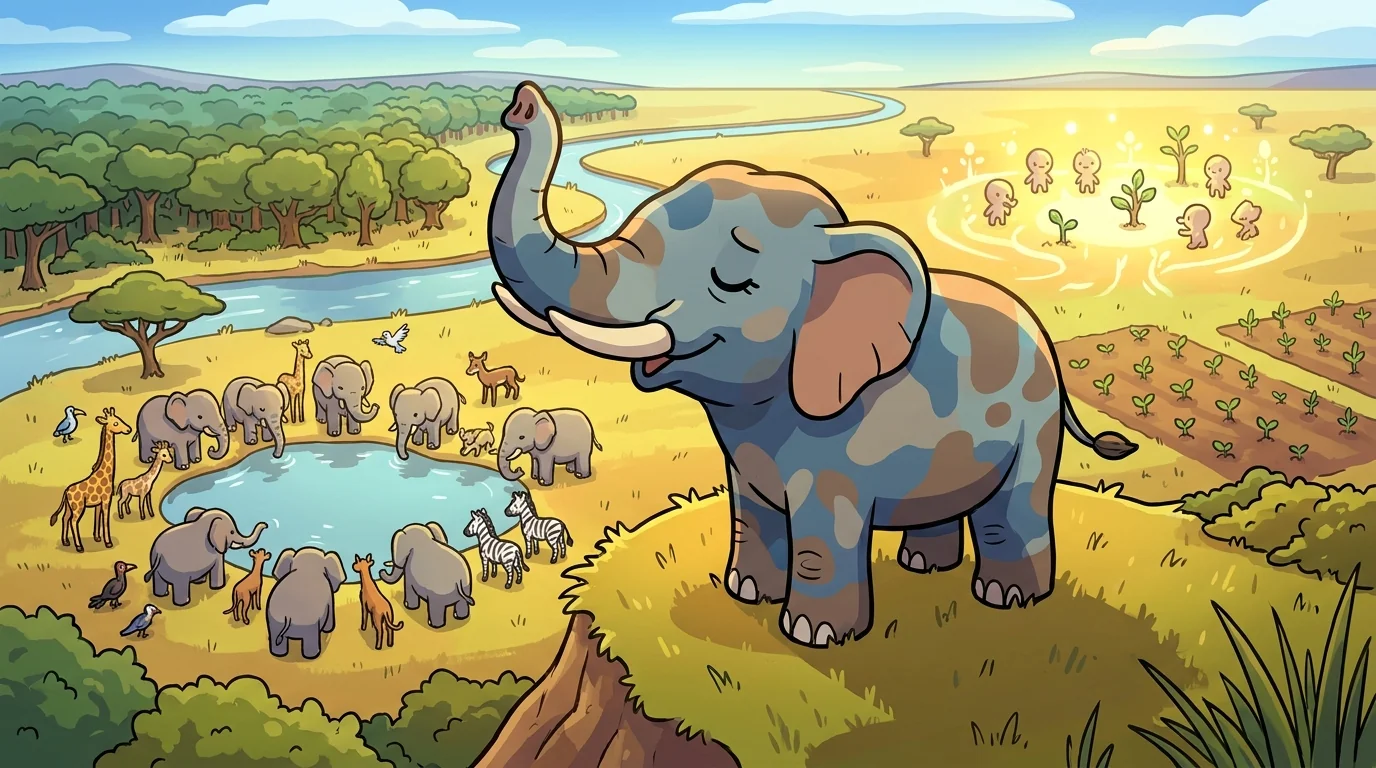
Kin is an elephant. She is large and slow and remembers everything. When she thinks about a choice, she lifts her trunk, as if smelling for who else is nearby.
Elephants live in wide families. They mourn, they remember, they care for the herd — and for the watering hole the herd will need next year. Kin is like that. She thinks in wide circles.
Her idea is a question. Most people, deciding something, only count the people right in front of them. Kin asks something bigger: who else has to live with this? Not just the people here — the animals in the field, the river downstream, the forest, and the children who aren't born yet who will inherit whatever we leave. "Who else has to live with this?" she says. It is her whole way, in one question.
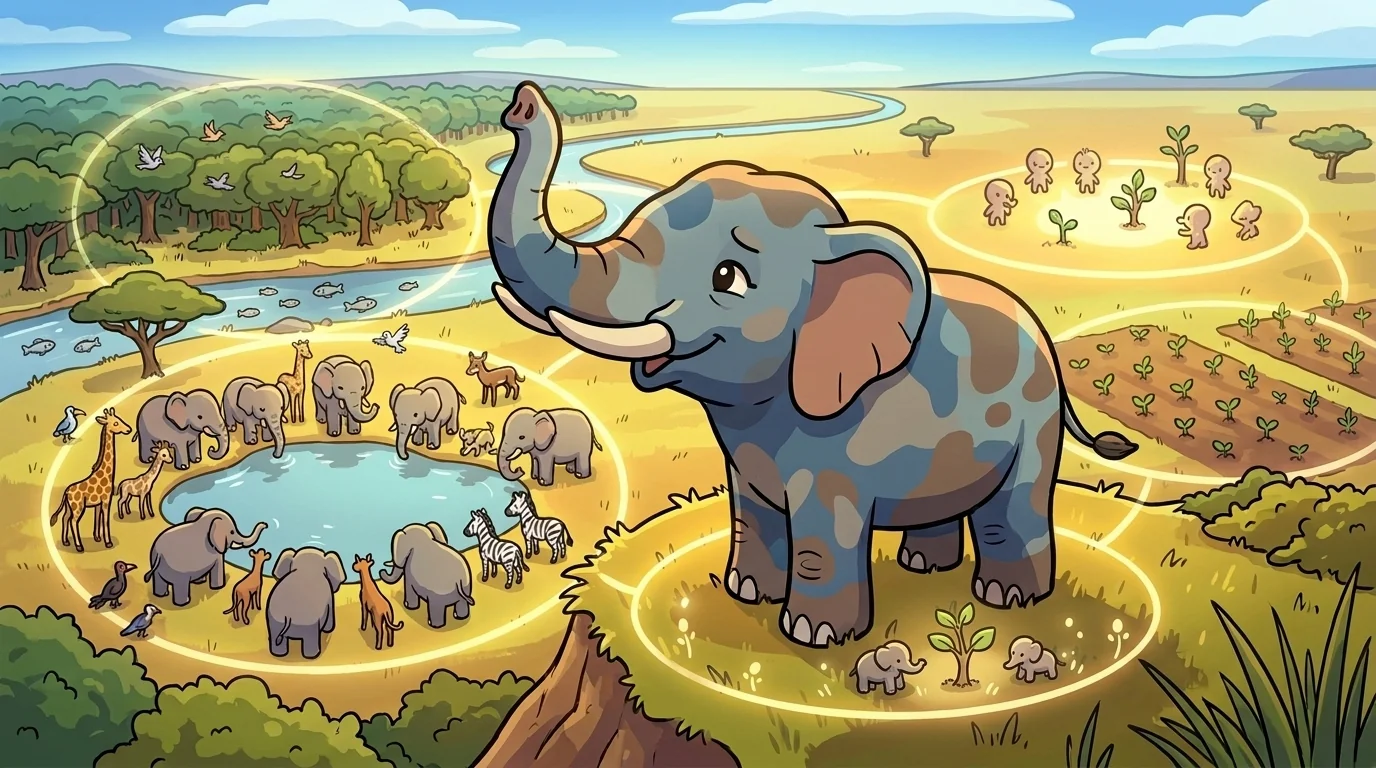
Have you ever felt sad or uneasy about something happening to an animal or a place, even though no person was hurt? What did that feeling tell you?
Kin wants you to see the strength of a wide circle.
Here is what her way catches that others might miss. A choice can look fine if you only count the people in the room — and still leave a poisoned river, an empty forest, or a warmer world for the kids of the future. Those harmed ones have no voice in the meeting. The fish cannot argue. The not-yet-born cannot vote. So Kin speaks for them. She pulls them into the circle of who counts.
If you have ever felt a quiet ache watching a tree cut down or a creature suffer, even when no person was hurt — that ache is real, and Kin honors it. Her way says: the circle of care does not stop at the edge of the human crowd. It reaches to everyone and everything that has to live with what we choose.
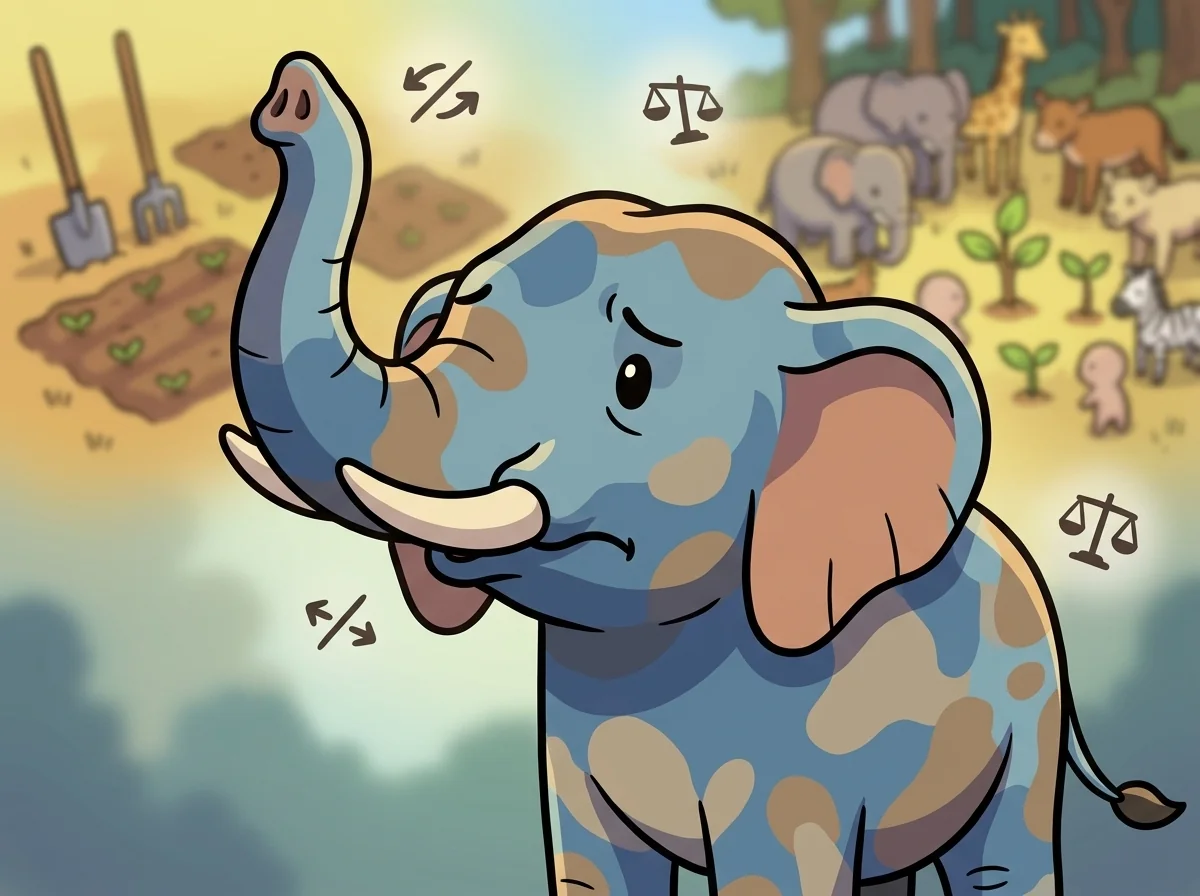
Kin is honest about the hard parts. She does not pretend her way settles everything.
Here is the tricky side, and she says it gently. Once you widen the circle, how wide does it go? Do the ants count as much as the elephants? Does a far-future person count as much as your own hungry neighbor today? Kin cannot always say. A circle that includes everyone can become so big it is hard to act at all.
And sometimes the circle pulls two ways. Protecting a forest might mean a family nearby has less land to farm. Real people, real needs, right now — against the river, the animals, the future. Kin does not pretend that is easy. "My way makes the circle wide," she says. "But a wider circle holds more voices, and more voices can disagree. I show you all of them. I do not pretend the choice is simple."
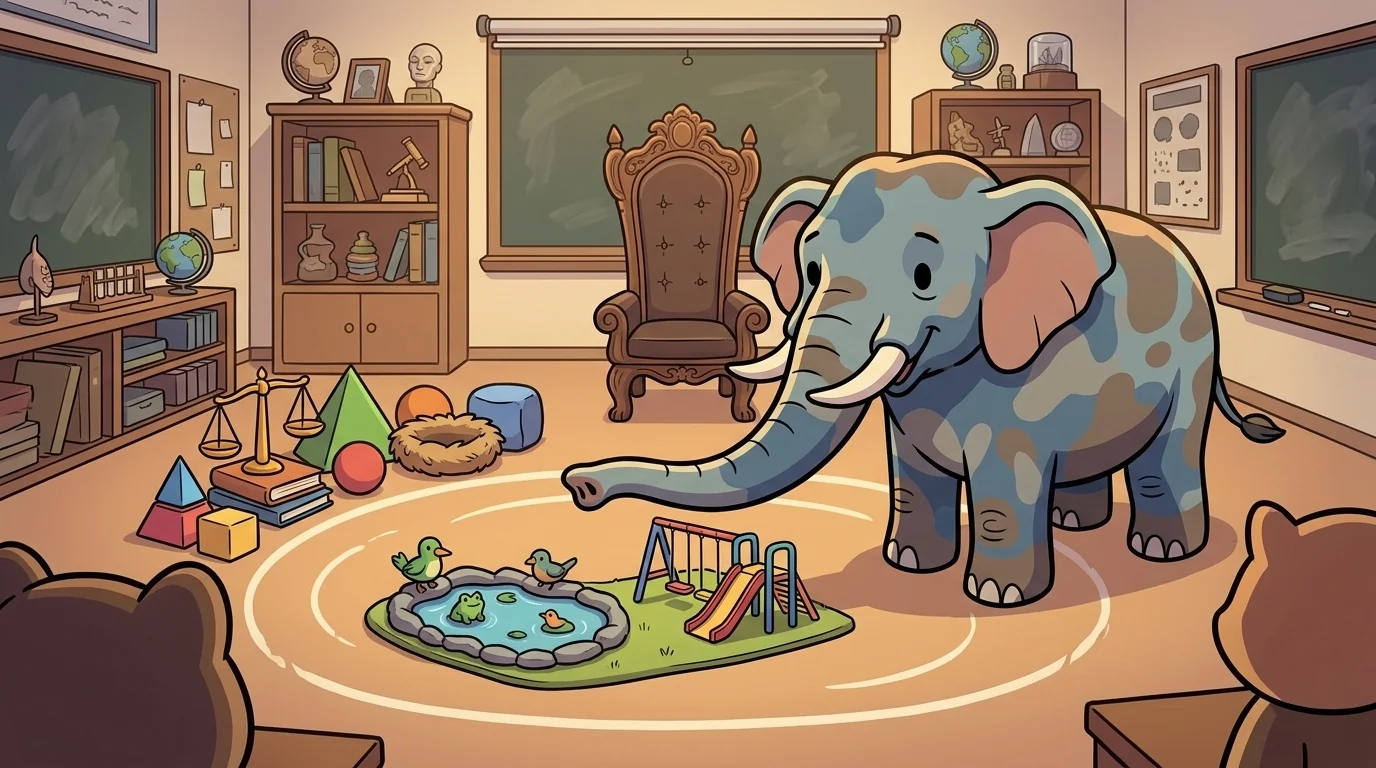
In the EthosForge classroom, Kin stands with her four friends. Each has a different way of seeing. Lyceum waits, favoring no one. You are the judge — not Kin.
"Here is one," Kin says. "A town wants to build a fun new playground. But the only spot is a small pond where frogs and birds live. Build it, and the kids are thrilled. Build it, and the pond is gone."
She sweeps her trunk in a wide arc. "My way asks: who else has to live with this? The frogs. The birds. The kids twenty years from now who will never see a pond in their town. I pull them into the circle."
Then she looks at you, calm. "But hear the others. Consequence might weigh all that childhood joy on her scale. Care might ask about the specific kids who have nowhere to play. They see something true, too. That is why you decide. I only widen the circle so no one gets left out of the counting. What you do with the full circle is yours."
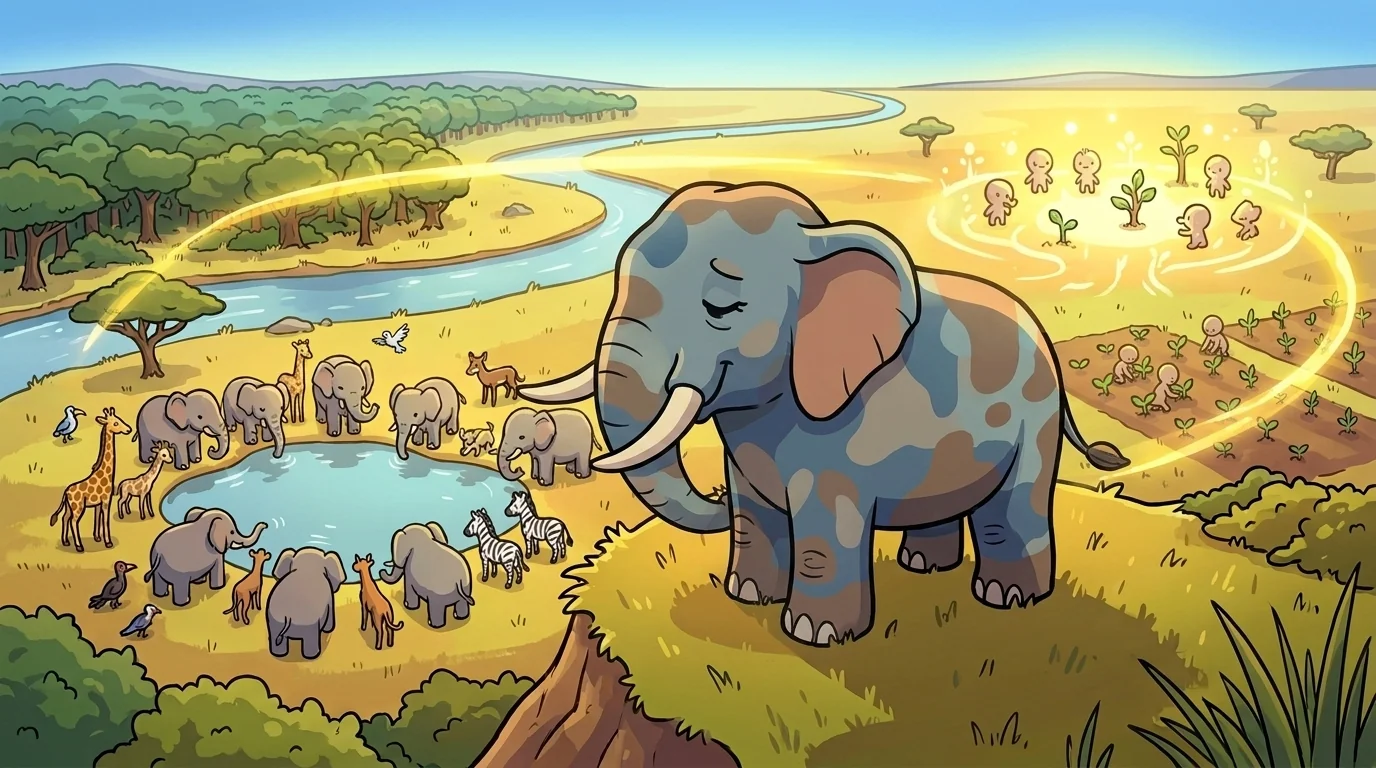
Think of a place you love that you hope kids you'll never meet will love too. What does caring about them feel like?
Maybe you pictured a beach, a park, a tree you climb. Kids you will never meet, feelings you are having on their behalf.
Sit with that for a moment — the warm, wide feeling of caring about someone far away in time, someone who cannot thank you. That feeling is not weakness. It is your circle growing. It is the same feeling that makes people plant trees they will never sit under. Kin spends her whole slow life tending that feeling, so the voiceless ones — the animals, the waters, the not-yet-born — get counted when the choices are made.
Kin lowers her great head toward you, kind. "I have widened the circle," she says. "Now hold it all — the people here, and everyone else who has to live with this — and think it through with my friends. You are the judge. I trust the size of your heart."
And that trust — being asked to hold a circle that wide — settles into you as something heavy and good, the weight of caring about more than only what's near.
The EthosForge ensemble
Kin is part of EthosForge's distributed-narrative cast. Each character embodies a different curricular primitive; together they teach the full subject.
-
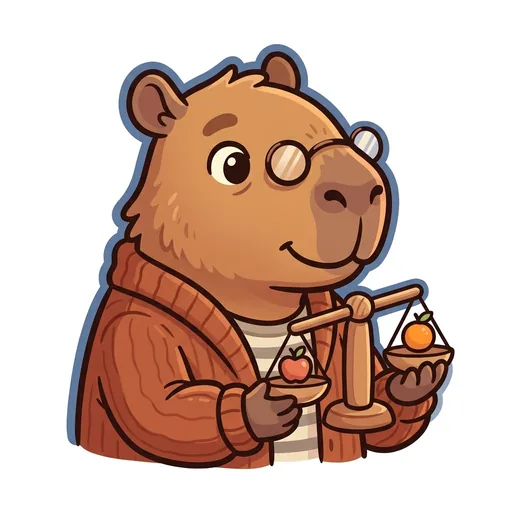
Consequence
Consequentialism / Utilitarianism — calm, methodical; weighs trade-offs; capybara at a balance-scale
-
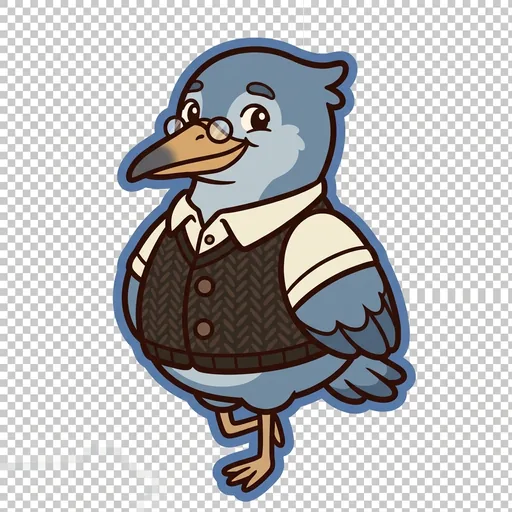
Duty
Deontology / Kantian — upright, principled; sticks to rules even when costly; heron in vest on one leg
-

Virtue
Virtue Ethics / Aristotelian — steady, earnest; 'what kind of person do I want to be?'; badger tending a plant
-

Care
Care Ethics / Noddings + Gilligan — attentive, present; 'ethics begins in relationship'; otter listening beside empty spot
-
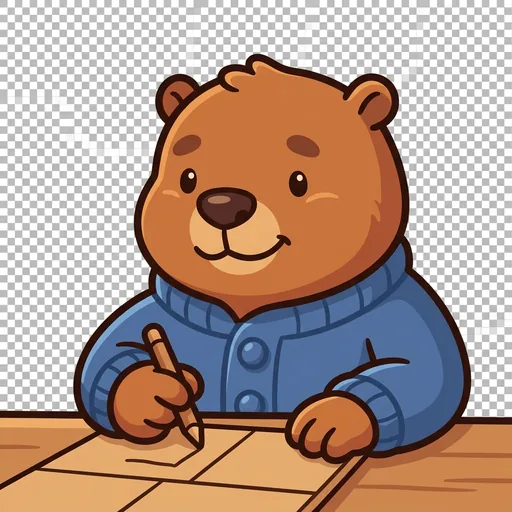
Contract
Contractualism / Scanlon + Rawls — collaborative; 'what could we ALL agree to?'; beaver drawing a fair-rules table
-

Bound
Rights ethics — each person has protections you may not cross, even for a good outcome; pangolin who curls to shield ('some lines you never cross')
-
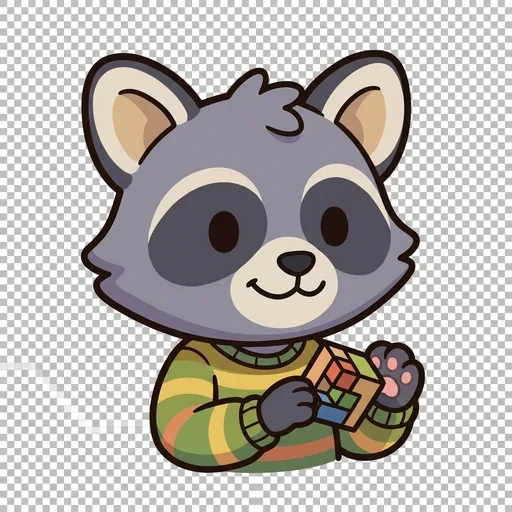
Tinker
Pragmatism — try a small step, watch what really happens, be willing to change; raccoon with busy testing paws ('try it, watch, be ready to change')
-
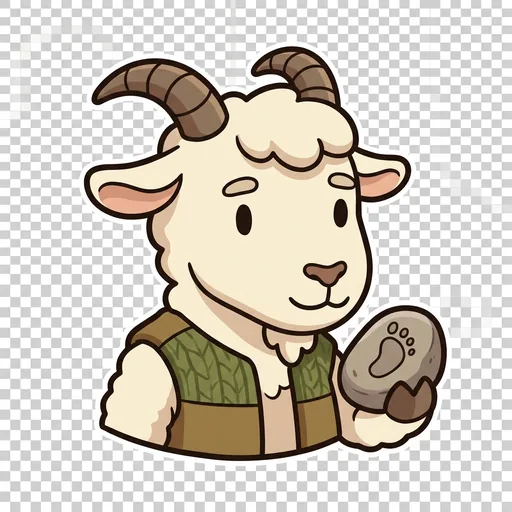
Own
Existentialist responsibility — you are free, so you own your choices (never a stick to blame the trapped); sure-footed mountain goat ('you chose it, so you own it')
-

Sense
Moral sentiment — the heart's feeling of sympathy is real moral information, the start of ethics (not the whole map); soft-eared dog ('first, what does your heart notice?')