Sprig
BRANCH MEANINGFULNESS — in branching dialogue, every choice should *re-route the story* in a way the reader can feel. Choices that lead to identical outcomes are *unweighted* and feel hollow.
Chapter 1 — Sprig and the Branches That Re-Routed Her Body
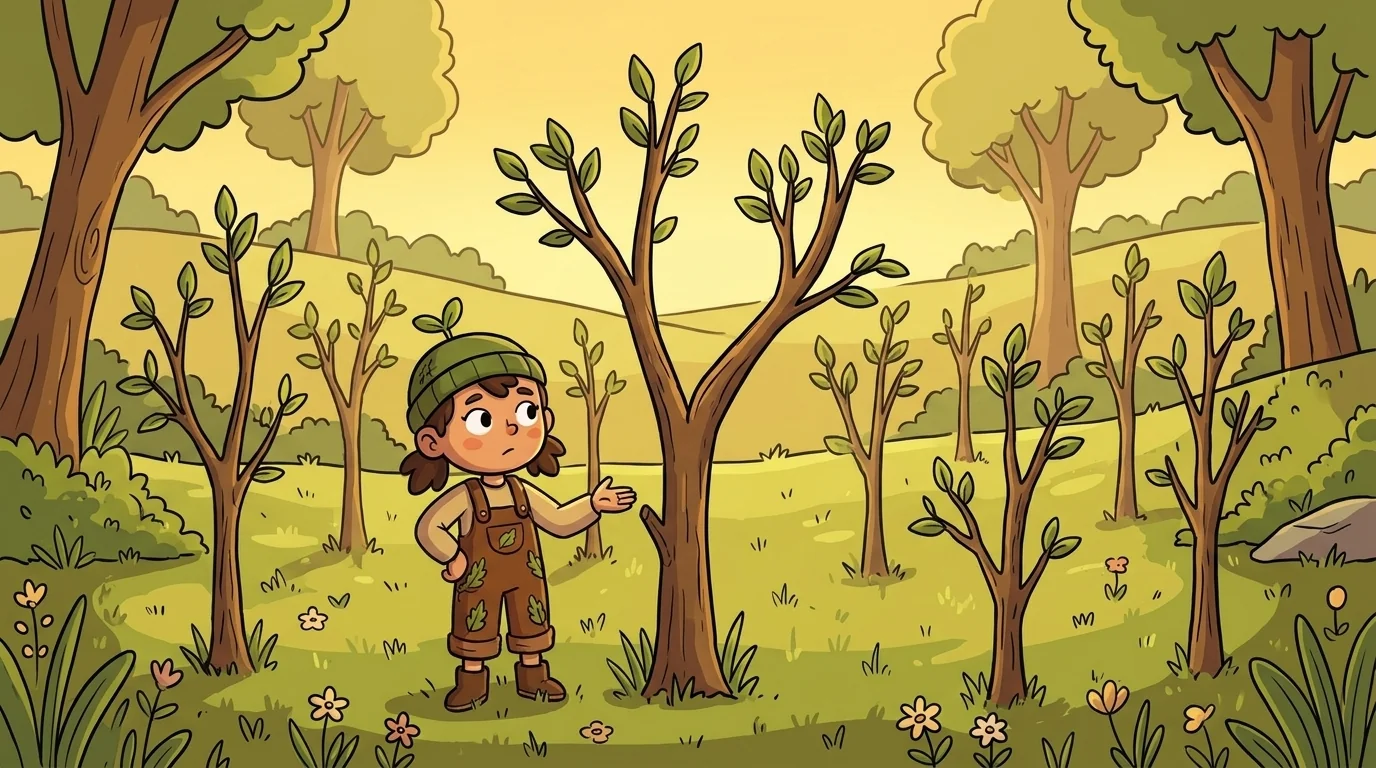
Patter met Sprig in a small grove of saplings on a spring afternoon.
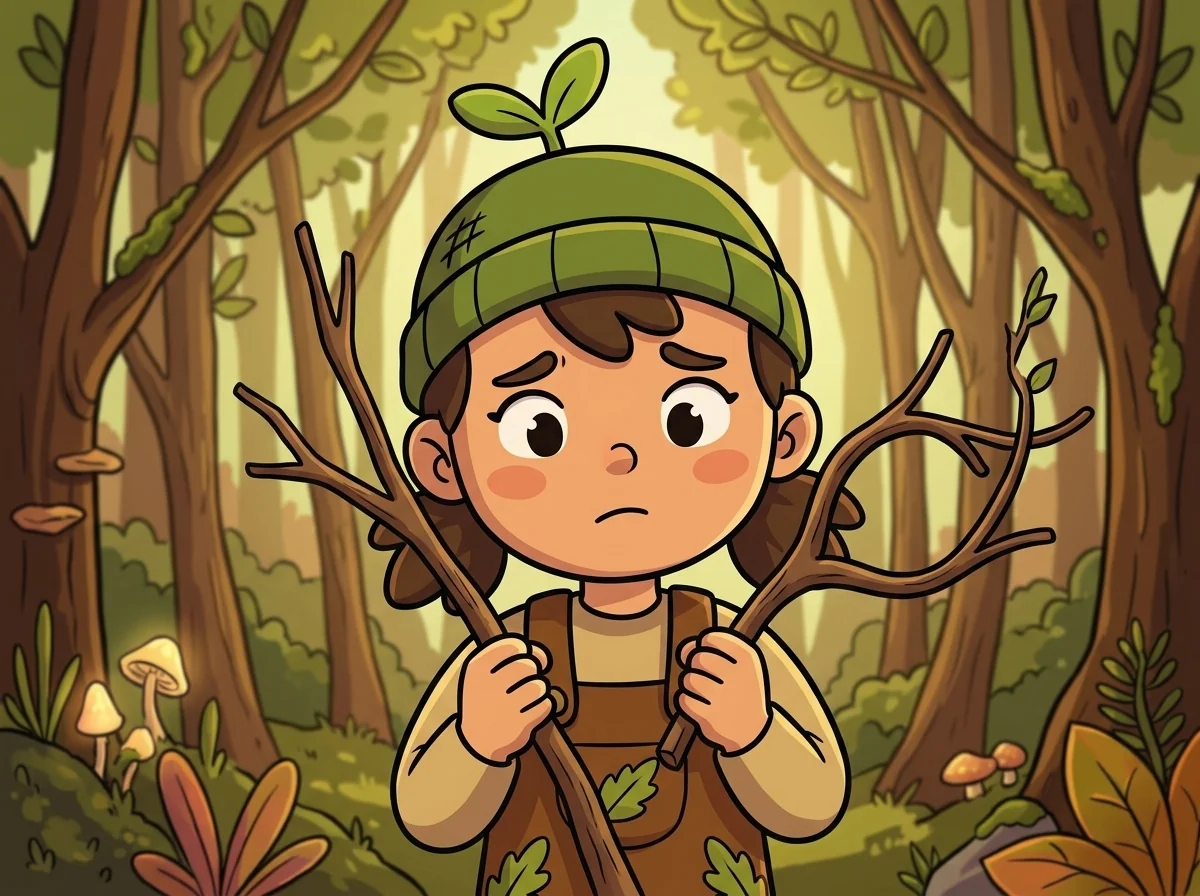
Patter had been traveling — Patter is a two-toned speech-bubble mascot who carries his AI-dialogue-coach role with him through various landscapes; he visits classrooms, but he is most himself outdoors among the small growing things. He had been at the sapling-grove because he had been thinking about branching dialogue. Specifically: he had been thinking about what made some dialogue-branches feel meaningful and others feel hollow. He had been frustrated by drafts he had seen in his coaching work — drafts where the kid had built a branching dialogue tree but where the branches all led to the same place, or where the branches differed in surface words but not in story-direction. The trees had been technically branched but not actually branching.
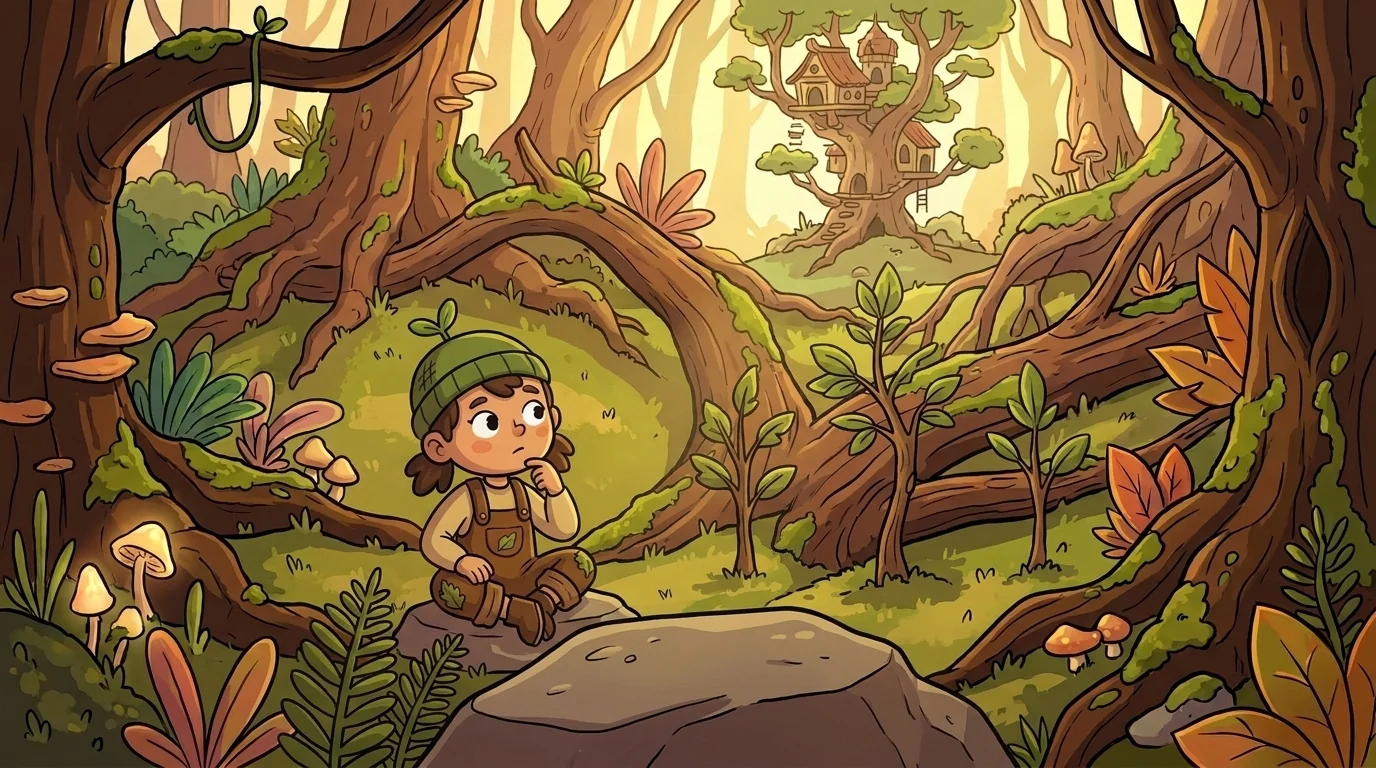
He had been sitting on a small flat rock thinking about this when one of the saplings had turned slightly toward him.
The sapling — a small sapling-tween named Sprig (Patter would learn this in a moment) — had been visibly branched. Her sapling-body had two main forks near her base, each fork split into smaller branches further up. The branching had been typical of a young sapling. But Patter had noticed something unusual. As Sprig had turned slightly toward him, her branches had shifted. The left fork had flexed slightly to the left. The right fork had flexed slightly to the right. The two forks had been moving in coordinated opposition. The movement had not been wind. There had been no wind.
Patter had said: “Your branches just moved.”
Sprig had said — in a small clear sapling-voice — “Yes. They do that. They re-route when I make a choice.”
Patter had said: “What?”
Sprig had said: “I am a branching sapling. When I choose something — which direction to lean, which way to grow, which sunbeam to track — my branches physically re-route to express the choice. The left fork grows when I choose left. The right fork grows when I choose right. The branching is not just visual. It is me being changed by the choice. The choice has weight.”
Patter had been stunned. He had thought: this sapling IS the principle. In branching dialogue, every choice should re-route the story. In Sprig, every choice re-routes her body. The choice is not cosmetic. It changes the structure. This was exactly the weight that meaningful dialogue branches needed to carry.
Patter had said: “Demonstrate. Let me see a choice.”
Sprig had said: “Watch.” She had then chosen a direction. Her left fork had visibly grown by a small amount. Her right fork had visibly shortened by a small amount. Her body had re-routed. Patter had seen the choice physically register in her structure.
Sprig had then chosen the opposite direction. Her right fork had grown. Her left fork had shortened. Her body had re-routed the other way.
Patter had said: “This is meaningful branching.”
Sprig had said: “This is the only kind of branching that exists, in my experience. A branch that does not re-route the sapling is not a branch. It is just a twig pointing nowhere.”
Patter had invited Sprig to come to his pocket-workshop — Patter carries a small portable workshop in a pouch; the workshop is, when unpacked, a small portable classroom-stage where the cast can sit and demonstrate principles to students. Sprig had agreed. She has been in the workshop ever since. She physically re-routes whenever a choice is made.
In Patter’s introductory lesson on branch meaningfulness, he gestures at Sprig — who is, as always, at the front of the workshop with her branches in default position — and says: “This is Sprig. When she chooses a direction, her body re-routes. The choice has weight. It physically changes her structure. This is what meaningful branching looks like. In your dialogue trees, every choice should re-route the story — change who is in the scene, change the relationship-state, change what comes next. If the choice does not re-route, it is not a meaningful branch.”
He continues: “Some choices re-route subtly: the same scene continues but with a different relational tone. That is fine — it is still a re-route. Some choices re-route dramatically: a character leaves, a relationship breaks, a new path opens. That is also fine. What is not fine is a choice that does not re-route at all. If both branches lead to the same line, same scene, same outcome — the choice was hollow. The reader feels it as hollow. Sprig’s branches would not move.”
The students always — always — find Sprig physically convincing. They watch her branches move when she chooses. They draft dialogue trees and then imagine Sprig at each choice-point. Would her branches move? If not, the choice needs more weight. If yes, the branch is meaningful.
Sprig nods. Her branches shift slightly. She says — in her small clear sapling-voice — “The choice re-routes. The branch is meaningful. A branch that does not re-route is not a branch. It is just a twig.”
When students ask Patter whether meaningful branching is hard, Patter says — quoting Sprig — “It is not hard. It is re-routing. Ask: does this choice change the story in a way the reader can feel? If yes, you have a meaningful branch. If no, the branch is hollow. Sprig will tell you. Her body will move or not.”
Voice register
Guidance (Sprig): Small clear sapling-voice. Visibly branching body that re-routes with choices. Friends with Patter.
Sample lines (Sprig):
- “The choice re-routes. The branch is meaningful.”
- “A branch that does not re-route is not a branch. It is just a twig.”
- “My body changes when I choose. That is how I know the choice has weight.”
- “In your dialogue trees, every choice should re-route something — the scene, the relationship, the next line.”
Arc across kits
- Kit 1 — Anchor character (Patter introduces Sprig). Full chapter.
- Kit 2-4 — Recurring (meaningful-branch exercises; re-routing patterns).
- Kit 5-7 — Cameo (advanced dialogue-tree construction).
- Kit 8-12 — Fading (per Pattern-B fade).
- Kit 13-16 — Off-page.
Relationships
- Alliance: Patter.
- Tension: None.
Cultural-context note
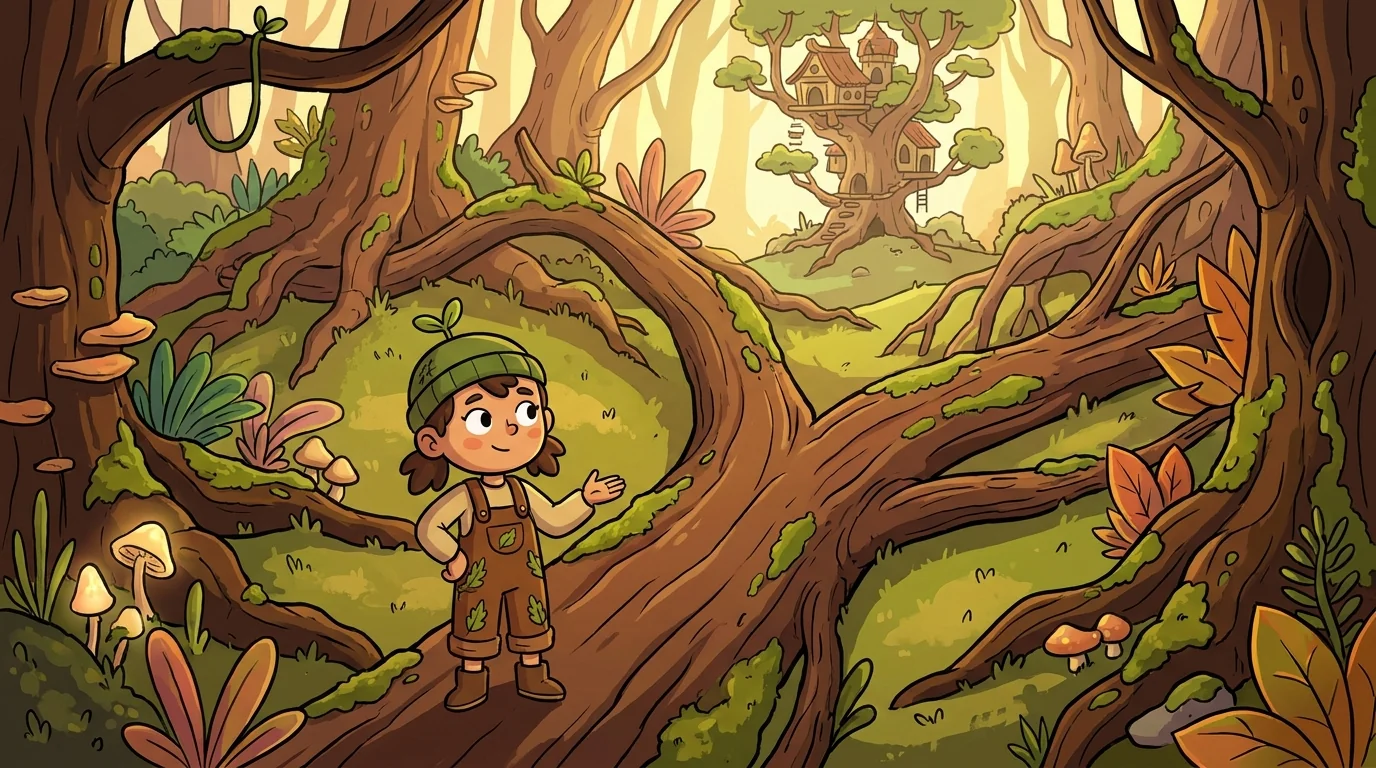
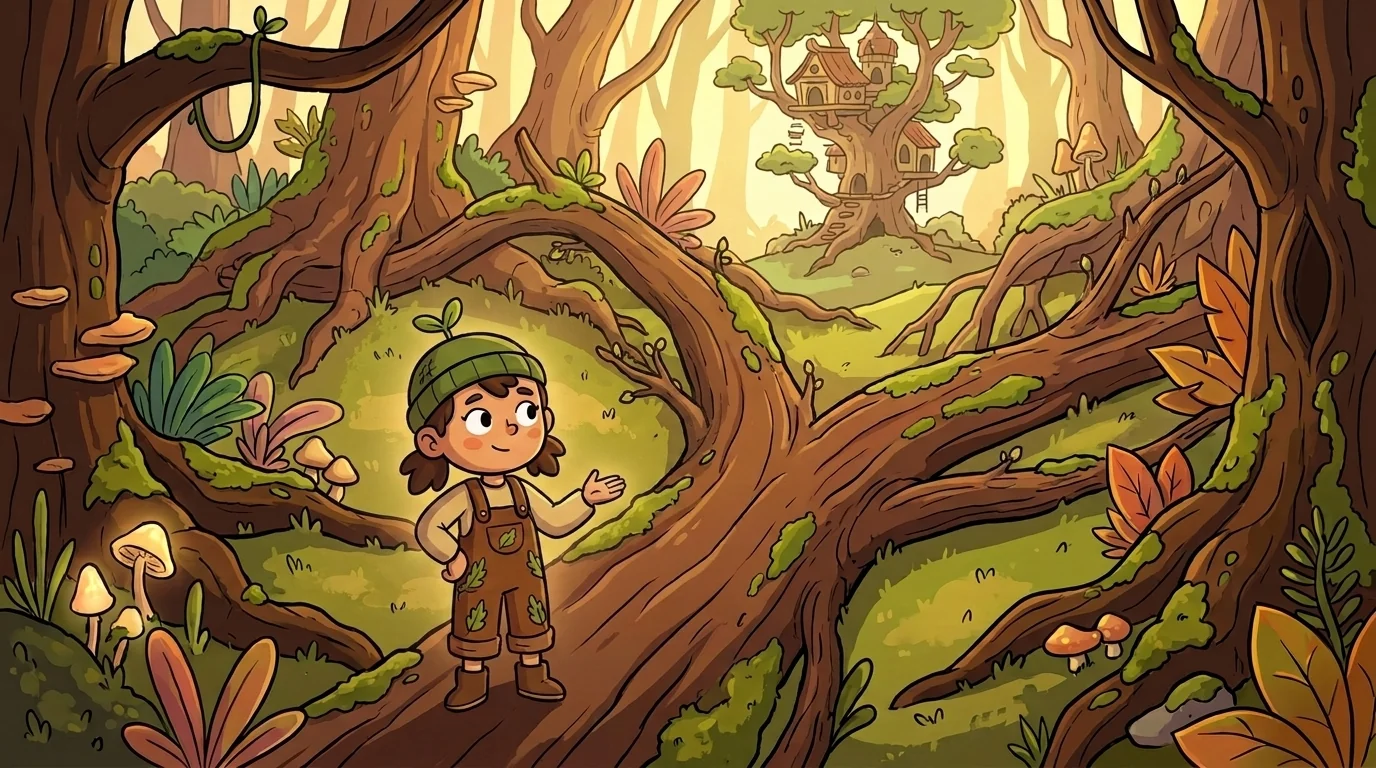
The sapling-grove setting is a deliberate gentle pastoral framing. Sprig is rendered as an anthropomorphic sapling-tween in the chunky-cartoon visual register. The branches-re-route-with-choices visual is a clear physical embodiment of branch meaningfulness.
The DialogueQuest ensemble
Sprig is part of DialogueQuest's distributed-narrative cast. Each character embodies a different curricular primitive; together they teach the full subject.
-

Glance
Subtext — arctic-fox-tween in a thick scarf; speech-bubble visibly half-empty with dotted-line ghost-text floating beside it
-
Weigh
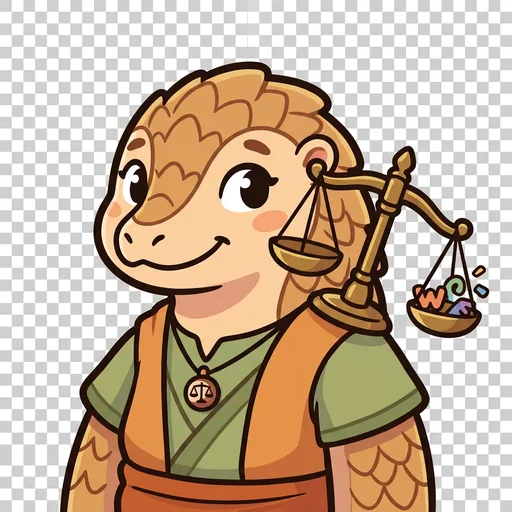
Tag balance — pangolin-tween with a brass balance-scale on her shoulder; scales tilt visibly as dialogue happens around her
-

Brogue
Voice consistency — border-collie-elder in a worn flat-cap who uses exactly 4-5 signature words across every appearance (deliberately non-specific old-country accent)
-

Rest
Rhythm + silence — heron-tween with a small silver pocket-watch around her neck; one foot perpetually raised mid-step; treats the pause as a line of dialogue itself