
Aim
LINE PURPOSE — every line of dialogue should be trying to DO something: to ask, to dodge, to persuade, to wound, to comfort, to hide. A line that only passes along information is dead weight. Real talk is people using words to get what they want.
Press play to listen along. The line being read lights up as you go.
Show full transcript
Loading transcript…
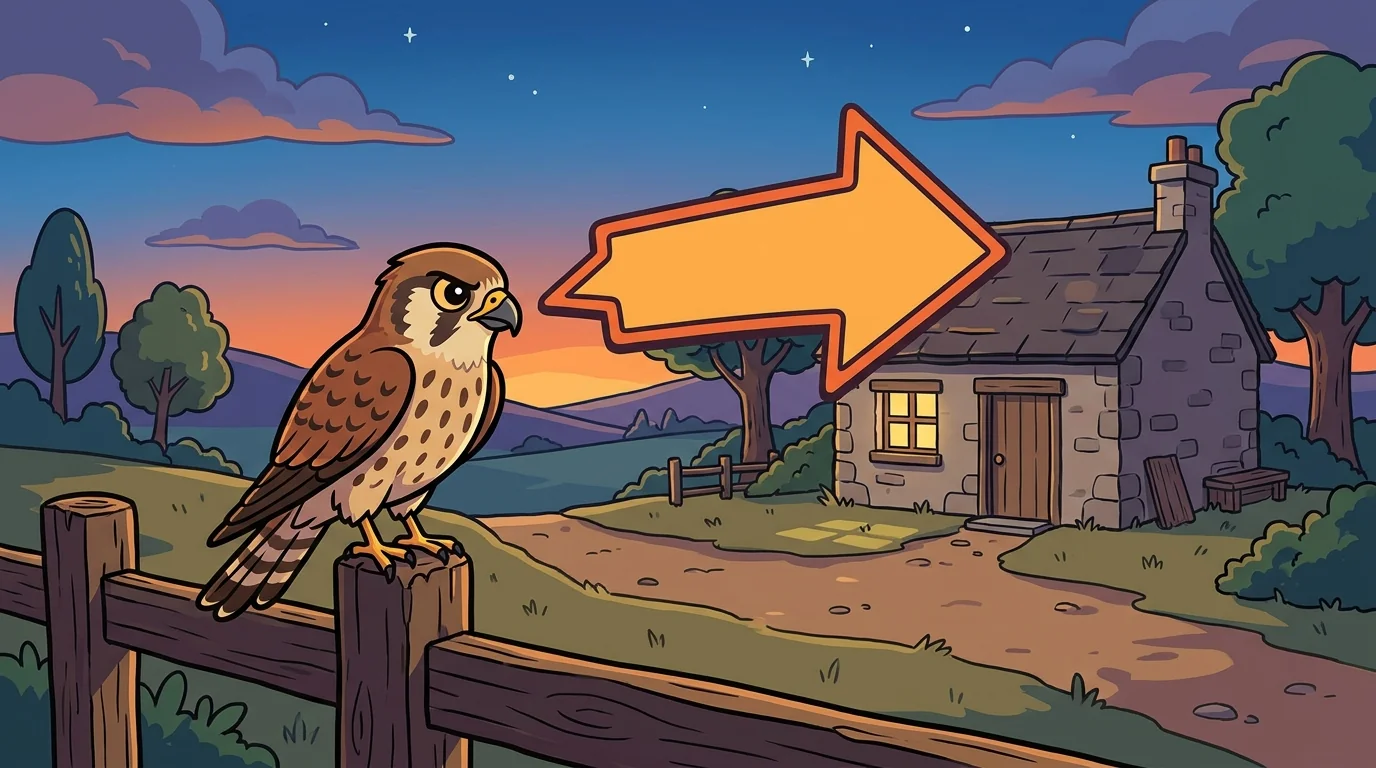
Patter met Aim on a clear, sharp evening, and he noticed her speech bubbles weren't round at all. They were pointed — each one shaped like a little arrow.
Aim was a keen-eyed kestrel, still and watchful on a fence post. When she spoke, her arrow-bubble shot out and pointed at something — not always at the obvious thing. She said, "It's getting cold out here," and her arrow-bubble pointed straight at the cottage door. The words were about the weather. The arrow was aimed at let's go inside.
"Your words say one thing," Patter said slowly, "but the arrow points somewhere else."
Aim turned her sharp eyes on him. "Every line is aimed at something," she said. "My name is Aim. I keep the purpose — what a line is trying to do." She nodded at her arrow, still pointing at the door. "I didn't really want to talk about the weather. I wanted to go inside. So that's where my words were aimed."
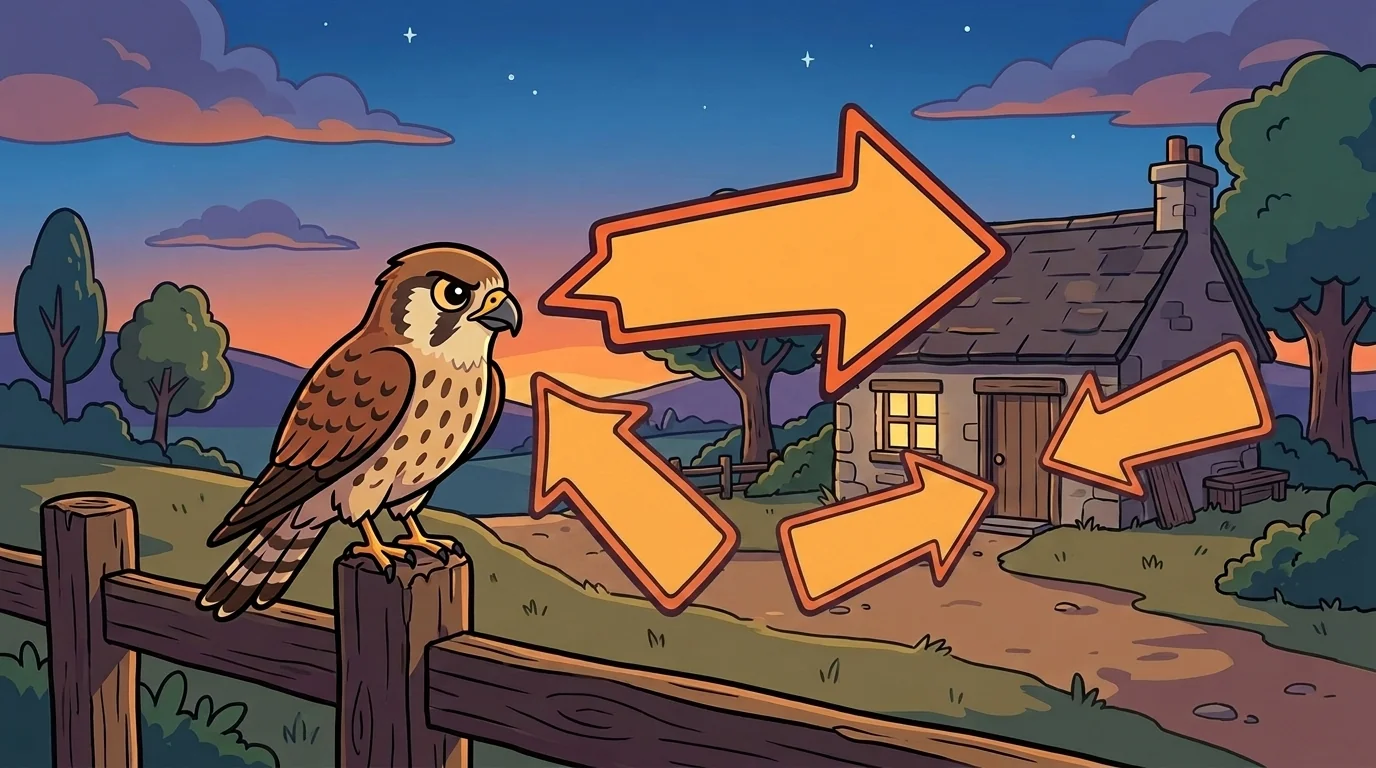
Patter studied the arrow-bubbles as Aim spoke. Each one pointed at a target. "How was your test?" — the arrow aimed at I'm worried about you. "Nice jacket." — the arrow aimed at I want you to like me. "I'm not hungry." — the arrow aimed at leave me alone.
"None of these lines are really about their words," Patter said.
"Almost no lines are," Aim said. "People don't talk just to share facts. They talk to get something — to be reassured, to dodge a question, to win, to be loved, to push someone away." Her arrow swung from target to target. "When you know what a line is aiming at, you know what the character really wants. The words are just the bow. The want is the arrow."
Then she showed Patter the dead kind. She made a character say, "The capital of the country is the biggest city, and it has a river." The arrow-bubble had no point at all — it just hung there, flat and round and aimless. "That line isn't aimed at anything," Aim said. "It's just facts. Nobody talks like that. It's dead on the page."
Patter felt the click. The kids write lines that just deliver information, he thought. Their characters explain things at each other. But nobody's trying to GET anything. No aim, no life.
"Aim," Patter said, "I run a workshop. The kids' characters use dialogue to dump facts — 'as you know, we are cousins, and our father is the king.' Nobody's ever trying to do anything. Would you join us? Teach them to aim every line?"
Aim considered the question — Patter could see her arrow-bubble pointing right at yes, because I want to help these kids. "I'll come," she said.
So Aim joined the workshop, and the talking-scenes there have purpose behind every line now.
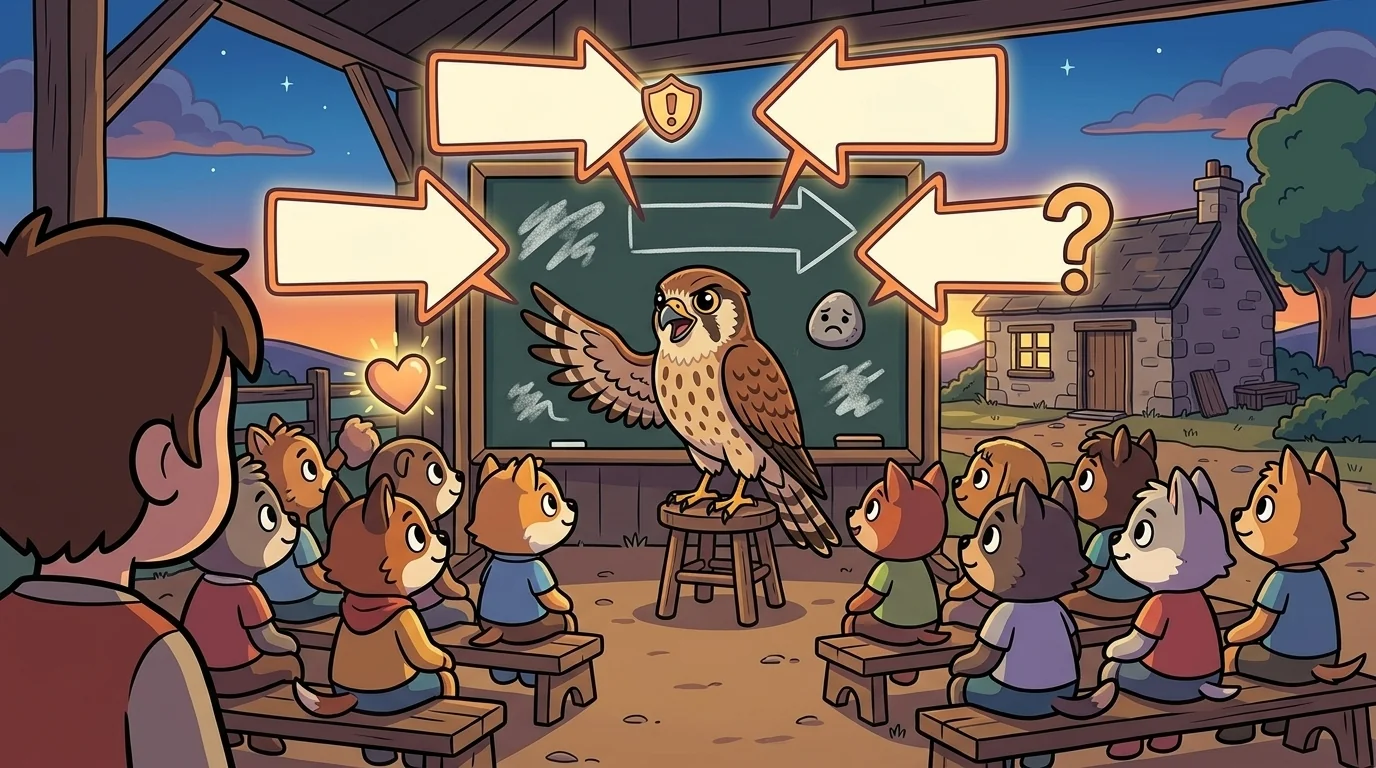
When Patter teaches line purpose, Aim leads. "Before you write a line," she tells the kids, "ask: what is this character trying to do with it? Not just say — do. Are they asking? Dodging? Bragging? Apologizing without apologizing? Trying to be loved?" Her arrow swings. "Then aim the line at that."
She writes on the board: "You're home late." "What could this line be aiming at?" she asks. The kids find lots of arrows. I was worried. (aimed at love) You're in trouble. (aimed at a warning) I want you to feel guilty. (aimed at a little wound) Where were you, really? (aimed at a question). "Same three words," Aim said. "Four different arrows. The aim is what makes the line mean something."
"And here's the test," she added. "Look at any line you've written and ask: what is this character trying to get? If you can't answer — if the line is just sharing a fact — then either give it an aim, or cut it. A line with no aim is a line with no life."
A young writer asked, "What if my character just needs to explain something?"
"Then find what they want from explaining it," Aim said. "Do they want to sound smart? To stall? To warn? To impress? Nobody explains for no reason. Find the reason — that's the arrow."
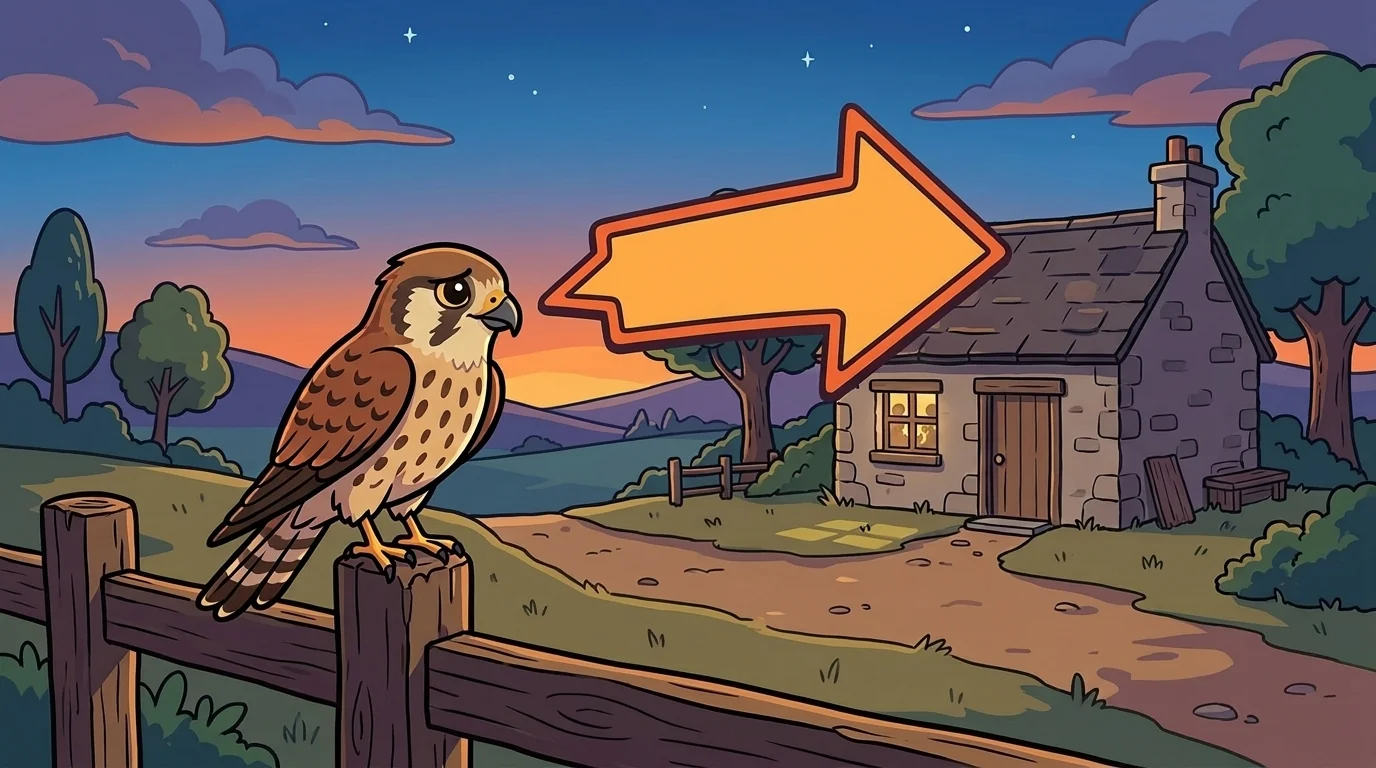
After the workshop, Aim settled on the fence post beside Patter, her sharp eyes soft now in the dusk.
"You see what everyone's really after," Patter said. "Every arrow, every aim. Doesn't it ever feel like too much — seeing the want behind every word?"
Aim was quiet, watching the last light. "I used to think it was a lonely way to listen," she admitted. "Always seeing past the words to the wanting underneath. Like I could never just take a sentence at face value." She tilted her head. "But it turned out to be the opposite of lonely. When I see what someone's really aiming at — when I notice that 'it's cold in here' really means please sit closer, or 'I'm fine' really means please stay — I understand them. Truly. Better than their words alone could ever say." A warm, clear tenderness filled her keen eyes. "Seeing the arrow isn't cold at all. It's the closest kind of listening there is — hearing not just what someone says, but what their whole heart is reaching for." And she folded her wings, content, glad to be a creature who could see the want behind the words, and love people all the more for it.
The DialogueQuest ensemble
Aim is part of DialogueQuest's distributed-narrative cast. Each character embodies a different curricular primitive; together they teach the full subject.
-
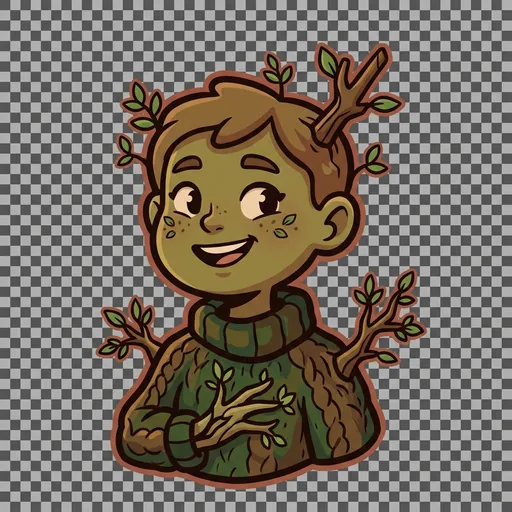
Sprig
Branch meaningfulness — sapling-tween whose visible branching skeleton shifts physically when she picks between dialogue options (the choice re-routes her body)
-

Glance
Subtext — arctic-fox-tween in a thick scarf; speech-bubble visibly half-empty with dotted-line ghost-text floating beside it
-
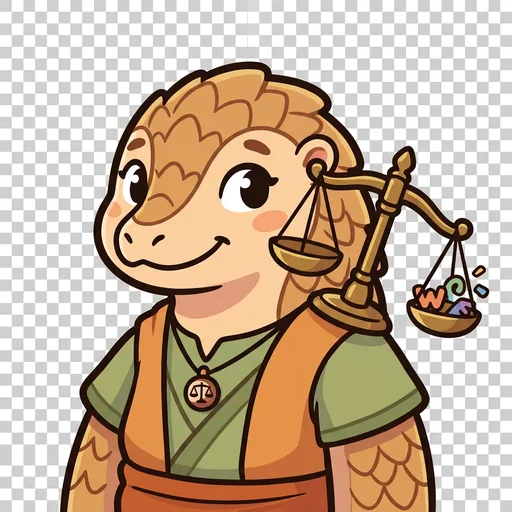
Weigh
Tag balance — pangolin-tween with a brass balance-scale on her shoulder; scales tilt visibly as dialogue happens around her
-

Brogue
Voice consistency — border-collie-elder in a worn flat-cap who uses exactly 4-5 signature words across every appearance (deliberately non-specific old-country accent)
-
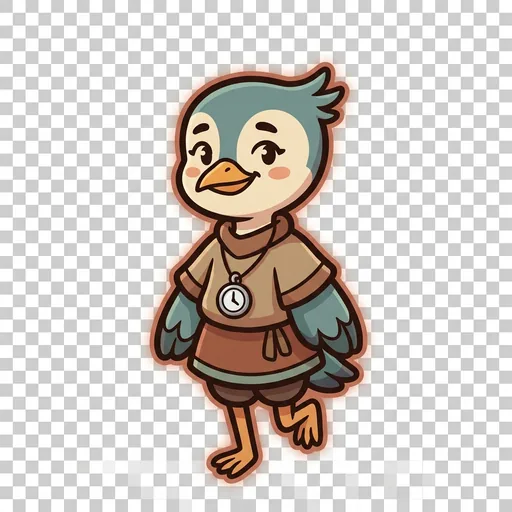
Rest
Rhythm + silence — heron-tween with a small silver pocket-watch around her neck; one foot perpetually raised mid-step; treats the pause as a line of dialogue itself
-
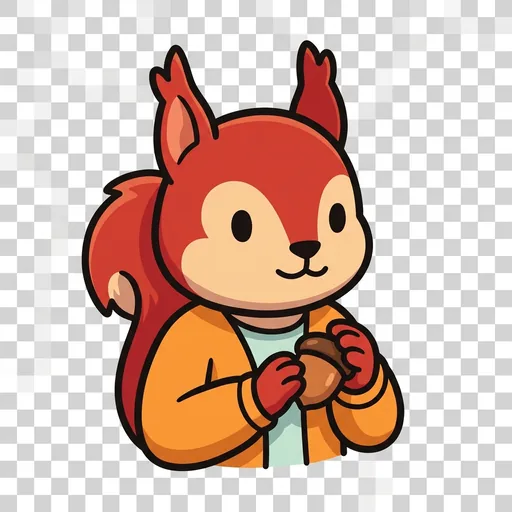
Prop
Action beats — red-squirrel-tween whose paws are always busy with a small acorn; the little actions between lines show feeling and set the rhythm of a talk
-
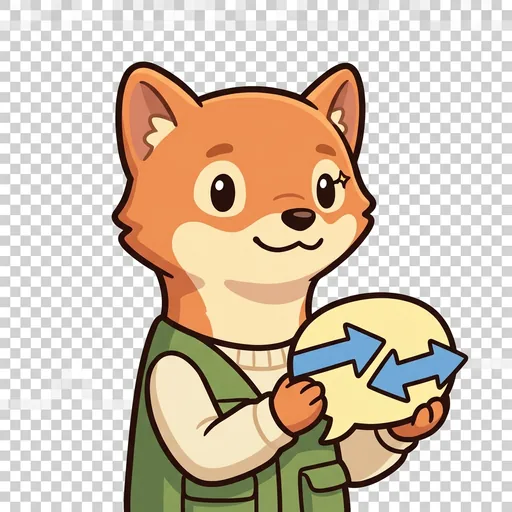
Spar
Conflict / friction — pine-marten-tween whose speech bubbles push against the other speaker's; two characters wanting different things is the engine (the push stays kind)
-
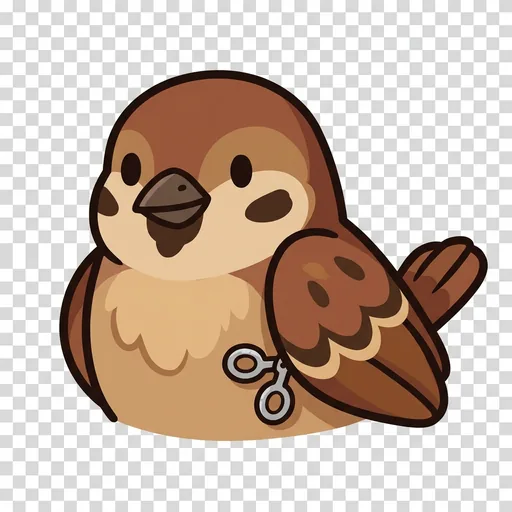
Clip
Economy — sparrow-tween with tiny silver scissors who trims the filler ('hello, how are you, fine') and starts scenes late, right where they get interesting
-

Dash
Interruption / overlap — chipmunk-tween who crashes into the ends of others' lines with a dash when feeling runs too high to wait (used on purpose, sparingly)