
Prop
ACTION BEATS — the small bits of action a character does between lines of dialogue (setting down a cup, looking away, tying a shoe). Action beats control the rhythm of a conversation and quietly show how a character feels, without anyone having to say it.
Press play to listen along. The line being read lights up as you go.
Show full transcript
Loading transcript…
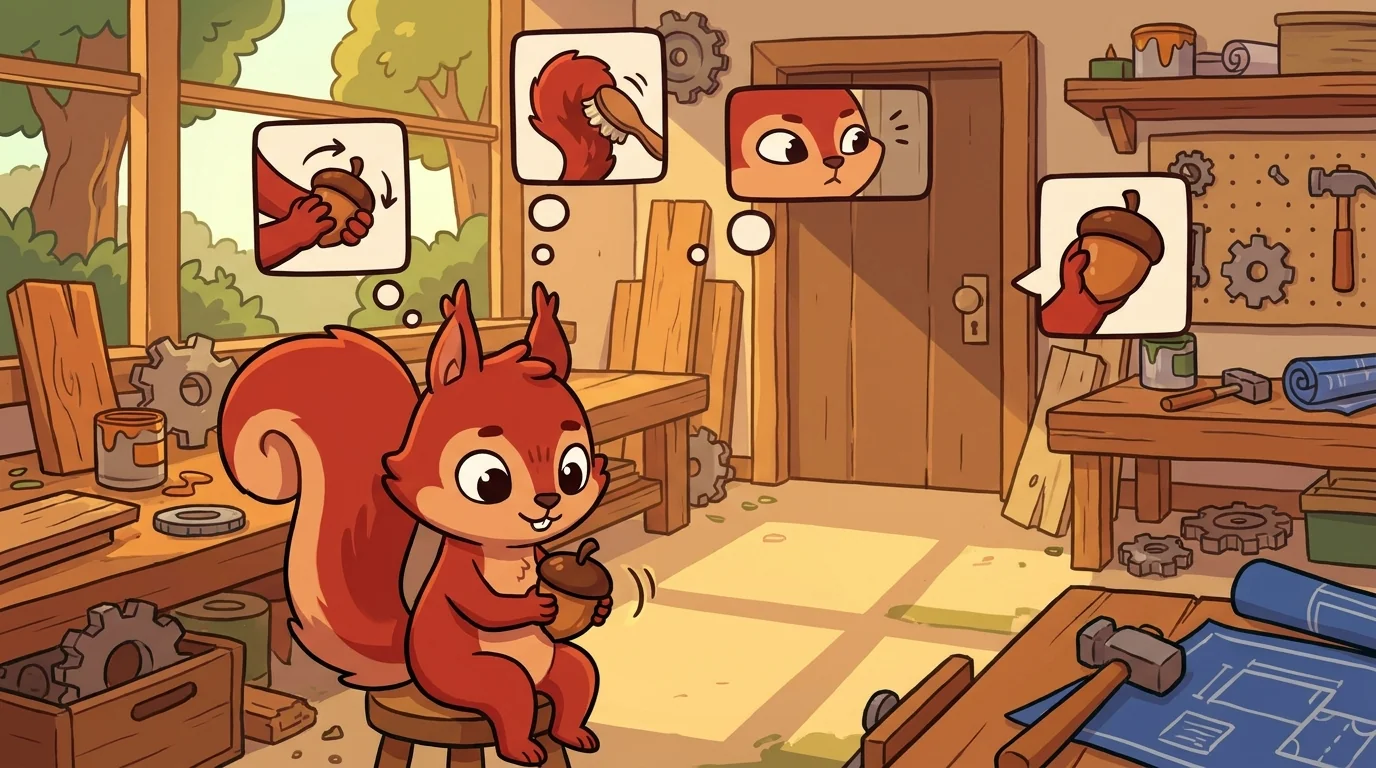
Patter met Prop on a slow afternoon at the edge of the workshop. He noticed the paws before anything else.
Prop was a tidy red squirrel. And his paws were never, ever still. While he sat, he turned a small smooth acorn over and over. A speech bubble floated above him — but between his words, little picture-boxes popped up too. Each box showed a tiny action. Turning the acorn. Brushing his tail. Glancing at the door. The talking and the little actions took turns, back and forth.
"Your talking has pictures in between," Patter said.
Prop looked up, and gave the acorn one more turn. "Of course it does," he said. "Nobody just talks. People do little things while they talk." He held up the acorn. "My name is Prop. I keep the action beats — the small stuff a character does between the words."
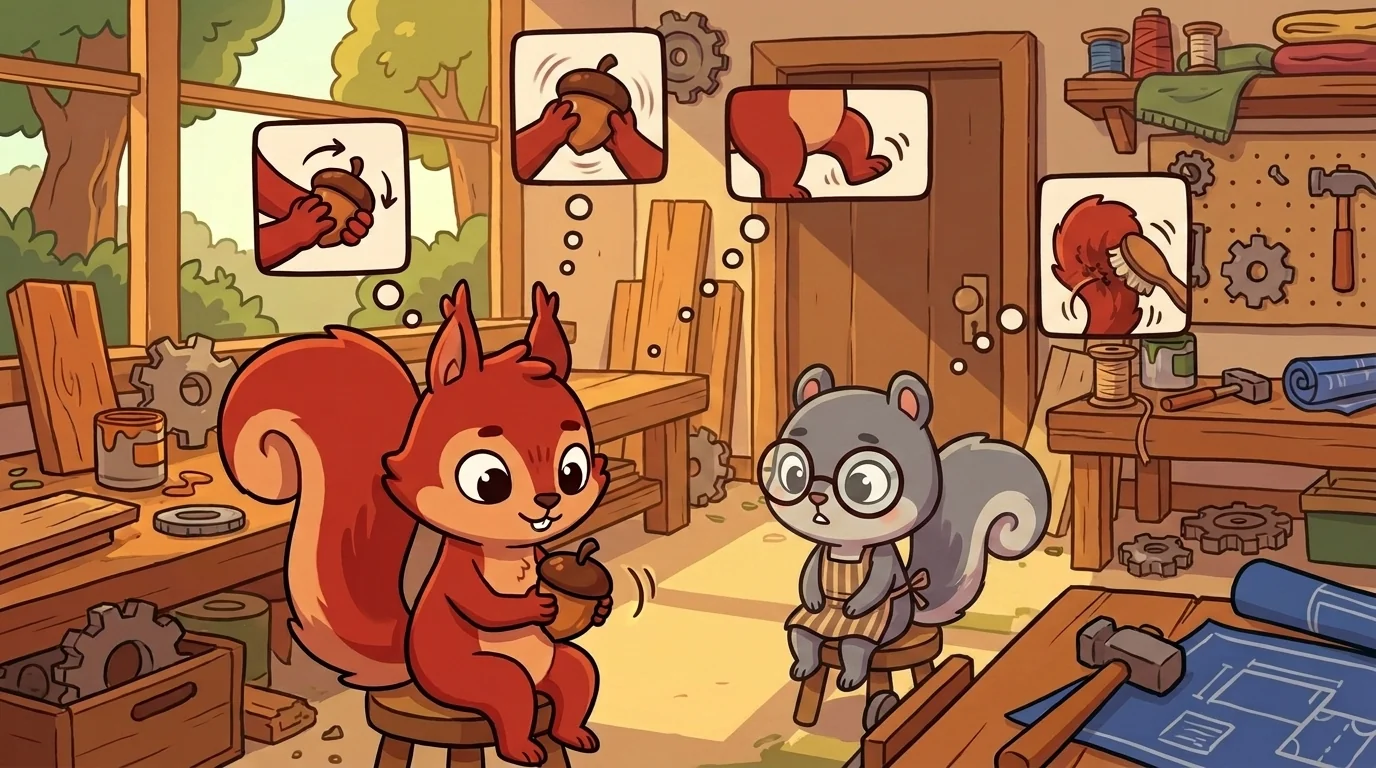
Patter sat down to watch. Sure enough: Prop would say a line, then a little box would show him doing something small, then another line. "It's a nice day," he said — and a box showed him not looking up from the acorn at all.
"See that?" Prop said. "I said it's a nice day. But the action-box showed I wouldn't look up. So you can tell — I didn't really mean it. Something's on my mind." He set the acorn down, gently. "The little action told you more than the words did."
Patter felt the click in his chest. The beats aren't filler, he thought. They're doing real work. They show feeling, and they set the pace.
"Try a fast one," Patter said.
Prop's paws sped up — turning, tapping, fidgeting — and his lines came quick and clipped. The whole talk felt nervous, rushed. Then Prop slowed his paws right down, smoothed the acorn once, and let a long pause sit before his next line. The same talk suddenly felt calm and heavy and serious. "The beats set the speed," Prop said. "Busy paws, busy talk. Still paws, slow talk. The action is the drumbeat under the words."
"Prop," Patter said, "I run a little workshop. I teach kids to write talking. And their characters are like floating heads — just lines and lines, no bodies, no hands, nothing happening." He smiled. "Would you join us? Show them the beats between the words?"
Prop pocketed his acorn — then took it right back out and started turning it again. "I'll come," he said. "I can't sit still anyway. Might as well be useful."
So Prop joined the workshop. He sits near the front, paws always busy, and the kids' talking-scenes have bodies now.
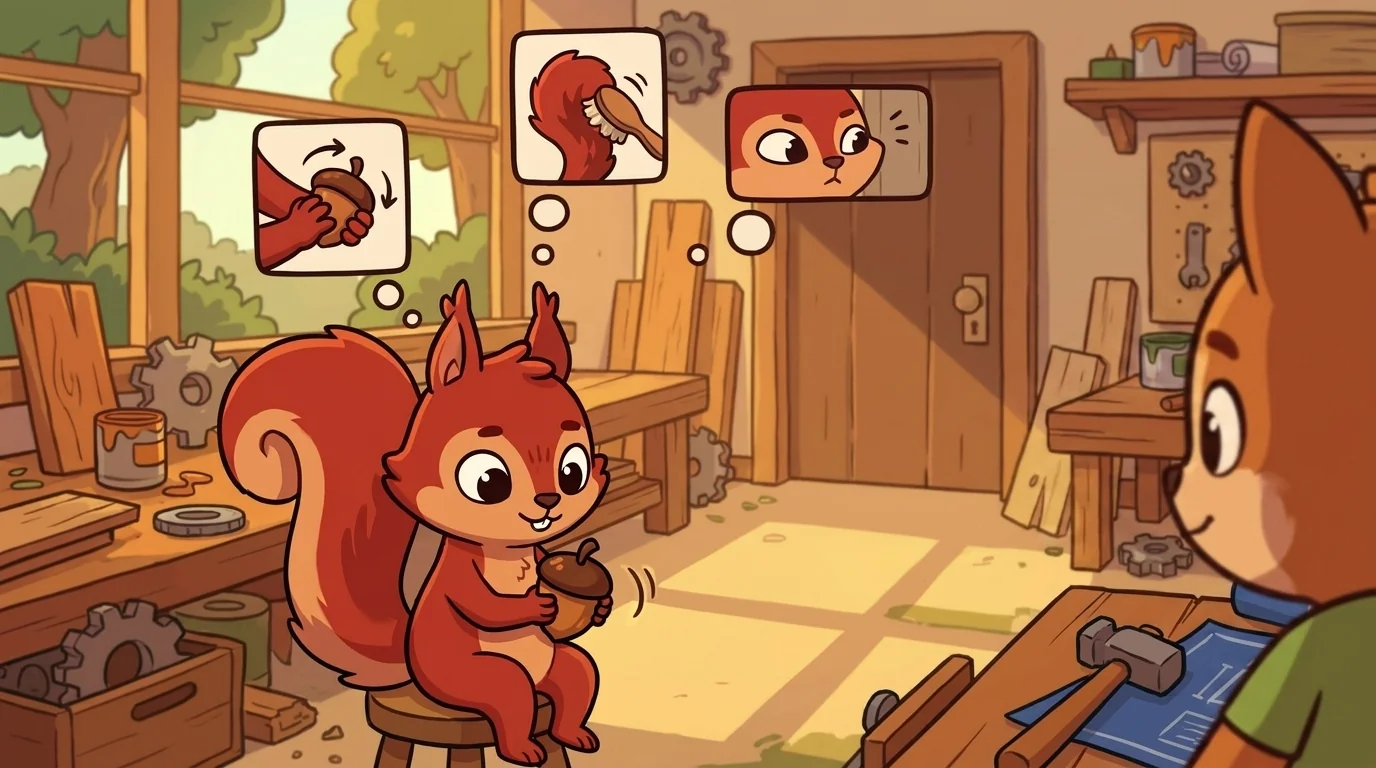
When Patter teaches action beats, he points to Prop. "Watch his paws," Patter tells the kids. "When you write a talk, don't just write line, line, line. Put small actions in between. 'She set down her cup.' 'He glanced at the window.' 'She tied and untied her shoelace.'"
He writes on the board: "I'm not upset," she said, and set her cup down very, very slowly.
"What does the slow cup tell you?" Patter asked. The kids got it at once — she was upset. The action said the true thing. Her words said the polite thing.
"That's the secret," Prop said, turning his acorn. "An action beat can agree with the words — or argue with them. When it argues, the reader feels the truth underneath." He gave the acorn a slow turn. "And the beats give the talk a body. Real people fidget and pour tea and look away. Put that in, and your characters stop being floating heads."
A young writer asked, "How many beats should I use?"
"Not too many," Prop said. "A beat here and there — at the moments that matter. If everyone's always doing something, it gets noisy. Save your beats for the lines where a small action says what the words can't."
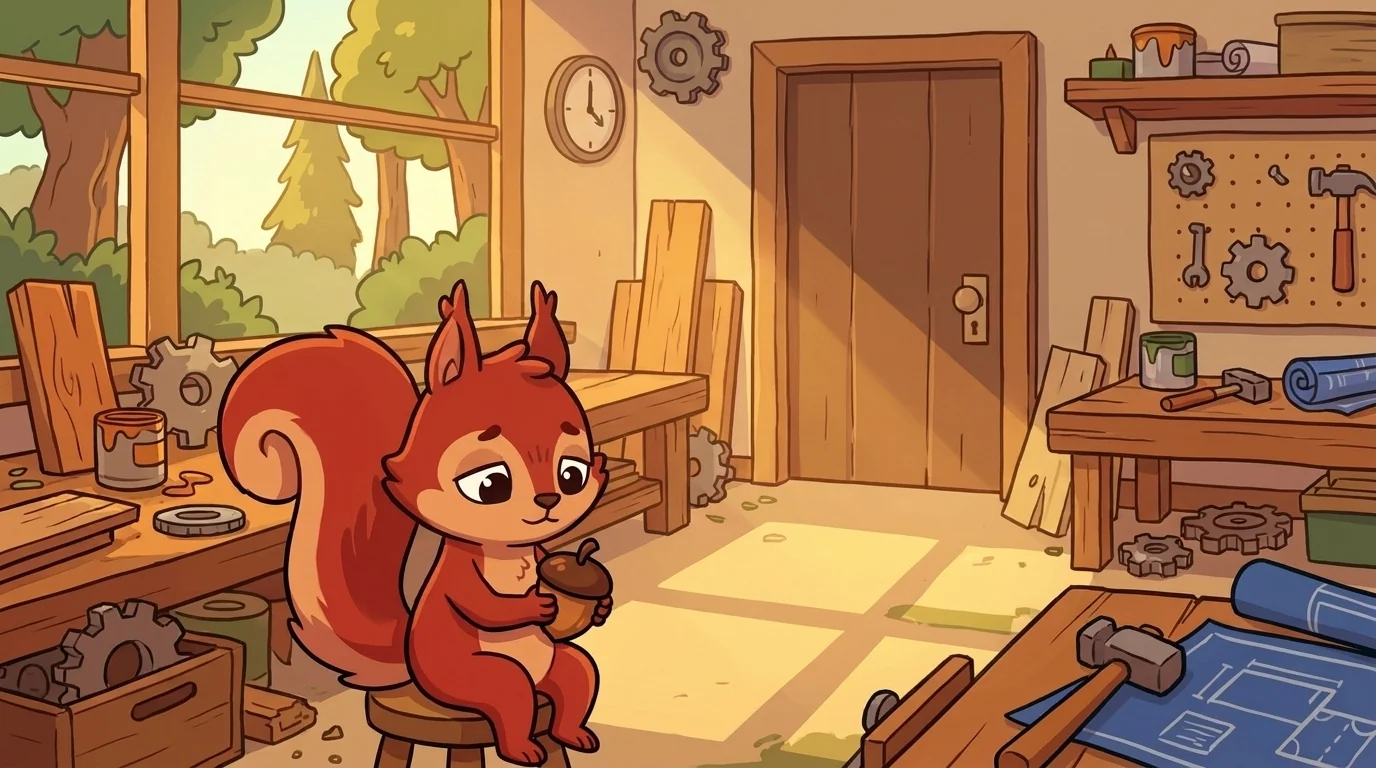
After the workshop, the kids went home, and Prop stayed, turning his acorn by the window. For once, Patter just watched the little paws go round and round.
"Can I ask," Patter said gently, "why the acorn? You always have it."
Prop's paws slowed. He looked at the small smooth thing in his hands, and for a moment he was quiet — which, for Prop, was rare. "When I was small, talking was hard," he said. "The words would get stuck. So I'd hold something, and turn it, and turn it, and somehow the words came easier." He smiled a little, shy. "The acorn isn't really about the acorn. It's the thing my hands do so my heart can keep talking." He gave it one more gentle turn. And Patter understood, then, that Prop's whole gift came from this — that he knew, deep down, how much of what we feel lives not in our words at all, but in the quiet, busy, honest things our hands do while we try to say them. And there was something tender in that, something that made Patter glad the little acorn had never once been put down.
The DialogueQuest ensemble
Prop is part of DialogueQuest's distributed-narrative cast. Each character embodies a different curricular primitive; together they teach the full subject.
-
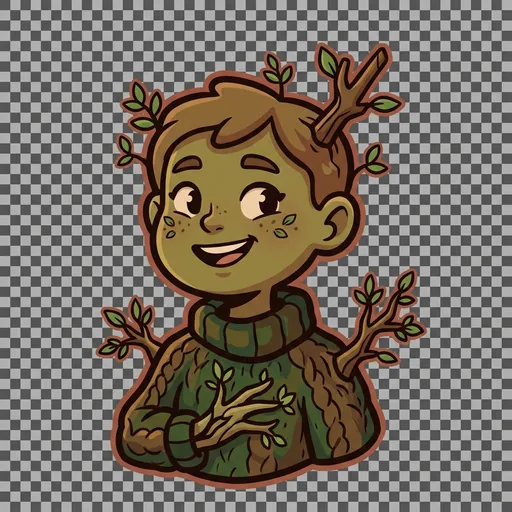
Sprig
Branch meaningfulness — sapling-tween whose visible branching skeleton shifts physically when she picks between dialogue options (the choice re-routes her body)
-

Glance
Subtext — arctic-fox-tween in a thick scarf; speech-bubble visibly half-empty with dotted-line ghost-text floating beside it
-
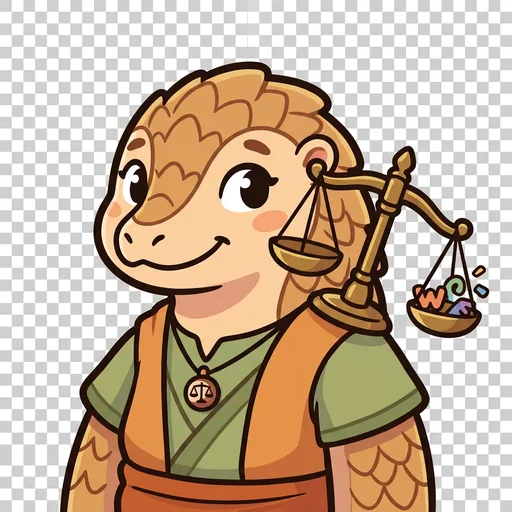
Weigh
Tag balance — pangolin-tween with a brass balance-scale on her shoulder; scales tilt visibly as dialogue happens around her
-
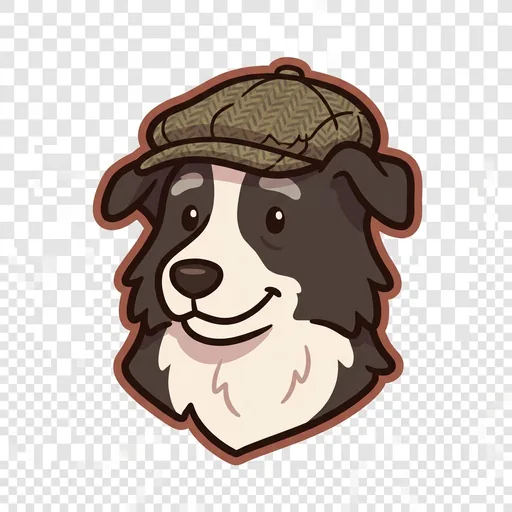
Brogue
Voice consistency — border-collie-elder in a worn flat-cap who uses exactly 4-5 signature words across every appearance (deliberately non-specific old-country accent)
-
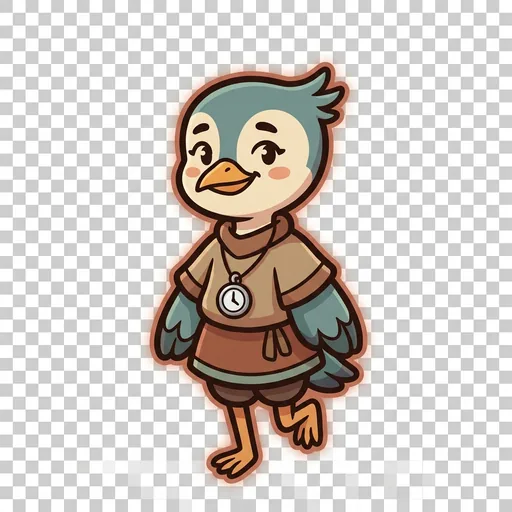
Rest
Rhythm + silence — heron-tween with a small silver pocket-watch around her neck; one foot perpetually raised mid-step; treats the pause as a line of dialogue itself
-

Spar
Conflict / friction — pine-marten-tween whose speech bubbles push against the other speaker's; two characters wanting different things is the engine (the push stays kind)
-
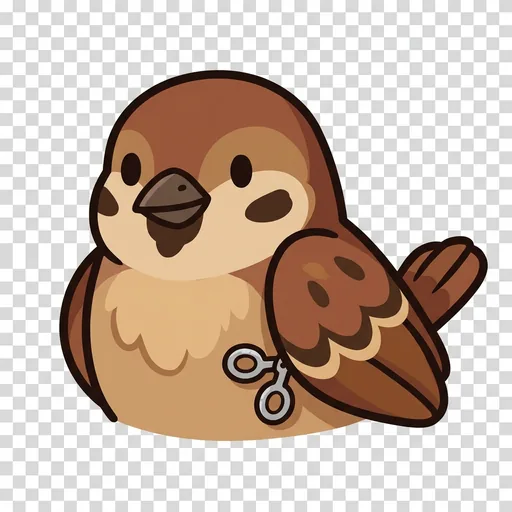
Clip
Economy — sparrow-tween with tiny silver scissors who trims the filler ('hello, how are you, fine') and starts scenes late, right where they get interesting
-

Dash
Interruption / overlap — chipmunk-tween who crashes into the ends of others' lines with a dash when feeling runs too high to wait (used on purpose, sparingly)
-
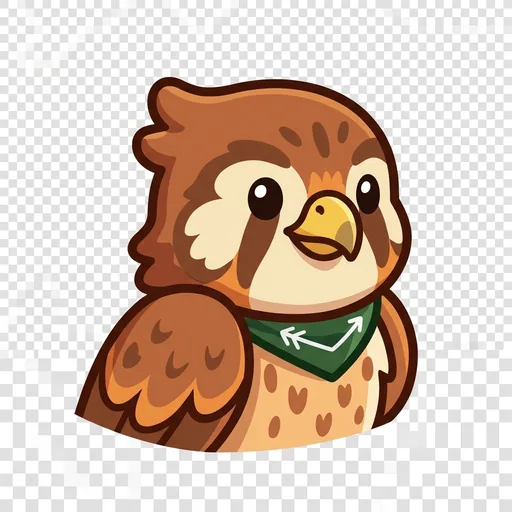
Aim
Line purpose — kestrel-tween with arrow-shaped speech bubbles that point at what each line is really trying to DO (ask, dodge, persuade), not just say