
Listener and Speaker
conversation-turn pair — Listener tracks what's been said and what's been left unsaid. Speaker tracks what they want to say next without trampling the other. Together they teach the rhythm of real dialogue.
A story read by Listener and Speaker
Press play to listen along. The line being read lights up as you go.
Show full transcript
Loading transcript…
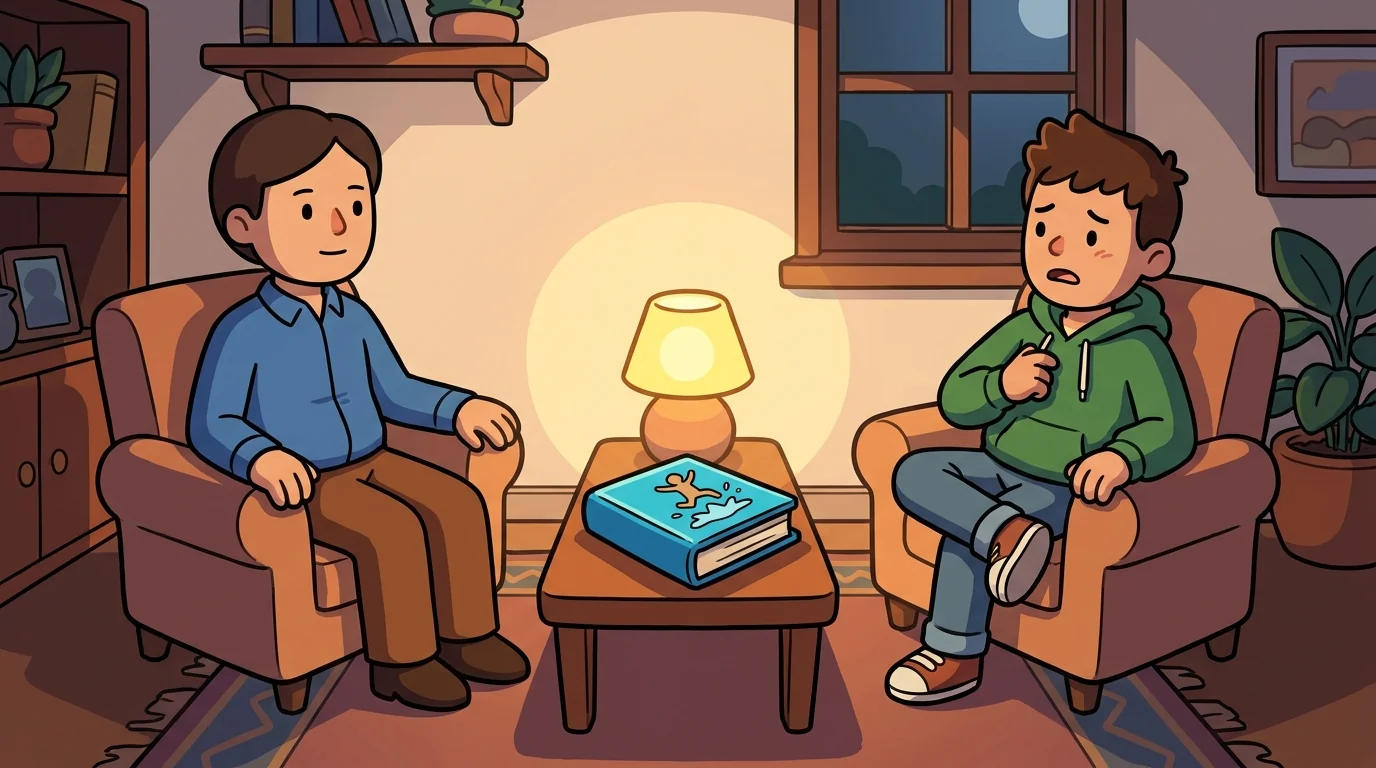
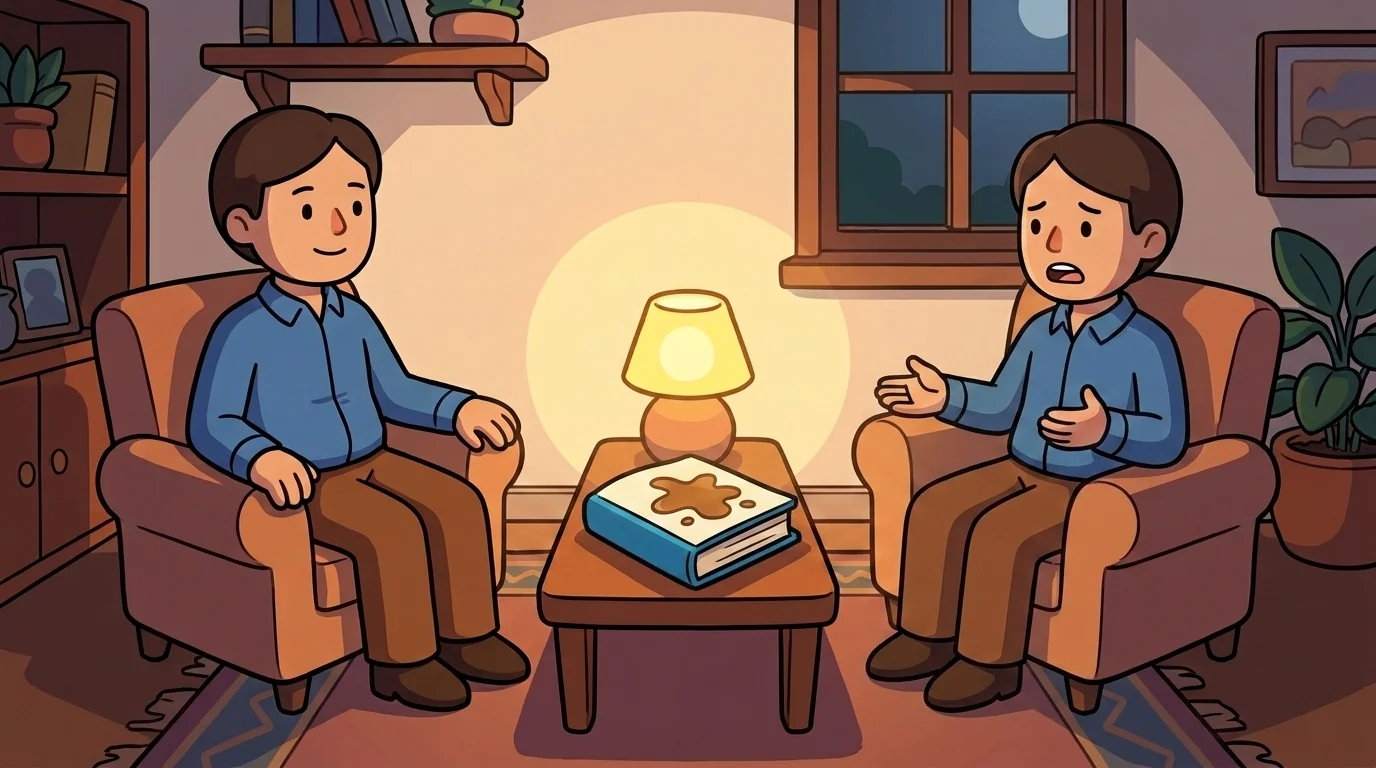
The room held a quiet stillness, broken only by the faint, rhythmic hum of a small lamp. It sat on a low table, a beacon of warm, contained light between two chairs. In one, Listener sat perfectly still, like a smooth stone settled at the bottom of a clear pond. Their hands rested open in their lap, posture relaxed, almost inviting. Across from them, Speaker fidgeted, a restless energy vibrating beneath their skin. They crossed and uncrossed their legs, smoothed an imaginary wrinkle on their shirt, and glanced everywhere except directly at Listener. Between them, on the little table, lay the object of their difficult, silent meeting: a book.
It was a thick volume, its bright blue cover proclaiming The Glorious History of Competitive Puddle-Jumping. This book had once been their absolute shared favorite. Or, at least, it had been until recently.
The silence in the room deepened, stretching into every corner. It wasn’t an angry quiet, but a heavy one, thick with unspoken thoughts and feelings. Listener waited with an almost unnatural patience, their breathing slow and even. Speaker, meanwhile, took a shaky breath, then another, feeling the weight of the moment. They knew it was their turn to begin. After all, they had been the one to call this meeting. Finally, their eyes settled on the book, and they found a fragile voice.
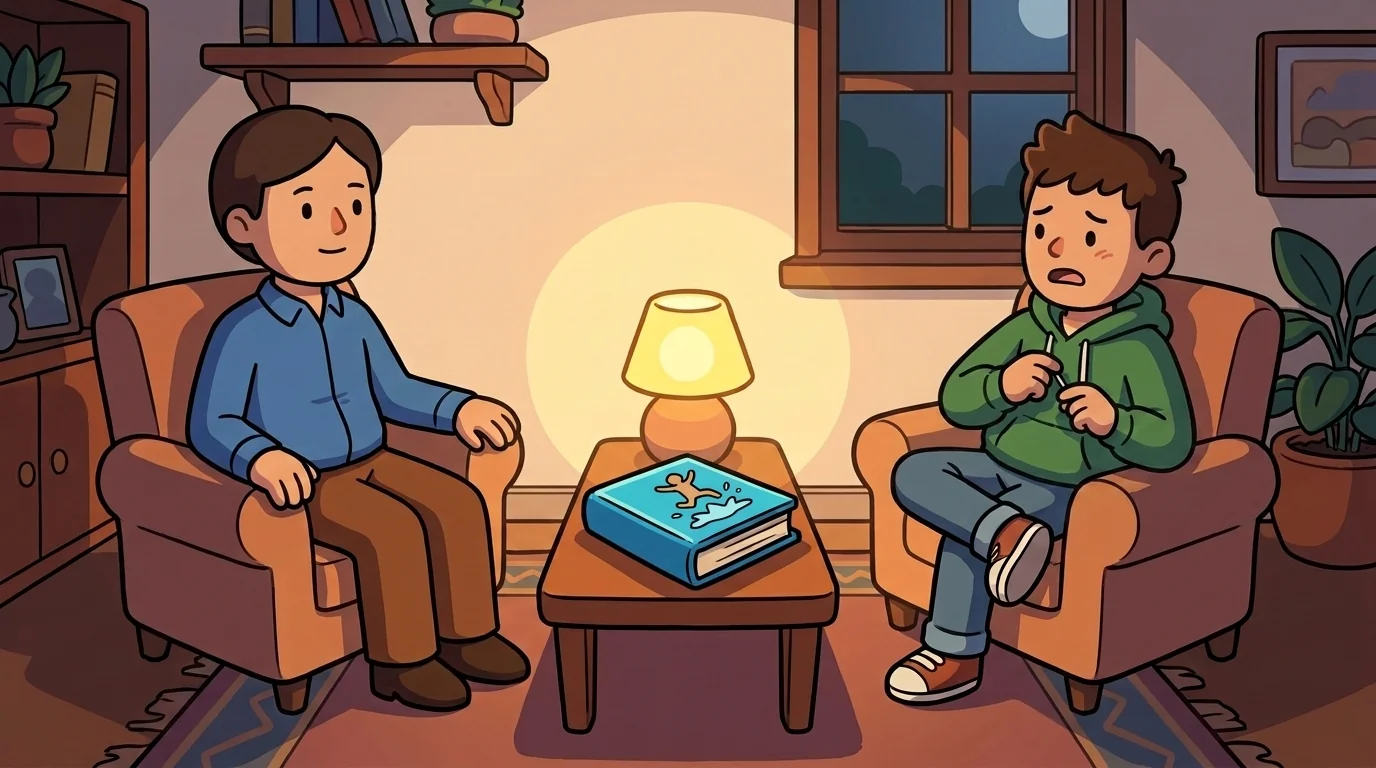
“So, about the book,” Speaker started, their voice a little tight, a little too loud. They cleared their throat, trying to loosen the knot in their chest. “Um. I just wanted to talk about the book.” Their fingers worried a loose thread on their sleeve, while their gaze darted from the bright blue cover to Listener’s calm face and back again. It felt impossible to say what needed saying without it all tumbling out in a confused rush. They truly wanted to be fair, even with the churning in their stomach.
Speaker took another breath, this one slower, more deliberate. “I got to my favorite page. The one about the legendary ‘Triple Ripple’ jump.” The words came out in a rush now. “And… well, there’s a stain on it.” Their eyes finally met Listener’s, holding steady for a moment. “It looks like… like strawberry jam.”
They paused, letting the sticky words hang in the air between them. Speaker’s biggest fear was that Listener would immediately become defensive or simply laugh it off, dismissing the problem. They watched Listener’s face carefully, bracing for even a flicker of annoyance. But there was none. Speaker had managed to deliver the first part of their message, the 'what happened'. Now, they had to wait, hoping there was enough space in the quiet for the second, more difficult part: the 'how it made me feel'.
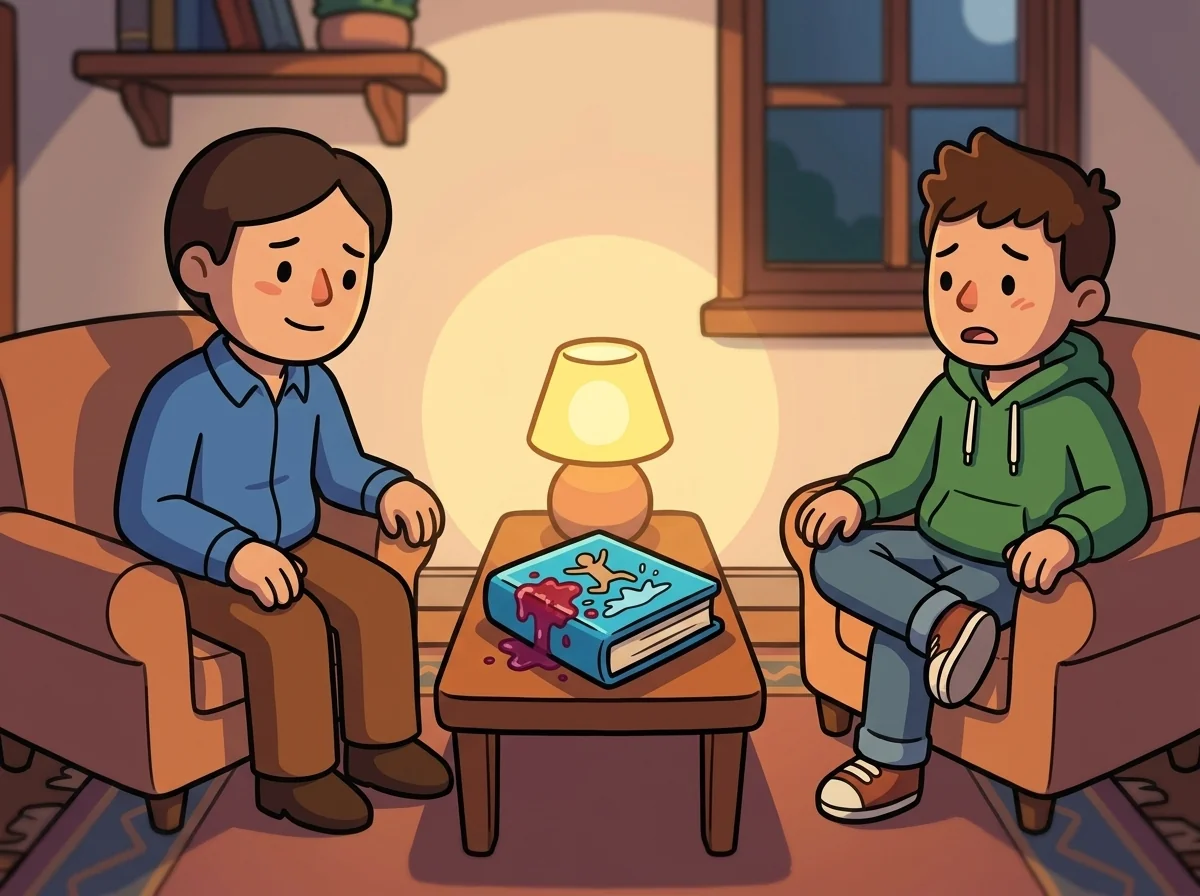
Listener remained silent. They didn’t gasp in surprise or offer any immediate excuses. Instead, they leaned forward just a fraction, their eyes soft and attentive. They looked at Speaker, acknowledging their distress, then their gaze shifted to the book on the table. It was as if they were seeing the jam stain for the very first time, now through Speaker’s upset eyes. They understood, with a quiet certainty, that this conversation wasn't truly about a sticky spot on a page. It was about the deeper feeling underneath, the sense of something precious not being cared for.
Listener made a small, soft sound in their throat. A quiet “hmmm” that was more than just a noise. It was a sound that clearly said, I am listening. What you are saying is important. Please continue.
They kept their hands perfectly still in their lap, a conscious effort. Listener knew that if they started fidgeting, even slightly, it might make Speaker feel rushed or dismissed. Their job right now was not to formulate a reply or a defense. Their job was to hold the space, to be the calm, steady shore while Speaker’s worried words washed in. They had heard the spoken part—the jam—and they were listening even harder for the unspoken part they knew was coming next.
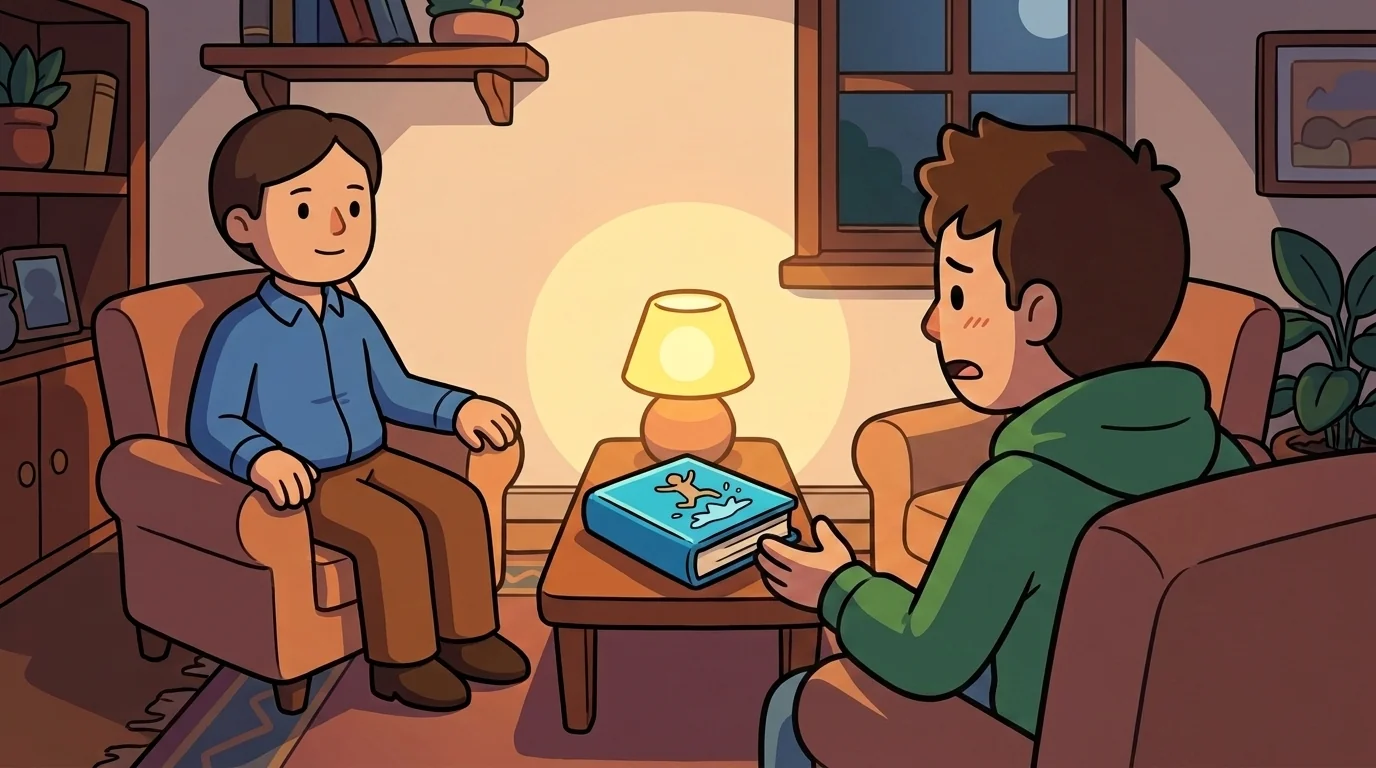
Seeing that Listener was truly, deeply listening, Speaker felt a small surge of bravery. The tight knot in their stomach loosened just enough for the next, more vulnerable words to emerge. “It’s not just the jam,” they said, their voice softer now, almost a whisper. “It’s… it felt like you didn’t care about it. Because it was my copy. And it’s my favorite part of my favorite book.” There. It was all out now. The real reason for this difficult conversation, laid bare.
Speaker finished, and the silence returned to the room. But this time, it felt profoundly different. It was no longer heavy with things unsaid, no longer a barrier. Now, it was a quiet, shared space, a pause for processing. It was Listener’s turn to think, to absorb everything.
Listener didn’t rush to fill the quiet. They took a full, slow breath in, letting it expand their chest, then released it completely. They thought back to that hurried breakfast, the toast slathered with strawberry jam, and their own eagerness to reread the Triple Ripple section. They remembered how utterly absorbed they had been, not paying attention to anything else. Then, they imagined how Speaker must have felt, discovering the stain on such a cherished page.
Only when their own thoughts were completely in order, when they understood the situation from every angle, did they prepare to speak. “You’re right,” Listener said, their voice gentle but clear, carrying no hint of defensiveness. “I wasn’t careful. And I’m truly sorry.”
Now it was Speaker’s turn to be still, to listen with their whole attention. They watched as Listener, who had now become the speaker, explained. It wasn’t an excuse or a justification, simply the honest story of what had happened. Listener’s voice was full of regret, their brow furrowed slightly. “I was so excited to read that part, I was rushing. I never would have been so careless on purpose. I love that book, too, you know.”
Speaker heard the genuine honesty in Listener’s voice. They saw the sincere look on Listener’s face and knew, without a doubt, that they truly understood. The anger and the deep hurt Speaker had been carrying all day began to melt away, replaced by a profound feeling of relief. They had been heard, truly heard. They had been understood, completely.
“Okay,” Speaker said with a small, grateful nod. “Okay. Thank you for telling me.”
A comfortable quiet settled between them, a warmth spreading through the space. The lamp on the table seemed to hum a little brighter, its light softer now. “Maybe,” Listener suggested, their voice thoughtful, “we can look up how to un-stain a book page. Together.”
A tiny, hopeful smile appeared on Speaker’s face, easing the tension that had been there for so long. “Yeah,” they said, their voice light. “I’d like that.” The hard conversation was finally over. They had taken their turns, one speaking and one listening, until the rhythm felt as natural and essential as breathing itself.
***
The DialogueQuest ensemble
Listener and Speaker is part of DialogueQuest's distributed-narrative cast. Each character embodies a different curricular primitive; together they teach the full subject.
-
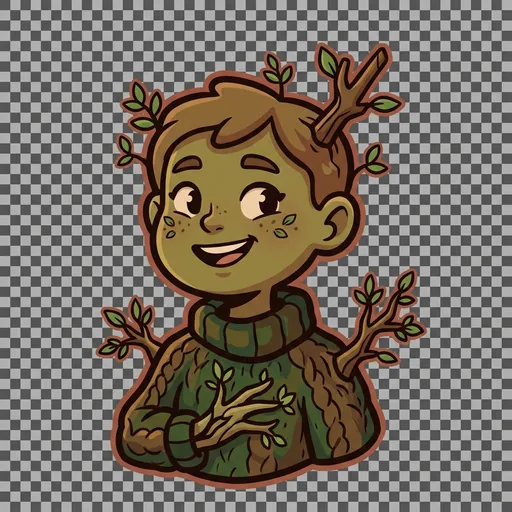
Sprig
Branch meaningfulness — sapling-tween whose visible branching skeleton shifts physically when she picks between dialogue options (the choice re-routes her body)
-

Glance
Subtext — arctic-fox-tween in a thick scarf; speech-bubble visibly half-empty with dotted-line ghost-text floating beside it
-
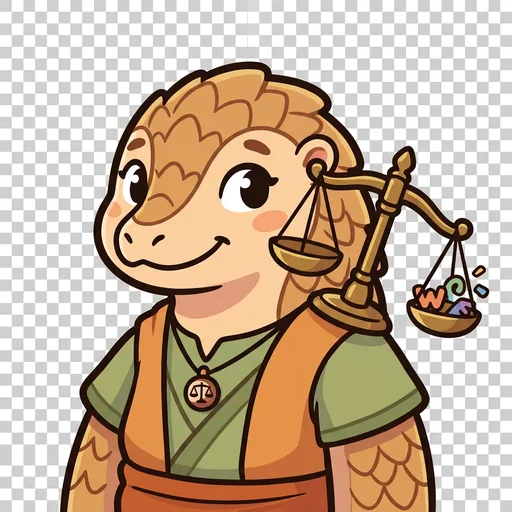
Weigh
Tag balance — pangolin-tween with a brass balance-scale on her shoulder; scales tilt visibly as dialogue happens around her
-

Brogue
Voice consistency — border-collie-elder in a worn flat-cap who uses exactly 4-5 signature words across every appearance (deliberately non-specific old-country accent)
-

Rest
Rhythm + silence — heron-tween with a small silver pocket-watch around her neck; one foot perpetually raised mid-step; treats the pause as a line of dialogue itself
-

Prop
Action beats — red-squirrel-tween whose paws are always busy with a small acorn; the little actions between lines show feeling and set the rhythm of a talk
-

Spar
Conflict / friction — pine-marten-tween whose speech bubbles push against the other speaker's; two characters wanting different things is the engine (the push stays kind)
-
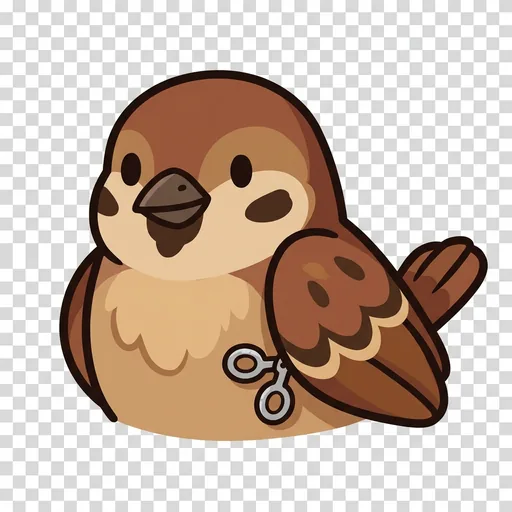
Clip
Economy — sparrow-tween with tiny silver scissors who trims the filler ('hello, how are you, fine') and starts scenes late, right where they get interesting
-

Dash
Interruption / overlap — chipmunk-tween who crashes into the ends of others' lines with a dash when feeling runs too high to wait (used on purpose, sparingly)
-

Aim
Line purpose — kestrel-tween with arrow-shaped speech bubbles that point at what each line is really trying to DO (ask, dodge, persuade), not just say