
Tugger
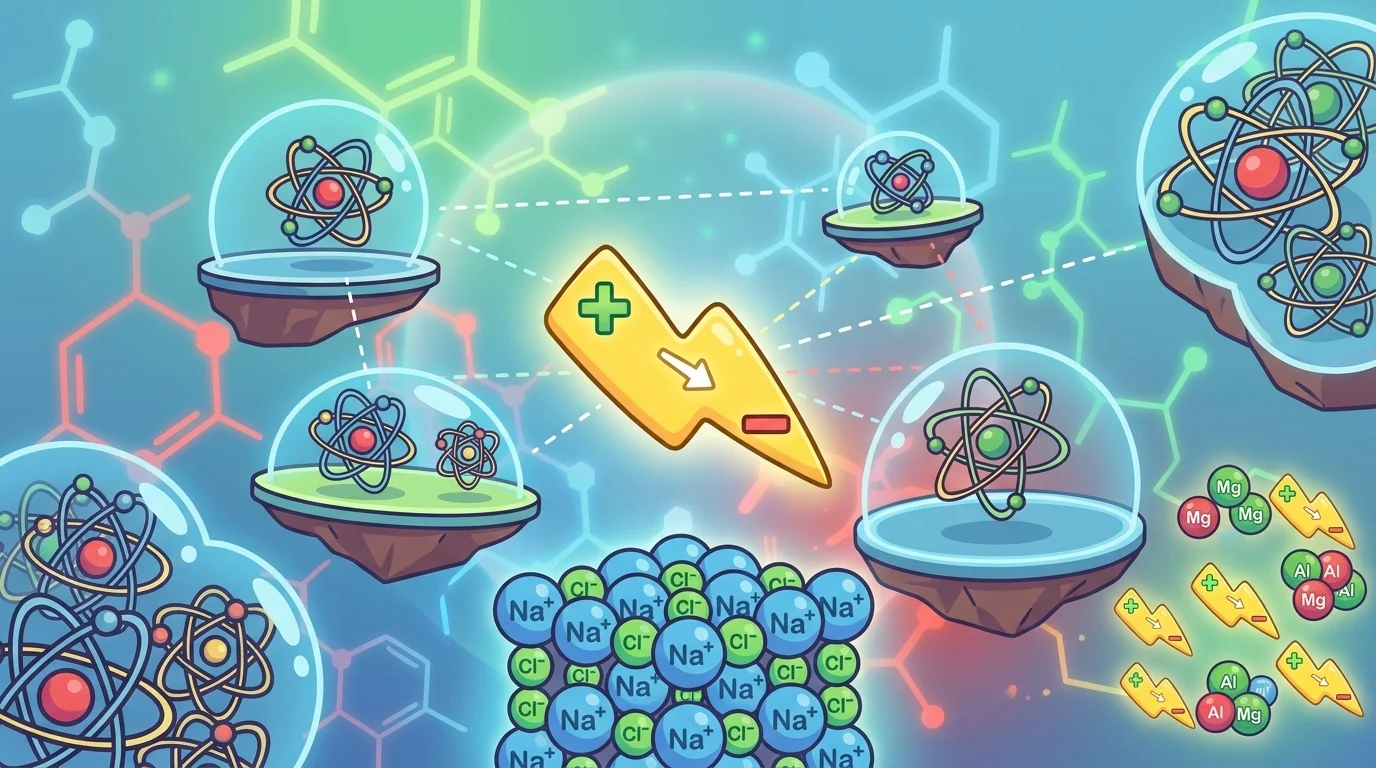
IONIC BOND — *forceful, decisive; full electron transfer; opposites attract.* The bond-type that forms when one atom completely gives an electron to another. NaCl, MgCl₂, Al₂O₃ — most salts.
Press play to listen along. The line being read lights up as you go.
Show full transcript
Loading transcript…
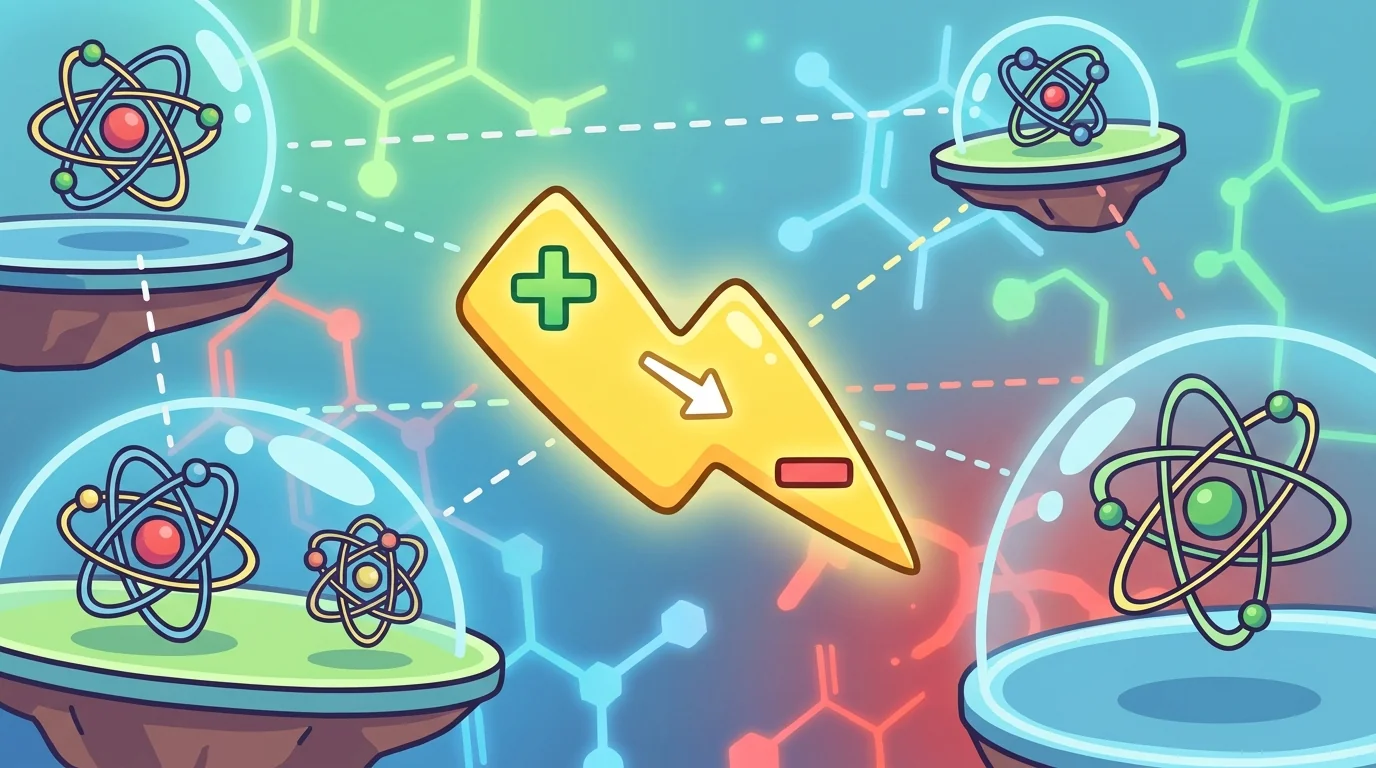
Tugger is not like the other characters. Tugger isn't an animal-tween, and Tugger doesn't have a face. Instead, Tugger is a shape, a symbol of pure energy. Picture a small, painted lightning bolt. At its top end, a bright plus sign glows. At the bottom, a clear minus sign. A tiny arrow shows an electron moving from the plus to the minus, from Sodi to Chlora. That's all Tugger is. No eyes, no mouth, no personality. Just the raw energy of the bond itself.
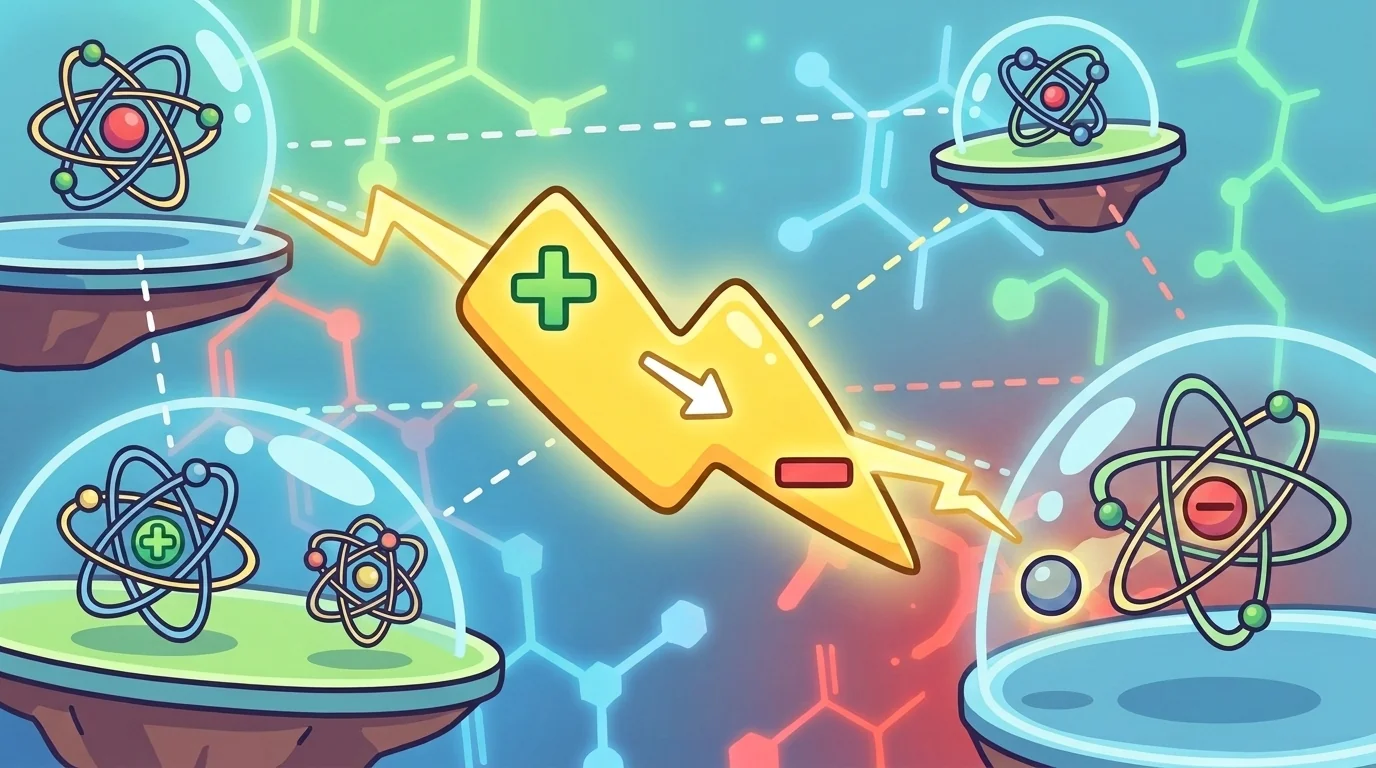
This design choice matters a lot in ChemQuest. The four bond-type characters are different from the twelve element-tweens. Elements like Sodi and Chlora look like animal-tweens. They have personalities that match how their atoms behave. But the bond types are just shapes. They are forces, not atoms. They are connections, not people. Their shapes show their power, not their feelings. This was a careful decision. Bonds are forces that hold atoms together. They don't have experiences or personalities. Giving them faces would confuse what chemistry is really about. The way these characters are designed helps everyone understand what bonds truly are.
Understanding Tugger means understanding the *ionic bond. This is a powerful connection. An ionic bond happens when one atom gives away an electron, or even several electrons, to another atom. It's a full transfer. The atom that gives electrons becomes positive. We call it a positive ion. The atom that takes electrons becomes negative. It's a negative ion. Now, these two ions have opposite charges. And what happens with opposite charges? They pull toward each other. Think about rubbing a balloon on your hair. Then hold it near tiny bits of paper. The paper jumps up and sticks to the balloon. That's the same kind of pull. This strong, attractive force holds the two ions together. That force is* the ionic bond.
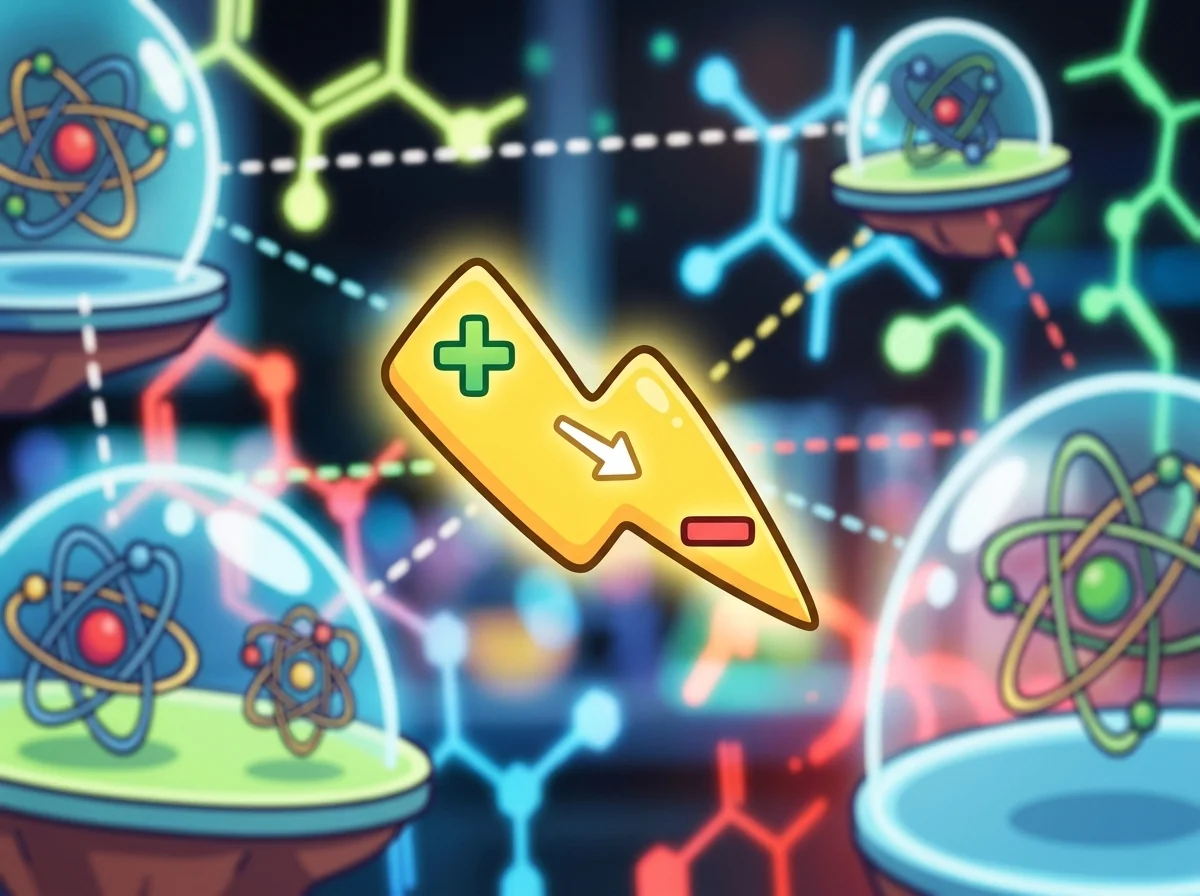
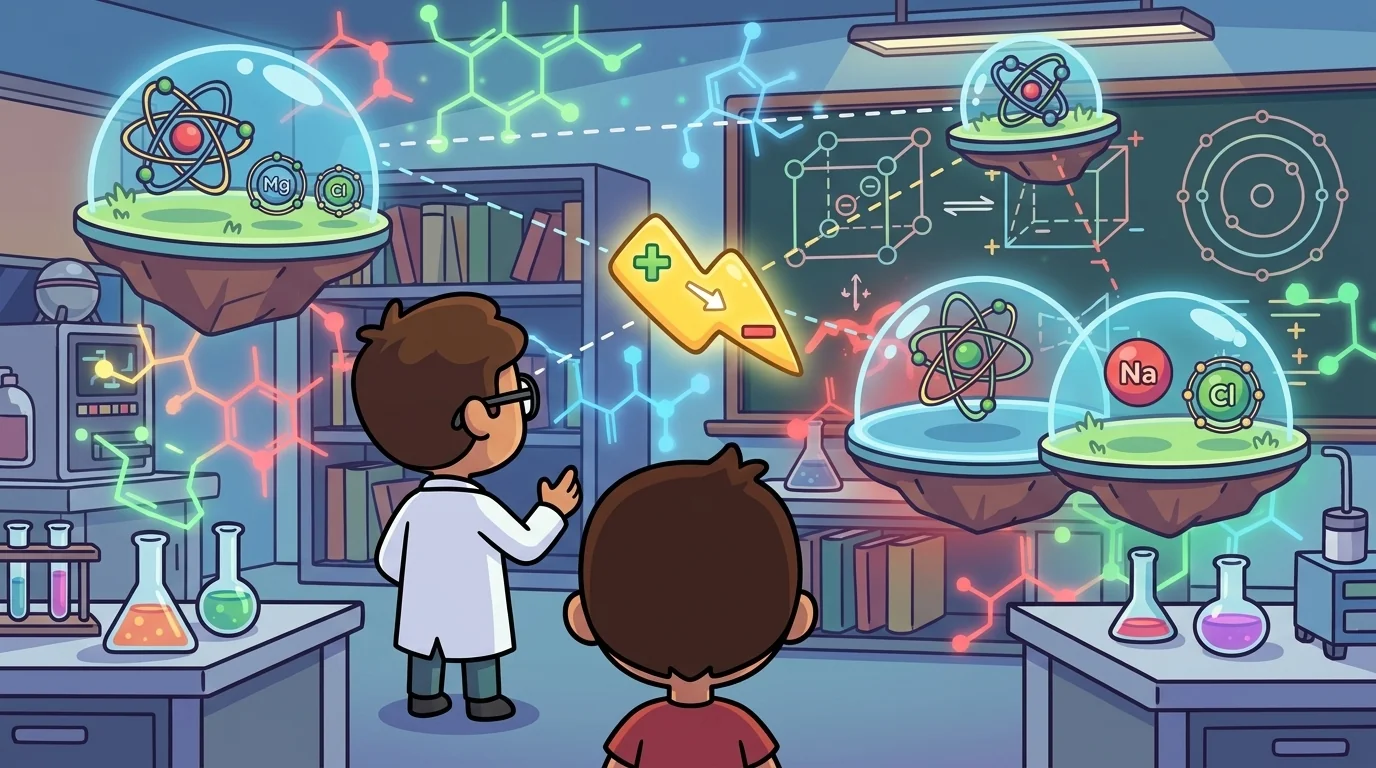
Table salt, the kind you shake on your food, is the best example. Its chemical name is NaCl. Here’s how it works: Sodi, the sodium atom, gives her electron to Chlora, the chlorine atom. Sodi changes into a positive ion, Na⁺. Chlora becomes a negative ion, Cl⁻. These two oppositely charged ions pull together. That pull creates the ionic bond. And that bond makes NaCl. This connection is strong. It's decisive. There are no half-measures here, just a complete transfer. That's why Tugger looks like a lightning bolt. A lightning strike is sudden and powerful. It shows that full, forceful electron transfer, just like in an ionic bond.
It's important to remember this: Tugger is all about the force of the bond. Tugger is not a character with feelings. When the ChemQuest cast members and Beaker, their mentor, introduce Tugger, they make this very clear. "This is Tugger," Beaker says, holding up the lightning-bolt shape. "Tugger is the ionic bond. See? No face. Tugger isn't a person. Tugger is the powerful force between atoms, after one gives an electron to the other." Beaker points to the shape. "Look at the lightning bolt. Plus sign at one end. Minus sign at the other. The arrow shows the electron moving. That's the whole thing. The force is the figure."
Tugger doesn't have a family history or a village where it grew up. The bond-type characters don't have biographies. They aren't living things with stories. This fits perfectly with their abstract design.
In ChemQuest classrooms, Tugger often appears right next to Sodi and Chlora. This is the classic way to show an ionic bond. On the workbench, Tugger connects them, a visible lightning bolt between the two elements. One end of the bolt, with its plus sign, touches Sodi. Sodi, the sodium atom, has just become Na⁺. The other end, with its minus sign, rests against Chlora. Chlora is now Cl⁻. Beaker gestures to the setup. "When you see Tugger between two cast members," he tells the students, "that means an ionic bond is happening. Full transfer. Plus and minus. It's lightning-strike chemistry. Remember, the bond is the force."
Beaker teaches many lessons using Tugger. He explains that an *ionic bond* always means a full electron transfer. It's not sharing; it's a complete hand-off. The atom that gives becomes positive, and the atom that takes becomes negative. He reminds them that opposite-charged ions always attract each other. It's a basic rule: opposites pull together, and like charges push apart. Students learn about common ionic compounds, too. Table salt, NaCl, is one. Magnesium chloride, MgCl₂, is another. Calcium chloride, aluminum oxide, magnesium oxide, and potassium bromide are all examples. Beaker shows them that ionic compounds are usually solid crystals. Their atoms arrange themselves in neat, repeating 3D patterns. These patterns are held tight by the strong pull of positive and negative charges. He also demonstrates how ionic compounds dissolve in water. When salt goes into water, it breaks apart into Na⁺ ions and Cl⁻ ions. That's why salty water can conduct electricity. Ionic bonds are usually very strong. This means these compounds have high melting points. They can be brittle as crystals, but they conduct electricity when melted or dissolved. The most important lesson is the full-transfer rule. For an ionic bond, one atom takes all the electrons. This is different from a covalent bond, which is Sharer's domain. In covalent bonds, atoms share electrons equally. Knowing this difference is key.
"Tugger has no face," Beaker often says. "That's the whole lesson. The bond is a force, not a living thing. You need to honor it for what it truly is."
Sometimes students ask if ionic bonds are hard to understand. Beaker, speaking for Tugger, always shakes his head. "Not hard at all," he assures them. "Full transfer. Plus and minus. Opposites attract. Tugger shows you the force, not a figure."
The lightning-bolt shape catches the light, a silent promise. The next ionic compound waits to form.
The ChemQuest ensemble
Tugger is part of ChemQuest's distributed-narrative cast. Each character embodies a different curricular primitive; together they teach the full subject.
-

Hydra
Hydrogen (H) — lightweight, ubiquitous, always paired up; buddy-system enthusiast
-

Carbo
Carbon (C) — connects to anything; the social atom; backbone of life
-

Oxy
Oxygen (O) — eager bonder; electronegative; the hungry grabber
-

Nitra
Nitrogen (N) — triple-bond loyal; slow-to-warm; locks in deeply once bonded
-
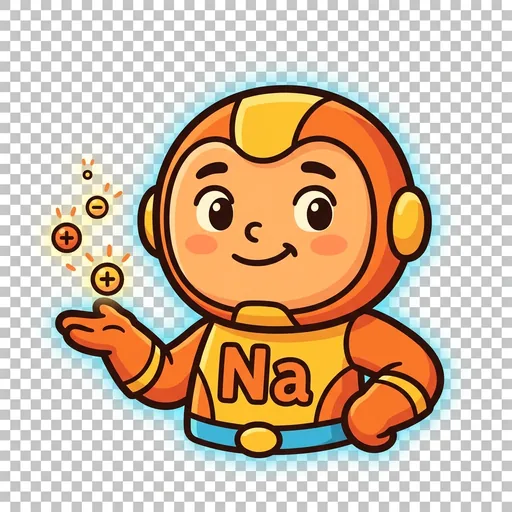
Sodi
Sodium (Na) — generous, impulsive; always giving away electrons
-

Chlora
Chlorine (Cl) — sharp, focused; the collector who finishes what Sodi starts
-

Helio
Helium (He) — noble gas; peaceful, floaty, complete; the contented onlooker
-

Sulfa
Sulfur (S) — earthy, dramatic; the stinky uncle of volcanoes and proteins
-

Phossa
Phosphorus (P) — energetic, restless; the spark of ATP and matches
-

Magna
Magnesium (Mg) — bold, ceremonial; burns bright white; chlorophyll core
-

Silica
Silicon (Si) — patient, geometric; the architect who builds quietly
-

Alumi
Aluminum (Al) — practical, modest; the workhorse of cans and foil
-

Sharer
Covalent bond — cooperative, balanced; equal partnership
-

Streamer
Metallic bond — flowing, communal; delocalized electron sea
-

Whisperer
Hydrogen bond — subtle, persistent; water's superpower; DNA pairing