Sulfa
SULFUR (S) — the smelly, generous element. Two bonds, flexible chemistry. Stinky in volcanoes; structural in your hair.
Press play to listen along. The line being read lights up as you go.
Show full transcript
Loading transcript…
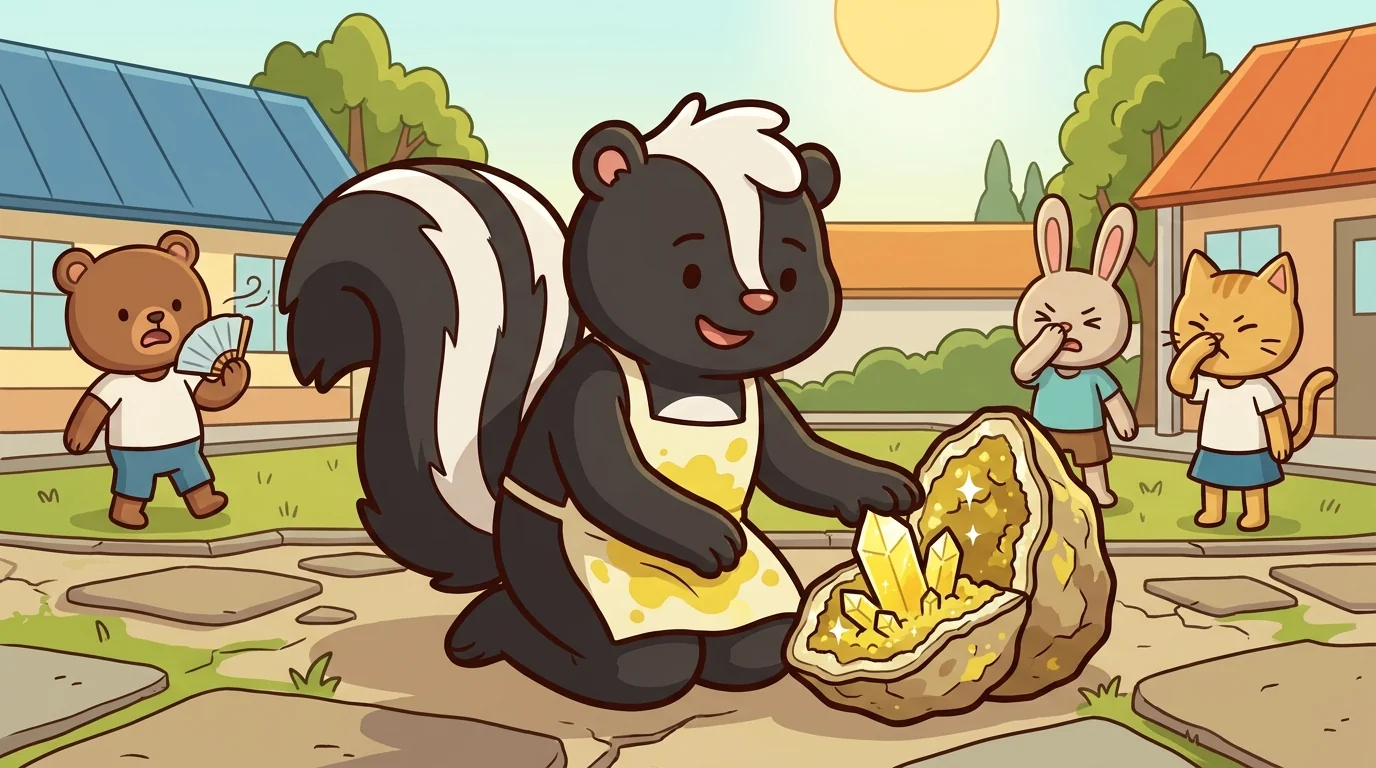
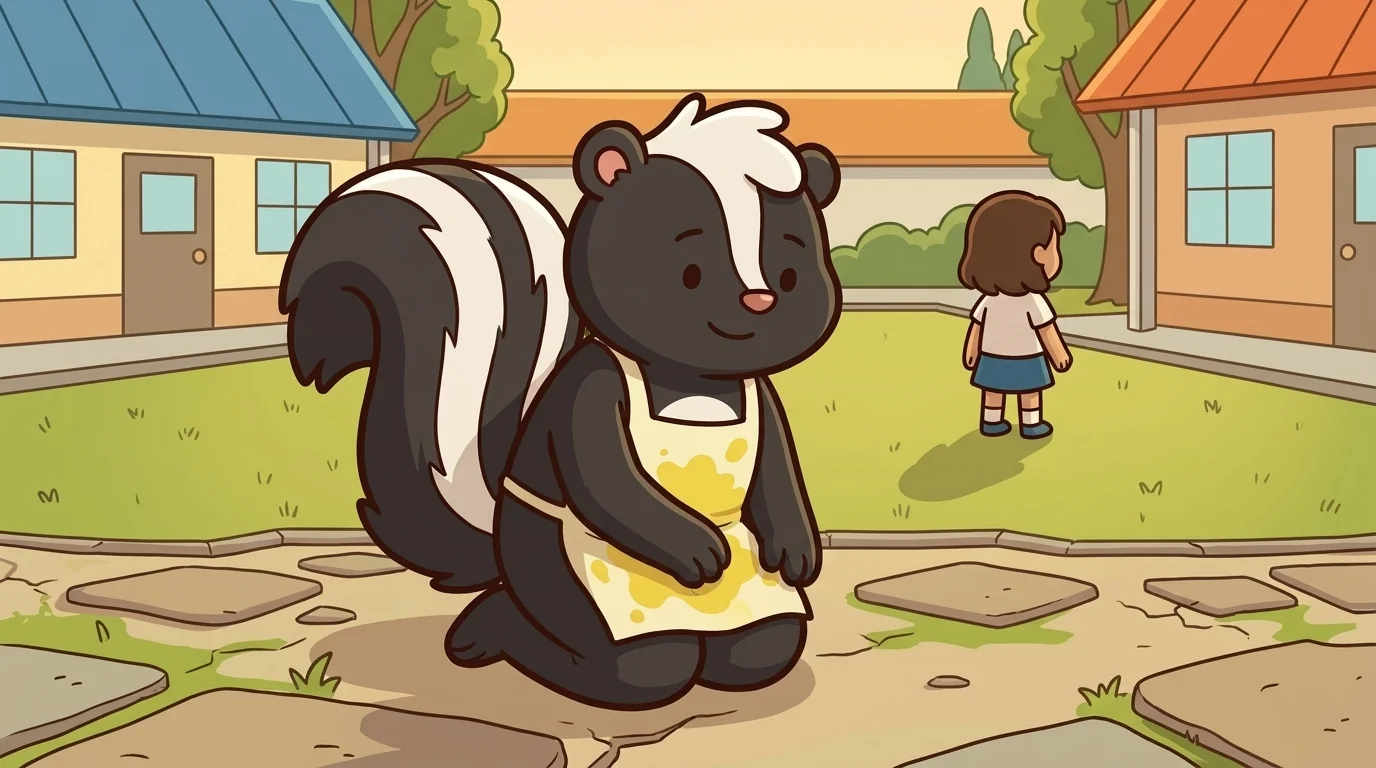
At the edge of the ChemQuest courtyard, a small skunk-tween in a yellow-stained apron knelt over a cracked-open geode and breathed in like it was fresh bread.
"There you are," Sulfa murmured to the little glint of yellow inside the rock. Around her, three students had backed off, wrinkling their noses. One of them fanned the air.
"It stinks," the tallest one said. "Like rotten eggs. Why are you smiling?"
Sulfa didn't look up. She turned the geode toward the light so the yellow crystals sparkled, and touched one with a careful claw. "You know what that smell is telling you?" she asked. "It's telling you I'm here. That's all a smell is — a message that got to your nose before I did." She held the rock up. "This came from deep down, near where the ground stays warm. The smell rode up through the water like a note passed in class."
"A note that says ew," the student said.
"A note that says pay attention," Sulfa corrected, gently. She wasn't offended. She'd heard it her whole life. She set the geode in the student's hands. "Go on. It won't hurt you to hold. Just don't lick it, and don't seal it in a jar — some of my cousins get grumpy in tight spaces." She grinned, and her stripe caught the sun, warm and friendly and not the least bit scary. "Everybody meets my smell first. Nobody stays for it. They stay for what I do."
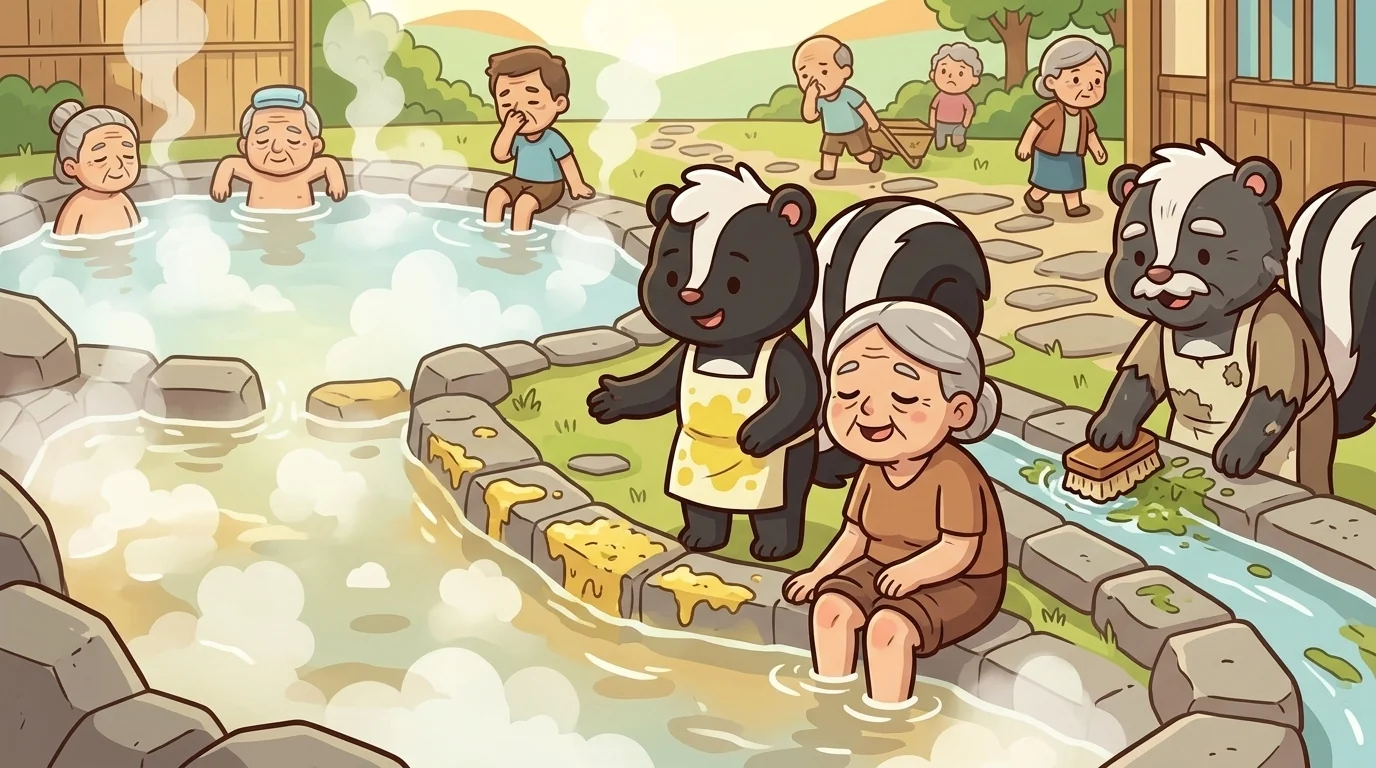
Sulfa grew up in a village built around a warm, cloudy spring that smelled, frankly, like the inside of a boiled egg.
Her family looked after it — kept the stone channels clear, kept the little bath-house clean, kept the paths safe for the old folks who came to soak their sore knees on cold mornings. And every single one of those visitors, the first time, made the same face. Nose scrunched. Step back. Ugh.
Six-year-old Sulfa hated that face. She thought it was about her.
One grey morning she asked her grandfather, who was scrubbing algae off a channel, "Why does everyone come here if they think it smells bad?"
He wrung out his cloth and thought about it. "They don't come despite the smell," he said. "The smell is how they know the spring is real. The warmth in the water, the way it eases an aching hand — that all comes from the same deep place the smell does." He tapped the yellow crust along the channel's edge. "This is the whole reason the water helps. You can't have the good part without the strong part. They're the same thing wearing two coats."
Sulfa looked at the old woman easing into the bath, sighing with relief, no longer making the face at all. Something in Sulfa's chest went quiet and steady. The smell wasn't a flaw she had to apologize for. It was just the loud front door of a very generous house.
She stopped scrunching her own nose that day. And she never really started again.
She walked to the ChemQuest academy at twenty-two, apron already yellow from years by the spring.
Beaker, the mentor, met her at the gate and asked only one thing. "What is sulfur?"
Sulfa didn't recite. She reached into her apron pocket, took out a strip of the same yellow crust from home, and set it on the low stone wall between them. "This is me at my loudest," she said. "Smelly. Everyone notices." Then she reached up and tugged one of her own coarse whiskers, stretchy and springy. "And this is me at my quietest. There's a little of me woven all through hair like this — the reason it curls instead of falling flat. Same element. Both jobs."
Beaker studied the yellow strip and the whisker for a long, quiet moment.
"You belong here," he said.
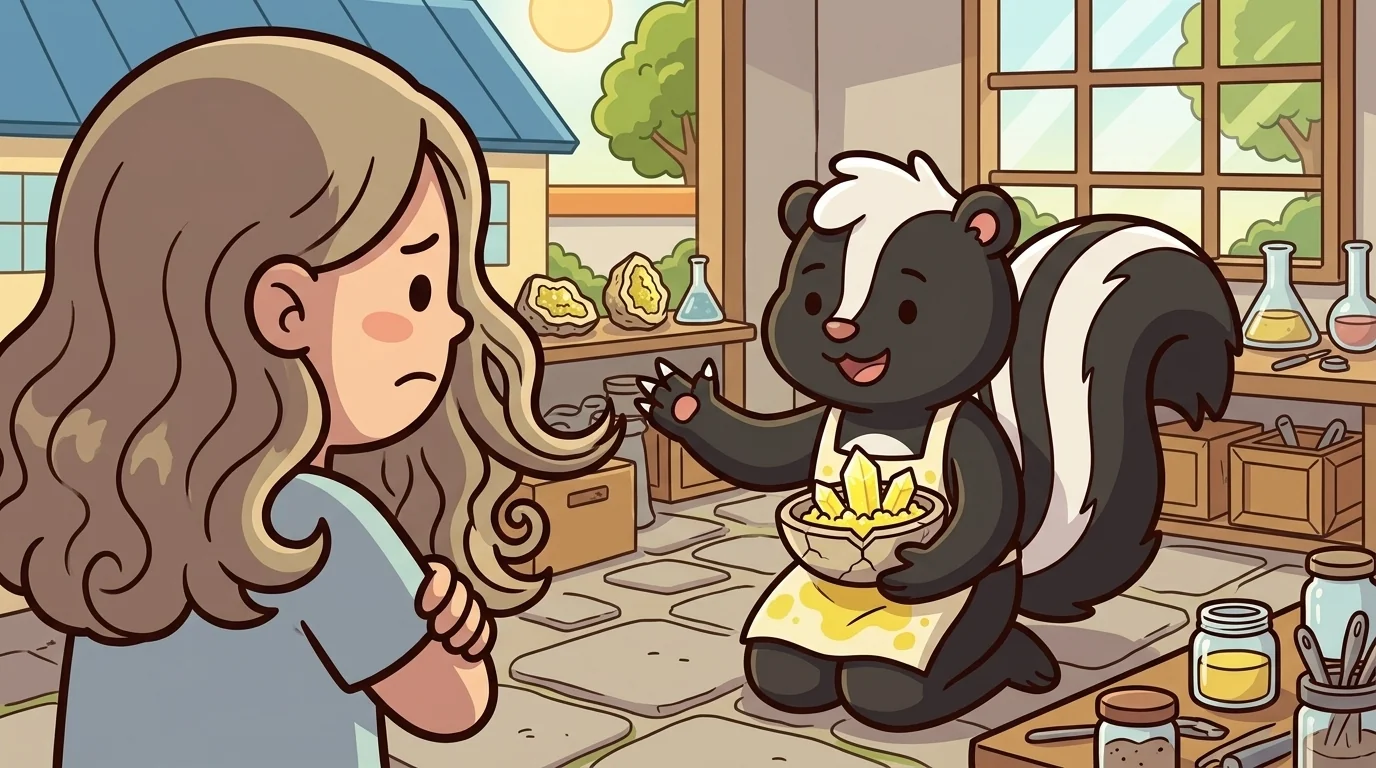
Sulfa's workshop always smelled faintly of warm eggs, and the students learned to stop minding within a week.
A girl came in one afternoon, arms crossed, cross about something else entirely. "The others say I'm too much," she muttered. "Too loud. First thing anybody notices about me is that I'm loud."
Sulfa slid a bowl of yellow crystals across the bench. "Smell that."
The girl leaned in and jerked back. "Gross."
"Now touch your own hair. The little wave in it, the way it holds a shape." The girl did, uncertain. "Same stuff," Sulfa said. "The bit that makes that smell and the bit that ties your hair into its shape — cousins. I'm the reason a curl stays a curl instead of going limp. Little bridges, holding the shape together from the inside where nobody sees."
The girl blinked. "The smelly thing is also the holding-together thing?"
"Every time." Sulfa leaned on the bench. "People meet my smell and they think that's the whole story. Loud, done, ew. But the loud part isn't the important part. The important part is quiet — I'm in your hair, your skin, tucked inside the little machines that keep you alive, holding their shapes so they can work." She tapped the bowl, then tapped her own chest. "The first thing they notice about you isn't the biggest thing about you. It's just the thing that arrived first."
The girl uncrossed her arms, slowly.
"Loud front door," Sulfa said. "Generous house."
Later, when the workshop was empty, the girl came back with one more question. She was quieter now.
"When you're holding something together," she said, "and nobody can see you doing it... doesn't it bother you? That they only ever notice the smell?"
Sulfa thought about the old woman sighing into the warm spring. About her grandfather's cloth and the two coats.
"It used to," she said honestly. "I used to think the smell was them deciding I was bad." She looked down at the permanent yellow blooms on her apron, the ones that never washed out, and she smoothed them almost fondly. "But the work doesn't need to be seen to be real. The curl still holds. The little bridges still do their job whether anyone's watching or not." She glanced at the girl. "There's a good kind of quiet in that. Knowing you're the reason something's still standing, even if nobody's thanking you for it. It doesn't feel like being ignored anymore." She paused, searching for the word. "It feels steady. Like being trusted with something important and being okay that it's a secret."
The girl nodded, and Sulfa watched the crossed-arm tightness ease out of her shoulders.
She didn't say the rest out loud, but she felt it, warm and certain under her yellow apron: that the loud thing people meet first is almost never the thing that matters most — and there's a deep, unbothered calm in being the quiet stuff that holds everything together.
The ChemQuest ensemble
Sulfa is part of ChemQuest's distributed-narrative cast. Each character embodies a different curricular primitive; together they teach the full subject.
-

Hydra
Hydrogen (H) — lightweight, ubiquitous, always paired up; buddy-system enthusiast
-

Carbo
Carbon (C) — connects to anything; the social atom; backbone of life
-

Oxy
Oxygen (O) — eager bonder; electronegative; the hungry grabber
-

Nitra
Nitrogen (N) — triple-bond loyal; slow-to-warm; locks in deeply once bonded
-

Sodi
Sodium (Na) — generous, impulsive; always giving away electrons
-

Chlora
Chlorine (Cl) — sharp, focused; the collector who finishes what Sodi starts
-

Helio
Helium (He) — noble gas; peaceful, floaty, complete; the contented onlooker
-

Phossa
Phosphorus (P) — energetic, restless; the spark of ATP and matches
-

Magna
Magnesium (Mg) — bold, ceremonial; burns bright white; chlorophyll core
-

Silica
Silicon (Si) — patient, geometric; the architect who builds quietly
-

Alumi
Aluminum (Al) — practical, modest; the workhorse of cans and foil
-

Tugger
Ionic bond — forceful, decisive; full electron transfer; opposites attract
-

Sharer
Covalent bond — cooperative, balanced; equal partnership
-

Streamer
Metallic bond — flowing, communal; delocalized electron sea
-

Whisperer
Hydrogen bond — subtle, persistent; water's superpower; DNA pairing