Nitra
NITROGEN (N) — slow to bond, strong when bonded; the fierce triple grip that holds proteins and DNA together.
Press play to listen along. The line being read lights up as you go.
Show full transcript
Loading transcript…
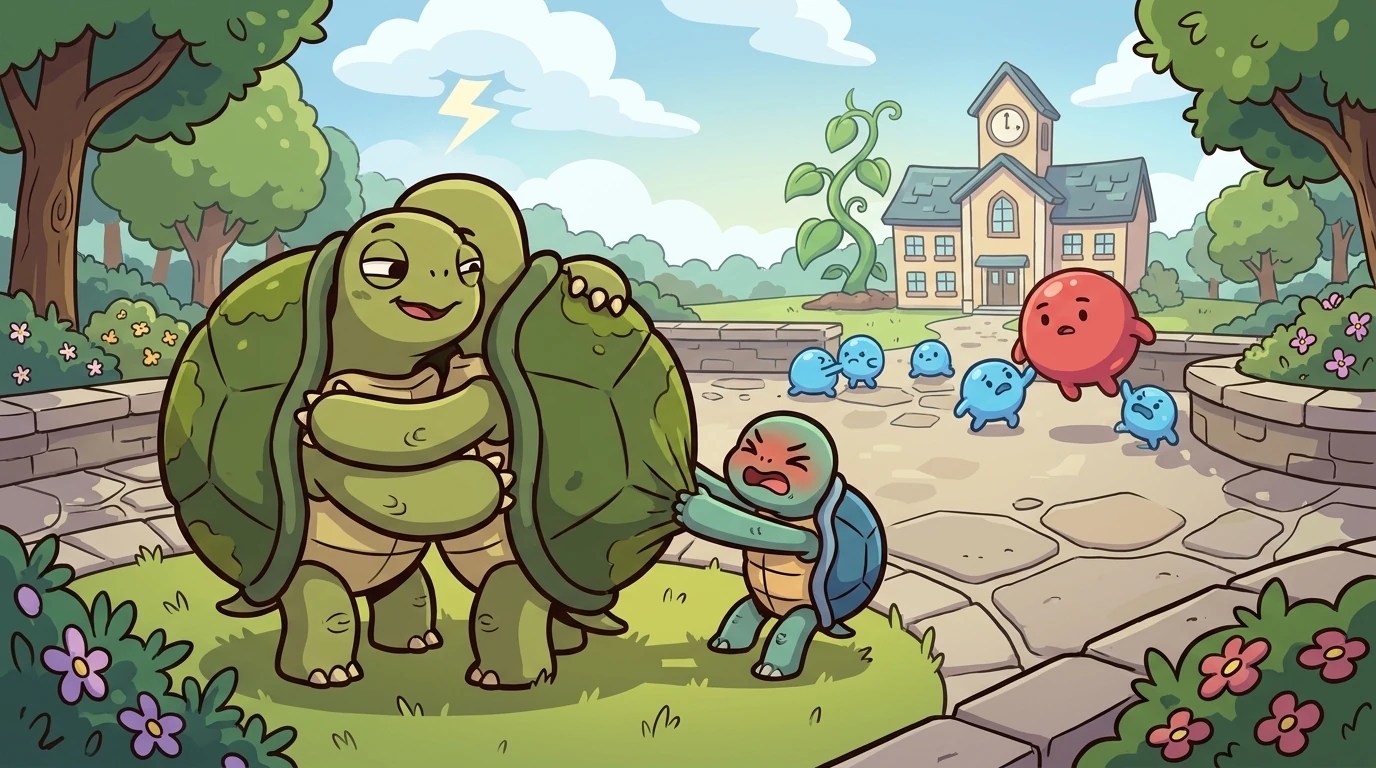
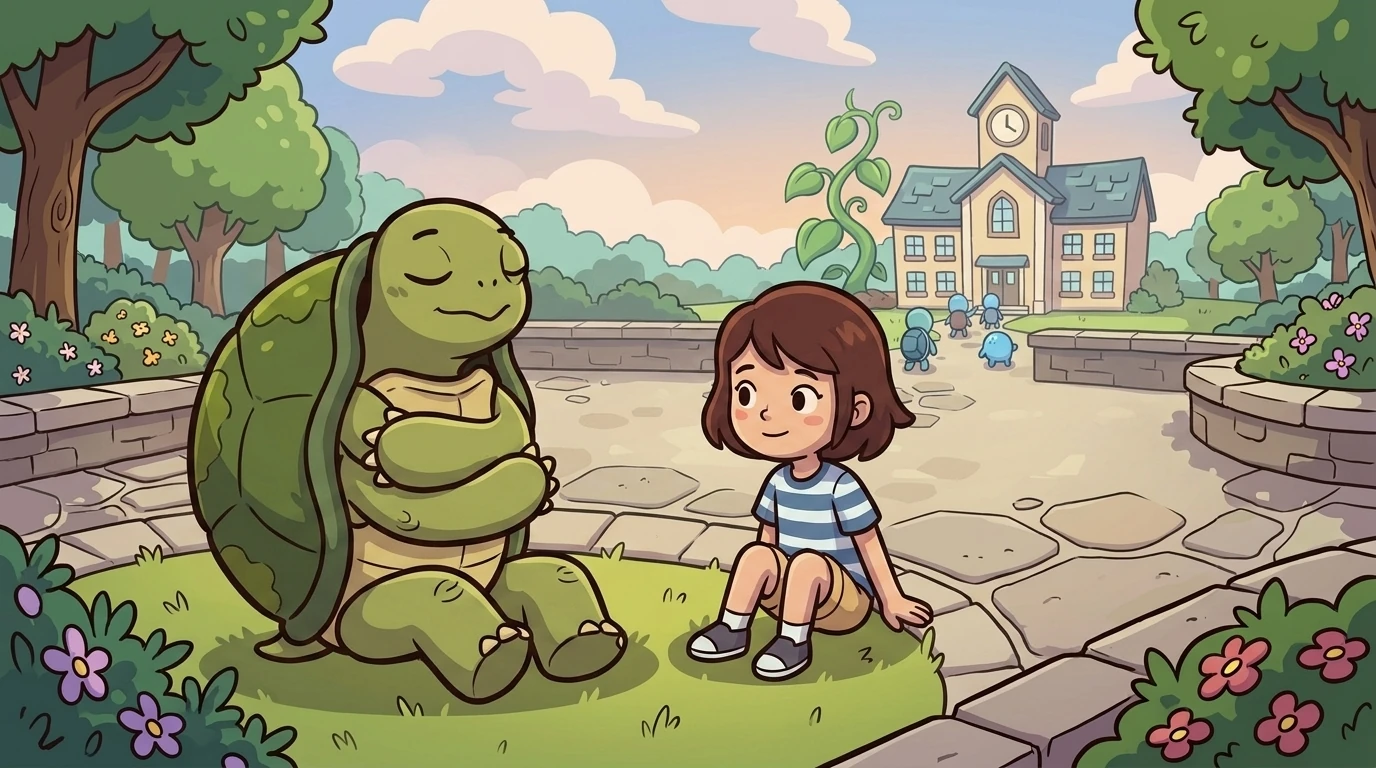
At the edge of the ChemQuest courtyard, a small tortoise-tween named Nitra sat with her arms locked around another tortoise exactly like her, and nothing in the world could pry them apart.
She wasn't hugging, quite. It was fiercer than a hug — three separate holds, one arm over another, wound so tight the two of them had become a single steady lump in the grass. All morning the wind had pushed at them. A gang of restless hydrogens had tried to tug one of them loose to play. Even Oxy had drifted close, offering to trade. The two tortoises hadn't budged. They just breathed, slow, and held on.
A younger tortoise flopped down nearby, out of breath from chasing everyone else. "You two have been stuck like that since sunrise," he said. "Don't your arms get tired?"
"Tired isn't the word," Nitra said, not opening her eyes. "We're locked. Three grips. Try to pull us apart and see."
The young one grabbed one of her arms and heaved. Nothing. He braced a foot and heaved harder. The whole knot of them barely rocked.
"It'd take a lightning bolt," Nitra said, and finally cracked one eye open, amused. "Or a very patient little creature living in the roots of a bean plant. Nothing gentler than that gets me to let go." She settled deeper. "That's the whole truth of me. I'm slow to grab hold of anything. But once I do — three arms, all in — I don't come loose."
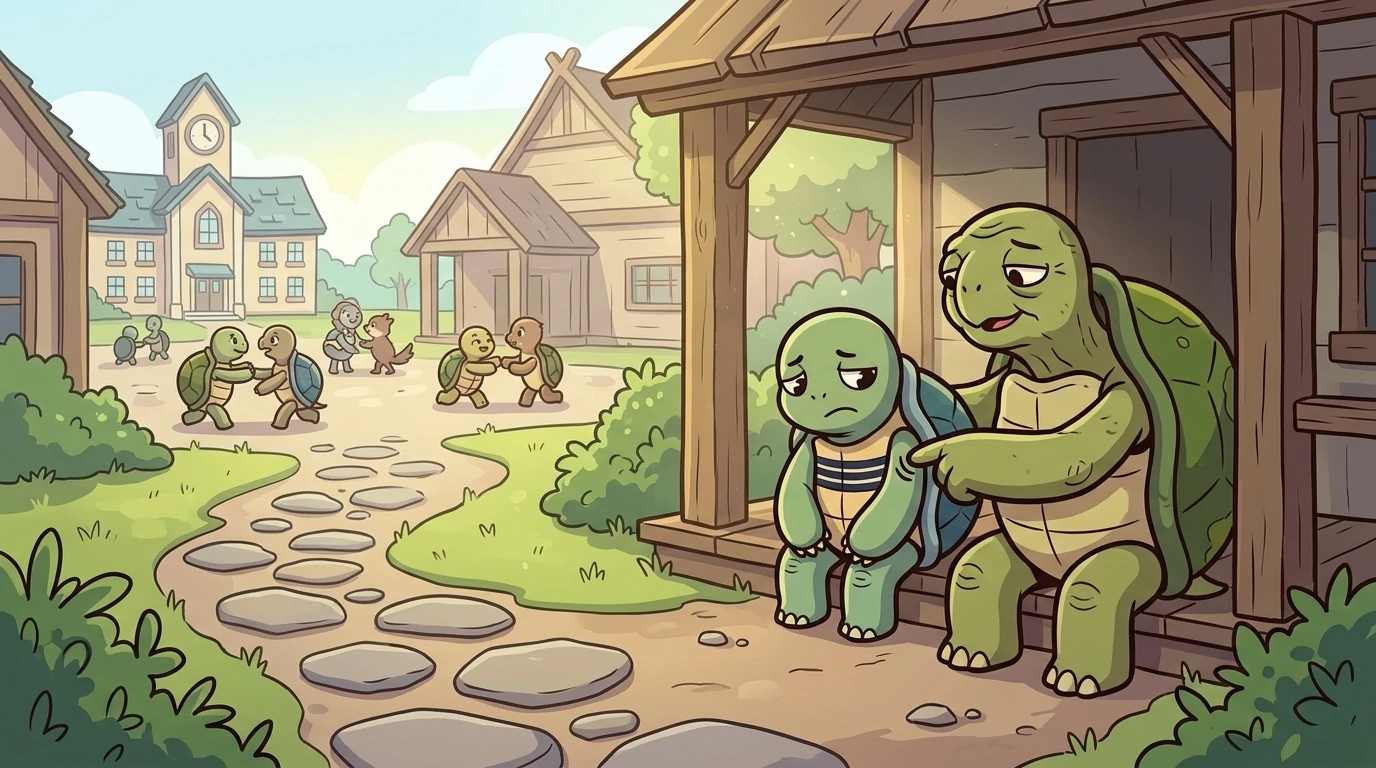
Nitra had learned the worth of a slow, strong grip in her village, when she was small.
Her family were the deliberation-keepers — the tortoises who went to every council meeting, listened to every side, and only spoke once they were sure. And little Nitra had hated it. The other cubs bonded fast, made friends in an afternoon, traded and swapped and moved on by the next day. Nitra couldn't. She held back, and held back, and by the time she was ready to reach out, everyone had already paired off. She felt left over. She felt wrong — like being slow to warm up meant something in her was broken.
Her grandmother had found her sulking under the porch. "You feel too slow, don't you? Like everyone bonded and you got left behind?"
Nitra had nodded, her chin tucked into her shell.
"Listen to me, little one. The fast bonds — the easy afternoon friendships — a lot of them come apart just as easy. A puff of wind and they're gone." Her grandmother tapped Nitra's chest, right over the three navy stripes on her band. "But when you finally take hold of something, you take hold with everything. Three arms. All in. And it lasts. Slow to reach is not the same as broken. It's the price of a grip that doesn't slip."
Nitra didn't make a friend that day. But the left-out feeling changed. It stopped feeling like too slow and started feeling like worth the wait. And when she finally did make a friend, a season later, that friendship held for the rest of her life.
By six she understood the family secret in her own body: slow to engage, strong when engaged. The strength was in the slowness, not in spite of it.
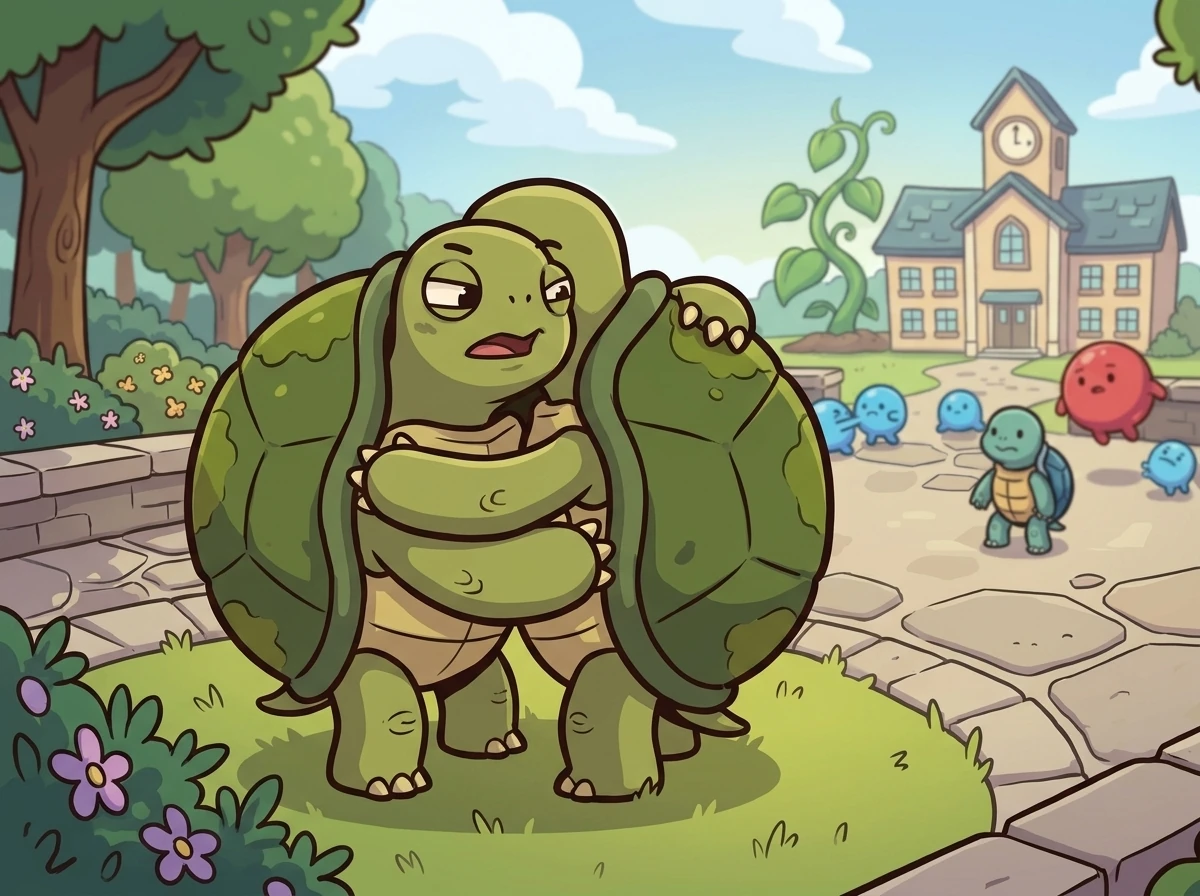
She walked to the ChemQuest academy at twenty-two. Beaker met her at the gate and asked one question. "What is nitrogen?"
Nitra didn't rush to answer — she never rushed. She looked around the courtyard until she found another nitrogen, walked over, and locked arms with them: one, two, three grips, wound tight. Then she turned back to Beaker, the two of them one solid knot.
"This is the air you're breathing," she said. "Almost four out of every five breaths is two of us, holding on like this. Three arms each. And we don't join in with anything — not the fire, not your lungs, not the rest of the chemistry rushing around us — because you can't get us to let go. It takes a lightning bolt, or tiny root-bacteria working slowly, or the heat of a great factory, to break this grip." She loosened, at last, and stepped back. "But once something does break me open, and I take a new hold — with hydrogen, with carbon — I lock in just as hard. That's why proteins stay strong. That's why the code in you lasts for decades. Three arms. Slow to grab. Sure to hold."
Beaker watched the knot come apart only because she chose to let it. "You belong here," he said.
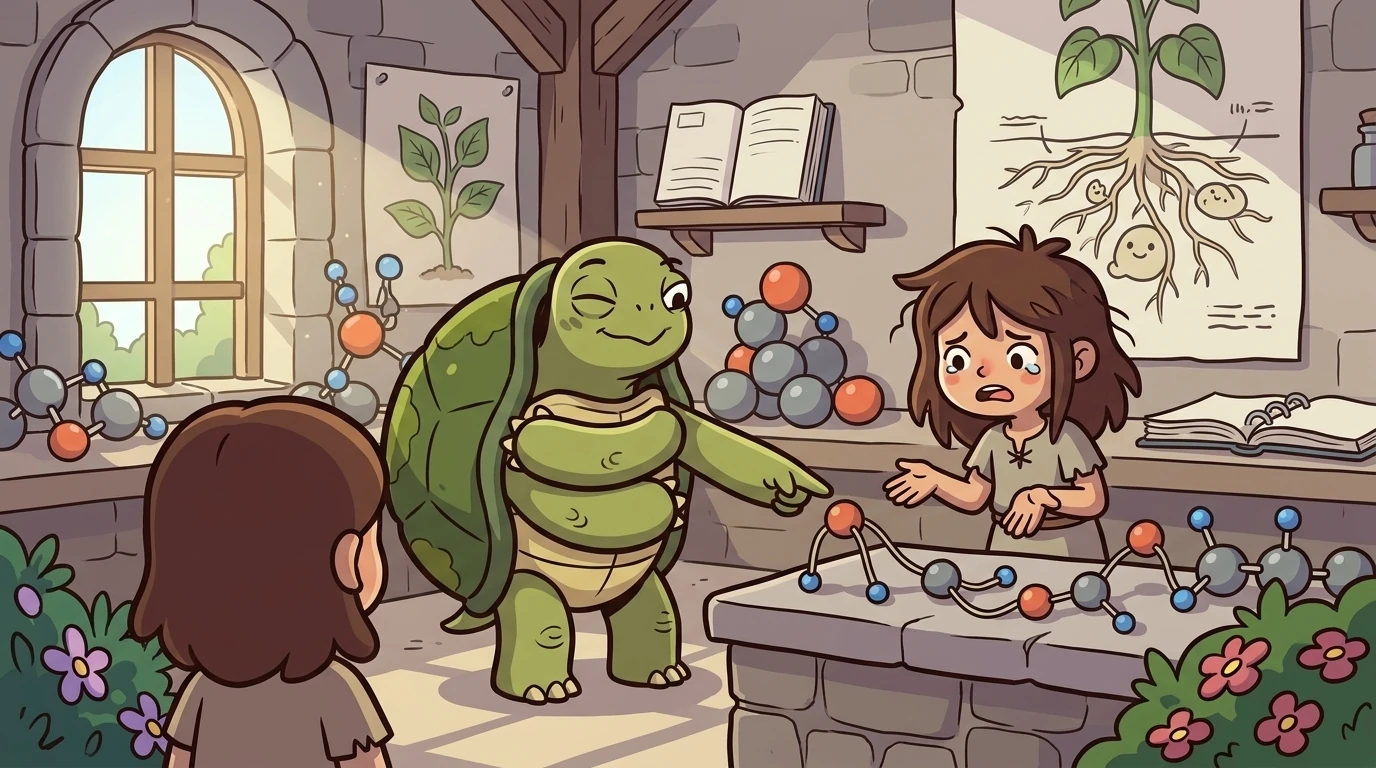
Nitra's workshop was the calmest room in the academy, because she wouldn't be hurried.
A girl came in one afternoon, frustrated near to tears. She'd been trying to build a protein all morning and it kept sagging apart. "Everyone else's stuff snaps together fast," she said. "Mine falls to bits. I think I'm too slow at this. I think I'm bad at it."
Nitra recognized that exactly — the left-behind feeling, the sure-you're-broken feeling. She'd carried it herself under a porch a long time ago.
"Come here," she said, unhurried. "Show me where it's failing."
The girl laid out her half-built chain: a row of carbons, some oxygens, some hydrogens, drooping at the joints.
"There's your trouble," Nitra said, and pointed at a sagging seam. "You've got no lock in the links. Watch." She stepped into the gap herself, reached one arm to the carbon on one side and pinned it, hard. The seam went rigid. She did it again at the next weak point, and the next — one nitrogen locked into each joint — and the whole chain stopped drooping and stood up straight, holding its own weight.
"That's a peptide bond," Nitra said. "Carbon on one side, me on the other, gripped tight. String enough of those together and you've got a protein that won't sag — the kind that builds a muscle, or carries air through your blood, or lasts long enough to be worth building at all." She tapped a joint. "The reason it holds isn't that I'm eager. I'm the opposite of eager. It holds because when I finally take a grip, I take it with everything I've got."
The girl pressed the chain. It didn't budge. "So it works because it's slow?"
"It lasts because it's slow," Nitra said. "Same thing, in the end."
Later, when the workshop was quiet, the girl came back with one more question, softer now.
"When you're waiting all that time," she said, "not bonding, not joining in — doesn't it feel lonely? Like you're missing everything?"
Nitra thought about the porch, and the left-over feeling, and her grandmother's slow warm voice.
"It used to," she said honestly. "I thought slow meant I'd end up alone. But it's the reverse. All that holding-back isn't emptiness — it's choosing. I'm waiting for the hold that's worth locking three arms around forever." She looked at her own crossed arms, wound tight out of habit. "And when I find it, I never have to wonder if it'll last. I already know. That's the quietest, surest feeling there is — knowing that the thing you finally reached for isn't going anywhere. That whatever you built together will still be standing long after the fast, easy things have blown away."
The girl nodded slowly, and Nitra watched the frustration ease out of her — the same way, years ago, the left-behind feeling had eased out from under a porch.
She didn't say the rest out loud, but she felt it, steady and warm all the way to her shell: slow to bond is not the same as broken. It only means that when I finally hold on, I hold on for good — and being held like that, and holding like that, is the safest feeling I know.
The ChemQuest ensemble
Nitra is part of ChemQuest's distributed-narrative cast. Each character embodies a different curricular primitive; together they teach the full subject.
-

Hydra
Hydrogen (H) — lightweight, ubiquitous, always paired up; buddy-system enthusiast
-
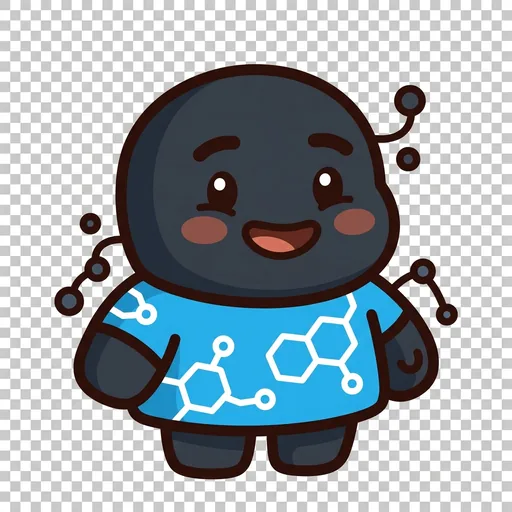
Carbo
Carbon (C) — connects to anything; the social atom; backbone of life
-

Oxy
Oxygen (O) — eager bonder; electronegative; the hungry grabber
-
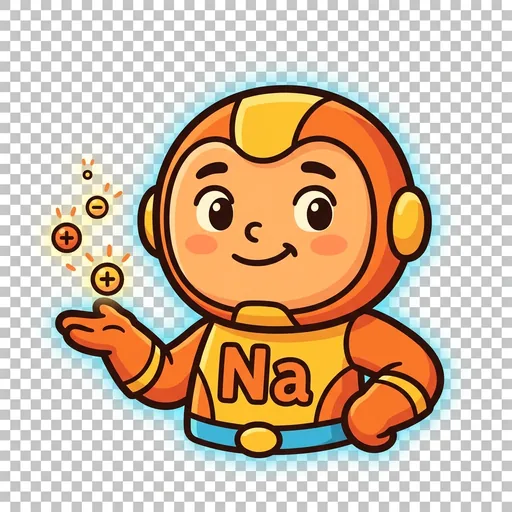
Sodi
Sodium (Na) — generous, impulsive; always giving away electrons
-

Chlora
Chlorine (Cl) — sharp, focused; the collector who finishes what Sodi starts
-

Helio
Helium (He) — noble gas; peaceful, floaty, complete; the contented onlooker
-
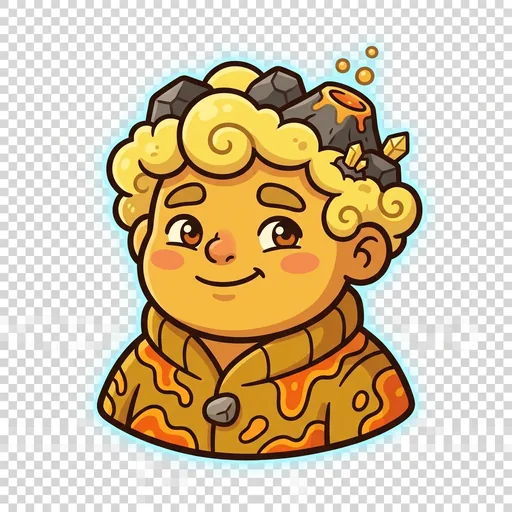
Sulfa
Sulfur (S) — earthy, dramatic; the stinky uncle of volcanoes and proteins
-
Phossa
Phosphorus (P) — energetic, restless; the spark of ATP and matches
-

Magna
Magnesium (Mg) — bold, ceremonial; burns bright white; chlorophyll core
-

Silica
Silicon (Si) — patient, geometric; the architect who builds quietly
-

Alumi
Aluminum (Al) — practical, modest; the workhorse of cans and foil
-

Tugger
Ionic bond — forceful, decisive; full electron transfer; opposites attract
-

Sharer
Covalent bond — cooperative, balanced; equal partnership
-

Streamer
Metallic bond — flowing, communal; delocalized electron sea
-
Whisperer
Hydrogen bond — subtle, persistent; water's superpower; DNA pairing