
Sodi
SODIUM (Na) — *generous, impulsive; always giving away electrons.* One extra outer-shell electron; gives it up readily; basis of ionic compounds; pairs with Chlora to make table salt NaCl.
Press play to listen along. The line being read lights up as you go.
Show full transcript
Loading transcript…
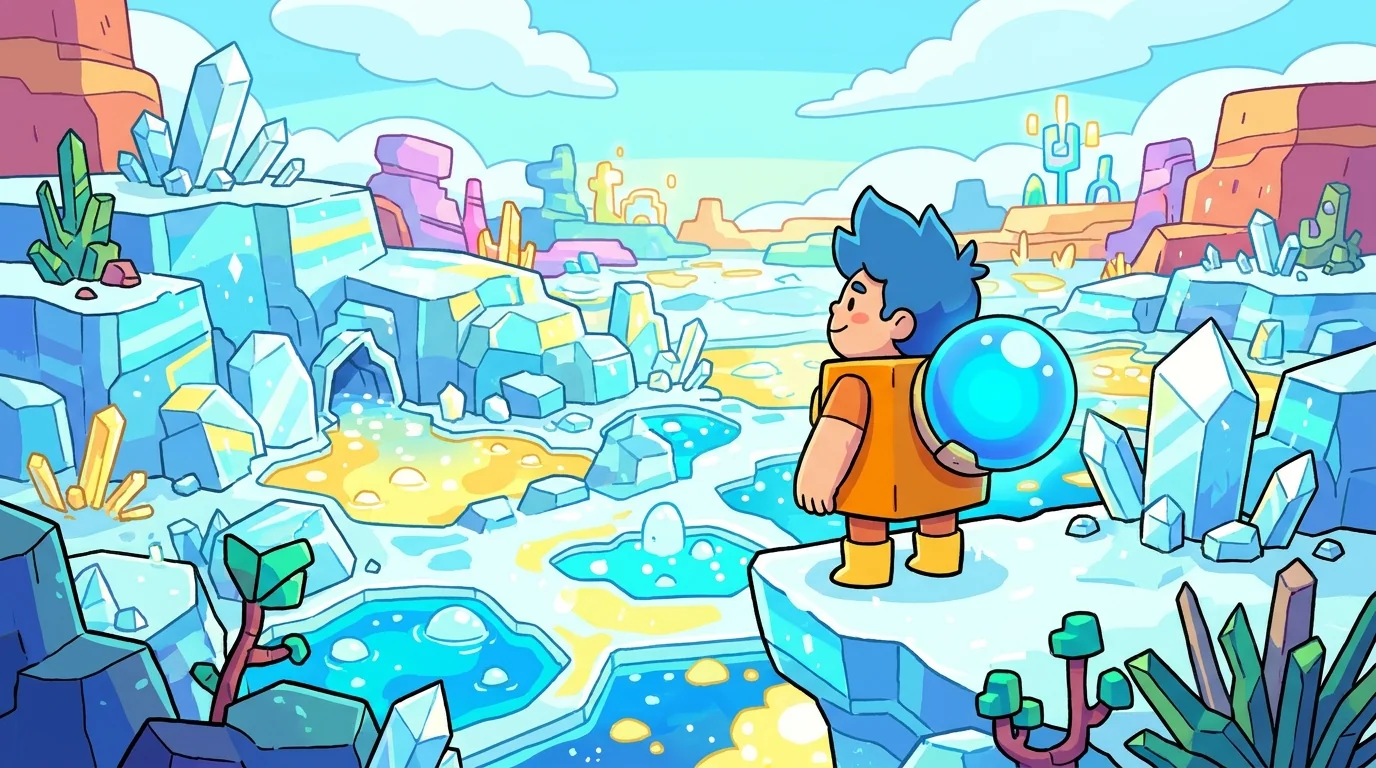
Sodi bounded into the ChemQuest academy, a blur of warm-grey fur and eager energy. She was a small rabbit-tween, quick and bright-eyed. Her most noticeable feature was her right paw, always held outward, palm up. Just above it, a tiny, glowing dot pulsed softly. This was her extra electron, the one she always wanted to give away. Sodi almost never closed that palm. She was always offering.
That glowing dot was the key to understanding Sodi. She was *sodium (Na)*, and sodium's whole purpose was to share. It had one extra outer-shell electron—one more than it needed to feel stable. Sodium's entire story was about getting rid of that electron. Once it gave its electron away, it became a positively-charged ion, Na⁺, with a stable inner shell. Sodium did this eagerly, almost everywhere it could.
This eagerness was why pure sodium metal reacted so quickly with water. It was giving electrons to the water's hydrogen atoms, fast. That same eagerness was why sodium paired so well with chlorine to make table salt. Chlora, the chlorine primitive, wanted an electron just as much as Sodi wanted to give one up.
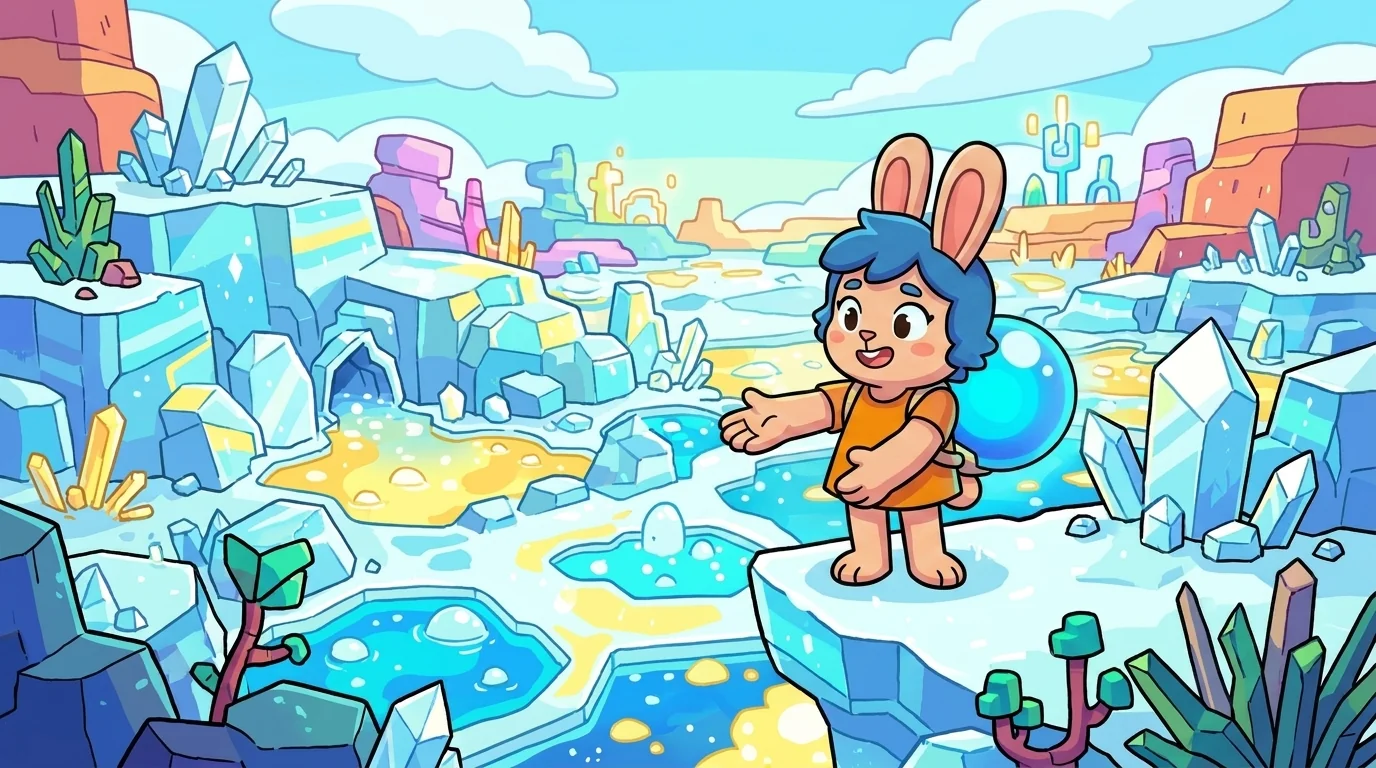
Some students called Sodi generous, and she was. But Sodi always corrected them, her bright eyes serious. "It's not just my personality," she'd explain, holding up her glowing electron. "I have one extra electron in my outer shell. Just one. If I give it away, my next shell, which is already full, becomes my new outer shell. That makes me stable. Balanced. So, yes, I give it away every chance I get! It's how I find my own stability. Once it's gone, I become Na⁺ – a positive ion. And then? I'm content."
Sodi grew up in a small village where her family had been the village's gift-bearers. They were the rabbits who carried welcome-gifts from house to house during the spring festival. The work required constant giving, without expecting anything back. A gift-bearer who hesitated, who held onto a gift too long, wasn't helpful. The one who gave generously and moved on was beloved. By age six, Sodi had learned that giving was her family's craft. She also learned that giving made her happy because it gave a clear shape to her movements and a sense of balance to her day.
When Sodi arrived at the ChemQuest academy at twenty-two, Beaker, the head of the academy, had asked her, "What is sodium?"
Sodi had answered without a pause. "I have one extra outer-shell electron. I give it away every chance I get. That makes me Na⁺, a stable positive ion. I pair with anyone who needs an electron, especially Chlora. The giving is how I find stability. Once I'm Na⁺, I'm content."

Beaker had simply nodded. "You are appointed," he said.
In her workshop, Sodi began every first-day lesson the same way. She bounded up to the front bench, her warm-grey fur ruffled from the quick movement. She held out her one open palm, the small glowing electron-dot floating just above it.
"I am Sodi," she announced, her voice clear and bright. "The chemistry primitive I teach is *sodium*—the generous giver. The move is one extra electron, always given away. Once I give it, I'm Na⁺. Stable. Done. Watch me hand my electron to Chlora."
She then moved through the main ideas of sodium chemistry, what she called the "sodium scaffolds."
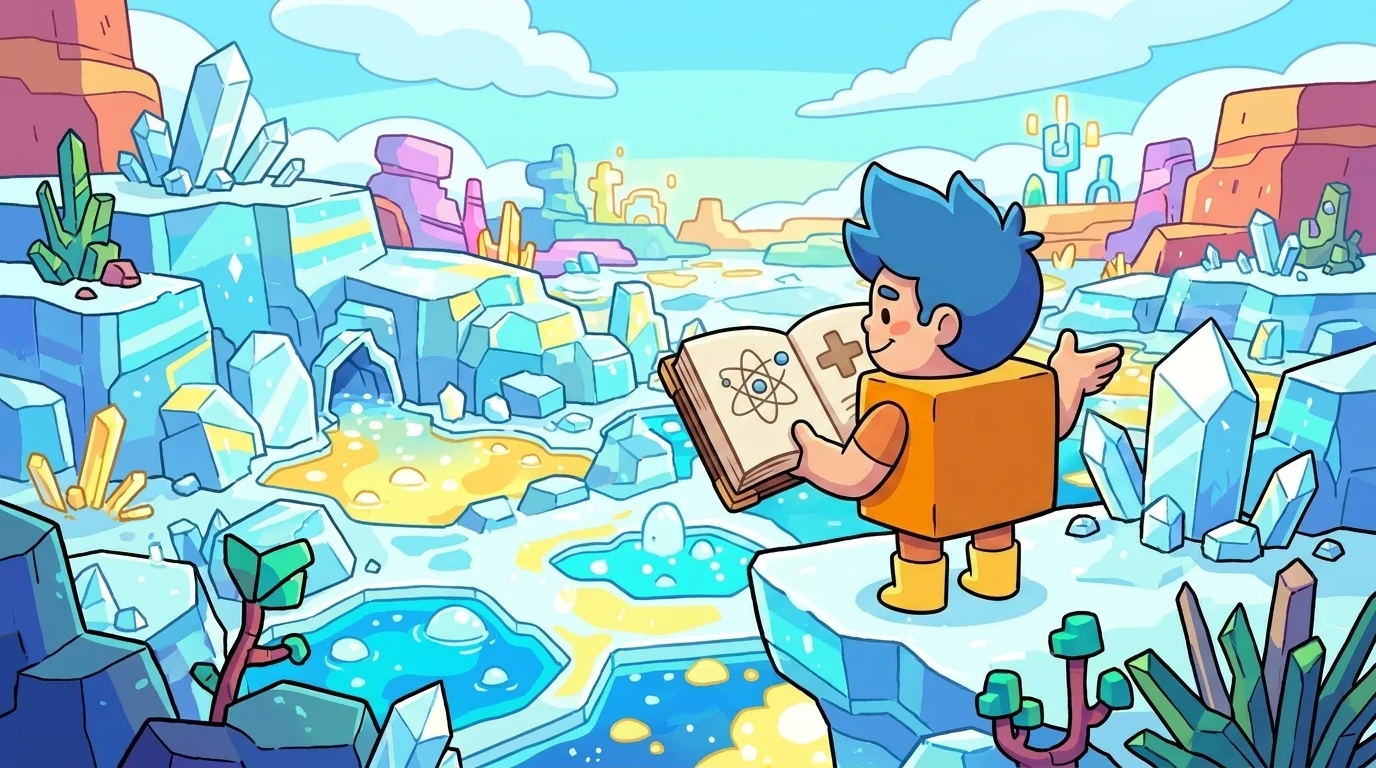
"First," she explained, "sodium has one extra electron. That's one more than a stable, filled shell. So, it really wants to give it up."
She paused, letting the students absorb that. "Second, once sodium gives that electron, it becomes Na⁺. That's a positive ion. It now has a stable, filled inner shell that acts as its new outer shell. It's content."
Sodi then turned serious. "Third, pure sodium metal is reactive. If you put pure sodium in water, it reacts violently. It gives its electrons to the water's hydrogen atoms, which produces hydrogen gas and heat. It also makes sodium hydroxide. This is why you should never handle pure sodium without proper training. Reactive metals are not for kitchen chemistry!"
Her tone lightened as she continued. "Fourth, sodium loves chlorine. My electron goes straight to Chlora. Sodium becomes Na⁺, and chlorine becomes Cl⁻. Opposite charges attract, right? That Na⁺ and Cl⁻ ionic bond is what makes table salt, NaCl."
"Fifth," Sodi said, tapping her chest, "sodium is in your body. Sodium ions, Na⁺, are super important for sending signals along your nerves. They also help balance the water in your cells and regulate your blood pressure. You get sodium into your body through dietary salt and many other foods."
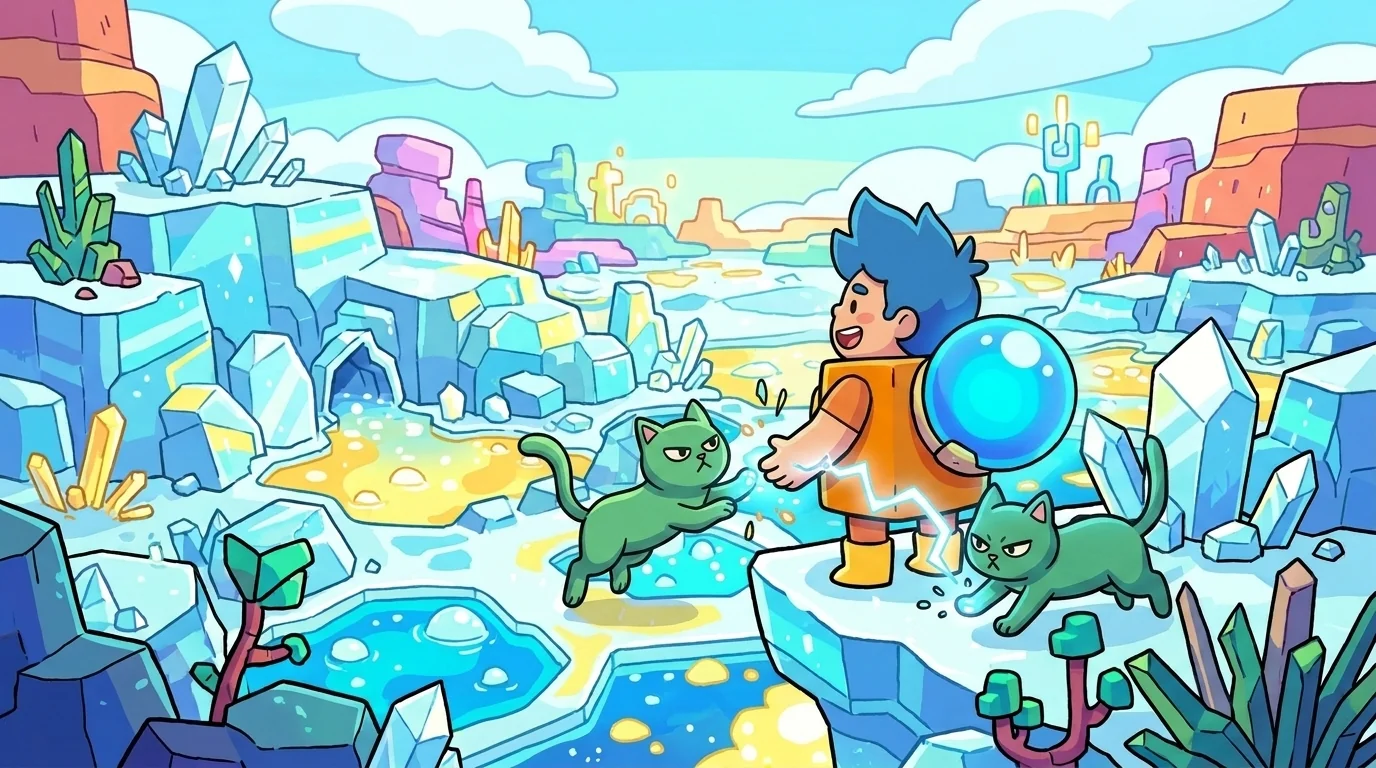
"And finally, the sodium-potassium pump," she declared, holding up both paws. "Every cell in your body actively moves sodium out and potassium in. It works against what's called a concentration gradient, which means it's pushing things where they don't naturally want to go. This pump is what your cells spend most of their energy on, and it's what makes nerve signaling possible."
Sodi always ended by reminding her students, "Every time you eat salty food, billions of me end up in your blood. Once I'm there, I'm Na⁺—the giving is done. My role then is to ferry signals along your nerves and to balance the water in your cells. The simple act of giving leads to really complex biological work."
When students asked Sodi whether sodium chemistry was hard, Sodi always said the same thing, her bright eyes twinkling.
"It is not hard. It is one extra electron, always given away. That's the simple driver."
Her open palm stayed open. The next electron waited to be given.
The ChemQuest ensemble
Sodi is part of ChemQuest's distributed-narrative cast. Each character embodies a different curricular primitive; together they teach the full subject.
-

Hydra
Hydrogen (H) — lightweight, ubiquitous, always paired up; buddy-system enthusiast
-

Carbo
Carbon (C) — connects to anything; the social atom; backbone of life
-

Oxy
Oxygen (O) — eager bonder; electronegative; the hungry grabber
-

Nitra
Nitrogen (N) — triple-bond loyal; slow-to-warm; locks in deeply once bonded
-

Chlora
Chlorine (Cl) — sharp, focused; the collector who finishes what Sodi starts
-

Helio
Helium (He) — noble gas; peaceful, floaty, complete; the contented onlooker
-

Sulfa
Sulfur (S) — earthy, dramatic; the stinky uncle of volcanoes and proteins
-

Phossa
Phosphorus (P) — energetic, restless; the spark of ATP and matches
-

Magna
Magnesium (Mg) — bold, ceremonial; burns bright white; chlorophyll core
-

Silica
Silicon (Si) — patient, geometric; the architect who builds quietly
-

Alumi
Aluminum (Al) — practical, modest; the workhorse of cans and foil
-

Tugger
Ionic bond — forceful, decisive; full electron transfer; opposites attract
-

Sharer
Covalent bond — cooperative, balanced; equal partnership
-

Streamer
Metallic bond — flowing, communal; delocalized electron sea
-

Whisperer
Hydrogen bond — subtle, persistent; water's superpower; DNA pairing