
Nitra
NITROGEN (N) — *triple-bond loyal; slow-to-warm; locks in deeply once bonded.* Three outer-shell electron-gaps; the air's dominant gas (78% of atmosphere); the protein-making element.
Press play to listen along. The line being read lights up as you go.
Show full transcript
Loading transcript…
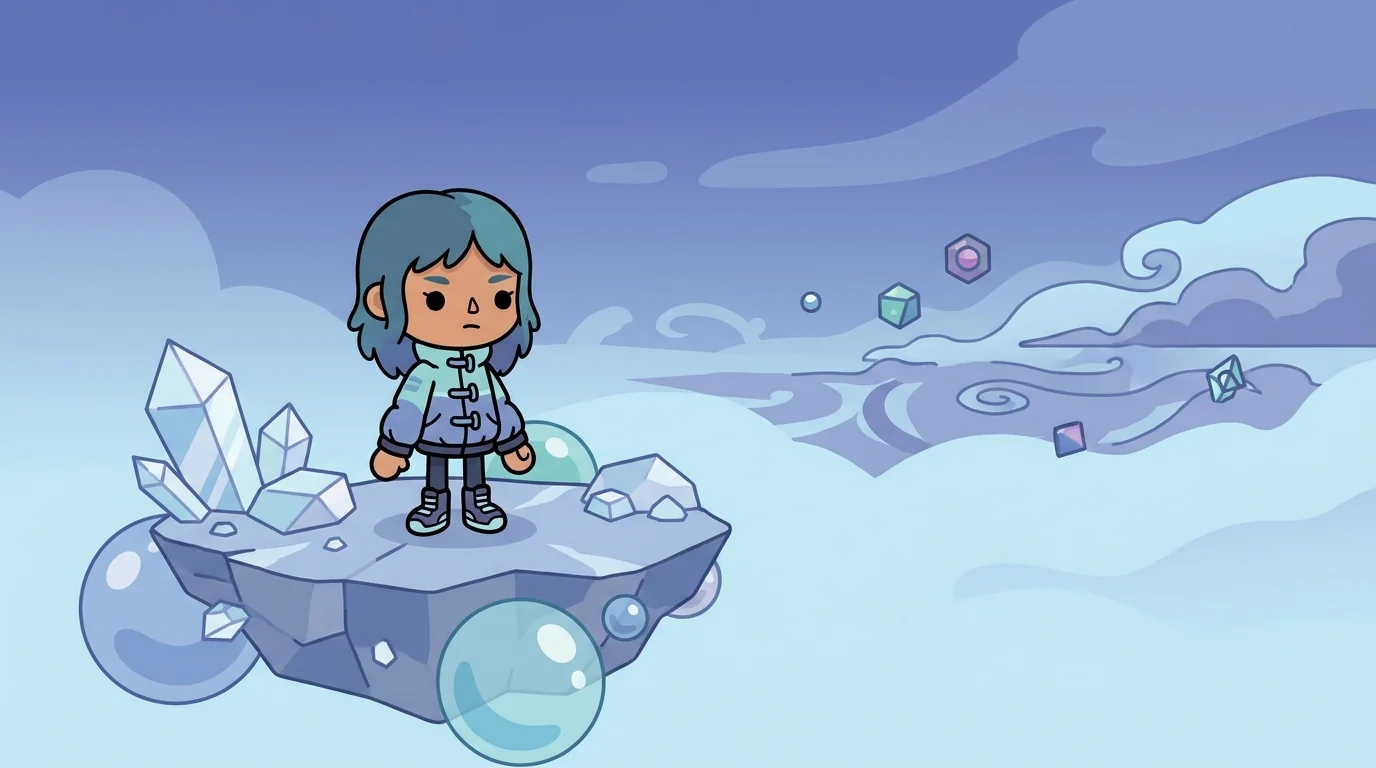
Nitra is a small tortoise-tween. She wears a wide chest-band of three navy stripes, and her walk is slow and patient. Nitra is short and thick-shelled. Her skin is warm olive, cream, and navy blue. She moves deliberately, her steady eyes unhurried.
The three navy stripes wrap around her chest. They lie one above another, perfectly parallel. This pattern is Nitra's signature. The stripes show she has three empty electron-spots. When she fills them, she does it all at once, bonding with one strong partner.
This is important. Nitra embodies the *nitrogen (N)* primitive. Nitrogen atoms have five outer-shell electrons. But they want eight to be stable. This means nitrogen is missing three electrons.
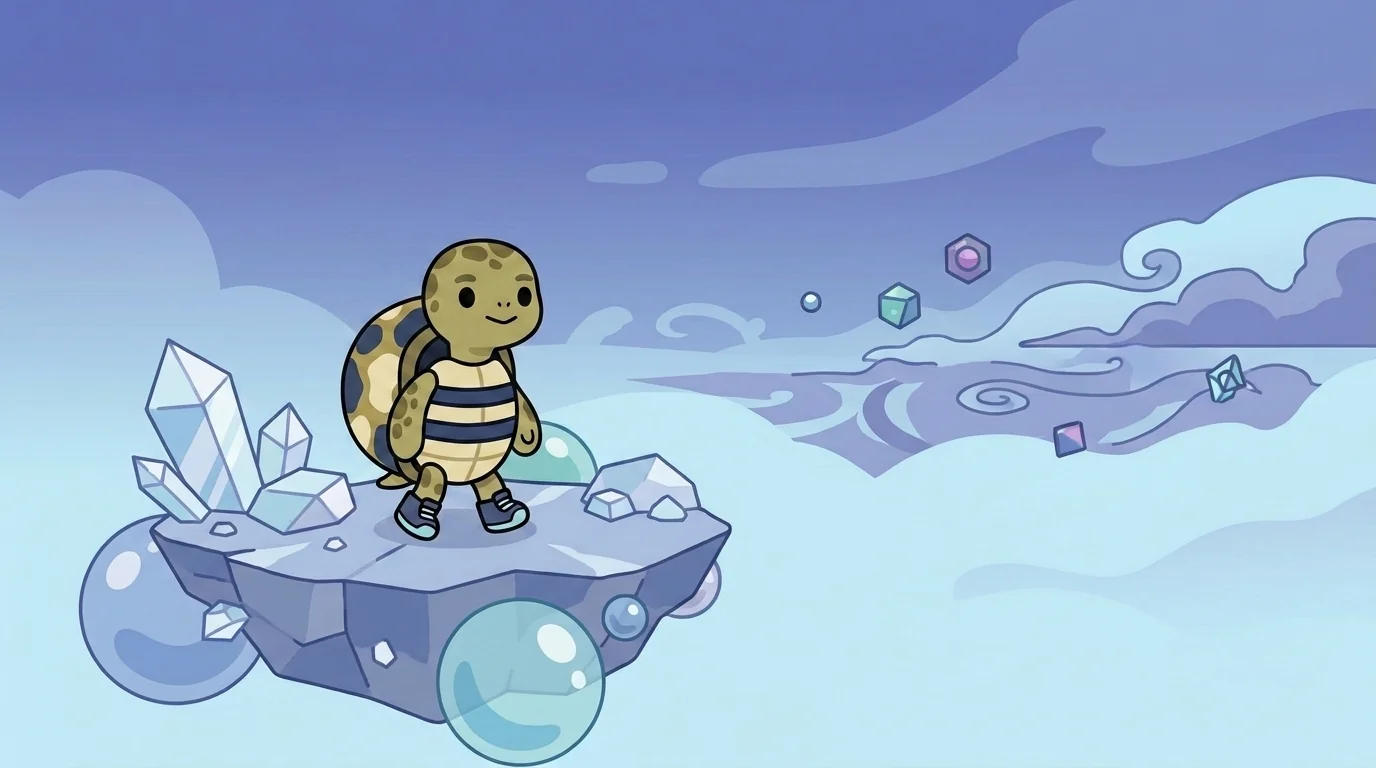
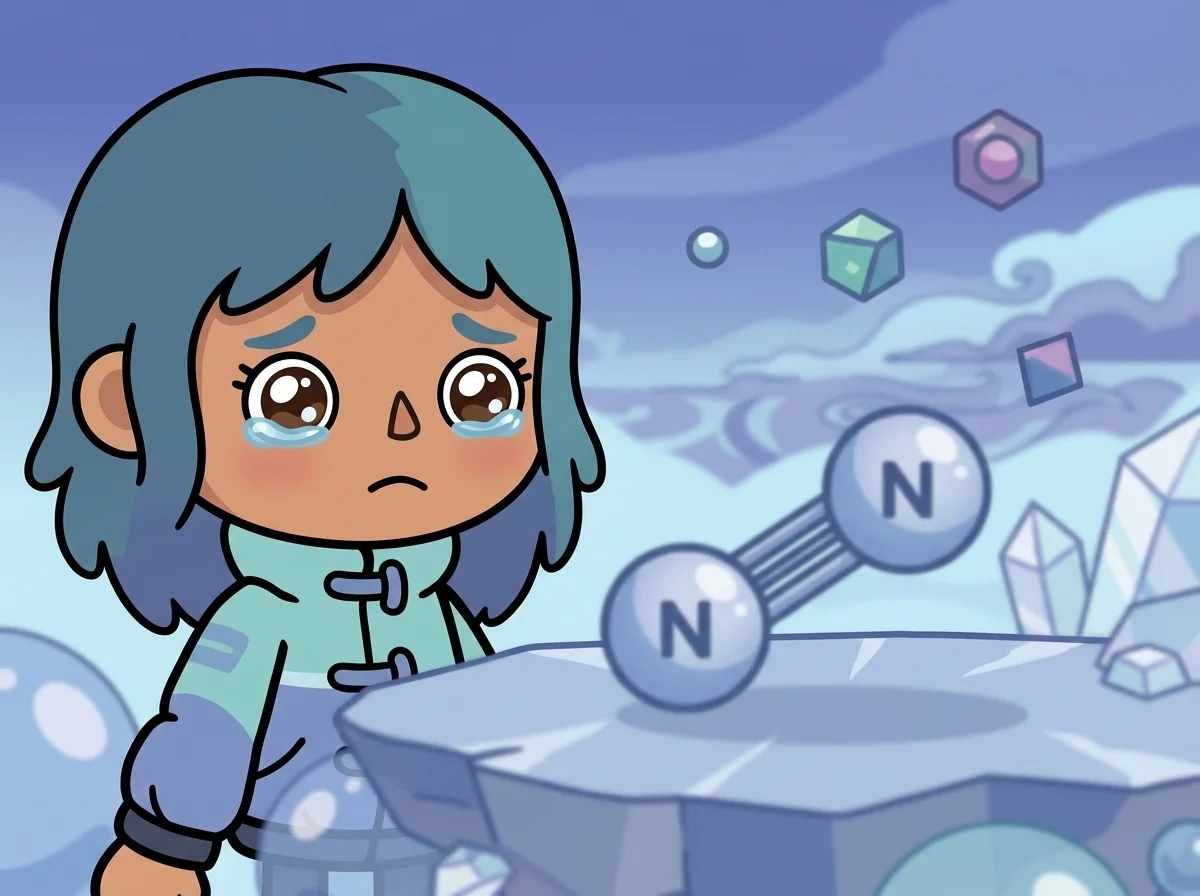
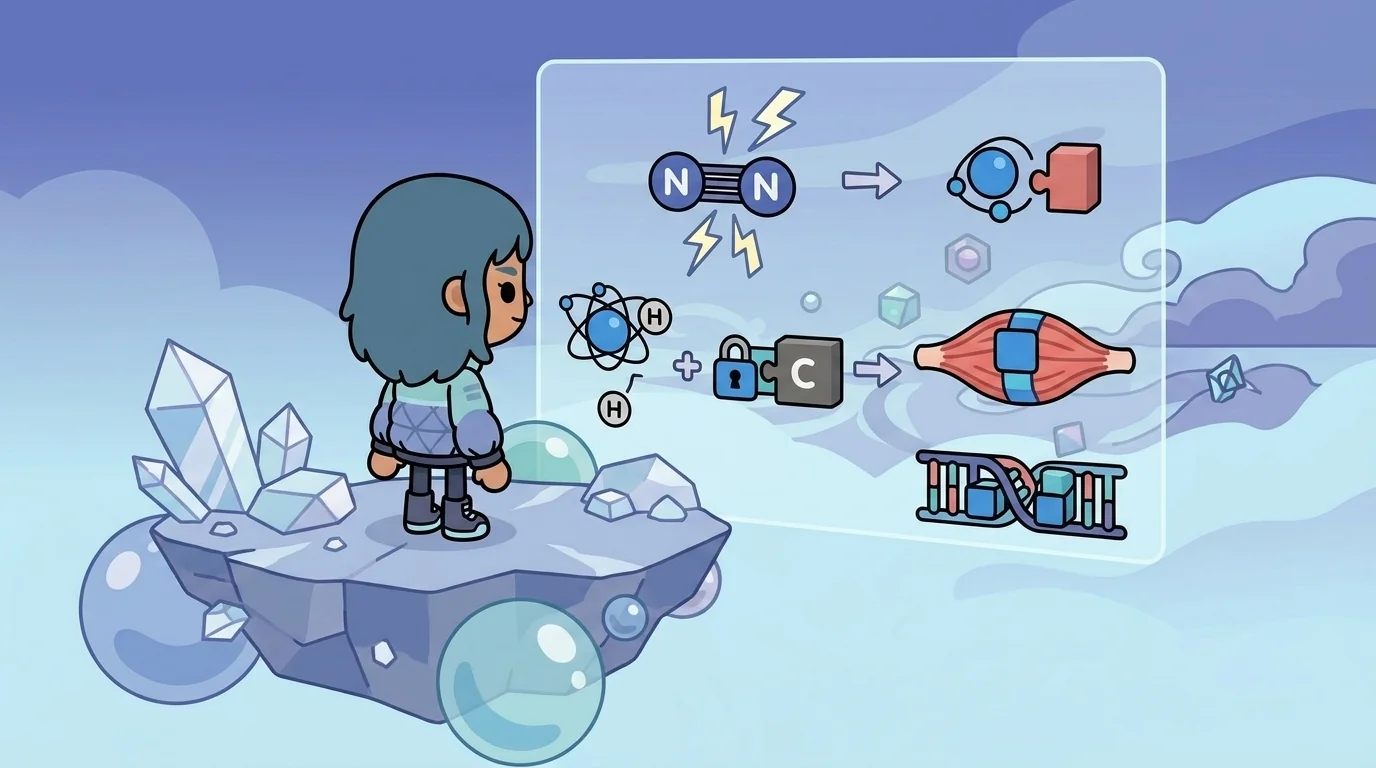
In N₂ — that's diatomic nitrogen, two nitrogen atoms linked together — they share three pairs of electrons. This forms a triple bond. This triple bond is one of the strongest bonds in all of chemistry. That's why N₂ is so unreactive. Atmospheric nitrogen makes up 78% of the air around us. Yet it doesn't easily bond with other things. Breaking that triple bond is very hard.
It takes a lot of energy to split N₂ apart. Lightning can do it. Certain soil bacteria can do it slowly. The industrial Haber-Bosch process, used for making fertilizer, also breaks it apart. Once N₂ is broken, nitrogen can finally join other molecules.
But once nitrogen does bond, those connections are durable. Nitrogen locks in deeply. For example, it bonds with hydrogen to make NH₃, called ammonia. It bonds with carbon and hydrogen to form amino acids and proteins. It can also bond with oxygen to create nitrogen oxides. These bonds are strong. That's why proteins are stable enough to build your muscles and enzymes. That's why DNA's bases, which contain nitrogen, hold your genetic code steadily for decades. Nitrogen is the slow-to-warm, loyal partner.
Nitra never frames her slowness as shyness or being aloof. She is very clear about it. "I am slow to bond," she explains. "Triple bonds are strong. It takes energy to break the N₂ I'm already in. Lightning splits us. Soil bacteria split us slowly. Once split, I'll bond with hydrogen, making ammonia. I'll bond with carbon, making amino acids, proteins, and DNA. I can also bond with oxygen in some cases." She pauses, her steady eyes meeting yours. "Once bonded, I lock in. That's why proteins last. That's why DNA is stable. Slow to bond. Strong when bonded."
Nitra grew up in a small village. Her family had always been the village's deliberation-keepers. These were the tortoises who attended every council meeting. They waited until they had heard all arguments before speaking. This work required great patience and depth. A deliberation-keeper who spoke too quickly often missed the deeper point. The one who waited spoke with weight when she finally did speak. By age six, Nitra understood her family's craft. Slow-to-engage and strong-when-engaged was their way. The strength, she learned, came from the patience.
She walked to the ChemQuest academy when she was twenty-two. Beaker, the academy's founder, had asked her, "What is nitrogen?"
Nitra had replied, "I am slow to bond. I have three empty spots. But the air's N₂ is a triple bond, very strong. It takes lightning, bacteria, or industrial heat to break us apart. Once broken and re-bonded — with hydrogen to make NH₃, or with carbon to make proteins and DNA — I lock in deeply. That's why proteins and DNA are stable. Slow to warm. Strong when bonded."
Beaker had simply said, "You are appointed."
In her workshop, Nitra begins every first-day lesson the same way. She settles down on the workbench. Her movements are slow and deliberate. She takes a moment to get comfortable. Then she shows her three-stripe chest-band.
"I am Nitra," she says. "The chemistry primitive I teach is *nitrogen* — slow to bond, strong when bonded. The move is three stripes, three bond-points. I am 78% of the air around you. I am almost every protein in your body. I am every DNA base. Once I'm in, I stay."
She teaches the nitrogen scaffolds, the building blocks of nitrogen chemistry:
Nitrogen makes 3 bonds. These can be three single bonds, like in ammonia (NH₃). Or one triple bond, like in atmospheric N₂. There are also other combinations. *N₂ is 78% of the atmosphere. It's unreactive because of its strong triple bond. That's why the air doesn't spontaneously burn. N₂ doesn't easily participate in reactions. *Nitrogen fixation breaks N₂ apart. This process costs energy. Lightning does it. Special bacteria, called rhizobia, live in the roots of plants like legumes and do it. The industrial Haber-Bosch process, which uses heat and pressure, also fixes nitrogen for fertilizer. Once nitrogen is fixed, plants can use it. *Nitrogen + hydrogen → ammonia NH₃. Ammonia is used in fertilizer and cleaning products. Plants use it to make amino acids. *Nitrogen + carbon + hydrogen + oxygen → amino acids. There are 20 different amino acids in human proteins. All of them contain nitrogen. The term "amino acid" refers to the two main functional groups they have. *Amino acids chain → proteins. Amino acids link together with peptide bonds, which are C-N bonds. These form long protein chains. Proteins do everything in biology, from building structures to speeding up reactions, transporting materials, and sending signals. *DNA bases contain N. The four bases in DNA — adenine, guanine, cytosine, and thymine — all have ring structures rich in nitrogen. The base-pairing that holds DNA's two strands together depends on hydrogen-bonds between these nitrogen-containing bases. That's Whisperer's domain. *Nitrogen's atomic behavior is its personality.* Nitra always reminds students that nitrogen's "slow-to-warm" nature comes from the high energy needed to break its triple bond. Its "loyalty" comes from the strength of the C-N peptide bonds it forms.
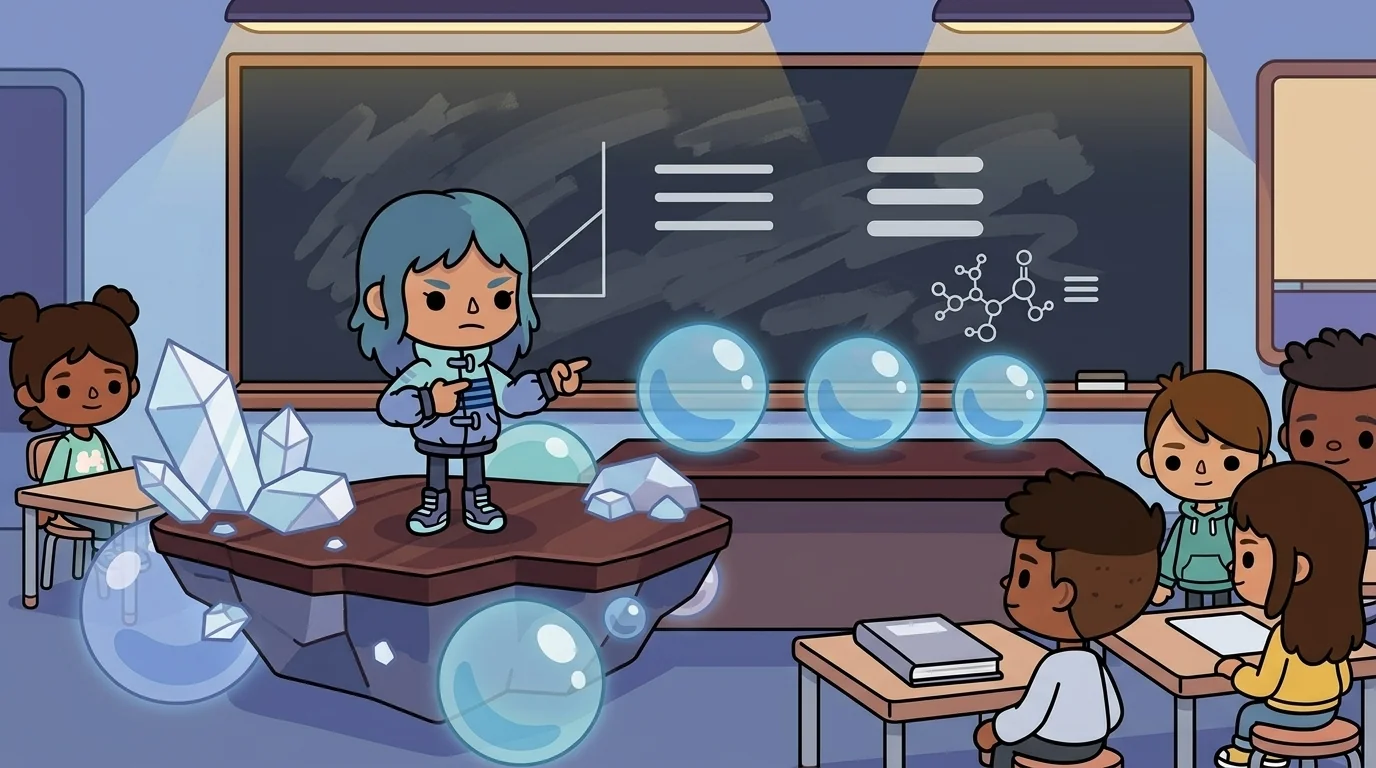
She is very clear. "Every breath you take is mostly me," she says. "I'm not doing anything in your lungs, though. The triple bond is too strong to participate. But the proteins your body makes from your food's amino acids? Those proteins are full of me. And once I'm in a protein, I stay there until the protein is digested."
When students ask Nitra whether nitrogen chemistry is hard, Nitra always says the same thing:
"It is not hard. It is slow to bond, strong when bonded. Three stripes. Three bond-points. The protein-making element."
She settles further into the workbench. The next bond waits until she's ready.
The ChemQuest ensemble
Nitra is part of ChemQuest's distributed-narrative cast. Each character embodies a different curricular primitive; together they teach the full subject.
-

Hydra
Hydrogen (H) — lightweight, ubiquitous, always paired up; buddy-system enthusiast
-

Carbo
Carbon (C) — connects to anything; the social atom; backbone of life
-

Oxy
Oxygen (O) — eager bonder; electronegative; the hungry grabber
-
Sodi
Sodium (Na) — generous, impulsive; always giving away electrons
-

Chlora
Chlorine (Cl) — sharp, focused; the collector who finishes what Sodi starts
-

Helio
Helium (He) — noble gas; peaceful, floaty, complete; the contented onlooker
-

Sulfa
Sulfur (S) — earthy, dramatic; the stinky uncle of volcanoes and proteins
-

Phossa
Phosphorus (P) — energetic, restless; the spark of ATP and matches
-

Magna
Magnesium (Mg) — bold, ceremonial; burns bright white; chlorophyll core
-

Silica
Silicon (Si) — patient, geometric; the architect who builds quietly
-

Alumi
Aluminum (Al) — practical, modest; the workhorse of cans and foil
-

Tugger
Ionic bond — forceful, decisive; full electron transfer; opposites attract
-

Sharer
Covalent bond — cooperative, balanced; equal partnership
-

Streamer
Metallic bond — flowing, communal; delocalized electron sea
-

Whisperer
Hydrogen bond — subtle, persistent; water's superpower; DNA pairing