
Helio
HELIUM (He) — *noble gas; peaceful, floaty, complete; the contented onlooker.* Two outer-shell electrons (full duet); doesn't bond with anything; the model of atomic stability.
Press play to listen along. The line being read lights up as you go.
Show full transcript
Loading transcript…

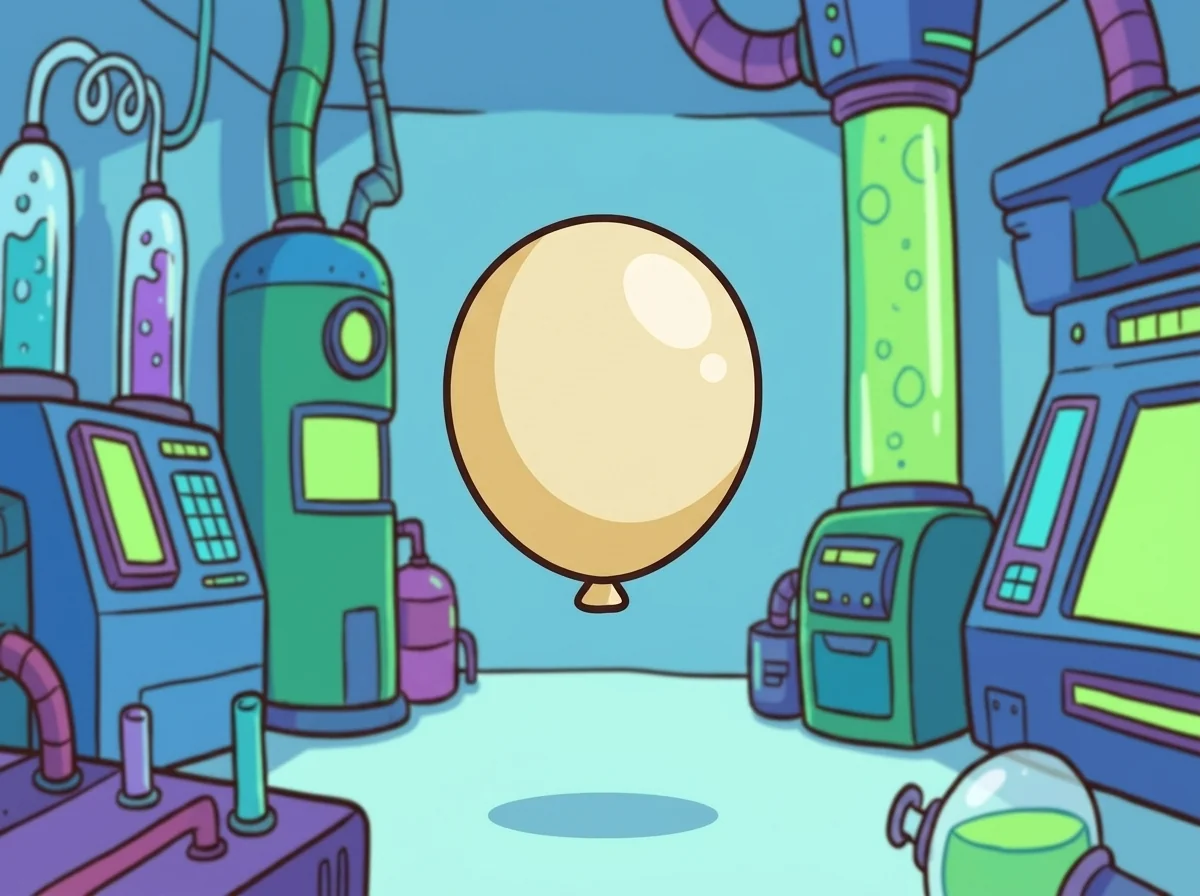
A soft, cream-colored sphere drifted just above the workbench surface. It had no arms to reach, no face to smile or frown. It simply floated, smooth and round, at about head-height for the other cast members. This was Helio, and that was the whole point. Helio had no need for an open hand, a cupped hand, or any other kind of hand. Helio was complete.
Helio was not an animal. Helio was not a tween-figure with busy arms and hands. Helio was a deliberately non-anthropomorphic object, a small cream-and-pale-gold balloon. The two outer-shell electrons that filled helium's only shell meant helium wanted nothing. Helium didn't bond. Helium just floated around, perfectly content.
This state of being was essential. Helio embodied the *helium (He) primitive, the model of atomic stability. Helium has only one electron shell. That shell holds at most two electrons. Helium has exactly two electrons. Its shell is full. This makes helium as stable as an atom can be. That’s why helium is a noble gas*. It is one of seven elements whose outer shells are full. These elements, which include neon, argon, and krypton, do not bond chemically under ordinary conditions. They just float around, being themselves.

The other cast members, all of whom were striving toward filled outer shells, quietly looked up to Helio. Helio was what they were trying to become, chemically speaking. The cast accepted this with warmth and a touch of humor. Helio was the cast member who had arrived already at the destination they were traveling toward.
Helio’s entire presence was about completion without action. The cast member was deliberately faceless and armless to emphasize the absence of need. Most cast members had signatures that pointed at what they wanted. Sodi’s open hand showed her desire to give. Chlora’s cupped hand indicated her wish to take. Oxy’s two empty pockets signaled her urge to grab. Helio had no signature pointing at want because Helio didn’t want anything. The visual design itself was the lesson.
Helio "grew up," metaphorically speaking, not in a village, but in the upper atmosphere. Helium is lighter than air and rises naturally. There are no helium mines in villages. Most of Earth’s helium comes from radioactive decay in deep underground rocks. Once it escapes to the atmosphere, it floats away into space. Helio was the cast member without a village-craft family origin. This was because helium’s existence is solitary by atomic design.
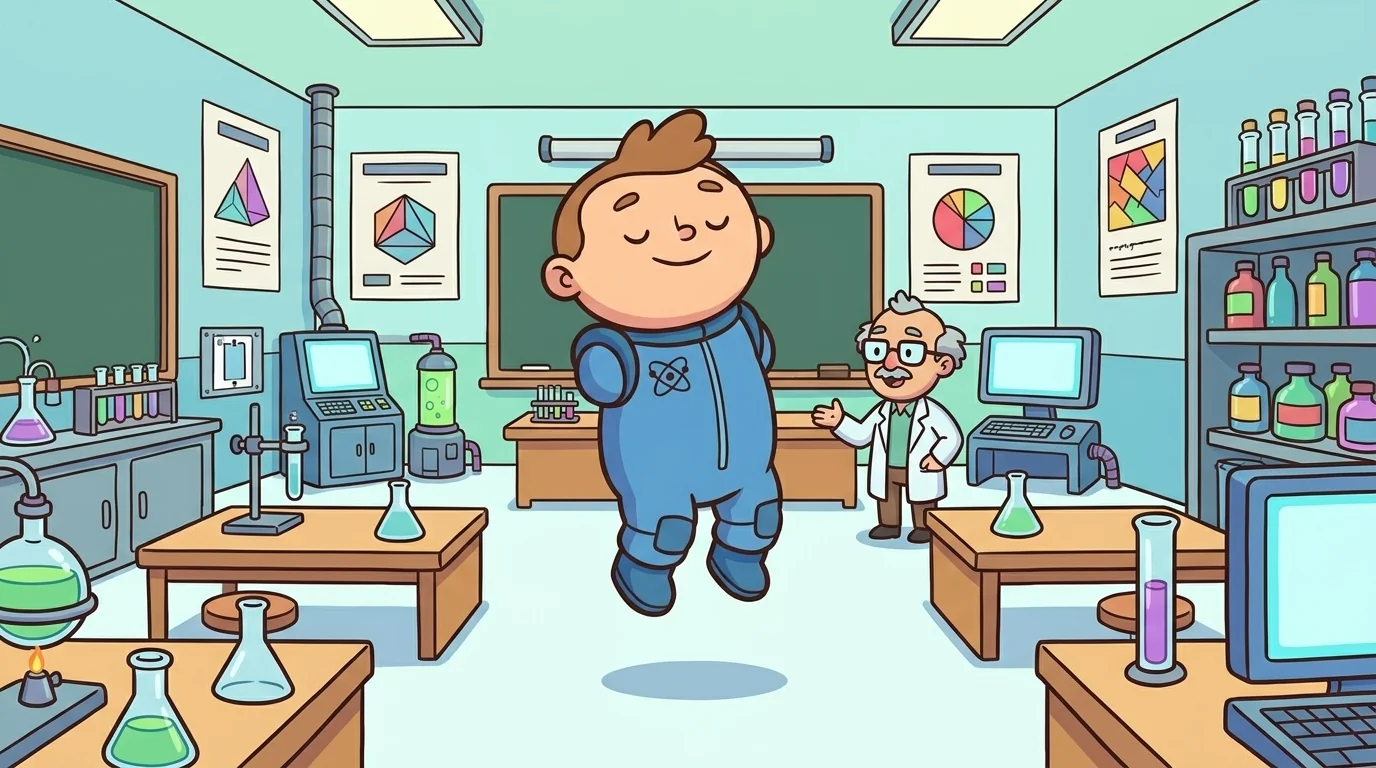
Helio floated into the ChemQuest academy at twenty-two. Beaker, the mentor, stood before the class, a thoughtful expression on her face. She looked at Helio, hovering serenely near the ceiling.
"What is helium?" Beaker asked the room.
Helio didn't speak. But the cast members, who had learned to translate Helio’s serene presence into words, understood. Helio communicated: "Two electrons. One shell. Full. Done. I do not bond. I do not want. I am stable as I am. I float. I am the model the others are trying to become — chemically. They will reach my state of completion through bonding. I am already there."
Beaker nodded slowly. "You are appointed," she said, her voice soft. "Welcome to the academy."
In Helio’s classroom, Helio simply floated. Beaker stood beside the silent figure. "This is Helio," she told the new students. "Helium. A noble gas. Look at Helio: there are no arms, no hands, no signature of want. That is the lesson."

She gestured toward the floating sphere. "Helio is what stability looks like in atomic terms. The other cast members are all trying to reach this state through bonding. Sodi by giving electrons. Chlora by taking them. Hydra, Oxy, Carbo, and Nitra by sharing."
A student in the front row, a boy with messy hair, raised his hand. "So, like, they're all trying to be as chill as Helio?"
Beaker smiled. "Exactly. Helio just arrived complete. Helium has two electrons in its one shell. The shell is full. No bonding needed. The presence of Helio in the cast reminds us what the others are striving for."
Another student, a girl with bright, curious eyes, asked, "What about other atoms? Do they also just need two electrons to be full?"
"A great question," Beaker replied. "For helium, yes, two is the magic number. But for elements with shells beyond the first one, the magic number is usually eight. That's called the *octet rule*. It means an atom needs eight electrons in its outermost shell to be stable, like a noble gas." She paused, letting the information sink in. "So, while Helio only needs two, most other atoms are aiming for eight."
Helio’s lessons taught several key ideas. Noble gases don't bond chemically under ordinary conditions. These are the seven elements with filled outer shells: Helium, Neon, Argon, Krypton, Xenon, Radon, and Oganesson. The lessons also showed why the other elements bond: they are all trying to reach that noble-gas state of a filled outer shell.
Beaker continued, "Helium also has some amazing applications. Because it’s lighter than air, it fills balloons and airships. Liquid helium, which is incredibly cold at minus 269 degrees Celsius, cools MRI magnets and superconducting equipment. There's even a special kind, Helium-3, used in nuclear physics. And unlike hydrogen, helium is non-flammable, making it much safer for balloons."
She grew serious for a moment. "It’s important to remember that helium is finite and escaping. Earth is gradually losing its helium to space. So, conservation matters. We use helium in many critical applications, and we need to be careful with it."
Helio did not speak much. The cast and students came to Helio when they needed to remember what they were working toward. Helio’s serenity was the lesson. Students would often sit quietly in the classroom, simply watching Helio float. There was a calm in Helio’s stillness, a quiet strength in its completeness. It was a reminder that sometimes, the goal wasn't to do more, but simply to be.
The ChemQuest ensemble
Helio is part of ChemQuest's distributed-narrative cast. Each character embodies a different curricular primitive; together they teach the full subject.
-

Hydra
Hydrogen (H) — lightweight, ubiquitous, always paired up; buddy-system enthusiast
-

Carbo
Carbon (C) — connects to anything; the social atom; backbone of life
-

Oxy
Oxygen (O) — eager bonder; electronegative; the hungry grabber
-

Nitra
Nitrogen (N) — triple-bond loyal; slow-to-warm; locks in deeply once bonded
-
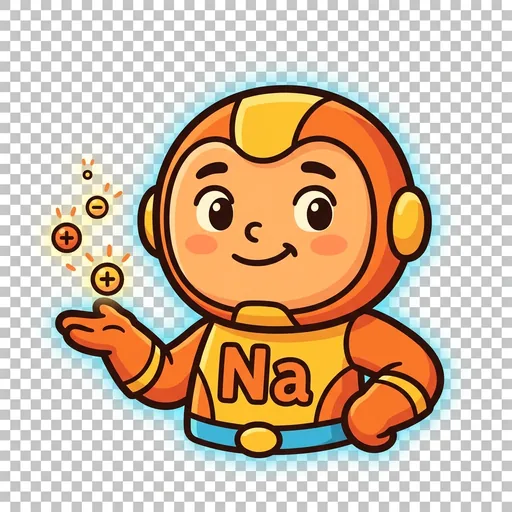
Sodi
Sodium (Na) — generous, impulsive; always giving away electrons
-

Chlora
Chlorine (Cl) — sharp, focused; the collector who finishes what Sodi starts
-

Sulfa
Sulfur (S) — earthy, dramatic; the stinky uncle of volcanoes and proteins
-

Phossa
Phosphorus (P) — energetic, restless; the spark of ATP and matches
-

Magna
Magnesium (Mg) — bold, ceremonial; burns bright white; chlorophyll core
-

Silica
Silicon (Si) — patient, geometric; the architect who builds quietly
-

Alumi
Aluminum (Al) — practical, modest; the workhorse of cans and foil
-

Tugger
Ionic bond — forceful, decisive; full electron transfer; opposites attract
-

Sharer
Covalent bond — cooperative, balanced; equal partnership
-

Streamer
Metallic bond — flowing, communal; delocalized electron sea
-
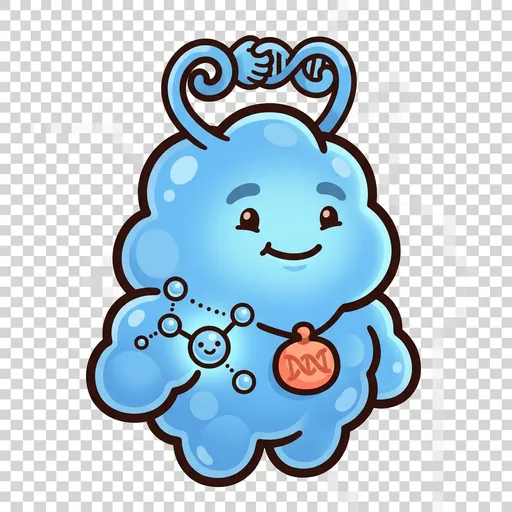
Whisperer
Hydrogen bond — subtle, persistent; water's superpower; DNA pairing