
Clew the Clue-Follower
CONDITIONAL PROBABILITY — once you learn a new fact, the chances change. You cross out the outcomes that the new fact rules out, and recount among only the ones that are still possible. "Given that we know this, how likely is that?"
A story read by Clew the Clue-Follower
Press play to listen along. The line being read lights up as you go.
Show full transcript
Loading transcript…
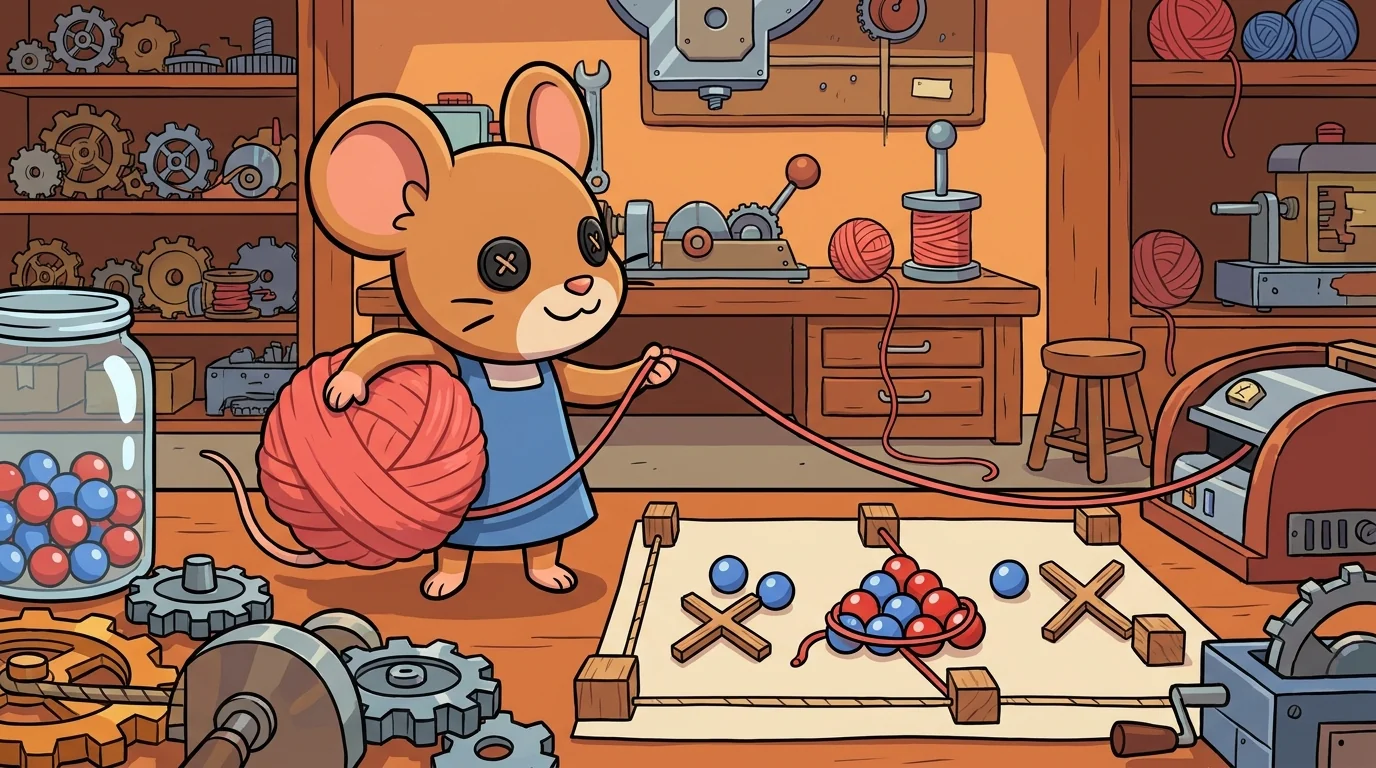
Clew was a small, tidy mouse who always carried a ball of soft red thread, and she believed that the chances of anything could change the very instant you learned something new.
She kept her ball of thread — her clew — looped around one paw in the ChanceForge workshop, and whenever a new fact arrived, she would wind a little of it in, drawing the loose tangle of possibilities tighter and tighter until only the still-possible ones were left.
A young vole named Bree came to her holding a bag of marbles.
"There are marbles in here," Bree said, "some red, some blue. I want to know the chance the next one I pull is red. But — wait — I just felt around, and I can tell the one my fingers are on is smooth, and only the red ones are smooth. Does that change anything?"
"It changes everything," Clew said, winding in a length of thread. "Before your clue, the chance of red was whatever the whole bag said. But now you know something: it's smooth. So we cross out every blue marble — they can't be the one, they're rough — and we count again among only the smooth ones that are left." She tugged the thread snug. "The chance isn't about the whole bag anymore. It's about the part the clue left standing. Given that it's smooth, red just got much more likely."
Bree stared at the tightened thread. "So the chance changed, just because I learned one thing?"
"That's the whole magic," Clew said. "A new fact, and the chances rearrange."
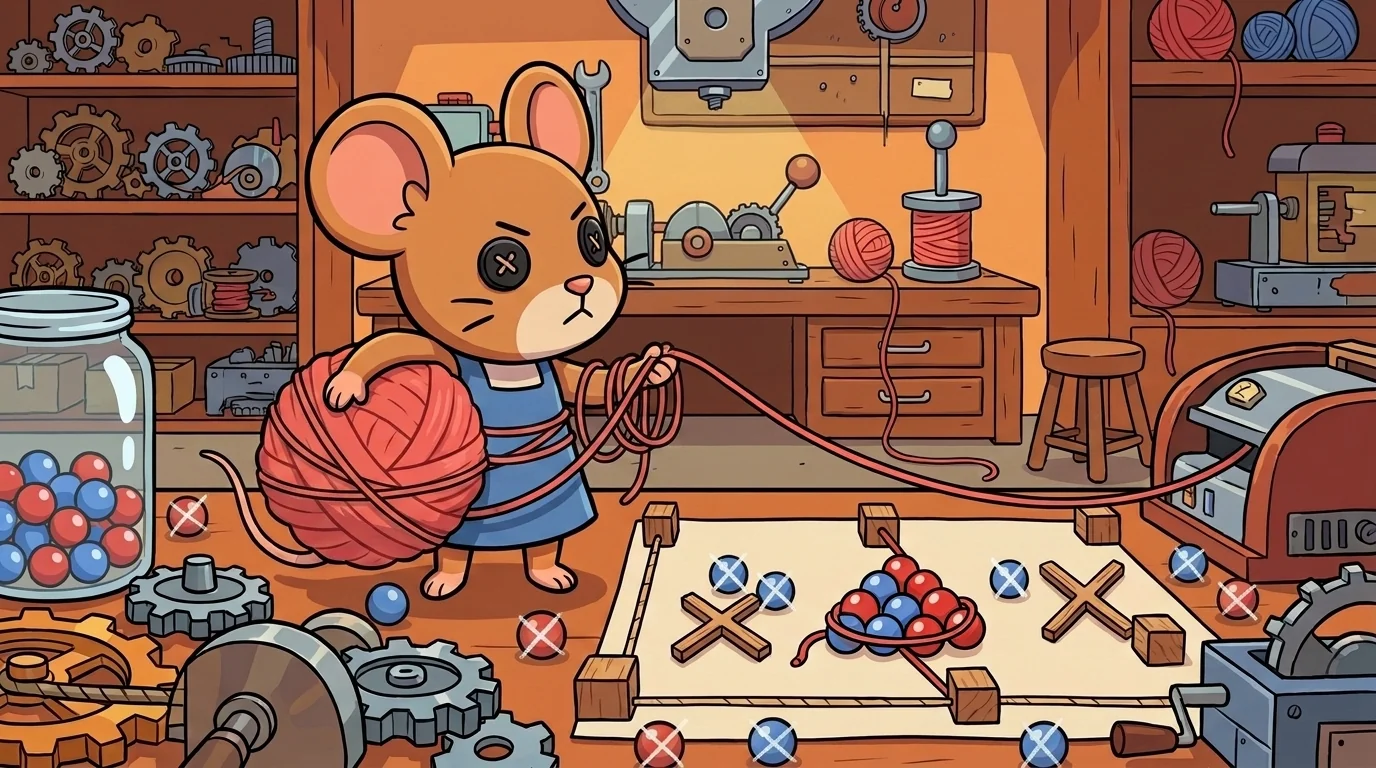
Clew had been following clues since she was a tiny pup.
She'd grown up in the back of a busy lost-and-found, where her family reunited lost things with their owners. As a little one she'd been overwhelmed — so many things, so many possible owners, the chances impossible to hold. Then her mother taught her the trick that ran the whole shop.
"You don't guess from the whole pile," her mother said, winding a thread. "You wait for a clue. Someone says 'mine was blue' — and just like that, you cross out every red and green and yellow thing, and you only look among the blue. The pile didn't shrink because you wished it. It shrank because you learned something." She pulled the thread tight. "Every clue throws away the impossibles and leaves you counting among the few that survive."
Little Clew practiced it for years, and she came to love the feeling: that moment when a single true fact arrived and a huge, hopeless cloud of maybes suddenly drew in to a small, manageable handful. The not-knowing didn't frighten her after that. She'd learned that you don't have to clear the whole fog at once. You just wait for one clue, and let it narrow the world.
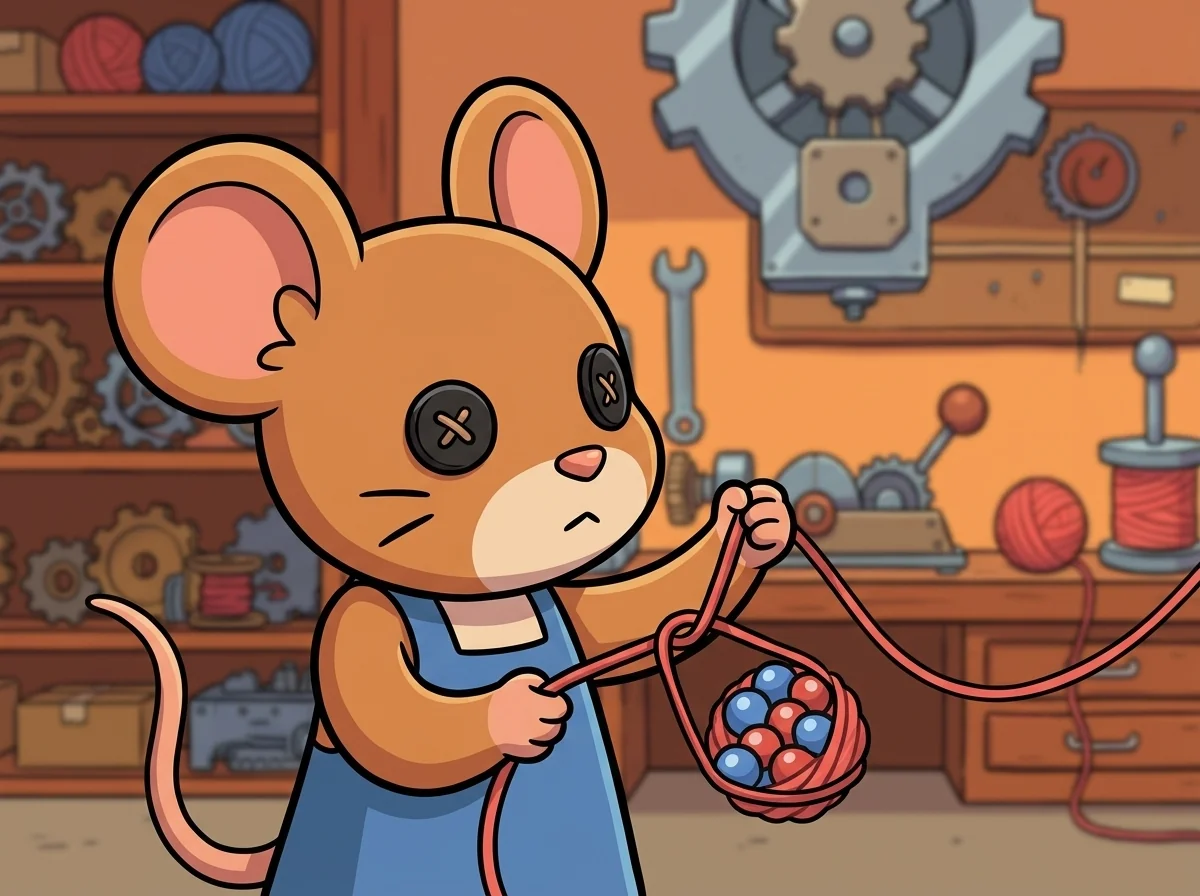
When she was grown, Clew brought her ball of thread to the ChanceForge workshop, because she'd heard it honored careful thinking.
The old tortoise keeper asked her, "What is conditional probability?"
Clew wound in a loop of thread. "It's the chance of something given that you already know a fact," she said. "When you learn something new, you cross out every outcome the fact makes impossible, and you recount among only the ones still standing. The whole list of maybes shrinks to just the part the clue allows — and the chances are figured fresh, inside that smaller world." She held up the tightened thread. "The same question can have one answer before the clue and a completely different answer after. Given that is the most powerful little phrase in all of chance."
"And you must always update?" the tortoise asked.
"Always," Clew said. "Clinging to your first guess after a clue arrives — that's the one real mistake. A new fact deserves a new chance."
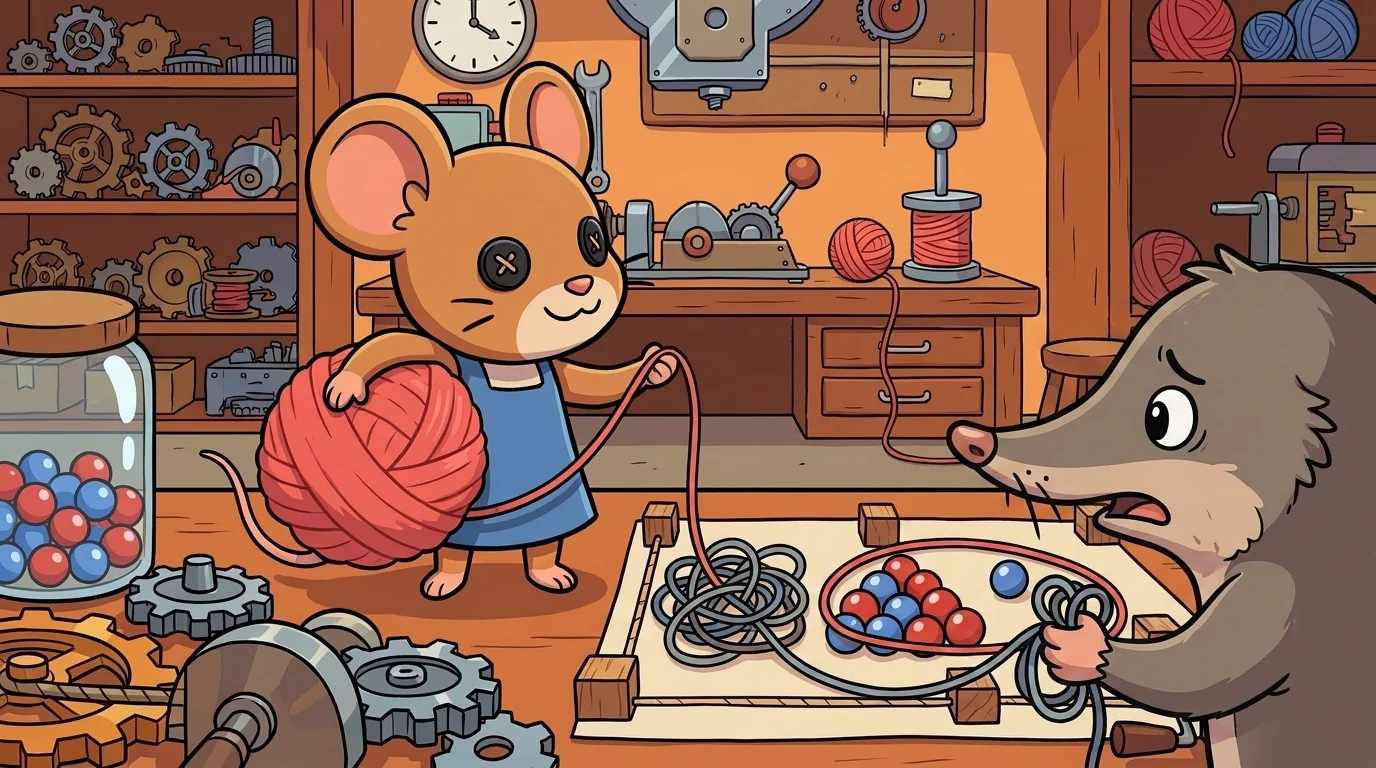
Clew's favourite thing was watching a worried kid's huge cloud of not-knowing shrink to something they could hold.
A frightened shrew named Tod crept up to her. "My friend is late getting home," Tod whispered, "and my head is full of a thousand terrible reasons why, and I can't stop, and they all feel equally likely and it's unbearable."
"A thousand maybes, all at once," Clew said softly. "Of course that's unbearable — nobody can hold a thousand. So let's wait for clues and start crossing out." She wound her thread gently. "Did you hear there was any trouble in the village today?"
"No," Tod admitted. "It's been quiet."
"Then cross out every maybe that needed trouble," Clew said, winding in. "Gone. Was it raining hard — could they be sheltering?"
"...It did rain. Yes."
"Then that maybe just got much more likely, and the scary ones got smaller." She drew the thread snug, the tangle pulling in to a tidy little loop. "See? Two clues, and a thousand terrible maybes became one gentle, likely one: they're waiting out the rain. You weren't wrong to worry the cloud. You just hadn't let the clues shrink it yet."
Tod breathed, watching the small tight loop of thread. "It got so much smaller."
"Knowing more almost always makes it smaller," Clew said. "That's the kindness in a clue."
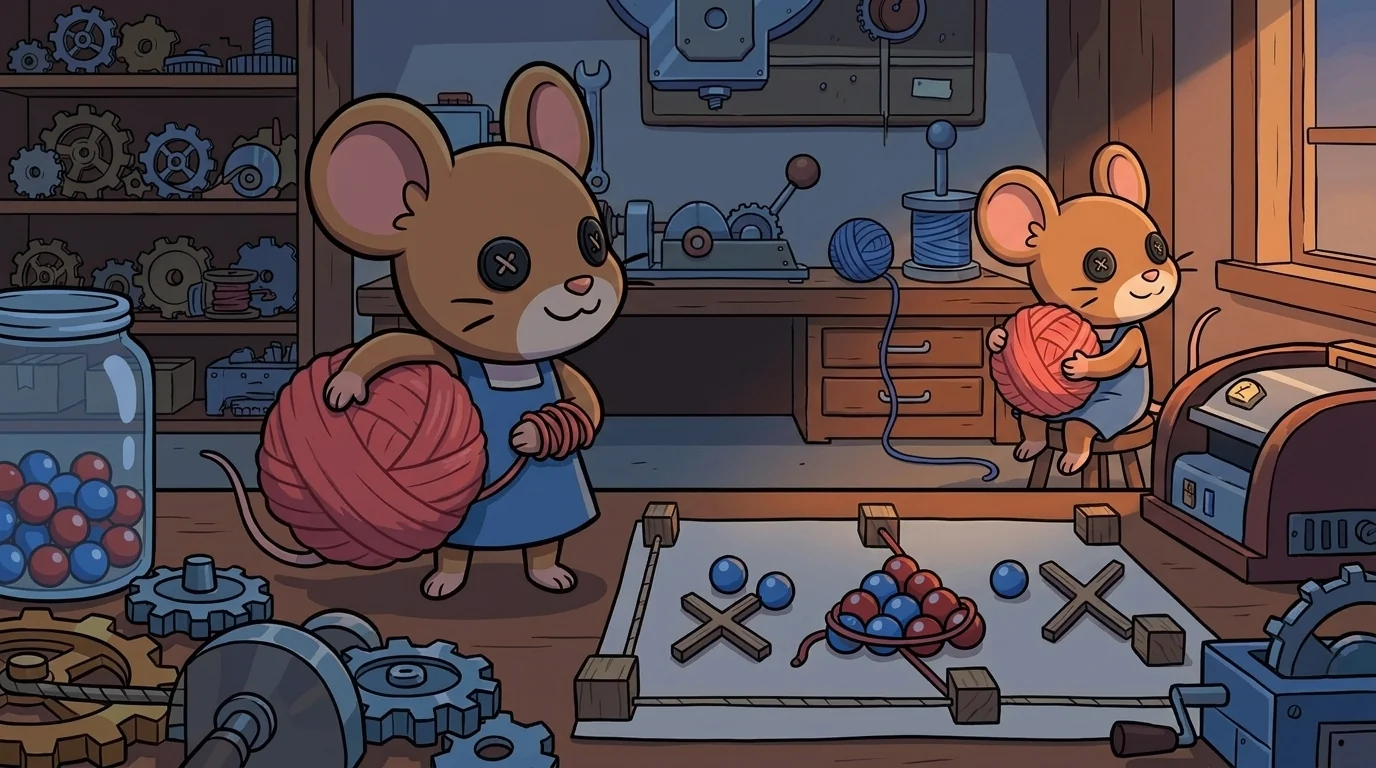
Later, when the workshop was dim and the thread was wound neat around her paw, Clew sat watching the last light.
Bree came back. "Can I ask you something? Doesn't it bother you, how the answer keeps changing? You say one chance, then a clue comes, and suddenly it's different. Don't you ever wish it would just hold still?"
Clew was quiet, turning the soft red ball in her paws.
"I used to wish that," she admitted. "When I was small, a changing answer felt like the ground moving under me. I wanted one chance, fixed, forever." She smiled and wound a little thread. "But I don't wish it anymore. A chance that changes when you learn something isn't unstable — it's alive. It's the world being honest with you: here's what's likely now; and now you know more, so here's what's likely now." She looked at the small tidy loop. "I'd much rather have an answer that grows with me than one that stays wrong out of stubbornness."
She looked out at the gathering dark, her ball of thread snug and ready for whatever clue tomorrow brought.
And as Bree settled nearby, Clew felt the deep, settled calm she always felt at day's end — not the false comfort of a world that never changes, but the truer comfort of knowing that every new thing she learned would only ever draw the great cloud of not-knowing in closer, clue by gentle clue, until even the biggest fog became something small enough to hold in two paws.
The ChanceForge ensemble
Clew the Clue-Follower is part of ChanceForge's distributed-narrative cast. Each character embodies a different curricular primitive; together they teach the full subject.
-

Tally the Counter-of-Outcomes
Data collection + frequency counting (the foundational "what happened, how often?" move)
-

Display the Picture-Maker
Graphs and visual displays (bar charts, histograms, dot plots, line graphs — turning numbers into pictures)
-

Center the Middle-Finder
Central tendency — mean, median, mode (the "what's typical?" question)
-

Sample the Estimator
Sampling, sampling distributions, inference from sample to population
-

Tree the Compound-Brancher
Compound events and probability trees — multiplication rule for independent events, addition for disjoint, conditional dependencies
-

Odds the Likelihood-Reader
Basic probability — placing a chance on the 0-to-1 scale from impossible to certain
-
Scatter the Spread-Reader
Spread and variability — how far apart the data is (range), not just the middle
-
Flipside the Other-Outcome-Counter
The complement rule — find the chance it doesn't happen and subtract from 1
-
Evens the Long-Run-Settler
Expected value and the long run — results settle toward the average over many tries