
STEM
ChanceForge
Run a virtual casino, investigate insurance company math, predict sports outcomes, and solve medical diagnosis puzzles — mastering probability and statistics through real-world contexts where the math determines who wins and who loses.
Meet your mentor
Every Spark & Anvil app has a friendly mentor character that demonstrates, praises, and patiently scaffolds learning. On-device AI personalizes the mentor's responses to your kid's progress — never connecting to a server, never collecting data.
Mentored by Chance
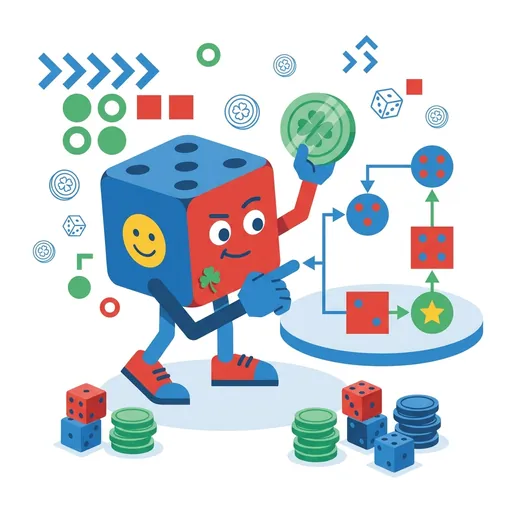
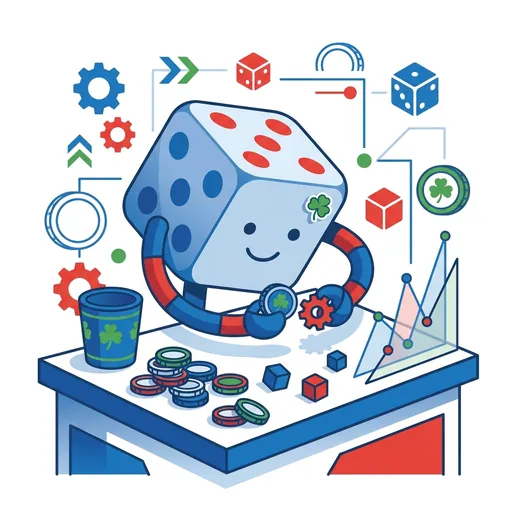
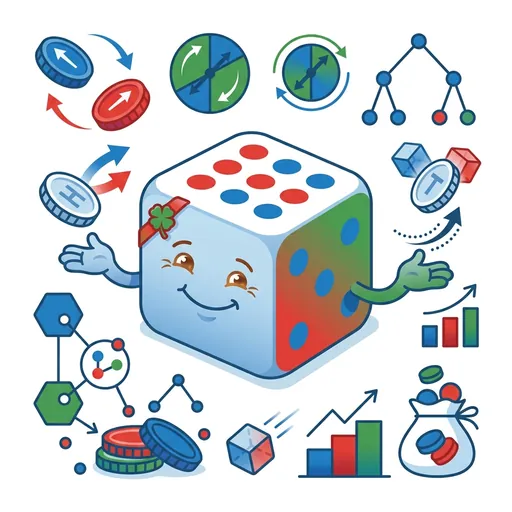
#29B6F6 ChanceForge is a probability, statistics, and data science lab where you flip coins, roll dice, run a virtual casino, investigate insurance math, predict sports outcomes, and solve medical diagnosis puzzles. You will discover why randomness has patterns, why the house always wins, and why statistics is the most powerful tool in modern decision-making. Your AI mentor Chance connects the math to real careers in data science, medicine, sports analytics, and finance.
Distributed-narrative cast
Meet the cast
Habgood intrinsic-integration test: **the character's behavior IS the statistical move**.

Tally the Counter-of-Outcomes
Data collection + frequency counting (the foundational "what happened, how often?" move)
Read chapter →

Display the Picture-Maker
Graphs and visual displays (bar charts, histograms, dot plots, line graphs — turning numbers into pictures)
Read chapter →

Center the Middle-Finder
Central tendency — mean, median, mode (the "what's typical?" question)
Read chapter →

Sample the Estimator
Sampling, sampling distributions, inference from sample to population
Read chapter →

Tree the Compound-Brancher
Compound events and probability trees — multiplication rule for independent events, addition for disjoint, conditional dependencies
Read chapter →
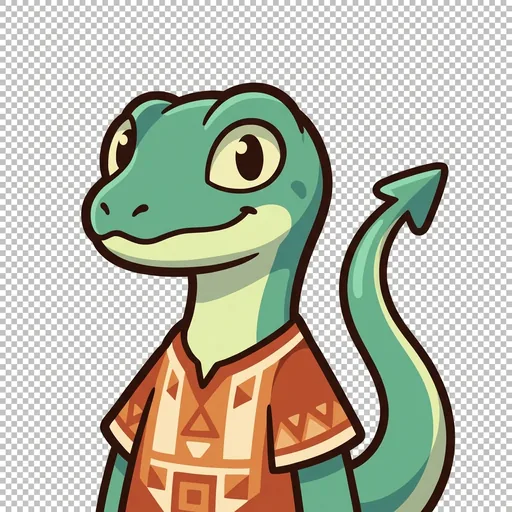
Odds the Likelihood-Reader
Basic probability — placing a chance on the 0-to-1 scale from impossible to certain
Read chapter →

Scatter the Spread-Reader
Spread and variability — how far apart the data is (range), not just the middle
Read chapter →

Flipside the Other-Outcome-Counter
The complement rule — find the chance it doesn't happen and subtract from 1
Read chapter →
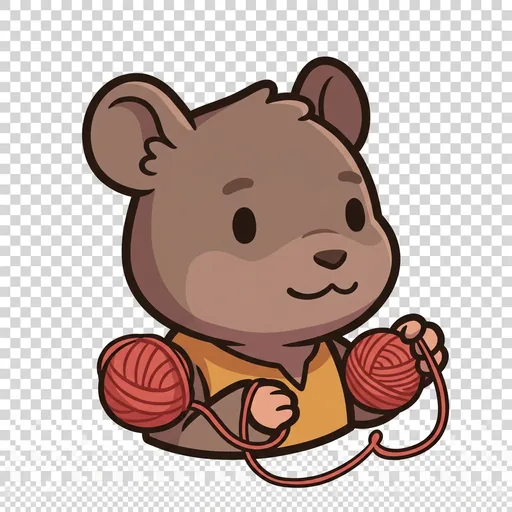
Clew the Clue-Follower
Conditional probability — how chances change once you learn a new fact
Read chapter →
Evens the Long-Run-Settler
Expected value and the long run — results settle toward the average over many tries
Read chapter →
Browse all 10 chapters → · What's distributed-narrative methodology? →
What's inside
Probability Foundations
Flip coins, roll dice, and spin spinners. Make predictions, then run the experiments and compare your guess to what actually happens. Watch the experimental pro
Compound Events
Build probability tree diagrams for events with multiple steps. What is the probability of flipping heads AND rolling a 6? Use the multiplication rule for indep
Distribution Explorer
Collect data and build histograms in real time. Calculate mean, median, mode, range, and standard deviation. See how different distributions look — symmetric, s
Sampling Lab
Discover why polling works — and why it sometimes fails. Sample from a virtual population and see how random samples represent the whole. Compare random samplin
Mentored by Chance — on-device AI, no data leaves the device.
How ChanceForge handles your kid's data
- ✅ All progress, settings, and AI-generated content stays on the device
- ✅ No analytics, no tracking, no third-party SDKs
- ✅ No ads, no in-app purchases — you pay once
- ✅ COPPA compliant under the 2026 FTC amendments
- ✅ Parental controls + session limits + content filters built in
ChanceForge runs on ForgeKit — the open-source Swift Package Manager framework that powers every Spark & Anvil app. ForgeKit ensures consistent accessibility, COPPA compliance, and design language across the portfolio, so your kid's progress and preferences feel coherent across every app they touch.
Coming to the App Store
ChanceForge is in active development. Email us to hear when it ships — no marketing, no spam, just a one-shot launch announcement.
Email me at launch