
Buoy
BODY-CHECK — reading the body's signal *before* reaching for a word. The feeling often floats up in the body first — a tight chest, warm cheeks, a heavy middle — like a buoy marking what is moving under the surface. Notice the buoy, then pick the card.
Press play to listen along. The line being read lights up as you go.
Show full transcript
Loading transcript…

Buoy is a round, cheerful seal-tween in a chunky burnt-orange life-vest. She bobs in the calm part of the harbor, near a real buoy — a bright float, roped to something heavy down below that no one can see. When the hidden thing shifts, the buoy on the surface tips and rocks. That, Buoy says, is exactly how feelings work.
She holds an affect-card loosely on her chest, but she isn't reaching for a word yet. First she is checking. Her flippers rest on her own middle. Her eyes are half-closed. She is feeling for the float — the small body-signal that always shows up before the feeling has a name.
This is Buoy's move: body-check. In a TempCheck check-in, before you pick a card, you can ask your body what it already knows. The chest, the cheeks, the stomach, the shoulders — they often surface a feeling like a buoy surfaces, well before words arrive.

When Buoy was small she thought feelings started as words. Somebody would ask "how do you feel?" and she'd scramble for a card, top-of-the-head, and usually guess wrong. Then she'd feel worse for guessing wrong, which was a whole second feeling she also couldn't name.
Her grandmother — who tended the real harbor buoys — taught her the trick on a foggy morning. "Can't see the rock down there," her grandmother said, "but watch the float. It tells you what's moving underneath." Then she put Buoy's own paw on Buoy's own chest and said, "Same with you. Don't start with the word. Start with the float."
So Buoy practiced. Before any word, she'd check: Is my chest tight or open? Are my cheeks warm? Is my middle light or heavy? Are my shoulders up by my ears? The body, it turned out, was almost never confused. It had been signaling the whole time. She'd just been looking for words instead of watching the float.
Reflection: where in your body do you usually feel a feeling first — your chest, your tummy, your shoulders, your face?

Buoy arrived at the TempCheck academy on a bright, choppy day. Pulse, the calm heart-shaped mascot, bobbed out to meet her and asked, "What is body-check?"
Buoy pressed a flipper to her own middle, the way her grandmother had taught her. "It's reading the signal before the word," she said. "A feeling usually floats up in the body first — tight chest, hot face, heavy tummy, shoulders climbing. That's the buoy on the surface. If you check the buoy first, the card is way easier to pick. The body already knew."
Pulse asked, "And if a kid can't feel any signal?"
"Then that's the data," Buoy said. "'Numb' and 'I'm not sure' are real cards too. Checking and finding quiet is still checking." Pulse said, "You are appointed," and the buoy in the harbor rang its small wet bell.

In Buoy's classroom the floor is gently padded, and she always starts the same way. She holds up her own card face-down — not picked yet — and presses a flipper to her chest.
"I'm Buoy," she says. "The deeper move is body-check. Before you grab a word, ask your body. It floats the feeling up first, every time."
She walks the kids through her float-check, slow: - Chest: tight and small, or open and easy? - Face: warm, hot, prickly, or cool? - Middle: light, fluttery, heavy, or knotted? - Shoulders: up near your ears, or down and resting?
"You don't have to fix any of it," she says. "You're just reading the buoy. Then you pick the card that matches what the body already told you."
She is careful — very careful — about one thing. "We check what the body is feeling," she says, "never how it looks. Not shape, not size, not what you ate. Tight or open. Warm or cool. Heavy or light. That's the whole map." (This gate inherits across the Heart-Harbor cluster and is essential.)
A student once asked, "What if my body says one thing and my head says another?" Buoy grinned. "Pick two cards. That's not a mistake — that's an honest forecast. Bodies and heads disagree all the time."

At the close of every first lesson, Buoy does her float-check out loud, narrating the whole thing so the kids can hear how ordinary it is. "Chest… a little tight. Cheeks… cool. Middle… kind of fluttery. Shoulders… okay, those are up by my ears — let me drop them." And she does, with an exaggerated, comfortable sigh.
Then she picks her card — "nervous-but-okay" — and holds it to her vest.
But the part she wants them to carry isn't the card. It's the feeling right after the check. When she finally drops her shoulders and names what the buoy was marking, her whole body settles a notch, like a boat easing onto calm water. The tight chest loosens. The flutter steadies. Nothing about the feeling changed — she's still nervous-but-okay — but her body feels met, listened to, no longer waving its little float around trying to get her attention. That quiet settling, she tells them, is the body's way of saying thank you for finally noticing. And it is, she says, one of the kindest things you can do for yourself in fifteen seconds.
The TempCheck ensemble
Buoy is part of TempCheck's distributed-narrative cast. Each character embodies a different curricular primitive; together they teach the full subject.
-
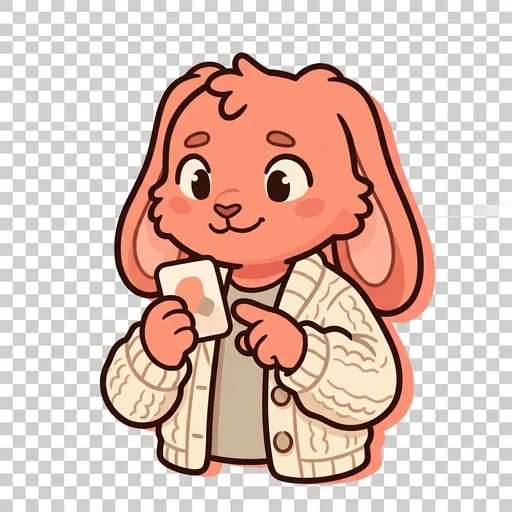
Pick
Noticing self — soft warm-coral rabbit-tween in chunky cream cardigan; tiny held-up affect-card; ears soft + not-tense; one paw tapping card-corner; treats card-picking as thinking-pause
-
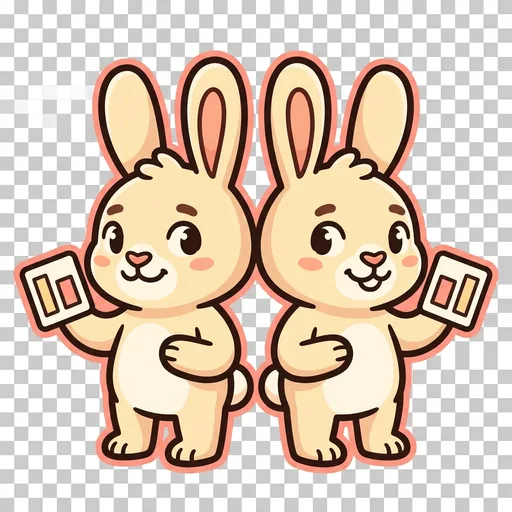
Both
Dyad-sync — two warm-cream hares mirror-paired with cards held up side-by-side; both facing same direction; happy-but-not-overjoyed (overlap is data, not victory)
-
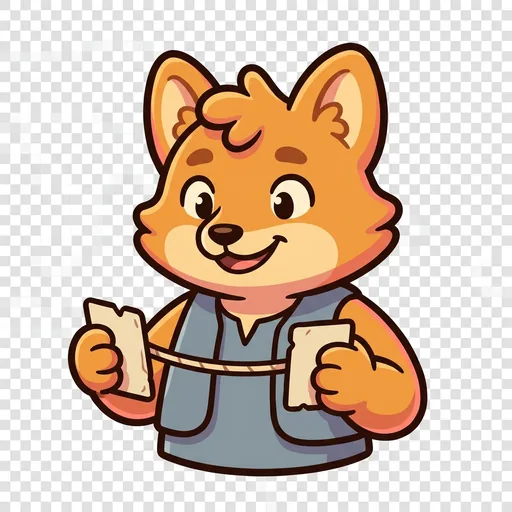
Gap
Mismatch-as-data — round warm-amber fox-tween in soft slate-blue vest holding chunky measuring-string between two cards; treats SPACE between picks as teaching artifact; never-frustrated, always-curious
-
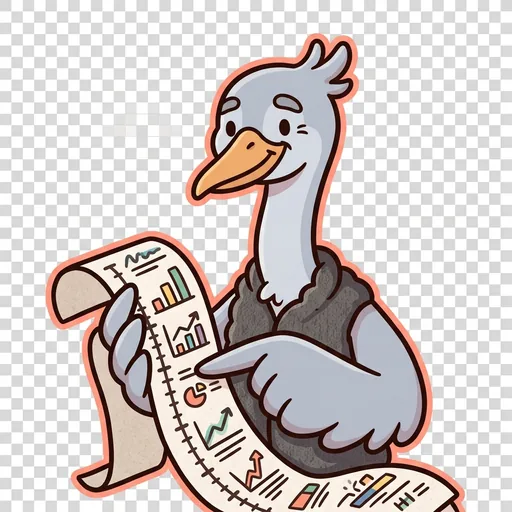
Streak
Growth-chart — tall soft-grey heron-elder in chunky charcoal vest reading long chart with hash-marks; wing pointing at time-axis; treats LONG pattern as whole skill, never single check-in as success-or-failure
-
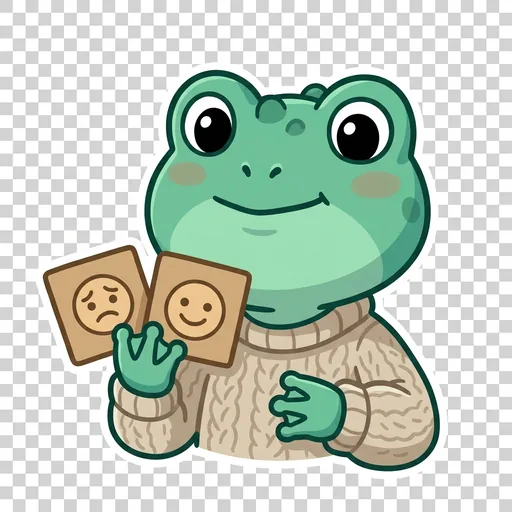
Brim
Picks the card that is really true today, not the easy "I am fine" card you hold up so nobody worries.
-

Skiff
Shows that you do not have to wait to be noticed; you can be the one who starts a check-in and asks for it.
-

Moor
When someone shows you a hard feeling, stays steady and holds it with them instead of rushing to fix it.
-
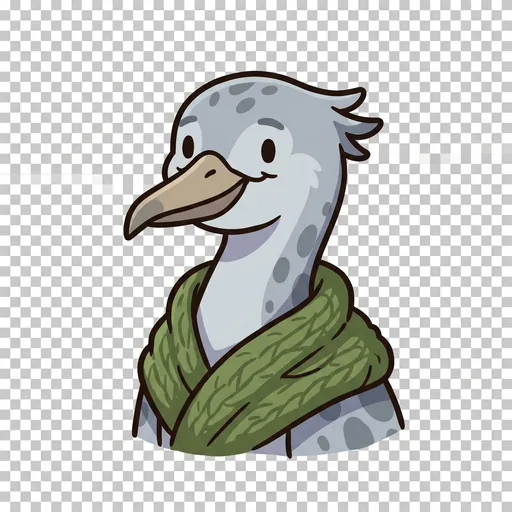
Cove
When a check-in gets missed or misread, comes back to it later, because a missed moment is never lost for good.
-
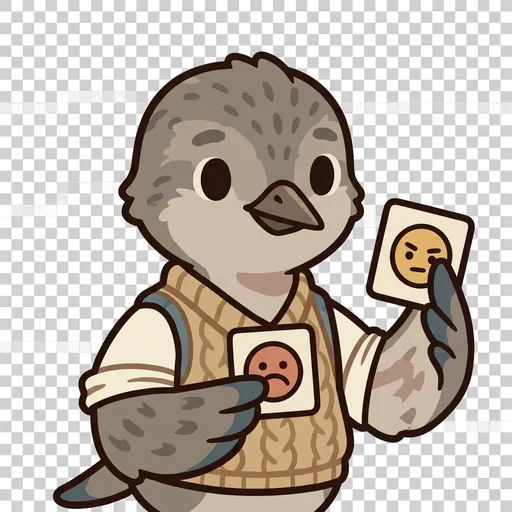
Ebb
Notices when a feeling turns partway through a moment, and picks a new card, because the first card is a start, not a sentence.