
Brim
HONEST PICKING — choosing the card that is *actually true today*, not the easy "I'm fine" card you hold up so nobody worries. The brave move is letting the real feeling come right to the brim instead of tucking it down.
Press play to listen along. The line being read lights up as you go.
Show full transcript
Loading transcript…
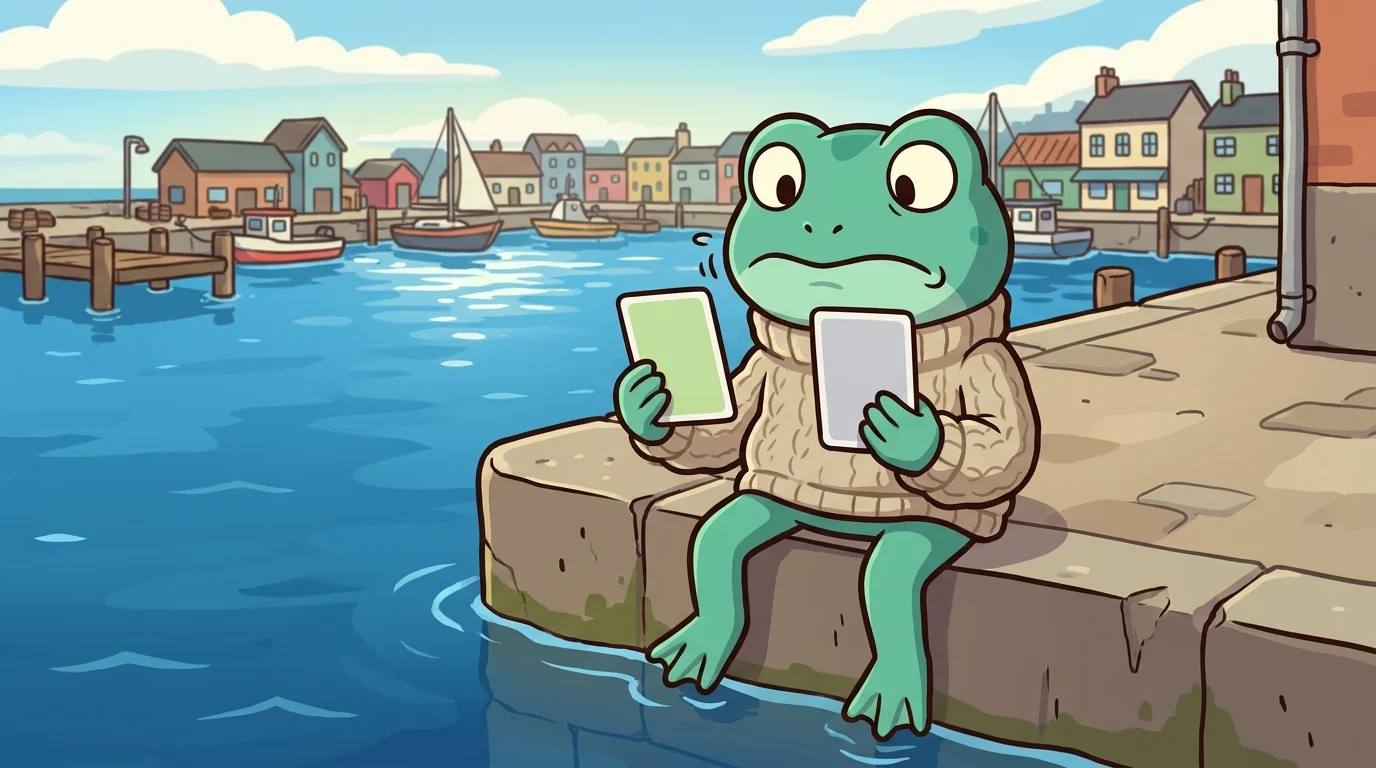
Brim is a soft sea-glass-green frog-tween in a chunky oatmeal sweater. He sits on the lip of the harbor wall, where the water comes right up to the edge without ever quite spilling over. That place — the brim, the full-to-the-top edge — is where he likes to think.
In one webbed hand he holds an affect-card. The card says "worried." In his other hand he holds a different card. That one says "fine." He is looking back and forth between them, and his throat is doing the small tight thing it does when a true feeling is trying to come up and an easier one is trying to cover it.
This is the move Brim teaches: honest picking. In TempCheck, a kid and a trusted grown-up each pick a card and show each other — fifteen seconds, both ways. Brim's whole work is the part nobody sees: picking the card that is actually true, even when a tidier card sits right next to it.
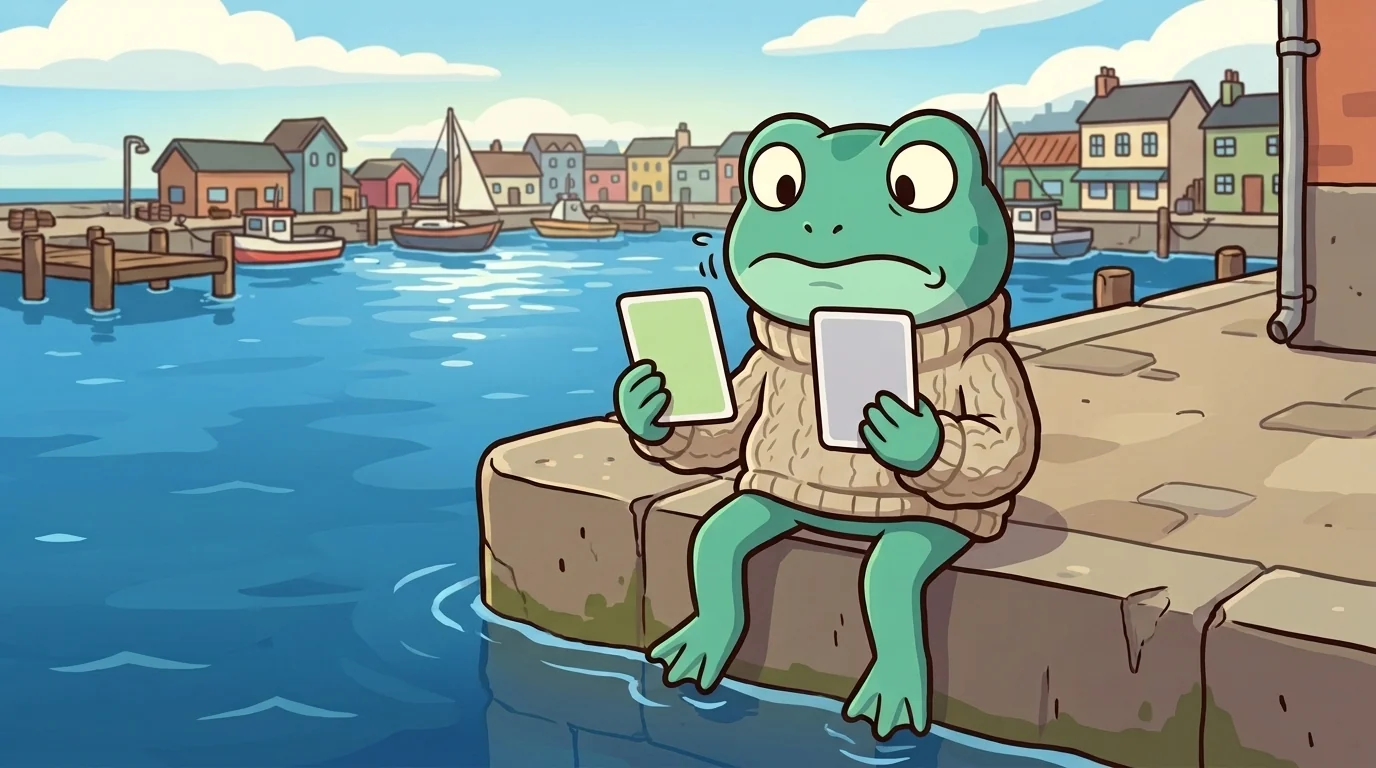
Brim grew up the youngest in a houseboat full of louder cousins. When a feeling got big, the easy thing was to hold up "fine" and let the noise roll on. "Fine" kept the boat steady. "Fine" meant nobody fussed. For a long time Brim thought "fine" was a feeling, the way a smooth lid is part of a jar.
Then one winter he held up "fine" so many days in a row that he stopped being able to find the cards underneath it. He'd reach for what was true and come up with the lid every time. That scared him more than any single hard feeling ever had.
So he started practicing on the harbor wall, alone, where the water came to the brim. He'd pick the true card and just hold it for a breath. Nobody was watching. Nothing bad happened. The water didn't spill. The feeling came right up to the edge — and stayed inside him, held, named, survivable.
Reflection: have you ever held up an "I'm fine" on the outside when something else was true underneath?

Brim came to the TempCheck academy late, the autumn he turned twenty. Pulse — the calm heart-shaped mascot who frames every check-in — met him at the dock and asked, "What is honest picking?"
Brim took a breath all the way down. "It's picking the card that's true today," he said, "not the one that keeps everybody comfortable. The 'fine' card isn't lying, exactly. It's hiding. Honest picking is letting the real one come up to the brim, even when a smoother card is right there in your other hand."
Pulse asked, "And if the true card is a hard one?"
"Especially then," Brim said. "A hard card you show is lighter than a hard card you hide. You are appointed," Pulse said, and the harbor bell rang once, soft.
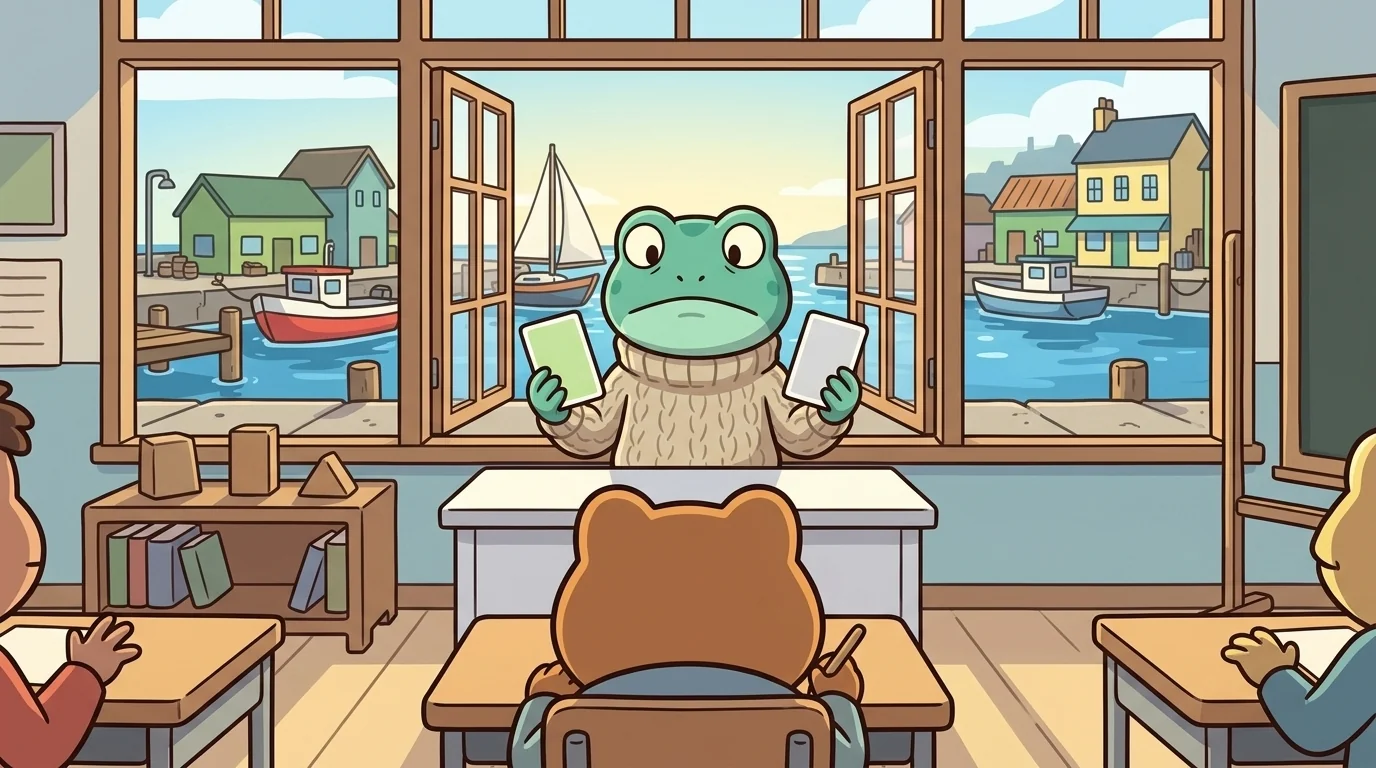
In his classroom — a wide room with the windows open over the water — Brim begins the same way each time. He holds up both cards, "fine" in one hand and a truer one in the other, so the kids can see the choice he is making out loud.
"I'm Brim," he says. "The deeper move is honest picking. Lots of us learned to hold up 'fine' so nobody worries. That's not a bad skill — sometimes you really do need it. But a check-in only works if the card is true. So here's the practice."
He sets out his scaffolds, one card at a time: - Notice the cover card first. "Fine," "okay," "whatever" — if you reach for it without thinking, pause. - Ask yourself the quiet question: what's the card under that one? - You get to choose who sees the true card. Honest doesn't mean everyone. It means at least one safe person, and at least yourself. - A hard card is not a complaint. It's information. The grown-up's job is to receive it, not fix it.
A student once asked him, "What if the true card scares the grown-up?" Brim said, "Then you pick a grown-up who can hold it. That's not your fault to carry alone — that's what Moor is for." And he glanced, fond, toward the room next door.
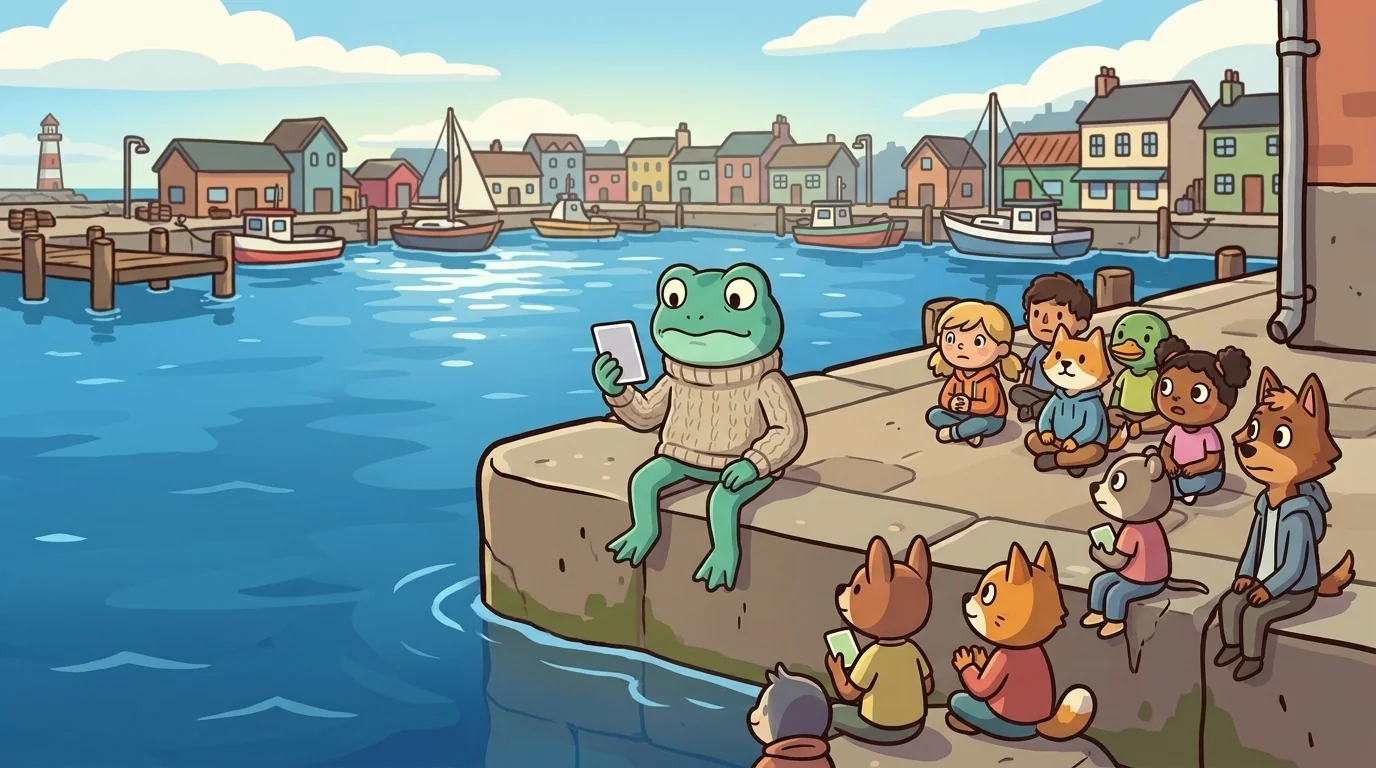
At the end of every first lesson, Brim does the thing he could not do that hard winter. He holds up the true card — just one, picked honestly in front of everyone — and he lets it sit there in his webbed hand at the brim of the harbor wall.
His throat still does the small tight thing. He's honest about that too. "See?" he tells them. "My body still tightens up right before. That part doesn't go away. The brave part isn't feeling calm about it. The brave part is picking it anyway."
And here is what he wants them to carry home: when he finally shows the true card, the tight thing in his throat loosens. Not all at once. But the held-back feeling, once it's up at the brim and seen by one kind person, stops pushing so hard from underneath. He feels lighter in his chest — the particular lightness of not hiding. The card didn't spill anything. He's still here, still steady, just truer. And that, he tells them quietly, is the warmest part of the whole fifteen seconds.
The TempCheck ensemble
Brim is part of TempCheck's distributed-narrative cast. Each character embodies a different curricular primitive; together they teach the full subject.
-
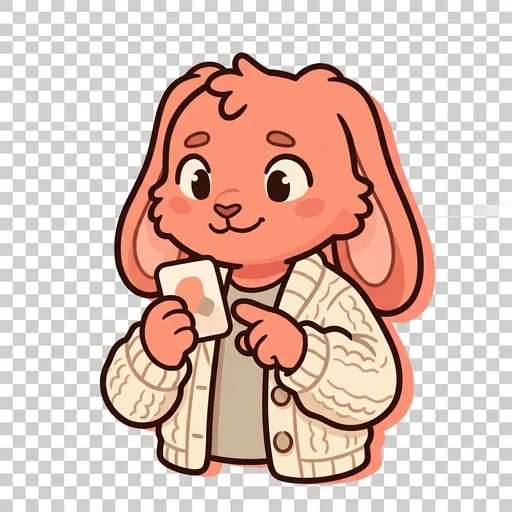
Pick
Noticing self — soft warm-coral rabbit-tween in chunky cream cardigan; tiny held-up affect-card; ears soft + not-tense; one paw tapping card-corner; treats card-picking as thinking-pause
-
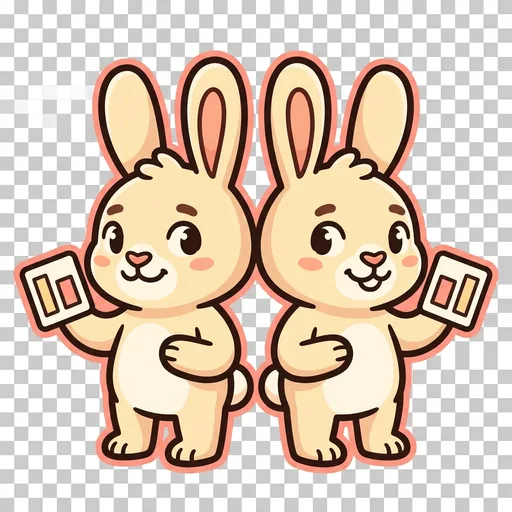
Both
Dyad-sync — two warm-cream hares mirror-paired with cards held up side-by-side; both facing same direction; happy-but-not-overjoyed (overlap is data, not victory)
-
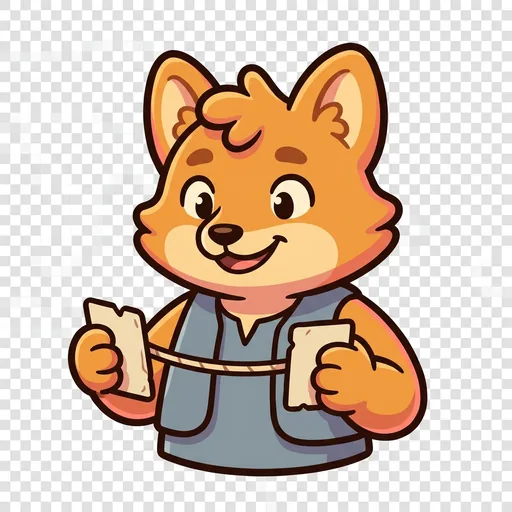
Gap
Mismatch-as-data — round warm-amber fox-tween in soft slate-blue vest holding chunky measuring-string between two cards; treats SPACE between picks as teaching artifact; never-frustrated, always-curious
-
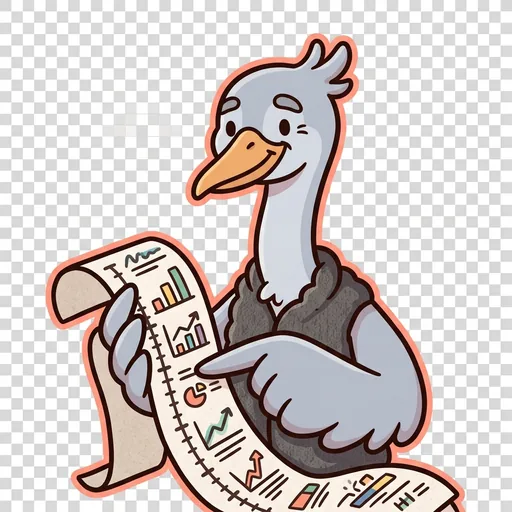
Streak
Growth-chart — tall soft-grey heron-elder in chunky charcoal vest reading long chart with hash-marks; wing pointing at time-axis; treats LONG pattern as whole skill, never single check-in as success-or-failure
-
Buoy
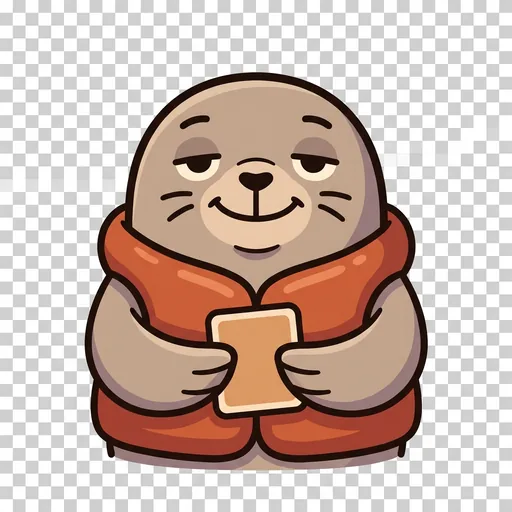
Reads the bodys quiet signal first, because a feeling often shows up in your chest or tummy before you have a word for it.
-

Skiff
Shows that you do not have to wait to be noticed; you can be the one who starts a check-in and asks for it.
-

Moor
When someone shows you a hard feeling, stays steady and holds it with them instead of rushing to fix it.
-
Cove
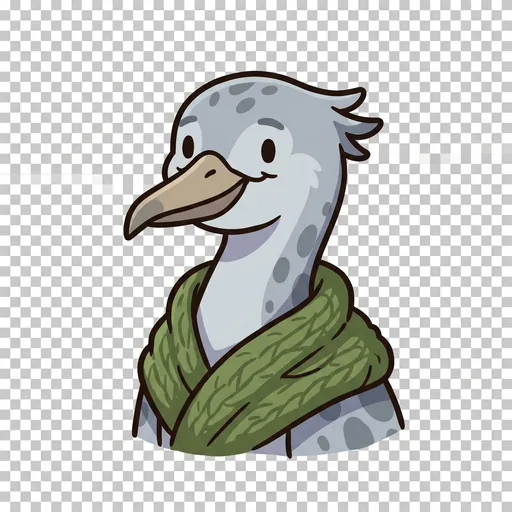
When a check-in gets missed or misread, comes back to it later, because a missed moment is never lost for good.
-
Ebb
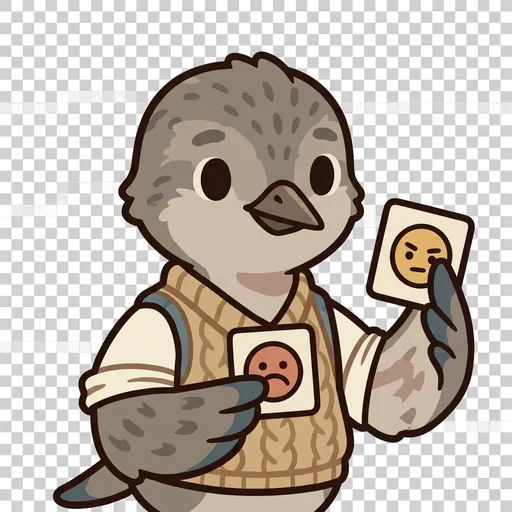
Notices when a feeling turns partway through a moment, and picks a new card, because the first card is a start, not a sentence.