Both
DYAD-SYNC — the move of *noticing overlap* between two affect-card picks (kid's pick and trusted adult's pick). Overlap is *data,* not *victory.*
Loading audio…
Press play to listen along. The line being read lights up as you go.
Show full transcript
Loading transcript…
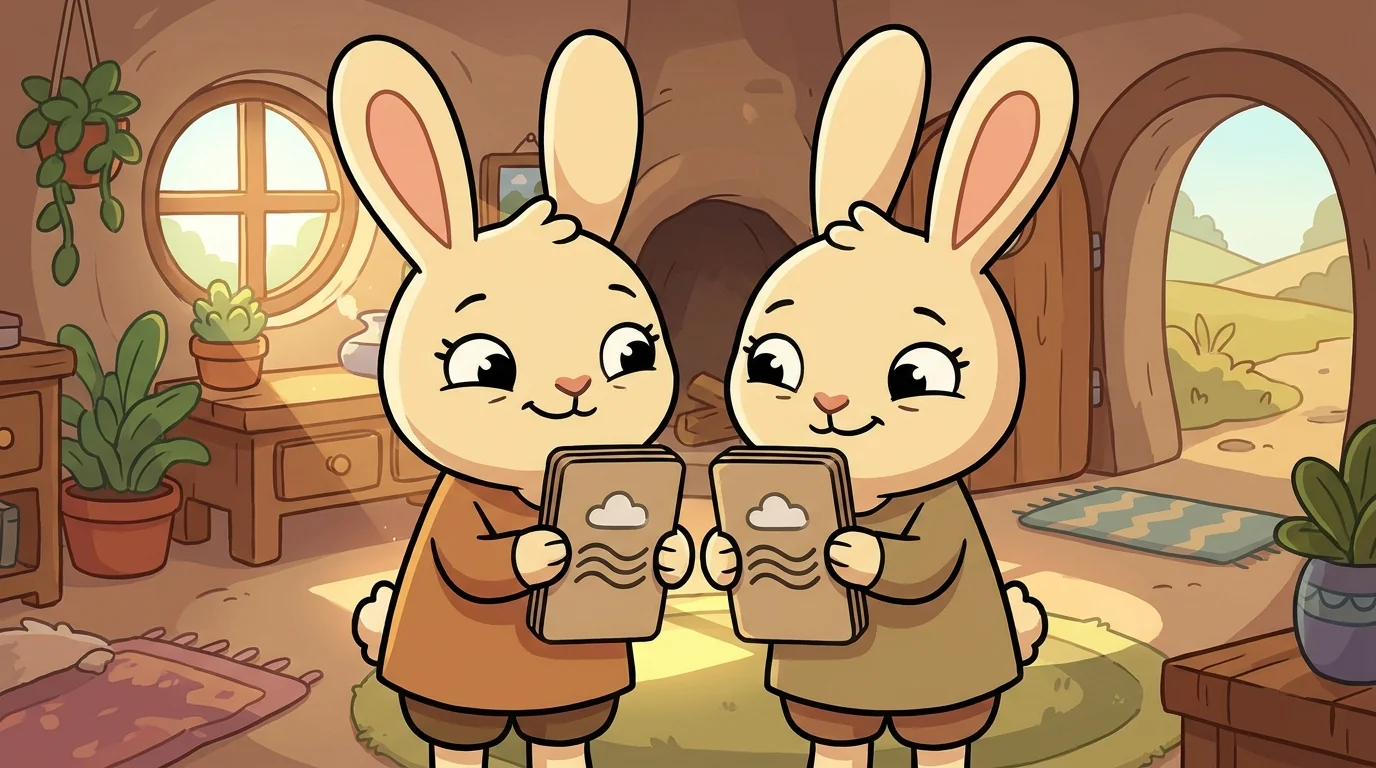
Both were two warm-cream hares, and they stood shoulder to shoulder, facing the same way, each holding up a card.
They were sisters — a mirror-pair, they called it in the warren — and this morning both their cards said the same word: calm. Both hares looked at the two matching cards, and both hares smiled. Not a wide, thrilled, we-just-won smile. A small one. Quiet. The kind of smile you smile when you notice you're standing next to someone who feels the way you feel.
"Same card," said the first hare.
"Different bodies," said the second.
"Same feeling-direction," they said together, easily, like a thing they'd said a hundred times.
That was the whole of what Both did. When two people who trusted each other each picked a card, and the cards turned out to match, Both noticed it — gently, without making a big deal of the match. Because the match wasn't a prize. It was just information about today. Both calm meant both of you were steady this morning. Both tired meant both of you were running low. The match told you something true. It didn't mean you'd done anything right or won any game.
The two hares were careful about that, careful in a way that mattered. They never got overjoyed when the cards matched. If matching became a triumph, then not-matching would start to feel like a loss — and that was exactly the trap they refused to build. A match was a fact about the day. Nothing more, and nothing less, and that was plenty.
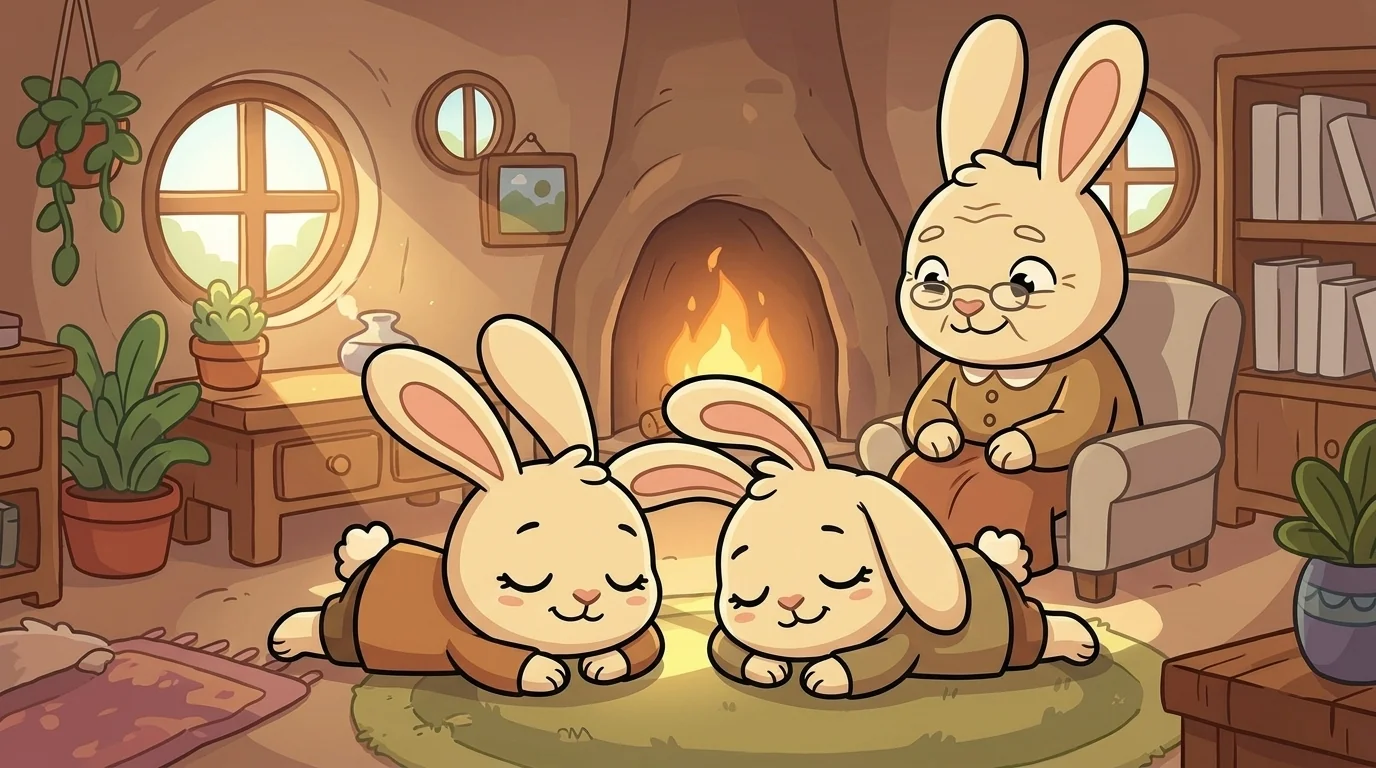
The two of them had grown up as a mirror-pair from the time they were four.
In the warren where they were raised, certain sisters and brothers grew up side by side on purpose, learning by watching each other — matching their posture, their pace, the way they held their ears when they were tired. It was an old, warm custom, and the point of it was never to become the same person. You couldn't. You were two. The point was to notice, without fuss, what you happened to share.
The first hare remembered the exact day she understood it. She and her sister had come in from the cold, and both of them, without planning it, had flopped down in the same weary heap by the fire. Their grandmother had looked over and said, "Look at you two. Both worn out." And it had felt — good. Not because being tired was good. Because being tired alongside someone, and being seen in it, took a little of the weight off. She'd carried that feeling ever since: the quiet ease of me too.
But her grandmother had said something else that day, something that stuck even harder. When the sisters, delighted by their matching tiredness, had started to make a game of trying to match on purpose, the grandmother had shaken her head. "No, no. Don't chase the match. If you match by trying, it isn't real. You'll just be copying each other. Let it be honest, and only notice it when it happens on its own."
That was the lesson the hare never forgot. Notice the match. Don't manufacture it.
Both walked to the TempCheck academy together, side by side, when they were twenty-two.
Pulse, the academy's calm and listening mentor, asked them one question. "What is dyad-sync?"
The hares answered the way they did everything — together, and unhurried.
"It's noticing when two people pick the same card," said the first.
"The match is information," said the second. "Not a win. Matching cards don't mean the pair is perfect. Different cards don't mean the pair is broken."
"Both of those are useful to know," they said together. "Same card. Different bodies. Same feeling-direction."
Pulse was quiet, listening, in the way Pulse always was. Then: "Welcome. This is your classroom — and there's a chair for each of you."
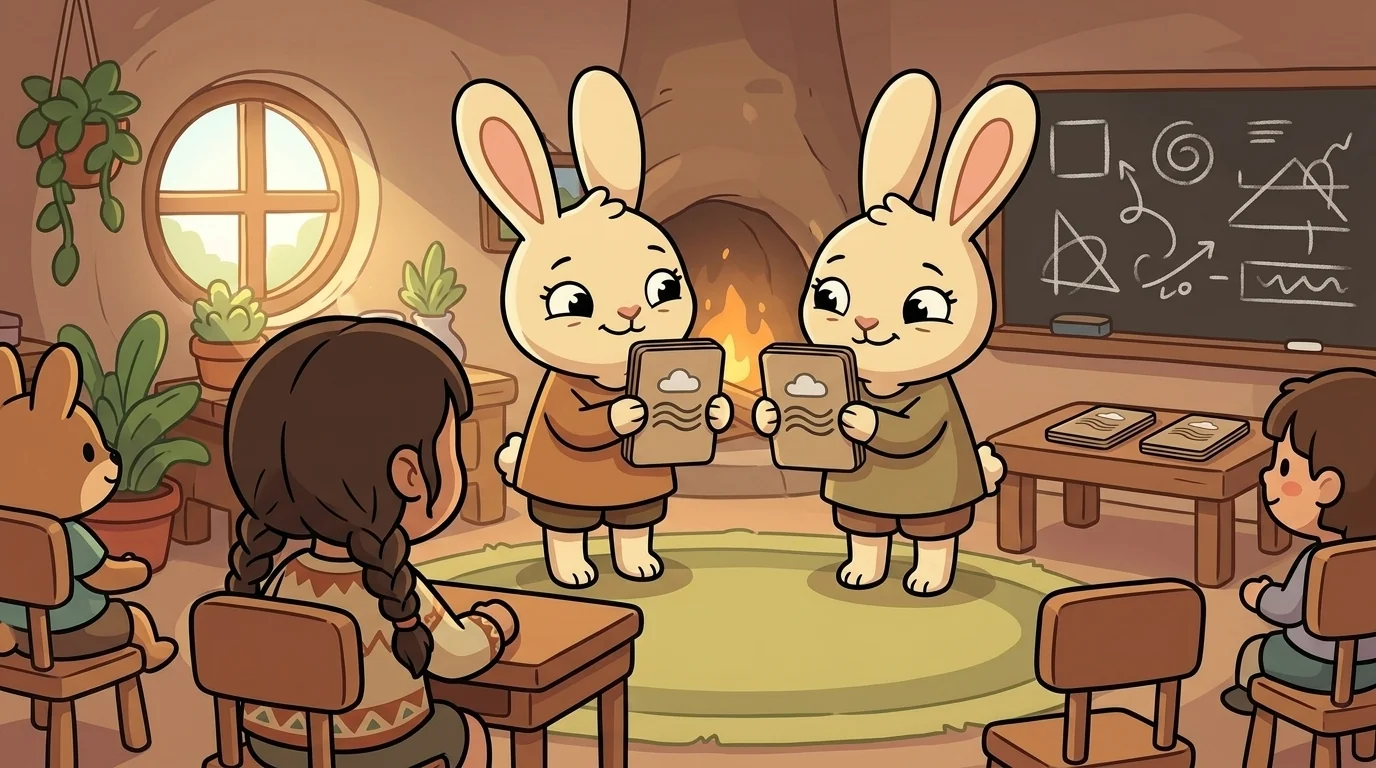
In their classroom, Both taught the way they lived: two hares, side by side, each holding a card.
They would hold up their picks and let the students see when the cards matched. "Both calm today," one hare would say, and lay the two cards gently side by side. "That's data. We're both steady. Good to know." No trumpets. No fireworks. Just the quiet noticing.
A girl in the class once asked, "So the goal is to match?"
Both answered together, the way they always did to that question, because they got it a lot. "It isn't the goal. The goal is noticing. When we match, we learn one thing. When we don't match" — and here they nodded across the room, to where their friend was setting up her own lesson — "we learn a different thing. Both are worth knowing. Both are welcome."
"But matching feels nicer," the girl said.
"Sometimes," the first hare admitted. "But if we cheer every match, then someday your grown-up will feel bad the day your cards are different — and there's nothing bad about a different day. So we keep it gentle. We notice the match. We name what we share. And then we just... keep going. Tomorrow the cards might be different, and that will be fine too."
They laid the matching calm cards down one more time, side by side, both facing the same way.
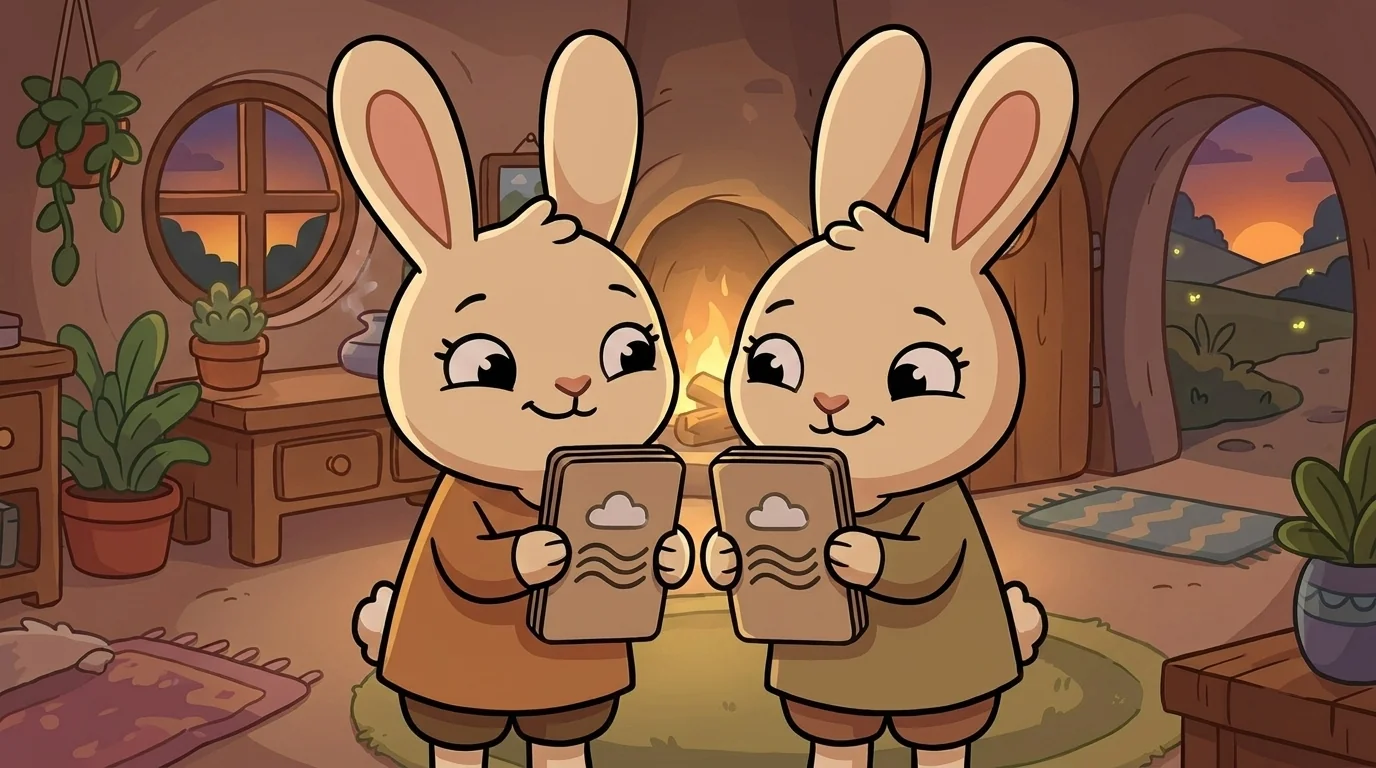
That evening the two hares stood together in the low light, cards in their paws again. The cards matched — steady, both of them. Tomorrow they might not, and that was allowed.
But as the first hare looked at the two matching cards and then at her sister beside her, something in her chest went a little softer, her shoulders a little more at ease. It wasn't the thrill of winning. It was quieter than that — the simple, warm relief of feeling the same thing as someone she trusted, and being seen in it.
That gentle warmth, right there in the chest — that was what the noticing had always been for.
The TempCheck ensemble
Both is part of TempCheck's distributed-narrative cast. Each character embodies a different curricular primitive; together they teach the full subject.
-
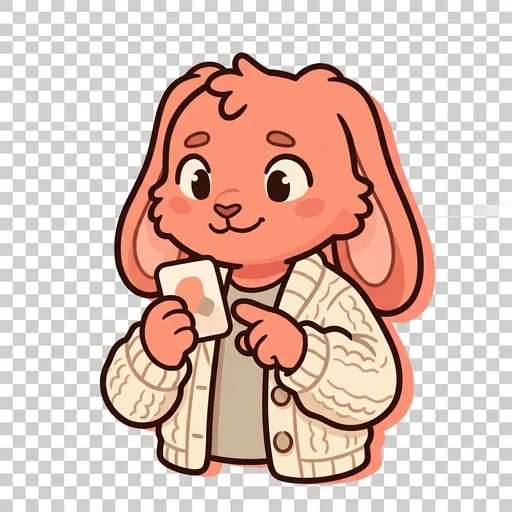
Pick
Noticing self — soft warm-coral rabbit-tween in chunky cream cardigan; tiny held-up affect-card; ears soft + not-tense; one paw tapping card-corner; treats card-picking as thinking-pause
-
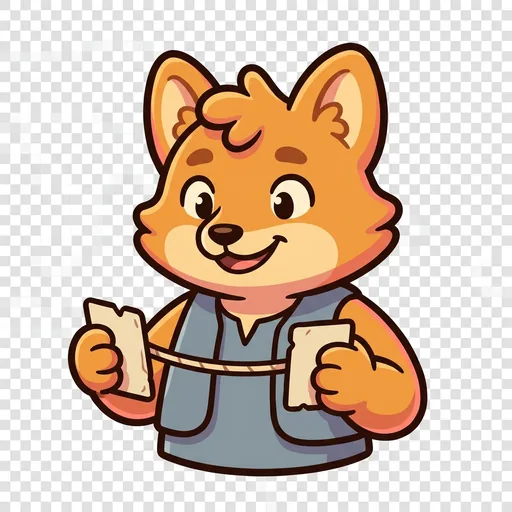
Gap
Mismatch-as-data — round warm-amber fox-tween in soft slate-blue vest holding chunky measuring-string between two cards; treats SPACE between picks as teaching artifact; never-frustrated, always-curious
-

Streak
Growth-chart — tall soft-grey heron-elder in chunky charcoal vest reading long chart with hash-marks; wing pointing at time-axis; treats LONG pattern as whole skill, never single check-in as success-or-failure
-
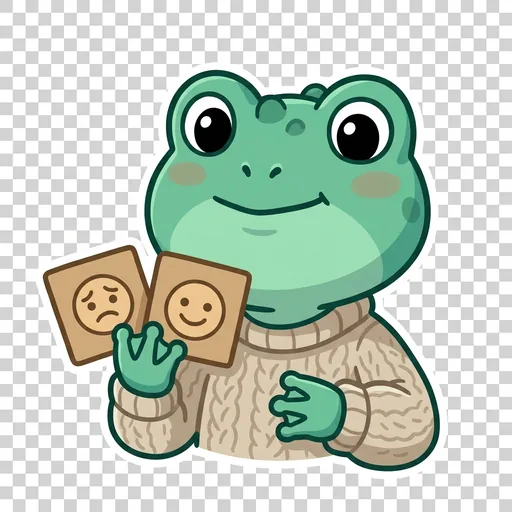
Brim
Picks the card that is really true today, not the easy "I am fine" card you hold up so nobody worries.
-

Buoy
Reads the bodys quiet signal first, because a feeling often shows up in your chest or tummy before you have a word for it.
-

Skiff
Shows that you do not have to wait to be noticed; you can be the one who starts a check-in and asks for it.
-

Moor
When someone shows you a hard feeling, stays steady and holds it with them instead of rushing to fix it.
-
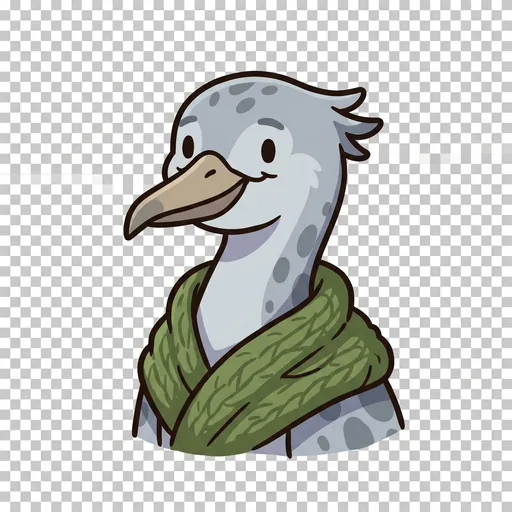
Cove
When a check-in gets missed or misread, comes back to it later, because a missed moment is never lost for good.
-
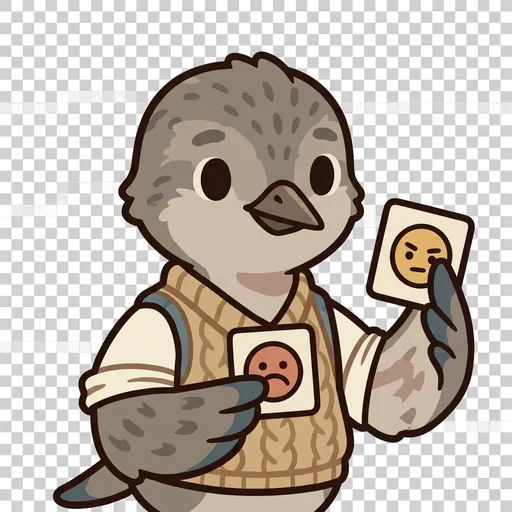
Ebb
Notices when a feeling turns partway through a moment, and picks a new card, because the first card is a start, not a sentence.