
Rafter
PROJECTION — *making your voice reach the back row without shouting, by supporting it with breath. carrying, not yelling — so the quietest line still lands in the last seat.*
Press play to listen along. The line being read lights up as you go.
Show full transcript
Loading transcript…
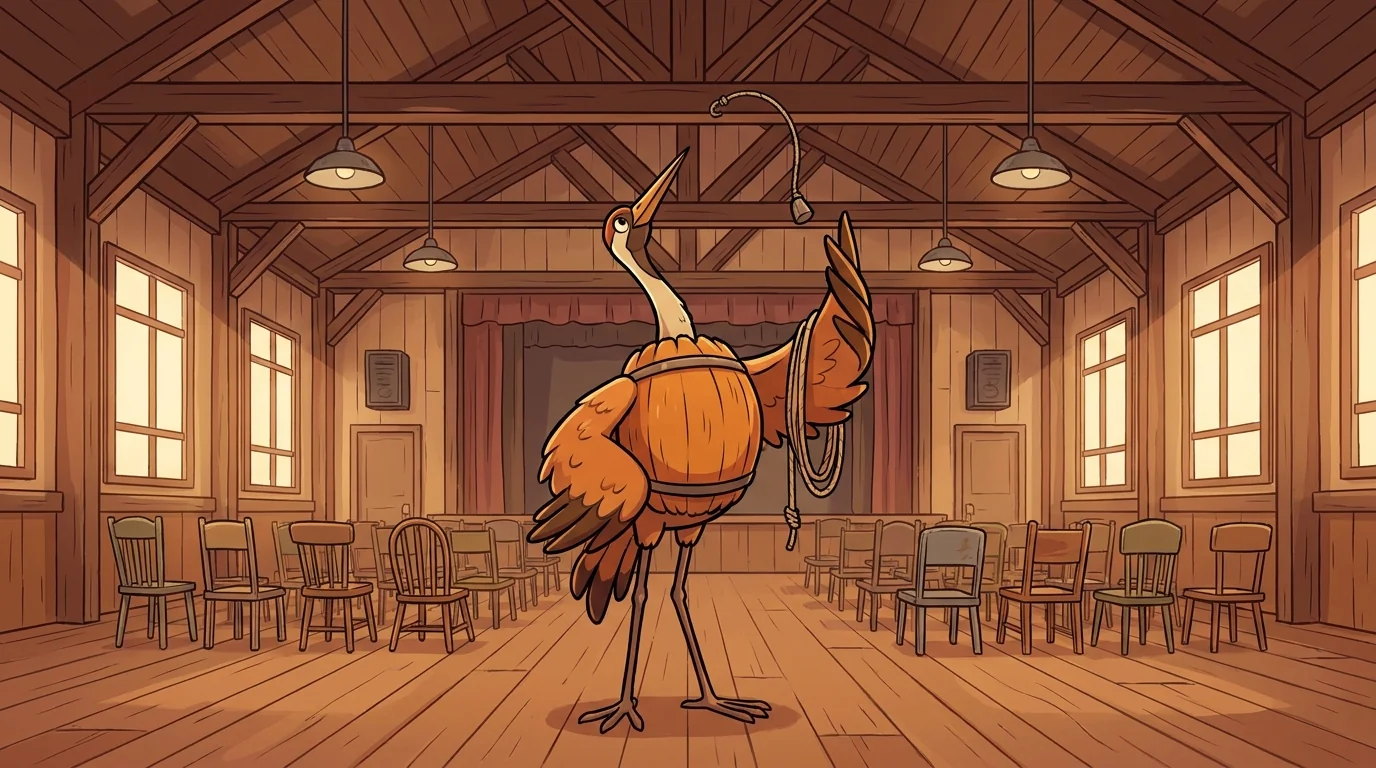
Rafter was a crane-tween, tall and long-necked, with a chest that seemed too big for the rest of him — a deep, round barrel of a chest that he was always filling and slowly emptying, like a bellows that had learned to breathe. When he spoke, even softly, his voice seemed to travel: you could stand at the very back of the StageForge rehearsal hall and hear every word of a whisper, warm and clear, as if he were standing beside you. He wasn't loud. That was the strange, wonderful thing. In his wing he carried a coil of thin rope with a tiny weight on the end, which he'd toss up toward the rafters of the hall to remind himself where his voice needed to go.
"A big voice isn't a loud one," Rafter liked to say, tilting his head back to watch the little weighted rope arc up into the beams. "Shouting is just loud and tired and scratchy, and it dies halfway across the room. Projection is carrying. You take a low, full breath — down here, not up in your shoulders — and you let the breath do the pushing. Then even a hush reaches the last seat. The trick isn't more noise. It's more breath under the sound."

Rafter grew up in a canyon so wide the two rims couldn't see each other clearly, and his family were the canyon-callers. Before there were bells or signal-fires, the callers carried news from rim to rim with nothing but their voices — a birth, a coming storm, a lost child found. A shout never made it; it broke apart on the wind and arrived as noise. What made it across was a low, supported, open call that rode the air like a thrown rope.
Little Rafter used to watch his grandmother stand at the canyon edge, plant her feet, drop her breath so low it seemed to come from the ground itself, and send a single word floating clear across a mile of empty air. "You're not throwing it hard," she told him when he tried and only managed a thin squeak that fell off the cliff. "You're throwing it deep. Breathe from the bottom. Open your throat like a door, not a keyhole. Let the breath carry the word — you just aim it." He practiced every dusk, filling that big chest, learning that the biggest voice in the canyon belonged to the calmest breather, not the loudest yeller.
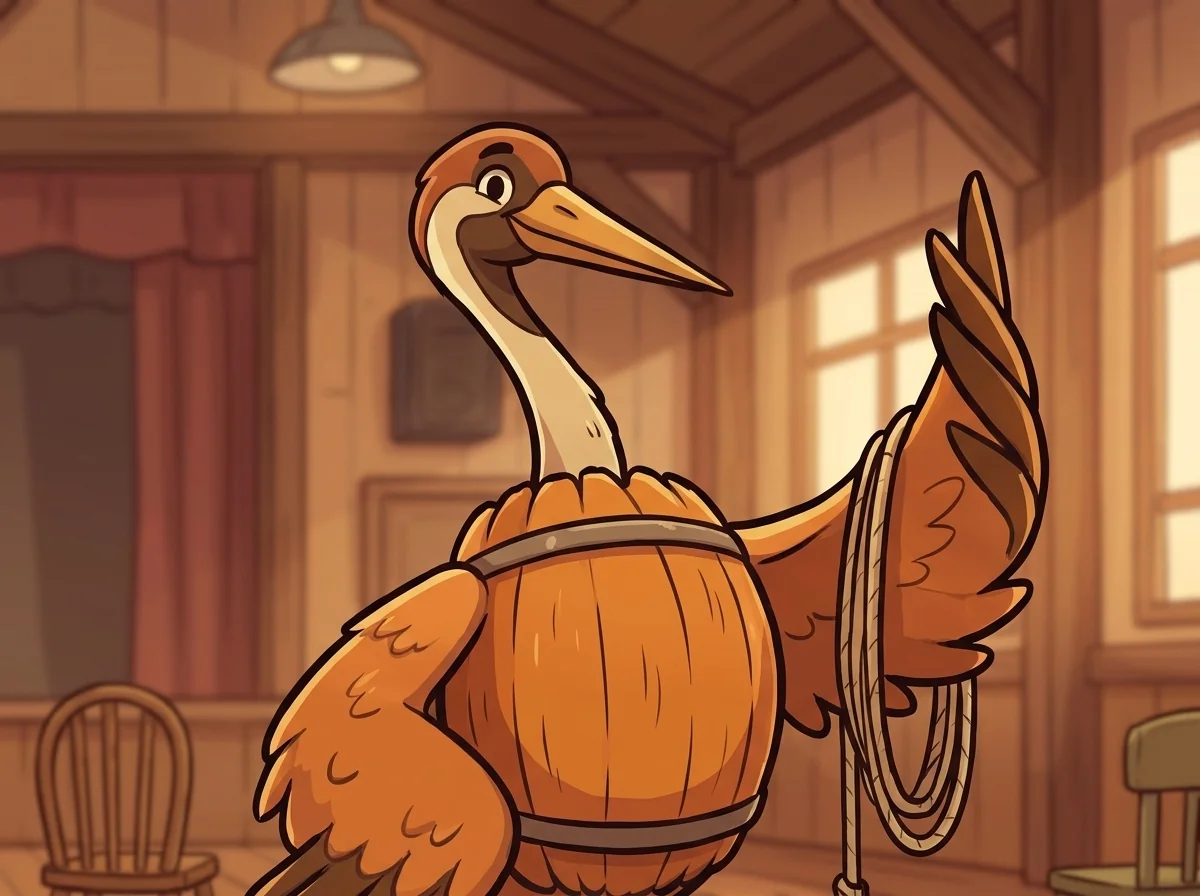
At twelve, Rafter walked to StageForge with his weighted rope coiled at his side. Curtain, the mentor, met him under the great hall's beams and asked the question.
"What is projection?"
Rafter dropped his breath low, planted his long feet, and answered so gently that it should have been lost in the big room — yet it filled every corner of it. "It's making your voice reach the back row without shouting," he said. "You support the sound with a low, full breath and let the breath carry it. Not louder — deeper. So even the softest line lands in the last seat."
Curtain, standing at the very back of the hall, had heard every word. "You are appointed," Curtain said, and even that traveled.
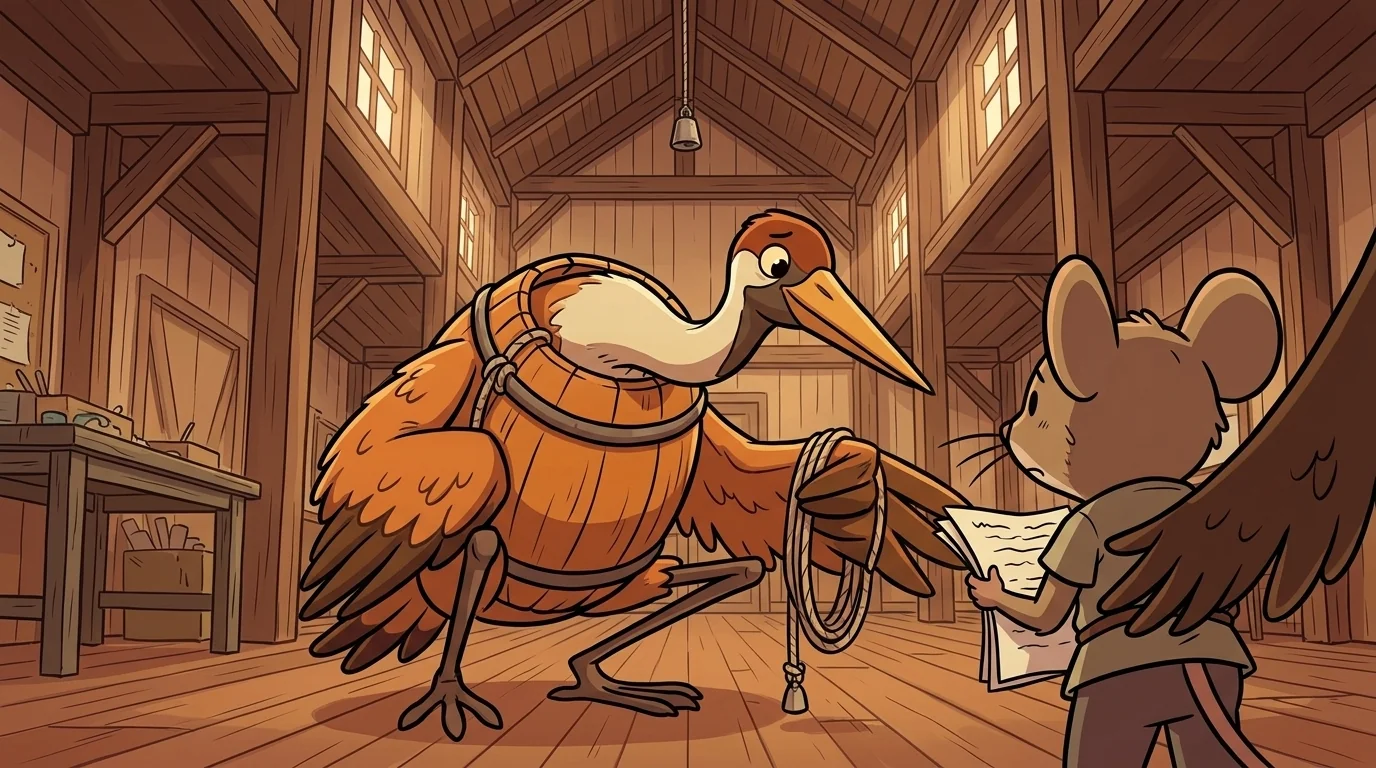
Rafter's workshop was the tallest room in StageForge, built high on purpose so a voice had somewhere to go. On his table sat the weighted rope, and today a small, tense fieldmouse-tween named Sumi stood in the middle of the floor, script shaking slightly in her paws.
"I have the biggest line in the play," Sumi said, "and when I say it, nobody past the third row can hear me. So I tried yelling it last night and my throat hurt and it sounded angry, which is wrong, the line's supposed to be sad." Her whiskers trembled. "And when I get up here my voice just — shrinks. It goes all thin and wobbly."
"Of course it does," Rafter said warmly, crouching to her level. "Nerves squeeze the breath up into your shoulders, and a shoulder-breath makes a thin, wobbly voice. That happens to every single performer who ever lived. We're not going to make the nerves go away. We're going to give the breath somewhere lower to live, so it carries even while you're scared." He set a wing gently on her back, low down. "Breathe into here. Feel it push out to the sides. Now say the sad line — soft as you like — and just let that low breath carry it up to the rafters." He tossed the little weighted rope; it sailed up into the beams.
Sumi breathed low. Her shoulders, for once, stayed still. She said the sad line quietly — and it floated out, clear and gentle, all the way to the back wall where Curtain stood listening. Sadness and all. Nothing angry. Nothing thin.
"It went all the way back," Sumi whispered, astonished. "And it still sounded sad."
"Because you carried it instead of throwing it," Rafter said. He showed her the small rules, one breath at a time. Breathe low, into the belly and sides, never up into the shoulders. Open the throat wide and relaxed — a door, not a keyhole. Aim the sound at the back wall, not the floor in front of you. And never, ever mistake volume for reach: a supported whisper beats a scared shout every time, and it saves your throat besides.
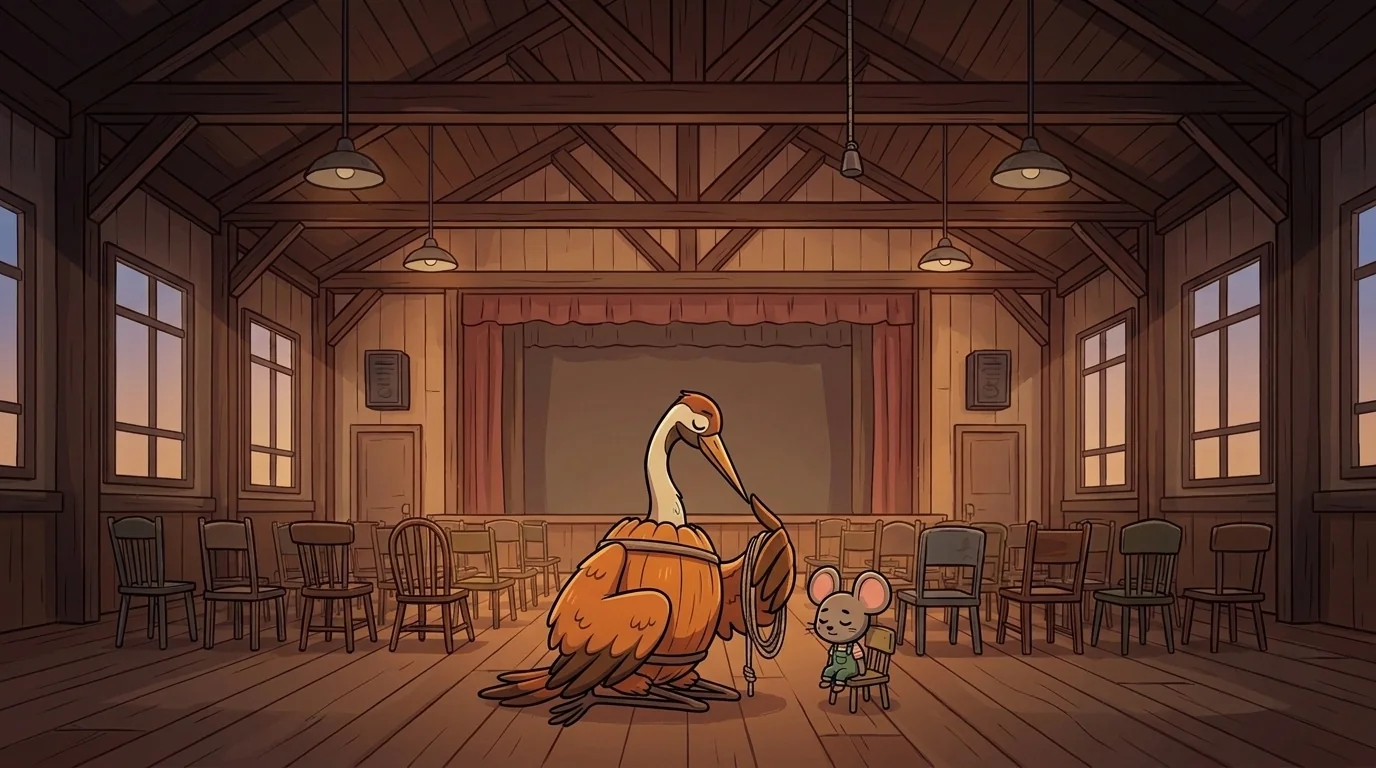
When the tall room went dim and quiet, Sumi lingered, practicing low breaths and watching the rope hang from the beams.
"I really thought there was something wrong with me," she admitted. "Everybody else seemed loud enough and I was the tiny one whose voice disappeared. I felt kind of ashamed of it."
Rafter sat down beside the little mouse, his big chest rising and falling slow. "There's nothing wrong with your voice. There never was. You just hadn't been shown where to breathe from — and nobody's voice is brave on its own when the nerves squeeze in." He tapped his own broad chest. "Even now, before I call across a full hall, my breath wants to fly up into my shoulders and shrink. I let it be scared. I breathe low anyway. That's the whole secret — not a voice that isn't nervous, but a breath that carries the words even while the nerves are shaking."
Sumi took one more low, full breath, and felt the wobble in her chest settle into something steady and quietly strong — the calm of knowing her voice could reach, scared or not.
"Not louder — deeper," Rafter said softly, and even soft, it reached the rafters. "Doesn't it feel good, being heard without having to force it?"
The StageForge ensemble
Rafter is part of StageForge's distributed-narrative cast. Each character embodies a different curricular primitive; together they teach the full subject.
-

Face
Acting — character work through voice, body, and emotional life
-

Pen
Playwriting — turning ideas into scripts with character, conflict, structure
-

Block
Blocking — directing actors through stage geography
-
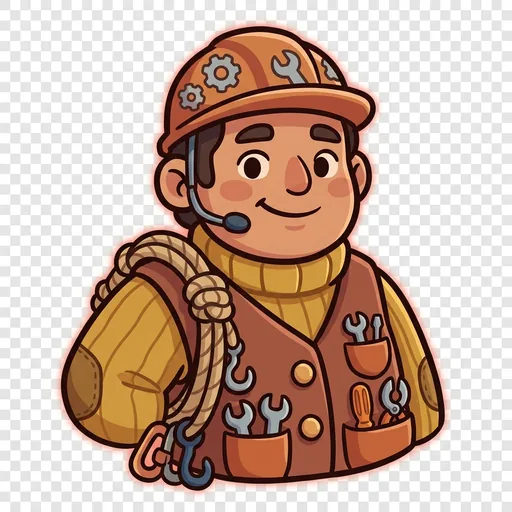
Rig
Stagecraft — the technical-theater craft that makes the visible-stage possible
-

Riff
Improvisation — the live-performance craft of Yes, and...
-

Yearn
The objective — what a character wants in a scene, badly enough to drive every line and move; the engine under a performance
-

Undertow
Subtext — the real meaning running under the spoken line; what a character truly means beneath the words they actually say
-

Freeze
Tableau — a frozen stage picture the whole cast holds so the audience can read the moment like a painting
-

Hitch
Pacing and timing — the rhythm of a scene and the deliberate pause that makes a line land, the held beat before the joke or the truth
-

Opening Night
The whole company on stage together — how acting, objective, subtext, tableau, and timing combine so one live scene truly comes alive