
Hitch
PACING & TIMING — *the rhythm of a scene: when to rush, when to slow, and the deliberate pause that makes a line land. the held beat before the joke or the truth.*
Press play to listen along. The line being read lights up as you go.
Show full transcript
Loading transcript…
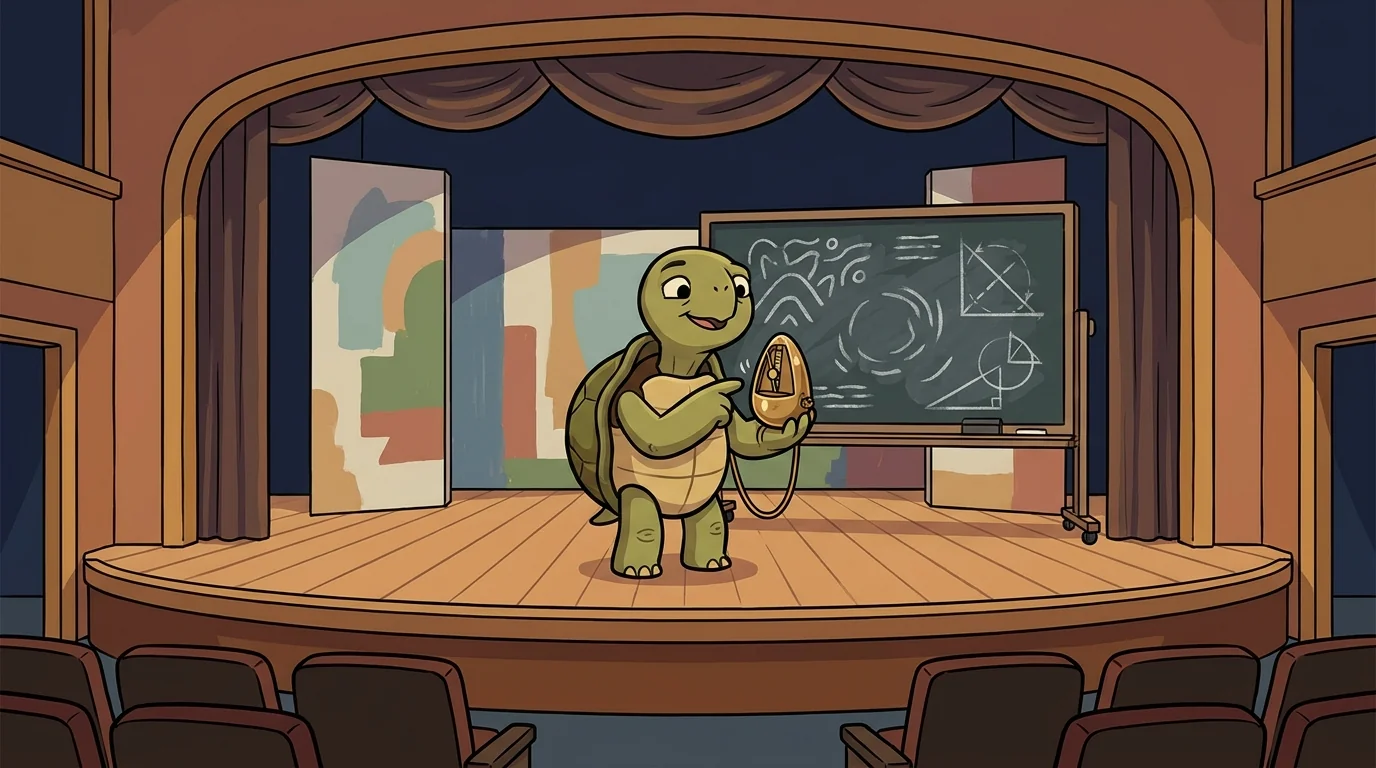
Hitch was a tortoise-tween, unhurried to his bones, and he had turned slowness into an art. He spoke in a rhythm all his own — a phrase, then a small, deliberate silence, then the next phrase — and somehow those little silences made everything he said land twice as hard. On a cord at his side he carried a slow brass metronome-egg that ticked at a walking pace, and he'd set it going during scenes, not to speed anyone up, but to teach them where the rests went. "The music of a scene isn't only the notes," he'd say, tapping the egg. "It's the rests between them."
He worked on the timing of everything — when a scene should race, when it should crawl, and above all where the pauses went. "Pacing is the rhythm of a scene," Hitch explained, "and the most powerful thing in that rhythm is often the silence. A tiny pause before a line makes the audience lean in. A held beat after a joke lets the laugh arrive. Rush everything and it all blurs together into noise. The pause is where the meaning lands. Silence isn't empty — it's the frame around the important thing."
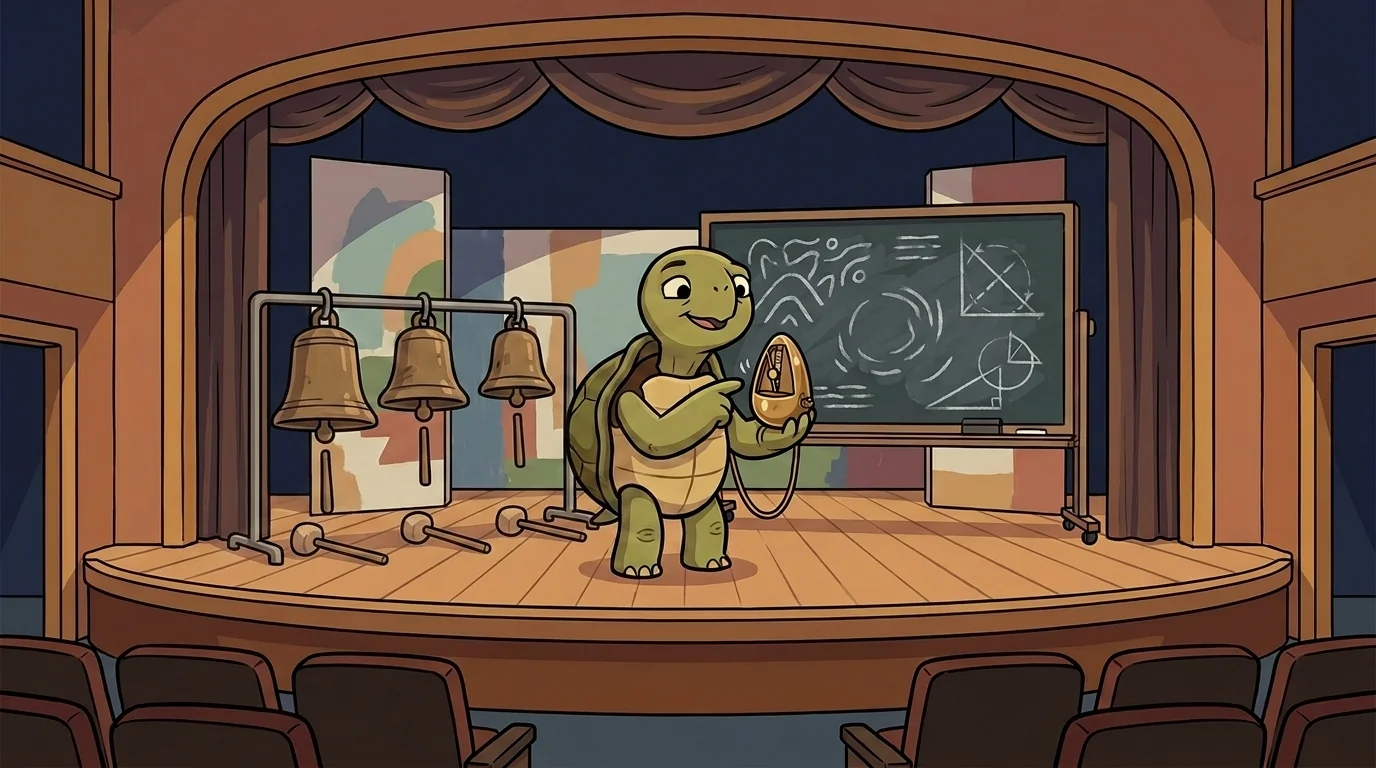
Hitch grew up in the bell-tower village, where his family were the bell-timers. A carillon of bells isn't beautiful because of the notes alone — anyone can ring them. It's beautiful because of the spacing: the exact rest between one bell and the next, the held silence that lets a note ring out fully before the next begins. Ring them too close and it's clanging chaos. Ring them with the right rests and it's music that makes the whole valley stop and listen.
Little Hitch was impatient once, believe it or not — he wanted to ring all the bells fast, to get to the end. "You're rushing the rests," his grandmother said, staying his eager paw. "The bell needs room to finish ringing. The silence after it is part of the song." She made him wait, count, breathe, let each note bloom and fade before the next. And slowly he heard it: the silences weren't gaps to hurry past. They were where the music actually lived. He grew up in love with the rest between the notes, and he carried the slow brass egg from the day he could walk, learning that the one who controls the pauses controls the whole feeling of a thing.
At twelve, Hitch made his slow way to StageForge, metronome-egg ticking at his side. Curtain met him and asked — and Hitch, of course, paused before answering.
"What is pacing and timing?"
A beat of silence. Then: "It's the rhythm of a scene," Hitch said. "When to rush, when to slow — and the pause that makes a line land. The silence before a truth, the held beat after a joke. Rush it all and it blurs. Space it right and the meaning lands. Silence isn't empty. It's the frame around the important thing."
Curtain waited a full beat — honoring the lesson — before saying, "You are appointed."
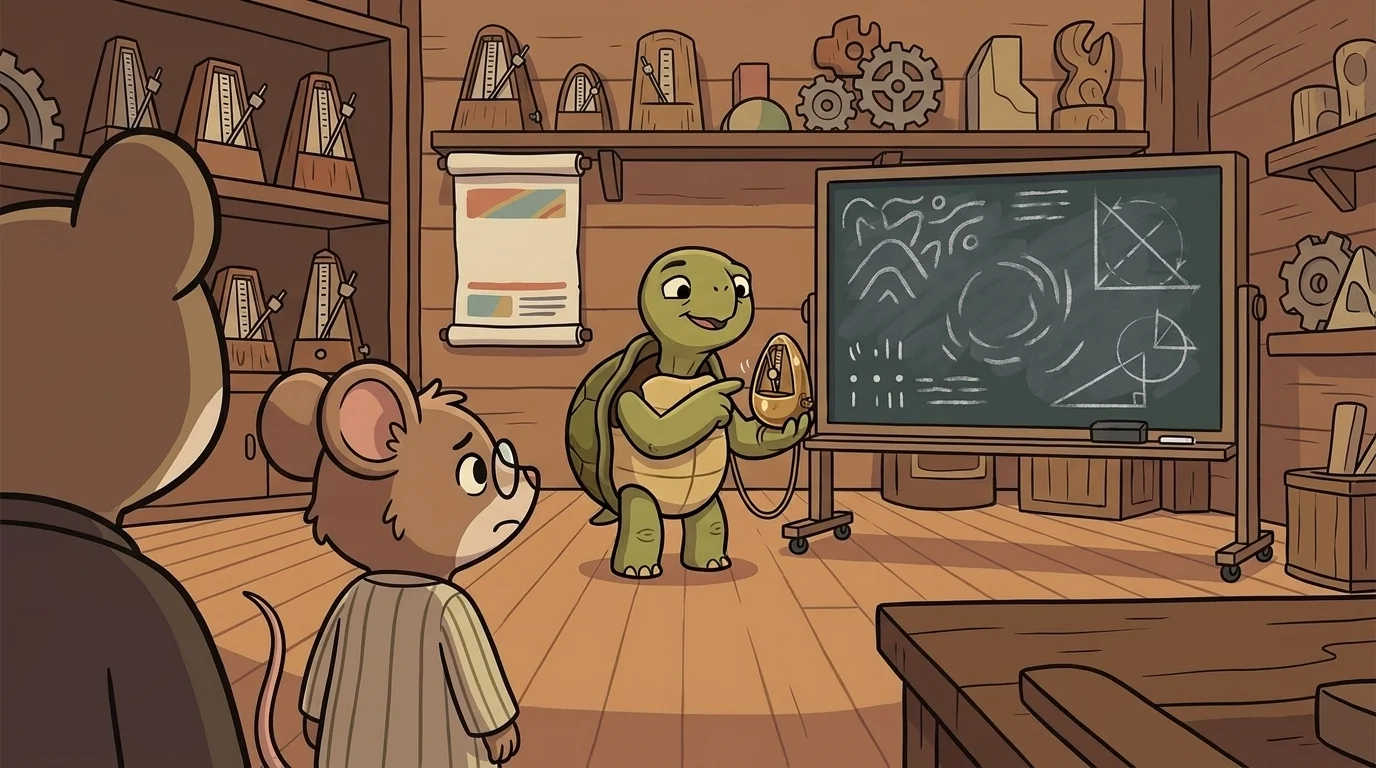
Hitch's workshop ticked softly with slow rhythms, and today the fieldmouse-tween Sumi was there, talking a mile a minute.
"My funny line isn't funny," she said in a rush, "and my sad line isn't sad, and Curtain says I'm 'steamrolling' and I don't even know what that means, I'm just trying to get all my words out before I mess them up because I'm so nervous I just want it to be over—" She ran out of breath.
"Ah," Hitch said, slow and warm. "You just showed me the whole problem in one sentence. You said all of that with no rests." He set the brass egg ticking, calm and even. "Nerves make everyone do exactly that — rush, swallow the pauses, sprint for the exit. But the pause is where your line lives. Let's find it. Say your funny line — but this time, put one small silence right before the funny word, and then hold still one beat after it. Don't fill the silence. Trust it."
Sumi took a breath. She said the setup, paused — a real, held, slightly-scary silence — landed the funny word, and then waited one beat in the quiet. And the workshop laughed. The line that had been flat was suddenly funny, and nothing had changed but the placement of two small silences.
"The words were the same!" Sumi said, amazed.
"The words are always the same," Hitch said. "The timing is the joke. Now your sad line — but slow it down, and leave a long pause before the last few words, so the audience arrives at the feeling with you." She tried it; the pause opened a space, and the sad line dropped into it and ached. He gave her the rules, one tick at a time. Vary the pace — race the small talk, slow the big moments; a scene at one speed is a scene asleep. Put a pause before the thing you want them to hear, to make them lean in. Hold a beat after a joke or a shock, to let it land. And never fear the silence: a held pause feels like forever to the nervous performer and like exactly right to the audience.
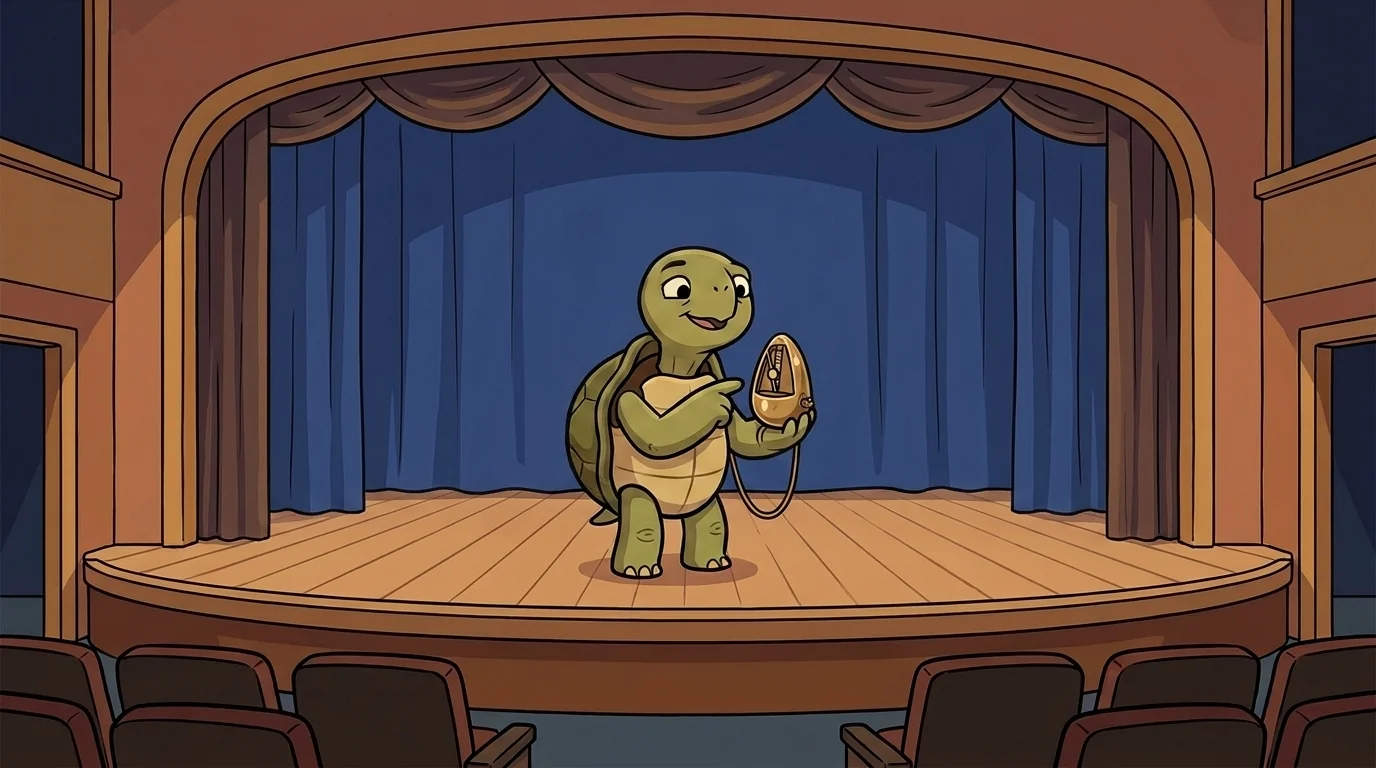
When the slow ticking wound down for the evening, Sumi stayed, listening to the brass egg mark its unhurried time.
"I rush because I'm scared," she admitted. "A silence up there feels terrifying — like if I stop even for a second, everyone will think I forgot, and I'll die of embarrassment."
Hitch nodded slowly, letting a pause sit between them before he answered — and the pause itself was the lesson. "That terror of the silence is exactly why rushing feels safe and slowing down feels brave. But here's the secret the bell-tower taught me: the pause that feels like forever to you feels like just right to them. Your scared inner clock runs fast. Trust the slow egg, not the fear. Leave the silence. Breathe in it. It's not a hole you're falling into — it's the frame around what you're about to say." He tapped the egg. "And if you ever do forget? A calm pause looks exactly like a dramatic one. The audience waits with you. Slowness buys you room to remember."
Sumi breathed in the quiet, let a full slow beat pass without filling it, and felt the frantic rush inside her settle into a calm, spacious steadiness — the relief of being allowed to take her time.
"The pause is where the meaning lands," Hitch said, and then — of course — paused. "Doesn't the silence feel less scary already, once it's yours?"
The StageForge ensemble
Hitch is part of StageForge's distributed-narrative cast. Each character embodies a different curricular primitive; together they teach the full subject.
-

Face
Acting — character work through voice, body, and emotional life
-

Pen
Playwriting — turning ideas into scripts with character, conflict, structure
-

Block
Blocking — directing actors through stage geography
-

Rig
Stagecraft — the technical-theater craft that makes the visible-stage possible
-

Riff
Improvisation — the live-performance craft of Yes, and...
-
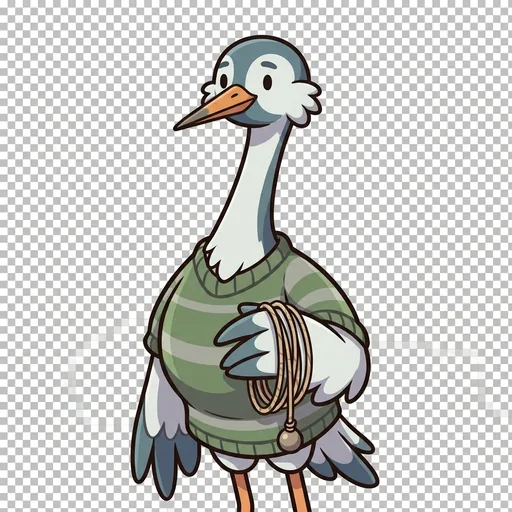
Rafter
Projection — making your voice reach the back row without shouting, by supporting it with breath so even a quiet line lands in the last seat
-

Yearn
The objective — what a character wants in a scene, badly enough to drive every line and move; the engine under a performance
-

Undertow
Subtext — the real meaning running under the spoken line; what a character truly means beneath the words they actually say
-

Freeze
Tableau — a frozen stage picture the whole cast holds so the audience can read the moment like a painting
-
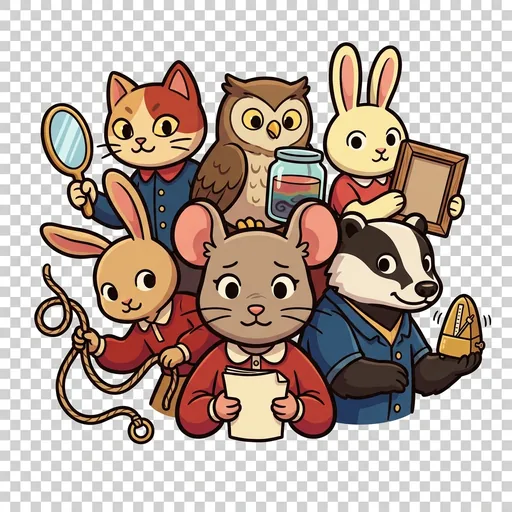
Opening Night
The whole company on stage together — how acting, objective, subtext, tableau, and timing combine so one live scene truly comes alive