
Freeze
TABLEAU — *a frozen stage picture. the whole cast holding a single still image so the audience can read the moment like a painting.*
Press play to listen along. The line being read lights up as you go.
Show full transcript
Loading transcript…
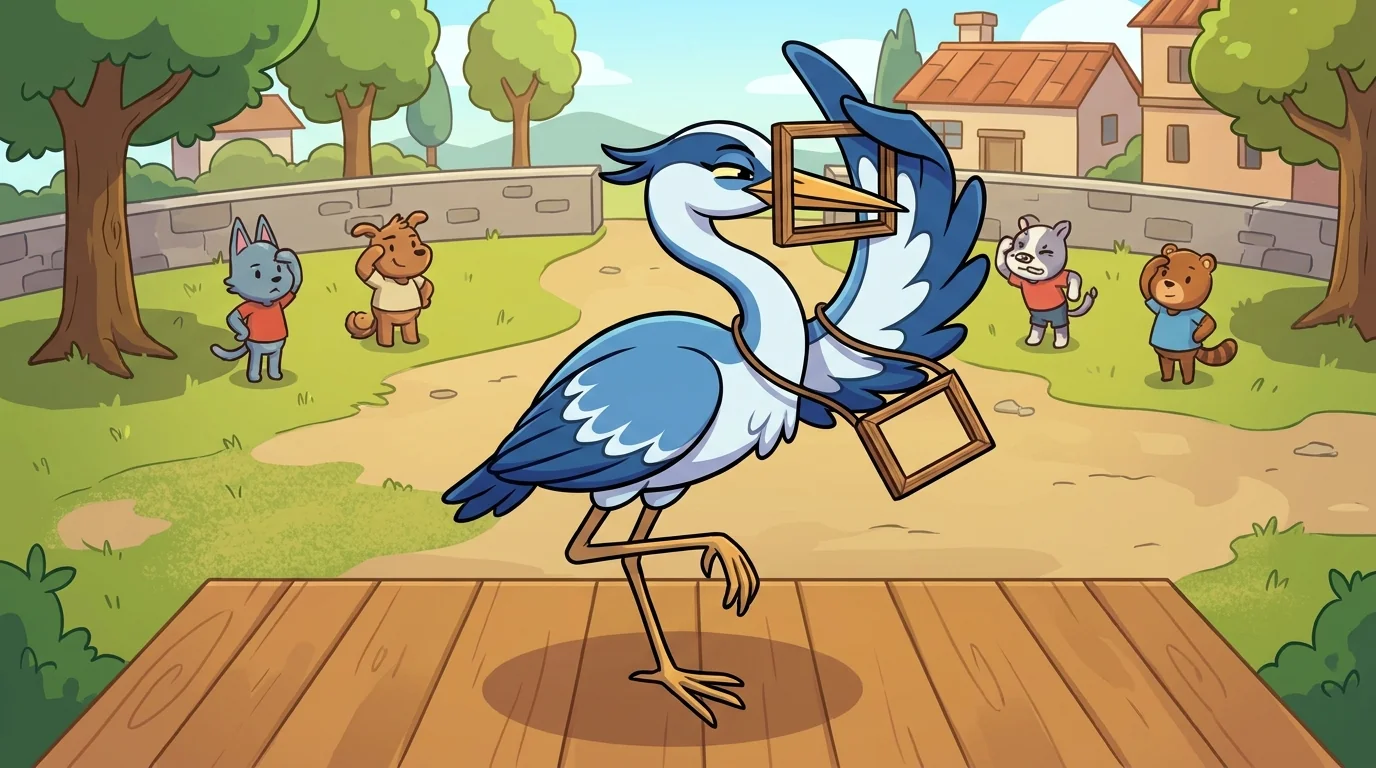
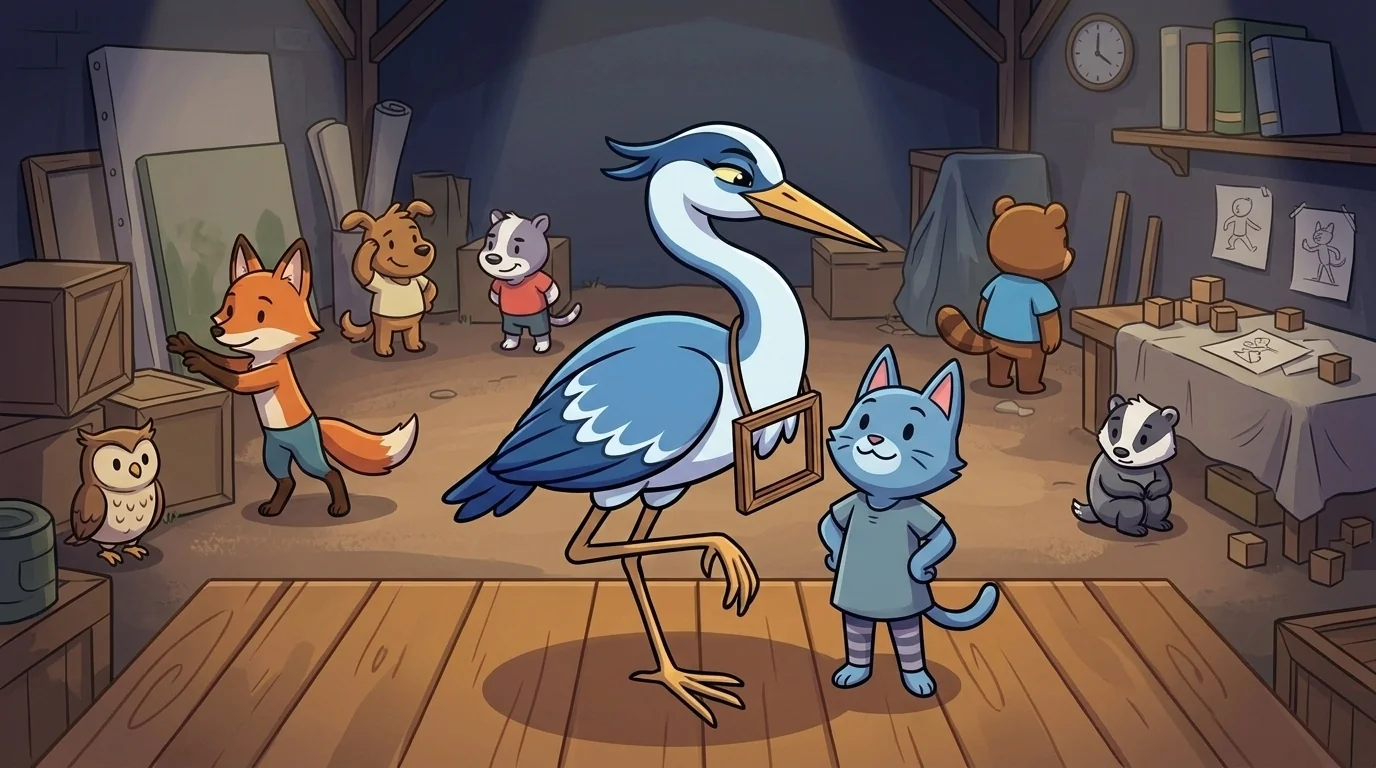
Freeze was a heron-tween, and stillness was her whole art. She could hold a pose so completely — one leg lifted, neck curved, wing half-raised — that visitors sometimes mistook her for a statue and jumped when she blinked. She wasn't stiff about it; her frozen poses were full of life, caught mid-feeling, like a photograph of a story's most important second. Around one wing she wore a small empty picture-frame on a strap, and she'd hold it up to the cast, squint through it, and call "Freeze!" — and everyone would snap into a single still image she could read like a painting.
"A tableau is a frozen picture," Freeze would say, lifting her little frame. "The whole cast holds one still image, all at once, and the audience gets to read it — who's reaching for whom, who's turned away, who's high and powerful, who's low and small. A held picture can say more than a minute of running around. Movement rushes past. A tableau stops time so the moment can land."
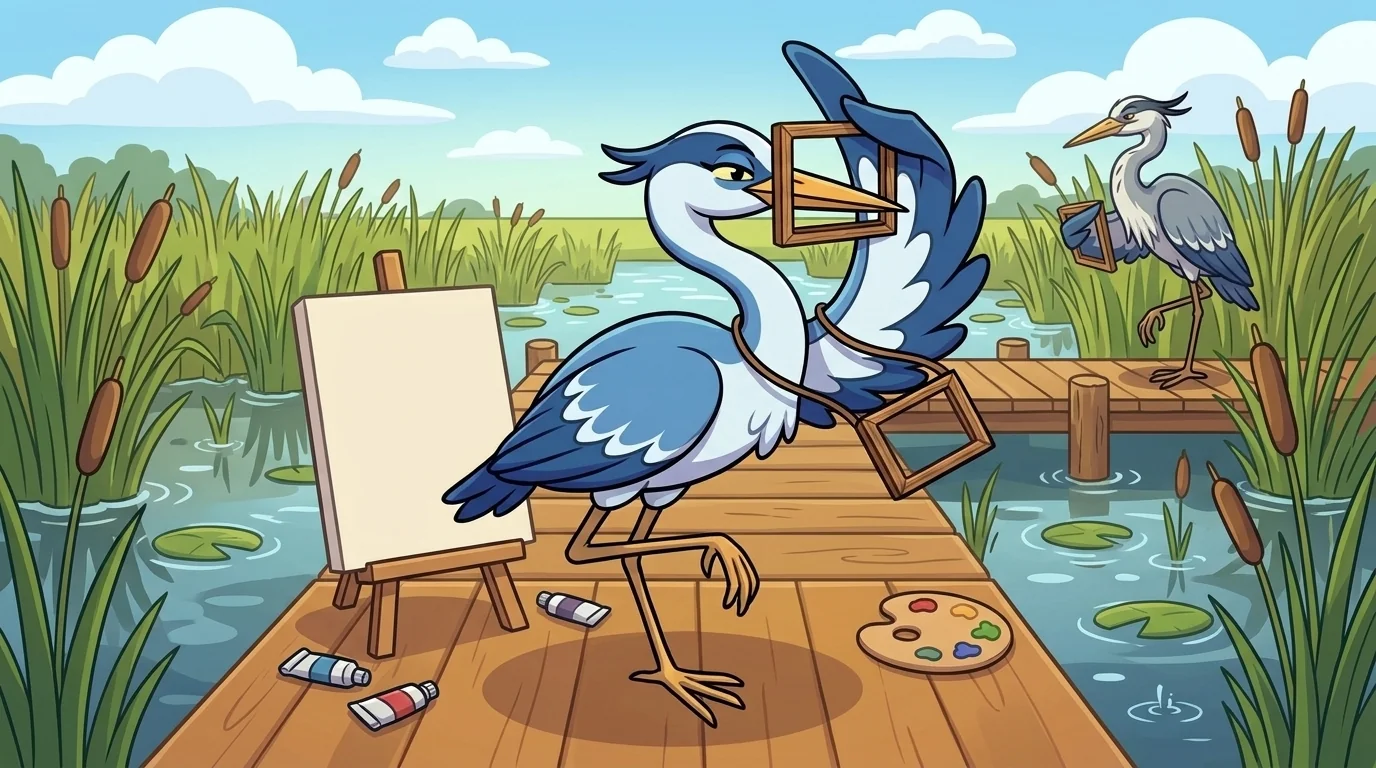
Freeze grew up in the marsh, where her family were the still-hunters — herons who caught their meals not by chasing but by holding utterly, perfectly still until the whole scene arranged itself and the right moment simply arrived. The marsh taught a lesson the fast creatures never learned: that stillness is not nothing. Stillness is a held choice, full of tension and readiness, and it can hold a whole story inside it — the fish, the water, the waiting bird — all balanced in one motionless picture.
Little Freeze was a fidget, always moving, and she hated the holding at first. "Why do we just stand there?" she complained, splashing. Her uncle, mid-hold, didn't even twitch. "We're not just standing," he said, barely moving his beak. "We're making a picture the moment can walk into. Look at us — you, me, the reeds, the still water. Anyone passing would read the whole story in one glance. That's what a held stillness is. It's a painting you make with your body." Slowly Freeze learned to love it: the way a held pose could brim with meaning, the way stopping could say more than moving. She traded her fidget for a frame and never looked back.
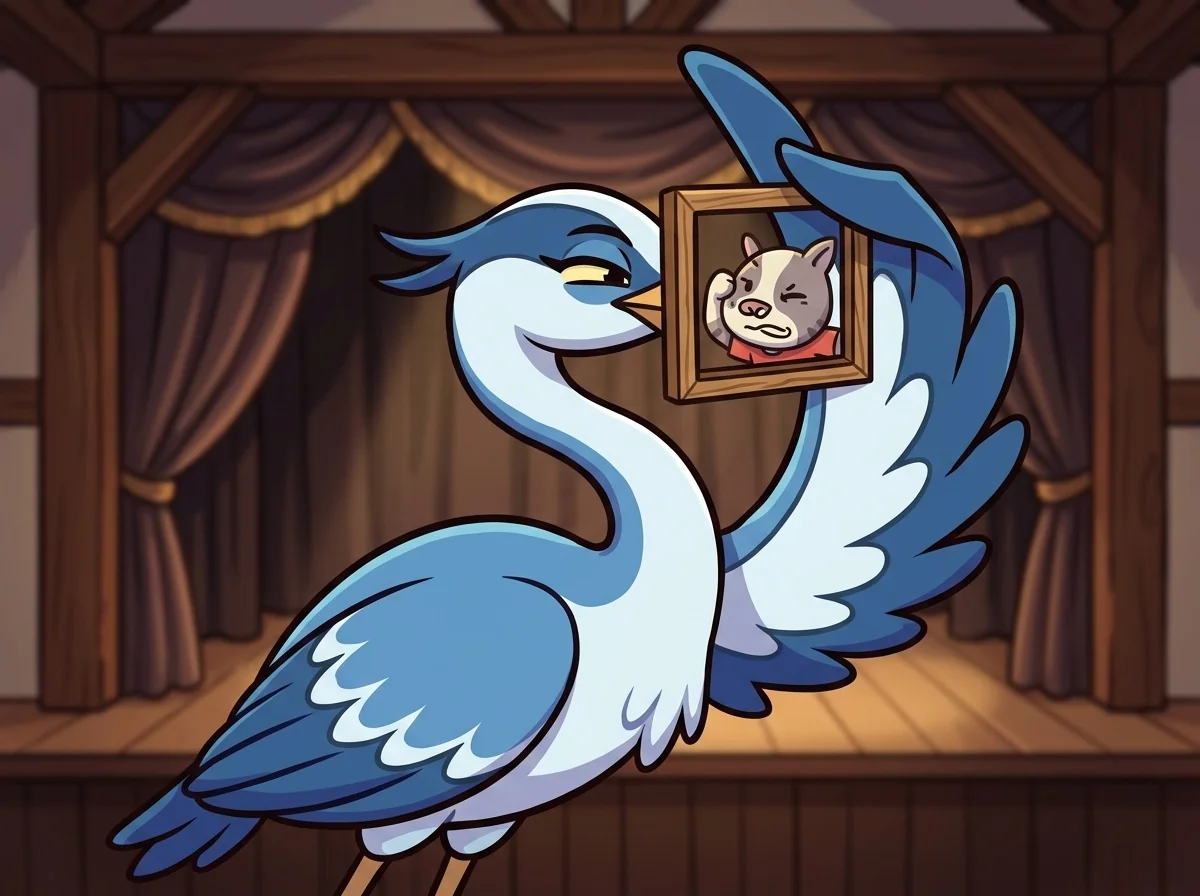
At twelve, Freeze walked — slowly, of course — to StageForge, empty frame on her strap. Curtain met her and asked.
"What is a tableau?"
Freeze lifted her frame, squinted through it at Curtain, and held perfectly still for a moment before answering. "It's a frozen stage picture," she said. "The whole cast holds one still image, all together, so the audience can read the moment like a painting — who reaches, who turns away, who stands high, who kneels low. It stops time so the moment can land."
Curtain held still, considering, framed in the little frame. "You are appointed," Curtain said.
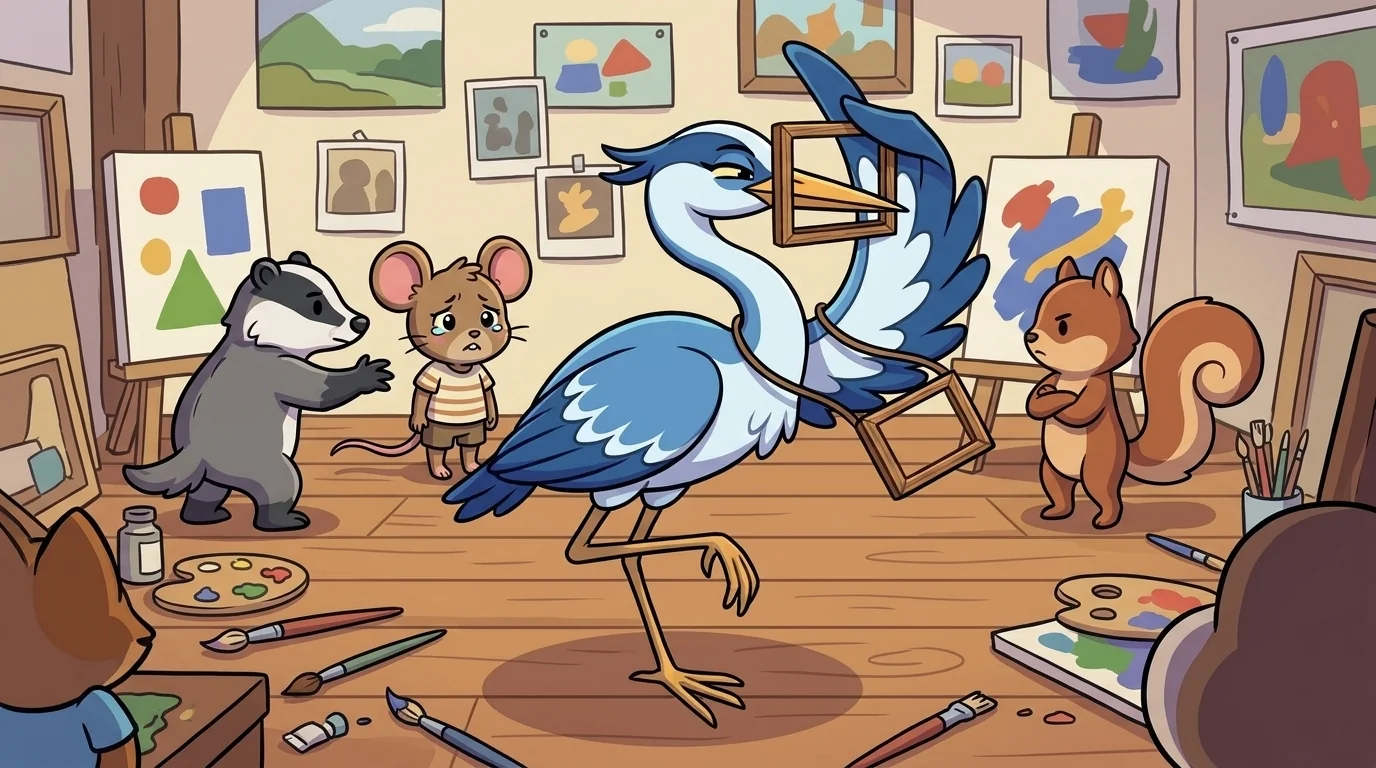
Freeze's workshop was hung with paintings and photographs, all frozen moments, and today the fieldmouse-tween Sumi stood in the middle looking near tears.
"Something awful happened at rehearsal," Sumi said. "I got up for the big group scene and my mind just went totally blank. I froze. I couldn't move, couldn't remember anything, I just stood there like a statue while everyone waited. It was so embarrassing. I never want to go back."
Freeze tilted her head, gentle and curious. "You stood perfectly still, in the middle of the group, in a big dramatic moment," she said slowly. "Sumi — do you know that's almost exactly what I teach?" She lifted her frame and squinted through it at the mouse. "Come here. Show me how you froze. Right where your feet were."
Confused, Sumi took the spot and went still. Freeze arranged the other imaginary cast around her — one reaching toward Sumi, one turned away, Sumi caught in the middle. "Now hold it. Feel it. You, frozen, everyone's focus on you." She stepped back and looked through her frame. "Read that picture. It says: everyone is waiting on this small one in the middle. That's not a mistake. That's a tableau. That's powerful."
Sumi blinked. "But I froze because I panicked."
"The audience can't tell the difference between a panic-freeze and a chosen freeze," Freeze said kindly, "if you commit to it. A blank moment becomes a held picture the instant you decide to own the stillness instead of flailing out of it. Breathe. Hold the pose like you meant it. Let the picture speak. Then, when the line comes back to you — and it will — melt out of the freeze into the next moment." She showed the little mouse the rules, holding a pose between each. Everyone freezes together, sharply, on a shared cue. Make the picture readable — clear levels, clear focus, clear reaching-and-turning. Hold it long enough for the audience to actually read it, then release cleanly. And, quietly: if your mind ever goes blank, don't panic-scramble — freeze on purpose, breathe, and let it look like a choice until the moment returns.
When the workshop dimmed among its frozen pictures, Sumi lingered, practicing holding still with her chin up.
"I was so sure the freezing meant I wasn't cut out for this," she said quietly. "I felt like such a failure, just standing there."
Freeze settled into a slow, graceful stillness beside her. "The freeze isn't the failure. The shame about the freeze is the only thing that turns it into one." She lifted her little frame. "Every performer's mind goes blank sometimes — mine still does. The difference between a disaster and a beautiful moment is just this: do you scramble and apologize with your whole body, or do you breathe, hold the picture, and trust the moment to come back? A held stillness is never nothing. It's a painting you're making. Even an accidental one can be lovely, if you own it."
Sumi lifted her chin, held perfectly still, and felt the hot shame of the blank moment cool into something calm and even a little proud — the quiet strength of a stillness chosen on purpose.
"Hold the picture. Let the moment land," Freeze said softly, motionless as a statue. "Doesn't it feel steadying — knowing even a freeze can be yours?"
The StageForge ensemble
Freeze is part of StageForge's distributed-narrative cast. Each character embodies a different curricular primitive; together they teach the full subject.
-

Face
Acting — character work through voice, body, and emotional life
-

Pen
Playwriting — turning ideas into scripts with character, conflict, structure
-

Block
Blocking — directing actors through stage geography
-
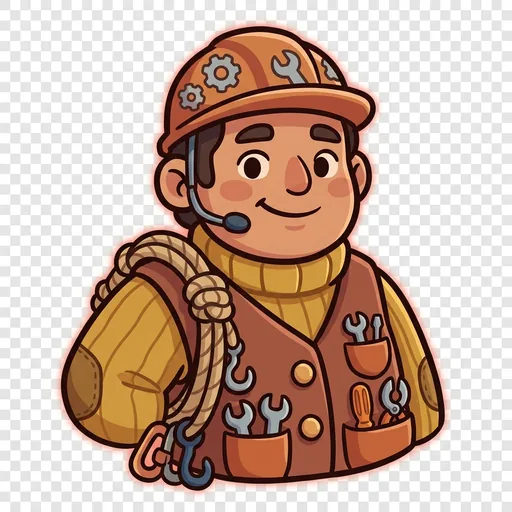
Rig
Stagecraft — the technical-theater craft that makes the visible-stage possible
-

Riff
Improvisation — the live-performance craft of Yes, and...
-
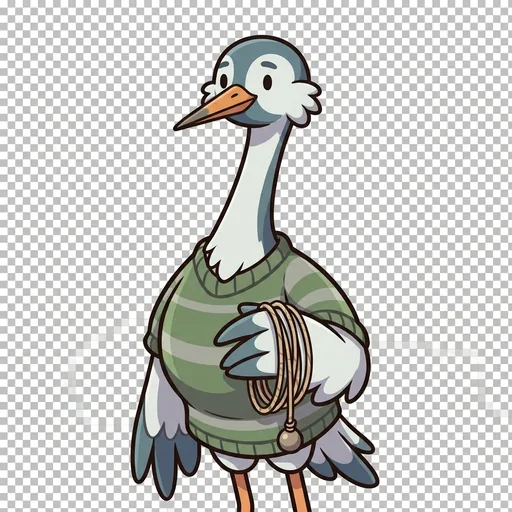
Rafter
Projection — making your voice reach the back row without shouting, by supporting it with breath so even a quiet line lands in the last seat
-

Yearn
The objective — what a character wants in a scene, badly enough to drive every line and move; the engine under a performance
-

Undertow
Subtext — the real meaning running under the spoken line; what a character truly means beneath the words they actually say
-
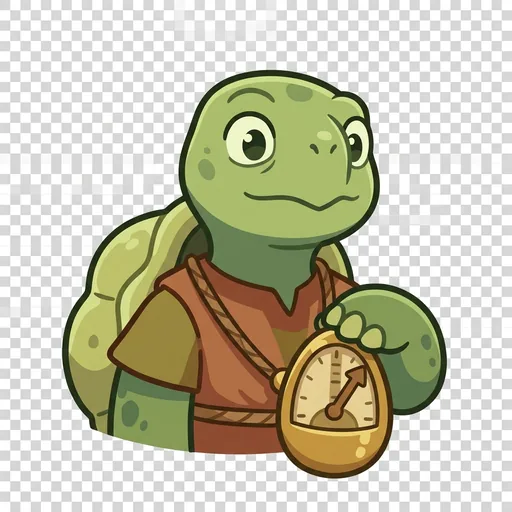
Hitch
Pacing and timing — the rhythm of a scene and the deliberate pause that makes a line land, the held beat before the joke or the truth
-
Opening Night
The whole company on stage together — how acting, objective, subtext, tableau, and timing combine so one live scene truly comes alive