

Block
BLOCKING — *directing actors through stage geography. where they stand; how they move; what the audience sees.*
Listen along — Block
Loading audio…
Press play to listen along. The line being read lights up as you go.
Show full transcript
Loading transcript…
Chapter 3 — Block and the Geometry of the Stage
Block crouched at the edge of the empty stage, her chunky director’s vest bulging with pockets, and set two tiny figurines down on the bare boards. She nudged one three steps toward the audience and stopped. Her tail went still. “There,” she murmured, more to herself than to anyone. “Now the room is different.” She was a small wolf-tween, soft grey-cream fur with a dark stripe down her back, and nothing about her was scary — but the way she watched space made older actors go quiet. She tilted her head, studying the gap between the two figures like it was a living thing.
A young rabbit named Tuft, waiting for rehearsal, leaned over. “They’re just standing there,” he said.
“They’re not,” Block said, and slid one figurine a hand’s-width closer. “Watch what your eyes do.” Tuft’s ears swiveled. His gaze snapped to the pair. “See? You felt them get close. I never said a word.”
She had learned to read space long before she ever saw a theater. Block grew up in the wolf-pack-village, where her family were the pack-coordinators — the ones who planned the hunt, the travel, the long treks across open ground. A pack that scatters starves; a pack that moves as one eats. So from the time she was a pup, Block’s grandmother would set pebbles in the dirt and make her arrange them.
“This one leads. Where do the others stand?” her grandmother would ask. Block would push a pebble forward, another to the flank, two behind. “Why there?”
“Because if the leader falls, the flank sees it first,” small Block would say.
Her grandmother would tap the pebble that led. “Where each body stands next to the others — that is the whole plan. Move it wrong and the plan is wrong.” Block practiced until she could feel it: a body too far back was a body that couldn’t help; a body too close was a body in the way. Space was never empty. Space was a sentence.
When she was twelve she walked to StageForge with her floor-plan board tucked under one arm and her pockets full of figurines. Curtain, the mentor of the place, met her at the wide doors and did not ask her to perform anything. She just gestured at the stage.
“Two people who love each other,” Curtain said. “Show me. No talking.”
Block knelt and placed two figures near center, angled toward one another, close enough that their shoulders nearly touched. Then she looked up. Curtain’s eyes had already softened at the little pair. Block moved one figure four steps back and turned it away. Curtain frowned before she could stop herself.
“You changed how I feel about them,” Curtain said slowly, “and you didn’t change a thing about who they are.”
“I changed where they stand,” Block said. “That’s the story arriving before the words do.”
Curtain smiled, the way you smile when someone shows you a thing you already half-knew. “Then this stage is yours,” she said.
In her workshop, Block gathered a knot of young actors around her floor-plan and set the same two figurines out again. “Two characters are arguing,” she said. “Position one.” She pushed them face to face, so close they nearly overlapped. “What is this?”
“A fight,” said Tuft. “They’re right in each other’s faces.”
“Good.” Block slid one figure far back, toward the rear of the little stage, and left the other near the front edge. “Position two. Same argument. What changed?”
A fox-kit near the back spoke up. “The one in front looks… open. Sort of exposed.”
“And the one behind?”
“Like they’re above it. Looking down.”
Block’s ears lifted. “You just heard power move across the stage, and no one said a single new line.” She turned the two figures back-to-back, spines pressed together. “Position three. Now?”
The room went quiet. “They’re stuck together,” Tuft said finally. “But they’re all alone.”
“That,” Block said softly, “is what a body can say when a mouth won’t.” She let them sit with it. Then she told them the one rule she cared about most: “Don’t ever let an actor just wander. A wander says nothing. A step with a reason says everything. Plan it. Walk it. Change it if it lies. Where they stand tells the story.”
Rehearsal ended late, and the young actors drifted off in twos and threes. Block stayed behind, gathering her figurines back into her pockets, and Tuft lingered by the edge of the stage.
“How do you know when it’s right?” he asked. “The standing part?”
Block set the last figure down instead of pocketing it. She placed a second one beside it — not touching, but near, that careful just-close-enough distance she had spent her whole life learning to feel. She looked at the little pair in the empty, dim workshop, and something warm settled behind her ribs.
“You don’t measure it,” she said. “You feel it. When two people stand exactly close enough, the whole room leans in without meaning to. It goes quiet. It holds its breath.” She glanced up at Tuft, and her voice went gentle. “That little tug you notice — that pull in your chest — that’s the story landing. Right there. That’s the part I love. Not the plan. The moment the room forgets to breathe.”
Tuft looked at the two figures for a long moment. Then, very carefully, he reached out and moved one a hair closer. The gap tightened. And he felt it too.
The StageForge ensemble
Block is part of StageForge's distributed-narrative cast. Each character embodies a different curricular primitive; together they teach the full subject.
-

Face
Acting — character work through voice, body, and emotional life
-

Pen
Playwriting — turning ideas into scripts with character, conflict, structure
-
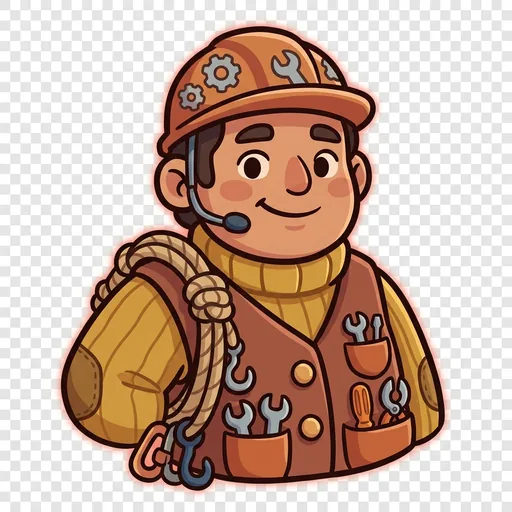
Rig
Stagecraft — the technical-theater craft that makes the visible-stage possible
-

Riff
Improvisation — the live-performance craft of Yes, and...
-
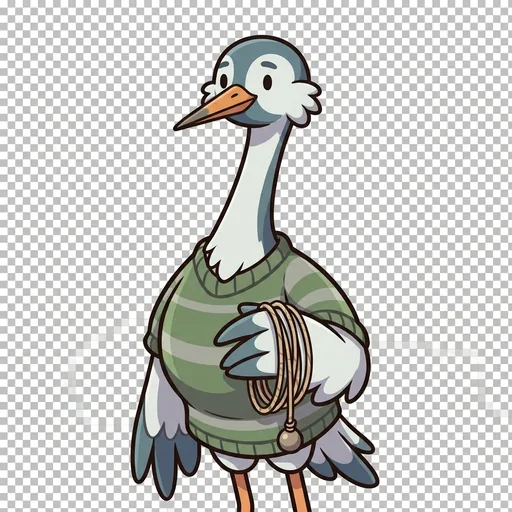
Rafter
Projection — making your voice reach the back row without shouting, by supporting it with breath so even a quiet line lands in the last seat
-

Yearn
The objective — what a character wants in a scene, badly enough to drive every line and move; the engine under a performance
-

Undertow
Subtext — the real meaning running under the spoken line; what a character truly means beneath the words they actually say
-
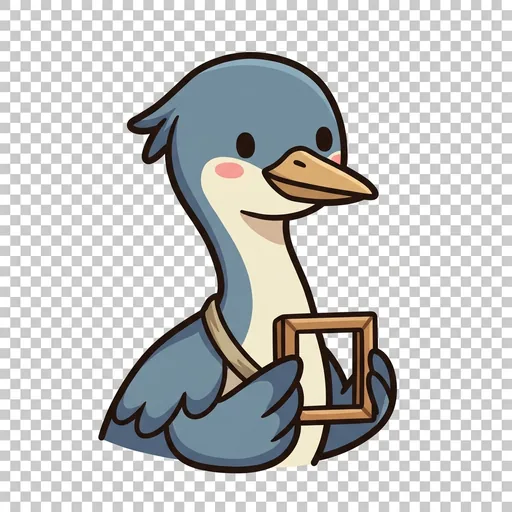
Freeze
Tableau — a frozen stage picture the whole cast holds so the audience can read the moment like a painting
-

Hitch
Pacing and timing — the rhythm of a scene and the deliberate pause that makes a line land, the held beat before the joke or the truth
-
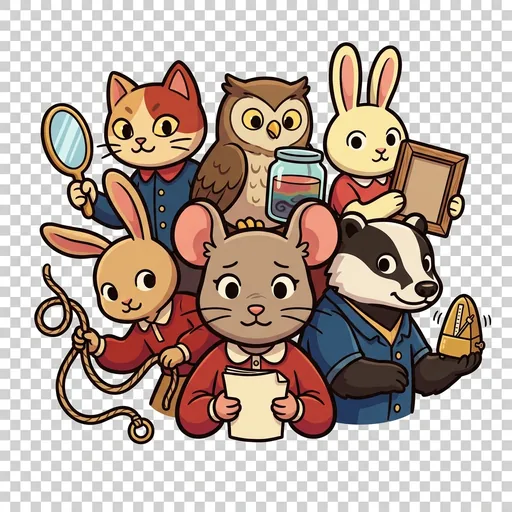
Opening Night
The whole company on stage together — how acting, objective, subtext, tableau, and timing combine so one live scene truly comes alive